

Are you ready to start your own firearm business or looking to deepen your involvement in the industry? Understanding the Federal Firearm License (FFL) is the first step towards this mission. An FFL is a certification issued by the United States government that allows individuals or companies to engage in the business of manufacturing, importing, and distributing firearms and ammunition. The FFL business license is required for anyone looking to operate their business legally in the firearm industry. An FFL holder must also obtain a Special Occupational Taxpayer (SOT) to deal, manufacture, or import NFA items.
Operating without an FFL as a firearm dealer is a federal offense. The FFL is fundamental to firearm businesses, ensuring the dealers and manufacturers comply with all federal laws and regulations set by the Bureau of Alcohol, Tobacco, Firearms, and Explosives (ATF). Having an FFL license shows your trust, responsibility, and compliance in the industry.
Each step of the FFL application process is imperative for ensuring that your business operates within the bounds of federal law. Several factors influence how long it takes to get your FFL. The current waiting time to become a Federal Firearm Licensee is 2 months, but you can refer to the ATF website for any updates on processing times. This guide walks you through the process, explaining what you can do to get your FFL approved most efficiently.
The Steps to Acquiring an FFL
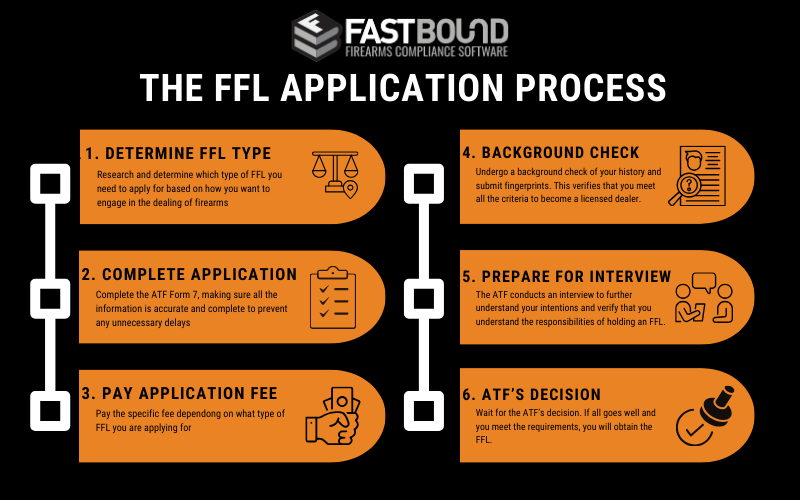
The FFL application process can be complex, but with a clear understanding of the steps and resources at your disposal, it is a straightforward process. It shouldn’t take more than one hour to complete the application.
Step 1. Determine Which Type of FFL You Need
The first step is researching and understanding which FFL best suits your business needs. Whether you’re looking to engage in the retail sale, manufacturing, or personal collection of firearms, each corresponds to a different type of FFL. Make an informed decision to ensure your business aligns with the FFL type. Here is a breakdown of the FFL types and SOT classes associated with becoming an FFL holder:
| FFL Type | Purpose | SOT Class |
| Type 01 | Dealer | 3 |
| Type 02 | Pawnbroker | 3 |
| Type 03 | Collector | n/a |
| Type 06 | Manufacturer of Ammunition | n/a |
| Type 07 | Manufacturer of Firearms | 2 |
| Type 08 | Importer of Firearms | 1 |
| Type 09 | Dealer (Destructive Devices) | 3 |
| Type 10 | Manufacturer (Destructive Devices) | 2 |
| Type 11 | Importer of (Destructive Devices) | 1 |
Step 2. Completing the Initial Application
The next step involves completing the ATF Form 7. This application is comprehensive and requires detailed information about your business and personal history. Make sure the information is accurate to prevent any unnecessary delays in the process.
Step 3. Pay the Application Fee
You will have to pay a specific fee when submitting the application. This fee varies based on the type of FFL you apply for.
| FFL Type | Application Fee | Renewal Fee | Years |
| Type 01 | $200 | $90 | 3 |
| Type 02 | $200 | $90 | 3 |
| Type 03 | $30 | $30 | 3 |
| Type 06 | $30 | $30 | 3 |
| Type 07 | $150 | $150 | 3 |
| Type 08 | $150 | $150 | 3 |
| Type 09 | $3,000 | $3,000 | 3 |
| Type 10 | $3,000 | $3,000 | 3 |
| Type 11 | $3,000 | $3,000 | 3 |
Step 4. Background Check
An important part of the application is the background check. This verifies your eligibility to hold an FFL, assessing factors like your criminal history and personal background. As part of the background check, you’ll also have to provide fingerprint cards to verify your identity.
Step 5. Prepare for the Interview
After you submit the completed application and undergo a background check, an ATF Industry Operations Investigator (IOI) will conduct an in-person interview. This step involves verifying the details of your application and determining your intended business activities. It’s important to be well-prepared for this step of the process.
Step 6. The ATF’s Decision
The final step of the application is waiting on the ATF’s decision. If all goes well and you meet the specific requirements, you will become a certified licensee.
Key Factors Influencing the FFL Timeline
After going through the steps of the application process, a common question many applications have is, “How long does it take to get an FFL?” The answer is multi-faceted because several factors influence this timeline:
Accuracy of Your Application
The time it takes to process your application depends on the completeness and accuracy of the information. Errors or missing information will likely lead to delays.
Background Check Duration
The timeline also depends on the background check process. Factors like previous criminal history or incomplete information on the application can extend this period.
ATF Interview Scheduling
Scheduling your interview with the IOI office can impact the timeline. The availability of the applicant and the IOI plays a role, so it’s important to be flexible and prepared for the interview to avoid unnecessary delays.
Volume of Applications
The ATF’s workload fluctuates, further impacting processing times. If there’s a high volume of applicants, you might experience longer wait times. While this factor is beyond your control, it’s important to stay informed about the current ATF processing times.
Local Law and Zoning Regulations
Local zoning and laws affect the time it takes to get your FFL, especially if your business requires additional permits or inspections. Complying with these regulations early in the process helps prevent delays.
Individual Business Circumstances
Depending on your business structure or location, there are specific circumstances that influence the approval timeline. For example, a home-based business might face different challenges than a brick-and-mortar gun shop.

Enhancing Efficiency and Compliance with FastBound
Once you’ve received your FFL, navigating the compliance process requires precision and an understanding of ATF and federal requirements. This is where FastBound’s software and expertise become essential. With our software, more than 20,000 monthly active users and over 50,000 digital 4473s are processed each month. Our platform helps over 5,000 FFL holders maintain compliance, manage background checks, and streamline their firearm transaction processes. By organizing this necessary information, we ensure that everything is in order, preventing common delays caused by inaccuracies or incomplete applications.
FastBound’s role is integral after receiving your FFL license. Once you obtain your FFL, our software continues to be a valuable resource for maintaining compliance with federal government regulations. From managing your ATF Bound Book to staying informed about legal changes, we ensure that your business operations remain compliant, efficient, and up-to-date. This ongoing support demonstrates our commitment to being a partner in your journey as an FFL dealer. Work with FastBound today to make your journey as an FFL smooth and exciting.
Resources:
1. ATF. https://www.atf.gov/
2. FastBound. https://www.fastbound.com/
