

If you’ve ever thought about exploring the world of firearms licensing in Maryland, it’s important to understand the federal firearms licensee and the FFL process. Navigating the FFL process in this state requires a clear understanding of federal and state regulations. However, with the right information and guidance, it is a straightforward and achievable goal.
A federal firearms license, commonly known as an FFL, is the foundation of the firearms business. Whether it’s for selling, manufacturing, or importing firearms, the FFL is a federal requirement. It ensures that these activities are carried out responsibly and legally. In Maryland, holding an FFL signifies your adherence to federal and state laws, ensuring public safety and compliance in all activities.
Maryland’s diverse legal landscape presents opportunities in the firearms industry. The FFL process in this state involves more than just filling out forms; it encompasses a deeper understanding of legal requirements, thorough state background checks, and a commitment to responsible firearms handling and sales. FastBound stands as an industry leader when it comes to FFLs. Our firearms software transforms any device into a compliant 4473, making ATF compliance even simpler.
As you read through this blog, you will gain insights into the process of obtaining the FFL in Maryland. We will cover everything from the initial steps of the application to the intricacies of compliance, providing you with the knowledge and tools for a successful journey.
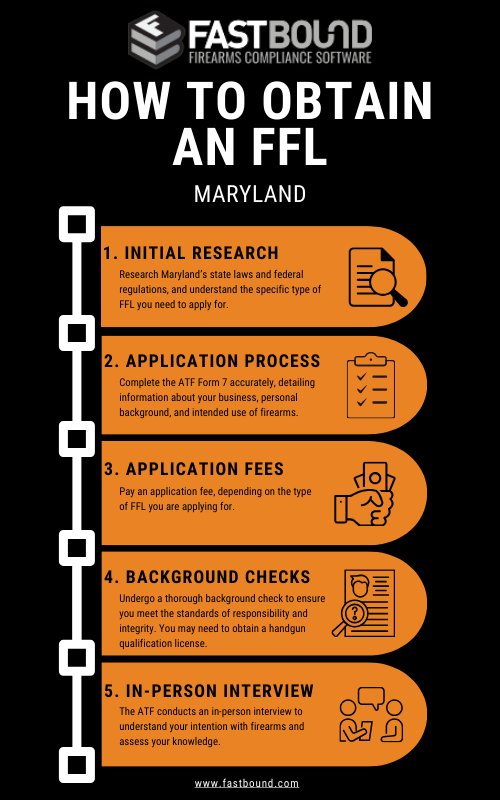
Step-by-Step Process to Obtaining an FFL in Maryland
Understanding the steps to obtain a Federal Firearms License (FFL) is crucial for regulated firearms dealers and manufacturers. This section provides a detailed guide on navigating the application process, emphasizing the importance of each step.
Step 1: Initial Preparation and Research
The first step in your process of obtaining an FFL is thorough preparation. This involves understanding the state-specific requirements of the FFL type you are applying for, whether it’s for dealing, manufacturing, or importing firearms. It’s important to research Maryland’s state laws and federal regulations to ensure your business plan aligns with these guidelines.
Step 2: Completing the Application
The next step is completing the ATF Form 7, the application for the Federal Firearms License. This federal form requires detailed information about your business, personal background, and the specifics of your intended firearms activities. You must make sure all the sections are filled out accurately to avoid any unnecessary delays or complications.
Step 3: Application Fees
Along with your application, you’ll need to pay an application fee. The fee varies depending on the type of FFL you are applying for. It’s important to consider this cost as part of your initial business expenses.
| FFL Type | Application Fee | Renewal Fee | Years |
| Type 01 | $200 | $90 | 3 |
| Type 02 | $200 | $90 | 3 |
| Type 03 | $30 | $30 | 3 |
| Type 06 | $30 | $30 | 3 |
| Type 07 | $150 | $150 | 3 |
| Type 08 | $150 | $150 | 3 |
| Type 09 | $3,000 | $3,000 | 3 |
| Type 10 | $3,000 | $3,000 | 3 |
| Type 11 | $3,000 | $3,000 | 3 |
Step 4: Background Checks and Compliance
After the application process, you’ll undergo a comprehensive background check at the federal level. This is a crucial part of the process, ensuring that FFL holders meet the highest standards of responsibility and integrity. In Maryland, additional steps may include obtaining a handgun qualification license, which demonstrates your commitment to responsible firearms handling.
Step 5: The Interview and Inspection
The Bureau of Alcohol, Tobacco, Firearms, and Explosives (ATF) conducts an in-person interview, detailing your intention with firearms. Law enforcement agencies play a vital role in this step, assessing your compliance with storage, record-keeping, and safety standards. It’s an opportunity to show your preparation and understanding of the responsibilities that come with holding an FFL.
Obtaining an FFL in the state of Maryland can be a challenging task, but with the right tools and resources, it is a straightforward and efficient process.
License Types and Their Relevance in Maryland
After gaining an understanding of the FFL process and the steps involved in obtaining the license in Maryland, it’s important to mention the FFL types. There are different types of FFL licenses available and they each come with their own responsibilities.
Type 01: Firearms Dealer
The Type 01 FFL is the foundational license for those looking to engage in the business of selling firearms. This license is essential for gun shops and is the standard choice for most retail businesses in Maryland. It allows for the sale of rifles, shotguns, and handguns.
Type 02: Pawnbroker
The Type 02 FFL is for pawn shops that deal in firearms. This license allows individuals to legally pawn or sell their firearms and allows others to purchase them.
Type 03: Curios and Relics
The Type 03 FFL is intended for collectors of curios and relics. While not suitable for operating a business, it allows individuals to collect historically significant firearms more easily.
Type 06: Manufacturer of Ammunition
The Type 06 FFL is ideal for those interested in manufacturing ammunition. It’s an ideal license for those focusing on ammunition production, but not for the manufacture of the firearm itself.
Type 07: Manufacturer of Firearms
For those wanting to manufacture firearms, the Type 07 FFL is the license for you. This license allows for the manufacture of firearms and ammunition. In Maryland, this license is essential for businesses that want to both produce and sell firearms and ammo.
Type 08: Importer of Firearms and Ammunition
The Type 08 FFL is for those who want to import firearms into the United States. This is crucial for businesses that plan to source firearms from international manufacturers, bridging the gap between the US market.
Type 09, 10, and 11: Destructive Devices
This market includes specialized licenses with more strict regulations. They allow the sale, manufacturing, and importing of destructive devices and their ammunition. They are less common than other types but are specific to some businesses.
Choosing the right type of FFL license is an important decision that shapes the operations of your firearms business. Each license type serves a specific purpose and comes with its own set of rules for maintaining compliance.

Additional Considerations and Resources in Maryland
After understanding the different FFL license types and their relevance, it’s essential to think about the additional factors playing a role in the successful operation of a firearms business.
Firearm Transfer Fees and their Implications
In Maryland, an FFL transfer request often involves a transfer fee. These fees vary based on the type of firearm and the specifics of the transaction. FFL holders need to be aware of these costs, as they impact the business’s pricing strategies and customer satisfaction. Staying informed about the current fees is key to maintaining a transparent and trustworthy business.
Understanding the Maryland Handgun Roster
The Maryland Handgun Roster is an important aspect for FFL dealers, especially those dealing with handguns. This roster lists all the handguns approved for sale within Maryland. Ensuring that your inventory aligns with this roster is crucial for compliance because violations can lead to serious legal consequences.
Navigating Maryland Laws and Regulations
Local laws in Maryland also impact firearms dealers. These may include specific state requirements for gun shops, additional background check requirements, and other local ordinances. Understanding and complying with these local laws holds the same importance as adhering to state and federal laws.
Resources for Further Information and Support
Maryland offers several resources for FFL holders seeking information or support. The Maryland State Police and the Bureau of Alcohol, Tobacco, Firearms, and Explosives (ATF) provide guidance and updates on firearms laws and regulations.
Operating a firearms business in Maryland involves navigating a landscape filled with important considerations and regulations. From transfer fees to local laws, staying informed and compliant is essential to a successful firearms business.
How FastBound Simplifies Compliance for FFL Holders
Navigating the complex world of FFL compliance is a challenge for firearms businesses. FastBound steps in as a unique solution, simplifying the compliance process. Our acquisition and disposition (A&D) software ensures adherence to federal and state laws, streamlining record-keeping and reducing the risk of errors. This feature is crucial in Maryland, where compliance with regulations like the Maryland Handgun Roster is rigorously enforced.
FastBound revolutionizes traditional processes by offering a digital ATF Form 4473 with electronic signature support. This approach is a game-changer for FFL dealers in Maryland, saving time and enhancing accuracy. Our software provides efficient serial number tracking and inventory management, making it easier for FFL holders to monitor their firearms from acquisition to sale.
By partnering with FastBound, you join the largest community with more FFLs than any other compliance software provider. This network, combined with our innovative software, ensures that FFL holders operate their businesses smoothly and within legal boundaries. We are the solution for helping you navigate compliance in the FFL industry confidently and efficiently. Reach out today to learn more!
Resources:
- Bureau of Alcohol, Tobacco, Firearms, and Explosives. https://www.atf.gov/
- FastBound. https://www.fastbound.com/
- Maryland State Police. https://mdsp.maryland.gov/Organization/Pages/CriminalInvestigationBureau/LicensingDivision.aspx
