FFL and SOT for Full Auto: What License Do You Need for Machineguns?

At a Glance: To deal in or manufacture machineguns as a business, you generally need the right FFL plus SOT status for NFA activity. Federal law sharply limits post-1986 machineguns to narrow exceptions. The most common setups are Type 01 + Class 3 SOT (dealer) or Type 07 + Class 2 SOT (manufacturer).


FFL vs. SOT: What You Actually Need for NFA Full Auto Activity

What an FFL Covers


Your FFL license defines what type of firearm business you are authorized to conduct. That includes whether you operate as a dealer, manufacturer, or importer. The license type you choose should match your operational model, whether that involves retail transfers, manufacturing, or importing.


An FFL alone does not authorize NFA firearm activity. For that, you need an additional registration.


What SOT Status Adds


A Special Occupational Taxpayer (SOT) registration is what allows a qualified FFL holder to engage in NFA business activity. That includes dealing, manufacturing, or importing NFA items like a full-auto firearm or sound suppressor.


Here is how the pairing typically works:


Your SOT license class must match your FFL type and intended NFA activity.


What “Full Auto” Means Under Federal Law

The Legal Definition That Controls Licensing and Compliance


Under the National Firearms Act, a “machine gun” is defined as a weapon that fires more than one shot automatically, without manual reloading, by a single function of the trigger. A fully automatic machine gun also includes any weapon designed to shoot that way or one that can be readily restored to do so.


The definition extends beyond complete firearms. It covers the frame or receiver of such a weapon. Any full-auto part or conversion kit intended for use in converting a weapon to full-auto fire falls under the same classification. That includes everything from a submachine gun to individual conversion components.

Definition of a Machinegun

NFA Categories People Often Lump in With Full Auto


Machineguns are just one type of NFA weapon. Other regulated categories under the National Firearms Act include:


  • Short-barreled rifles (SBRs) and other short-barreled weapons like short-barreled shotguns
  • Sound suppressors (silencers)
  • AOWs (any other weapons)
  • Destructive devices


Your inventory mix directly affects your licensing requirements and compliance workflows. If you stock a full auto rifle alongside suppressors and SBRs, your recordkeeping and ATF form obligations will reflect each category differently.


The Post-1986 Restriction You Must Understand First

Why Post-1986 Machineguns Are Treated Differently


Federal law restricts machineguns manufactured after May 19, 1986 from general civilian transfer. Generally, civilians cannot lawfully acquire or possess machineguns made after that date, except under limited government-authority exceptions. These restricted machineguns are available primarily for law enforcement, military, and qualified SOTs as dealer sales samples for demonstration to a requesting government entity.


Holding an FFL + SOT is not a blanket approval for general commercial full-auto machine gun manufacturing or sales. The right to bear arms, while protected, operates within the regulatory boundaries Congress has set for these specific items.


How That Restriction Shapes Dealer and Manufacturer Workflows


Because post-1986 full auto firearms are restricted, demos, government agency interest, and documentation become the center of most transactions involving them. If you plan to acquire or transfer a restricted machinegun, you will need to show a legitimate reason tied to a law enforcement or government request.


This is where post-sample and dealer-sample rules come into play. Your best bet is to understand the documentation expectations before initiating any transfer.


Common License Setups and When Each Makes Sense

Type 01 FFL + Class 3 SOT (NFA Dealer Model)


This is the standard setup for a dealer focused on NFA transfers. It allows you to stock eligible NFA items and handle agency-facing sales and transfer activity. A background check, fingerprint cards, and proper application paperwork are all part of the FFL license process.


Dealer activity can also include Type 02 (pawnbroker) or Type 09 (DD dealer), depending on the scope of your business license and inventory.


Type 07 FFL + Class 2 SOT (Manufacturer Model)


This setup is the best fit for manufacturing firearms and, where lawful, manufacturing NFA items as part of business activity. A Type 07 + Class 2 SOT can manufacture a full auto weapon for legitimate purposes, including post-sample production tied to a qualifying demo or government request.


Expect tighter documentation requirements, stronger internal controls, and a higher level of inspection readiness. The Bureau of Alcohol, Tobacco, Firearms, and Explosives (ATF) holds manufacturers to a demanding standard.

Common FFL + SOT License Setups

Type 08 FFL + Class 1 SOT (Importer Model)


Type 08 covers importing firearms other than destructive devices. Type 11 is the destructive-device importer license. Importing often overlaps with distribution and dealer operations, depending on your business needs.

If you plan to import NFA weapons, you will need the right SOT class in addition to your FFL. State laws and local laws may add further requirements depending on where you operate.


“Law Letters” and Restricted (Post-86) Dealer Sales Samples

What a “Law Letter” Is and When It Comes Up


A demo letter (often called a “law letter”) is tied to restricted post-1986 machineguns being transferred or imported as dealer samples. The letter is documentation intended to show bona fide interest from a government agency in a demonstration or anticipated purchase.


Without this documentation, a qualified licensee cannot receive a restricted dealer sample.


What the Documentation Supports in the Application


The demo request letter is submitted alongside the transfer or import application for restricted machineguns. ATF guidance expects this documentation to accompany the ATF form for the transaction.


The ATF may verify law letters directly with the government entity point of contact listed in the letter. Incomplete or unverifiable letters can delay or block approval.


Recordkeeping and Audit Readiness for NFA and Machinegun Operations

Bound Book Discipline: Entries, Dispositions, and Corrections


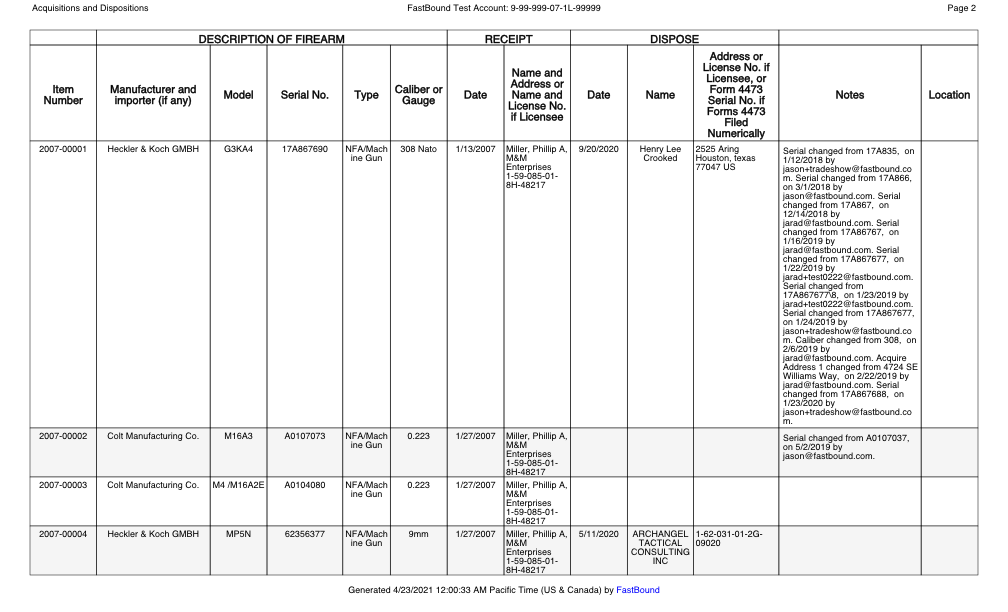
Clean, consistent inventory tracking starts with timely entries. Every acquisition and disposition of an NFA item should be recorded promptly by regulation, with accurate serial number data.


When corrections are needed, a clear audit trail matters. Sloppy edits without documentation create problems during inspections. Legal protection during an ATF audit depends heavily on how well your records hold up.


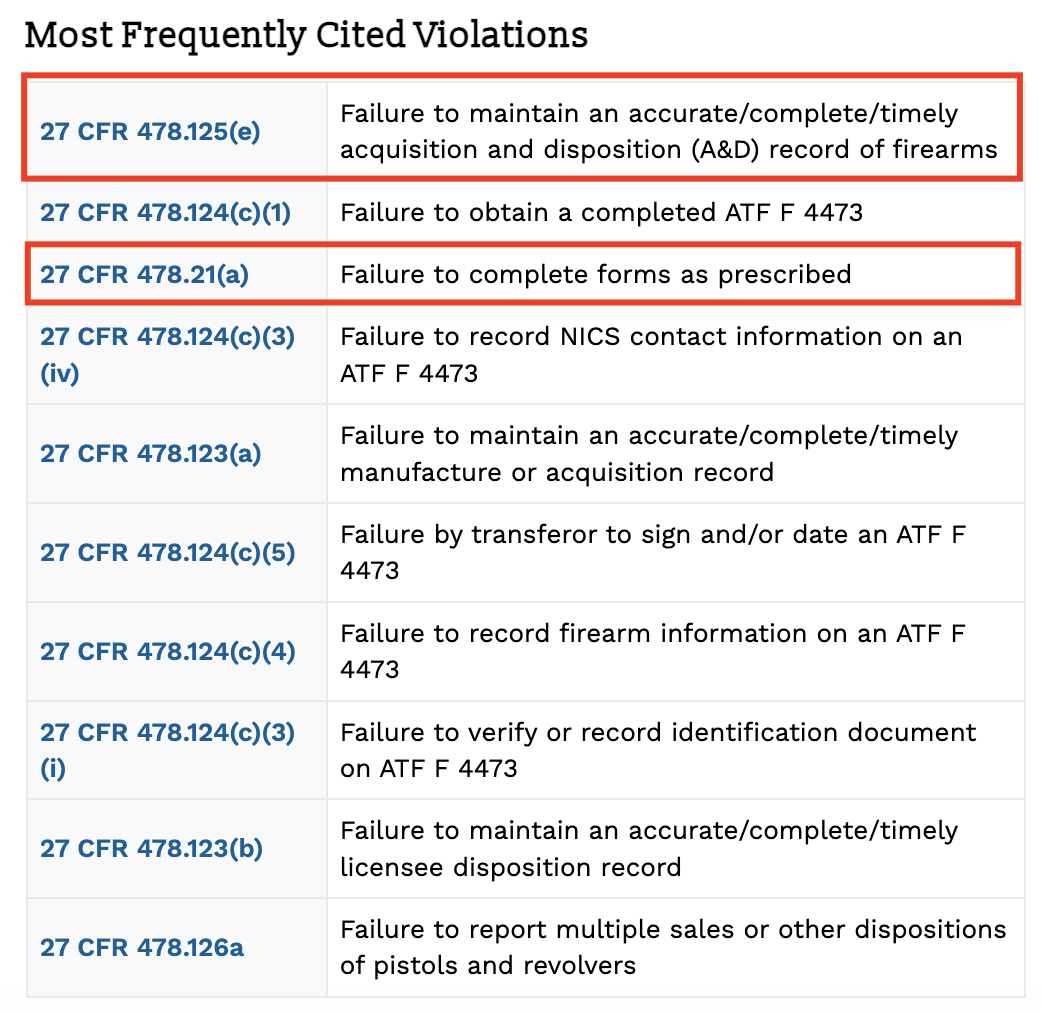
Common Mistakes That Create Inspection Risk


  • Inconsistent model naming across entries
  • Serial number formatting errors
  • “Floating” inventory with no matching disposition
  • Missing supporting documents for restricted transfers
  • Unclear or incomplete demo paperwork


Making FFL Compliance Easier with FastBound

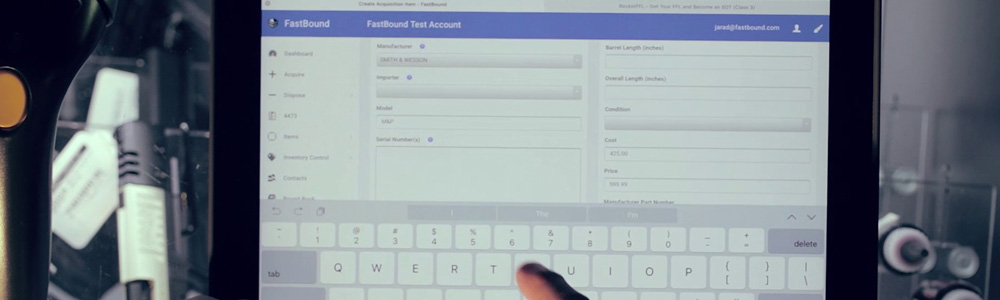
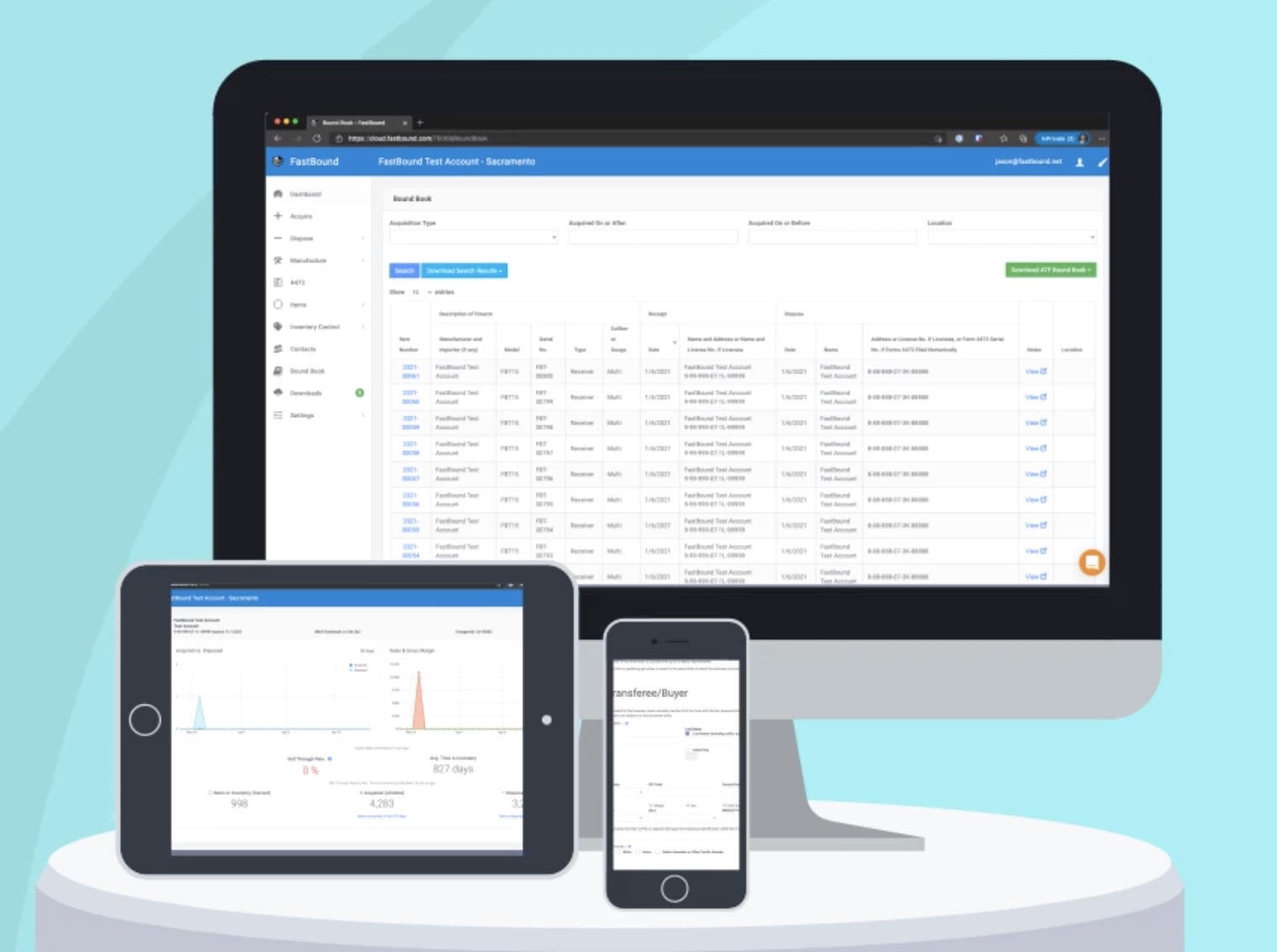
FastBound is a firearms A&D software built to assist with every aspect of recordkeeping and compliance. We make it easier than ever to maintain your bound book and adhere to ATF regulations.


FastBound provides:


With FastBound, you gain a reliable and innovative solution for all your firearm compliance needs. Start your Free Trial today and see how our software can help you simplify day-to-day compliance, manage records with ease, and meet regulatory requirements.

Ready to See How FastBound Can Streamline Your Compliance Efforts?

Join thousands of FFLs who trust FastBound to keep them protected and compliant.

Try for Free!

shae
March 9, 2026

Firearm Payment Processing: Why It Is Challenging and How Dealers Can Avoid Disruptions

At a Glance: Firearm payment processing often involves more oversight than standard retail transactions. Many banks and financial providers treat a firearm sale differently from other purchases. This affects approvals, pricing, and long-term account stability.


For a firearms business, payment issues can disrupt daily operations. Delays, account reviews, or sudden changes create uncertainty. Understanding how payment processing works helps firearms dealers reduce disruption and prepare for provider reviews.


Why Firearm Payment Processing Is Different

The payment process in most industries follows a familiar flow. A customer uses a credit card or debit card. The transaction routes through a payment gateway. The payment processor authorizes the payment and settles the funds.


For a firearms merchant, this same process often includes additional review.


Many providers classify parts of the firearms industry as high risk for payment processing because of regulatory complexity and the potential for chargebacks or fraud. This classification is based on how financial institutions and payment processors evaluate risk and does not mean firearm sales are illegal. Because of this high-risk label, the application process for a firearm merchant account may require more review or documentation than it does in other retail categories.


Common Payment Processing Problems Firearms Dealers Face

Firearm payment processing issues usually fall into a few predictable categories. These issues affect both new and established dealers.

Common problems firearm dealers face with firearm payment proccessing

Sudden Account Holds or Closures


A firearms dealer may experience held funds or delayed deposits. In some cases, an account may be closed after a policy update or internal review.


When an account is flagged, the provider may request additional information, such as:


  • Transaction history
  • Customer verification procedures
  • Refund and dispute handling practices


Slow responses can extend funding delays.


Higher Rates and Limited Options


Firearms business accounts often have different pricing than standard retail.


Costs may include:


  • An application fee
  • A higher processing fee per transaction
  • Additional monitoring or review charges


Not every payment processor supports firearm sales. This reduces choice and can make changing providers more difficult.


Chargebacks and Serialized Products


Chargebacks occur in every industry. Firearms add complexity.


Because firearms are serialized and transfers are documented, disputes can trigger additional documentation requests and, in some cases, follow up outside the normal chargeback process.


This does not mean every dispute escalates. It does mean the review process may involve more detail than a typical retail transaction.


Why Some Financial Institutions Avoid Firearms

Some financial institutions choose not to support certain firearms-related business accounts. These decisions usually come from internal policy rather than federal law.


Providers may consider:


  • Regulatory exposure
  • Monitoring requirements
  • Public brand positioning


This contributes to frequent changes in firearm payment processing policies.

Regulatory Context and Payment Review

Firearms-related purchases intersect with state and local permitting fees in some jurisdictions. These government payment systems operate separately from a firearms dealer merchant account.


Even so, this broader regulatory environment contributes to how the firearms business category is evaluated by financial providers.


More regulation often leads to more internal review.


Ecommerce Firearms Businesses Face Additional Review

Online sales add another layer of scrutiny. A provider may review:


  • The ecommerce platform setup
  • Product descriptions and categories
  • Billing descriptors
  • Refund and dispute handling procedures


The payment gateway configuration also matters. Mismatches between the ecommerce platform and the payment processor can increase friction during reviews.


Steps Firearms Dealers Can Take to Reduce Payment Risk

While dealers cannot control every policy shift, internal practices matter.


Maintain Clean Identity Records


Verify customer identity carefully. Record information accurately. If a driver license is collected, confirm it matches transaction records.


Clear documentation supports your position if the activity is reviewed later.


Document the Full Transaction Lifecycle


Organized records reduce confusion during disputes. Maintain documentation for:


  • Approval status
  • Transfer timing
  • Refund actions
  • Chargeback responses


Consistent records lower the avoidable risk.


Set Clear Customer Expectations


Many disputes begin with misunderstanding. Clarify policies related to:


  • Deposits
  • Pickup timelines
  • Returns
  • Special orders


Clear communication reduces unnecessary chargebacks.


FastBound Partners and Payment Processing Support

FastBound is not a credit card processor. It does not sell merchant services. It does not control bank underwriting decisions. FastBound helps firearms businesses maintain organized compliance records. Clean documentation reduces uncertainty if a payment processor reviews account activity.


FastBound also works with partners that support common dealer setups.


If you are evaluating payment processing options:


FastBound is built specifically for firearms recordkeeping and compliance workflows. The platform supports day-to-day operations tied to acquisition, disposition, and inspection readiness.


FastBound provides:


  • Electronic A&D Bound Book: Maintain acquisition and disposition records in a digital system designed for firearms dealers.
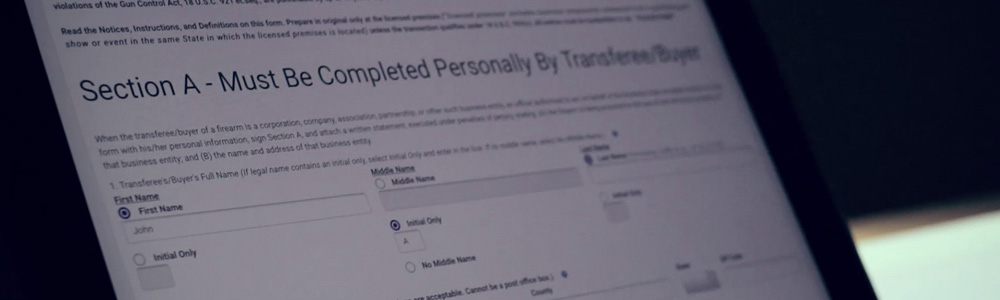
  • Electronic Form 4473 Management: Complete and store Form 4473 records with built-in validation to reduce common entry errors.
  • Audit History and User Tracking: View a detailed record of edits, entries, and user activity to support inspections and internal reviews.
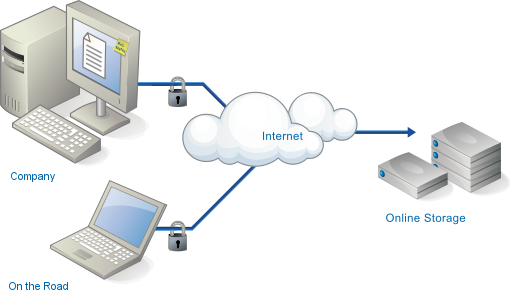
  • Automatic Backups and Cloud Storage: Records are stored securely with daily backups to reduce reliance on local hardware or paper files.
  • Unlimited Users and Bound Books: Add staff and manage multiple bound books without additional user fees.


FastBound helps firearms dealers keep records organized and accessible. Clear documentation supports inspections, internal reviews, and day-to-day business operations. Start your free trial today!

Ready to See How FastBound Can Streamline Your Compliance Efforts?

Join thousands of FFLs who trust FastBound to keep them protected and compliant.

Try for Free!


Frequently Asked Questions


Can firearms dealers accept credit card payments?

Yes. Many firearms dealers accept credit card payments and debit card transactions. Approval depends on the payment processor and how the firearms business is structured.

Some providers require a firearm merchant account. Others restrict certain product categories. Dealers should confirm support before onboarding.

Are online firearm payments handled differently than in-store payments?

Yes. Online firearm payments often receive additional review. Processors may examine the ecommerce platform, checkout flow, and refund handling. Clear documentation helps reduce friction during reviews.

Why are firearms businesses considered high risk by payment processors?

Some processors classify a firearms-related business as high risk due to regulatory complexity, dispute handling, and internal policy decisions.


This classification reflects how the processor evaluates exposure. It does not indicate illegal activity.

Do background checks affect payment processing?

Background checks are part of the firearm transfer process. They are separate from payment authorization. Delays in approval can affect timing. Dealers should document when payment occurs relative to transfer completion.

What happens if a firearm transaction is delayed or expires?

Some transactions depend on external approvals. Delays may affect pickup timing or require reauthorization. If a transaction has an expiration date, dealers should document the next steps clearly. This reduces confusion and dispute risk.

Do firearm permit renewals impact dealer payment processing?

Permit renewal systems vary by state. Renewal applicants may submit a renewal application through an online application or in person. These systems are separate from dealer payment processing. However, they contribute to how the firearms category is viewed by financial providers.

Is identity verification important for firearm payment processing?

Yes. Identity verification supports compliance and dispute resolution. Dealers often collect a driver license or driver’s license during transactions. Accurate records help if a payment is reviewed.

Does FastBound handle payments for firearm transactions?

No. FastBound does not act as a credit card processor or payment gateway. FastBound supports compliance workflows tied to firearm transfers. This includes recordkeeping that helps dealers respond if payment activity is reviewed.

shae
March 9, 2026

The Proper Disposal of Firearms: A Guide

At a Glance: As a firearm owner, you have four ATF-approved options for safe disposal of an unwanted firearm: surrender it to your local police department, destroy it according to ATF specifications, donate it to a museum or licensed firearm dealer, or sell it through a private sale or gun store. Each method ensures legal compliance and avoids potential criminal charges.

Methods of Firearm Disposal

The  Bureau of Alcohol, Tobacco, Firearms, and Explosives (ATF) provides four legal options for getting rid of any unwanted gun, whether it’s a handgun, long gun, or even a broken firearm.

Ways to dispose of a firearm

Give It to the Police Department


You can take a gun or rifle to your local police department, county sheriff’s office, or other local law enforcement facility along with any unwanted ammunition. Call ahead to ask about their procedure for bringing an unwanted firearm into the station. Showing up unannounced with a gun can cause unnecessary concern.


Destroying the Firearm


The ATF has specific guidelines for how to destroy a firearm, which involves cutting it into pieces so the receiver is destroyed in a particular way. Their documentation includes illustrations for both handguns and rifles.


If you are a Federal Firearms Licensee (FFL), FastBound has a built-in process for disposing of destroyed firearms, including the required and recommended documentation.


Key points about destruction:


  • The ATF prefers that guns be smelted so the receiver is not recoverable
  • The lower receiver is the part of the gun that must be registered with the ATF
  • Some barrels or other parts may also require registration
  • Be careful when smelting, as some metals or finishes may produce dangerous material or hazardous waste
  • An unserviceable firearm is still a firearm and must be registered; destroying and making it unserviceable are not the same


ATF-approved destruction methods include:


  • Smelting
  • Crushing
  • Cutting 
  • Shredding


If you lack access to the tools needed for these methods, you can take the firearm to your local law enforcement agency for gun disposal.


Donate the Firearm


Several options exist for donating firearms:


  • Municipal corporations: Check if your local government has a dedicated office for donated firearms
  • Museums: Some local or state-level museums may accept donated guns, especially an antique firearm or historical pieces
  • Licensed firearm dealers: A gun store or firearms dealer with the appropriate FFL can accept your donated gun


As the firearm owner, you may need to complete paperwork to transfer the gun out of your name and into the licensed dealer’s records.


Selling a Firearm


Under federal law, you only need an FFL to sell guns if it’s your business. A private sale does not require a background check or Federal Firearms License at the federal level.


Important considerations:


  • The ATF strongly advises against selling to prohibited persons 
  • State gun laws may be stricter than federal laws
  • Some states require background checks, and that sales go through a licensed firearm dealer or licensed firearm holder
  • Going through an FFL creates a record of the transaction, which can be beneficial for legal protection


Since the ATF outlines several ways to dispose of a firearm, people who want to get rid of a gun can do so without fear of criminal charges. Firearms are generally not permitted at waste disposal sites. Your options are handing the gun to local law enforcement, working with a federally licensed firearm dealer, or conducting a private party sale at events like firearm sales shows.

Disposition Requirements for FFLs

For firearms dealers, disposition means the transfer of the gun within bound books or from one party to another, following ATF firearm safety regulations.


The ATF requires FFLs to record:


  • Model of the gun or rifle
  • Serial number
  • Type of weapon (handgun, rifle, shotgun, etc.)
  • Caliber or gauge
  • Date of disposition
  • Business name, address, and FFL number of the receiving party
  • The date they take possession
  • Full name (not just business name) if applicable
  • Form filed (such as 4473), FFL number, and sale location


The Importance of Proper A&D Records

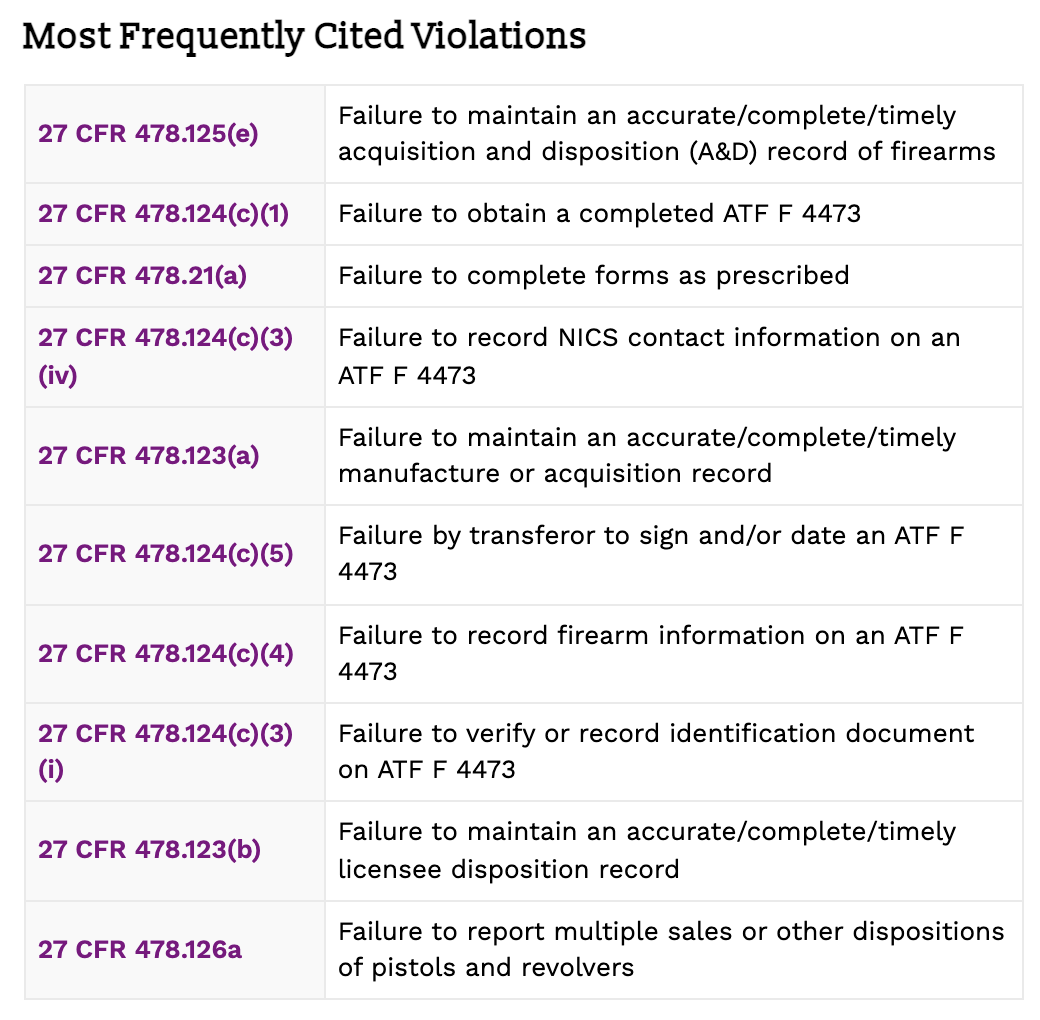
Maintaining accurate Acquisition and Disposition (A&D) records is both essential and a legal responsibility for any FFL. Records must be truthful and meet strict requirements from the federal and state governments.

As a federal firearms licensee, you must run background checks when selling or buying through your business. If purchasing a gun privately for resale in your FFL business, proper forms must be created.

For those accepting donated firearms, paperwork is required even without a purchase. This protects you from accepting a firearm used in a crime and helps identify the donor if legal questions arise later.


A&D Made Easy with FastBound

FastBound is a lawyer-backed software platform guaranteed to be compliant, helping firearms dealers maintain an effective compliance program for the acquisition and disposition of firearms.


FastBound keeps your gun business in compliance by staying current with ATF regulation changes and state law updates. The system automatically flags potential issues before they become violations, helping you avoid costly mistakes. Instead of dealing with handwritten paperwork, FastBound streamlines electronic forms to prevent delays in sales authorizations. The platform meets all ATF requirements for electronic storage of A&D records and 4473s. As a cloud-based solution, you can access FastBound from any desktop computer, laptop, or smart device without special equipment.


Start your free trial to learn how FastBound can help you remain in compliance. Protect your FFL with FastBound.

Ready to See How FastBound Can Streamline Your Compliance Efforts?

Join thousands of FFLs who trust FastBound to keep them protected and compliant.

Try for Free!


Frequently Asked Questions


How do I dispose of an antique firearm?

An antique firearm (generally manufactured before 1899) may have different regulations depending on your state. You can donate it to a museum that accepts historical pieces, sell it to a collector, or work with a licensed firearm dealer who specializes in antiques. Always verify state-specific requirements before disposal.

Can I sell or dispose of a broken firearm?

Yes, you can dispose of broken firearms through any ATF-approved method. A broken firearm is still legally considered a firearm, so the same rules apply. You can surrender it to your local police department, have it destroyed, donate it, or sell it. If selling, disclose the condition to the buyer. Some gun stores may accept broken firearms for parts or proper gun disposal.

Where can I surrender an unwanted firearm?

For safe disposal of an unwanted firearm, you can take it to your local law enforcement agency, including your local police department or county sheriff’s office. Call ahead to confirm their procedures. Many areas also have gun buyback programs that offer a simple way to surrender firearms with no questions asked.

Do I need legal advice to dispose of a firearm?

While you don’t necessarily need legal advice for straightforward disposals, consulting an attorney is recommended if you have questions about state-specific laws, inherited firearms, or firearms involved in estate matters. State laws vary significantly, and professional guidance can help you avoid unintentional violations.

How can FastBound help firearms dealers comply with ATF regulations?

FastBound provides a comprehensive compliance platform that automates A&D recordkeeping, ensures forms are correctly filled out, and keeps your business current with changing ATF regulations. The cloud-based system helps firearms dealers avoid costly errors and maintain proper documentation for all firearm transactions.

Can I just throw away a firearm at a waste disposal site?

No. Firearms are not permitted at waste disposal sites. For proper gun disposal, you must use one of the ATF-approved methods: surrender to local law enforcement, destruction, donation, or sale through proper channels.

shae
February 6, 2026

How to Legally Sell a Gun: A Complete Compliance Guide

Short Answer: To legally sell a gun, FFL dealers must conduct a background check on the prospective buyer, complete ATF Form 4473 accurately, and record the firearm transaction in an A&D record (bound book). Private sellers must follow state law requirements, which vary by location.

Table of Contents

Federal Laws Governing Firearm Sales in the United States

Federal law forms the foundation of all firearm transactions in the United States. The Gun Control Act requires that anyone engaged in the business of selling firearms must hold a Federal Firearms License (FFL). This applies to gun shops, pawn shops, and any dealer conducting regular firearm sales.


The National Instant Criminal Background Check System (NICS) is the primary tool for screening prospective purchasers. When a potential buyer wants to purchase a firearm, the licensed dealer submits their information to NICS or the state background check system. This verifies the buyer is not a prohibited person under federal law.


Regulations for Different Firearm Types


Different categories of firearms have specific legal requirements:


  • Handguns: Buyers must be at least 21 years old when purchasing from a licensed gun dealer
  • Long guns (rifles and shotguns): Buyers must be at least 18 years old for purchases from licensed dealers
  • NFA items (short-barreled rifles, machine guns, fully automatic firearms, silencers): require ATF approval, a background check, and fingerprinting


State and Local Firearm Sale Requirements

While federal law provides baseline standards, state law can add significant requirements. Some states mandate universal background checks for all gun sales, including private transactions. Others require waiting periods, permits, or registration.

Selling a firearm across state lines involves additional restrictions. Federal law prohibits direct sales of handguns to residents of another state. These transfers must go through a licensed firearm dealer in the buyer’s home state.


Firearm laws change frequently. Always check current regulations through the ATF website and your state’s law enforcement resources before completing any gun sale.


Steps to Legally Sell a Gun as an FFL Dealer

Checklist for legally selling a gun as an FFL

1. Obtain Your Federal Firearms License


Before you can legally sell firearms as a business, you must obtain an FFL through the Bureau of Alcohol, Tobacco, Firearms, and Explosives (ATF). The application process includes a background check, interview, and inspection of your business premises.


2. Prepare the Firearm for Sale


Verify the firearm is legal to sell in your state and the buyer’s state. Check that the serial number is visible and matches your A&D records. Confirm the firearm is not stolen by checking with law enforcement databases when required.


3. Verify the Buyer’s Eligibility


Conduct a required background check through NICS or your state’s system. The prospective buyer must provide valid identification and answer questions on Form 4473 to confirm they are not a prohibited person. Prohibited categories include felons, domestic violence offenders, unlawful drug users, and individuals adjudicated as mentally defective.


4. Complete ATF Form 4473


The buyer must complete ATF Form 4473, providing their name, date of birth, identification details, and answers to eligibility questions. You must verify this information matches their ID and record all firearm details, including make, model, and serial number.


5. Maintain Accurate A&D Records


Record every firearm transaction in your Acquisition and Disposition (A&D) record, also called a bound book. This includes the firearm’s details, the buyer’s information, and the transaction date. These records must be available for ATF inspection and kept for at least 20 years.


How Licensed Firearm Dealers Handle Gun Sales

Federal firearms licensees play a central role in preventing firearms from reaching unlicensed persons who should not have them. FFL dealers serve as the checkpoint between manufacturers, distributors, and the public.


Benefits of Working with a Licensed Dealer


  • Access to NICS for conducting background checks
  • Proper handling of ATF Form 4473 and required paperwork
  • Organized records available for law enforcement audits
  • Legal protection through proper documentation


Pawn Shop and Gun Shop Requirements


Pawn shops and gun shops that buy, sell, or trade firearms must hold a Type 1 or Type 2 FFL. If your pawn shop does not deal in firearms, no FFL is required. FFL dealers must notify law enforcement if they unknowingly accept a firearm from a prohibited person.


Private Sale Requirements for Gun Owners

A private sale occurs when an individual who is not a licensed dealer sells a firearm to another individual. Federal law does not require private sellers to conduct background checks in most cases. However, it is illegal for any person to sell a firearm to someone they know or reasonably believe is a prohibited person.


State Background Check Requirements for Private Sales


Many states now require universal background checks for all firearm transfers, including private transactions. In these states, the private seller must complete the sale through a licensed gun dealer who runs the background check. Check your state law before completing any private firearm sale.


Transferring Firearms to Family Members


Some states allow firearm transfers between immediate family members without a background check. This typically includes parents, children, spouses, and siblings. Even in these cases, transferring a firearm to a family member who is a prohibited person remains illegal under federal law.


Avoiding a Straw Purchase


A straw purchase occurs when someone buys a firearm on behalf of another person who cannot legally purchase it themselves. This is a federal crime with serious penalties. Always verify that the actual buyer is completing the transaction and Form 4473.


Streamline Background Checks with FastBound NICS Direct

Running NICS background checks has traditionally meant switching between systems, re-entering buyer data, and managing technical requirements like dedicated servers and digital certificates. These manual handoffs create opportunities for the types of 4473 errors that frequently come up during ATF inspections.


FastBound NICS Direct eliminates those friction points by connecting FFLs directly to NICS E-Check from within their existing compliance workflows. Key benefits include:


  • Unified Workflow: Buyer data flows directly from the Electronic 4473 into the NICS submission with no duplicate entry or platform switching
  • Zero IT Overhead: FastBound handles all certificate management and connectivity behind the scenes
  • Single Auditable System: Acquisition records, 4473s, and background checks all live in one place, reducing compliance risk
  • FFLGuard-Backed: Includes a funded legal defense for administrative actions arising from FastBound software use


FastBound NICS Direct is available now to FFLs nationwide.


Simplify Firearm Compliance with FastBound

Managing firearm transactions and staying compliant with ATF regulations requires accurate record-keeping. FastBound offers software designed for FFL dealers to handle A&D records, Form 4473, and compliance checks.


FastBound features include:


Ready to simplify your FFL compliance? Contact FastBound today to start your free trial and see how our software helps you manage every firearm sale legally and efficiently.

Ready to See How FastBound Can Streamline Your Compliance Efforts?

Join thousands of FFLs who trust FastBound to keep them protected and compliant.

Try for Free!


Frequently Asked Questions


Can I sell a gun to a family member without a background check?

It depends on your state. Some states exempt immediate family member transfers from background check requirements. However, you cannot transfer a firearm to any family member who is a prohibited person under federal law.

Do I need an FFL to sell guns at a gun show?

If you are engaged in the business of selling firearms, you need an FFL regardless of location. Occasional sales from a personal collection may not require a license, but regular sales for profit do.

Can I sell a firearm to someone from another state?

Handgun sales across state lines must go through an FFL dealer in the buyer’s state. Long gun sales may be completed in person if legal in both states, but many sellers use a licensed dealer for interstate firearm transfers.

What happens if I sell a gun to a prohibited person?

Knowingly selling a firearm to a prohibited person is a federal crime. Even unknowing sales can lead to legal consequences if you had reasonable cause to believe the buyer was prohibited. Background checks and documentation protect sellers.

jason
February 6, 2026

ATF Fingerprints: How NFA Fingerprinting Works From Start to Submission

At A Glance: ATF fingerprints are typically required for Form 1, Form 4, and Form 5 submissions filed by individuals or by trusts/legal entities (for each responsible person). You can upload an .EFT file in eForms or mail FD-258 fingerprint cards in duplicate as required. Good prints and matching personal information help reduce delays in the approval process.


What “ATF fingerprints” means for NFA paperwork

Who has to submit fingerprints (individual vs trust/legal entity)


Bureau of Alcohol, Tobacco, Firearms, and Explosives (ATF) fingerprinting shows up in the common public application process under the National Firearms Act. It applies to an individual filing an NFA application. It also applies to each responsible person tied to a legal entity, including a gun trust.


For a trust or legal entity, responsible persons must provide the required items. That includes the fingerprint requirement.


Which NFA forms trigger fingerprint collection


Fingerprint requirements most often appear in end-user workflows tied to:


Have the serial number and item details ready before you start.


Two ways to submit ATF fingerprints (EFT vs FD-258)

Option 1: Upload an electronic .EFT file in eForms


An EFT fingerprint file is a fingerprint file used for electronic fingerprint transmission. A service provider captures digital fingerprints with a fingerprint scanner. The system packages the data into an electronic file called an EFT file.


Typical flow:


  • You book an appointment with a fingerprinting service.
  • The provider uses a scanner to capture digital fingerprinting data.
  • You upload the electronic fingerprint file during the ATF eForm submission.


Option 2: Mail paper fingerprint cards (FD-258) after eForm submission


The paper route uses paper fingerprint cards. These are FD-258 cards. For this method, submit fingerprints in duplicate. That means two FD-258 fingerprint card copies for each responsible person.


Typical flow:


  • You submit the atf eform.
  • You receive a cover letter for any physical fingerprint cards still required.
  • You mail the two cards per person with the cover letter within 10 days.


For the official ATF instructions on submitting an EFT file or mailing two FD-258 fingerprint cards within 10 days of eForm submission, see the ATF eForm 1 Fingerprint Options guide (Form 1, 2021R-08F).

Eletronic Fingerprints vs Finger Print Cards NFA Forms

Step-by-step: How the eForms fingerprint process works (Form 1 / Form 4)

Step 1: Collect fingerprints the right way


This is the first step. Get a clean fingerprint capture.


Common places include:


  • A law enforcement agency or other law enforcement office.
  • A sheriff’s office.
  • A commercial fingerprinting services provider that offers Live Scan.


If you choose Live Scan and electronic fingerprinting:


  • The provider captures digital fingerprints with a fingerprint scanner.
  • You leave with an EFT file or access to the EFT fingerprint file.

If you choose physical fingerprint cards:


  • You leave with completed FD-258 fingerprint card sets.
  • Check the FD-258 card fields before you leave.

Bring what your provider asks for. A driver’s license is common. Some workflows also require a passport style photo. You may see it listed as a passport photo or passport picture.


Step 2: Submit your eForm and attach fingerprints


Start the ATF eForm and follow the screens for the atf application.


If you are uploading an EFT file:


  • Upload the electronic fingerprint file for each responsible person.
  • Verify you attached the correct file to the correct person.

If you are mailing FD-258 cards:


  • Submit the atf eform first.
  • Use the cover letter that eForms generates.

Confirm your NFA weapon details, including the serial number.


Step 3: After you submit your cover letter and the mailing window


If you are mailing physical fingerprint cards, the cover letter ties the print cards to your application.


Before you mail, confirm:


  • The cover letter is included.
  • Two FD-258 fingerprint card copies are included for each responsible person.
    The prints are readable.


Mail the packet within 10 days of the eForms cover letter. Missing the window can slow the application process.


An FFL dealer may help coordinate these steps. Some shops charge an additional fee for fingerprint service help. A transfer fee may apply at pickup.

What happens after submission (ATF + FBI in plain English)

What eForms checks when you upload an EFT


When you upload an EFT file, the ATF form links the electronic fingerprint data to the correct person on the application. File issues and person mix-ups are common problems, especially when there are multiple responsible persons.


How prints support the background check process


After submission, the application moves into review at the ATF. Fingerprints support a background check that can include criminal history checks. This supports a thorough background check during the nfa application process. Once checks clear, the NFA branch continues the approval process. 


Common issues that slow down ATF fingerprints

EFT upload issues (file problems and person mismatch)


Common issues include:


  • Uploading the wrong EFT file for the wrong responsible person.
  • Using the wrong file type instead of an EFT fingerprint file.
  • Uploading a corrupted file.


Keep each electronic file labeled by person. Store the fingerprint file securely with other file services for the application.


FD-258 issues (smudges, missing fields, mailing mistakes)


Common issues include:


  • Smudged prints.
  • Missing fields on the fingerprint card.
  • Mailing without the cover letter.
  • Mailing only one card instead of the required duplicate set.


If you are using a law enforcement agency, ask them to review the cards before you leave.


For FFLs: A repeatable fingerprint workflow for NFA customers

One appointment flow (capture + photo + signatures)


Many shops aim for a single appointment.


A simple flow:


  • Verify identity with a driver’s license.
  • Capture fingerprints with a fingerprint scanner or complete paper cards.
  • Take a passport picture if the workflow calls for it.
  • Confirm entries match what the customer will submit in the atf eform.


Data handling basics (what to store, what not to store)


Fingerprints and personal information require careful handling.


Good habits:


  • Limit access to fingerprint files.
  • Use clear naming for each file.
  • Store only what supports the application and required records.


FastBound + Cerberus LiveScan (Partner Spotlight)

What Cerberus LiveScan helps dealers do


Live Scan systems are designed for digital fingerprinting at the counter. Cerberus LiveScan supports electronic fingerprint capture that can produce an EFT file for ATF fingerprints.


In a shop workflow, it can support:


  • Capturing digital fingerprints with a fingerprint scanner.
  • Packaging the EFT file for upload to an atf eform.
  • Collecting identity items in the same session.


This helps with common customer needs like a suppressor transfer or an sbr application.


Learn more about FastBound’s Cerberus LiveScan partnership


FastBound is committed to helping FFLs run a faster, safer NFA workflow with tools built for real shop use. That is why we partner with Cerberus LiveScan, a fingerprint system from Peterson Farms made for FFL dealers. It captures clean digital fingerprints, creates an EFT file quickly, and supports one-appointment completion with driver’s license barcode scanning and photo capture. Start your free trial with FastBound Today!

Ready to See How FastBound Can Streamline Your Compliance Efforts?

Join thousands of FFLs who trust FastBound to keep them protected and compliant.

Try for Free!

shae
February 5, 2026

Understanding ATF Form 4: Current Wait Times, Requirements, and How to Avoid Delays

At a Glance: According to the ATF’s Current Processing Times (November 2025), ATF Form 4 eForms are processed in 10-11 days on average, while paper submissions take 57-85 days when completed accurately. These current wait times reflect major improvements in the ATF’s overall application process, particularly for electronic submissions.


For firearm dealers and owners transferring NFA items such as suppressors or short-barreled rifles, ATF Form 4 remains a required step in the approval process. While the Bureau of Alcohol, Tobacco, Firearms and Explosives (ATF) has drastically reduced the average wait time for eForm submissions, new legislation and policy changes that took effect in 2026 have altered the process. This guide explains what ATF Form 4 is, what’s required, and how the recent tax stamp rule changes have reshaped the process for gun owners and federal firearm licensees.


Current ATF Form 4 Wait Times

Form 4 Wait Times

The ATF’s published averages demonstrate the significant increase in processing speed across the United States. As of November 2025, the average approval time for an eForm 4 individual form submission is about 10 days, while a trust application averages 11 days. Paper applications take longer—approximately 85 days for an individual and 57 days for a trust—though these remain far shorter than the multi-month delays seen before 2023.


These numbers only reflect applications that are filled out correctly and completely. The ATF’s National Firearms Act (NFA) Division reviews all forms for accuracy, verifies background checks, and issues the tax stamp once approved.


While most FFLs now file electronically, some still prefer paper submissions. Paper forms are processed manually, meaning clerical review and data entry can extend turnaround slightly. Still, even these times are measured in weeks rather than months. Dealers should remind customers that seasonal surges, staffing adjustments, or new policy rollouts can temporarily slow down approvals.


What Is ATF Form 4 and What’s Required

Definition and Purpose


ATF Form 4, officially titled Application for Tax Paid Transfer and Registration of Firearm, is required under the National Firearms Act for any transfer of an NFA firearm. These items include suppressors, short-barreled rifles (SBRs), short-barreled shotguns (SBSs), machine guns, destructive devices, and “Any Other Weapon” (AOW). The form must be filed and approved before the transferee can take possession of the firearm.


When Form 4 Applies


Form 4 is used any time ownership of an NFA firearm is transferred to another person or entity who will possess the item. This includes:


  • Dealer (FFL/SOT) → Individual
    Example: When you buy a suppressor, short-barreled rifle (SBR), or machine gun from a licensed dealer.
  • Dealer → Trust or Corporation
    Example: When the transferee is an NFA trust, LLC, or other legal entity.
  • Individual → Individual (via an FFL/SOT)
    Example: Private transfers of NFA items also require Form 4.
  • Estate Transfers
    Example: When an NFA item is inherited and transferred to a lawful heir outside of a tax-exempt circumstance (if not using Form 5).


Required Documentation and Information


The application must include complete information about both the firearm and the applicant. Missing data is one of the most common causes of delay. Applicants must submit:


  • Manufacturer, model, caliber, and serial number of the firearm
  • Transferor (seller/dealer) and transferee (buyer) information
  • Passport-style photograph of the buyer
  • Two FD-258 fingerprint cards per responsible person for paper filings, or an EFT (Electronic Fingerprint Transmission) file upload for eForms

  • ATF Form 5320.23 for all responsible persons in a trust or corporation
  • CLEO notification:

    • Individuals provide a copy of the Form 4 to their Chief Law Enforcement Officer (CLEO), shown in item 12.
    • Each responsible person on a trust or entity must also send CLEO notification with their own 5320.23 form.

NFA Tax Stamp Update


As of January 1, 2026, the NFA tax stamp requirement has changed significantly. Under H.R. 1 (the One Big Beautiful Bill Act), the $200 transfer tax is now $0 for suppressors, short-barreled rifles, short-barreled shotguns, and Any Other Weapons (AOWs). However, machine guns and destructive devices still require the $200 tax. Despite the elimination of the tax for most NFA items, the registration form and background check requirements remain in place.


Submission Options

The transferor FFL/SOT submits Form 4 (paper or eForm) on behalf of the transferee, whether that’s an individual, trust, or legal entity. Applicants provide required photos, fingerprints, and supporting documentation.


Dealers can submit Form 4 in two ways:


  • ATF eForms: The fastest and most accurate method. The eForms system automatically checks required fields and reduces data-entry mistakes.
  • Paper Forms: Still accepted but processed manually by ATF staff, which can extend turnaround time slightly.

In every case, accuracy is essential. Even minor mismatches, such as a missing digit in the serial number, can delay approval for weeks.

ATF Form Quick Guide

NFA Tax Stamp Rule and Policy Changes

ATF Modernization and 2026 Tax Update

As of January 1, 2026, under Public Law 119-21 (the One Big Beautiful Bill Act), the NFA transfer and making tax has been reduced to $0 for most items (excluding machine guns and destructive devices). Form 4 filing and background-check requirements remain in place.


Impact of the One Big Beautiful Bill Act


Since January 2026, the NFA transfer tax is $0 for silencers, short-barreled rifles, short-barreled shotguns, and Any Other Weapons (AOWs). Machine guns and destructive devices still require a paid $200 tax.


FFls should prepare for:


  • Increased consumer demand: The elimination of the $200 tax has driven a significant uptick in suppressor applications and SBR transfers as gun owners take advantage of the reduced cost.
  • Higher submission volumes: The surge in applications may temporarily extend current wait times, even for eForms, as the ATF processes the influx.
  • Operational adjustments: FFLs face the need for updated workflows, staff training, and compliant software solutions to handle the increased demand efficiently.


Industry reaction so far has shown huge interest, with reports of tens of thousands of eForm submissions on January 1 alone. The tax change and updated procedures temporarily complicated ATF’s systems, highlighting the importance of accurate submissions. 


Avoiding ATF Form 4 Delays and Common Mistakes

Common Causes of Delays


Despite faster average processing times, delays still occur when applications contain errors or omissions. Frequent causes include:


  • Missing or unreadable fingerprint cards
  • Incorrect serial number or manufacturer data
  • Incomplete Form 5320.23 for responsible persons
  • Incorrect or unverified tax payment
  • Multiple responsible persons in trusts cause additional review
  • Temporary slowdowns due to high submission volume or system maintenance


Best Practices for Faster Approvals


FFLs and applicants can minimize wait times by following proven strategies:


  • Use ATF eForms: Electronic filing is faster and more accurate than paper.
  • Verify all information: Double-check spelling, serial numbers, and applicant details.
  • Submit digital fingerprints and photos: Electronic uploads reduce mailing delays and rejections.
  • Keep trust paperwork current: Each responsible person must complete Form 5320.23 with valid prints.
  • Provide proper CLEO notification: Keep a dated copy as proof of compliance.
  • Retain documentation: Save digital copies of every submission and payment confirmation.


Accuracy is the fastest way to a faster approval. Every field on the form should match the firearm and applicant records exactly.


FastBound Solutions for FFL Compliance

FastBound’s comprehensive compliance software simplifies firearms compliance by automatically tracking transactions, maintaining required records, and helping ensure your store stays compliant with all federal laws. Our solutions are backed by decades of industry expertise and are equipped to handle NFA-restricted firearms and other complicated processes to help FFLs maintain thriving businesses. Start your Free Trial today to learn how our compliance software can protect your business while saving you valuable time and resources.

Ready to See How FastBound Can Streamline Your Compliance Efforts?

Join thousands of FFLs who trust FastBound to keep them protected and compliant.

Try for Free!

jamison
February 5, 2026

ATF NFA Form 1 Changes 2026: What You Need to Know

At a Glance: As of January 1, 2026, the Bureau of Alcohol, Tobacco, Firearms, and Explosives (ATF) revised NFA Form 1 to reflect the $0 tax stamp for most NFA items and modernize the form. Key updates include updated tax fields, removing the CLEO notification, clearer formatting, expanded digital signature options, linked copies, and updated references to eForms/Pay.gov.


What Changed on NFA Form 1 on January 1, 2026

Starting January 1, 2026, revisions to ATF Form 5320.1 (Form 1), the application to make and register NFA firearms, took effect. These changes are tied to the federal reduction of the NFA tax stamp to $0 for suppressors, short-barreled rifles (SBRs), short-barreled shotguns (SBSs), and certain other NFA items under the One Big Beautiful Bill law.

Changes to NFA Form 1 in 2026


1. Tax Line Updates


  • Key Change: The $200 tax for making or transferring most NFA items (suppressors, SBRs, SBSs, etc.) was reduced to $0, effective January 1, 2026.
  • Form Update: Form 1 now reflects this change in the tax fields, indicating when the $200 tax is still required (for machine guns and destructive devices).
  • Impact: This update eliminates a longstanding cost and potential delay in NFA applications.


2. Removal of CLEO Notification


  • What’s Changed: The Chief Law Enforcement Officer (CLEO) notification requirement has been removed.
  • Effect: Applicants no longer need to include a CLEO copy with their Form 1 submission.


3. Photo and Identification Changes


  • New Photo Options: The embedded photo box has been removed.
  • New Submission Options: Applicants can now attach either a passport-style photo or a copy of a valid photo ID.


4. Combined and Simplified Fields


  • Combined Fields: Race/ethnicity fields have been combined for clarity.
  • Other Updates: Typographical and formatting corrections were made, and the form title was revised for clarity.


5. Expanded Digital Signature and Form Functionality


  • More Digital Options: The form now supports additional digital signature types.
  • Linked PDF Copies: Copies 1 and 2 of the fillable PDF are linked, so Copy 2 auto-populates most fields, reducing manual errors.


6. References to eForms and Pay.gov


  • Electronic Filing: The form now includes clear references to ATF eForms for electronic submissions.
  • Payment Instructions: Updated guidance on using Pay.gov for any necessary payments.


7. Additional Filing Guidance


  • New Guidance: The form now includes guidance for married couples filing jointly as an “other legal entity.”
  • Contact Information: Updated contact email references for questions (nfa@atf.gov, ipb@atf.gov, nfafax@atf.gov).


How the Changes Affect FFLs

Although the NFA process has undergone some changes, key aspects for FFLs remain the same. Here’s what still applies:


  • Form 1 and Form 4: FFLs will continue to use Form 1 for manufacturing and Form 4 for transferring NFA items.
  • Background Checks: Applicants will still be required to undergo background checks.
  • Fingerprint Cards: Submitting fingerprint cards remains part of the process.
  • Passport Photos: Applicants will still need to provide a passport-style photo or a copy of a valid photo ID.


While the tax stamp fee has been eliminated for most NFA items, all other ATF regulations regarding the transfer and manufacture of NFA items remain unchanged.


Why These Changes Matter


These revisions reflect two simultaneous movements:

  1. Statutory change: The tax stamp is going to zero for many NFA items, which means the ATF had to update the tax fields and instructions.
  2. Modernization of firearms paperwork: This includes clearer forms, better digital support, and removal of outdated procedural elements like the CLEO copy.


This doesn’t deregulate suppressors or SBRs. All NFA items still require approval, background checks, fingerprints/photos, and filing with ATF; the tax just no longer applies for most items.


Industry reaction so far has shown huge interest, with reports of tens of thousands of eForms submissions on January 1 alone due to the tax change and updated procedures complicating ATF’s systems temporarily.


What FFLs Should Do Now


1. Update Your Internal Processes


  • Ensure your staff understands the $0 tax stamp change and how Form 1 reflects it.
  • Update your standard operating procedures for filing Form 1 and related eForms submissions.


2. Train on Updated Form Features


  • Walk through the updated form with your team so everyone is familiar with the new fields, especially digital signatures and linked PDF copies.


3. Use Tech to Stay Organized


  • Digital recordkeeping and form workflows can reduce errors and speed up compliance. Platforms that handle ATF forms and recordkeeping help ensure you don’t rely on manual processes prone to mistakes.


Streamline Firearm Compliance with FastBound: The Industry Leader

FastBound stands at the forefront of firearm compliance, offering comprehensive software solutions designed specifically for Federal Firearms License holders and individuals navigating the complexities of ATF regulations. With years of expertise in firearm transactions and compliance, we’ve crafted tools that simplify the process and eliminate the need for cumbersome manual paperwork.


Our platform boasts key features to ensure seamless compliance with the ATF:


  • Automated ATF Form 4473: Simplifies the preparation and submission of forms with built-in error checks to prevent common mistakes.
  • Background Check Integration: Seamlessly integrates with NICS and online state systems, streamlining the approval process.
  • Bound Book Maintenance: Ensures accurate, ATF-compliant records that meet federal requirements, reducing the risk of violations during inspections.


At FastBound, we’re more than just a software provider; we’re your trusted compliance partner, dedicated to helping you stay fully compliant with ease. Start your free trial today and discover how we can streamline your ATF compliance processes.

shae
February 5, 2026

NICS Direct for FFLs: Now Fully Available Nationwide

At a Glance: FastBound NICS Direct is now fully available following sustained real-world use by FFLs nationwide, providing seamless NICS access directly within Electronic A&D and 4473 workflows.


FastBound NICS Direct Now Fully Available Following Widespread Use by FFLs Nationwide


FastBound NICS Direct is now fully available after an extended deployment period during which the integrated solution has already been supporting daily background check transactions for Federal Firearms Licensees (FFLs) across the country.


Built directly into FastBound’s Electronic Acquisition & Disposition (A&D) and Electronic ATF Form 4473 workflows, FastBound NICS Direct removes long-standing technical barriers that have historically limited adoption, delivering fast, reliable, at-scale access to NICS E-Check without requiring additional infrastructure or system changes by dealers.


Validated Through Real-World Use at Scale


Unlike short-term pilots or limited rollouts, FastBound NICS Direct has been operating in sustained, real-world environments across a wide range of FFL business models. During its extended deployment, the solution has been adopted by a large and diverse group of retailers—ranging from single-location dealers to multi-state retail chains—processing daily NICS transactions as part of normal operations.


The system’s workflows, reliability, and user experience have been refined through continuous feedback from FFLs actively using NICS Direct in day-to-day firearm transfers.


“Our customers have been using NICS Direct as part of their normal operations for quite some time,” said Jamison Collins, Vice President at FastBound. “It’s proven reliable, it works at scale, and dealers consistently tell us how much they value having the entire transaction handled in one system.”


Modernizing the Background Check Process


The National Instant Criminal Background Check System (NICS), operated by the FBI, determines whether a prospective buyer is prohibited from purchasing a firearm under federal law by querying multiple databases, including the NICS Index, the National Crime Information Center (NCIC), and the Interstate Identification Index (III).


FastBound’s NICS Direct integration connects FFLs directly to NICS E-Check from within their existing transaction workflow. Buyer information flows securely from the Electronic 4473 into the background check submission, eliminating duplicate data entry, reducing errors, and improving processing speed—particularly in higher-volume retail environments.


Eliminating Long-Standing Technical Barriers


Historically, NICS Direct adoption has been limited by technical requirements such as dedicated servers, static IP addresses, and manual digital certificate provisioning and renewal. FastBound NICS Direct removes these constraints entirely.


All technical requirements—including certificate management and connectivity—are handled automatically within the FastBound platform, significantly reducing operational overhead and making NICS Direct accessible to FFLs of all sizes without specialized IT resources.


Built for Compliance Continuity and Risk Reduction


FastBound NICS Direct is developed by teams experienced in delivering software for highly regulated environments, with development practices centered on auditability, data integrity, and operational resilience. The integration keeps the entire transaction—from acquisition through 4473 completion and NICS submission—within a single, auditable system.


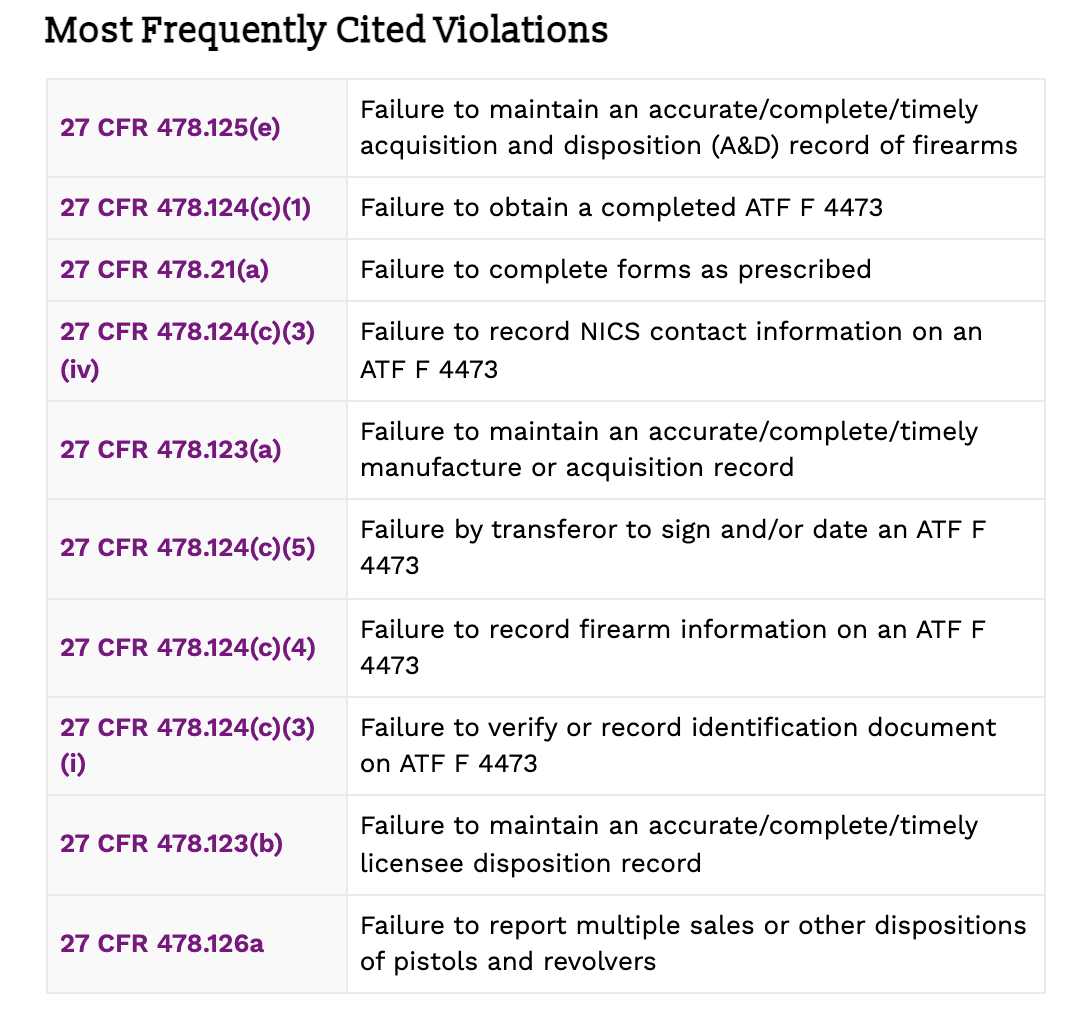
That continuity is especially significant given that errors on ATF Form 4473 during the background check process remain among the most common sources of violations identified during ATF inspections.


“What makes FastBound’s NICS Direct integration different is that it eliminates manual handoffs between systems,” said Chris Chiafullo, National Coordinating Counsel at FFLGuard. “When acquisition records, 4473s, and NICS submissions all live within one auditable workflow, the opportunities for compliance errors are dramatically reduced. Combined with FFLGuard’s Protection Plan Plus legal defense program—exclusive to FastBound users—dealers gain both automated compliance controls and experienced legal support if questions arise.”


FastBound NICS Direct is backed by FastBound’s exclusive partnership with FFLGuard, which includes a funded legal defense for administrative actions arising directly from the use of FastBound software.


Available Now Nationwide


FastBound NICS Direct is available now to FFLs nationwide as part of the FastBound firearms compliance platform.


To learn more, visit FastBound.com.


About FastBound


Founded in 2010, FastBound has supported more Federal Firearms Licensees than any other firearms compliance software, with continuous service to the regulated firearms industry. Through an open API and the industry’s largest ecosystem of vetted partners, FastBound enables firearms businesses to scale operations while maintaining compliance. FastBound is the only firearms compliance software exclusively partnered with FFLGuard to include a funded legal defense for administrative actions arising directly from the use of its software—delivered through a defined legal defense program, not introductions or referrals. Learn more at FastBound.com.


About FFLGuard


FFLGuard is the nation’s leading provider of legal protection and compliance support for Federal Firearms Licensees. Through its network of legally trained compliance consultants and experienced firearms attorneys, FFLGuard helps dealers navigate ATF regulations, prepare for inspections, and respond to administrative actions. Learn more at FFLGuard.com.

shae
January 27, 2026

FastBound Launches TraceDesk™ to Simplify ATF Firearm Trace Compliance for FFLs

At a Glance: FastBound launches TraceDesk™, a firearms compliance tool designed to help Federal Firearms Licensees (FFLs) securely manage ATF firearm trace requests through FFL Direct—while maintaining a clear audit trail and limiting data collection to what is legally required.

What Is TraceDesk™?

TraceDesk addresses the growing compliance and operational demands placed on FFLs by modernizing how firearm trace requests are received, documented, and completed—without expanding data collection beyond what federal law requires.

Modernizing ATF Firearm Trace Workflows

TraceDesk replaces fragmented, manual workflows that rely on phone calls, fax, and email with a centralized trace management platform.

Key capabilities include:

  • Automated receipt and response for trace requests submitted through FFL Direct

  • Centralized tracking of manual trace correspondence

  • Clear documentation of every action taken during the trace process

This approach helps ensure trace requests are handled consistently, on time, and with a defensible record for regulatory review.

Designed for Compliance – Not Data Analysis

Unlike analytics or intelligence platforms, TraceDesk is intentionally designed as a compliance-only system.

TraceDesk:

  • Does not aggregate or analyze trace data

  • Does not profile customers or score risk

  • Does not generate sales recommendations or intelligence outputs

Instead, TraceDesk stores only the minimum information required to meet ATF tracing obligations and treats each trace request strictly as legally required correspondence.

Flexible Deployment for Any FFL Operation

TraceDesk integrates seamlessly with FastBound’s firearms compliance platform, automatically updating records when used together. FastBound is not required.

TraceDesk can be deployed as a standalone solution, making it ideal for:

  • Retailers

  • Dealers

  • Gunsmiths

  • Manufacturers

  • Distributors

  • Multi-location or multi-license operations

Whether an organization operates one FFL or hundreds, TraceDesk maintains clear separation of records and credentials for each license.

Built to Reduce Risk – Not Introduce It

TraceDesk maintains a complete audit trail of trace requests and responses to support regulatory reviews and legal documentation. Trace data remains fully isolated within TraceDesk, with no external integrations, no data sharing, and no secondary use beyond compliance.

Availability

TraceDesk is available now to FFLs nationwide.

For additional information:
📞 (833) 263-4473
📧 sales@fastbound.com

About FastBound

Founded in 2010, FastBound has supported more Federal Firearms Licensees (FFLs) than any other firearms compliance software and has operated continuously in the regulated firearms industry.

FastBound delivers firearms compliance software built for real-world operational and regulatory demands. Through an open API and the industry’s largest ecosystem of vetted partners, FastBound enables firearms businesses to scale while maintaining compliance.

FastBound is the only firearms compliance software exclusively partnered with FFLGuard, including a funded legal defense for administrative actions arising directly from the use of its software—delivered through a defined legal defense program, not introductions or referrals.

Often imitated. Never duplicated.


shae
January 27, 2026

How to Check and Verify Serial Numbers on Guns

To check serial numbers on guns, start by locating the serial number, typically found on the firearm’s frame or barrel. Once you have the number, you can verify it through various databases or with local law enforcement to ensure the firearm’s legality. Using resources like these helps you stay compliant with ATF regulations.

Table of Contents

The Importance of Checking Serial Numbers on Guns

A gun serial number is a unique identifier assigned to each firearm by the manufacturer, and it serves as a crucial tool for tracking its history and ownership. Serial numbers are used in various records, including purchase documents, registration, and legal transfers, making them essential for maintaining accurate records.

Serial numbers play an important role in gun safety, crime prevention, and compliance with federal law. By tracking these numbers, authorities can trace firearms back to their original owners, identify stolen guns, and link firearms to criminal activity.

For Gun Owners, Sellers, and Law Enforcement

For gun owners, maintaining an accurate record of a firearm’s identification number can help them recover it if it’s ever lost or stolen.

Gun shops play a critical role in ensuring that each firearm sold has a valid serial number and has passed a background check to prevent illegal transactions.

For law enforcement agencies, accurate serial number records are valuable in criminal investigations and in ensuring that all firearms for sale comply with federal regulations.

The Process of Checking a Gun’s Serial Number

The serial number is typically engraved on the frame, barrel, or receiver, but the exact location can vary depending on the make and model. For handguns, it’s often found on the frame near the trigger guard or under the grip. On rifles and shotguns, it’s usually on the receiver or barrel.

It’s important to check the model number, date code, and any letter prefix or suffix, as these details can provide additional information about the firearm’s origin.

how to check serial numbers on guns

Step-by-Step Guide

  1. Locate the Serial Number: Identify and record the serial number from the firearm. Be aware that weapons from different models may have varying locations for their serial numbers.
  2. Check Public Records: Visit your local police department to access public records that may include the history of the firearm.
  3. Use Online Databases: Utilize online resources like the National Tracing Center to search for the serial number. These databases can reveal whether the firearm has been reported stolen, involved in a violent crime, or legally transferred.
  4. Contact Law Enforcement: If you suspect the firearm has a questionable history, contact local law enforcement to run the serial number through their records.
  5. Document Your Findings: Keep a record of your search results to ensure that you have proof of your due diligence in verifying the firearm’s history.

The National Tracing Center is one of the most reliable sources for firearm tracing. Other resources include state-specific databases that allow users to check for stolen firearms or those involved in a crime.

An image of someone purchasing a firearm.

Why Checking Serial Numbers is Crucial

Preventing the Sale of Stolen Guns

The legal implications of selling or buying a stolen firearm can lead to criminal charges and significant penalties. Federal law prohibits the possession, sale, or transfer of stolen firearms, and being caught with one can result in legal consequences.

Assisting in Criminal Investigations

When a firearm is used in a crime, its serial number can be traced back to its original owner. This process can reveal whether the gun was stolen, illegally transferred, or involved in other criminal activities.

Verifying the Gun’s Legitimacy

Ensuring that a firearm is not a ghost gun or firearm precursor part is essential for legal and safety reasons. Ghost guns present a significant challenge to law enforcement and public safety, and some criminals may attempt to destroy serial numbers to hide a firearm’s origin.

The ATF’s Obliterated Serial Number Program is an important tool here, allowing law enforcement to identify firearms trafficking and find recovered firearms that have been altered.

The Challenges of Ghost Guns

Ghost guns are typically self-assembled from parts or ghost gun kits and they don’t have a serial number. Unlike regular guns, which are manufactured by licensed companies and have a unique serial number for identification, ghost guns are untraceable because they aren’t subject to the same regulations. The lack of traceability complicates efforts to prevent illegal firearm distribution and investigate crimes involving these weapons.

Legal and Safety Implications of Serial Number Checks

Under the Gun Control Act of 1968, all firearms manufactured or imported into the United States must have a serial number engraved on the firearm’s frame or receiver so they can be individually identified and traced. Federal law mandates that these numbers are maintained in a legible condition throughout the firearm’s life.

Gun dealers and private citizens hold significant responsibilities in ensuring that all firearms sold have valid serial numbers and are legally compliant.

  • Gun dealers must maintain accurate records of all firearm transactions and verify that each gun has a legitimate serial number before completing a sale.
  • For private sales, individuals must ensure that any firearm they buy or sell is fully compliant with federal and state regulations.

Checking a firearm’s serial number is not just a legal requirement but a crucial step in protecting oneself from potential legal troubles. If a firearm is reported stolen, law enforcement uses serial numbers to match recovered firearms with police reports of stolen guns, facilitating their return to the rightful owner.

graphic for electronic form 4473

How FastBound Can Help Ensure Compliance and Safety

Automated Bound Books

As the leading firearm compliance software in the industry, FastBound assists FFL dealers in maintaining precise and compliant records of firearm acquisitions and dispositions. Our platform allows you to keep detailed logs of every transaction, ensuring that each firearm’s serial number, model, and other important information are accurately recorded.

Digital Signature Support

We also offer digital signature support for Form 4473 to simplify the compliance process. By allowing electronic signatures, our software makes it easier and faster to complete the required paperwork. This digital capability eliminates the need for paper forms, reducing the risk of errors and making it easier to manage your compliance efficiently.

At FastBound, we understand the complexities involved in staying compliant with ATF regulations. With features like automated record-keeping, comprehensive audit trails, and compliance backed by legal defense, we ensure that you can focus on your business while we handle compliance.

Ready to See How FastBound Can Streamline Your Compliance Efforts?

Join thousands of FFLs who trust FastBound to keep them protected and compliant.

Try for Free!

shae
January 9, 2026

How to Get a Class 3 SOT: What You Need to Know

What is a Class 3 SOT?

The Class III Special Occupational Taxpayer (SOT) is essential for anyone holding a Federal Firearms License (FFL) interested in handling firearms regulated under the National Firearms Act (NFA). These items, often called Title II firearms or NFA items, include machine guns, short-barreled rifles, short-barreled shotguns, suppressors, and destructive devices. Obtaining a Class 3 SOT enables a federally licensed firearm dealer to sell or transfer NFA weapons in compliance with federal law across the United States. This license is a critical requirement for operating legally and responsibly in the NFA marketplace.

Types of NFA Items

Each of these NFA weapons comes with its own set of regulatory requirements to ensure public safety and responsible handling.

Machine Guns and Full-Auto Firearms

A machine gun (a fully automatic firearm) fires multiple rounds with a single trigger pull, making it one of the most highly regulated categories under the National Firearms Act.

Destructive Devices

Destructive devices include explosive devices like grenades and certain large-bore firearms with a diameter greater than half an inch (excluding certain shotguns). Due to their destructive potential, they require a thorough background check and compliance with stringent regulations for transfer and possession.

Short-Barreled Rifles

Short-barreled rifles (SBRs) feature a barrel length under 16 inches or an overall length under 26 inches. 

Short-Barreled Shotgun

Like SBRs, short-barreled shotguns (SBS) have barrels shorter than 18 inches. Their size makes them more concealable, subjecting them to specific federal government restrictions.

Suppressors (Silencers)

Suppressors, or silencers, reduce the noise of gunfire and are categorized as an NFA item due to their ability to mask firing noise.

Any Other Weapon (AOW)

This category includes unusual or concealable firearms that don’t fall neatly into standard classifications, like disguised pistols. Ownership of an AOW still requires compliance with federal law.

How to Apply  for a Class 3 SOT

Step 1


Before applying for the Class 3 SOT, applicants must have a specific FFL license.


  • Type 01: For dealing in firearms (not manufacturing).
  • Type 02: For pawnbrokers dealing in firearms.
  • Type 09: For firearm dealers importing firearms.


Applicants must complete the appropriate Bureau of Alcohol, Tobacco, Firearms, and Explosives (ATF) Form, submit an application, and pass a background check.


Step 2


The next step is submitting your SOT application (ATF Form 5630.7) and paying the associated application fee or transfer tax. The annual tax for SOT registration can vary, but the fee for Class 3 Gun Licenses is $500.


ATF Form 5630.7 Explained

Ongoing Compliance Responsibilities for Class 3 SOTs

Annual SOT Renewal Cycle


Once approved, a Class 3 SOT taxpayer operates under an annual special occupational tax registration tied to the business or FFL, not an individual license. The SOT tax year runs from July 1 through June 30, regardless of when the initial registration was filed. To remain active, the business must submit the renewal application using ATF Form 5630.7 and pay the required tax on or before July 1 each year. If payment is not made on a timely basis, interest will be charged, and penalties may be incurred. For that reason, the FFL or business entity should track renewal deadlines carefully and plan submissions ahead of July 1.


Recordkeeping Expectations for NFA Dealers


Dealers operating as a Class 3 SOT (FFL/SOT) are subject to heightened recordkeeping responsibilities under federal regulation and the Gun Control Act. Accurate records support firearm safety, protect the business owner, and reduce compliance risk during ATF reviews. This is especially important when dealing with NFA firearms such as suppressors, short-barreled firearms, and full-auto weapons.


Best practices for NFA recordkeeping include:


  • Complete and accurate acquisition and disposition entries for each NFA firearm
  • Consistent serial number, model, and classification details
  • Internal methods to clearly identify NFA inventory versus non-NFA firearms
  • Ongoing tracking of transfer status and supporting documentation
  • Records that reflect compliance with federal requirements and applicable local law


While not every internal control is expressly mandated, consistent practices help reduce errors that can compound over time.

Class 3 SOT Registration Checklist

Transfer Documentation and Timing


NFA transfers require closer oversight than standard firearms transactions. Dealer to dealer transfers often move more quickly, while dealer to consumer transfers can take longer depending on filing method and review timelines. Clear communication is important, particularly for a firearm enthusiast unfamiliar with the NFA process. Dealers should document each stage of the transfer and retain all related paperwork until final approval. Strong internal tracking helps avoid missed filings, delayed handoffs, and interruptions to NFA business activity.


ATF Inspections and Audit Readiness


ATF inspections review required records and inventory for compliance purposes. If a business deals in NFA firearms, inspections will also include a review of NFA inventory and transfer documentation. Inspectors commonly examine:


  • Acquisition and disposition records
  • NFA transfer paperwork and approval history
  • Current SOT status and renewal filings
  • Business information on file with ATF
  • General adherence to firearm safety and recordkeeping requirements


Keeping records organized and current helps inspections proceed efficiently and minimizes disruption to day-to-day operations.


FastBound’s Impact on Compliance and Growth

FastBound is designed to take the stress out of managing NFA compliance by automating critical processes for FFL Holders. With FastBound, users gain access to:


  • Automated ATF Form 4473: Simplifies the preparation and submission of forms with built-in error checks to prevent common mistakes.
  • Background Check Integration: Seamlessly integrates with NICS and online state systems, streamlining the approval process.
  • Bound Book Maintenance: Ensures accurate, ATF-compliant records that meet federal requirements, reducing the risk of violations during inspections.


By easing the administrative burden, FastBound equips firearms dealers, including those selling short-barreled rifles, short-barreled shotguns, and machine guns, with the tools they need to stay compliant and grow their businesses with confidence. Our system supports federally licensed firearm dealers in efficiently managing NFA-related transactions while focusing on building long-term success in the firearms industry.


Start your free trial today to see how FastBound can support your business.


Ready to Streamline Your Compliance and Focus on Growth?

Start Your Free Trial with FastBound Today

Try for Free!


FAQs

What’s the difference between Class 2 and Class 3 SOT?

The main difference between the Class 3  and Class 2 SOT is that Class 2 is aimed at manufacturers, while Class 3 is aimed at dealers. They both allow a licensee to work with NFA items and can be used in conjunction with an FFL (Type 7 and 10 for Class 2 and Type 2 and 9 for Class 3, respectively).

How much is the SOT tax?

The Special Occupational Tax rate for importers and manufacturers under the SOT is $1,000 per year, and the tax rate for dealers is $500 per year. All Class 3 dealers fall under the $500 fee.

Was the NFA tax stamp removed?

Yes, starting January 1, 2026, the $200 tax stamp fee is eliminated (set to $0) for suppressors, short-barreled rifles (SBRs), short-barreled shotguns (SBSs), and Any Other Weapons (AOWs) under H.R. 1 (One Big Beautiful Bill Act). The ATF filing/approval process still applies, so a federal firearm license holder and buyers must continue using Form 1/Form 4 as required.

shae
January 9, 2026

California AB 1263: What Firearm Industry Members Need to Know

At a Glance: California Assembly Bill 1263 is a new California law aimed at reducing unlawful firearm manufacturing and the online distribution of digital firearm manufacturing code. It adds new requirements for certain firearm-related product sales, and it expands civil and criminal liability tied to unlawful manufacture and certain digital instruction activity. 


What Is California AB 1263?

The effective date for AB 1263 is January 1, 2026. This is a statewide rule. It is not a local program. AB 1263 applies to a firearm industry member involved in covered sales or delivery in California or to a California resident. That can include a manufacturer, an online retailer, or an out-of-state vendor selling into the state. It can also affect a knowledgeable vendor who offers instructions, parts, or tools connected to manufacturing. 


What the california ab 1263 changes

What AB 1263 Was Designed to Address

Unserialized firearms and unlicensed manufacturing


AB 1263 was introduced in a policy environment focused on unserialized firearms and unlicensed manufacturing. California has long regulated manufacturing without proper licensing. AB 1263 builds on that framework. 


The role of digital design and modern manufacturing


AB 1263 addresses modern methods used to make firearms and parts. This includes digital firearm manufacturing code and files used in production. It also addresses manufacturing activity using tools such as a CNC milling machine or a 3D printer. 


How the Law Expands Beyond Finished Firearms


AB 1263 ties its consumer notice and proof workflow to defined categories, not firearm components in general.

The covered categories include:


This is why it can affect sales to California customers even when the item is not a firearm. 


Shipping and Delivery Requirements for Covered Items


When a covered item is shipped, AB 1263 sets specific delivery requirements that sellers must follow. For shipment and delivery of a covered firearm accessory, firearm manufacturing machine, or standalone barrel, the seller must:


  • Clearly label the package to state that signature and proof of identification of a person aged 18 or older are required for delivery
  • Ensure the shipping address listed for delivery matches the purchaser’s identification
  • Require the purchaser, at delivery, to present identification and provide an adult signature before receiving the item


These delivery requirements apply only when a covered item is shipped. They are separate from the consumer notice and purchaser verification steps that occur earlier in the transaction.


Manufacturing tools and digital workflows


The bill also expands legal exposure tied to “unlawful manufacture” and to conduct that helps others manufacture unlawfully. This can pull in tools and workflows that sit earlier in the manufacturing chain.


How AB 1263 Expands Liability Around Unlawful Manufacture


Production limits and licensing thresholds


AB 1263’s required notice references unlawful-manufacture concepts, including the idea that it is generally a crime to manufacture more than three firearms per calendar year in California without a license. That “more than three firearms per calendar year” limit is not new. It appears in existing law at Penal Code 29010.  AB 1263 uses these concepts as part of the consumer warning and acknowledgment content.


Aiding or facilitating unlawful manufacture


AB 1263 creates criminal prohibitions for knowingly or willfully causing or helping another person engage in unlawful manufacture. That includes knowingly or willfully aiding, abetting, prompting, or facilitating unlawful manufacture. 


AB 1263 also ties into civil liability concepts under the Firearm Industry Responsibility Act. This can include remedies like injunctive relief and a civil penalty in appropriate civil actions. 


AB 1263 expands the list of specified misdemeanor convictions that can trigger California’s existing 10-year firearm prohibition rules. For convictions on or after January 1, 2026, specified misdemeanors, including manufacturing an undetectable firearm or knowingly or willfully causing another person to engage in unlawful firearm manufacturing, can result in a 10-year prohibition on owning, purchasing, or receiving firearms.


Digital Files and Online Activity


CAD, CAM, and digital instruction files


AB 1263 updates and uses the concept of digital firearm manufacturing code. That term is defined as digital instructions, including computer-aided design files and related formats. You will also see these described in plain language as CAD and CAM files or other digital instructions used to make firearms or parts.


Online sharing and increased legal exposure


AB 1263 creates a rebuttable presumption tied to an internet website or platform that makes digital firearm manufacturing code available and, under the totality of the circumstances, encourages unlawful use. This is one of the reasons online behavior is a major focus.


This does not mean every website that hosts files automatically violates the law. The bill language focuses on knowledge and encouraging context as part of the presumption framework.


Impact on FFLs


New steps buyers may encounter


For the defined categories, AB 1263 requires the seller to provide a clear notice and receive an acknowledgment from the prospective purchaser before completing the covered sale or delivery. AB 1263 also requires proof of age and identity, verifying the purchaser is at least 18 years old. 


Compliance and operational considerations


AB 1263 can affect manufacturers and sellers because it regulates defined categories of firearm-related products and expands exposure tied to unlawful manufacture and digital code distribution. 


Some sellers will need to review product classification. For example, items discussed in the market include:


  • A pistol grip
  • A vertical grip
  • A minimal grip
  • A minimal control accessory
  • A part that attaches to a Picatinny rail


Those terms are common in commerce. The statute applies based on its definitions, not on product nicknames. AB 1263 also impacts more than physical inventory. Digital activity can matter, including how files are shared in connection with manufacturing. 


What Happens Next

Enforcement timing and regulatory guidance


AB 1263 takes effect on January 1, 2026. The California Attorney General issued an informational bulletin highlighting new rules taking effect, including updated definitions and requirements under the Firearm Industry Responsibility Act. 


Businesses should track:


  • Updates to state guidance and reference materials on ghost guns and digital code. 
  • How definitions in the statute are applied in enforcement and litigation over time. 


This includes understanding how the law treats digital code distribution and unlawful manufacture facilitation, since those are major pillars of the bill text.


FastBound: Simplifying Compliance in a Changing Regulatory Landscape

FastBound helps firearms dealers stay compliant as regulations evolve. Its cloud-based A&D system automates recordkeeping, integrates with electronic 4473 workflows, and flags potential issues before they become violations. 

Start your free trial today to see how FastBound can support your business while saving time and reducing risk.


Ready to See How FastBound Can Streamline Your Compliance Efforts?

Join thousands of FFLs who trust FastBound to keep them protected and compliant.

Try for Free!


AB 1263 FAQs


What is required for covered online sales under AB 1263?

For certain online sales involving covered firearm parts, AB 1263 requires the seller to do the following before completing the sale:

  • Provide the required consumer notice
  • Receive purchaser acknowledgment
  • Complete age verification and identity verification for the purchaser
  • Confirm the purchaser meets the minimum age requirement

What firearm parts are included under AB 1263 for online sales?

AB 1263 ties its added sale requirements to defined categories, including certain firearm parts such as a standalone barrel (a barrel unattached to a firearm), along with defined firearm accessories and firearm manufacturing machines

What does AB 1263 mean for digital files and an undetectable firearm?

AB 1263 increases legal exposure for conduct tied to unlawful manufacturing, including certain activity involving digital firearm manufacturing code. The focus is on situations where digital distribution or support is connected to unlawful manufacture, including the production of an undetectable firearm. Context and intent matter.

shae
January 9, 2026

How to Get an FFL in New Jersey (Step-by-Step Guide)

At a Glance: To get an FFL in New Jersey, start by setting up a compliant business with proper zoning approval for your premises. Then apply for your federal firearms license through ATF Form 7, send the required CLEO notification, and complete the ATF interview. Next, apply for your New Jersey Retail Firearms Dealer license through the State Police. Once approved, set up NJ NICS access to run background checks on firearm purchases.

Steps to getting an FFL in New Jersey

Federal Firearms License Requirements

A federal firearms license allows you to legally operate a firearms business in the United States. The Bureau of Alcohol, Tobacco, Firearms and Explosives (ATF) issues FFLs to qualified applicants who meet federal law requirements.


To qualify for an FFL, you must:


  • Be at least 21 years old
  • Be legally eligible to possess firearms under federal and state law
  • Have a business location that complies with local zoning
  • Intend to engage in business as a dealer, manufacturer, or importer
  • Not have any disqualifying criminal convictions


FFL License Types


The ATF offers several license types based on your planned operations:


  • Type 01: Dealer in firearms and gunsmith
  • Type 02: Pawnbroker dealing in firearms
  • Type 03: Collector of curios and relics (not for commercial sales)
  • Type 06: Manufacturer of ammunition only
  • Type 07: Manufacturer of firearms and ammunition
  • Type 08: Importer of firearms and ammunition
  • Type 09: Dealer in destructive devices
  • Type 10: Manufacturer of destructive devices, ammunition, and armor-piercing ammo
  • Type 11: Importer of destructive devices, ammunition, and armor-piercing ammo


Most gun dealers in New Jersey apply for a Type 01 license. This covers retail firearm sales, transfers, and gunsmithing services.


Apply for Your Federal FFL (ATF Form 7)

Prepare Your Business First


Before submitting ATF Form 7, handle your business setup:


  • Register your business entity and obtain an EIN
  • Confirm your business location meets local zoning rules for firearm and ammo sales
  • Get zoning compliance in writing from your local municipality
  • Gather lease documents or proof of property ownership


Zoning approval is a common sticking point. Some areas in Jersey restrict where gun shops can operate. Address this early to avoid delays. ATF licensing depends on having a qualifying premises that complies with state and local NJ law.


Submit Your Application


Your federal application package includes:


  • ATF Form 7 (Application for Federal Firearms License)
  • Responsible Persons Questionnaire for each person with ownership or management control
  • Passport-style photographs for all responsible persons (not required for Type 03)
  • Fingerprint cards, Form FD-258 (not required for Type 03)
  • Application fee ($200 for Type 01 dealers)


Mail your completed paperwork to the ATF.


Send CLEO Notification


ATF Form 7 instructions require you to send Copy 2 (CLEO copy) to your Chief Law Enforcement Officer. This is the CLEO where your business premises is located. Keep proof that you sent this notification with your records.


Processing Timeline


ATF regulations reference action within 60 days from receipt of a properly completed application. Incomplete applications take longer. Double-check all forms and supporting documents before mailing to avoid delays.


Complete the ATF Interview


An Industry Operations Investigator (IOI) will schedule an interview at your proposed business location. The inspector will verify:


  • Your intent to engage in a lawful firearms business
  • The suitability of your premises for firearm storage and sales
  • Your understanding of federal recordkeeping requirements
  • Your plan for maintaining compliance with ATF rules


Prepare by reviewing ATF regulations on acquisition and disposition records, Form 4473 procedures, and firearm safety storage. The interview is a conversation, not an interrogation. Investigators want to see that you understand your obligations as an FFL dealer.


New Jersey State License Requirements

In addition to your federal license, the state of New Jersey requires gun dealers to obtain state authorization before conducting business.

Process for a NJ Retail FIrearms Dealer License Process

NJ Retail Firearms Dealer License


Most FFL holders need the New Jersey Retail Firearms Dealer license, also called the State Firearms License (SFL). This applies if you plan to:


  • Operate a retail gun shop
  • Conduct firearm sales to the public
  • Process transfers for handgun and long gun purchases
  • Sell ammunition and accessories
  • Offer gunsmithing services


Application Process


Submit your application to the New Jersey State Police Firearms Investigation Unit. The required forms and documents include:


The State Police investigate the application and, after that process, the application is forwarded to a Superior Court judge in the county where the business is located for final action.


License Duration and Renewals


The New Jersey retail dealer license is valid for three years. Renewal requires submitting updated paperwork and the $50 fee. You must notify the State Police if your zoning status changes or if you move your shop to a new location. 


Employee Licensing


Employees actively engaged in the sale or purchase of firearms need their own licensing. There are $5 state additional fees per employee plus required fingerprint and background check fees. Include employee licensing paperwork with your initial application if you plan to hire staff for firearm sales.


Manufacturing and Wholesale Dealer Registration


If you plan to manufacture firearms or operate as a wholesale dealer, New Jersey requires separate registration under N.J.S.A. 2C:58-1 and N.J.A.C. 13:54-4. This applies to FFL Type 07 and Type 10 holders focused on manufacturing or wholesale operations. The registration process uses Forms S.P. 280 and S.P. 280A and follows different rules than the retail dealer license.


Set Up NJ NICS and Compliance Workflows


With both your FFL and state license in hand, you can set up systems to run background checks and manage daily operations.


Access NJ NICS Online


New Jersey uses its own NICS system for firearm purchase background checks. To access the NJ State Police NICS portal, you need:


  • A MyNewJersey account
  • Your State Firearms License Number (SFL)
  • Your Federal Firearms License Number
  • A valid payment method for transaction fees


The portal handles background checks for handgun purchases, rifle sales, and other firearm transfers. You cannot process a firearm sale without running the required background check through this system. Gun owners in New Jersey depend on licensed dealers who follow these rules.


Build Your Compliance Engine


Your shop needs solid systems from day one:


  • A&D Bound Book: Log every firearm you acquire and dispose of. Record serial numbers, manufacturer info, and transaction details consistently.
  • Form 4473 Workflow: Complete ATF Form 4473 for every firearm sale. Verify buyer identification and run the thoroug background check before releasing the firearm.
  • Audit-Ready Organization: Keep records accessible and organized. ATF inspectors can review your books at any time.
  • Routine Self-Checks: Review your records regularly to catch errors before they become compliance issues.


Accuracy matters. Sloppy paperwork creates problems during inspections and can put your FFL license at risk.


Run Your New Jersey FFL on FastBound

Starting with the right system makes compliance easier from day one. FastBound gives New Jersey FFLs a digital A&D bound book built to reduce errors and support daily operations. With integrated NICS E-Check workflows, dealers can manage background check details alongside acquisition and disposition records in one place. That means fewer manual steps, cleaner records, and easier preparation when inspections come up. If you’re setting up or scaling a New Jersey gun shop, FastBound helps keep your records accurate as your business grows. 


Start a free trial today and see how FastBound can support your FFL operations.


Ready to See How FastBound Can Streamline Your Compliance Efforts?

Join thousands of FFLs who trust FastBound to keep them protected and compliant.

Try for Free!

shae
January 9, 2026

Will Suppressors and Other NFA Items Be Removed from NFA? DOJ Takes a Side in Legal Battle

The Short Answer: Suppressors and other NFA items remain regulated under the National Firearms Act. While the One Big Beautiful Bill Act (OBBBA) eliminated the $200 transfer tax, registration and compliance requirements continue. The Department of Justice (DOJ) has filed briefs in federal court supporting the constitutionality of these provisions, signaling that changes will not occur through executive action alone.


What the One Big Beautiful Bill Act Changed

Signed into law on July 4, 2025, the OBBBA eliminated the $200 excise tax on several categories of firearms, including suppressors, short-barreled rifles (SBRs), short-barreled shotguns (SBSs), and firearms classified as “Any Other Weapon” (AOW).


Key changes under the law:


  •  Transfer tax for suppressors and silencers reduced to $0
  • SBRs and SBSs now transfer without tax
  • AOW category firearms included in the $0 tax structure


This adjustment removed a financial barrier that had existed since 1934, when the $200 tax was

first imposed. However, registration requirements—including Form 4 submissions, fingerprinting,

and ATF approval—remain in place.

NFA Tax Stamp Explained

Here is what changed under the new federal law:


This is a significant policy change welcomed by many in the firearms community. The $200 tax stamp, originally set in 1934, would be worth nearly $5,000 in today’s dollars. Removing this financial barrier opens access to these firearms for many law-abiding citizens who previously could not justify the cost.


However, the registration and transfer requirements under the National Firearms Act technically remain in place. Gun owners must still submit Form 4s, provide fingerprints, and register these items with the Bureau of Alcohol, Tobacco, Firearms and Explosives (ATF).


What Could Happen to Registration When the Tax is Eliminated

The letter cites a 1937 Supreme Court decision, Sonzinsky v. United States, in which the Court upheld the National Firearms Act’s registration provisions as constitutional. At the time, the Court reasoned that registration requirements were “supportable as in aid” of Congress’s taxing power under Article I, Section 8 of the Constitution.


Rep. Clyde and his cosigners suggest that the elimination of the $200 excise tax raises new constitutional questions:


  • Registration historically functioned to track tax payments on each firearm by serial number
  • The ATF’s tax stamp reflected both the serial number and the amount paid
  • Criminal provisions under the NFA were tied to failure to pay or register tax payment
  • With no tax to collect, they suggest the original constitutional basis for registration may no longer apply


The letter emphasizes that taxation and registration were “inseparably linked.” From this perspective, continuing registration requirements without the corresponding tax could be seen as inconsistent with the original framework. During the reconciliation process, this interpretation was discussed in relation to the Byrd Rule and Senate parliamentarian debates, with supporters maintaining that Congressional intent was to remove both the tax and the associated regulatory requirements on NFA items.

What the Letter Asks the DOJ to Do

Rep. Clyde’s letter is a formal request backed by more than 30 Republican House members who supported and participated in drafting Section 70436 of the OBBBA.


The letter makes several direct asks:


  • Adopt the position that transfer and registration requirements cannot stand without the corresponding excise tax
  • Advance this interpretation in all ongoing litigation challenging NFA provisions
  • Defend Congressional intent, as the drafters of this legislation have stated it


The letter framed this as an opportunity for the Trump administration to support the Second Amendment. Rep. Clyde’s office issued a press release emphasizing that the drafters’ intent was clear: eliminating the tax should eliminate the registration burden.


How DOJ Responded: Defending NFA Requirements

The Lawsuit


Following the passage of the OBBBA, the Silencer Shop Foundation and other plaintiffs filed suit against the ATF. The case, Silencer Shop Foundation v. ATF, is a constitutional challenge to the remaining NFA requirements for suppressors, SBRs, SBSs, and AOWs. Plaintiffs suggest that because Congress eliminated the taxes for these items, the remaining requirements for each firearm in these categories are no longer supported by any constitutional power. The case focuses specifically on short-barreled firearm regulations and whether they can survive without the underlying tax.


DOJ’s Constitutional Arguments


The DOJ filed a brief defending the law’s constitutionality. The Department suggests that the remaining NFA requirements are still supported under three sources of congressional authority:


  • Taxing Power: The transfer tax on individuals is gone, but the Special Occupational Tax on businesses that manufacture, distribute, or deal in NFA firearms remains intact, including those dealing in short-barrel rifle sales. DOJ suggests the regulatory framework supports enforcement of these business taxes.
  • Commerce Clause: The NFA regulates manufacturers, distributors, dealers, and purchasers as they participate in an interstate firearms market.
  • Necessary and Proper Clause: The regulated activities substantially affect interstate commerce, giving Congress authority to maintain the requirements.


DOJ’s Second Amendment Position 


DOJ also pushed back on Second Amendment claims. The Department suggests the Supreme Court has made clear that the Second Amendment does not protect short-barreled shotguns, a holding that applies equally to SBRs and at least some AOWs. The same logic extends to items like the machine gun and destructive device categories, which remain fully regulated.


The Fifth Circuit has already held that NFA regulations on suppressors are presumptively lawful. In short, the government believes these specific items fall outside constitutional protection. DOJ added, however, that the analysis would be different if similar restrictions applied to ordinary pistols and rifles.

What Comes Next for Suppressors and Other NFA Items?

When the OBBBA passed, there was optimism that removing the tax would lead to removing registration. The Hearing Protection Act, which would have reclassified the firearm silencer as a standard firearm accessory rather than an NFA item, never passed Congress despite years of effort. Many hoped the OBBBA and a favorable DOJ interpretation could achieve similar results through a different path.


Organizations like the American Suppressor Association, Firearms Policy Coalition, National Rifle Association, and Second Amendment Foundation have long advocated for easing restrictions. Their argument centers on hearing protection and safety. Suppressors reduce muzzle blast and protect hearing for shooters and bystanders. Treating them as heavily regulated items has always seemed subject to ongoing policy debate to law-abiding gun owners who simply want to protect their ears.


But DOJ has taken a different position, which shapes the current outlook. The situation now is:


  • Executive Action: Closed. DOJ has taken its position defending registration.
  • Courts: Now the main avenue. The case is in the Northern District of Texas (Fifth Circuit). Plaintiffs have a solid textual argument, but DOJ has backup constitutional theories and favorable precedent. Outcomes are not guaranteed.
  • Congress: Would require new legislation. Background check and paperwork requirements remain in effect until lawmakers act, and the political will for another NFA-related bill is uncertain.


In short, while the elimination of the transfer tax marked a significant shift in federal firearms policy, broader changes to NFA registration requirements are unlikely to occur in the near term without additional action by Congress or the courts.


Stay Compliant with FastBound: Simplifying Your FFL Operations

As NFA regulations continue to evolve, maintaining accurate records becomes more important than ever. Whether registration requirements change or stay in place, FFLs need reliable systems to navigate regulatory uncertainty with confidence.


FastBound Provides:


Start a free trial today and see how FastBound can support your FFL operations.

Ready to See How FastBound Can Streamline Your Compliance Efforts?

Join thousands of FFLs who trust FastBound to keep them protected and compliant.

Try for Free!

shae
December 16, 2025

Are Pistol Braces Legal Again?

At a Glance: As of 2025, the Bureau of Alcohol, Tobacco, Firearms, and Explosives (ATF)’s pistol brace rule from 2023 has been vacated by federal courts. This makes the rule unenforceable nationwide. Braced pistol configurations are no longer classified as short barreled rifle items under the National Firearms Act. For firearm owners and FFLs alike, this represents a significant legal shift. Here’s what changed and what it means for you.


The ATF’s 2023 Pistol Brace Rule

In January 2023, the ATF published a final rule in the Federal Register that reclassified pistols equipped with a stabilizing brace. Under this rule, many of these firearms would be considered short-barreled rifles. This classification placed them under stricter NFA regulations.


The ATF evaluated several factors when making classifications:


  • Whether the brace allowed for rearward attachment to the shoulder
  • The surface area available for shouldering the device
  • Overall length and weight of the firearm
  • How the firearm deviated from its original approved configuration


This rule created widespread concern among AR pistol brace owners. The criteria were vague, and many law-abiding citizens faced confusion about whether their firearms were suddenly illegal. FFLs also struggled with compliance risks, as determining which pistol firearms fell under the new rule proved difficult without clear guidance.


Legal Challenges and Court Rulings

The ATF’s rule faced immediate pushback. Gun rights organizations, individual owners, and industry groups filed lawsuits arguing the agency overstepped its authority. The Firearms Policy Coalition and the Second Amendment Foundation were among the most active challengers.


Several court cases shaped the outcome:


  • Mock v. Garland: A federal court ruled the ATF’s rule was unlawful, issuing a preliminary injunction to block enforcement for plaintiffs.
  • Fifth Circuit Ruling: The court found the ATF exceeded its statutory authority under the Administrative Procedure Act.
  • Eighth Circuit Ruling: Judges similarly concluded the rule was an improper expansion of ATF power.
  • Britto v. ATF: This case resulted in a nationwide injunction, blocking enforcement across the United States.


The Supreme Court’s decision in Garland v. Cargill also influenced the legal landscape. While that case focused on bump stocks, it reinforced limits on ATF rulemaking authority. Courts increasingly questioned whether the agency could redefine terms Congress had established.


By July 2025, the DOJ dropped its appeal. The final ruling left the ATF without legal ground to enforce the pistol brace ban. Summary judgment in multiple cases confirmed the rule was invalid.

ATF Pistol brace rule timeline

Current Legal Status of Pistol Braces

The legal status of pistol braces has returned to where it stood before 2023. Owners of pistols with an attached stabilizing brace no longer face NFA restrictions under federal law.


Here’s what this means in practice:


  • Braced pistols are not classified as NFA items
  • No tax stamp is required for ownership or transfer
  • No NFA registration is necessary
  • ATF Form 1 applications are not needed for pistol stabilizing brace configurations
  • Owners do not need to retroactively register or surrender their firearms


For any gun owner who registered their braced pistol during the 2023 compliance window, those registrations remain on file. However, the underlying requirement no longer exists. The ATF has not provided formal guidance on removing these registrations, so owners may want to monitor agency updates.


This outcome restores Second Amendment rights for millions of Americans who purchased pistol braces for legitimate purposes. Many users originally acquired these devices for stability assistance due to disabilities or for improved accuracy at the range.


Implications for FFLs

For any federal firearms licensee, the court rulings simplify daily operations. The burden of NFA paperwork for braced pistol sales has been lifted.


Changes for dealers include:


  • No tax stamps required for selling pistols with braces
  • No ATF Form 4 transfers for these configurations
  • Standard 4473 procedures apply as with any pistol sale
  • No need to treat braced pistols differently from other handguns in inventory


FFLs should update their inventory descriptions and sales practices to reflect current regulations. If you previously marked certain items as NFA-restricted, those designations should be corrected. Staff training may also be needed so employees understand the current rules when assisting customers.


Some customers may still have questions about their previously registered firearms. FFLs can help by explaining the court outcomes and directing customers to official ATF communications. However, dealers should avoid providing specific legal advice on individual situations.

Before and After the Pistol Brace Rule

State and Local Variations

While the federal brace ban is no longer enforceable, state and local laws may still apply. Some jurisdictions have their own restrictions on pistol configurations, magazine capacities, or overall firearm length.


Considerations for FFLs and owners:


  • Check state-specific regulations before selling or purchasing
  • Some states mirror federal NFA definitions, while others do not
  • Local ordinances may impose additional restrictions
  • Law enforcement practices vary by jurisdiction


Staying current with state laws is just as important as tracking federal changes. FFLs operating in multiple states or near state borders should be especially careful. When in doubt, consult with legal counsel familiar with firearms regulations in your area. Professional legal advice can help you avoid costly compliance mistakes.


Future Outlook

The ATF’s rule has been vacated, but the regulatory landscape can shift. A future administration could attempt new rulemaking, or Congress could pass legislation addressing pistol braces directly.


Factors that could influence future regulations:


  • Changes in executive branch priorities or a new executive order
  • Congressional action on NFA definitions
  • Additional court case outcomes affecting ATF authority
  • Shifts in the broader political environment around firearms


The Biden administration’s original push for stricter regulations reflected a policy priority that could resurface. FFLs and owners should stay informed about legislative proposals and ATF announcements. Industry associations and advocacy groups often provide early alerts on regulatory changes.


For now, ATF’s rule remains unenforceable. But vigilance matters. Tracking developments helps you adapt quickly if the legal situation changes again.


Stay Compliant with FastBound: Simplifying Your FFL Operations

As ATF regulations continue to evolve, maintaining accurate records becomes more important than ever. FastBound provides a complete solution to help FFLs navigate regulatory changes with confidence.


FastBound Provides:


Let FastBound handle the complexity of ATF compliance so you can focus on running your business. Get started with a free trial today and see how FastBound can support your FFL operations.

Ready to See How FastBound Can Streamline Your Compliance Efforts?

Join thousands of FFLs who trust FastBound to keep them protected and compliant.

Try for Free!

shae
December 8, 2025

How Much Does an FFL Cost

At a Glance: An FFL costs between $30 and $3,000 for a three-year period, depending on the license type. A Federal Firearms License (FFL) is issued by the ATF and authorizes individuals and businesses to sell, manufacture, or import firearms in the United States. Federal law requires this license to legally conduct firearms transactions.


Before going through the process of applying for an FFL, it’s important to understand the types of FFLs, their associated costs, and the specific activities they allow. Responsible persons must adhere to the guidelines set by the Bureau of Alcohol, Tobacco, Firearms, and Explosives (ATF) and maintain a standard that guarantees the safety of firearm transactions across the country.


The Basic Costs of an FFL License

It’s essential to understand the financial commitment involved in starting a firearms business. The costs associated with acquiring an FFL vary, depending on the license type and the specific business activities it covers. Whether you’re opening a gun shop or becoming a manufacturer, understanding FFL transfer cost structures is essential for planning your business finances.


Varying Costs Among FFL License Types

The ATF categorizes FFLs into several types, each tailored to different parts of firearms transactions, from sales to manufacturing to importing. Selecting the FFL type that best suits your intended business activities is important. Below is a chart that explains the fee structure associated with each FFL type.


  • Type 1: Firearms Dealer
  • Type 2: Pawnbroker in Firearms
  • Type 3: Curios and Relics
  • Type 6: Manufacturer of Ammunition
  • Type 7: Manufacturer of Firearms
  • Type 8: Importer of Firearms/Ammunition
  • Type 9: Dealer in Destructive Devices
  • Type 10: Manufacturer of Destructive Devices
  • Type 11: Importer of Destructive Devices

FFL Costs by Type

One of the most straightforward costs is the fee paid to the ATF’s Federal Firearms Licensing Center. This FFL fee ranges from $30 to $3,000 for three years, with a renewal cost every three years thereafter. As mentioned, licensed FFL dealers, manufacturers, and importers face different fees, which further emphasizes the need for applicants to understand the costs associated with their chosen FFL.


FFL Application Process

The process of applying for an FFL is very thorough. It requires applicants to provide the following information: detailed personal data, business premises documentation, and their intentions for wanting the license. Gathering accurate FFL information before beginning the application helps ensure a smoother experience. Applicants go through a detailed background check, including a NICS background check, where they submit fingerprints and verify that their business complies with local zoning laws. After the background check, they must attend an in-person interview with an Industry Operations Investigator (IOI) to review their completed application. These steps, which may involve coordination with law enforcement agencies, are necessary for maintaining industry standards and safety. Preparation and understanding of what is required helps streamline the process, potentially minimizing delays and additional expenses.


Standard vs. Additional Costs

Beyond the initial application fee, there are standard and additional costs to consider. Standard costs include renewal fees and compliance with federal regulations. Additional costs may arise from the need to register for a SOT or ITAR. Unexpected costs can also emerge from delays in the application process or the need for changes to business plans to meet ATF federal requirements.


Special Cases: Implications for NFA Items, Short-Barrel Rifles, and Machine Guns


FFL holders face a unique set of challenges regarding NFA items. This category includes a range of specialized firearms such as short-barreled rifles (SBRs), machine guns, suppressors, and other destructive devices. The handling, manufacturing, and selling of these items require an additional Special Occupational Taxpayer (SOT) status and FFL transfer forms.


To deal in items regulated by the National Firearms Act, the FFL holder must pay an annual SOT fee, which varies depending on the size of the business. For most FFL dealers, this fee can be a significant addition to the initial and ongoing costs of maintaining an FFL.


As of January 1, 2026, the $200 NFA transfer tax has been eliminated for suppressors, SBRs, SBSs, and AOWs under the One Big Beautiful Bill Act signed in July 2025. However, the $200 tax still applies to machine guns and destructive devices. While the tax has been removed for most NFA items, the registration process, Form 4 applications, fingerprinting, and background checks remain in place.


Extra Steps and More Costs


Each NFA transaction must be documented with an ATF Form 4, which includes a comprehensive background check and often, a lengthy approval process that can take several months to complete. Dealers also have to manage log books of their NFA inventory, ensuring all items are accounted for and properly documented.


The storage and security requirements for NFA firearms are different than those for non-NFA firearms. Federal Firearms Licensees might need to invest in secure storage solutions to prevent theft or unauthorized access, which might be a significant upfront cost.

Additional FFL Costs

Adhering to State Requirements with FFL Costs


State-specific laws impact the overall cost of operating an FFL business. Each state has the authority to impose additional rules, fees, and licensing requirements. In some states, additional permits may be required on top of the FFL. For example, a state might require a separate dealer’s license or firearm permit for the sale of handguns or a long gun, which is going to involve an additional fee or application. Some states may also mandate specific insurance coverage for firearms dealers, beyond what is required at the federal level.


Firearm Transfer Fees


Another aspect where state requirements influence costs is in handling outgoing transfers. This is when a firearm is sold to a buyer in another state, or when facilitating a person-to-person transfer between private parties. Some states require additional paperwork, showing a photo ID, or paying an FFL transfer fee. These fees, while seemingly minor on a per-transaction basis, can accumulate and impact the business’s pricing structure and profitability. Understanding the full transfer process helps dealers accurately price their services and maintain compliance.


Prospective FFL holders should conduct detailed research into the specific regulations of their state and local jurisdiction. This proactive approach helps identify potential costs early in the planning process, allowing for a smoother path to compliance.


Streamlining FFL Compliance with FastBound

Understanding the components of FFL cost management is just the beginning. The real challenge is maintaining ongoing adherence to ATF regulations. This is where FastBound’s software is invaluable. For those who have successfully obtained their FFL, FastBound offers innovative software for record-keeping and streamlined processes for handling transactions.


FastBound Provides:


By focusing on these objectives, FastBound helps businesses mitigate the risks of regulatory non-compliance. With features tailored to support the unique needs of the firearm industry, we allow FFL holders to focus on growing their businesses while ensuring that all transactions are completed within the legal framework set by the state and federal government. 

Ready to See How FastBound Can Streamline Your Compliance Efforts?

Join thousands of FFLs who trust FastBound to keep them protected and compliant.

Try for Free!


Frequently Asked Questions


How much does an FFL license cost?

The cost of an FFL license ranges from $30 to $3,000 for a three-year period, depending on the license type. Type 3 (Curios and Relics) is the least expensive at $30, while licenses for dealing in destructive devices can cost up to $3,000.

What is the FFL application process like?

The application process requires submitting detailed personal and business information, undergoing fingerprinting and a background check, verifying compliance with local zoning laws, and completing an in-person interview with an ATF Industry Operations Investigator (IOI).

Are there additional costs beyond the FFL license fee?

Yes. Additional costs may include Special Occupational Tax (SOT) fees for dealing in NFA items, ITAR registration for exporters, excise taxes, state-specific licensing fees, insurance requirements, and secure storage solutions for inventory.

Do I need a separate license or permit for each state I operate in?

State requirements vary significantly. Some states require additional dealer licenses, permits, or specific insurance coverage beyond federal FFL requirements. It’s essential to research the regulations in your specific state and local jurisdiction.

How does FastBound help FFL holders with compliance?

FastBound provides ATF-compliant electronic A&D Bound Book software, electronic 4473 forms with built-in validation, audit trail tracking, automatic backups, and secure cloud storage. These tools streamline record-keeping and help ensure ongoing regulatory compliance.

shae
December 8, 2025

A General Guide: How to Get an FFL

At a Glance: Getting an FFL involves completing an ATF application, passing a background check, and complying with federal, state, and local laws. The specific steps to this process include: 1) Determine eligibility, 2) Complete ATF Form 7, 3) Pay the application fee, 4) Complete a background check/submit fingerprints, and 5) Complete an ATF interview.


What Is an FFL and Why Is It Important in the Firearms Industry?

A Federal Firearms License (FFL) is a certified license granted by the Bureau of Alcohol, Tobacco, Firearms, and Explosives (ATF) that allows individuals or businesses to engage in activities related to firearms and ammunition. The primary purpose of this license is to ensure that those involved in the firearms industry are following federal regulations, which are designed to enhance public safety and prevent illegal trafficking.


Why Might You Need an FFL?


Having an FFL license is essential for several reasons:


  • Legal compliance ensures that all transactions adhere to federal, state, and local laws
  • Increases business opportunities and enhances credibility
  • Builds trust with customers and establishes a reputation for compliance and reliability
  • Access to a wider range of firearms that might not be available to the general public


With an FFL, individuals can operate within the legal framework, capitalize on business opportunities, and build a reputable presence in the industry.


What Are the Different Types of FFL Licenses?


  • Type 01 (Firearms Dealer): For those looking to engage in the buying and selling of firearms, excluding destructive devices. This is the most common type for firearm dealer operations and retailers.
  • Type 02 (Pawnbroker): For pawnbrokers and pawn shops dealing in firearm activities.
  • Type 03 (Curios/Relics): Ideal for personal use and collectors wanting to obtain curio and relic firearms, not for conducting business.
  • Type 06 (Manufacturer of Ammunition): For manufacturing and reloading ammunition, but doesn’t include the manufacture of armor-piercing ammunition.
  • Type 07 (Manufacturer of Firearms): For manufacturing firearms and ammunition and engaging in retail sales.
  • Type 08 (Importer of Firearms): For those wanting to import firearms and ammunition into the United States.
  • Type 09, 10, and 11 (Dealer, Manufacturer, and Importer of Destructive Devices): This type caters to a niche market in the industry, allowing individuals to engage in destructive devices like grenades and bombs.


What About NFA Items?


For businesses dealing with NFA weapons, such as machine guns, short-barreled rifles, and silencers, special occupational tax (SOT) classifications are required.


  • Class 2 SOT: For those wanting to manufacture and deal with NFA firearms
  • Class 3 SOT: For those wanting to sell NFA firearms


How Do You Select the Appropriate FFL License Type?


Applying for the right FFL type depends on your intended business activities. Understanding these types is the first step toward successful and compliant firearm transactions.


What Are the Federal and State Requirements for Obtaining an FFL?


To become a Federal Firearm Licensee, FFL applicants must meet several eligibility criteria set by federal law. The basic requirements include:


  • Must be at least 21 years old
  • Must be a US citizen or a legal permanent resident
  • Must have a licensed premises where the business activities will be conducted
  • Cannot have any disqualifying factors like felony or domestic violence convictions


How Do You Comply with Local Requirements and State Laws?


In addition to federal requirements, applicants must also comply with local government and state regulations. This includes obtaining any necessary business licenses and following any zoning laws that regulate where a firearms business can operate.


Zoning laws, for example, may dictate specific areas where businesses can be located and whether you can operate in a residential area. Failing to comply with these laws can result in heavy fines or business closure. Therefore, adherence to these requirements is essential to the entire process.


Who Qualifies as a Responsible Person?


A responsible person in the context of an FFL application is someone who directs the management and policies of the firearms business. This includes entities such as a sole proprietor, partner, or board members. The role of responsible persons is critical as they are accountable for ensuring that the business complies with all laws related to firearm transactions and operations.

An infographic outlining the steps for how to get an FFL.

How Do You Complete the FFL Application Process?

Follow these six easy steps to obtain your FFL license:


Step 1: Determine Eligibility


Before starting the application, make sure you meet the eligibility requirements to become an FFL holder.


Step 2: Complete ATF Form 7


The next step is filling out ATF Form 7. This form requires detailed information about you and your business, including the type of FFL you are applying for, business address, and details of all responsible persons.


Step 3: Pay the Application Fee


Submit the required application fee along with your ATF Form 7. The fee varies depending on the type of license you are applying for. Make sure you have the correct amount to avoid delays in processing your application.


FFL Type

Application Fee

Renewal Fee

Years

Type 01

$200

$90

3

Type 02

$200

$90

3

Type 03

$30

$30

3

Type 06

$30

$30

3

Type 07

$150

$150

3

Type 08

$150

$150

3

Type 09

$3,000

$3,000

3

Type 10

$3,000

$3,000

3

Type 11

$3,000

$3,000

3


Step 4: Complete Background Checks


Completing a thorough background check is an integral part of the application process. This involves reviewing personal information to ensure there are no disqualifying factors that would prevent you from engaging in firearms. This step may involve coordination with law enforcement agencies.


The background check will review criminal history, including arrests and convictions, to identify any disqualifying factors. The ATF also examines whether applicants have previously violated firearms laws, failed to comply with licensing regulations, or provided false information on applications. This thorough process ensures that only eligible individuals gain access to the responsibilities and privileges associated with an FFL.


Step 5: Submit Fingerprints


You are required to submit fingerprint cards as part of the application process. These are submitted during the background check.


Each responsible person must submit fingerprints on FBI-approved fingerprint cards (Form FD-258), which can be taken at many local law enforcement agencies, private fingerprinting services, or through mobile fingerprinting vendors. Some states may have specific fingerprinting requirements, so it’s important to check local regulations before scheduling your appointment.


Step 6: In-Person Interview


After your application passes the initial review and background check, an ATF Industry Operations Investigator (IOI) will contact you to schedule an in-person interview and premises inspection. This is mandatory for all FFL applicants.


The interview will verify your application details, assess your knowledge of firearms regulations, and ensure you understand recordkeeping, transaction types, and firearm storage requirements.


The premises inspection will confirm your business complies with zoning laws, has adequate security, and meets ATF standards for firearms transactions and storage.


To prepare, review ATF compliance resources, organize your documents, and be ready to discuss recordkeeping and security measures. Familiarizing yourself with the Gun Control Act (GCA) and National Firearms Act (NFA) will also help.


How Do You Maintain Compliance as an FFL Holder?

As a license holder, it’s crucial to maintain accurate and up-to-date records of transactions. This is where using a Bound Book comes into play. Each entry must include detailed information about the firearm, such as its manufacturer, model, and serial number. Proper record-keeping ensures traceability and accountability for every firearm in your inventory. Conducting background checks for all firearm transfers is also mandatory, helping to prevent firearms from falling into the wrong hands.


What Happens During ATF Inspections?


ATF inspections are a routine part of being an FFL dealer. During an inspection, an ATF investigator will review your records, inventory, and overall business practices. To stay prepared, keep all your records organized and readily accessible. Make sure your bound books are up-to-date, and that all required forms are accurately completed.


How Do You Renew Your FFL License?


Renewing your FFL is another process that must be done promptly to avoid lapses in your license. The ATF will send a renewal application (ATF Form 8) approximately 90 days before your current license expires. You should complete the renewal application and submit the renewal fee to continue business operations.


Making FFL Compliance Easier with FastBound

As a leading firearms A&D software, FastBound is here to assist with every aspect of record-keeping and compliance. We make it easier than ever to maintain your bound book and adhere to ATF regulations.


FastBound Provides:


With FastBound, you gain a reliable and innovative solution for all your firearm compliance needs. Start your Free Trial today and see how our software can help you streamline operations, manage records with ease, and ensure you meet all regulatory requirements.

Ready to See How FastBound Can Streamline Your Compliance Efforts?

Join thousands of FFLs who trust FastBound to keep them protected and compliant.

Try for Free!

FAQs

How long does it take to get an FFL?

The FFL application process typically takes 60 days from submission to approval. However, this timeline can vary depending on the completeness of your application, background check processing times, and scheduling availability for your in-person ATF interview.

How much does an FFL license cost?

 FFL application fees range from $30 to $3,000 depending on the license type. A Type 03 (Curios/Relics) license costs $30, while Type 01 (Dealer) costs $200. Licenses for destructive devices (Types 09-11) cost $3,000.

Can I get an FFL for personal use?

The Type 03 (Curios and Relics) FFL is designed for collectors and personal use, not for conducting business. It allows you to acquire curio and relic firearms for your personal collection.

Do I need a storefront to get an FFL?

No, a storefront is not required. However, you must have a licensed premises where business activities will be conducted, and the location must comply with local zoning laws.

What is an FFL transfer fee?

 A transfer fee is the amount an FFL holder charges to facilitate the transfer of a firearm between parties. This fee covers the background check processing and required paperwork for the transaction.

What disqualifies you from getting an FFL?

Disqualifying factors include felony convictions, domestic violence convictions, being a fugitive from justice, unlawful drug use, or being dishonorably discharged from the military. Applicants must also be at least 21 years old and a U.S. citizen or legal permanent resident.

Do I need to renew my FFL?

Yes, FFL licenses must be renewed every three years. The ATF sends renewal applications (ATF Form 8) approximately 90 days before expiration.

shae
December 8, 2025

FastBound at SHOT Show 2026: What to Before You GO

We’re excited to announce that FastBound will be exhibiting at the 2026 Shooting, Hunting, and Outdoor Trade (SHOT) Show, taking place January 21–24, 2026 in Las Vegas, Nevada. As the industry’s largest professional event, SHOT Show brings together thousands of manufacturers, dealers, and professionals from across the globe — and we’re thrilled to be part of it again!


Event Overview

SHOT Show is the world’s premier exposition for firearms, ammunition, law enforcement gear, outdoor apparel, optics, and related services. It’s a once-a-year opportunity for brands to connect face-to-face with customers, showcase innovations, and share industry insights. Now in its 47th year, SHOT Show 2026 will span two major venues — the Venetian Expo and Caesars Forum — with a convenient shortcut connecting both. With over 2,800 exhibitors and attendees from all 50 states and 100+ countries, it’s the ultimate destination for anyone in the shooting sports and outdoor industry.


Where to Find FastBound

This year, FastBound will be located on Level 2 of the Venetian Expo:


  • Booth 14730


You can also find us easily using the official SHOT Show Planner or floor map.

Fastbound Shotshow Booth


Schedule Highlights

Exhibit Hall Hours:


  • Tuesday–Thursday (Jan 21–23): 8:30 AM – 5:30 PM
  • Friday (Jan 24): 8:30 AM – 4:00 PM


Additional programming includes:


  • SHOT University™
  • Law Enforcement Education Program (LEEP)
  • New Product Center
  • Supplier Showcase
  • Networking Events & Meetups


SHOT University™: Learn, Grow, Lead

One of the most valuable parts of SHOT Show is SHOT University™, a series of standalone training sessions designed to help retailers, ranges, and industry professionals thrive in today’s competitive and highly regulated marketplace.


Sessions cover topics such as:


  • ATF/NICS compliance and operational best practices
  • Marketing strategies for regulated brands, including storytelling and AI tools
  • Customer engagement and community-building events
  • Risk management, cybersecurity, and straw purchase prevention
  • Revenue diversification, staffing strategies, and retail innovation


FastBound is proud to share that our Vice President of Sales and Marketing will be presenting at SHOT University™:


Tales from the Counter: Mistakes, Mayhem, and Close Calls


  • Thursday, January 22
  • 4:15 PM – 5:15 PM
  • Murano Ballroom, Level 3
  • Session Code: SSU17


This session will share real-world stories from the counter, highlighting common compliance pitfalls, close calls, and lessons learned — all designed to help FFLs strengthen their operations and avoid costly mistakes.


Why Visit FastBound?

FastBound is the leading provider of FFL compliance software, trusted by thousands of dealers nationwide. We help firearm businesses stay ATF-compliant with:


  • Electronic Bound Book
  • e4473 automation
  • Audit-ready recordkeeping
  • Seamless integrations with POS and inventory systems
  • Special Prizes


Stop by our booth to see live demos, meet our team, win special prizes, and learn how FastBound can simplify your compliance workflow.


Important Details

  • No personal firearms or ammunition are allowed on the show floor.
  • Attendees must be 16+ (no infants or children permitted).
  • Parking is limited — use shuttles, monorail, Uber, or Lyft for convenience.


See You in Vegas!

SHOT Show 2026 is shaping up to be one of the biggest and most exciting yet. Whether you’re attending for the first time or returning for another year, we invite you to stop by FastBound’s booths and say hello. We’re here to help you stay compliant, save time, and grow your business.

shae
December 5, 2025

Trump’s ATF Director Pick: Robert Cekada’s Nomination Explained


At a Glance: President Trump has nominated Robert Cekada to serve as the next Director of the Bureau of Alcohol, Tobacco, Firearms, and Explosives (ATF). Cekada, currently the ATF’s Deputy Director, brings more than three decades of law enforcement experience, including 20 years inside the ATF. His nomination has been formally sent to the U.S. Senate Judiciary Committee for review and confirmation. If approved, his leadership could influence the agency’s enforcement priorities, rulemaking pace, and compliance inspections for Federal Firearms Licensees (FFLs) nationwide.


President Trump Nominates Robert Cekada to Lead the ATF

The White House has confirmed the nomination of Robert Cekada as the next Director of the ATF, placing an experienced internal leader at the forefront of the agency responsible for regulating firearms, explosives, arson investigations, and compliance enforcement. The Trump administration’s selection signals a preference for institutional knowledge and continuity within the Bureau of Alcohol, Tobacco, Firearms, and Explosives.


Cekada’s nomination comes at a time when the firearms industry faces ongoing scrutiny, shifting rule interpretations, and increased oversight activity. The role of ATF Director, often vacant or filled by acting leadership for years at a time, plays a key influence in determining how the agency interprets federal law, prioritizes enforcement, and allocates investigative resources.


Who Is Robert Cekada? Career Overview


Robert Cekada is a veteran law enforcement professional with over 30 years of service, including:


  • 20 years at the ATF, where he has served in multiple leadership positions
  • Service with the New York Police Department (NYPD)
  • Service with the Plantation, Florida Police Department


His experience spans operational, investigative, and administrative roles, giving him a broad understanding of both field-level operations and federal regulatory systems.


Current Role: Deputy Director


As the ATF’s current Deputy Director, Cekada oversees major divisions within the agency, including:


  • Field operations
  • Industry operations
  • Firearms and explosives regulatory enforcement
  • Compliance inspections
  • Intelligence and criminal investigations


This background makes him one of the most experienced internal candidates nominated to lead the agency in recent years.

ATF directors role in firearms regualtions

Political Context of the Nomination


The nomination of Cekada has drawn attention from lawmakers on both sides of the aisle. Several Republican congressman members and Republican senator representatives have expressed support for his confirmation, citing his extensive experience. Some House Republicans have expressed support for Cekada’s nomination and will monitor the process closely.


Pro-Second Amendment advocacy groups are watching the nomination with interest, as ATF leadership directly impacts Second Amendment policy enforcement across the United States. Constitutional rights organizations have noted that the director’s approach to enforcement can significantly affect how the American people experience federal firearms regulations.


Trump has historically emphasized appointing officials who understand the concerns of lawful gun owners. While some have characterized Cekada as a Trump loyalist due to his continued service in the administration, others note his career spans multiple administrations, suggesting a focus on professionalism over politics.


What the Nomination Means for the Firearms Industry

If confirmed, Cekada’s leadership could significantly impact ATF activity in several key areas affecting firearms dealers, manufacturers, importers, and distributors.


Potential Shifts in ATF Priorities


While ATF directors operate within federal law and Department of Justice oversight, each leader inevitably influences:


  • Inspection frequency
  • Emphasis on paperwork violations
  • Interpretation of gray area policies
  • Speed of policy decision-making
  • Implementation of ongoing and pending policies


Industry observers are particularly interested in how Cekada might approach ghost guns regulations and whether the agency will maintain, soften, or intensify its zero tolerance stance on certain compliance violations.


Cekada’s long tenure inside the ATF suggests continuity rather than abrupt shifts, but confirmation hearings may shed more light on his policy direction.


Senate Confirmation Process


The Senate confirmation process for ATF Director nominees has historically been contentious. The nomination has been sent to the Senate Judiciary Committee, which will:


  1. Review Cekada’s background check results and credentials
  2. Hold a confirmation hearing
  3. Vote on whether to advance his nomination to the full Senate


If approved by the committee, the full Senate will vote to on the nomination. Until then, Cekada continues serving as Deputy Director.


What FFLs Should Expect During the Transition


While a nomination alone does not change ATF policy, leadership transitions often coincide with:


  1. Increased Focus on Recordkeeping: New directors typically emphasize foundational compliance, especially accurate Acquisition & Disposition (A&D) records, complete 4473s, and clean audit trails.
  2. Continued Enforcement Activity: ATF inspections, investigations, and enforcement actions do not pause during leadership changes. Industry Operations Investigators (IOIs) continue to conduct compliance reviews.
  3. Possible Acceleration or Delay of Pending Rules: Depending on the timing of Senate confirmation, rulemaking initiatives (ex., definitions, classification standards, procedural changes) may speed up or slow down.

4. Communication Lag:  During transitional periods, FFLs often experience delays in administrative assistance, classification requests, technical guidance responses, or communication from the licensing center.


How FFLs Can Prepare


Regardless of who leads the agency, every FFL can proactively safeguard their business by:


  • Ensuring every acquisition and disposition is updated in real time
  • Keeping 4473s accurate, legible, and fully completed
  • Backing up digital-bound books daily
  • Maintaining organized, audit-ready records
  • Staying informed on Senate proceedings and ATF updates


Leadership may shift, but compliance expectations stay the same.


How FastBound Helps FFLs Through Regulatory Transitions

Changes in ATF leadership often lead to changes, especially in compliance inspections. FastBound helps FFLs remain protected, accurate, and audit-ready, regardless of who directs the agency.


FastBound Provides:


As the ATF transitions into new leadership, FastBound ensures FFLs stay ahead of compliance risks by helping dealers operate confidently, efficiently, and in full compliance with federal regulations.


If you’re an FFL navigating compliance uncertainty or preparing for increased compliance scrutiny, stay prepared through ATF leadership changes. 


Start a Free Trial with Fastbound today to stay organized and audit-ready.


Frequently Asked Questions

How does an ATF Director nomination fit into broader administration appointments?

Cabinet-level and agency head nominations are part of a broader transition team effort when a new administration takes office. While positions like vice president, homeland security secretary, treasury secretary, and surgeon general receive significant media attention, agency directors like the ATF head play equally important roles in policy implementation. The national security adviser and director of national intelligence focus on national security matters, while the ATF director focuses specifically on firearms, explosives, and arson enforcement. Each nomination, whether for a senior adviser, general counsel, or agency director, goes through its own confirmation process.

Will FFLs see immediate changes after confirmation?

No. Policy changes typically take time to develop and implement. FFLs should focus on maintaining compliance with current regulations while monitoring official ATF communications for any updates. 

shae
November 24, 2025

FFL License Renewal

At a Glance: Renewing your Federal Firearms License is a vital step for every firearm dealer in the United States. It keeps your business compliant with federal firearm laws and allows you to continue lawful operations without interruption.

Every firearm dealer license issued by the Bureau of Alcohol, Tobacco, Firearms, and Explosives (ATF) is valid for three years. As your expiration date approaches, you must complete your license renewal to avoid disruption to your business operations.

The ATF mails the renewal application (ATF Form 8 Part II) approximately 90 days before expiration. Completing this form on time bridges your current status as a certified licensee to a new license period. Failure to renew jeopardizes your authority to conduct your firearms business. Make sure your mailing address is current to receive your renewal packet on time.

Steps to renew your FFL License

When Does an FFL License Expire?

All federal firearm licensees hold a valid license for three years from the issue or last renewal date. The ATF Form 8 Part II is mailed approximately 90 days before expiration to the address on file.

FFL holders may continue operating under their current license only if their renewal application is post-marked before the expiration date. The ATF clarifies that timely submission allows continued operations while renewal is pending, and a Letter of Authorization may be issued if needed.

Renewal does not relieve licensees of ongoing recordkeeping and inspection obligations under 18 U.S.C. § 923(g) and 27 CFR § 478.23. ATF may decline or revoke a renewal if compliance issues arise.

How Much Does FFL License Renewal Cost?

The ATF charges a flat application fee for each license type. The fee schedule applies to firearms (other than destructive devices), while destructive device licenses have substantially higher fees.

FFL Type

License Description

Initial Fee (3 Years)

Renewal Fee (3 Years)

01

Dealer in Firearms (other than destructive devices)

$200

$90

02

Pawnbroker in Firearms (other than destructive devices)

$200

$90

03

Collector of Curios and Relics

$30

$30

06

Manufacturer of Ammunition (other than destructive devices)

$30

$30

07

Manufacturer of Firearms (other than destructive devices)

$150

$150

08

Importer of Firearms (other than destructive devices)

$150

$150

09

Dealer in Destructive Devices

$3,000

$3,000

10

Manufacturer of Destructive Devices

$3,000

$3,000

11

Importer of Destructive Devices

$3,000

$3,000

Fees are established in 27 CFR § 478.42 and apply to both initial and renewal applications, each valid for a three-year term. Payment should accompany your completed application and be mailed to the Federal Firearms Licensing Center.

How Early Should I Submit My Renewal Application?

The ATF mails the renewal packet approximately 90 days before your expiration date. If you have not received it 30 days before expiration, contact the Federal Firearms Licensing Center immediately.

To ensure uninterrupted business operations, your application must be post-marked before expiration. If timely submitted, you may continue to operate under your current license while renewal is under review. A Letter of Authorization may extend your operating period for up to six months while the renewal is pending.

Submitting late does not guarantee this authorization, so renew promptly to avoid interruptions.

Completing the ATF Form 8 Part II to Renew Your FFL

When you receive ATF Form 8 Part II in the mail, complete it accurately and verify that all information is correct. The form is often pre-populated with your existing data and includes a certification confirming compliance with federal law.

Steps to Complete the Renewal Process:

  1. Verify Personal and Business Information: Ensure your contact information, business name, and mailing address are correct. If your business moves, file ATF Form 5300.38 to amend your license and do not operate at the new location until approved.
  2. Determine the Correct Renewal Fee: Review your license type and include payment for the correct application fee. Payment should be made by check or money order to the ATF.
  3. Complete All Required Sections: Fill out every field carefully to avoid delays. Missing or inaccurate details can trigger a compliance inspection or processing hold.
  4. Submit the Form and Payment: Mail your completed application and payment to:

 Federal Firearms Licensing Center
P.O. Box 6200-20
Portland, OR 97228-6200

Accurate completion and timely mailing are essential for uninterrupted operations.

What Documents Are Needed?

Renewal generally requires only your Form 8 Part II and fee payment. If there are changes to responsible persons or business details, you may need to include additional forms or proof.

You may be asked for:

  • Updated business license or lease (if location changed)
  • Ownership or corporate records (if structure changed)
  • Supplementary materials if requested during inspection

The ATF form includes a certification that your business complies with federal firearm laws. Renewal documentation assists the ATF and law enforcement agencies in maintaining accurate records.

Do I Need to Re-Submit Background Checks?

Generally, no new screening is required if the responsible persons on your license remain the same. However, the ATF retains authority to request additional information or criminal background checks during the renewal process.

If a new responsible person is added, they must complete the appropriate forms and may undergo a background check. These steps ensure continued eligibility under federal firearm laws.

What Happens if I Miss My Renewal Deadline?

If your license expires before you file renewal, you must immediately stop all firearms business activity. Submitting the application after expiration does not allow continued operation.

If your renewal was post-marked before expiration, you may continue business while ATF reviews your application. If not, you must file a new license application using ATF Form 7 and await approval before resuming operations.

Operating after expiration without authorization violates federal law and may result in penalties or loss of licensure.

How FastBound Helps with Compliance

FastBound makes renewal and compliance management easier for FFL dealers nationwide. Its automated platform supports federal firearms licensees with secure recordkeeping, digital form management, and real-time audit tracking.

Dealers can store, access, and update renewal documentation, track ATF applications, and prepare for compliance inspections without manual errors. The platform also helps ensure proper data management for law enforcement reporting and background check records.

Whether you manage multiple stores or a single location, FastBound streamlines every renewal process and keeps your business operations compliant. Discover how FastBound simplifies compliance for federal firearm licensees. Start your free trial today.

Frequently Asked Questions About FFL License Renewal

What happens if I don’t receive my renewal notice?

If you still haven’t received your application form 30 days before your license’s expiration date, reach out to the Federal Firearms Licensing Center (FFLC). They can issue a replacement packet to prevent delays.

What should I do if I want to discontinue my firearms business?

If you’re no longer planning to maintain your dealer’s license, contact the FFLC and the National Tracing Center. You’ll receive instructions for closing out your firearm records and proper record disposal to stay compliant with federal law. You must stop all firearm-related business activities once your license expires.

How often are compliance inspections conducted?

The ATF can conduct one compliance inspection per year to verify adherence to federal, state, and local regulations. These visits ensure FFL holders follow accurate recordkeeping and trace procedures. In some cases, ATF may also coordinate with your local law enforcement agency to confirm operational compliance.

For detailed information and official updates, visit the ATF gov website for the latest guidance and downloadable forms.

jamison
November 5, 2025

What Is an FFL Number? Understanding the 15 Digit Federal Firearms License Format

At a Glance: An FFL number is a 15-digit code assigned by the ATF to each Federal Firearms Licensee. Every digit has a meaning that reveals details like region, state, license type, expiration date, and a unique identifier. Knowing how to read it helps gun dealers stay compliant during every firearm transfer.


An FFL number is a unique identifier issued by the Bureau of Alcohol, Tobacco, Firearms and Explosives (ATF)  to licensed firearm dealers, manufacturers, and importers. While the number may seem like just a sequence of digits, each part holds valuable information that helps verify a business’s legitimacy, track compliance, and streamline firearm transfers. Knowing how to read and interpret each section of the FFL number ensures that firearms transactions are done legally and smoothly, reducing the risk of compliance issues. Below, we’ll break down the six sections of the FFL number, highlighting what each part reveals and how it plays a role in the transfer process.

FFL Number

1st Set – Region Code

(1 Digit: Part of the RDS Key)

The first digit in every FFL number represents one of seven ATF regions in the United States where the federal firearm license was issued. The region code helps identify which field division oversees the license and confirms that the FFL dealer operates in the correct jurisdiction. This information can be cross-checked when verifying a valid FFL or reviewing a firearm shipment approval letter.


Region Code

Region Name

1

Southeast

3

Midwest

4

Central

5

Southwest

6

North Atlantic

8

Mid Atlantic

9

Western


Codes 2 and 7 are not used. If the region code does not match the FFL holder’s business address, contact information, or the state’s database listing, it could indicate a compliance issue that needs review before any firearm transfer or outgoing transfers occur.

2nd Set – District Code

(2 Digits: Part of the RDS Key)


The second set of digits in an FFL number identifies the state or territory in which the license was issued. Some states have multiple codes because of population size or the number of active FFL dealers. This set helps confirm that the selling dealer and transferring FFL are located in the correct state for shipping, sales tax, and person transfer regulations.


Code

State / Territory

Code

State / Territory

01

Maine

61

Kentucky

02

New Hampshire

62

Tennessee

03

Vermont

63

Alabama

04

Massachusetts

64

Mississippi

05

Rhode Island

66

PR or VI (Puerto Rico or U.S. Virgin Islands)

06

Connecticut

68

California

11

New York

71

Arkansas

13

New York

72

Louisiana

14

New York

73

Oklahoma

16

New York

74

Texas

22

New Jersey

75

Texas

23

Pennsylvania

76

Texas

25

Pennsylvania

77

California

31

Ohio

81

Montana

33

California

82

Idaho

34

Ohio

83

Wyoming

35

Indiana

84

Colorado

36

Illinois

85

New Mexico

37

Illinois

86

Arizona

38

Michigan

87

Utah

39

Wisconsin

88

Nevada

41

Minnesota

91

Washington

42

Iowa

92

Alaska

43

Missouri

93

Oregon

45

North Dakota

94

California

46

South Dakota

95

California

47

Nebraska

98

Guam

48

Kansas

99

Hawaii

51

Delaware


52

Maryland


54

DC or Virginia


55

West Virginia


56

North Carolina


57

South Carolina


58

Georgia


59

Florida


When verifying an FFL, always ensure the state code aligns with the FFL license copy on file, the business’s current address, and the state’s database information before processing any firearm transfer.


3rd Set – FIPS or County Code

The third section of an FFL number, made up of three digits, corresponds to the FIPS code for the specific county or locality where the FFL operates. This ensures each license can be matched to the correct physical location.


For firearm dealers, this section helps confirm that a license is linked to the correct premises before accepting an incoming transfer or processing outbound transfers. When verifying, confirm the county listed matches the address, customers name, and phone number on the transferring FFL’s copy of our FFL documentation.


If the location or county does not match the FFL holder’s records, pause the transfer procedure until the discrepancy is corrected with the ATF.

4th Set – License Type

The fourth set contains two digits identifying the type of license issued. This determines whether the FFL holder is a dealer, manufacturer, importer, or collector. Knowing this is vital for ATF compliance, especially when dealing with lower receivers, long guns, or ammunition.


Code

License Type

01

Dealer in Firearms (other than Destructive Devices)

02

Pawnbroker in Firearms (other than Destructive Devices)

03

Collector of Curios and Relics

06

Manufacturer of Ammunition

07

Manufacturer of Firearms (other than Destructive Devices)

08

Importer of Firearms (other than Destructive Devices)

09

Dealer in Destructive Devices

10

Manufacturer of Destructive Devices

11

Importer of Destructive Devices


Always check the license type before transferring firearms. For example, a dealer cannot perform manufacturing under a 01 license. Ensure the selling dealer and transferring FFL share appropriate license types before shipping or charging transfer fees.


5th Set – Expiration Code

The fifth set includes a number and a letter that represent the expiration date of the FFL. The number indicates the final digit of the year, and the letter identifies the month.


  • Number = last digit of the expiration year
  • Letter = month (A = January through L = December, skipping I)


Example: 5K indicates a license expiring in November 2025.

Verifying this section helps prevent compliance issues caused by expired licenses. Before processing any firearm transfer, confirm the license expiration date using the ATF’s eZCheck tool

FFL eZ Check

6th Set – Unique Sequence Number


The final five digits of an FFL number form the unique sequence that distinguishes each license. Even if two dealers share the same region and state codes, this number identifies each FFL holder individually.


Always ensure the sequence number matches the copy of the license provided by the transferring FFL before proceeding with any firearm transfer, person transfer, or outgoing transfer. This prevents confusion during audits and ensures each firearm is tied to the correct FFL license and transaction record.


Managing FFL Numbers and Compliance with FastBound


The ATF’s eZ Check system is a free tool that provides up-to-date information on the validity of an FFL, ensuring firearms are transferred under legitimate licenses. FastBound simplifies FFL verification by integrating directly with eZ Check, allowing dealers to verify FFL status in real time. This automation reduces manual effort and ensures compliance with ATF regulations. FastBound pulls key details like the FFL holder’s business name, expiration date, and address, preventing errors related to expired or invalid licenses and keeping the process secure.


FastBound’s integration flags any mismatched or expired licenses immediately, preventing delays and regulatory issues. Dealers can trust that every transfer is backed by accurate, verified FFL data, saving time and minimizing non-compliance risks. This seamless process enhances recordkeeping, streamlining workflow while maintaining full ATF compliance.


FastBound helps firearms dealers stay compliant as rules change. Its cloud-based A&D system automates recordkeeping, integrates with electronic 4473 workflows, and flags issues before they become violations. Start your Free Trial today to learn how our compliance software can protect your business while saving you valuable time and resources.

jamison
November 5, 2025

Government Shutdown 2025: Delays in ATF Processing and NFA Applications Explained

At a Glance: As of October 1, 2025, the federal government shutdown has halted most ATF administrative functions. NFA transfers, import reviews, and new license applications are paused, while enforcement and inspections continue. FFLs can operate under limited grace periods, but should prepare for significant delays and post-shutdown backlogs across the United States.


When the federal government shuts down, agencies like the Bureau of Alcohol, Tobacco, Firearms and Explosives (ATF) lose federal funding for many administrative operations. While the agency’s law enforcement divisions remain active to protect public safety, most non-essential staff are furloughed. This creates widespread disruption across the firearm industry, particularly for Federal Firearms Licensees (FFLs), importers, and manufacturers.


Government shutdowns have historically disrupted federal operations, including ATF services, leading to delays, backlogs, and compliance challenges. During previous shutdowns, FFLs faced similar setbacks in processing NFA transfers, new applications, and renewals. Understanding what stops, what continues, and what steps FFLs can take during this period is crucial to managing expectations and staying compliant. Below is a comprehensive breakdown of how the October 2025 government shutdown affects federal agency operations, including specific division impacts, rule delays, and practical guidance for firearm businesses


General Impact on ATF Operations

When a government shutdown begins, agencies must determine which activities are essential for public safety and which are not. At the ATF, most administrative functions fall into the latter category. The shutdown began after Congress failed to pass a continuing resolution to maintain government funding for the new fiscal year.

Goverment Shutdown and the ATF

Here’s what that means for FFLs:


  • Furloughed staff: Many ATF employees not directly tied to law enforcement are placed on unpaid leave under the U.S. Department of Justice’s contingency plan.
  • Delays in processing: Renewals, new FFL applications, and amendments are paused.
  • Communication slowdowns: FFLs may experience unanswered calls and emails for the duration of the shutdown.
  • Enforcement continues: All agents in ATF’s field divisions, Industry Operations Investigators, application inspections, and other personnel who collect and review intelligence data in support of criminal investigation remain active.


The result is an uneven environment where compliance oversight persists, but business-critical licensing and documentation processes are frozen until funding returns.


ATF Division-by-Division Disruptions


Imports Branch


The Imports Branch processes firearm, ammunition, and parts import requests. During the shutdown:


  • Only imports for law enforcement, military, or national security purposes are being processed.
  • Civilian and commercial applications are on hold.
  • Pending requests are not being reviewed until the shutdown ends.


For importers, this means delayed shipments and uncertain delivery timelines. Importers should maintain open communication with each foreign producer to update shipping expectations and avoid customs delays.


NFA Branch (National Firearms Act Division)


The NFA Branch handles paperwork for items regulated under the National Firearms Act, including silencers, short-barreled rifles (SBRs), machine guns, and other NFA items. During the shutdown:


  • Only government and law enforcement forms are processed.
  • Individual and dealer NFA applications (Forms 1, 3, and 4) are suspended.
  • Pending approvals remain paused until ATF staffing returns.


For gun dealers, this means that suppressor and SBR sales are effectively frozen. Delays in Form 4 approvals will likely cause sales backlogs and longer customer wait times. Keeping records accurate and accessible can help streamline resubmissions once processing resumes.


Government Shutdown

FATD (Firearms and Ammunition Technology Division)


The FATD determines firearm classifications and importability, which are essential for manufacturers and importers. During the shutdown:


  • All civilian and commercial-related work is suspended except for certain law enforcement agency or military-related requests.
  • No technical determinations or classification letters are being issued.


This suspension prevents manufacturers from releasing new models that require classification approval. Importers with products awaiting FATD determinations must also wait for funding to resume before proceeding.


Firearms Licensing Center


The Firearms Licensing Center oversees every Federal Firearms License application, amendment, and renewal. Renewals for November and December have already been sent out. During the shutdown:


  • Dealers must return renewal forms promptly upon receipt.
  • No new or amended applications are being processed.
  • Letters of continuance are unavailable.


However, dealers are protected by 27 CFR 478.94, which allows them to continue operations for up to 45 days after license expiration if their renewal was submitted on time. Recommended actions for FFLs:


  • Each firearms dealer should keep proof of renewal submission.
  • Notify distributors that your license remains valid under the 45-day continuation rule.
  • Avoid making structural business changes until normal processing resumes.


Exports and the Bureau of Industry and Security (BIS)


The Bureau of Industry and Security manages export control regulations for firearms and related products. Before the shutdown, BIS was rolling back an interim export rule, but this process has been frozen due to the funding lapse. As a result:


  • Exporters are uncertain which set of regulations currently applies.
  • Pending export authorizations are stalled.
  • Any applications for international shipments remain unprocessed until government funding is restored.


Businesses engaged in export should delay new filings and maintain documentation for when operations resume.


Pending Rule Changes and Federal Register Activity


Before October 2025, several proposed ATF rule changes were open for public comment, including:


Several firearm-related bills, including H.R. proposals tied to NFA tax stamp reform, remain pending while administrative review is paused.


During the shutdown, these updates are paused because the ATF lacks administrative staff to process public comments or finalize rulings. While some limited Federal Register postings may continue, new rule implementation will not proceed until after the shutdown ends.

Government Shutdown Effects on ATF Divisions

What FFLs Can Do During the Shutdown


  1. Operate Within Compliance: If your renewal was submitted before the shutdown, you may continue operating under the 45-day extension outlined in 27 CFR 478.94. Keep all records up to date, including Acquisition and Disposition (A&D) logs, 4473 forms, and inventory controls.
  2. Communicate with Partners: Inform customers, suppliers, and distributors about potential delays. Sharing accurate information helps maintain trust and prevents disputes about order timelines or documentation.
  3. Organize and Prepare for Backlog: Once operations resume, the ATF will face a flood of pending applications. To prepare:


  • Review all pending submissions for completeness.
  • Organize digital and paper records for easy resubmission.
  • Label documents clearly and store copies in a secure system.
  1. Monitor for Updates: Follow the ATF’s official site, the Department of Justice news releases, and trade association bulletins for shutdown updates. 
  2. Advocate for Legislative Resolution: Reach out to congressional representatives and industry associations to share how government shutdowns harm small businesses, compliance certainty, and the broader firearm industry. 


How FastBound Supports FFLs During Government Downtime


FastBound’s digital compliance platform helps FFLs stay audit-ready, organized, and operational even when ATF systems are unavailable.


Key benefits include:


FastBound’s audit trail and legal defense tools help dealers remain compliant during administrative reviews by the ATF or the United States Attorney.


While the ATF’s administrative work is paused, FastBound helps dealers keep their operations running smoothly. Every record, form, and renewal remains securely stored and ready for inspection once normal processing resumes.


If you are an FFL affected by the 2025 government shutdown, FastBound can help you stay compliant and organized. Start your free trial today and protect your business through uncertainty.

jamison
October 10, 2025

New Gun Laws 2025: What FFLs Need to Know

At a Glance: Federally, the Supreme Court affirmed ATF’s frame-or-receiver rule, the pistol-brace rule was vacated, ATF issued import rulings and a new enforcement policy, and Commerce rolled back prior export limits. Several federal bills remain pending, signaling possible changes to background checks, dealer oversight, and reciprocity.


Federal firearms regulation shifted in 2025 in ways that matter to every Federal Firearms Licensee. Dealers saw a Supreme Court decision on frames and receivers, the brace rule vacated, updated Bureau of Alcohol, Tobacco, Firearms and Explosives (ATF) import rulings, a new administrative enforcement posture, and an export rollback. These actions touch firearm transfers, background checks, imports, and definitions relied on by law enforcement. This guide summarizes what is approved and what remains proposed at the federal level. It focuses on clear takeaways for storefronts, ranges, pawnbrokers, and e-commerce dealers that manage A&D books and Form 4473 workflows every day. The goal is faster, clearer compliance decisions.


Approved / Enacted Federal Rules & Laws (2025)


Bondi v. VanDerStok — Supreme Court upholds ATF “Frame or Receiver” rule


On March 26, 2025, the Supreme Court issued a 7 to 2 decision in Bondi v. VanDerStok. The Court affirmed that the Gun Control Act allows ATF to regulate certain unfinished receivers and parts kits that may be readily converted. The ruling upheld the rule’s general validity, while leaving room for later challenges about whether specific items or configurations fall within the statute’s scope. For dealers, treat regulated kits and partially complete frames as firearms for background checks, serialization, and records.


One Big Beautiful Bill Act (NFA tax set to $0, effective January 1, 2026)


Congress reduced the NFA tax to $0 for suppressors, short-barreled rifles (SBRs), short-barreled shotguns (SBSs), and Any Other Weapons (AOWs). The change does not cover machine guns or destructive devices. The effective date is January 1, 2026. Dealers should prepare updated workflows now. Record serial numbers, complete Form 4, and run background checks. Lower cost may increase lawful NFA demand, so plan inventory and staffing accordingly.


ATF “New Era of Reform” / Administrative Action Policy


In 2025, ATF replaced its prior zero-tolerance policy with an Administrative Action Policy. The update favors corrective steps and education for nonmaterial errors. Serious or willful violations still face revocation. Many FFLs will see a more balanced approach to inspections, warning conferences, and follow-ups. Document training, audit your A&D entries, and keep corrective actions on file.

Key Federal Gun Law Updates 2025

ATF Ruling 2025-1 / Importing dual-use barrels


Ruling 2025-1 clarifies which dual-use barrels qualify under the sporting-purposes exception. The clarification helps certain importers, but it does not remove all scrutiny. Some configurations can still face review or denial based on context. Dealers who handle imported firearms should retain manufacturer certifications and import documentation before completing sales.


ATF Ruling 2025-2 / Importing training rounds


Ruling 2025-2 draws a clearer line between inert training rounds and regulated ammunition. The clarification reduces the risk of inadvertent violations in defined cases. It does not convert all training items into exempt goods. Maintain clear documentation for inert items used by law enforcement, security, or range instruction.


Factoring criteria for firearms with attached “stabilizing braces” (vacated and unenforceable)


As of 2025, the 2023 pistol-brace rule, including its factoring criteria, has been vacated by the courts and is not being enforced. The Department of Justice dismissed its appeal. In July 2025, the government jointly dismissed its appeal in Mock v. Bondi, confirming the vacatur and effectively ending federal enforcement of the brace rule.


DOJ / ATF Interim Final Rule-Withdrawal of Delegation


In March 2025, the Department of Justice issued an interim final rule under 18 U.S.C. § 925(c) withdrawing prior delegation of authority for relief from federal firearm disabilities. The change centralizes review under the Attorney General’s office. The rule is in force, subject to comment. Dealers may see downstream effects in background check results and appeals when applicants seek relief.


Export policy rollback finalized


In September 2025, the Bureau of Industry and Security rescinded prior civilian-firearms export restrictions. The rollback is now in effect. Manufacturers and licensed dealers working with exports should review current BIS guidance, licensing steps, and end-user controls.

2025 Federal Firearm Rule Changes

Proposed / Pending Federal Rules & Bills (2025)


Beyond finalized actions, several federal bills could reshape compliance if enacted. These measures remain in committee or awaiting further action. They show where policy might move next, so dealers should track them during the legislative session.


Staying Prepared for Legislative Change


Every year brings new proposals. The best approach is proactive awareness. Review each ATF update, watch proposed bills, and keep accurate records that meet current standards. Digital and auditable processes make updates faster and reduce risk for firearm sales and transfers.


FastBound: Simplifying Compliance in a Changing Regulatory Landscape


FastBound helps firearms dealers stay compliant as rules change. Its cloud-based A&D system automates recordkeeping, integrates with electronic 4473 workflows, and flags issues before they become violations. Start your Free Trial today to learn how our compliance software can protect your business while saving you valuable time and resources


Frequently Asked Questions

How do the 2025 federal gun law updates affect FFL background checks?

Background checks remain mandatory for all firearm sales conducted by a licensed dealer. The new rules reinforce recordkeeping requirements and clarify disqualifiers related to felony convictions, domestic violence, controlled substance use, and active protective orders. FastBound’s digital A&D system helps dealers stay compliant with every ATF update.

Do the new laws affect gun owners with a felony conviction or a domestic violence charge?

Yes. Federal law continues to prohibit firearm possession for individuals with a felony conviction or a domestic violence misdemeanor. Dealers must run background checks to identify disqualifying criminal offenses or court orders before completing a firearm sale or transfer.

How do these laws impact open carry or handgun license requirements?

The 2025 changes mainly focus on federal compliance and definitions under the Gun Control Act. Open carry and handgun license rules still vary by state. Local governments and general assembly actions may add firearm regulations during the legislative session.

Are semiautomatic firearms or dangerous weapons affected by the new rules?

Some federal updates clarify classifications for semiautomatic firearms, stabilizing braces, and components that may be treated as dangerous weapons. Dealers should track ATF rulings and Senate or House bills that could expand the scope of firearm regulation in future sessions.

jamison
October 10, 2025

Acquisition Webhooks, Virginia SP-65 State Form, and 4473 Enhancements – September 2025

Another round of updates is now live, continuing our commitment to keeping firearm dealers ahead of compliance challenges. Unlike most FFL software vendors who rarely update (and almost never tell you when they do), we keep improving month after month. Every update is developed, tested, and hosted entirely in the USA—and as always, these upgrades are included at no extra cost.

Compliance & Workflow Enhancements

  • Acquisition Webhooks – Dealers can now automatically trigger actions in other systems whenever an acquisition is logged, streamlining integrations and reducing duplicate entry.
  • Virginia SP-65 State Form – FFLs in Virginia can now fill out and print the required SP-65 directly within FastBound, simplifying state-level compliance.
  • Form 4473 Enhancements – Buyer data is now safeguarded against accidental erasure on mobile devices, and Q32 responses are automatically carried into pending disposition notes for greater accuracy.

API & Integration Updates

  • Expanded API capabilities include querying items by TTSN/OTSN, retrieving account users with optional expiration filters, and creating acquisitions in a pending status.
  • Webhook models are now visible in Swagger, making it easier for developers to connect FastBound with outside systems.

Refinements for Everyday Use

  • Pending disposition entries now support longer OTSN values.
  • Contact checks now account for suffixes, reducing duplicate records.
  • Several performance and reliability improvements make A&D and 4473 workflows smoother.

These updates are already live and ready to use. Log in today to see how they make your daily workflow faster and more compliant. And remember—if you ever need help, our 100% US-based support team responds within minutes during business hours. Just another way we’re quietly doing the work that keeps FFLs compliant and confident.

jason
September 15, 2025

What FFLs Should Know About Gunsmithing

The Short Answer: If you hold a Federal Firearms License and want to offer gunsmithing services, you’ll need proper licensing, compliant record-keeping systems, and a clear understanding of when repair work becomes manufacturing. Following Bureau of Alcohol, Tobacco, Firearms and Explosives (ATF) regulations and using the right compliance software will keep your gunsmithing operation running smoothly and legally.


As a Federal Firearms License holder, adding gunsmithing services to your business can help boost revenue and customer loyalty. However, navigating the regulatory landscape requires careful attention to compliance, proper documentation, and understanding where repair work ends and manufacturing begins. This guide breaks down everything FFLs need to know about operating a compliant gunsmithing business in the United States.


Understanding Gunsmith License Requirements

Which FFL type do you need?


Most gunsmiths operate under a Type 01 FFL license (Dealer in Firearms). This federal firearms license requires an initial application fee of $200 and a renewal fee of $90 every three years, as outlined in 27 CFR 478.42.  This license also authorizes activity as a retail gun dealer. A Type 01 FFL authorizes standard gunsmithing activities such as:

A Type 01 FFL is generally sufficient for repairs or customization work when the firearm is returned to the same customer. A Type 07 FFL is required if you manufacture firearms for sale, assemble receivers into complete firearms for commercial purposes, or routinely modify firearms for resale. 


State and Local Requirements 


Your federal firearms license is just the beginning. Local authorities often have additional requirements:

  • Zoning Compliance: Many areas restrict home-based firearm businesses.
  • State Licensing: Some states require separate gunsmithing permits.
  • Business Registration: Standard business licenses and tax permits apply.
  • Insurance Requirements: General liability coverage is recommended.

The ATF may deny your FFL if you are not in compliance with state or local laws, such as zoning regulations. Form 7 requires applicants to certify compliance, as outlined in 27 CFR 478.47.


Record-Keeping Obligations for Gunsmithing FFLs

The cornerstone of FFL compliance is your Acquisition & Disposition (A&D) record, commonly called the bound book. For gunsmithing operations, you need to understand when A&D entries are required:

  • Same-Day Returns: If a firearm is received and returned within the same business day, no A&D entry is required.
  • Overnight Stays: Any firearm remaining overnight (from one business day to another) must be entered into the bound book.
  • Subcontractor Work: If you send a firearm to another FFL for work, record a disposition to that FFL, log an acquisition when it returns, and then record the final disposition to the customer.


Your bound book must include the following information for each firearm, as required under 27 CFR 478.125(e). During inspections, an ATF agent will review your bound book for compliance.

  • Manufacturer and, if applicable, importer
  • Model
  • Serial number
  • Type (for example, pistol, rifle, shotgun)
  • Caliber or gauge
  • Date received
  • From whom received (name and address or FFL number)
  • Date of disposition
  • To whom disposed (name and address or FFL number)


When background checks are required


  • Returning to the same person: A Form 4473 and NICS check are not required when a repaired firearm is returned to the same individual from whom it was received.
  • Picked up by someone else: If anyone other than the original owner collects the firearm, including immediate family members, you must complete Form 4473 and conduct a NICS check.
  • Prohibited persons: If you have reason to believe the customer is prohibited from possessing firearms, you may not transfer the firearm.
  • Firearms taken in trade: If a firearm taken in trade is sold or transferred to someone other than the original owner, a Form 4473 and NICS check are required.


Common Gunsmithing Compliance Mistakes


  • Incomplete bound book entries: Missing required fields violate regulations.
  • Poor organization: Disorganized records hinder inspections.
  • Manufacturing without a proper license: Crossing the line from repair to manufacturing
  • Interstate transfer violations: Returning a repaired firearm across state lines to the same person is permitted under 27 CFR 478.147. In all other cases, the firearm must be sent to an FFL.
  • Working on NFA items: Special rules apply to firearms regulated under the National Firearms Act.

Record Keeping Obligations for FFLs

Applying for a Gunsmith FFL

Step-by-Step Process


  1. Choose your business structure
    Decide whether you will operate as an LLC, sole proprietor, or other entity. This affects taxes, liability, and how you’ll run your own business.

  2. Select the correct license type
    Most shops focused on repairing firearms apply for a Type 01  firearm dealer (includes gunsmiths), manufacturers use Type 07.
  3. Complete ATF Form 7 (FFL application)
    Submit ATF Form 7/7CR with all required fields.
  4. Submit fingerprints and photos for all Responsible Persons
    Except for Type 03 FFLs, each Responsible Person must provide an FD-258 fingerprint card and a 2×2 photo.
  5. Notify local law enforcement (CLEO copy)
    Send the Chief Law Enforcement Officer where your premises are located a copy of your Form 7. No action is required by the CLEO; it is notice only.

  6. Expect an ATF review and interview/inspection
    An Industry Operations Investigator (IOI) will contact you, review your gunsmith application, and conduct an initial interview and inspection of your premises and recordkeeping plans. In certain states, this may include obtaining a pistol permit in addition to your FFL. Some states also have specific firearm repair and transfer rules for non-licensees who are not the original gun owner.
  7. Meet zoning and local licensing requirements
    You must certify compliance with state and local law (including zoning and business licensing) as part of eligibility.

Operate only after approval
ATF approves or denies completed applications within about 60 days of receipt, assuming eligibility and a complete submission.

Operational Best Practices For Gunsmithing FFLs

A smooth customer intake process prevents compliance headaches for any skilled gunsmith

  • Verify Customer Identity: Check driver’s license or state ID.
  • Documentation: Use detailed work orders with firearm information.
  • Set Clear Expectations: Provide written estimates and timelines.
  • Secure Storage: Lock customer firearms immediately after intake.
  • Pricing & Turnaround: Shop rates and timelines vary. A turnaround time of two to four weeks for basic repairs is common in the industry.

Tools and training investments

  • Basic Hand Tools: Quality screwdrivers, punches, measuring tools.
  • Specialized Equipment: Action wrenches, barrel vises, gauges.
  • Machine Tools: Drill press, lathe, milling machines for advanced work.
  • Training Programs: Skilled professionals often attend programs at established schools or complete manufacturer-specific armorer courses.

Special Considerations for Different Firearm Types

Working with National Firearms Act (NFA) items


  • Repairs to NFA items do not require a transfer application. However, ATF recommends submitting a Form 5 in advance to document that the item is being shipped for repair and will be returned to the same owner.
  • Confirm that the firearm is properly registered and that the required tax stamp is in place. A new law under H.R. 1 changes the tax requirements for certain NFA items starting January 1, 2026. The $200 tax stamp will no longer be required for suppressors, short-barreled rifles, short-barreled shotguns, and any other weapons. NFA registration and approval will still be required, and the $200 tax will continue to apply to machine guns and destructive devices.
  • Maintain NFA records in compliance with 27 CFR Part 479, which governs the possession, transfer, and manufacture of NFA-regulated firearms. If you are a Special Occupational Taxpayer (SOT) such as an NFA dealer, manufacturer, or importer, you have additional obligations. These include recording all acquisitions and dispositions of NFA firearms, keeping these records at your licensed business premises, and using the appropriate ATF forms, such as Form 3 for tax-exempt transfers between SOTs, to document transactions.
  • Do not modify any NFA firearm in a way that would change its legal classification.

National Firearms Act

Antique and collectible firearms


Firearms that meet the “antique firearm” definition under 27 CFR 478.11 outside the Gun Control Act’s definition of “firearm”  do not require A&D entries. FFLs should still aim to keep track of these transactions by:

  • Thoroughly documenting the condition of the firearm with photographs before starting work.
  • Using restoration techniques that are appropriate for the firearm’s age and value.
  • Maintaining insurance coverage suitable for valuable or rare collectables.
  • Evaluating whether any planned modifications might reduce the firearm’s collector value.


FastBound: Your Partner in Gunsmithing Compliance

Operating a gunsmithing business as an FFL requires balancing technical expertise with regulatory compliance. Success comes from understanding the distinction between repair and manufacturing, maintaining meticulous records, and following all federal, state, and local requirements.

FastBound’s electronic A&D software simplifies FFL compliance with cloud-based bound book management and automated Form 4473 processing. The platform handles complex record-keeping while offering real-time compliance monitoring to help prevent costly violations.


Whether you’re adding gunsmithing services to an existing FFL or starting fresh, build systems that ensure compliance from day one. Invest in training, quality tools, and reliable record-keeping practices. Stay current with regulations through industry associations and ATF updates.


Take the first step toward bulletproof compliance with FastBound by exploring how specialized software can simplify record-keeping and reduce audit risks. Start your Free Trial today to see how the right compliance tools can streamline your operations and provide peace of mind.


Frequently Asked Questions

Do I need a special gunsmith license beyond my FFL?

Federal law only requires a Federal Firearms License (typically a Type 01) to perform gunsmithing. However, some states and local governments require additional permits or licenses.

Can I work on firearms for family members without paperwork?

Yes, but all FFL requirements still apply. If the firearm remains in your possession overnight, it must be entered into your bound book. When returning the firearm to the same person who brought it in, a Form 4473 is not required.

What is the difference between gunsmithing and manufacturing?

Gunsmithing is the repair or modification of a customer-owned firearm that is returned to the same owner. Manufacturing includes building, assembling, or modifying firearms for sale or redistribution.

How long must I keep gunsmithing records?

You must maintain both your A&D records and all completed Forms 4473 for as long as you hold your license. When the business closes, these records must be sent to the ATF.

Can out-of-state customers ship firearms directly to me?

Yes. You may return a repaired firearm directly to the same person across state lines in compliance with 27 CFR 478.147. If returning it to anyone else, the transfer must be processed through another FFL.

jamison
September 12, 2025

What Differentiates Muzzleloaders from Other Firearms: A Complete FFL Guide

The Short Answer: Muzzleloaders differ from modern firearms by loading powder and projectiles through the muzzle end rather than using cartridges. Most fire one shot per loading, though multi-barrel and revolving versions exist. Many qualify as antique firearms under federal law if they meet specific criteria. These differences create unique FFL compliance requirements for record-keeping, background checks, and state regulations.


Federal firearms licensees face distinct challenges when dealing with muzzleloaders. Unlike modern firearms that use self-contained cartridges and breech loading, muzzleloaders operate on fundamentally different principles that affect everything from legal classification to sales procedures. Understanding these differences helps FFLs navigate compliance requirements while serving customers interested in these traditional firearms.


Understanding Muzzleloader Design and Function

Muzzleloaders represent the original firearm design where powder and projectile enter through the muzzle end rather than the breech. This distinction shapes every aspect of their operation and legal status.


Loading Process


The muzzleloading process involves measuring black powder or black powder substitute, pouring it down the barrel, adding wadding, and ramming a projectile home. This contrasts sharply with modern firearms, where shooters simply insert a self-contained cartridge into the breech or magazine.


Modern muzzleloaders may use pelletized black powder substitute charges for convenience, but the basic principle remains unchanged. Each shot requires individual loading from the muzzle end, making rapid fire not feasible compared to magazine-fed rifles or even single-shot breech loaders. Some modern muzzleloaders are expressly designed to handle smokeless powder, though these represent a separate category from traditional black powder designs.


Ignition Systems

Traditional muzzleloaders use three main ignition types:

  • Flintlock Systems: A flint strikes steel to create sparks that ignite priming powder in the pan, which then ignites the main charge through a touch hole.
  • Percussion Cap Systems: A hammer strikes a percussion cap containing explosive material, sending flame directly into the powder charge.
  • Modern inline Systems: Many use 209 shotshell primers, though some use specialized muzzleloader primers or rifle primers, in a more direct ignition path for improved reliability.


Unlike centerfire or rimfire ammunition with built-in primers, muzzleloaders require separate ignition components that FFLs may need to stock and understand.

Muzzleloader Design

How Muzzleloaders Compare to Other Firearm Types


Muzzleloaders differ significantly from other firearm categories in design and capability. The manufacturing process for muzzleloaders emphasizes the longer range accuracy achievable through careful powder charges and clean shot placement. This single-shot nature sets them apart from machine guns and other automatic firearms designed for rapid fire.


  • Load Requirements: Unlike bolt action rifles that use magazines and cartridges, muzzleloaders require individual loading of each component. 
  • Barrel Length: Muzzleloaders typically have longer barrels than modern sporting rifles to maximize powder burn and effective range. 
  • Ammunition Types: Traditional muzzleloaders fire round ball projectiles instead of the intermediate cartridge ammunition used in assault rifles and automatic rifles. 
  • Velocity: While some modern muzzleloaders can operate at significant pressures, they generally produce lower velocities than smokeless powder cartridges used in bolt action rifles.
  • Accuracy: Unlike assault rifles, which have intermediate cartridge systems or machine guns designed for sustained fire, muzzleloaders focus on single-shot capabilities for hunting small game and target shooting.
  • Mechanics: The revolving cylinder found in some muzzleloader designs differs from modern revolver mechanisms.


Federal Legal Classification and Compliance


The federal definition of antique firearms significantly impacts how FFLs handle muzzleloaders. Under 18 U.S.C. § 921(a)(16), firearms manufactured in or before 1898, certain replicas thereof, and muzzleloaders designed to use black powder or black powder substitute that cannot use fixed ammunition qualify as antique firearms. This excludes muzzleloaders that incorporate firearm receivers or are readily convertible to use fixed ammunition.


Antique Firearm Benefits


Antique firearms may not require certain federal compliance procedures if they meet the federal definition:

  • Bound book entries: Sales of qualifying antique muzzleloaders may not require recording in acquisition and disposition records.
  • Form 4473 completion: Background checks may not be federally mandated for antique firearm sales.
  • Interstate transfers: Qualifying antiques may be shipped directly to consumers across state lines under federal law, subject to carrier policies and state restrictions. USPS does not accept most handguns for mailing except between authorized parties, so common carriers may be required.


Modern Muzzleloader Exceptions


Not all muzzleloaders qualify as antique firearms. Muzzleloaders that incorporate firearm receivers or are readily convertible to use fixed ammunition fall under standard firearm regulations, regardless of their ignition system. FFLs must evaluate each model individually rather than assuming all muzzleloaders receive antique treatment.


Even muzzleloaders expressly designed to handle smokeless powder can still qualify as antique firearms if they meet the federal definition. Smokeless capability alone doesn’t affect antique status. Receiver design and fixed ammunition capability are the determining factors. When in doubt, treat the transaction as a standard firearm sale to maintain compliance.

State Law Variations and FFL Responsibilities

State regulations can impose additional requirements beyond federal law, creating complexity for FFLs operating across state lines or in restrictive jurisdictions.


Background Check Requirements


Some states impose background check requirements for muzzleloader sales regardless of federal antique status. New York requires a state background check for muzzleloader rifle and shotgun transfers. New Jersey requires a Firearms Purchaser Identification Card, and dealer transfers of black-powder long guns include a NICS check. Most private long-gun transfers must be completed through a licensed dealer with NICS, with limited exemptions that use a Certificate of Eligibility.


FFLs must research applicable state laws in their jurisdiction and any states where they ship firearms. What qualifies as an exempt antique firearm federally may still require full compliance procedures under state law.


Record Keeping Variations


Some states impose their own documentation and background check requirements for muzzleloader sales, including federally exempt antique firearms. Illinois requires a FOID card for purchase and possession of muzzleloaders, while Hawaii requires a permit to acquire before obtaining any firearm, including antiques.


Modern electronic record systems like FastBound can help FFLs track these variations by allowing custom fields and state-specific compliance settings. This prevents confusion when federal and state requirements differ.


States That Exempt Antique Firearms


Conversely, many states with universal background check laws explicitly exempt antique firearms from their background-check statutes. States like Colorado, New Mexico, Oregon, and Rhode Island don’t treat most muzzleloaders that fit the federal antique definition like modern firearms. This creates a patchwork of regulations where qualifying antique muzzleloaders may face additional requirements in some states while remaining largely unregulated in others.


Serial Number Requirements


Federal marking requirements apply only to firearms under the Gun Control Act, not antique firearms. However, some manufacturers voluntarily serialize antique replicas for inventory tracking purposes. FFLs should understand that while antique muzzleloaders don’t require federal serial numbers, any muzzleloader classified as a firearm must follow standard marking requirements.

Antique Muzzleloader

Practical Sales and Transfer Scenarios

FFLs encounter several common scenarios when dealing with muzzleloaders that require specific handling procedures.


Interstate Sales


Qualifying antique muzzleloaders may be shipped directly to out-of-state customers without FFL involvement, but FFLs should verify both origin and destination state laws and carrier policies. For example, Massachusetts treats certain muzzleloader designs as modern firearms requiring licenses and registration. Some states prohibit direct shipment even for federally exempt firearms.


Modern muzzleloaders that don’t qualify as antique firearms follow standard interstate transfer procedures requiring shipment to an FFL in the buyer’s state.


Gunsmithing and Repairs


Repair work on antique muzzleloaders typically doesn’t require FFL involvement since the firearms maintain their antique status. However, modifications that incorporate firearm receivers or make the gun readily convertible to use fixed ammunition could affect classification.


FFLs should document any modifications that might change a muzzleloader’s legal status and advise customers accordingly.


Training Staff on Muzzleloader Sales


FFLs should train all staff members on muzzleloader classification and compliance requirements. Staff education prevents costly mistakes and builds customer confidence. Training topics should include identifying different muzzleloader types, understanding when background checks apply, and recognizing state-specific requirements that override federal exemptions.


Regular staff meetings can address new ATF rulings or state law changes affecting muzzleloader sales. Maintaining current knowledge helps FFLs adapt to evolving regulations while providing accurate customer guidance.


FastBound: Simplifying Muzzleloader Compliance

Managing muzzleloader transactions requires understanding complex federal and state regulations that vary by firearm type and jurisdiction. FastBound’s compliance software helps FFLs navigate these complexities by providing electronic bound book management, compliance violation warnings, and multi-state background check automation.


FFLs using FastBound can confidently handle muzzleloader sales knowing their records meet federal requirements. Since 2010, over 10,000 FFLs have trusted FastBound with their firearms compliance, processing more than a billion transactions. The system provides guaranteed legal defense against ATF violations related to software use through their partnership with FFLGuard.


Whether you’re dealing with traditional flintlock rifles or modern inline muzzleloaders, FastBound’s electronic A&D software streamlines compliance with easy-to-use, ATF-approved record-keeping. Learn more about FastBound’s compliance solutions and see how their platform can help ensure proper handling of muzzleloader transactions while maintaining full regulatory compliance.

Frequently Asked Questions

Do all muzzleloaders qualify as antique firearms under federal law?

No. Only muzzleloaders that cannot use fixed ammunition and don’t incorporate firearm receivers qualify as antique firearms. The ignition system alone doesn’t determine classification.

Can I ship a muzzleloader directly to a customer in another state?

Only if it qualifies as an antique firearm under federal law and both carrier policies and state laws permit direct shipment. For example, Rhode Island exempts antique firearms from its rifle and shotgun background check and waiting period; muzzleloaders that are firearms under state law still require a check.

How do I determine if a modern muzzleloader is considered a firearm?

Evaluate whether it incorporates a firearm receiver or is readily convertible to use fixed ammunition. These criteria determine firearm status more than ignition type.

What records do I need to keep for muzzleloader sales?

Federal law doesn’t require records for qualifying antique firearms, but some states mandate documentation for all sales regardless of federal classification.

jamison
September 12, 2025

FastBound Launches Built-In NCIC Stolen Gun File Check: Seamless BSCA Compliance for FFLs

Why This Matters Now

The Bipartisan Safer Communities Act (BSCA) opened the door for federally licensed firearms dealers (FFLs) to verify whether a firearm has been reported stolen, directly against the FBI’s National Crime Information Center (NCIC) Stolen Gun File. FastBound is proud to be among the first compliance platforms to operationalize this capability for dealers and their partners.


Starting on August 4, you’ll see a new “Stolen Gun Search” button on three key FastBound screens:

    • Pending Acquisition

    • Committed Acquisition Receipt

    • Item Details


A built-in search returns results in seconds, so you immediately know if the firearm you’re about to log has been reported stolen, helping you meet your compliance obligations faster and with less friction.


A Quick Refresher: What the BSCA Says About Stolen Gun Checks

In June 2022, the BSCA (Public Law 117-159) was enacted, and Section 12004(h) directs explicitly the FBI to provide FFLs “information necessary to verify whether firearms offered for sale to such licensees have been stolen.” In plain English: the law gives you a pathway to check the NCIC Stolen Gun File before you acquire a firearm into your inventory.

The Department of Justice (DOJ) and the FBI subsequently issued regulations and guidance on how FFLs can access that information. While the law doesn’t require you to run a stolen-gun query on every acquisition, it enables you to do so—and strongly encourages systems, like FastBound, to make that process straightforward, auditable, and secure.


Compliance Note: The BSCA language also clarifies that using or not using this verification system doesn’t create a new civil cause of action or a standard of care. That said, proactively checking for stolen firearms is both a best practice and a wise business decision, because if you pay for a stolen firearm and law enforcement confiscates it, you’re out the gun and the money.


How the New FastBound Feature Works

We built the “Stolen Gun Search” workflow to be:


    1. Efficient: Minimal extra steps—FastBound handles the heavy lifting behind the scenes so you get your result in seconds.
    2. Accurate: The firearm’s serial number is automatically passed to the query. You avoid clerical errors and keystroke mistakes.
    3. Documented: Results are stored alongside the acquisition record to support your audit readiness.
    4. Partner-Ready: Integration partners do not need to do anything for customers to access this feature; customers see these new buttons directly in FastBound’s user interface.

  1.  

  1.  

  1.  

Where You’ll See the Button


    • Pending Acquisition: Before acquiring firearms from individuals, check the serial number(s) in seconds.
    • Committed Acquisition Receipt: Need to double-check after the fact—or prove that you already did? The button is there as well.
    • Item Details Screen: At any time during the life of that firearm in your bound book, you can re-run the search.

  •  

  •  

Frequently Asked Questions

What is the NCIC Stolen Gun File?

The NCIC Stolen Gun File is a law enforcement database maintained by the FBI that lists firearms reported stolen nationwide. FFLs can now verify serial numbers against this file to prevent stolen guns from entering inventory.


Is FastBound’s Stolen Gun Search feature mandatory to use?

No. The BSCA authorizes access but does not mandate usage. However, running a quick check can significantly reduce risk and demonstrate due diligence during ATF inspections.


Will using this feature slow down my acquisition process?

Not at all. FastBound’s built-in workflow returns results in seconds and is optimized for speed and accuracy, minimizing any impact on your daily operations.


Is my data secure?

Yes. FastBound transmits only the required data (like the firearm’s serial number) using secure, encrypted channels that meet or exceed industry best practices.


What is the NCIC?

The National Crime Information Center (NCIC) is an FBI-managed computerized index that shares criminal-justice data on persons (e.g., wanted or missing individuals) and property (e.g., stolen vehicles or firearms) across federal, state, local, tribal and territorial agencies.


What information does the NCIC Gun File contain?

It stores records of firearms reported stolen, recovered, lost, missing, or used in a felony; if police recover an unreported firearm, they may enter it as “recovered.”


How can an FFL search the NCIC Gun File?

Under the Bipartisan Safer Communities Act, an FFL can: • work through a partnering law-enforcement agency, • use a secure state website/app that hosts NCIC data, or • submit the serial number through the FBI’s NICS E-Check form (separate from background-check submissions).


Does federal law require an FFL to verify whether a firearm is stolen?

No. Federal law makes such checks voluntary for FFLs, though state, tribal or local regulations may differ.

How do I know which access method my state prefers?

The FBI and ATF have notified FFLs, and an interactive NCIC Gun File access map is posted at www.fbi.gov/nics-ffl.

I’m in a Point-of-Contact (POC) state for NICS background checks—may I still use NICS E-Check?

Yes. POC-state FFLs can register with the FBI’s NICS Section to run stolen-gun checks via E-Check.

What information is required to run a search?

Only the firearm’s serial number (SER) is needed in NICS E-Check; state systems may request more.

If a firearm has several numbers, which one should I use?

Start with the number on the frame or receiver; if no match appears, submit additional queries with other numbers (e.g., on the slide).

What if the serial number is longer than 20 characters?

First search the right-most 20 characters; if nothing matches, search the left-most 20 characters.

How do I interpret the response?

NICS E-Check only returns a record when the serial number is an exact match to an NCIC stolen-gun entry. Review make, model, caliber, etc., to confirm you’re looking at the same firearm.

Who should I contact if I receive a positive match?

Promptly notify ATF and the law-enforcement agency that has jurisdiction where the firearm is located.

Am I expected to hold a firearm that returns a positive match?

No. Retaining it could violate 18 U.S.C. § 922(j); follow ATF or local-law-enforcement guidance instead.

How do I check a firearm with no serial number or with an obliterated one?

If the required serial number has been removed or altered, report the firearm to ATF and local authorities. If the gun never legally had a serial number (e.g., a pre-1968 firearm), run the search using any other identifiers present.

Must I tell the seller I’m running an NCIC check?

Federal law doesn’t mandate notice, but you should consult counsel about any state-level requirements.

When can FFLs that are not yet enrolled with NICS sign up, and when will NCIC Gun File access be active?

Enrollment is open now, and the search capability for newly enrolled FFLs will go live on Monday, August 4, 2025  

How to Get Started in FastBound

Already using FastBound? The new Stolen Gun Search button is live right now on:

  • Pending Acquisition
  • Committed Acquisition Receipt
  • Item Details
 

New to FastBound? Try it free and see why FastBound has been the leader in firearms compliance since 2010. Spin up an account, create or import an acquisition, and run your first Stolen Gun Search in seconds—no hassle, no extra logins.


Pro Tip

Use the feature as part of your standard intake SOP. Even if you only run checks on consignments or private-party buys, having a consistent policy helps ensure compliance and defensibility.


Staying Ahead of Compliance Changes

The regulatory landscape evolves fast. FastBound will continue to track guidance from ATF, FBI, and DOJ and ship updates to keep you compliant without extra effort on your part.


Final Thoughts (and a Friendly Reminder)

FastBound’s mission is to simplify FFL compliance—period. The new Stolen Gun Search feature is the next step in that journey, empowering you to quickly check serial numbers against the NCIC Stolen Gun File without leaving your workflow.


Ready to try it?


    • Existing customers: Log in and give it a shot.

    • New to FastBound? Schedule a demo and see how fast compliance can be.


Let’s make compliance effortless—together.


Integration Partners: Share the Compliance Advantage

If you’re an integration partner using FastBound, you can now promote that Stolen Gun Search is available to your customers inside FastBound’s UI. There is no development needed for this feature—your customers use the new buttons within FastBound through the integration you already provide.


    • Update your marketing and onboarding materials to highlight the availability of Stolen Gun Search in FastBound.

    • Encourage customers to run checks during the intake process to reduce risk and demonstrate due diligence.

jamison
August 1, 2025

NFA Violations: A Guide for FFLs

The Short Answer: NFA violations occur when Federal Firearms Licensees fail to properly handle, document, or transfer NFA-regulated items. These violations can result in license revocation and legal penalties, but they’re preventable through proper documentation and by following ATF guidelines.

The National Firearms Act (NFA) represents one of the foundational pieces of federal firearms legislation, regulating specific categories of weapons like suppressors, short-barreled rifles, and machine guns. For Federal Firearms Licensees (FFLs), understanding and following NFA regulations is a fundamental requirement for staying in business and avoiding serious consequences from the Bureau of Alcohol, Tobacco, Firearms and Explosives (ATF).


FFLs face complex documentation requirements, strict transfer procedures, and specific storage rules for NFA items. This guide examines common NFA violations, their consequences, and practical, straightforward ways to maintain NFA compliance. By exploring recent regulatory changes, you will understand how to prevent violations before they happen.


Common NFA Violation Types and Prevention

Documentation Violations


Accurate and complete documentation is the foundation of NFA compliance. The ATF requires strict adherence to form requirements, recordkeeping rules, and inventory accuracy. Common documentation violations include:

  • Missing or incomplete ATF Forms (Forms 1, 2, 3, 4, 5, Responsible Person Questionnaire)


  • Incorrect serial numbers on forms


  • Missing signatures or dates


  • Illegible or altered documentation


  • Failure to maintain copies of approved NFA forms


  • A&D book entries that do not match physical inventory


  • Failure to retain required records for the mandated period


Transfer Violations


Transferring NFA-regulated firearms such as suppressors or short-barreled rifles requires prior ATF approval. Failure to follow the proper steps can lead to serious legal consequences. Common transfer violations include:

  • Releasing Title II firearms without approved paperwork


  • Transferring items across state lines without proper notification


  • Failing to verify tax stamp authenticity and transfer tax payment


  • Allowing unapproved individuals access to restricted firearms


  • Incomplete chain of custody documentation


  • Failing to report a lost or stolen NFA item immediately upon discovery is a violation under 27 CFR § 479.141 of the National Firearms Act. The 48-hour reporting rule applies only to non-NFA firearms reported by FFLs under 27 CFR § 478.39a of the Gun Control Act.


Storage and Security Violations


The ATF requires that NFA items be stored securely to prevent unauthorized access. Violations in this category often involve:

  • Inadequate physical security measures


  • Storing firearms at unregistered or unauthorized locations


  • Failure to limit access to authorized personnel only


Manufacturing and Modification Violations


Any modification or creation of an NFA-regulated firearm requires prior approval from the ATF. Violations in this area include:

  • Converting firearms into NFA-regulated items without approval


  • Possession of unregistered machine guns, short-barreled rifles, or suppressors


  • Modifying weapons in a way that creates an NFA item without submitting Form 1 and getting ATF approval


Administrative Violations


Administrative violations typically involve a failure to comply with ATF processes and communication requirements. These may not involve firearms directly but can still lead to serious enforcement actions. Examples include:

  • Failing to respond to ATF inspection requests


  • Ignoring or failing to implement corrective action plans


  • Providing false or misleading information to the ATF


  • Failing to document training or compliance measures


  • Noncompliance with mandatory reporting or record submission requirements

Common NFA Violations

Prevention Strategies

Stay ahead of violations with these practical steps:


Create Documentation Systems


  • Use pre-transfer checklists covering all required forms
  • Implement double-verification for serial numbers
  • Set up digital reminders for renewal dates
  • Keep backup copies of all NFA rule paperwork
  • Subscribe to client alert services for regulatory updates


Staff Training


  • Schedule monthly updates on regulation changes
  • Practice form completion with sample documents
  • Review common disciplinary action cases from past inspections
  • Document all training sessions and attendance


Regular Audits


  • Compare physical firearm inventory against A&D records weekly
  • Review NFA transfer paperwork completeness monthly
  • Check storage security measures quarterly
  • Track error patterns to identify training needs


Understanding NFA Violation Consequences

Civil Penalties


Willful violations of the NFA under 26 U.S.C. § 5871 can result in criminal penalties of up to 10 years in prison and a fine of up to $10,000. However, under the broader sentencing guidelines in 18 U.S.C. § 3571, courts may impose higher fines for felony-level federal criminal cases: up to $250,000 for individuals and $500,000 for organizations for felony offenses, unless a statute expressly limits the fine amount. 


While § 5871 sets a $10,000 maximum fine, courts may apply the higher penalties in some cases depending on how the violation is charged and prosecuted. The ATF considers factors like willfulness, prior compliance history, and public safety impact when determining enforcement actions. A single recurring error, such as incorrect transfer documentation, can trigger multiple violation counts if it affects several NFA transactions.


For FFLs, the ATF may issue a notice of suspension, revocation, or impose a civil fine under 27 CFR §§ 478.73 through 478.74. Revocations are more common than suspensions, but in some cases, such as recordkeeping violations or first-time infractions, the ATF may choose a temporary suspension instead of a full revocation.


If a license is suspended, the licensee must cease all firearm-related business operations. However, if the licensee submits a timely request for a hearing, the license generally remains active until the ATF issues a final decision.


The ATF may also impose additional corrective actions, such as:

  • Mandatory staff retraining programs
  • Implementation of new record-keeping systems
  • Regular NFA compliance reporting
  • Third-party audits of business practices

Criminal Consequences


Criminal prosecution follows willful NFA violations, potentially leading to:

  • Federal district court charges carrying up to 10 years imprisonment
  • Permanent loss of firearm possession rights and ineligibility to hold an FFL or work in most firearms-related roles.
  • Asset forfeiture of inventory and business property
  • Personal criminal record affecting future employment


Business owners face direct liability for employee violations if proper oversight measures weren’t in place. The attorney general may pursue charging documents against FFLs for serious violations. Law enforcement convictions often trigger additional consequences, such as:


  • Loss of voting rights
  • International travel restrictions
  • Professional license revocations
  • Banking relationship terminations


States attorney offices work closely with federal prosecutors when violations cross jurisdictional lines or involve interstate commerce.


ATF Response Actions


After identifying violations, the ATF typically increases oversight through:


More Frequent Inspections


  • Annual compliance reviews instead of standard 3-5 year cycles
  • Unannounced special agent spot checks
  • Detailed firearms inventory audits


Graduated Enforcement Actions


  • Warning conferences with field office supervisors
  • Mandated NFA compliance rule improvement plans
  • Regular progress reports
  • Monitored disciplinary actions


District court proceedings may result when administrative remedies prove insufficient for serious violations.


2025 NFA Compliance Updates

The ATF’s approach to NFA compliance continues to evolve in 2025, introducing important updates for FFLs handling NFA-regulated firearms. Beginning in April, the agency adjusted its enforcement strategy and expanded support for digital tools to help licensees maintain accurate records and streamline form submissions.


Policy Changes


On April 7, 2025, the ATF announced the repeal of its ‘Enhanced Regulatory Enforcement Policy.’ ATF Order 5370.1H formalized this change on May 6, 2025, establishing a new administrative action framework. This updated policy moves away from automatic revocation for every violation and directs inspectors to distinguish between willful misconduct and minor administrative errors. However, revocation is still likely for serious violations such as falsifying records, failing to conduct background checks, or transferring firearms to prohibited persons.


As part of this revised approach, ATF special agents now:

  • Distinguish between willful violations and unintentional documentation mistakes
  • Offer FFLs the chance to resolve minor compliance issues through corrective action plans
  • Prioritize enforcement on issues related to safety, traceability, and criminal intent
  • Encourages FFLs who surrendered or had licenses revoked under past policy to reapply


To support licensees during this transition, FastBound offers client alert notifications and updated guidance to help FFLs stay informed about changes and implementation timelines.

New Era of Reform

Technology Integration


The ATF’s modernization efforts have encouraged the use of digital tools to improve the documentation process for machine guns, short-barreled rifles, and short-barreled shotguns. FFLs can now use:

  • Electronic Forms 4473 submitted through ATF-compliant software, with features that support secure storage and completion
  • Digital signatures on most NFA eForms, including Forms 1, 3, and 4, submitted through the ATF eForms system
  • Cloud-based storage systems for A&D records, as long as they comply with ATF recordkeeping rulings
  • Status tracking through the ATF eForms portal, allowing dealers to monitor NFA form processing progress

These digital solutions help minimize paperwork errors and improve efficiency in how dealers prepare, submit, and manage required NFA documentation.


Compliance Tools


Modern software platforms have become standard practice for gun trust and NFA compliance management. Digital solutions now offer:


Automated Verification


  • Form completion assistance
  • Required field notifications
  • Real-time compliance checks


Digital Record Keeping


  • Searchable transaction histories
  • Automatic backup systems
  • Quick audit preparation tools


The combination of updated policies and improved technology gives FFLs better tools to maintain compliance while reducing administrative burden. FFLs using these systems report fewer documentation errors and smoother ATF inspections.


How FastBound Helps You Navigate NFA Compliance

Staying compliant with NFA rules and regulations for firearms requires attention to detail and proper systems. Violations can result in serious disciplinary action, and following best practices and using modern compliance tools helps FFLs maintain accurate transfer records and avoid common pitfalls.


The updated 2025 ATF policies have shifted away from automatic license revocation for minor NFA violations. However, maintaining precise documentation remains important. Regular internal audits, staff training, and digital record-keeping reduce risk and demonstrate commitment to NFA compliance rules.


FastBound’s digital bound book system automates NFA firearms documentation workflows and helps prevent costly mistakes. The software includes:

  • Built-in form validation to catch missing information
  • Digital A&D record keeping with audit trails
  • Automated alerts for compliance deadlines
  • Electronic signature capabilities
  • Real-time updates on regulatory changes


Start your Free Trial today to learn how our compliance software can protect your business while saving you valuable time and resources.

jarad
July 31, 2025

How Should Firearms Be Transported in a Boat: A Complete Guide

To prioritize safety and compliance, loaded and unloaded firearms should be stored in a waterproof, hard-sided, locked container when transported on boats. Keep ammunition separate from firearms, verify local waterway regulations, and ensure the case is secured so it won’t shift during travel.

Transporting firearms on boats presents unique challenges that demand careful attention to both gun safety and federal law requirements. Whether you’re a hunter traveling by boat or a recreational boater crossing waterways, proper firearm transport protects your equipment and keeps you compliant with regulations. This guide walks through federal guidelines, state-specific rules, and practical safety measures for moving firearms across water.

For Federal Firearms Licensees (FFLs) and boat operators alike, understanding these requirements prevents costly mistakes and potential firearm offense issues. We’ll explore everything from basic transport laws to specific scenarios like duck hunting and overnight storage. This knowledge helps gun store owners better serve their customers while keeping their businesses compliant and offering sound legal advice when needed.


Legal Requirements and Regulations

Federal law provides the baseline requirements for transporting firearms on waterways, while state regulations add specific local requirements. When traveling by boat with firearms, recreational boaters must follow both federal and state guidelines to stay compliant.


Federal Transport Laws


​​Federal law (18 U.S.C. § 926A) protects the interstate transport of unloaded firearms if they are not readily accessible or are locked in a container when no separate compartment exists. However, whether this protection extends to transport by boat remains legally unsettled. Boaters should proceed with caution and consult current regulations. The U.S. Coast Guard has authority to board vessels and enforce federal firearms laws on navigable waters.

When crossing state lines by water, the firearm must be legal in both the origin and destination states. In protected areas such as national parks, state parks, and wildlife refuges, firearm possession generally follows state law. However, some federal facilities and specific wildlife refuge rules still prohibit or restrict carry. Always review site-specific regulations, including those from NOAA marine sanctuaries, before your trip.

For international travel, complete CBP Form 4457 with U.S. Customs and Border Protection before departure. While not a transfer permit, this form documents ownership and helps ensure smooth re-entry to the United States without duty fees or unnecessary scrutiny.


State Requirements


State laws vary significantly regarding firearm transport on boats. For example:

  • Some states require all firearms to be unloaded and cased
    • Minnesota: Under Minn. Stat. § 97B.045, firearms transported in a motor vehicle must be unloaded and in a closed, fastened case, or stored in the trunk if the vehicle has one. Minn. Stat. § 624.714 provides a specific exception for pistols, allowing transport in a boat if the pistol is unloaded and secured in a closed and fastened case, gun box, or securely tied package. Boats are treated similarly to motor vehicles under this exception.
    • New Jersey: Under N.J.S.A. 2C:39‑6g, firearms must be unloaded and transported in a closed and fastened case, gun box, securely tied package, or locked in the trunk. Only travel that is “reasonably necessary” is permitted, and unnecessary deviations may disqualify you from protection under the federal safe-passage law (18 U.S.C. § 926A). The Firearm Owners Protection Act (FOPA) may not apply if you stop for nonessential reasons.


  • Others allow loaded firearms for specific purposes, like hunting
    • Florida: Fla Stat § 790.25(3)(h) expressly permits carrying a loaded firearm on a boat when actively engaged in fishing, camping, or lawful hunting. 
    • New York:  NYSDEC regulations state that while all firearms on boats must be unloaded, a “loaded firearm may be carried or possessed in a motorboat while legally hunting migratory game birds.”


  • Some mandate trigger locks or other gun safety devices
    • Massachusetts: Per M.G.L. c. 140 § 131C, any handgun not under your direct control in a vehicle or in a vessel treated like a vehicle should be unloaded and stored in a locked container or equipped with a tamper-resistant mechanical lock. Large capacity rifles and shotguns must also be unloaded and stored in a locked case or trunk.


  • Storage requirements differ for different vessel types
    • Michigan:  Under MCL 750.227c, no person shall transport or possess in or upon a motorboat or other vehicle propelled by mechanical means any firearm other than a pistol that is loaded, except as otherwise permitted by law. A violation is a misdemeanor punishable by up to 2 years imprisonment, a fine of up to $2,500, or both.


On bodies of water bordering multiple states, boaters must follow the regulations of the state whose waters they’re currently in. This can mean changing storage methods mid-journey to maintain compliance with the state’s firearm transport laws and penal code provisions.

Law Enforcement Interactions


While the U.S. Coast Guard focuses primarily on boating safety, they can report firearms violations to the appropriate authorities. During routine safety checks, boaters should:

  • Some states require you to disclose firearms if you have a concealed carry permit, while others don’t. The Coast Guard often asks during boardings.
  • Keep registration and concealed handgun license readily available
  • Follow all officer instructions for safe firearm inspection
  • Storing documentation in a waterproof container is good practice


Local marine patrols have direct authority to enforce firearms laws. They regularly conduct safety inspections and may request to examine firearm storage methods and documentation.

Being unaware of specific regulations may not prevent citations, so boaters should research and document applicable laws before transporting firearms on any waterway.


Safe Storage Solutions for Firearms on Boats


Proper storage of firearms on boats requires specific equipment and careful consideration of the marine environment. A locked container made from high-impact plastic or aluminum provides the foundation for safe transport of any firearm. Look for cases with waterproof protection; an IPX7 rating, meaning submersion in 1 meter of water for up to 30 minutes, is a nice bonus but not commonly listed. The case should have a rubber or silicone gasket seal around all edges and quality stainless-steel latches that won’t corrode in salt spray.


Waterproof Storage Basics


Your storage case needs three main features:

  • Foam padding that’s closed-cell to prevent water absorption
  • Multiple locking points using non-corroding padlocks
  • Pressure release valve to prevent seal damage from altitude changes


Ammunition Storage Guidelines


Store ammunition in a separate waterproof container from your unloaded firearm. The container should have:

  • Rubber O-ring seals on all openings
  • Snap-shut or threaded lid design
  • Internal compartments to prevent rounds from contacting each other

Temperature fluctuations can affect ammunition performance, so position ammo storage away from direct sunlight. Include moisture-absorbing silica gel packets in both firearm and ammunition containers to combat humidity.


Strategic Placement


Mount or secure your gun case:

  • At least 3 feet from engine compartments or exhaust systems
  • Above floor level where water might collect
  • Using marine-grade straps or mounting brackets


The case should remain accessible but not in the way of regular boat operations. Non-slip rubber matting under the case prevents sliding during rough water. When selecting a mounting location, consider both security and the need to access the firearm if required for lawful purpose.

For overnight storage, remove firearms from the boat entirely. If removal isn’t possible, use a heavy-duty cable lock to secure the case to the boat’s frame, keeping it out of plain sight under a locked compartment or cover.


What to Avoid: Risky Mistakes on the Water


Unsafe Transport Practices


Transporting loaded firearms on boats creates unnecessary risks. Store all firearms unloaded, with actions open and safety engaged. Soft cases and bags offer inadequate protection from water damage and impacts. Instead, use a locked container or hard-sided, waterproof case with proper padding and locking mechanisms.


Storage and Securing Issues


Leaving firearms unsecured while on a motorized boat leads to dangerous situations. Waves and boat movement can cause unsecured cases to slide or tip over. Install mounting brackets or use heavy-duty straps to prevent shifting. Keep long guns and handguns away from direct sunlight and boat exhaust to prevent damage from heat exposure.


Legal and Documentation Mistakes


When stopped by law enforcement or Coast Guard:

  • Immediately inform officers about firearms on board
  • Have all required carry permits and hunting licenses readily available
  • Keep copies of relevant firearms laws for reference
  • Never assume verbal permissions are sufficient


Ammunition Storage Problems


Poor ammunition storage practices create serious risks:

  • Storing ammunition in areas prone to water exposure
  • Using containers that aren’t waterproof
  • Mixing loose ammunition with other items
  • Failing to check ammunition condition before use


Equipment Maintenance Oversights


Neglecting regular gun safety checks can lead to problems:

  • Not inspecting cases for water damage
  • Failing to monitor mounting hardware tightness
  • Skipping rust prevention measures in humid conditions
  • Overlooking signs of corrosion or moisture damage


FFLs should be prepared to answer questions from customers about safe boating practices with firearms and applicable legal requirements.

Mistakes to Avoid when transporting firearms on a boat

How FastBound Supports Safe and Compliant Firearm Transport by Boat


Transporting firearms by boat requires careful planning, secure storage, and strict adherence to both federal and state regulations. From understanding container requirements to following waterway-specific laws, each step plays a role in protecting your equipment and staying compliant. Whether for hunting, recreational use, or personal protection, safe storage practices remain essential. Avoiding mistakes with documentation or unsecured firearms is key to staying safe and avoiding legal trouble on the water.

FastBound helps FFLs and boaters simplify compliance with firearm transport laws by automating A&D Bound Books, 4473s with digital signatures, and NICS integrations, features backed by legal support from FFLGuard. Start your Free Trial today to see how our software can protect your business and save you time, or consult qualified counsel for legal guidance.

jarad
July 31, 2025

How to Obtain a Fully Automatic Weapons Permit: A Guide for FFLs

Obtaining a fully automatic weapons permit requires meeting strict federal requirements and working closely with the Bureau of Alcohol, Tobacco, Firearms and Explosives (ATF). FFLs must complete the proper paperwork, undergo thorough background checks, and maintain impeccable compliance records to process machine gun transactions.

The landscape of automatic weapons permitting remains one of the most tightly regulated areas of firearms compliance. The ATF has maintained strict oversight of fully automatic weapons through the Hughes Amendment of the Firearms Owners Protection Act (FOPA), creating a complex but necessary framework of requirements that FFLs must navigate. These permits are essential not just for compliance under federal law, but for maintaining the integrity of the firearms industry and ensuring public safety. 


For Federal Firearms Licensees (FFLs), understanding the process behind obtaining a fully automatic weapon is crucial. This guide will walk you through the key requirements, application processes, and compliance considerations for obtaining and maintaining your automatic weapons permits.


Understanding FFL and SOT Requirements

Machine guns are regulated in the United States under the National Firearms Act (NFA), so FFLs seeking to deal in fully automatic weapons must meet specific requirements beyond standard licensing.

FFL Types for Machine Guns


Only specific Federal Firearms License types can qualify for the additional Special Occupational Taxpayer (SOT) status necessary for machine gun transactions:

  • Type 01 (Dealer in Firearms)
  • Type 07 (Manufacturer of Firearms)
  • Type 08 (Importer of Firearms)


SOT Classes


The SOT classification system consists of three distinct classes, each serving different operational needs.

  • Class 1 SOT:  Importers of NFA items, including machine guns, requires a Type 08 or 11 FFL.
  • Class 2 SOT: Manufacturers of NFA items, requires a Type 07 FFL.
  • Class 3 SOT: Dealers in NFA items, typically operate with a Type 01 FFL.


Annual SOT fees vary by classification, with renewal required yearly by July 1st.

  • Class 1 and 2 SOT: $1,000 annually
  • Class 3 SOT: $500 annually


These fees are separate from standard FFL renewal costs, which occur every three years.

Business premises for SOT holders must meet enhanced security requirements. This includes approved safes or vaults for weapon storage, sophisticated alarm systems with law enforcement notification capabilities, and reinforced entry points. Many jurisdictions mandate specific security measures beyond what’s required under the federal government.


Record-keeping for SOT holders involves maintaining detailed acquisition and disposition records in bound books or approved software systems. These records must track every NFA item’s movement through the business, including transfers between licensees and sales to qualified buyers. Additionally, SOT holders must maintain separate records for machine guns distinct from other firearms, with regular inventory reconciliation required.

Application Process and Documentation

The application process for obtaining fully automatic firearms requires submitting ATF Form 4, which facilitates the transfer and registration of NFA items, including machine guns.


Initial Application Steps


To begin the Form 4 process, you must first identify a transferable fully automatic firearm. The application requires detailed information about both the transferor (seller) and transferee (buyer), along with specific details about the firearm being transferred. All Form 4 applications must be submitted in duplicate.


Required Documentation


The ATF requires the following documentation with your completed Form 4:

  • Two sets of fingerprints on FBI Form FD-258
  • Recent 2×2 passport-style photograph
  • Proof of citizenship or legal residency
  • $200 tax payment per firearm (unless the item is classified as Any Other Weapon (AOW), in which case the fee is $5)
  • Law enforcement certification or notification
  • Trust or legal entity paperwork (if applicable)


Timeline and Processing


The Form 4 approval process timeline can vary based on ATF workload and application volume. During this period, the firearm must remain in the transferor’s possession until final approval is received. The ATF’s current Form 4 processing periods are:

  • Individual Applications: 7 days for eForms, 49 days for paper applications
  • Trust Applications: 11 days for eForms, 59 days for paper applications

Avoiding Common Mistakes

Common Form 4 application errors include:

  • Incomplete fingerprint cards
  • Missing photographs
  • Incorrect firearm information
  • Incomplete payment

To avoid critical errors, double-check all serial numbers, model designations, and caliber information. Ensure trust paperwork is current and complete if using a trust structure for the transfer.

Which States Allow Fully Automatic Weapons?

Under the Firearms Owners Protection Act, eligible civilians can legally own automatic weapons manufactured before May 19, 1986, provided they undergo an extensive ATF approval process, pass thorough background checks, and pay a $200 transfer tax. Possessing newly manufactured machine guns is prohibited for civilians under federal law, but FFLs throughout the United States are able to own, deal, and manufacture machine guns as long as they have the appropriate FFL and SOT.

Currently, five states, along with the District of Columbia, have enacted laws either prohibiting civilian ownership of machine guns:

Certain states have state-specific licenses or other requirements outside of federal law:

The following states prohibit the sale, transport, purchase and/or possession of machine guns for civilians in most cases, but provide exceptions for licensed dealers:

  • California
  • Colorado
  • Illinois
  • Massachusetts
  • Minnesota
  • Iowa
  • Rhode Island
  • Louisiana

The following states prohibit the possession of a machine gun only if the gun is used for an aggressive purpose or a crime:

  • Maryland
  • Montana
  • Virginia

The remaining states generally allow civilian ownership of pre-1986 automatic weapons that meet federal NFA requirements, though some impose additional regulations such as enhanced background checks, registration requirements, or restrictions on certain types of automatic firearms.

Compliance and Operational Requirements

Maintaining compliance with gun laws and ATF regulations for fully automatic weapons requires meticulous attention to detail across multiple operational areas. The cornerstone of compliance is precise inventory management through your bound book system. Every NFA item must be logged with complete serial numbers, manufacturer details, and model specifications. Transaction records must include thorough documentation of all transfers, including copies of approved Form 4s and tax stamp verification. Dealers must maintain these records for a minimum of 20 years.

All automatic weapons must be secured in ATF-approved safes or vaults when not in active demonstration. Transportation requires detailed documentation, including route planning and security measures. Employee access must be strictly controlled, with detailed logs of all personnel who handle these firearms.

Audit preparation is an ongoing process, not a one-time event. Successful dealers: 

  • Maintain organized filing systems for all Form 3s, Form 4s, and transfer documentation. 
  • Implement regular internal audits should mirror ATF compliance inspections, including inventory reconciliation and transaction record review. 
  • Renew SOT status annually, with all associated fees paid on time to maintain your ability to deal in NFA items.

Reporting requirements include immediate notification of lost or stolen weapons, quarterly reports of multiple sales, and annual inventory verification. Maintaining detailed electronic records through FastBound’s ATF-compliant software streamlines these obligations while ensuring accuracy and accessibility during inspections.

Let FastBound Help You With Every Stage of Firearms Compliance

Obtaining and maintaining permits for fully automatic weapons requires meticulous attention to detail and unwavering compliance. Remember that this specialized license demands ongoing vigilance—from securing proper storage facilities to conducting thorough background checks and maintaining detailed transaction records.

For dealers seeking to streamline their compliance with firearms laws, digital solutions have become invaluable. FastBound’s comprehensive compliance software specifically addresses the complex recordkeeping requirements for FFLs, automating form completion, ensuring accurate bound book maintenance, and providing real-time compliance updates. By digitizing these critical processes, dealers can focus more on their core business while maintaining ATF compliance.

Ready to implement a digital solution that safeguards your business and simplifies regulatory requirements? Start your Free Trial with FastBound today to learn how our compliance software can protect your FFL investment and streamline your automatic weapons dealing operations.

jarad
July 1, 2025

What FFLs Should Know About NFA Gun Trusts

An NFA gun trust is a document that allows citizens to legally own, possess, manage, and transfer National Firearms Act (NFA) items. These trusts help FFLs and their customers navigate complex federal regulations while ensuring proper succession planning for NFA items.

For Federal Firearms Licensees (FFLs), understanding NFA gun trusts isn’t just about expanding business knowledge—it’s about providing better service and maintaining impeccable compliance. For many dealers and customers in the United States, NFA trusts have become an essential tool for working with NFA weapons. Whether you’re handling suppressors, short-barreled rifles, or destructive devices, knowing the ins and outs of these specialized trusts can streamline transactions and protect your business. 

In this guide, we’ll explore everything FFLs need to know about NFA gun trusts, from their basic structure to their practical benefits in daily operations. We’ll cover the critical compliance requirements, common pitfalls to avoid, and how these trusts can enhance your business operations while serving your customers more effectively.

The Fundamentals of NFA Gun Trusts

An NFA gun trust is a specialized document that allows multiple citizens to acquire, manage, and transfer items regulated under the NFA and Title II of the Gun Control Act,  such as:

  • Suppressors
  • Silencers
  • Short-barreled shotguns
  • Automatic Firearms (Machine Guns)
  • Destructive Devices

Unlike traditional trusts, NFA trusts are crafted to comply with both state laws and the federal government, providing a structured framework for the legal possession and transfer of NFA items. Since they provide crucial benefits like simplified transfers, clear succession planning, and shared access among authorized trustees, working with gun trusts can mean enhanced business opportunities for FFLs.


Legal Definition and Key Components

At its core, an NFA gun trust is a revocable living trust that acts as a legal entity separate from any individual person. The trust becomes the legal owner of NFA firearms, Title II Weapons, and related items, while designated trustees maintain possession and control rights. This arrangement offers significant advantages in management, transfers, and succession planning for NFA items.

Legal Definition and Key Concepts

Types of NFA Trusts


Two primary types of NFA trusts exist:

  • Single-Shot Trusts: Created for a specific NFA item purchase
  • Traditional NFA Trusts: Designed to hold multiple NFA items over time


Trust Structure vs. Individual Ownership


NFA trusts differ fundamentally from individual ownership in several key ways. While individual ownership restricts possession to a single person, trusts allow multiple trustees to legally possess and use NFA items. This flexibility eliminates the need for the primary registered owner to be physically present during use and simplifies the transfer process to family members or other beneficiaries.

Essential Gun Trust Components

Essential Trust Components


The basic structure of an NFA trust requires three key elements:

  • Trustees: Individuals authorized to possess, manage, and use trust assets
  • Beneficiaries: People designated to receive trust assets upon dissolution
  • Trust Property: The NFA items and related assets owned by the trust


Each trustee must meet federal firearms possession requirements and comply with all applicable federal and state regulations. The trust document itself must clearly outline succession plans, trustee responsibilities, and procedures for adding or removing trust assets.


Benefits and Advantages for FFLs and Customers


NFA gun trusts offer substantial advantages for both FFLs and their customers by streamlining operations while ensuring compliance.


Streamlined NFA Transfer Process


Instead of managing individual transfers repeatedly, FFLs can process transactions through an NFA trust entity, reducing paperwork burden and administrative overhead. The trust structure allows multiple authorized users to handle and transport NFA items legally, making inventory management and demonstrations more efficient.


Asset Protection


The trust structure helps shield valuable firearms collections from personal liability issues and can offer enhanced privacy protections compared to individual ownership. This legal framework gives customers peace of mind while allowing FFLs to offer more comprehensive service options.


Customer Service


By offering gun trusts, dealers can position themselves as knowledgeable advisors in NFA compliance, building stronger client relationships and establishing themselves as trusted industry experts. This expertise often translates into expanded market potential, as trusts enable FFLs to serve collectors, investors, and multi-generational firearms enthusiasts more effectively.


Succession & Estate Planning


NFA trusts provide a clear, legally sound framework for transferring NFA items to successor trustees and other beneficiaries, ensuring valuable collections remain compliant through generational transfers. This aspect is particularly valuable for FFLs advising clients with substantial firearms investments or estate plans, allowing dealers to offer more comprehensive long-term services.


Regulatory Compliance and Requirements

The Bureau of Alcohol, Tobacco, Firearms and Explosives (ATF)’s Final Rule 41F marked a significant shift in NFA trust regulations, implementing stricter requirements for all responsible persons involved in NFA trusts. 

Responsible Persons For Gun Trusts

Responsible Persons For Trusts


A responsible person is any individual who possesses the ability to direct the management and policies of the trust. These can include a range of roles, including:

  • Settlors/Grantors
  • Trustees
  • Partners
  • Officers
  • Board Members
  • Owners
  • Beneficiaries, if they have the capability to exercise any of the powers or authorities listed above


Trust Documentation Requirements


For FFLs facilitating NFA trust transactions, proper documentation is paramount. Required paperwork for the application and background check includes:

  • Complete trust instrument with all amendments
  • Form 5320.23 (Responsible Person Questionnaire) for each responsible person
  • Two FD-258 fingerprint cards per responsible person
  • Recent 2×2 photographs of each responsible person
  • Form 1, 4, or 5 depending on transfer type

All responsible persons must submit the completed Form 5320.23 to the chief law enforcement officer in the locality where they reside.


Tax Stamps and Processing


The $200 tax stamp requirement remains consistent for most NFA items, though transfers for items classified as “any other weapon” (AOW) may qualify for the reduced $5 rate.


Processing times typically range from 6-12 months, during which all documentation must remain current and accurate. Trust applications typically take longer to process with the ATF since additional review is required compared to an individual application.


Compliance Best Practices


FFLs should maintain detailed records of all trust-related transfers, including copies of approved forms and correspondence with the NFA Division.

  • Verification System: Implementing verification for responsible persons and regular trust document reviews helps prevent compliance issues. 
  • Record-Keeping: Digital recording systems can manage the complex documentation requirements while ensuring nothing falls through the cracks.
  • Staff Training: Regular training on trust verification procedures and maintaining updated compliance checklists helps FFLs avoid common pitfalls such as incomplete responsible person documentation.


Seamlessly Implement NFA Compliance with FastBound 

FastBound’s comprehensive compliance software simplifies firearms compliance by automatically tracking transactions, maintaining required records, and helping ensure your store stays compliant with all federal laws. Our solutions are backed by decades of industry expertise and are equipped to handle NFA-restricted firearms and other complicated processes. to help FFLs maintain thriving businesses. Start your Free Trial today to learn how our compliance software can protect your business while saving you valuable time and resources.

jamison
July 1, 2025

2024 ATF Firearms Commerce Report: Key Trends Every FFL Needs to Know

Inside the 2024 Firearms Commerce Report: Key Insights from a Decade of Data

Each year, the Bureau of Alcohol, Tobacco, Firearms and Explosives (ATF) releases its Firearms Commerce in the United States: Annual Statistical Update. The newly published 2024 edition provides a detailed statistical snapshot of the U.S. firearms industry, from manufacturing and exports to licensing and tax revenues. Here’s a breakdown of some of the most notable trends over the past decade.

U.S. Firearms Manufacturing Sees Steep Decline After Pandemic Boom

In 2021, U.S. firearm manufacturers produced nearly 13.8 million firearms—the highest in the past decade. But that number dropped to 9.8 million by 2023. Pistols made up the bulk of production in 2023, followed by rifles and shotguns. The spike in 2020–2021 is widely attributed to pandemic-related uncertainty and increased consumer demand.

Firearm Exports Remain Modest but Stable

In 2023, the U.S. exported just under 480,000 firearms—roughly 5% of the total firearms produced. Pistols and rifles led the export categories. While export levels have fluctuated, 2022 marked a recent high, with over 630,000 firearms shipped overseas.

Imports Tell a Different Story

The U.S. imported nearly 5.9 million firearms in 2023. Handguns led this category, with over 3.7 million units. Notably, countries like Turkey, Austria, and Brazil dominated import origins. Turkey alone shipped more than 1.2 million firearms to the U.S. last year.

Record Number of Importation Applications in 2023

Over 11,700 firearm import applications were processed in 2023—the highest in the past decade. These included submissions from licensed importers, the military, and other entities. The increase suggests sustained global trade activity despite a drop in domestic production.

National Firearms Act (NFA) Revenues and Registrations Rise

The ATF collected over $106 million in NFA taxes in 2023, more than double the amount collected in 2016. These revenues come from occupational taxes and transfer/making taxes on items like silencers, short-barreled rifles, and machine guns.

At the state level, Texas led with over 1.1 million registered NFA firearms, followed by Florida and California. Silencers were by far the most commonly registered NFA item nationwide.

Licensing Trends: A Slight Decline

There were 132,383 active federal firearms licensees (FFLs) in the U.S. at the end of 2023, a gradual decline from the 2013 peak of 139,244. Texas, Florida, and Pennsylvania top the list for total licensees, while California saw an increase year-over-year.

Applications and Compliance

ATF processed 10,624 original license applications in 2023, down from 23,242 in 2013. Withdrawals and denials remained relatively stable. Compliance inspection data has been removed from this year’s report but is still available on the ATF’s website.

Conclusion: A Changing Landscape

The 2024 ATF report reflects a firearms industry still adjusting after an explosive boom during the COVID-19 pandemic. While domestic production is down, import and export activity remains robust, and interest in NFA items continues to grow. As regulatory and market dynamics evolve, this data remains a critical lens into America’s unique relationship with firearms.

jason
May 14, 2025

Colorado FFL Alert: DR 7606, DR 7602 & DR 7603 Firearms Dealer Forms Required Starting July 1, 2025

Starting July 1, 2025, all Federal Firearms Licensees (FFLs) in Colorado are required to complete and retain three new state-mandated firearms forms. These forms are issued by the Colorado Department of Revenue – Enforcement Division and are in addition to all federally required ATF records.

FastBound generates these forms for Colorado FFLs, helping you stay compliant with state regulations without duplicate data entry.

Required Colorado Firearms Dealer Forms

Effective July 1, 2025, the following forms are required:

These forms must be retained alongside your federal A&D record, ATF Form 4473, and NICS data. They do not replace federal documentation—they are required separately by the state of Colorado.

FastBound Generates Colorado FFL Forms

FastBound is the leading cloud-based FFL software that now supports generation of:

  • DR 7606 – Colorado A&D Record
  • DR 7602 – Transaction Log
  • DR 7603 – Addendum

Benefits of using FastBound for Colorado compliance:

  • Generate all required Colorado forms from existing transaction data
  • Seamlessly maintain federal and state compliance in one platform
  • Attorney-backed compliance tools reduce your legal risk
  • FastBound automates CBI background checks

What Colorado FFLs Need to Do Before July 1

  1. Download and review the new DR 7606, DR 7602, and DR 7603 forms
  2. Update internal policies and train your staff

Stay Compliant Without Extra Work

The July 1 deadline is coming fast. With FastBound, you can meet Colorado’s new FFL documentation requirements without disrupting your operations.

Not using FastBound yet? Schedule a demo or try FastBound for free today to stay compliant and avoid costly state-level violations.

jarad
May 12, 2025

NICS Direct Integration and Major 4473 Improvements

We’re excited to announce another FastBound update! This release brings powerful new features and improvements that make firearms compliance faster, smarter, and more reliable than ever. Let’s dive into what’s new.

NICS Direct Integration

NICS Direct integration is live in FastBound. That means you can now communicate directly with NICS without leaving the FastBound platform or switching tools. From initiating background checks to receiving results, it’s all streamlined within your workflow: less friction, faster processing. FastBound streamlines all technical aspects (certificates, static IP addresses, etc.) of integrating with NICS. We’ve also added more intelligence around NICS data. For example:

  • Transaction Purpose IDs are now supported and tailored by FFL type.
  • The final NICS status (like “Proceed” or “Denied”) will update Section Q27.e when the item comes in, even if it has already been transferred.
  • We’ve added better contact details to NICS transmissions, ensuring clarity if NICS needs to get in touch.

Smarter 4473s: Cleaner, More Accurate, Fully Validated

Form 4473 just got a serious polish. We’ve revamped several sections to ensure better accuracy and compliance:

  • Validated Fields: We now validate that Q20 (Alien ID numbers) includes well-formed AR#, USCIS#, or I94# entries. Likewise, the UPIN/AMD ID in Q17 now undergoes validation to prevent errors.
  • NICS-Based Dropdowns: To reduce typos and inconsistencies, several fields, like Foreign Country of Citizenship, Place of Birth, and State of Residence, use the official NICS list.
  • Better Formatting: We’ve tightened the formatting for name fields (first, middle, last) and SSNs, matching NICS’s expectations.
  • City/State/ZIP Now Split: Fields like Q25 (Gun Show Location) are now stored and displayed as three distinct entries. The same goes for the applicant’s name—suffixes are now separate from the last name and included wherever appropriate (like on state forms).
  • Mexico Blocked in County Field: To prevent confusion, we now block “Mexico” from being mistakenly entered into the County/Parish/Borough field.

Contact Improvements: Cleaner Sorting, Better Suffix Support

Managing contacts in FastBound just got easier:

  • Contacts now sort more logically by name and address.
  • You can now add suffixes (Jr, Sr, III) to contact records, ensuring consistent display across documents and reports.

Other Notable Enhancements

  • Centralized Age Calculations: We’ve unified all age-related logic across the platform, making eligibility checks more consistent.
  • External 4473 Enhancements: Validation now ensures name and SSN formats match NICS standards, reducing delays.
  • PIN Entry Pages: These now support customizable background images, giving you more control over the look and feel of the customer-facing experience.
  • Excel Export Speed: Large data exports? No problem. Excel file generation is now significantly faster.
  • NY Driver’s Licenses: We will correct non-standard heights in New York IDs with non-compliant barcodes.

Campaigns & Buyer Data Collection

We’ve laid the groundwork for more customer engagement with support for Campaigns and the ability to collect buyer information. This gives you new ways to connect with your customers while staying compliant.

Wrapping Up

We’re reinforcing FastBound’s position as the most comprehensive, compliant, and user-friendly solution in the firearms industry. Whether you’re streamlining your 4473s, tapping into NICS Direct, or speeding up your daily processes, this update has something for everyone.

Ready to give it a spin? Log in to your FastBound account and experience the improvements firsthand.

jon
May 8, 2025

ATF Order 5370.1H: Comprehensive Update on Federal Firearms Administrative Action Policy and Procedures (May 2025)

May 6, 2025 – For every Federal Firearms Licensee (FFL), staying abreast of evolving ATF regulations is not just good practice – it’s essential for the longevity and legal standing of your business.

Today, the Bureau of Alcohol, Tobacco, Firearms and Explosives (ATF) has released an updated directive, ATF Order 5370.1H, outlining the agency’s Federal Firearms Administrative Action Policy and Procedures.

This critical update supersedes previous guidance (ATF O 5370.1G). It brings refined clarity to how the ATF will address FFL violations through administrative remedies, including license revocation, denial, fines, and suspensions.

Understanding the New ATF Compliance Mandate

The core purpose of ATF O 5370.1H is to establish fair and consistent guidelines for handling violations committed by FFLs. While providing a baseline policy, it emphasizes that every inspection requires individual analysis based on specific facts and circumstances. This new order underscores the ATF’s commitment to public safety, crime reduction, and upholding the rule of law, achieved by ensuring robust FFL compliance with the Gun Control Act of 1968 (GCA) and its implementing regulations.

Key Takeaways for FFLs from ATF O 5370.1H

Willfulness Redefined for Revocation

The order provides crucial clarification on what constitutes “willful violations” under 18 U.S.C. § 923(e). Willfulness is defined as a “purposeful disregard of, a plain indifference to, or a reckless disregard of a known legal obligation.” Importantly, the ATF does not need a history of prior violations to establish willfulness; it can revoke a license based on an initial set of violations if willfulness is otherwise demonstrated through evidence like FFL admissions, repeat violations with prior discussions, ATF publications and training, or even the FFL’s internal records (or lack thereof).

FastBound Insight: This heightened emphasis on what constitutes “willfulness” means FFLs must demonstrate proactive efforts to understand and adhere to regulations. Robust, easily auditable compliance software like FastBound becomes even more critical for proving due diligence and preventing inadvertent errors from being misconstrued as willful disregard.

Presumptive Revocation for Specific Willful Violations

The order clearly lists several types of willful violations that generally lead to a Notice to Revoke. These include, but are not limited to:

  • Transferring firearms to prohibited persons (NICS denials avoidance).
  • Refusing to comply with Brady Act background checks.
  • Refusing to respond to trace requests within 24 hours.
  • Falsifying or misrepresenting information on records or license applications.
  • Repeatedly refusing ATF right of entry/inspection.
  • Allowing prohibited employees to possess firearms.
  • Transferring firearms in “straw purchases.”
  • Repeatedly failing to create/use required GCA records (e.g., Form 4473, Acquisition & Disposition (A&D) Record).
  • Possessing firearms with obliterated serial numbers.
  • Failing to timely report theft or loss of firearms (after prior identification of same failure).
  • Extensive or systemic missing firearms after inventory reconciliation due to unrecorded dispositions.

FastBound Insight: Our automated FFL audit logs, integrated Form 4473 processing, and streamlined e-Bound Book features directly address the types of record-keeping and procedural violations highlighted as grounds for revocation. Having clear, digital trails for every transaction mitigates risk significantly.

Warning Conferences and Warning Letters

The order elaborates on when these actions are appropriate alternatives to revocation. Warning conferences generally apply to violations that are less severe, may be”repetitive, yet accidental,” and where the FFL shows willingness and ability to achieve compliance. Warning letters are for violations that merit formal documented action beyond a Report of Violations (ROV) but do not rise to the level of an administrative action or warning conference.

  • Examples for Warning Conferences: Recklessly failing to obtain a Form 4473 (isolated case), failing to timely report theft or loss (isolated), specific percentages of non-compliant 4473s or unfiled multiple sales, or engaging in unauthorized manufacturing.
  • Examples for Warning Letters: Failing to timely/correctly maintain records of receipt/disposition, failing to file required multiple sale reports on fewer occasions than a warning conference would merit, failing to obtain complete transferee ID, or failing to obtain accurate Form 4473 information.

FastBound Insight: The distinction between Warning Letters, Warning Conferences, and Administrative Actions underscores the need for continuous FFL compliance monitoring. FastBound helps FFLs proactively identify and correct potential issues before they escalate to these formal actions, reflecting a “willingness and ability to achieve and maintain compliance.”

Emphasis on FFL Responsibility and Public Safety

The ATF will consider several factors when determining administrative actions, including:

  • Whether continued FFL operations pose a threat to public safety or contribute to violent crime.
  • Whether the FFL self-reported violations.
  • The FFL’s acceptance of responsibility and willingness/ability to achieve compliance.
  • Whether violations were employee-driven, and if the FFL took corrective employment actions.

FastBound Insight: Software like FastBound empowers FFLs to easily manage compliance workflows, generate accurate reports, and demonstrate proactive compliance efforts. Features like user permissions and detailed transaction histories support accountability and can help FFLs prove robust internal controls.

Timelines and Procedures

The order also outlines specific timelines for various administrative actions, including the issuance of “Notice to Revoke or Notice to Deny” within 90 calendar days of inspection submission, and the scheduling of administrative hearings.

    Prepare for the Future of FFL Compliance with FastBound

    The new ATF O 5370.1H clearly signals an increased emphasis on demonstrated compliance and accountability for FFLs. With more precise definitions of “willfulness” and a clearer roadmap of potential administrative actions, FFLs must prioritize robust, auditable, and proactive compliance measures.

    Don’t let evolving regulations put your livelihood at risk. FastBound’s leading firearms compliance software is designedto keep you ahead of the curve, providing the tools you need for impeccable record-keeping, streamlined processes, and undeniable proof of your commitment to GCA compliance.

    Ready to ensure your FFL is prepared for the new ATF compliance landscape?

    Schedule a Demo or Start Free Trial with FastBound and see why thousands of FFLs trust us to keep them audit-ready, 24/7.

    jason
    May 6, 2025

    What Are Class 4 Weapons? Understanding the Classification, Legality, and Ownership Rules

    While Class 4 is not an official legal classification, the term is often used to refer to several destructive devices, including explosive weapons, large-bore weapons, missile weapons, explosive or incendiary ammunition, and launch vehicles. Requirements for destructive device ownership can differ between civilians and military personnel.

    Navigating the complex world of firearm regulations in the United States can be challenging even for experienced gun owners. The web of federal, state, and local laws creates a system where understanding legal classifications becomes essential for lawful ownership. Among these different classes, the term “Class 4 weapons” frequently appears in discussions about heavily regulated firearms and destructive devices.

    The American system of firearm regulation categorizes weapons based on their characteristics, capabilities, and potential public safety concerns. While many gun enthusiasts and even some dealers might refer to “Class 4 weapons,” this terminology doesn’t align with official Bureau of Alcohol, Tobacco, Firearms and Explosives (ATF) classifications. Understanding what people typically mean when referring to “Class 4 weapons” can help FFLs understand how these items are classified under federal law, the legal pathways to ownership, and the stringent regulations surrounding these highly controlled items.

    What Are Class 4 Weapons?

    The term “Class 4 weapons” is not an official designation used by the ATF or defined in federal firearms laws. Instead, it’s informal terminology that has emerged among gun enthusiasts and within some segments of the firearms industry. When people refer to “Class 4 weapons,” they typically mean destructive devices as defined by the National Firearms Act (NFA).

    Destructive devices represent some of the most heavily regulated items under federal firearms law and include:

    • Explosive weapons: Hand grenades, bombs, explosive missiles, and rockets
    • Large-bore weapons: Firearms with a bore diameter greater than 0.50 inches (with some sporting exceptions)
    • Explosive or incendiary ammunition: Rounds containing more than 1/4 ounce of explosive material
    • Launch vehicles: Mortars, artillery pieces, and rocket launchers
    • Military-grade equipment: Certain heavy weapons originally designed for military applications

    The confusion around the term “Class 4” likely stems from its relationship to the Special Occupational Taxpayer (SOT) classifications, which are licenses for firearms dealers, manufacturers, and importers. However, these classifications apply to the businesses dealing in NFA items, not the weapons themselves.

    Firearm Classifications Under the NFA

    To properly understand where so-called “Class 4 weapons” fit into the regulatory framework, we need to examine the National Firearms Act of 1934 and its system of classification.

    The NFA was enacted during the Prohibition era in response to gangland violence involving automatic weapons. It established a regulatory framework for certain firearms deemed to present enhanced public safety concerns. The Act imposed a tax on the manufacture and transfer of specific firearms and required their registration with federal authorities.

    Special Occupational Taxpayer (SOT) Classifications

    The formal “Class” system actually refers to Federal Firearms License (FFL) holders who pay a Special Occupational Tax to deal in NFA items:

    • Class 1: Dealers in firearms not classified as NFA weapons
    • Class 2: Manufacturers of firearms (including NFA items)
    • Class 3: Dealers in NFA firearms and devices

    There is no official “Class 4” in this system. However, the weapons that people commonly call “Class 4” are typically destructive devices, which constitute one category of NFA-regulated items.

    NFA-Regulated Weapons

    The National Firearms Act regulates several categories of weapons:

    1. Machine guns: Fully automatic firearms that fire continuously with a single trigger pull
    2. Short-barreled rifles (SBRs): Rifles with a barrel length of less than 16 inches or an overall length under 26 inches
    3. Short-barreled shotguns (SBSs): Shotguns with a barrel length of less than 18 inches or an overall length under 26 inches
    4. Suppressors (silencers): Devices designed to reduce the sound signature of a firearm
    5. Any Other Weapons (AOWs): A catch-all category including disguised firearms, smooth-bore pistols, and certain hybrid firearms
    6. Destructive Devices: Explosive, incendiary, or poison gas weapons, large-bore firearms, and explosive projectiles

    Each of these categories carries specific definitions, exemptions, and regulatory requirements. Destructive devices—what many incorrectly call “Class 4 weapons”—are subject to the strictest controls in most cases.

    Are Class 4 Weapons Legal?

    Destructive devices can be legally owned by civilians under federal law, but they are subject to extensive regulations and restrictions. The legality depends on several factors:

    Infographic detailing the different factors for the legal status of destructive devices.

    Federal Legal Status

    Under federal law, destructive devices can be legally owned if:

    • They are properly registered with the ATF in the National Firearms Registration and Transfer Record (NFRTR)
    • The owner has paid the required $200 tax stamp for each device (with certain exceptions)
    • The transfer or manufacture was approved via ATF Form 4 (transfer) or ATF Form 1 (manufacture)
    • The owner passes an extensive background check, including fingerprinting and photographs
    • All other federal requirements are met

    The registration process is significantly more rigorous than for standard firearms and involves detailed scrutiny by federal authorities.

    State-by-State Legality

    While federal law provides a pathway to legal ownership, many states have enacted additional restrictions or outright prohibitions on destructive devices. States with particularly strict regulations include:

    Before pursuing ownership of any NFA item, you must verify that it’s legal in your state of residence. No federal approval can override a state-level prohibition.

    Restrictions on Use and Transport

    Even when legally owned, destructive devices are subject to strict regulations regarding:

    • Transportation: Must comply with federal regulations for transport across state lines
    • Storage: Must be securely stored to prevent unauthorized access
    • Use: Can only be used in specifically permitted locations (often limited to certain ranges or testing facilities)
    • Transfer: Can only be transferred to eligible individuals or entities after ATF approval

    Violations of these restrictions can result in severe federal criminal charges, including possible jail time, regardless of whether the device was legally registered.

    Man holding a black handgun.

    Who Can Own a Class 4 Weapon?

    The path to legal ownership of destructive devices is narrow and requires meeting stringent criteria:

    Basic Eligibility Requirements

    To legally own a destructive device, an individual must:

    • Be a U.S. citizen or legal permanent resident
    • Be at least 21 years old (for purchases from dealers)
    • Not be a prohibited possessor of firearms under federal law
    • Not be subject to state or local prohibitions on such ownership
    • Be willing to undergo extensive background checks

    These requirements represent the minimum threshold for consideration—meeting them does not guarantee approval.

    The Application Process

    The typical process for acquiring a destructive device involves:

    1. Locating a transferable item: Finding a registered destructive device available for transfer, typically through a Class 3 dealer
    2. Completing ATF Form 4: Submitting the application for transfer of an NFA firearm
    3. Providing supporting documentation:
      • Passport-style photographs
      • Fingerprint cards
      • Certification of compliance with state and local laws
    4. Paying the $200 tax stamp: Required for each destructive device (with some exceptions for certain AOWs)
    5. Undergoing ATF review: A thorough background investigation
    6. Waiting for approval: Typically several months, sometimes up to a year
    7. Taking possession: Only after receiving approved forms from the ATF

    This process must be completed for each individual device, and approval is never guaranteed.

    Trusts and Corporate Ownership

    Many individuals pursue NFA item ownership through legal entities such as:

    • NFA Trusts: Legal arrangements allowing multiple trustees to possess and use the registered items
    • Corporations: Business entities that can own NFA items for legitimate business purposes

    These structures offer certain advantages, including shared access among designated individuals and potentially simplified inheritance. However, recent rule changes require all responsible persons in these entities to undergo the same background checks and provide the same identifying information as individual applicants.

    Civilian vs. Military Ownership

    The gap between civilian and military/law enforcement access to destructive devices is substantial:

    Military and Law Enforcement Access

    Government agencies access destructive devices through separate channels that bypass many civilian restrictions:

    • Military units acquire items through Department of Defense procurement
    • Law enforcement agencies can obtain certain devices through government programs
    • Training and operational restrictions still apply but differ from civilian regulations

    These entities typically use these weapons for specialized functions like explosive ordnance disposal, tactical operations, or perimeter security.

    Civilian Collector and Professional Market

    For the extremely limited civilian market, destructive devices are typically:

    • More expensive: Legally transferable destructive devices often cost tens of thousands of dollars
    • Rare: Very few exist in civilian-transferable registries
    • Difficult to maintain: Require specialized storage, handling, and maintenance
    • Subject to additional oversight: Owners face ongoing compliance requirements

    Most civilian owners are specialized collectors, professional dealers, or individuals using them for specific commercial purposes such as movie production or engineering testing.

    How Class 4 Weapons Differ from Other Firearms

    Destructive devices stand apart from both standard firearms and other NFA items in several key ways:

    Compared to Standard Firearms

    Unlike non-NFA regulated firearms, destructive devices:

    • Require federal registration and tax payment
    • Cannot be privately transferred without ATF approval
    • Must be transported according to strict guidelines
    • Often cannot cross state lines without advance approval
    • Carry significantly harsher penalties for violations

    The purchase process bears almost no resemblance to buying a standard rifle or handgun from a gun shop.

    Compared to Other NFA Items

    Even among NFA-regulated items, destructive devices face additional scrutiny:

    • More states prohibit destructive devices than other NFA items
    • Fewer dealers handle or transfer them
    • Storage requirements are typically more stringent
    • Insurance coverage may be difficult or impossible to obtain
    • Transportation presents more complex compliance challenges

    The explosive nature of many destructive devices triggers additional regulations from agencies beyond the ATF, including the Federal Aviation Administration, Department of Transportation, and local fire codes. These can result in punishments including a felony offense, so it’s important to be aware of these measures.

    Specific Considerations for Destructive Devices

    Owners of destructive devices must also consider:

    • Ammunition availability: Often requires special permissions or manufacturing capabilities
    • Testing facilities: Few ranges permit the use of destructive devices
    • Storage security: May require specialized facilities beyond standard gun safes
    • Local ordinances: May trigger additional restrictions beyond state and federal law
    • Insurance and liability: Standard firearms insurance typically excludes destructive devices

    These factors make ownership legally challenging for most civilians. For many, the pursuit of destructive device ownership represents an extraordinarily complex, expensive, and heavily regulated endeavor with limited practical applications. Remember that firearms classifications and regulations exist within a dynamic legal landscape subject to change through legislation, court decisions, and administrative rules. Always verify current laws before making decisions about NFA items or other heavily regulated firearms.

    Prioritize Firearm Compliance with FastBound 

    FastBound provides a seamless solution for FFL dealers looking to simplify their firearm transaction process. By automating the entry of firearms, FastBound’s software  reduces paperwork for FFLs but also ensures accuracy and compliance.

    Start your Free Trial today and experience how FastBound’s solutions can make the firearm shipping and transaction process simple for FFLs.

    jason
    May 2, 2025

    How to Ship a Handgun: What FFLs Need to Know

    To ship a handgun, federal law requires you to use a common carrier (not USPS) and ship only to a licensed FFL dealer. Most major carriers, including UPS and FedEx, now restrict firearm shipments to FFL holders only, meaning individuals must work through a licensed dealer to legally and compliantly ship a handgun.

    Shipping firearms, particularly handguns, involves navigating a complex web of federal regulations, state laws, and carrier policies. Unlike shipping standard consumer goods, firearm shipments are heavily regulated to ensure public safety and prevent illegal trafficking. Whether you’re sending a handgun for repair, returning it to the manufacturer, or facilitating a sale, understanding the proper procedures is essential not just for compliance but to avoid potentially serious legal consequences.

    The regulations surrounding handgun shipping are designed to maintain accountability for firearms in transit and to prevent prohibited persons from accessing them. With penalties that can include hefty fines and even imprisonment for violations, this isn’t an area where improvisation or assumptions are acceptable.

    Is It Legal to Ship a Handgun?

    The legality of shipping a handgun depends on who you are, where you’re shipping from and to, and which carrier you plan to use. Carrier policies can also change frequently, so it’s important to verify requirements before shipping a firearm.

    Federal Regulations

    The Bureau of Alcohol, Tobacco, Firearms and Explosives (ATF) enforces the Gun Control Act (GCA), which establishes the foundational rules for firearm transfers. Under federal law, the shipment of handguns is more strictly regulated than long guns (rifles and shotguns).

    • Interstate vs. Intrastate: Handgun transfers between states must involve a Federal Firearms Licensee (FFL) at the receiving end. Handguns cannot legally be shipped directly to non-licensed individuals across state lines under any circumstances.
    • GCA Requirements: Federal law requires that all firearms shipped in interstate commerce must be shipped to a licensed importer, dealer, or collector.
    • Documentation: Proper record-keeping and transfer forms are required for all handgun shipments, creating a paper trail that allows for tracking the firearm’s movement.

    Many people mistakenly believe that federal law completely prohibits individuals from shipping handguns, but the regulations are more nuanced. However, there is a difference between who can ship and who can receive.

    Who Can Ship a Handgun?

    FFLs have the most flexibility in shipping handguns. FFLs can:

    • Ship handguns to other FFLs in any state
    • Return repaired handguns directly to their customers, even across state lines
    • Ship handguns to law enforcement agencies
    • Send handguns to other individuals within the same state, depending on state law
    • Use common carriers (UPS, FedEx) or the U.S. Postal Service

    For FFLs, shipping handguns is a routine part of business operations. They maintain detailed records of all firearms shipped, including serial numbers, recipient information, and tracking data.

    Private Individuals

    Non-licensed individuals face more restrictions when shipping handguns:

    • Interstate Shipments: Private individuals cannot ship handguns directly to other individuals in different states. If you sell a handgun to someone in another state, you must transfer it through an FFL in the recipient’s state.
    • Intrastate Shipments: In most states, private individuals can ship handguns to other individuals within the same state, though this depends on state law. However, carrier policies often make this difficult in practice.
    • Shipping for Repairs: If you need to ship a handgun to a manufacturer or gunsmith for repair, you can typically ship directly to their FFL, though some carriers may still require you to start the process at a local FFL’s location.
    • Returns to Manufacturers: Individuals can generally ship handguns directly back to manufacturers for warranty work or repairs.

    Carrier Limitations: Private individuals cannot use the US Postal Service to ship handguns under any circumstances. UPS and FedEx also have significant restrictions on individual handgun shipments.

    Choosing a Shipping Carrier

    Not all shipping carriers handle firearms, and those that do have specific policies for handguns that differ from their standard shipping procedures.

    United Parcel Service (UPS)

    UPS allows handgun shipments under the following conditions:

    • Handguns must be shipped using UPS Next Day Air service only
    • Only FFL holders can ship handguns to other FFL holders
    • Individuals can ship handguns to FFL holders for repair or transfer using UPS, but must:
      • Present in person at a UPS Customer Center (not UPS Stores, which are franchises)
      • Declare the package contains an unloaded firearm
      • Present government-issued identification
    • Adult signature is required for delivery
    • No indication on the outer package that it contains a firearm

    UPS reserves the right to refuse any firearm shipment at its discretion, and policies can change. Always check the UPS firearms policy before shipping.

    FedEx

    FedEx’s handgun shipping policies are similar to UPS:

    • Handguns must be shipped via FedEx Priority Overnight service
    • Only licensed manufacturers, dealers, importers, or collectors can ship handguns
    • Individual customers must ship from a FedEx location, not a drop box
    • Delivery requires direct signature
    • The package cannot be labeled as containing a firearm

    FedEx also requires proper identification and may request to see a copy of the recipient’s FFL. Consult FedEx’s firearms shipping policy for the most current requirements.

    USPS (United States Postal Service)

    The U.S. Postal Service has the most restrictive policies for handgun shipments:

    • Only FFL holders, manufacturers, dealers, and certain government officials can ship handguns via USPS
    • Private individuals cannot ship handguns through the mail, even to FFLs
    • Shipments must be sent using USPS Registered Mail with return receipt and restricted delivery

    Attempting to ship a handgun via USPS as a non-eligible shipper is a federal felony, regardless of your intent or whether the handgun is unloaded and securely packaged.

    How to Package a Handgun for Shipping

    Proper packaging is crucial not only for protecting the handgun during transit but also for legal compliance. Follow these guidelines:

    1. Unload the Firearm: Remove all ammunition from the handgun, including from the magazine and chamber. Ammunition must be shipped separately from firearms.
    2. Secure the Action: Use a cable lock or other device to secure the action in an open position where possible.
    3. Use Appropriate Packaging:
      • Place the unloaded handgun in a hard-sided case
      • If the case has provisions for locks, secure it with non-TSA locks
      • Wrap the case in bubble wrap or similar cushioning material
      • Place everything in a sturdy cardboard box with additional cushioning
    4. Package Discretion: The outer packaging should give no indication that it contains a firearm. Do not mark the box with text or symbols indicating a gun is inside.
    5. Sealing: Use quality packing tape to securely seal all seams of the box.

    Most carriers prohibit shipping ammunition and firearms in the same package. Ammunition must be shipped separately according to the carrier’s hazardous materials guidelines.

    A black handgun sits on a black background.

    Where and How to Ship a Handgun

    Shipping to an FFL

    When shipping a handgun to an FFL (for transfer to another person, for example):

    1. Verify the Recipient’s License: Confirm the receiving FFL is valid. You can ask for a copy of their license or check their status through the ATF’s FFL eZ Check.
    2. Communicate in Advance: Contact the receiving FFL to inform them of the incoming shipment and confirm their willingness to accept it.
    3. Include Documentation: Inside the package, include a note with:
      • Your full name and address
      • The handgun’s make, model, and serial number
      • Purpose of the shipment (transfer, repair, etc.)
      • Your contact information
    4. Ship from the Right Location: Follow carrier requirements for where you can initiate the shipment (usually a staffed shipping center, not a drop box).
    5. Declare Properly: Inform the carrier the package contains an unloaded firearm when required by their policies.
    6. Obtain Tracking and Insurance: Always use tracking services and consider insuring the shipment for its full value.
    7. Require Signature: Ensure the package requires an adult signature upon delivery.

    Completing Required Forms

    Depending on the nature of the shipment, different paperwork may be required:

    • For Transfers to Another Person: The receiving FFL will complete ATF Form 4473 (Firearms Transaction Record) when the recipient picks up the handgun.
    • For Returns to Manufacturers: Include a letter describing the issue and any relevant warranty information.
    • For Repairs to Gunsmiths: Include a detailed description of the work to be performed.

    Keep copies of all documentation, including shipping receipts, tracking numbers, and any correspondence with the recipient FFL.

    Infographic detailing common handgun shipment mistakes, including using generic boxes with markings, shipping loaded firearms, incomplete documentation, and shipping directly to out-of-state residents.

    Tips to Avoid Common Mistakes

    The most serious errors in shipping handguns typically involve misunderstanding or disregarding the legal requirements:

    Don’t Ship Through USPS as a Non-FFL

    This bears repeating: private individuals cannot ship handguns through the US Postal Service under any circumstances. Doing so is a federal felony that can result in up to five years in prison, regardless of intent.

    Don’t Ship Directly to Out-of-State Recipients

    Never ship a handgun directly to another individual in a different state, even if they have a carry permit or other firearm credentials. Interstate transfers must go through an FFL in the recipient’s state.

    Avoid Vague or Incomplete Documentation

    Poor record-keeping can lead to confusion, delays, or legal issues. Always document:

    • The firearm’s complete identifying information
    • The specific purpose of the shipment
    • Your contact information
    • The recipient’s FFL number (when applicable)

    Check Destination State Laws

    Some states have additional restrictions beyond federal requirements. For example, handguns legal in your state might be prohibited in the destination state due to magazine capacity limits or other features. Always verify that the handgun complies with the destination’s state and local laws.

    Never Ship Loaded Firearms

    This seems obvious, but it’s critically important—never ship a loaded firearm under any circumstances. Double-check that both the chamber and magazine are empty before packaging.

    Don’t Use Generic or Reused Boxes with Markings

    Avoid shipping in boxes with labels or markings that might indicate contents (like manufacturer logos or model information). Use plain, unmarked boxes whenever possible.

    Shipping a handgun isn’t as simple as dropping a package in the mail, but by following proper procedures, you can legally and safely transport firearms when necessary:

    • Know Your Role: FFLs have more shipping options than private individuals. When in doubt, work through a local FFL dealer.
    • Understand Interstate vs. Intrastate: Shipping across state lines always requires an FFL at the receiving end for handguns.
    • Choose the Right Carrier: UPS and FedEx allow certain handgun shipments, while USPS only accepts shipments from FFLs and other authorized shippers.
    • Package Properly: Unloaded firearms, secured in appropriate containers, with no external indications of contents.
    • Document Everything: Keep records of all shipping information, recipient details, and tracking numbers.
    • Stay Updated: Regulations and carrier policies change. Verify current requirements before each shipment.

    When in doubt about any aspect of shipping a handgun, consult with a local FFL dealer or attorney specializing in firearms law. The minor inconvenience of additional verification is far preferable to the serious consequences of inadvertent violations.

    Remember that responsible gun ownership includes understanding and following the laws governing the transportation and transfer of firearms. By adhering to proper shipping procedures, you help ensure that firearms remain in the hands of authorized individuals and maintain the integrity of the legal firearm market.

    Simplify Handgun Transfer with FastBound to Avoid Common Mistakes

    FastBound provides a seamless solution for FFL dealers looking to simplify their firearm transaction process. By automating the entry of firearms, FastBound’s software  reduces paperwork for FFLs but also ensures accuracy and compliance.

    Start your Free Trial today and experience how FastBound’s solutions can make the firearm shipping and transaction process simple for FFLs.

    jamison
    May 2, 2025

    Arms Export Control Act vs ITAR: Understanding the Difference

    The Arms Export Control Act (AECA) and the International Traffic in Arms Regulations (ITAR) are two critical laws that regulate the export, import, and transfer of defense-related articles and services in the United States. These laws ensure that sensitive military technology and defense equipment do not fall into the wrong hands, protecting national security and maintaining U.S. foreign policy objectives.

    For Federal Firearms Licensees (FFLs) and firearms manufacturers, understanding AECA and ITAR is crucial to maintaining compliance with U.S. law. Violations of these export regulations can lead to consequences, including criminal penalties, so understanding the differences between these regulations and the effects they can have is critical. 

    Arms Export Control Act (AECA)

    The Arms Export Control Act (AECA) was enacted in 1976 to provide the legal framework for controlling the export of military equipment, technology, and services to a foreign country. The AECA authorizes the President of the United States, through the Department of State, to oversee and regulate the export of defense articles and services listed as export-controlled items in the United States Munitions List (USML).

    The AECA gives the President authority to issue executive orders to control the import and export of arms, ensuring that sensitive military technologies are transferred only to allies and trusted foreign governments. The Department of State, specifically the Directorate of Defense Trade Controls (DDTC), administers and enforces AECA regulations.

    Key components of AECA include:

    • Export Licensing: Companies and individuals must obtain a license from the State Department before exporting defense articles or services.
    • United States Munitions List (USML): A comprehensive list of items regulated under AECA, including firearms, ammunition, explosives, and military vehicles.
    • Foreign Military Sales (FMS) Program: The U.S. government facilitates defense sales to allied nations through government-to-government agreements.
    • Penalties for Violations: Non-compliance with AECA can result in heavy fines, imprisonment, and loss of export privileges.

    International Traffic in Arms Regulations (ITAR)

    International Traffic in Arms Regulations (ITAR) is a set of regulations that fall under AECA, designed to control the manufacture, sale, and export of defense-related articles and services. ITAR enforces strict oversight of military-grade weapons and technology, preventing unauthorized access and ensuring that U.S. national security interests are safeguarded. Along with the Export Administration Act (EAR), which governs dual-use items, ITAR serves as an important measure used by the United States government for national security.  

    Administered by the Directorate of Defense Trade Controls (DDTC), ITAR imposes licensing requirements on individuals and companies that manufacture, sell, or export items on the United States Munitions List (USML). The goal of ITAR is to prevent unauthorized access to military technology, ensuring that foreign entities and adversaries do not obtain weapons or sensitive defense-related information.

    Key aspects of ITAR compliance include:

    • Mandatory Registration: Companies involved in the manufacturing or exporting of defense articles must register with the DDTC.
    • Export Licensing: Entities exporting defense articles or technical data must obtain a license from the Department of State before shipment.
    • Technical Data Protection: ITAR restricts access to sensitive defense information, prohibiting unauthorized foreign access.
    • Severe Penalties: Violating ITAR regulations can lead to fines, loss of business licenses, and criminal charges.

    Infographic detailing the differences between the Arms Export Control Act and ITAR.

    What is Regulated Under ITAR?

    ITAR governs the United States Munitions List (USML), which consists of 21 categories of defense-related articles and services. The list includes, but is not limited to:

    • Firearms, Ammunition, and Explosives: Including rifles, handguns, shotguns, military-grade ammunition, and suppressors.
    • Military Vehicles and Equipment: Tanks, armored vehicles, aircraft, and naval vessels.
    • Missiles and Rockets: Ballistic missiles, launch vehicles, and guidance systems.
    • Sensitive Technical Data: Blueprints, schematics, and manuals related to defense technology. 
    • Protective Equipment: Body armor, helmets, and military-grade optics.

    Any export, sale, or transfer of these items requires strict compliance, and ITAR violations can lead to serious legal consequences. Even sharing technical information with a foreign national, whether online or in person, is considered an ITAR violation.

    ITAR regulations apply not only to explicitly military items but also to dual-use items—products that have both civilian and military applications. If an item has the potential for military use, it is likely subject to ITAR controls, even if it is commonly used for non-military purposes. This can include certain firearms, optics, protective gear, and technical data that, while available on the civilian market, are also utilized by military forces.

    Additionally, businesses must consider Export Administration Regulations (EAR), which govern the export of dual-use items that do not fall under ITAR but still have national security implications. Unlike ITAR, EAR is overseen by the Department of Commerce and applies to a wider range of commercial goods that could be repurposed for military use.

    How Do These Regulations Affect FFLs?

    FFLs play a critical role in firearm manufacturing, sales, and exports. Whether producing firearms for the domestic market or engaging in international transactions, FFLs must comply with stringent federal regulations under the AECA and ITAR. Understanding these laws is essential for maintaining compliance, avoiding severe penalties, and ensuring the legal transfer of firearms and defense-related articles.

    The AECA and ITAR play a vital role in maintaining national security and controlling the export of defense-related articles. Failure to comply with AECA and ITAR can result in criminal charges, revocation of licenses, fines, and loss of export privileges. To prevent violations, FFLs engaged in firearm manufacturing, international sales, or the development of defense-related technology must follow specific guidelines, including registration, licensing, and record-keeping requirements. 

    • FFL Registration with ITAR: Even if an FFL does not export firearms, manufacturers must register with the DDTC if they produce ITAR-controlled firearms. This registration includes annual fees and ongoing compliance requirements.
    • Exporting Firearms and Components: Any FFL that wants to export firearms, suppressors, or other USML-listed items must obtain an export license from the Department of State. 
    • Strict Record-Keeping: ITAR requires comprehensive documentation of all transactions, exports, and foreign interactions. 
    • Compliance with Technical Data Restrictions: FFLs must ensure sensitive firearm-related technical data is not shared with unauthorized foreign nationals, even within the U.S. 
    • Severe Penalties for Non-Compliance: Violating ITAR regulations can lead to fines, criminal prosecution, and the loss of an FFL license.

    For FFLs, failure to comply with AECA and ITAR can have serious consequences. Whether engaging in international firearm sales or manufacturing, ensuring compliance with all regulations is essential to avoid penalties and maintain business operations. Even small-scale FFLs must assess whether their activities fall under ITAR jurisdiction, as non-compliance can result in substantial fines and penalties. 

    How FastBound Helps You Meet Compliance Regulations

    For FFLs engaged in firearm sales, manufacturing, or exports, maintaining compliance with AECA and ITAR is essential. Working with legal experts and compliance professionals ensures that your business follows all necessary export regulations.

    FastBound simplifies compliance for FFLs with an automated, digital platform designed to streamline every stage of the firearm transaction process. FastBound helps ensure accurate record-keeping, proper documentation, and compliance with state and federal laws with services including:

    • Automated Compliance Tools: FastBound integrates with NICS and state-level background check systems to ensure seamless compliance.
    • Real-Time Record-Keeping: Track and manage all firearm transactions to stay ahead of regulatory requirements. 
    • Export Licensing Assistance: Ensure that international firearm transactions comply with ITAR regulations.

    Start a Free Trial today to find out how FastBound can elevate your firearm business.

    jason
    April 11, 2025

    How to Transfer Ownership of a Firearm in Tennessee

    Table of Contents

    Transferring firearm ownership in the state of Tennessee requires an understanding of federal and state laws to ensure compliance and a smooth transaction. Whether purchasing from a federal firearms license holder (FFL) or conducting a private sale, buyers and sellers must follow the appropriate legal steps under Tennessee state regulation and United States law. Knowing the process, restrictions, and requirements is essential for FFLs in the state.

    Federal Firearm Requirements

    FFLs in Tennessee must meet the same federal regulations as dealers in every other state. When purchasing a firearm through an FFL dealer, buyers must complete ATF Form 4473, which serves as an official record of the firearm transfer and confirms the buyer’s eligibility to purchase a gun. This form collects essential details, including the buyer’s personal information, firearm details, and background check results. Submitting false information on Form 4473 is a federal offense and can result in serious legal penalties, including fines and imprisonment.

    In addition to completing Form 4473, all firearm purchasers must undergo a background check to ensure they are legally permitted to own a firearm and comply with Bureau of Alcohol, Tobacco, Firearms, and Explosives (ATF) regulations. The FFL dealer is responsible for verifying the buyer’s identity, running the background check, and properly recording the transaction before finalizing the sale. Failure to comply with these regulations can lead to consequences from law enforcement, including criminal charges, license revocation, and fines for the dealer.

    Six black rifles hang on a white display wall.

    Gun Laws in Tennessee

    Tennessee is a Point of Contact (POC) state, meaning that instead of using the National Instant Criminal Background Check System (NICS) operated by the FBI, a state law enforcement agency conducts all firearm background checks within the state. In Tennessee, the Tennessee Bureau of Investigation (TBI) conducts these checks. This ensures that the state maintains full oversight of firearm transactions involving an FFL. All firearm transfers in Tennessee that involve an FFL dealer, including handgun and long gun transfers, require a background check performed by TBI through the Tennessee Instant Check System (TICS).

    Unlike some states that impose strict regulations on private gun sales, Tennessee does not regulate private firearm sales between two legal gun owners. As long as neither party is a prohibited person and both of them meet the legal requirements for firearm ownership, a private seller can conduct a transaction without requiring an FFL or background check. However, this exemption applies only to in-state transactions. Any firearm transfer across state lines must be processed through a licensed dealer.

    Additionally, Tennessee has no state-specific firearm restrictions beyond those required at the federal level. This means that gun owners in Tennessee must comply with all federal firearm regulations but do not face additional state-imposed restrictions on firearm ownership or transfers.

    Tennessee Instant Check System (TICS)

    The Tennessee Instant Check System, or the TICS, refers to the process of the background checks performed on prospective gun buyers by the TBI. In operation since 1998, the TICS serves as the primary screening tool for prospective gun buyers in the state. It is used to verify an applicant’s eligibility by examining their background and checking for prior criminal charges, mental illness records, substance abuse, or other factors that would disqualify them from owning a firearm. If an applicant is flagged during the TICS check, the system may issue a delayed or denied response, requiring further investigation before approval or rejection.

    One advantage of TICS is that it integrates both state and federal databases, ensuring that Tennessee firearm dealers comply with all legal requirements while streamlining the background check process.

    Steps to Transfer Ownership of a Firearm in Tennessee: Step-by-Step

    If you are transferring a firearm in Tennessee through an FFL dealer, here are the steps you’ll need to follow:

    1. Verify Buyer Eligibility: The FFL dealer must confirm that the buyer is legally allowed to own a firearm. This includes checking their age, criminal history, and any potential disqualifications under state and federal law.
    2. TBI Background Check: The buyer must undergo a background check through TICS, which is conducted by the Tennessee Bureau of Investigation. The check helps determine whether the buyer meets legal firearm ownership requirements.
    3. Form 4473 Completion: The buyer fills out ATF Form 4473, which records key transaction details, including the firearm’s make, model, and serial number, along with the buyer’s personal information.
    4. Complete and Record Transfer: Once the buyer successfully passes the background check, the FFL dealer finalizes the sale, records the transfer in their logbook, and ensures compliance with ATF regulations.

    Following these steps helps prevent illegal firearm sales and ensures that every transaction is legally documented and traceable.

    Exclusions Under State and Federal Law

    While most legal gun owners in Tennessee can buy or transfer firearms without additional restrictions, there are specific exclusions under both state and federal law:

    • NFA Firearms: Firearms regulated under the National Firearms Act (NFA), such as silencers, machine guns, and short-barreled rifles, require additional federal paperwork, approval from the ATF, and a $200 tax stamp before ownership can be transferred.
    • Prohibited Persons: Under federal law, certain individuals are barred from purchasing or possessing firearms, including those convicted of felonies, domestic violence offenders, individuals with mental health adjudications, and fugitives from justice.
    • Intoxicated Persons: Tennessee law prohibits the transfer of firearms to individuals who are under the influence of alcohol or drugs at the time of purchase, ensuring that firearms are not sold to impaired individuals.

    Understanding these restrictions is crucial for both buyers and sellers to remain compliant with firearm laws in Tennessee.

    Transferring Firearm Ownership in Tennessee with FastBound

    Whether you’re purchasing from an FFL dealer or conducting a private sale, understanding the legal steps in Tennessee helps ensure a smooth and compliant firearm transfer. Keeping up with state and federal regulations can be time-consuming and complicated, but technology can simplify the process.  FastBound provides a seamless solution for FFL dealers looking for an efficient, compliant, and reliable firearm transaction process.

    FastBound automates the entry of firearms and, where applicable, the buyer’s personal information into the NICS and the TICS. This not only reduces paperwork for FFLs but also ensures accuracy and compliance, minimizing the risk of errors that could delay sales.

     Start your Free Trial today and experience how FastBound’s solutions can make the firearm transaction process simple for FFLs.

    jamison
    April 11, 2025

    Faster Bound Book Searches & Smarter 4473 Tools – March 2025 Updates

    Another round of FastBound updates is now live, continuing our commitment to constant improvement—unlike most FFL software that rarely updates (or tells you when they do). These updates are 100% made in America—developed, tested, and hosted entirely in the USA. And like always, every improvement is included at no extra cost.

    Bound Book Updates

    • Improved Speed We’ve improved how paging works in bound book generation, which significantly improves performance, especially for FFLs with large bound books with millions of entries.
    • Streamlined Indexing for Better Reliability Old indexes were retired and replaced with optimized ones. This helps ensure faster, more reliable searches and reporting in your bound book.
    • Improved Date Comparisons Cleaned up how date fields are handled behind the scenes to avoid mismatches between formats, making record-keeping more accurate and predictable.

    Inventory Tools

    • More Precise Item Searches Automatically trim unnecessary spaces from serial numbers and other fields—eliminating frustration when looking for inventory that’s already in your system.

    These updates are already live and ready to go—no surprise fees, no waiting. And if you ever need help, our 100% US-based support team usually replies within minutes during business hours. Just another way we’re quietly doing the work that keeps FFLs compliant and confident.

    jon
    March 18, 2025

    How to Check the Status of Your NICS Delay

    When purchasing a firearm from a Federal Firearms Licensee (FFL), the transaction must go through the National Instant Criminal Background Check System (NICS) to determine whether the buyer is legally eligible to own a firearm. In most cases, the background check is instantly approved or denied, but some transactions are delayed while the FBI conducts a further review of records. While a NICS delay might be frustrating, understanding why the delay occurred and staying informed throughout the process is the best way to get back on track.

    Understanding a NICS Delay

    A NICS delay means the FBI needs more time to process your background check before making a final decision. This is different from a denial, which indicates the buyer is legally prohibited from purchasing a firearm.

    Infographic detailing common reasons for a NICS delay, including recent identity changes or name similarities, state-level processing, incomplete or missing records, and past criminal records, restraining orders, or mental health concerns.

    Common Reasons for a NICS Delay

    • Incomplete or Missing Records – If the FBI cannot find all the information needed to approve the transaction immediately, they may need to retrieve additional records.
    • Shared or Similar Names – If your name and personal information closely match someone with a criminal history or prohibited status, the system may flag your transaction for further review.
    • Past Criminal Records, Mental Health Concerns, or Restraining Orders – Even if you are legally allowed to own a firearm, old records or incomplete case dispositions may require extra time for verification.
    • Recent Identity Changes – If you have changed your name, updated your citizenship status, or had a prior arrest record expunged, these updates may not be reflected in NICS yet, causing a delay.
    • State Laws Differing from Federal Rules – Some states have stricter background check requirements than federal law, meaning a delay could be due to state-level processing.

    How Long Does a NICS Delay Last?

    Under federal law, the FBI has three business days (excluding weekends and federal holidays) to approve or deny your license. If a decision is not made within three business days, the FFL dealer has the discretion to proceed with the firearm transfer. If the dealer chooses to wait, the FBI will continue the review until a final decision is made.

    State-specific laws may override federal law and require FFLs to wait until a full approval is received, meaning a firearm may not be transferred even after three business days.

    If your NICS delay lasts longer than expected, there are several ways to check the status and find out what’s causing the delay.

    How to Check the Status of a NICS Delay

    If your background check has been delayed, there are four primary ways to check the status of your NICS transaction:

    Contact the Firearm Dealer (FFL)

    The FFL is the first place to check. Since they initiated the NICS background check request, they receive all updates from the FBI and can inform you if a decision has been made. The dealer may receive updates from NICS before you do and can let you know if the delay has been resolved. They also might be able to share:

    • If the background check has been updated
    • If the FBI has contacted you with further instructions
    • If state laws allow the transfer to process after three business days

    Call the FBI NICS Customer Service

    You can call the FBI NICS Section at (877) 324-6427 to request a status update.

    To check the status, they will need your:

    • Full legal name
    • Date of birth
    • Social Security Number (if provided during the purchase)
    • The NICS Transaction Number (NTN) (if given to you by the FFL)

    The FBI cannot provide specific reasons for the delay over the phone, but they can confirm whether your transaction is still pending or if a decision has been made.

    Black firearm lying on the floor.

    Submit a Firearm-Related Challenge (Appeal) If Necessary

    If you believe your NICS delay was caused by an error, you can formally challenge the background check decision through the FBI’s NICS Appeal website.

    • When to file an appeal:
      • If your delay turns into a denial and you want to dispute the decision. 
      • If you have no criminal record but keep experiencing delays.
      • If you recently had an expungement or legal record correction that is not reflected in NICS.
    • What to include in your appeal:
      • Proof of identity (government-issued ID).
      • Fingerprints for verification.
      • Legal documentation clearing past records.

    Processing times for appeals vary, but the process can take weeks to months depending on workload.

    Submit a NICS Status Request via the Voluntary Appeal File (VAF)

    If you have experienced multiple NICS delays in the past, you may want to apply for a Voluntary Appeal File (VAF). This process allows the FBI to store your cleared background check information so future firearm purchases go through more smoothly.

    • How to apply for a VAF request:
      1. Visit the FBI’s NICS VAF application page.
      2. Submit your fingerprints and documentation.
      3. Wait for processing (this can take several weeks to months).

    What to Do While Waiting for a NICS Response

    If your NICS check is delayed, you can still stay engaged while waiting:

    • Stay in touch with the firearm dealer – The FFL will be the first to know if a decision has been made.
    • Find out your state’s laws – If federal law allows the transfer after three business days, but state law does not, you may need to wait longer.
    • Prepare for a possible appeal – If your delay turns into a denial, be ready to challenge it with supporting documents.
    • Apply for a VAF (if needed) – If you face delays frequently, consider getting a UPIN to prevent future issues.

    Preventing Future NICS Delays

    To avoid delays in future firearm purchases:

    • Use Your Full Legal Name – Ensure the dealer correctly enters your name, birthdate, and SSN if required.
    • Update Your Records – If you’ve had a legal name change, expungement, or record correction, check that it’s updated with law enforcement databases.
    • Apply for a UPIN – If you’ve been delayed multiple times, a Unique Personal Identification Number (UPIN) from the VAF can help prevent future issues.

     Discover How FastBound Can Help You Navigate Compliance

    FastBound’s intuitive and efficient digital platform simplifies the firearm transaction process for FFLs by automating the background check system. Our software assists FFLs with the accurate entry of information to help reduce the potential for human error and the time spent on manual data entry. We work closely with FFLGuard to proactively monitor potential changes and stay on top of the firearms industry.

    Want to give us a try? We make it quick and easy. Start Your Free Trial today to learn more about our solutions.

    jamison
    March 7, 2025

    Can I Give the ATF My Guns to Destroy?

    There are several reasons why someone might want to dispose of a firearm. Whether it’s an unwanted inheritance, an old or damaged firearm, or simply a desire to no longer own a gun, proper disposal is crucial. Improperly discarding a firearm can be dangerous and illegal, so it is essential to understand the correct procedures for gun disposal.

    In most cases, the ATF (Bureau of Alcohol, Tobacco, Firearms and Explosives) does not accept personal firearms for destruction unless they are part of an investigation. However, there are multiple legal and responsible ways to dispose of a firearm, including surrendering it to local law enforcement, selling it legally, or destroying it yourself.

    Does the ATF Accept Firearms for Destruction?

    The ATF is a federal government agency that enforces firearm laws, investigates gun-related crimes, and regulates the sale and transfer of firearms. While the ATF frequently confiscates and destroys firearms involved in criminal activities, it does not typically accept voluntarily surrendered personal firearms for destruction.

    However, there are certain cases where the ATF may accept firearms:

    • Illegal Firearms Possession – If an individual possesses an illegal firearm (such as a fully automatic weapon without proper licensing or a gun owned by a prohibited person), surrendering it to the ATF or local law enforcement may be an option.
    • Firearms Involved in a Crime – If a gun is tied to an ongoing criminal investigation or has been seized in a law enforcement operation, the ATF may take possession and destroy it.

    In most cases, individuals cannot simply drop off a gun at an ATF office for destruction. Instead, they should explore other legal and safer methods of firearm disposal.

    Legal Ways to Dispose of a Firearm

    Since the ATF is not a standard option for firearm destruction, gun owners must find alternative methods to dispose of unwanted firearms legally and responsibly. Here are some safe disposal methods:

    Surrendering to Local Law Enforcement

    Many police departments accept firearms from individuals who no longer want to keep them. 

    How It Works:

    • Call ahead and follow their instructions for safe transport.
    • Bring proper identification and be prepared to answer questions about the firearm’s history.
    • Once surrendered, the firearm is typically destroyed, though some departments may repurpose them for law enforcement use.

    Important Considerations:

    • Some departments require an appointment for gun surrender.
    • If the firearm has a questionable history (e.g., unknown origin), law enforcement may run a background check on the gun.

    Contact your local police department or sheriff’s office to ask whether they accept voluntary firearm surrenders.

    Gun Buyback Programs

    Many cities hold gun buyback events, allowing individuals to turn in firearms. Sometimes, this is done in exchange for cash or gift cards.

    Pros:

    • Safe and anonymous way to dispose of a firearm.
    • Incentives may be available (cash or store gift cards).
    • No need to arrange personal sales or transfers.

    Cons:

    • Availability varies by location and is not always year-round.
    • Typically limited to lawfully owned firearms.

    Selling or Transferring the Firearm

    If the gun is legally owned, it can be sold or transferred to another individual, federal firearm licensees (FFLs), or a trusted family member.

    Selling to a Private Buyer

    • Must comply with federal and state laws regarding private gun sales.
    • Some states require background checks and paperwork for private transactions.
    • Always use a bill of sale to document the transaction.

    Selling to Licensed Firearm Dealers

    • FFLs can legally handle the resale or disposal of unwanted firearms.
    • Licensed dealers can ensure compliance with federal laws during the firearm transaction.

    Destroying the Firearm Yourself

    If surrendering or selling is not an option, a gun owner can permanently destroy a firearm to prevent future use. It is important to do this properly so that the firearm becomes an unserviceable firearm, or one not restorable to firing condition.

    How to Properly Destroy a Firearm

    • Remove the firing mechanism: Take apart the gun, separating the barrel, firing pin, and slide.
    • Cut the receiver/frame: Using a saw, torch, or grinder, cut the firearm’s receiver or frame into multiple pieces (making it non-functional).
    • Dispose of parts separately: Never discard all firearm parts in one place. Some may be legally disposed of in regular trash, while others should be turned in to law enforcement.

    It’s important to check local and state laws before attempting firearm destruction. Additionally, some gun manufacturers or gunsmiths offer firearm destruction services.

    Infographic detailing ways to properly destroy a firearm, including removing the firing mechanism, cutting into the receiver or frame with a saw, torch, or grinder, and disposing of parts separately and safely.

    Proper Steps to Surrender a Firearm

    If you decide to turn in a firearm for destruction, follow these steps to ensure a legal and safe process:

    • Contact Law Enforcement: Call your local police department, sheriff’s office, or state firearm disposal program to confirm their policies.
    • Transport the Firearm Safely: If required to bring the firearm in person:
      • Keep it unloaded.
      • Transport it in a locked case or container.
      • Do not bring ammunition unless specifically instructed.
    • Complete Any Required Forms: Some agencies may ask for proof of ownership or require a signed statement of surrender.
    • Confirm the Disposal Method: Ask whether the firearm will be destroyed, repurposed, or stored for a period before disposal.

    FBI NICS background check form with cartridges and pen

    Federal and State Laws Regarding Firearm Disposal

    Firearm disposal must comply with both federal and state regulations:

    Federal Regulations (ATF)

    • The ATF does not mandate firearm surrender but regulates legal transfers and destruction.
    • If destroying a firearm, ensure it is permanently non-functional per ATF standards.

    State-Specific Laws

    • Some states require background checks for firearm transfers (even among family members).
    • Gun destruction laws can vary, and some states require firearms to be destroyed at certified facilities.
    • Transport laws dictate how firearms must be carried or surrendered.

    Alternatives to Surrendering a Firearm

    If you’re unsure about giving up your firearm, there are other safe and legal options to consider:

    • Donate to a Museum or Historical Society: Some rare or antique guns may be accepted as historical artifacts.
    • Keep It as a Non-Operational Display Piece: If you want to keep the gun but not use it, consider permanently disabling it for display.
    • Trade-In for a New Firearm: Some gun stores and dealers offer trade-in programs for upgraded models.

    Whether you surrender the firearm to law enforcement, participate in a buyback program, sell it legally, or destroy it yourself, understanding the proper steps ensures compliance with the law and public safety.

    Discover FastBound’s Solutions for FFLs

    FastBound’s intuitive and efficient digital platform simplifies the firearm transaction process for FFLs by automating the background check system. Our software assists FFLs with the accurate entry of information to help reduce the potential for human error and the time spent on manual data entry. We work closely with FFLGuard to provide Guaranteed Legal Defense to our users by proactively monitoring potential changes and staying on top of the firearms industry.

    Want to give us a try? We make it quick and easy. Start Your Free Trial today to learn more about our Electronic Transfers and other solutions.

    jason
    March 7, 2025

    Faster Inventory Search and Smarter Compliance Safeguards – February 2025 Updates

    Another round of updates is now live—making it even easier for FFLs to stay compliant and efficient. While most FFL software rarely updates (or tells you when they do), we’re constantly refining and releasing improvements that matter. These updates are 100% made in America—developed, tested, and hosted entirely in the USA. And as always, everything is included with your subscription—no extra fees.

    Inventory Tools

    • Faster Search, Better Performance: Searching for items in large inventories is now quicker and more reliable, thanks to performance-focused upgrades behind the scenes.
    • New Search Operators: You can now search with different match types—including a more precise default of Exact Match. That means fewer irrelevant results and faster answers.
    • User-Friendly Feedback: When you run a search, a progress modal now lets you know the system is working—no more second-guessing or repeat clicks.
    • Error Handling Improvements: If a search runs into an issue, the system clears out old error messages automatically on your next attempt to avoid confusion.

    4473 Enhancements

    • We completed document retrieval tasks for select accounts, ensuring that all archived 4473s remain fully accessible and audit-ready.

    Compliance Controls

    • Improved Data Validation: New safeguards now block invalid geographic entries in address fields—helping prevent common mistakes before they happen.

    These updates are already live and ready to go—no surprise fees, no waiting. And if you ever need help, our 100% US-based support team usually replies within minutes during business hours. Just another way we’re quietly doing the work that keeps FFLs compliant and confident.

    jon
    February 18, 2025

    Answering Form 4473 Questions

    Form 4473 is a firearms transaction letter issued by the Bureau of Alcohol, Tobacco, and Firearms (ATF) that is required for every firearm sale conducted by a Federal Firearms Licensee (FFL). It collects critical information to ensure that the firearm dealer has performed a background check and verified the identity of the prospective buyer. This verification process helps dealers adhere to stringent regulatory standards by maintaining accurate records of firearm sales. In an industry that can be difficult to navigate, Form 4473 promotes accountability and compliance with firearm regulations under federal law.

    FastBound offers Electronic 4473 services to simplify the application and reduce potential errors during the process. By digitizing the traditional paper-based Form 4473, our reliable platform reduces the risk of manual mistakes. The system is consistently updated to reflect the latest regulatory requirements, making the submission process easier and more efficient without transaction fees or special hardware requirements.

    Five guns lie on a table.

    Why Do Form 4473 Applications Get Denied?

    If a Form 4473 is denied, the dealer cannot sell the firearm to the applicant. Most of the time, a denial occurs because an applicant fits the criteria for a prohibited person or submits misinformation on the application form. This misinformation can include:

    • Incorrect address
    • Incomplete demographic information
    • Incorrect identification information (Driver’s License Number, SSN, etc.)

    Since Form 4473 is required under federal law, lying on the form is a felony punishable with criminal charges, substantial fines, and even prison time for up to 10 years. An honest mistake could be considered an intentionally false statement, so it’s important to be vigilant that the information you’re providing is correct and carefully review your Form 4473 before submitting it.

    For people who are denied a Form 4473 and are not classified as a prohibited person, there are options to file for a “firearm-related challenge” or appeal through the NICS. The steps to challenge a denial include:

    • File an Appeal: The applicants can contact the NICS and fill out the necessary forms to file the appeal.
    • Review Process: The NICS Appeals Unit conducts a thorough review of the denial. This involves examining the records and data used during the initial background check to determine if the decision was made in error. 
    • Outcome of the Appeal: After background information and any additional evidence that supports the claim are re-assessed, the NICS will issue a decision. If the denial is found to be unjustified, the denial will be overturned, which allows the individual to proceed with the firearm purchase. If the appeal is denied, the individual will receive an explanation detailing the reasons for the decision. 

    Once a Form 4473 has been submitted, it cannot be corrected. While there are options for an appeal, you can take steps from the beginning when filing your form to avoid these situations and save yourself the extra paperwork.

    What Are the Most Common Mistakes?

    A simple mistake can become a major factor in whether your 4473 Form is approved. Because the form serves as an official record for firearm sales, any issues can lead to unnecessary delays, complications, or even denial of a firearm transaction. Some of the most common mistakes include:

    • Illegible handwriting 
    • Incorrect or incomplete information
    • Incorrect or incomplete SSN
    • Incorrect or incomplete Driver’s license number
    • Incorrect or incomplete Address
    • Not including NICS check and driver’s license
    • Not labeling pages connected with FFL transfer with Transfer Number from A&D book

    Certain questions on the form can get confusing, such as question 11 (a). This question asks if you are the actual buyer or the transferee. It is used to identify a straw purchase, but it can also be a difficult question if someone is purchasing the gun as a legal gift for someone else. If you are confused, make sure to get your questions answered before submitting the form to avoid costly mistakes.

    Steps to Complete a FastBound Electronic 4473

    FastBound’s compliant Electronic 4473 form has options for English and Spanish-speaking buyers. Follow these steps to use FastBound’s Electronic 4473 services:

    1. Add firearm(s): Form 4473 can list one gun or multiple guns.
    2. Buyers Complete Form: The buyer will complete and electronically sign their 4473 on any device.
    3. Background Check: The seller will perform a background check and complete their assigned sections on the form, which can include an interstate identification index check. The form contains a transaction number that keeps sales and additional information separate.

    Move On to the Next Sale: Our compliant and user-friendly electronic Form 4473 saves you time and energy so you can make more sales.

    Discover New Form 4473 Solutions with FastBound

    At FastBound, we are proud to offer an affordable, efficient digital platform that automates the background check system and makes the firearm transaction process simple for FFL holders. Our Electronic Form 4473 process helps you fill out, submit, and store Form 4473 and meet all ATF requirements, making it easy for firearm owners to sell guns to Federal Firearms Licensees (FFLs). 

    FastBound aims to go above and beyond to provide you with the most updated forms to guarantee compliance while saving you time and money. Thanks to our partnership with 4473 Cloud, we offer a convenient, ATF-approved digital solution that saves you the hassle of printing every Form 4473 and deciphering illegible handwriting. We work closely with FFLGuard so we can proactively monitor potential changes and stay on top of the firearms industry.

    Want to give us a try? We make it quick and easy. Start Your Free Trial today to learn more about Electronic Form 4473 and our other solutions.

    Resources:

    https://www.atf.gov/

    https://www.atf.gov/firearms/docs/4473-part-1-firearms-transaction-record-over-counter-atf-form-53009/download 

    https://www.law.cornell.edu/uscode/text/18/924

    jamison
    February 3, 2025

    How to Get a Dealer Record of Sale

    Since firearm laws and regulations can vary by state, it can feel daunting to navigate background check entry systems. The Dealer’s Record of Sale (DROS) allows the United States Bureau of Alcohol, Tobacco, Firearms and Explosives (ATF) to track and regulate firearm sales, ensuring they are conducted responsibly and within the bounds of the law.

    At FastBound, we understand the importance of compliance. We offer streamlined automation services that simplify the process, allowing dealers to focus on their business while meeting all legal requirements. Our online services are tailored to help you stay ahead in a highly regulated industry while saving you time and money.

    Collection of various firearms, including rifles and carbines, hand on mounts on a wall.

    What is Included in DROS?

    A DROS form requires a wide range of information, most of which can be split into two main categories – information about the firearm and information about the person purchasing the firearm. This ensures that transactions are properly documented and traceable.

    • Information about the Prospective Purchaser 
      • Full Legal Name
      • Address or Business Location
      • Demographic Information (gender, height, eye color, etc.)
      • Date and Place of Birth
      • Citizenship Status
      • Driver’s License or Identification Card Number
      • Background and Exemption Information
    • Information about the Firearm
      • Serial Number
      • Firearm Type (Handgun, Rifle, Shotgun, etc.)
      • Firearm Make and Model 
      • Action Type (semi-automatic, revolver, etc.)
      • Caliber, Barrel Length, and Color of Firearm
      • Any specific penal code sections that govern the purchase

    After submission, buyers must wait for the mandatory 10-day waiting period before taking possession of their firearm.

    Graphic listing requirements for the Dealer Record of Sale requirements.

    Variations by State: Point of Contact States

    These background check processes are often different between states based on state laws, permit requirements, and firearm types. Whether a state is a Point of Contact State (POC) will have a major impact on the transaction. 

    Point of Contact states use state or local authorities, such as a state Bureau of Investigations, state police department, or Department of Public Safety, to conduct background checks for firearm transfers in addition to the Federal Bureau of Investigation (FBI). These states can serve as an intermediary between an FFL and the federal databases checked by the National Instant Criminal Background Check System (NICS). A majority of U.S. states use the NICS only, while POC states use both.

    NICS States

    Under the NICS system, firearms dealers, manufacturers, and importers who hold an FFL are required to undertake an NICS background check on prospective buyers before a firearm transfer. The FBI conducts NICS checks for all firearms transactions in a majority of U.S. states and territories, including:

    • Alabama, Alaska, American Samoa, Arizona, Arkansas, Delaware, Washington, D.C., Georgia, Guam, Idaho, Indiana, Kansas, Kentucky, Louisiana, Maine, Massachusetts, Michigan, Minnesota, Mississippi, Missouri, Montana, New Mexico, North Carolina, North Dakota, Ohio, Oklahoma, Puerto Rico, Rhode Island, South Carolina, South Dakota, Texas, Vermont, Virgin Islands, West Virginia, and Wyoming.

    These background checks rely on federal databases such as:

    • Interstate Identification Index (III): Ties FBI criminal history records with centralized files by each participating state into one national system
    • National Crime Information Center (NCIC): Contains criminal record history, including warrants and restraining orders
    • NICS Indices: Collects information about prohibited persons

    POC States

    These states act as the Point of Contact (POC) for all firearms transactions, allowing them more control and oversight over these sales. A firearms dealer in a POC state looking to run a background check on a buyer must reach out to their respective state agency rather than the FBI and NCIS. The state agency will then ensure that the transaction is compliant with both state and federal requirements.

    • California, Colorado, Connecticut, Florida, Hawaii, Illinois, Nevada, New Jersey, Oregon, and Pennsylvania are all POC states.

    Partial POC

    In Partial Point of Contact states, background check responsibilities are split between the FBI and state agencies, depending on the type of firearm being purchased. FFLs will need to reach out to different agencies depending on the product criteria.

    • State agencies conduct background checks for handguns
    • The FBI conducts background checks for long guns
    • Maryland, Nebraska, Wisconsin, and New Hampshire are Partial POC states.

    Requirements for DROS Transactions

    In addition to information about the firearm and the purchaser, the DROS form requires some additional information and longer-term requirements to keep in mind during and after an application is submitted.

    • Collection of a DROS License Fee: This mandatory fee of $31.19 covers the costs associated with processing the application, conducting background checks, and maintaining records to ensure regulatory compliance.
    • Acquisition of a Firearm Safety Certificate: This ensures that individuals purchasing firearms are equipped with the knowledge to handle and store them responsibly, reducing the risk of accidents or misuse.
    • Adherence to the Mandatory Waiting Period: This allows for background checks to be completed to ensure the purchaser’s eligibility to own a firearm. In California, the waiting period is ten 24-hour periods from the date and time that the DROS is accepted by the Department of Justice.

    A person is loading a semi automatic hand gun.

    What You Avoid By Accurately Submitting a DROS Form

    In addition to causing issues with the firearm transaction, a DROS form with incorrect information can also create issues with compliance for FFL holders. Submitting an accurate and thorough DROS form helps ensure a smooth transaction and avoids potential delays, denials, or other unnecessary complications that could arise from an incorrect form.

    • Legal Repercussions: Since the DROS is a legal document, inaccuracies can be interpreted as non-compliance with state or federal firearms laws. Repeated mistakes can put a dealer’s FFL in jeopardy.
    • Approval Delays: incomplete or inaccurate forms can lead to approval delays of the firearm transfer, which can impact your business operations. 
    • Record-Keeping Issues: Accurate record-keeping is crucial to make sure that firearms don’t end up in the wrong hands. It’s also an easy way to remain in compliance with California law.

    How FastBound Helps With Compliance

    FastBound’s intuitive and efficient digital platform simplifies the firearm transaction process for FFLs by automating the background check system. Our software assists FFLs with the accurate entry of information to help reduce the potential for human error and the time spent on manual data entry. We work closely with FFLGuard to proactively monitor potential changes and stay on top of the firearms industry.

    At FastBound, we are proud to offer an efficient digital platform that automates the background check system with the most updated forms to guarantee compliance and make the firearm transaction process simple for FFLs. As a trusted document creation platform and storage system for the firearms industry, our ATF-approved solutions include electronic FFL Bound Books, Electronic Transfers, Multiple Sale Reporting, and many more features.

    Interested? Give us a try! Start your Free Trial today to learn more about our Dealer Record of Sale options and find out what FastBound can do for you.

    Resources:

    https://www.atf.gov/

    https://oag.ca.gov/firearms/regs/drosfee

    https://oag.ca.gov/firearms/pubfaqs#:~:text=


    jason
    February 3, 2025

    Updated ATF Forms & Smarter Autofill for 4473s – January 2025 Updates

    Another round of updates is now live, continuing our mission to keep your FFL operations smooth and compliant. While most FFL software rarely updates—or tells you when they do—our team keeps improving what matters. These updates are 100% made in America—developed, tested, and hosted entirely in the USA. And as always, every improvement is included with your subscription—no surprise fees.

    4473 Enhancements

    • Autofill Fixes for R1 and R2: We’ve improved how the Resides in City Limits (Q2) field is handled on 4473s for R1 and R2 versions. This field now supports blank/null values when needed, preventing unnecessary interruptions during form completion.
    • Updated ATF 3310.4 PDF: The latest version of the Handgun Multiple Sale Report is now available. You’re always up to date without lifting a finger.

    State Compliance

    • Florida Wait Period Accuracy: For dealers in Florida, our system now uses the correct statute—27(d) instead of 27(a)—to calculate waiting periods. This ensures better alignment with state law and fewer compliance headaches.

    These updates are already live and ready to go—no surprise fees, no waiting. And if you ever need help, our 100% US-based support team usually replies within minutes during business hours. Just another way we’re quietly doing the work that keeps FFLs compliant and confident.

    jon
    January 27, 2025

    Smarter 4473 Autofill & Stricter Data Validation – January 2025 Updates

    Another round of updates just landed—bringing smarter automation, cleaner data handling, and even better state form support to your FFL workflows. While most FFL software updates are rare (and often silent), FastBound keeps evolving with improvements that help you stay compliant and efficient. As always, these updates are 100% made in America—developed, tested, and hosted entirely in the USA—and included at no extra cost.

    4473 Enhancements

    We’ve tightened up how Form 4473 interacts with autofill and state-specific forms. Autofill scripts for both federal and NY NICS were updated to match the latest data models, and we’ve improved how data maps between the 4473 and state forms—crucial for staying aligned with frequent ATF updates. We’ve also eliminated a data entry loophole by preventing “PO BOPX” typos, and made RDS Key display logic clearer in Question 33.

    Inventory & Compliance Tools

    The PCS section of Q26d has been refined—if “N/A” is entered in the base, city, and state fields, the Effective Date is no longer required. This makes the form both more accurate and less confusing for buyers and staff.

    State Form Support

    Michigan dealers, take note: the RI-060 form has been updated to the latest version, keeping you aligned with state requirements.

    These updates are already live and ready to go—no surprise fees, no waiting. And if you ever need help, our 100% US-based support team usually replies within minutes during business hours. Just another way we’re quietly doing the work that keeps FFLs compliant and confident.

    jon
    January 6, 2025

    What is an NFA Item?

    An NFA item refers to firearms and accessories regulated under the National Firearms Act (NFA) in the United States. Ownership of these items, such as fully-automatic firearms, suppressors, and short-barreled rifles, requires specific legal steps, including registration, background checks, and obtaining tax stamps.

    What is the National Firearms Act and What Items are Regulated?

    The National Firearms Act (NFA), enacted in 1934, was designed to regulate the ownership and transfer of specific firearms and accessories that posed risks if misused. The NFA mandates strict requirements on items like suppressors, fully-automatic firearms (machine guns), and short-barreled rifles (SBRs), ensuring proper oversight and legal compliance.  

    What Qualifies as an NFA Firearm

    NFA items fall into distinct categories, including:

    • Short-Barreled Shotguns (SBS): Shotguns with a barrel length of less than 18 inches or an overall length under 26 inches.
    • Short-Barreled Rifles (SBR): Rifles with a barrel length shorter than 16 inches or an overall length under 26 inches.
    • Suppressors (Silencers): Devices that reduce the sound of firearm discharge.
    • Destructive Devices: Includes explosive ordnance, bombs, grenades, or certain large-caliber firearms.

    Key factors like barrel length and overall length are used to determine whether an item is regulated under the NFA. Barrel length is measured from the firearm’s breech to the muzzle, while overall length is the firearm’s full measurement from end to end. These precise measurements are essential for classifying items under NFA regulations. By understanding these classifications, firearm owners can navigate the NFA requirements and remain compliant with federal law.

    Legal Requirements for Owning an NFA Item

    Registration and Tax Stamps

    Owning an NFA item requires strict adherence to federal regulations – starting with the submission of an ATF Form for purchase or transfer. FFLs are required to register the NFA item in the National Firearms Registration and Transfer Record (NFRTR) – a database maintained by the Bureau of Alcohol, Tobacco, Firearms, and Explosives (ATF).

    Each NFA item also requires a tax stamp, which costs $200 for most items. The approval process involves an extensive background check and can take several months to complete, depending on current ATF processing times. Once approved, the owner receives the tax stamp, which serves as proof of compliance.

    Compliance for Individuals and Legal Entities

    An NFA item can be purchased either as an individual or through a legal entity, such as an NFA trust or gun trust.

    • Individual Ownership: Requires the purchaser to complete the ATF Form 4, undergo a background check, and submit fingerprints and a photograph.
    • NFA Gun Trust or Legal Entity: Allows multiple people, defined as “responsible persons,” to legally deal in NFA items. This method is often chosen for flexibility in ownership and transfer.

    The term responsible person refers to individuals named in the trust or entity who have the legal authority to access the NFA item. A legal entity like an NFA trust streamlines the transfer process while ensuring compliance with federal requirements for all listed parties.

    Understanding these different pathways helps ensure that potential owners choose the method that best suits their needs while remaining fully compliant with NFA regulations.

    types of nfa items

    Common Types of NFA Items

    Fully-Automatic Firearms

    Fully-automatic firearms, also known as machine guns, are capable of firing multiple rounds with a single trigger pull. These firearms are heavily regulated under the NFA due to their potential for misuse.

    Machine guns manufactured before May 19, 1986, are the only ones available for civilian ownership – and they require a specific tax stamp, registration, and approval for transfer.

    Suppressors

    A firearm silencer reduces the noise and muzzle flash of a firearm. Suppressors don’t actually make firearms “silent” but instead diminish sound to safer levels, improving communication and hearing protection for users. Like machine guns, suppressors require ATF approval, registration, and a $200 tax stamp before ownership.

    Short-Barreled Firearms

    Short-barreled rifles (SBRs) have barrels shorter than 16 inches or an overall length under 26 inches. Short-barreled shotguns (SBSs) have barrels shorter than 18 inches or an overall length under 26 inches.

    Destructive Devices

    Destructive devices encompass a wide range of regulated items, including explosive devices, bombs, grenades, or firearms with a bore diameter greater than 0.50 inches.

    The regulation of destructive devices focuses on minimizing risks associated with their potential misuse. Bore diameter and the explosive nature of these devices require strict adherence to NFA laws.

    NFPA Compliance and The Role of NFA Trusts

    An NFA trust simplifies the ownership and management of NFA-regulated firearms. One of the main benefits of an NFA trust is the ability to share ownership responsibilities with trusted individuals, such as family members or successor trustees. All listed and responsible individuals are authorized to use the NFA items.

    Constructive Possession and Compliance Risks

    Constructive possession is a situation where someone has access to or control over an NFA item without being the registered owner or a listed responsible person in the trust. This can create serious legal issues, even if the access was unintentional.

    To address compliance risks, it’s critical to maintain accurate and up-to-date records for all NFA weapons. This includes documenting any changes in ownership, ensuring that all responsible persons are correctly listed in the trust, and securing the items to prevent unauthorized access. Failure to address these compliance factors can result in significant legal penalties.

    lipseys and fastbound integration

    How FastBound Simplifies NFA Compliance

    FastBound is designed to take the stress out of managing NFA compliance by automating critical processes for Federal Firearms Licensees (FFLs). With FastBound, users gain access to:

    • Automated ATF Form 4473: Simplifies the preparation and submission of forms with built-in error checks to prevent common mistakes.
    • Background Check Integration: Seamlessly integrates with NICS and online state systems, streamlining the approval process.
    • Bound Book Maintenance: Ensures accurate, ATF-compliant records that meet federal requirements, reducing the risk of violations during inspections.

    These powerful tools make it easy for firearm dealers and gun owners to navigate the complex requirements of NFA compliance with confidence and accuracy.  

    Industry-Leading Solutions for FFLs

    FastBound has been the trusted leader in A&D software since 2010, processing more firearm compliance transactions for more FFLs than any other provider. FFLs trust FastBound for:

    • Our proven track record of guaranteed compliance with ATF regulations.
    • Attorney-backed legal defense to protect users in the event of an audit or legal challenge.
    • A user-friendly interface that eliminates manual errors, saves time, and provides peace of mind.

    Don’t let the complexities of NFA compliance slow you down. Start your Free Trial today and experience how easy compliance can be.

    Resources:

    https://www.atf.gov/firearms/

    jamison
    December 20, 2024

    Understanding Home-Based FFL Requirements: How to Start and Stay Compliant

    Are you wanting to run a firearm business from your home? To start a home-based firearm business as an FFL holder, you must comply with certain federal, state, and local regulations, meet zoning requirements, and complete the ATF application process.

    home based ffl requirements

    A Guide to Becoming a Home-Based FFL Holder

    Federal Requirements

    Starting a home-based firearm business begins with navigating the federal regulations set by the ATF.

    • FFL Application Process: The ATF requires all FFL applicants to complete ATF Form 7, submit a fingerprint card, and pay the necessary application fee. This process ensures the agency can verify your eligibility and maintain compliance with federal law.
    • Federal Firearm License Categories: There are various FFL categories tailored to different business needs. For a home-based business, you’ll likely apply for a Type 01 FFL (Firearm Dealer) or Type 07 FFL (Firearm Manufacturer).
    • Background Checks & Compliance: All applicants must pass a thorough background check conducted by the ATF. Once approved, maintaining compliance with ATF regulations is non-negotiable. This includes keeping accurate records, storing firearms securely, and adhering to all reporting requirements.

    State and Local Regulations

    While federal compliance is essential, approval at the state and local levels is equally important for running a home-based firearm business.

    • Zoning and Local Laws: Before applying for your FFL, make sure your residential area zoning laws allow for a business of this nature. Some local authorities prohibit gun shops in residential areas altogether.
    • Local Government Approvals: In addition to zoning laws, you may need approval from your local government or law enforcement. This could involve an inspection or submitting additional paperwork to show that your business aligns with local laws.
    • Residential Restrictions: Homeowners’ associations (HOAs) or other community organizations may also impose restrictions that could impact your ability to operate a firearm business from home.

    By meeting federal and state requirements, you’ll be on the right track to establishing your home FFL while staying compliant with all relevant regulations.

    Preparing Your Home for a Firearm Business

    Setting up your home to meet federal and state standards is a crucial step in becoming a compliant FFL holder.

    • Secure Firearm Storage: The ATF requires firearms to be stored securely to prevent unauthorized access. Invest in safes, lock boxes, or similar storage solutions to keep long guns, handguns, and other firearms secure.
    • Safety and Security Protocols: During the ATF inspection, agents will evaluate your adherence to safety protocols. This includes implementing security measures like alarm systems, restricted access areas, and clear procedures to ensure your inventory is well-protected.

    Business Logistics

    Running a home-based FFL also requires thoughtful planning on day-to-day operations to maintain professionalism and meet legal standards.

    • Business Hours and Location: Establish specific business hours and designate an area within your home, such as an office or workshop, as the official business location. This adds credibility and ensures clear boundaries between your business and personal life.
    • Home Address and Insurance: Confirm that your home address is legally eligible for operating a business and that your homeowner’s insurance covers your firearm-related activities. You may need to upgrade your policy to ensure proper coverage for inventory, liability, and other business needs.

    Preparing your home with compliance and logistics in mind is key to successfully operating your firearm business while staying aligned with ATF requirements and local regulations.

    an image of a firearms display

    Navigating the Financial and Legal Aspects

    Financial Considerations

    Having a home-based FFL business license involves upfront and ongoing costs that require proactive planning.

    • Budgeting for Costs: Prepare for the ATF application fee – which varies depending on your FFL type – as well as initial setup costs like secure storage and compliance tools. Don’t overlook ongoing expenses such as record-keeping software, inventory management, and marketing.
    • Accepting Payments: Whether you plan to conduct retail sales or internet sales, a reliable credit card processing system is essential. Choose a payment processor that supports firearm sales and ensures secure, seamless payment options for your customers.

    Legal and Compliance Requirements

    Staying legally compliant is one of the most important parts of operating a home-based firearm business.

    • Maintaining Your Federal License: Once you receive your FFL, maintaining it is key. This involves timely renewals and adhering to federal, state, and local laws. Keep detailed records of all acquisitions and dispositions to meet ATF standards.
    • ATF Inspections: Be prepared for regular inspections by ATF agents to ensure your compliance with firearms regulations. Stay informed about any changes in ATF rulings or local laws to avoid penalties and keep your business running smoothly.

    Risks of Non-Compliance

    Non-compliance with these regulations can have serious consequences for FFLs.

    • Violations of federal, state, or local laws can result in heavy fines, license revocation, or even criminal charges.
    • Losing your FFL or facing legal action can cause significant interruptions to your operations, potentially shutting down your business entirely.
    • Non-compliance can harm your reputation, making it difficult to rebuild trust with customers and law enforcement agencies.

    Staying compliant isn’t just a legal requirement – it’s essential for protecting your business and maintaining customer trust.

    Why FastBound Is Your Partner for Home-Based FFL Success

    Managing a home-based FFL license doesn’t have to be overwhelming. FastBound is here to make the process as simple as possible, so you can focus on growing your business with confidence.

    Simplifying Compliance with User-Friendly Software

    FastBound’s acquisition and disposition (A&D) software takes the hassle out of recordkeeping. Fully compliant with ATF regulations, it provides an intuitive and efficient way to manage your Bound Book, saving you time and reducing the risk of errors.

    Streamlining ATF Forms and Processes

    With FastBound, completing ATF Forms like the 4473 is easier than ever. Our system integrates with NICS checks and state-specific requirements, ensuring your gun sales remain compliant and your operations run smoothly.

    A Proven Partner Since 2010

    Trusted by thousands of FFL dealers, FastBound has built a reputation for reliability and excellence. Our software is backed by an attorney-backed legal defense, giving you the peace of mind to operate your business without worry.

    Ready to take the stress out of ATF compliance and streamline your firearm business? Start your Free Trial today and see why thousands of FFLs trust us to keep their operations running smoothly.

    Resources:

    https://www.atf.gov/

    jason
    December 20, 2024

    Smarter 4473 Handling & Duplicate Check Warnings – December 2024 Updates

    Another round of powerful updates is now live. While most FFL software rarely updates—or lets you know when they do—our team keeps FastBound improving every month. These updates are 100% made in America—developed, tested, and hosted entirely in the USA. And as always, every update is included with your subscription—no extra fees.

    4473 Enhancements

    • You can now enter up to 1,560 characters in Q27.b to accommodate more NICS or OTSN numbers per 4473.
    • If more than 60 items are listed on a single form, FastBound automatically adds a continuation sheet to the 4473 PDF so nothing gets left out.
    • Spanish support has been added for the new continuation sheet, making it easier to serve bilingual customers and staff.
    • We’ve also added real-time warnings if you enter a duplicate OTSN or NICS number—preventing accidental errors before they happen.
    • Reliability improvements ensure Q27.b is updated correctly no matter how the 4473 is edited.

    Bound Book & Disposition Safeguards

    • Dispositions now cross-check for any previously used OTSNs across all entries—helping catch duplicates before saving.
    • If an item is “undisposed” and it’s the last one tied to a transaction, FastBound now automatically clears associated OTSN records to keep your records clean.

    Inventory & Admin Tools

    • The ATF 5300.5 report now correctly includes items acquired from organizations—giving you more accurate reporting.
    • California FFLs now get accurate timing calculations using the correct response date field (27d), enhancing compliance with state law.
    • New links in user settings offer quick access to audit trails, making it easier to monitor changes.

    These updates are already live and ready to go—no surprise fees, no waiting. And if you ever need help, our 100% US-based support team usually replies within minutes during business hours. Just another way we’re quietly doing the work that keeps FFLs compliant and confident.

    jason
    December 2, 2024

    Automatically Track Mandatory Waiting Periods for Guns by State

    Waiting periods for guns are mandatory delays between the purchase and transfer of firearms, designed to enhance overall public safety in the United States. These periods allow for a thorough background check and help reduce impulsive, volatile actions like gun violence and deaths. The length and conditions of waiting periods vary by state, with some states offering exceptions for certain buyers or circumstances.

    Why Waiting Periods Matter: Enhancing Firearm Safety and Compliance

    Waiting periods are more than a regulatory requirement; they support safer and responsible gun ownership.

    A waiting period introduces a “cooling-off” period between the purchase and transfer of a firearm, which has been shown to significantly reduce firearm homicide and suicide attempts by giving individuals additional time to reconsider actions that may have severe consequences.

    Supporting Law Enforcement

    Waiting periods also provide law enforcement agencies with the time necessary to conduct universal background checks. Federal regulations require licensed dealers to check buyers against the National Instant Criminal Background Check System (NICS), but these checks may take longer than the three business days allowed.

    Without a waiting period, firearms can sometimes be transferred before law enforcement has completed their review. State-imposed waiting periods ensure that these federal agencies have time to:

    • Verify the potential buyer’s eligibility
    • Cross-check criminal records and mental health flags
    • Investigate potential discrepancies or outdated information

    Exceptions to Waiting Period Laws

    While waiting periods are designed to enhance safety, there are often exceptions that vary by state. These exceptions can include law enforcement officers, military personnel, or individuals with specific permits.

    These periods are a key strategy for promoting safety and compliance in firearm sales. Understanding and respecting these laws is a critical part of responsible gun ownership.

    State-by-State Guide to Waiting Periods

    waiting period times by each state

    Here is a detailed breakdown of current state-mandated waiting periods for the purchase of firearms.

    • California: 10-day waiting period applies to all firearm purchases.
    • Hawaii: 14-day waiting period for all firearms.
    • Washington, D.C.: 10-day waiting period for all gun purchases.
    • Illinois: 72-hour (3-day) waiting period for all types of firearms.
    • Colorado: 3-day waiting period for all firearms (effective as of October 2023).
    • Florida: 3-day waiting period or until the background check is completed, whichever is longer.
    • Maine: 72-hour waiting period applies to all firearms.
    • Rhode Island: 7-day waiting period for all firearms.
    • New Mexico: 7-day waiting period for all firearm purchases.
    • Minnesota: 7-day waiting period for handguns and assault weapons.
    • Maryland: 7-day waiting period specifically for handguns.
    • New Jersey: 7-day waiting period for handgun purchases.
    • Vermont: 72-hour waiting period for all firearms.

    Firearm laws and waiting periods are always subject to change. New legislation can extend, shorten, or eliminate waiting periods altogether. Buyers should always verify the most current regulations in their state by consulting with licensed firearm dealers.

    Our software simplifies this entire process by automatically tracking state-specific waiting periods. We alert dealers when waiting period requirements apply, ensuring all transactions are compliant with the latest state and federal laws. This feature eliminates guesswork, saves time, and provides peace of mind for the dealer and buyer.

    Federal Laws for Waiting Periods

    At the federal level, there is no mandatory waiting period for firearm purchases. Instead, the NICS allows licensed dealers to transfer firearms as soon as the buyer passes a comprehensive background check.

    If the FBI doesn’t complete the background check within three business days, federal law allows the dealer to proceed with the transfer by default – known as the “default proceed rule.”

    They also don’t require private sellers to conduct background checks, meaning buyers can often take immediate possession of the firearm unless state or local laws impose additional requirements.

    Challenges and Exceptions: What Buyers and Dealers Need to Know

    Waiting periods involve a range of possible exceptions and challenges that buyers and dealers should understand. Some buyers qualify for exceptions to these laws, which vary widely depending on the state. Common exceptions include:

    • Law Enforcement Officers and Military Personnel: Often undergo separate, rigorous screening processes, allowing them to bypass the standard waiting periods.
    • Concealed Carry Permit Holders: Many states exempt permit holders from waiting periods because they typically pass extensive background checks during the application process.

    The Importance of Verifying State Laws

    Some states allow exceptions for private sales or specific firearm types, while others impose additional requirements for buyers to qualify for an exemption. To ensure compliance, buyers should confirm the latest regulations with a firearm license dealer in their state. Dealers should apply the correct waiting periods or exemptions to avoid misunderstandings and complications.

    Our software makes managing these complexities easier by offering customizable settings for dealers, allowing them to track state-specific waiting periods and configure workflows to accommodate unique rules or exceptions for certain buyers.

    These features minimize errors and ensure that dealers meet all legal requirements, even in states with complex or constantly changing regulations.

    An image of someone purchasing a firearm.

    Simplifying Compliance with FastBound

    FastBound’s software is designed to make firearm compliance simple, efficient, and hassle-free for dealers. We streamline the compliance process by offering tools tailored to the needs of FFLs.

    Automatic Tracking of Waiting Periods

    We automatically track waiting periods based on state-specific regulations, ensuring that every firearm purchase adheres to the appropriate timelines.

    Configurable Settings for Exceptions

    We allow you to customize account-level settings so you can account for exceptions like law enforcement or permit holders. This flexibility ensures compliance with even the most nuanced state laws.

    Proactive Alerts

    To prevent premature errors, we send automated alerts to dealers if an attempt is made to initiate or complete a Form 4473 before the waiting period has lapsed. It also tracks purchase frequency rules, keeping transactions on track and error-free.

    FastBound doesn’t just handle today’s regulations. We continuously monitor updates to firearm laws across states, ensuring our platform reflects the most current compliance standards. Dealers using FastBound can trust that their transactions are legal and compliant, reducing the risk of costly errors or audits.

    With over 10 years of processing more firearm compliance transactions than any other provider, FastBound has established itself as a trusted partner in the firearms industry.

    Start Simplifying Compliance Today

    Why navigate the complexities of waiting period laws alone? With FastBound, you can focus on your customers while we handle the compliance details. Start your free trial today and discover how FastBound can simplify compliance for your business.

    Resources:

    1. FBI. https://www.fbi.gov/how-we-can-help-you/more-fbi-services-and-information/nics/about-nics
    2. State of California Department of Justice. https://oag.ca.gov/firearms/ 

    jason
    November 21, 2024

    What is a Gun Trust?

    A gun trust is a legal entity that streamlines the ownership, transfer, and management of Title II firearms regulated by the Gun Control Act of 1968 and the National Firearms Act (NFA). It allows multiple individuals to share legal access to NFA items – such as suppressors or SBRs – ensuring compliance with federal regulations and simplifying the complexities associated with individual ownership.

    Understanding the Basics of a NFA Gun Trust

    As a legal entity, a gun trust serves as a revocable trust to hold title to NFA weapons. The structure includes a grantor (the person establishing the trust), trustees (individuals granted access to the firearms), and beneficiaries (those who may inherit the items).

    Simplifying NFA Compliance and Avoiding Probate

    One of the primary benefits of a gun trust is its ability to simplify the compliance process for NFA-regulated firearms. Instead of navigating individual ownership requirements – such as fingerprints, photographs, and law enforcement approval – a gun trust centralizes the ownership of firearms under a single agreement.

    A gun trust also helps firearm owners avoid the probate process upon their passing, ensuring seamless transfers of items to beneficiaries without unnecessary delays or complications.

    explaining which firearms qualify for a gun trust

    What Firearms Qualify for a Gun Trust?

    Gun trust agreements are specifically designed for NFA-regulated firearms, which include the following categories:

    • Short-Barreled Rifles (SBRs): Rifles with a barrel length of less than 16 inches or an overall length of less than 26 inches. Requires a $200 tax to transfer to a trust.
    • Short-Barreled Shotguns (SBSs): Shotguns with a barrel length under 18 inches or an overall length of less than 26 inches. Requires a $200 tax to transfer to a trust.
    • Machine Guns: Firearms that discharge multiple rounds with a single trigger pull. Requires a $200 tax to transfer to a trust.
    • Suppressors (Silencers): Devices that reduce the sound of a firearm’s discharge. Requires a $200 tax to transfer to a trust.
    • Destructive Devices: Grenades, bombs, rockets, and other large-caliber weapons. Requires a $200 tax to transfer to a trust.
    • Any Other Weapons (AOWs): Any other small weapons that don’t fall into any other category. Requires a $5 tax to transfer to a trust.

    By including these items in a gun trust, owners can ensure their firearms are properly managed, securely stored, and legally transferred – protecting themselves and others from the risks of non-compliance.

    How a Gun Trust Works

    A gun trust, also known as a NFA trust, establishes specific roles for individuals involved in the trust, ensuring all parties are compliant with federal and state laws.

    Key Roles in a Gun Trust

    • Grantor: The individual who creates the trust and establishes its terms. They typically fund the trust by transferring firearms into its ownership and designate trustees and beneficiaries.
    • Trustee: Individuals who are authorized to manage the firearms owned by the trust and ensure that the beneficiary is able to use the firearms.
    • Successor Trustee: A trustee appointed to manage the trust’s assets in the event the original grantor or primary trustee cannot fulfill their duties.
    • Responsible Person: Those identified in the trust who have the authority to control NFA firearms. They are subject to the same background checks and compliance measures as the grantor.

    Each role carries different legal obligations to ensure the trust remains compliant with firearms laws, including proper documentation, lawful usage, and secure storage.

    Setting Up a Gun Trust

    To establish a gun trust, Federal Firearms Licensees (FFLs) or gun owners can follow these steps:

    1. Draft the Trust Document: The grantor works with a legal professional to create a detailed document that outlines the roles, responsibilities, and assets of the trust.
    2. Submit the Necessary ATF Form: Individuals must file ATF Form 1 (for manufacturing) or ATF Form 4 (for transferring existing firearms into the trust) to the Bureau of Alcohol, Tobacco, Firearms, and Explosives.

    Compliance with firearm regulations is critical when establishing and operating a gun trust. Federal law mandates that all responsible persons undergo background checks and notify the Chief Law Enforcement Officer (CLEO) of the transfer.

    Failure to comply with these laws can result in severe legal consequences, such as invalidation of the trust or potential criminal penalties.

    an image of firearms laying on a table for presentation.

    Advantages of a Gun Trust for FFLs

    Simplified Transfer Process

    One of the main benefits of a firearm trust is how it streamlines the transfer process of NFA items. When firearms are held in a trust, multiple trustees can legally use the items without requiring individual approval.

    Estate Planning

    Gun trusts play a crucial role in creating an estate plan by providing a clear and legally enforceable succession plan for firearms. When firearms are held in a trust, they bypass the probate process, avoiding delays and potential legal disputes.

    Protecting Future Transfers

    If future laws restrict the transfer of certain firearms, a gun trust can help. Every trustee of the trust is allowed to possess or use the firearms, so gun owners may be able to sidestep certain restrictions that could impact individual ownership.

    Key Considerations for FFLs Regarding Gun Trusts

    Every transaction involving a gun trust must meet strict federal and state requirements, and it’s the FFL’s duty to ensure full compliance. This goes beyond just background checks – it includes verifying the trust document’s validity, confirming the roles of trustees and responsible persons, and ensuring all transfers are conducted with local regulations in mind.

    Staying Ahead of Regulatory Changes

    The firearms industry is subject to constantly changing laws and ATF rules, which can impact gun trusts and NFA transactions. Firearm owners must actively monitor the updates the federal rulings and state legislation, such as changes to CLEO notification requirements or updates to ATF forms.

    graphic for electronic form 4473

    Enhancing Compliance with FastBound’s Solutions

    Managing the complexities of firearm compliance can be challenging, and that’s where FastBound comes into play. Our software is designed to simplify these processes, offering tools that ensure accurate record-keeping, streamline transactions, and help FFLs maintain compliance with confidence.

    Accurate Record-Keeping for Acquisitions and Dispositions

    FastBound’s A&D software eliminates the headaches of manual record-keeping by providing an automated solution for transactions. By maintaining ATF-compliant records, FFLs can reduce errors, save time, and confidently handle audits.

    Digital 4473 Forms

    Our digital 4473 forms also revolutionize the compliance process. The integration of electronic signatures ensures that every form is completed accurately and securely, meeting all ATF requirements without the worries of manual error or compliance issues.

    Ongoing Support

    At FastBound, we understand that firearm regulations are constantly changing. That’s why we’re committed to providing FFLs with ongoing support and software updates. Our solutions are designed to keep your business compliant and operating smoothly.

    Ready to take the hassle out of firearm compliance? Start your Free Trial today and discover how our solutions can help you simplify processes, save time, and ensure 24/7 compliance.

    Resources:

    1. ATF. https://www.atf.gov/

    jamison
    November 21, 2024

    Can You Get Flagged for Buying Multiple Guns?

    The short answer is yes. Buying multiple firearms can trigger reporting requirements and even raise red flags with law enforcement, depending on how frequently and in what volume purchases are made.

    Restrictions around gun purchases vary widely based on state regulations and the type of firearm involved. Staying informed about these rules is crucial for buyers and sellers to ensure compliance and to uphold Second Amendment rights.

    Federal and State Regulations on Multiple Firearms Purchases

    ATF Form 3310.4

    Under the Gun Control Act of 1968, Federal Firearm Licensees (FFLs) are required to report the sale of multiple handguns to a single buyer within five consecutive business days. This requirement is regulated by the Bureau of Alcohol, Tobacco, Firearms, and Explosives and is facilitated through ATF Form 3310.4, the Multiple Sale or Other Disposition of Pistols and Revolvers.

    The purpose of this form is to help local law enforcement track patterns that may indicate illegal trafficking or other potential risks to public safety.

    ATF Form 3310.12

    For certain border states (Arizona, California, New Mexico, and Texas), federal regulations extend to reporting multiple sales of rifles on ATF Form 3310.12. In these states, the types of rifles that must be reported have the following characteristics:

    • Two or more semi-automatic rifles
    • Capable of accepting detachable magazines
    • Greater than .22 caliber

    purchase frequency restrictions

    State-Specific Frequency Restrictions

    When it comes to state-specific regulations, purchase limits for guns vary:

    • California: One-in-30-day rule for semiautomatic centerfire rifle and handgun purchases, which applies to dealer sales and private party transfers.
    • New York: Does not enforce a statewide restriction on handgun purchase frequency. Limits certain counties (New York City, Nassau, and Suffolk) to one handgun in a 30-day period.
    • Maryland: Restrict individuals to one handgun or regulated firearm (like specific semiautomatic rifles) every 30 days. Individuals can apply for an exemption under specific criteria.
    • New Jersey: One-handgun-per-30-days restriction, but doesn’t apply to long guns like rifles or shotguns.
    • Virginia: One-handgun-per-30-days, but offer exemptions for holders of concealed carry permits.

    Given the complexity and variation in state regulations, buyers are strongly encouraged to verify specific restrictions with their local FFL dealer before initiating a new purchase. A licensed dealer can provide current, accurate information and ensure all compliance steps are taken.

    Why Do Gun Purchases Get Flagged?

    Gun purchases can trigger flags when specific patterns or volumes suggest potential risks of misuse, such as straw purchases or actions for mass shootings.

    • A straw purchase occurs when someone buys a firearm on behalf of someone who is prohibited from purchasing one.

    Frequent or bulk purchases may also raise concerns regarding ill intentions, prompting further review by authorities.

    Monitoring by Local and Federal Government Agencies

    The ATF, alongside state and local law enforcement, actively monitors multiple firearm sales to identify and address potential risks. Through required reporting processes like ATF Form 3310, they can keep track of individuals purchasing multiple firearms within a short time period.

    By flagging high-frequency purchases, law enforcement can deter illegal firearm distribution and help prevent gun violence within communities.

    Extreme Risk Protection Orders (ERPOs)

    ERPOs, also known as “red flag laws,” are designed to temporarily remove firearm access from individuals who are deemed by a court to be at risk of hurting themselves or others. There are long-term and emergency ERPOs, depending on the assessed risk level and the immediate danger posed.

    While ERPOs vary by state in terms of duration and process, their goal is the same → to mitigate risks of harm by temporarily restricting firearm access for those exhibiting high-risk behaviors.

    An image of someone filling out the ATF Form 4473.

    Different Firearm Types and Purchase Restrictions

    Firearm purchase restrictions vary significantly across the United States, with states often adding to federal regulations to address specific safety concerns within their jurisdictions. Generally, handguns, semiautomatic centerfire rifles, and long guns face different levels of scrutiny and regulation.

    At the federal level, regulations focus primarily on background checks and monitoring multiple purchases within short timeframes. However, individual states might establish additional restrictions for specific types of firearms – typically those with a higher potential for misuse.

    • Handguns and assault weapons are more tightly regulated due to their association with violent crime.
    • Long guns, like hunting rifles, tend to have fewer restrictions given their common use in recreational activities.

    Importance of Monitoring Compliance

    Due to these state-specific variations, it’s crucial for firearm buyers and sellers to stay informed about federal and local regulations. Consulting with local dealers or legal professionals can help ensure that each purchase is in full compliance with current gun laws, reducing the risk of unintentional violations and supporting responsible firearm ownership.

    ATF compliance

    How FastBound Supports Compliance for Firearm Dealers

    FastBound’s software is designed to make compliance straightforward and error-free for FFLs, helping them avoid accidental violations and streamline operations.

    Automated Compliance Warnings

    One of our key features is automated compliance warnings. These alerts notify dealers if an ATF Form 4473 is initiated before the buyer’s purchase frequent restriction period has lapsed. This is essential for avoiding non-compliance, which can happen if a buyer attempts a new purchase before meeting waiting period requirements.

    FastBound’s solutions go beyond compliance warnings by providing comprehensive tracking tools that organize all necessary purchase details. Each transaction’s purchase date, relevant reporting requirements, and serial numbers are recorded, allowing firearm dealers to maintain clear, accurate records for each sale. These records create an audit-ready system that ensures dealers are always prepared for compliance inspections from ATF agents.

    Confidence in Compliance

    With our comprehensive tracking, alerts, and reporting tools, all FFLs can comply with state and federal laws, knowing their transactions are accurately documented. This compliance support not only provides peace of mind but also boosts operational efficiency, allowing dealers to focus on their business without worrying about the hassles of compliance.

    Ready to See How FastBound Can Transform Your Compliance Processes?

    Start your free trial today and experience the peace of mind that comes with reliable, automated record-keeping.

    Try for Free!

    Resources:

    1. Alliance for Gun Responsibility. https://gunresponsibility.org/solution/erpo/ 
    2. ATF. https://www.atf.gov/
    3. “How background checks and red flag gun laws work.” PBS. https://www.pbs.org/newshour/nation/how-background-checks-and-red-flag-gun-laws-work

    jamison
    November 1, 2024

    MIL-STD-130: Unique Identification Standard

    MIL-STD-130 is a Department of Defense (DoD) standard that mandates unique, machine-readable identifiers on firearms to ensure lifecycle management and traceability within military operations. This military marking standard plays an important role in managing and tracking firearms through their entire lifecycle, from initial manufacturing to final disposition.

    By requiring Data Matrix barcodes on firearms, Military Standard 130 provides a reliable, streamlined way to capture essential details – like serial numbers and part numbers – for accurate record-keeping and guaranteed compliance.

    What MIL-STD-130 Means for Firearm Traceability

    Under the MIL-STD-130, each firearm must display a set of data elements for traceability, such as:

    • Serial numbers
    • Part number
    • Manufacturer data
    • CAGE code (commercial and government entity)

    These data points are standardized across the Department of Defense and are crucial for identifying each specific item from production to final disposition. With this information, the DoD ensures that all firearms are easily identifiable and traceable throughout various stages of use and maintenance.

    Unique Identification (UID Label) Requirements

    A defining component of this military standard is the Unique Identifier (UID label), also known as Item Unique Identification (IUID label), which assigns each firearm a unique item identifier that is machine-readable and specific to that individual weapon. The UID incorporates the firearm’s unique data, transforming it into a traceable asset that can be tracked across military databases. This prevents duplication and provides a standardized marking method to recognize each firearm regardless of its location, condition, or age.

    Recent Updates with MIL-STD-130N

    The standard practice in MIL-STD-130 has seen several revisions, including MIL-STD-130N in December 2007 and MIL-STD-130N with Change 1 in November 2012.

    These updates provided enhanced guidance on machine-readable information (MRI) and item marking criteria for U.S. military property. By refining the requirements for MRI, this standard continues to support secure, compliant inventory management, allowing the DoD to maintain high standards for tracing firearms and other military equipment.

    Enhanced Tracking and Loss Prevention

    MIL-STD-130’s traceability measures have been shown to significantly improve tracking within military inventory systems, reducing the risk of misplaced or lost firearms. The precise information encoded in each UID means that firearms are more easily monitored as they move across various locations.

    With unique identifiers, the DoD can also better control inventory and spot discrepancies, ultimately deterring counterfeit firearms from entering or circulating within military systems. This security measure ensures that only authentic, government-issued firearms are present.

    Quick Scanning & Data Retrieval

    MIL-STD-130 UID labels are designed for efficiency, allowing for quick scanning and access to important data. Typically in Data Matrix barcode format, these MIL-STD-130 labels allow personnel to retrieve information about the firearm’s origin, specifications, and historical usage.

    With these UID tags, inventory checks become more streamlined, with less manual input and a lower risk of errors, further enhancing operational readiness and control.

    military firearms

    Benefits of MIL-STD-130 for Firearm Inventory and Management

    Comprehensive Lifecycle Tracking

    As mentioned, this unique identification system gives the Department of Defense the ability to track firearms throughout each phase of their lifecycle. With a UID assigned to each item, it’s easier to manage critical details like service history, maintenance needs, and condition. This structured tracking helps the DoD maintain firearms in optimal working order and minimizes downtime for repairs.

    When a firearm is ready to be retired, its complete, traceable history ensures that it’s handled in compliance with military protocols.

    Strengthening National Security

    Identification markings improve security by ensuring that each firearm is accounted for within military operations, reducing the risk of unauthorized access and preventing the potential for loss or misplacement. Overall, this system upholds strict control over firearms, making sure each weapon remains within secure channels.

    steps for complying with MIL-STD-130

    Steps for Ensuring MIL-STD-130 Compliance

    Step 1. Select Durable UID Labels

    The first step in UID compliance with MIL-STD-130 is choosing labels suitable for firearms. These labels should be created from durable materials like aluminum or stainless steel, due to their ability to withstand various conditions, resist wear and tear, and ensure long-term durability.

    Labels should also be written in a permanent, sans-serif font that is legible over time, so information remains clear and accessible throughout the firearm’s lifecycle.

    Step 2. Compliant Labels That Meet MIL-STD-130 Requirements

    All UID labels should be verified to include the necessary information mandated by MIL-STD-130, such as serial numbers, part numbers, and CAGE codes. These labels must be encoded in a format that supports machine-readable and human-readable information, ensuring that it’s easily identifiable within DoD systems.

    Step 3. Apply and Secure Labels Correctly

    The next step is securing the UID labels on each firearm. Placement should follow the guidelines for visibility and accessibility, ensuring that it remains attached throughout the firearm’s use. This careful application process helps prevent label damage or detachment, preserving its traceability.

    Step 4. Initial Verification Process

    Once labels are applied, each one must be tested to confirm that all data is accurately encoded, both in machine-readable and human-readable formats. Verification should confirm adherence to MIL-STD-130 standards to ensure that the firearm is ready for compliant lifecycle tracking.

    Step 5. Regular Inspections for Ongoing Compliance

    To maintain compliance, it’s important to regularly inspect the UID labels to make sure they are eligible and intact. This helps identify any wear or potential issues with the labeling.

    Consistent inspections reinforce compliance, helping each firearm stay fully traceable from manufacture to disposal.

    fastbound's software

    How FastBound Simplifies Compliance for Firearm Tracking

    FastBound provides FFLs with a reliable, innovative solution for managing acquisition and disposition (A&D) records. Our software simplifies the complex tracking requirements for firearms by helping FFLs maintain their Bound Book, keep detailed records of serial numbers, and ensure compliance with ATF regulations. With our software, firearm tracking becomes a streamlined process, minimizing errors and reducing administrative burdens.

    Our software features data management tools, like digital signature support and record-keeping, that allow users to access and update firearm records from any device. This flexibility enhances operational efficiency and provides users with the peace of mind that their records are safely maintained and compliant.

    Industry-Leading Compliance Solutions

    Since 2010, FastBound has been a leader in firearm compliance, processing more transactions for FFLs than any other provider. With our ATF-compliant software, users can focus on their core operations, confident that their record-keeping meets regulatory standards. Our solutions have helped thousands of FFLs operate smoothly and stay up-to-date with the latest ATF requirements.

    Ready to simplify your compliance process? Start your free trial with FastBound today!

    Try for Free!

    Resources:

    1. Department of Defense. https://www.defense.gov/ 

    jason
    November 1, 2024

    From 4473.io to 4473.app: A Cautious Move in Uncertain Times

    The buyer portion of FastBound’s Electronic 4473 is hosted on a shorter domain name, 4473.io, serving over 100,000 buyers every month.

    However, with the uncertainties surrounding the future of the .io domain, we are adopting a proactive approach:

    • FastBound will discontinue use of 4473.io in favor of 4473.app in QR codes, links, and labels as soon as possible.
    • 4473.io expires on 2028-03-04. We will keep 4473.io registered and renewed for as long as possible.
    • 4473.io links will continue functioning as always and can be used interchangeably with 4473.app.

    Current Situation

    The .io domain has been under increasing scrutiny due to its association with the British Indian Ocean Territory (BIOT), a subject of geopolitical controversy, particularly regarding the Chagossian people’s forcible removal from the islands. The UK government has said it would cede sovereignty of the Chagos Islands to Mauritius, leading to questions about the legitimacy of the .io domain’s governance. Additionally, ICANN has been reviewing its policies regarding ccTLDs, further contributing to the uncertainty surrounding the future of .io. This ongoing situation has raised concerns among businesses relying on the .io domain, prompting many to seek alternative options to safeguard their online presence.

    What is ICANN?

    The Internet Corporation for Assigned Names and Numbers (ICANN) oversees the global domain name system, and its decisions can significantly impact domain owners. The potential for ICANN to delete a country code top-level domain (ccTLD) is a serious consideration for any organization reliant on its digital presence. A notable and relevant example is the .io domain, which, while currently popular among tech and startup sectors, has faced scrutiny regarding its status and governance.

    Popularity of .io Domains

    Despite the uncertainties, .io domains have become increasingly popular among technology companies and startups. The .io extension is often associated with “input/output,” a fundamental concept in computing and programming. This technical connotation makes .io appealing to developers and tech entrepreneurs looking to establish a modern and innovative online presence. Additionally, the availability of desirable domain names in the .io space has attracted many businesses.

    Numerous well-known companies using .io domains, such as GitHub (github.io), Trello (trello.io), and Docker (docker.io), may influence ICANN’s decisions regarding the future of .io. The significant user base and business reliance on these domains could potentially delay any harsh actions by ICANN, as they would need to consider the broader impact on the tech ecosystem and its stakeholders.

    Risky Country Codes

    Two-letter country codes, like .io (British Indian Ocean Territory), .ai (Anguilla), and .tv (Tuvalu), are designated for specific nations or territories. These ccTLDs can be subject to geopolitical turbulence, meaning their status may change based on international relations or shifts in governance. As these regions face political, economic, or social changes, the future of their associated domain may also be uncertain, leading to potential deletions or restrictions by ICANN.

    An article from DomainIncite outlines five instances where ICANN has deleted ccTLDs, illustrating the potential volatility associated with these domains:

    • .su: Originally assigned to the Soviet Union, this domain became obsolete after the USSR dissolved in 1991 and was ultimately deleted.
    • .zr: Assigned to Zaire, this ccTLD was rendered irrelevant when the country was renamed the Democratic Republic of the Congo in 1997, leading to its deletion.
    • .cs: This domain represented Czechoslovakia, which split into the Czech Republic and Slovakia in 1993. The .cs domain was deleted as it no longer represented an existing sovereign state.
    • .va: The Vatican City domain faced scrutiny over governance issues, raising concerns about its future, although it has stabilized.
    • .me: Originally for Montenegro, this domain encountered challenges related to its use and governance. It was re-established after a period of uncertainty but serves as a cautionary example of TLD volatility.

    These deletions highlight the complexities and challenges of managing domain names, particularly as geopolitical situations evolve.

    Safer Alternatives

    In contrast, generic top-level domains (gTLDs) such as .com, .net, .org, and .app are considered safer alternatives. These domains are not tied to specific countries and are governed by more stable policies. gTLDs are widely recognized and supported by various industries, making them less susceptible to geopolitical changes affecting ccTLDs. For businesses like FastBound, using a gTLD ensures a more secure and reliable online presence, as these domains are less likely to face deletion or regulatory challenges.

    The .app domain is part of Google’s TLD offerings, designed specifically for application developers and businesses. This domain extension is recognized for its security features, such as mandatory HTTPS, which aligns with FastBound’s commitment to providing a secure platform for our users. Additionally, the .app domain has gained traction and credibility in the market, making it a suitable alternative for our brand.

    Going Forward

    As we move forward with this transition, we will keep our users informed and supported throughout the process. While the future of 4473.io remains uncertain, our proactive measures will ensure that FastBound continues to provide reliable and effective compliance solutions. We are dedicated to adapting to the changing landscape while prioritizing our users’ needs, and we look forward to serving our community with the same dedication and expertise they have come to expect from us.

    jason
    October 17, 2024

    Understanding a Solvent Trap vs Suppressor

    A solvent trap is a firearm cleaning accessory that catches and stores cleaning fluids, while a suppressor (silencer) is a device used to reduce the noise of a fired shot.

    Solvent traps are intended for maintenance purposes, whereas suppressors are regulated under the National Firearms Act (NFA) and require ATF approval for lawful ownership. A solvent trap can be converted into a suppressor, but without proper authorization, it is considered illegal.

    difference between solvent trap and suppressor

    What are Solvent Traps?

    As defined by the Bureau of Alcohol, Tobacco, Firearms, and Explosives (ATF), “solvent traps” are marketed as devices that attach to firearm barrels to catch excess solvent used when cleaning firearms. ATF has not classified any device as a “solvent trap,” because that term does not exist in the relevant Federal statutes or implementing regulations.”

    Solvent traps are typically constructed from durable materials like aluminum, stainless steel, carbon steel, or titanium. These materials are used for their strength and resistance to corrosion, ensuring that the device can withstand repeated use and exposure to harsh cleaning chemicals.

    Key Components of a Solvent Trap

    • End Cap: The end cap seals the solvent trap, preventing any leakage of cleaning fluids.
    • Tube: The tube is the main body for the solvents, holding them securely during the cleaning process.
    • Storage Cup: Also known as dividers, storage cups organize and trap debris and solvents.
    • Adapters: Adapters are used to attach the solvent trap to the firearm.

    Legal Considerations for Converting Solvent Traps

    While solvent traps are primarily designed for cleaning purposes, they have a strong resemblance to suppressors. People have attempted to convert solvent traps into suppressors to reduce the noise of a fired shot. However, this modification is highly regulated and illegal without proper authorization.

    To legally modify this device, individuals must submit an ATF Form 1, which allows for the lawful creation of a suppressor. Without this approved form, any modification is considered a felony. With this in mind, it’s crucial for firearm owners to maintain compliance with ATF regulations to avoid legal penalties.

    What is a Suppressor/Silencer?

    A suppressor, also known as a firearm muffler or silencer, is a device designed to reduce the noise and muzzle flash generated when a firearm is discharged. By attaching a suppressor to the muzzle of a firearm, the escaping gases that cause the loud noise of a gunshot are slowed down and dispersed more gradually, resulting in a significant noise reduction.

    Suppressors come in various types, differentiated by the materials used in their construction and the caliber of firearms they are designed to fit. They are typically made from aluminum, stainless steel, nickel base alloys, or titanium alloys, and each comes with unique advantages and disadvantages. Suppressors are also designed for different calibers, such as .22 and .30, and larger calibers like 9mm. Each suppressor handles specific pressures and velocities associated with its intended caliber, ensuring optimal noise reduction and durability.

    Legal Considerations for Supressors

    In the United States, suppressors are legal to own in many states but are heavily regulated under the National Firearms Act. To legally purchase and own one of these, individuals must meet specific criteria:

    • At least 21 years old to buy from a firearm dealer
    • Be a legal resident in the U.S.
    • Be legally eligible to purchase and own NFA items
    • Pay the $200 tax stamp as part of the application process
    • Complete and submit ATF Form 4, which includes a background check

    Once approved by law enforcement, the suppressor is registered to the individual, who must comply with all federal, state, and local laws for its ownership and use. This structured process ensures that these devices are only owned by responsible individuals who meet all legal requirements.

    Legal Implications and Regulations

    Solvent traps and suppressors serve distinct purposes but share a difference in their legal status. Because solvent traps are intended for maintenance, they are not regulated under the NFA. On the other hand, suppressors are classified as regulated items because they are used to reduce the noise of a gunshot. This means that suppressors are subject to strict federal regulations as we mentioned above.

    the ATF open letter about suppressors

    ATF’s Open Letter

    The ATF issued an “Open Letter to all Federal Firearms Licensees” stating that it has examined devices commonly marked as “solvent traps” and determined that some of them meet the definition of “firearm silencer” as outlined in the Gun Control Act and NFA.

    It’s important to note that the ATF does not officially recognize the term “solvent trap” in any federal regulations. However, they have classified numerous devices as “firearm silencers,” even if they are marketed as solvent traps.

    The National Firearms Act and Hearing Protection Act

    The National Firearms Act is the primary federal law that regulates the ownership and transfer of suppressors. Under the NFA, suppressors are considered “Title II” firearms, which means they require:

    • Registration with the ATF
    • Payment of a $200 tax stamp
    • Comprehensive background check

    Additionally, the Hearing Protection Act has been proposed as a legislative measure for easing the restrictions on suppressors by potentially removing them from the NFA’s oversight. This legislation has not been passed, so current NFA regulations still stand.

    For individuals who are uncertain whether a device qualifies as a firearm suppressor or a solvent trap, they should contact their local ATF Field Office. The ATF can provide legal advice and clarification so gun owners can remain compliant with federal laws.

    An image of someone filling out the ATF Form 4473.

    Maintaining ATF Compliance with FastBound

    FastBound plays a crucial role in helping Federal Firearms Licensees maintain compliance with ATF regulations. Since 2010, we have processed more firearm compliance transactions for more FFLs than any other provider, ensuring that businesses across the country operate within the boundaries of federal law. Our track record of reliability and legal protection has made FastBound the trusted choice for FFLs.

    Our software is designed to transform any device into a fully compliant 4473 with digital signature support. We not only simplify the compliance process but also reduce the risk of manual errors, giving FFLs the confidence they need to focus on their core business operations. Whether you’re managing acquisition and disposition records or making sure your records are audit-ready, FastBound handles it all with ease.

    Ready to Simplify your ATF Compliance?

    Experience the difference that industry-leading software can make for your business.

    Try for Free!

    Resources:

    ATF. https://www.atf.gov/

    jason
    September 26, 2024

    Step-by-Step: How to Get an FFL in Nebraska

    To obtain an FFL in the state of Nebraska, individuals must complete ATF Form 7, submit fingerprints, pass a NICS background check, and complete an interview with the ATF. Once the application is approved, it’s mandatory to comply with all federal and state laws to legally operate as an FFL.

    Why You Need an FFL

    A Federal Firearms License (FFL) is a license that allows individuals and gun dealers to engage in activities related to the manufacturing, importing, or selling of firearms and ammunition. Whether you’re opening a local gun shop or expanding your collection of antique guns, an FFL is the gateway to legally conducting these activities.

    There are several types of FFLs available, each tailored to different needs within the firearms industry. The most common types include:

    • Dealer License: Allows you to buy or sell firearms — the most common FFL type for gun shops.
    • Manufacturer License: This allows you to manufacture firearms and engage in some dealing activities.
    • Collector License: Specifically for collectors of antique or C&R firearms.

    Obtaining an FFL in the United States requires strict adherence to federal and state laws. Compliance is not just a legal obligation; it’s a critical aspect of running a responsible and successful firearms business. Failure to comply can lead to severe penalties, including fines, revocation of your license, and even criminal charges.

    Eligibility and Requirements for Nebraska Residents

    To be eligible for a Federal Firearms License (FFL) in NE, applicants must meet specific criteria:

    • Must be at least 21 years old.
    • Must be a legal resident of the United States.
    • Be legally permitted to handle firearms under state or federal regulations.
    • No history of any felony convictions or disqualifying offenses under federal law.
    • Have never violated the Gun Control Act.

    Nebraska residents must also comply with state-specific requirements. This includes adhering to local zoning laws that govern where firearms businesses can operate. Individuals may also need to obtain a business license from their local municipality, and, in some cases, gain approval from local law enforcement.

    Nebraska gun laws are just as important as the federal criteria and must be met to legally obtain an FFL.

    Step-by-Step Guide to Obtaining an FFL

    Step 1. Determine the Right License Type

    The first step is determining which license type best suits your needs. There are several types of FFLs, including:

    • Type 01: Firearm Dealer — Allowing for the buying and selling of firearms through an FFL dealer in a gun shop.
    • Type 02: Firearm Pawnbroker — Allows individuals to pawn or sell firearms to the public.
    • Type 03: Collector of Curios and Relics — Ideal for collecting antique firearms.
    • Type 06: Manufacturer of Ammunition — Allows individuals to manufacture and sell ammunition.
    • Type 07: Manufacturer of Firearms — Allows for the manufacture and sale of firearms.
    • Type 08: Importer of Firearms/Ammunition — Designed for businesses to import from international markets.
    • Type 09, 10, 11: Destructive Devices — For those who want to sell, manufacture, or import destructive devices.

    Step 2. Complete the ATF Application

    Once you’ve determined the valid license type, the next step is to complete ATF Form 7. You’ll need to provide identification and proof of U.S. citizenship or legal residency. Along with the application form, you’ll need to pay the application fee, which varies depending on the type of license you’re applying for.

    You are also required to list any responsible persons associated with the business.

    ffl fees

    Step 3. Pass the NICS Background Check

    After submitting your application, you’ll undergo a background check conducted through the National Instant Criminal Background Check System (NICS). This background check ensures that you meet all legal requirements to engage with firearms.

    Step 4. Prepare for the ATF Interview

    Before your license is approved, an Industry Operations Investigator (IOI) from the Bureau of Alcohol, Tobacco, Firearms, and Explosives (ATF) will conduct an interview to verify your application and make sure your location complies with all relevant regulations.

    Maintaining Compliance as an FFL Holder in Nebraska

    Once you’ve obtained your FFL, maintaining compliance is an ongoing responsibility that requires diligence. The key areas to focus on are record-keeping requirements, renewals, and staying updated with regulations.

    • Record Keeping: Accurate record keeping is critical. Maintain an up-to-date Bound Book that records every firearm transaction, including details like the serial number, caliber, and model. These records must be kept for at least 20 years and must be readily available for ATF inspection.
    • License Renewals: FFLs are typically valid for three years. It’s essential to renew your license before it expires to avoid any disruption in your business operations.
    • Staying Updated with Regulations: Federal and state laws can change over time, so it’s your responsibility to stay informed about any new laws that might affect your business.

    Tips to Stay Prepared

    As an FFL holder, you can expect periodic audits by the ATF to ensure compliance with all regulations. These audits are typically scheduled, but the ATF has the authority to come unannounced. Here’s how you can stay prepared:

    • Regularly update your Bound Book and conduct internal audits to help you stay compliant.
    • Make sure that all firearms are properly tagged and stored.
    • Be transparent with the ATF agents – providing them with all requested information can make the process smoother.

    Regular audits are part of the responsibility of holding an FFL. By staying organized and informed, your business can continue to operate legally and smoothly.

    image of a gun display

    How FastBound Helps with Compliance

    At FastBound, we are industry leaders in firearms compliance. We have processed more firearm compliance transactions for more FFLs than any other provider. Our software allows users to transform any device into a compliant 4473 with digital signature support. With features like automated Bound Books, our software is designed to make compliance effortless for FFLs. We streamline the record-keeping process, ensuring that you meet all ATF requirements without the hassle of manual paperwork.

    FastBound offers key benefits to Federal Firearms Licensees:

    • User-Friendly – Our software is simple to navigate and manage your firearms transactions.
    • Guaranteed Legal Protection – FastBound comes with attorney-backed legal defense, ensuring that your records are always in compliance with the latest ATF regulations.
    • Reliability – You can trust that your data is secure and accessible whenever you need it.

    Don’t Leave Compliance to Chance

    Let FastBound be your trusted partner in staying compliant with the ATF.

    Try for Free!

    Resources:

    1. ATF. https://www.atf.gov/
    2. “Firearms Checks (NICS).” FBI.gov. https://www.fbi.gov/

    jason
    September 26, 2024

    August 2024 Release: Compliance Updates for ATF Form 3310.12 (June 2024 Revision) and Enhanced Multiple Sale Reporting

    We’re excited to share details about our latest FastBound update, focusing on optimizing compliance and reporting workflows for FFL dealers. This release introduces new capabilities that improve firearms reporting accuracy, flexibility, and control, particularly around Multiple Sale Reports. 

    Here’s a high-level overview of what’s new:

    Enhanced Multiple Sale Reporting Features

    The Enhanced Multiple Sale Reporting Features in this release focus on improving the accuracy and flexibility of compliance workflows. We’ve refined how activity dates are calculated, added a new compliance check for date discrepancies, and introduced greater control over report management, including options to edit and unlink generated reports. These updates ensure more precise reporting while maintaining an audit trail for transparency.

    Updated Reporting Logic and Default Settings

    This release introduces critical updates to reporting logic, reflecting the latest regulatory requirements. In line with a recent ATF directive, licensed manufacturers and importers in Arizona, California, New Mexico, and Texas are now required to report multiple sales of certain semi-automatic rifles. These reports must be submitted whenever two or more such rifles, capable of accepting a detachable magazine and with a caliber greater than .22 (including .223/5.56), are sold to an unlicensed person within five consecutive business days. The new reporting requirement takes effect on October 1, 2024, and must be filed using ATF Form 3310.12. Additionally, the update reinforces existing obligations for reporting multiple handgun sales, ensuring that all relevant transactions are properly documented and submitted in compliance with ATF guidelines.

    Why This Matters

    Our goal with this release is to make your compliance process as smooth and accurate as possible while giving you the tools to adapt to regulatory changes. Whether managing a small or large operation, these updates are designed to help you stay compliant effortlessly.

    Looking Ahead

    As always, we’re listening to your feedback and continuously working on enhancements that simplify your compliance journey. Stay tuned for more updates as we innovate and deliver more powerful features.

    If you have any questions or need assistance, our support team is ready to help!

    jarad
    August 21, 2024

    What is the ATF Rule 2021R-08F?

    ATF Rule 2021R-08F, Factoring Criteria for Firearms with Attached “Stabilizing Braces”, is an ATF regulation under the Gun Control Act. This rule determines if firearms should be classified as short-barreled rifles under the National Firearms Act (NFA).

    Table of Contents

    This ATF rule considers factors such as design and intent to be fired from the shoulder, ensuring proper regulation and compliance for enhanced public safety.

    Details of the ATF Rule 2021R-08F

    2021R-08F, published in the Federal Register, was established to address the classification of firearms with a stabilizing brace. Originally, stabilizing braces were designed for disabled shooters, allowing them to stabilize heavy pistols and improve accuracy. Over time, the use of these braces expanded, leading to a need for regulatory changes.

    On January 13, 2023, the Attorney General signed the ATF Final Rule declaring that firearms with stabilizing pistol braces can be classified as SBRs under the NFA.

    • Stabilizing Braces: Attachments that provide additional support to the firearm, giving the user more control and accuracy when firing.

    infographic for atf rule 2021R-08F

    Who is Affected by this Rule?

    According to the ATF, those who are affected by 2021R-08F include:

    • Unlicensed possessors
    • FFLs NOT qualified under the NFA as a Class 1 Importer or Class 2 Manufacturer SOT holder
    • FFL importers or manufacturers under the GCA that ARE qualified as a Class 1 or Class 2 SOT holder
    • Certain governmental entities

    Factoring Criteria for Classification

    The Bureau of Alcohol, Tobacco, Firearms, and Explosives (ATF) uses specific criteria to determine if these firearms should be classified as a short-barreled rifle. These criteria include:

    • Weight and Length: Whether it’s consistent with similarly designed rifles
    • Marketed and Intended Use: How the brace is attached and its intended use
    • Rearward Attachment: If the brace provides a surface area large enough that it can be shoulder-fired

    This rule significantly impacts gun owners, particularly those using AR-style pistols. They must evaluate their firearms against the ATF criteria and, if classified as SBRs, comply with NFA regulations, which could involve registration, additional paperwork, and certain taxes.

    Overall, the purpose of this rule is to ensure that firearms with braced pistols are regulated appropriately to improve compliance with federal gun laws.


    Simplify Compliance with FastBound

    an image of a firearm transaction taking place

    Legal Challenges and Controversies

    ATF Rule 2021R-08F has faced significant legal challenges, with various stakeholders arguing against its interpretation and implementation. These challenges question the ATF’s authority and the rule’s impact on firearm regulations.

    Significant Legal Cases

    • Mock v. Garland: A lawsuit challenging the ATF’s pistol brace rule, disputing their authority to redefine firearm regulations. They argued that the rule oversteps legal boundaries and infringes on gun owners’ rights.
    • Britto v. ATF: Focuses on the rule’s impact on firearm manufacturers and owners, highlighting issues with the criteria’s fairness.

    This rule has also intensified debates around the Second Amendment. Supporters argue that it improves public safety, while opponents see it as an infringement on gun ownership rights.

    To navigate these legal complexities, gun owners should stay informed about ongoing legal developments and seek legal advice. Consulting legal professionals specializing in firearms compliance can provide valuable guidance as well.

    Detailed Impact on Gun Owners and the Firearms Industry

    Manufacturers and retailers of firearms with stabilizing braces face significant changes due to the ATF rule. They need to make sure their products comply with the new classification criteria. This includes re-evaluating their inventory and potentially redesigning products to meet the standards. Compliance will also require updated record-keeping and additional paperwork, which can increase operational costs and administrative burdens.

    NFA Gun Trust

    Gun trusts play a crucial role in managing compliance and ownership of SBRs under the new pistol brace rule. These legal entities allow multiple trustees to legally possess and use NFA-regulated firearms, which simplifies the process of transferring and managing them.

    Trusts also help streamline the registration process and provide a clear framework for passing down firearms without violating federal laws.

    Interaction with State Laws

    State laws add another layer of complexity to the compliance process. Some states have stricter regulations than federal law, which means firearm owners and manufacturers must follow both sets of requirements.

    States may have different definitions, registration requirements, or bans on certain firearms, which can affect how the federal rule is applied.

    Form 4473

    Leveraging FastBound for Firearm Compliance

    As a leader in the industry, FastBound processes more firearm compliance transactions for more FFLs than any other provider. Our expertise and legal defense guarantee compliance and provide peace of mind for our users.

    FastBound’s software is designed to help firearm owners and FFLs effortlessly maintain compliance with ATF regulations. Our platform simplifies the complexities of firearm acquisition and disposition, ensuring that all necessary records are accurately maintained.

    Key features of our software include:

    • Digital signature support streamlines the completion and submission of ATF Form 4473.
    • Electronic bound books eliminate manual errors and ensure records are up-to-date and compliant.
    • Our software works seamlessly on any device – computers, tablets, and smartphones – making compliance easily accessible.

    Ready to Simplify your Compliance Process?

    Experience the ease of our leading software solution.

    Start Your Free Trial

    jason
    August 16, 2024

    NFA Wait Times Explained

    NFA wait times vary significantly depending on the type of application and submission method. Generally, electronic forms (eForms) are processed much faster than paper forms. As of July 1, 2024, the average wait time for ATF Form 4, for example, the paper version is 262 days, while the eForm version is 60 days.

    Table of Contents

    Waiting for an NFA approval can be a lengthy process. However, understanding the factors that influence these wait times can help set realistic expectations and make the process more manageable.

    What is the National Firearms Act (NFA)?

    The National Firearms Act (NFA) is a federal law enacted in 1934 that regulates the ownership and transfer of specific types of firearms and accessories. Its primary purpose is to control and monitor firearms deemed dangerous or associated with criminal activity, ensuring public safety through extreme oversight.

    What are NFA Items?

    NFA items include firearms and accessories that require special regulation due to their nature and potential misuse.

    • Suppressor or Silencer: Devices attached to or part of a firearm that reduce the noise and visible muzzle flash generated by firing.
    • Short Barreled Rifle (SBRs): Rifles with barrels less than 16 inches in length or overall barrel length under 26 inches.
    • Short-Barreled Shotgun (SBSs): Shotguns with barrels less than 18 inches in length or overall barrel length under 26 inches.
    • Machine Gun: Firearms that are capable of fully automatic fire, where multiple rounds are fired with a single trigger pull.

    Related ATF Forms

    To comply with the NFA, various forms are required for different purposes:

    • ATF Form 1: Used for the application to make and register an NFA item, typically filled out by individuals or legal entities looking to manufacture a weapon.
    • ATF Form 2: Used for the notice of NFA items manufactured or imported. 
    • ATF Form 3: Used for the tax-exempt transfer of an NFA item between individuals and an SOT licensee.
    • ATF Form 4: Used for NFA transfers from one entity to someone without a Federal Firearms License. 
    • ATF Form 5: Used for the tax-exempt transfer of NFA items, often used for transfers to government agencies.

    Certain NFA items can be transferred tax-exempt under specific circumstances. This helps facilitate legitimate ownership changes without the additional burden of transfer taxes.

    By understanding the purpose of the NFA, the types of regulated items, and the necessary forms, individuals and businesses can better navigate the regulatory landscape and maintain compliance.

    Factors Impacting NFA Wait Times

    Application Process: Paper vs Electronic

    The application process for NFA items can vary depending on whether you use paper forms or electronic forms. Paper forms involve mailing physical documents, which can be slower due to manual handling and processing.

    On the other hand, eForms are submitted online, allowing for faster and more efficient processing by the ATF. The streamlined nature of eForms often results in shorter wait times, as digital submissions can be reviewed and processed more quickly.

    Volume of Applications

    The number of applications submitted to the ATF plays a role in determining wait times. During periods of high demand, such as after new regulations or changes in gun laws, the number of applications can surge, leading to longer processing times. When fewer applications are submitted, the ATF can process them more quickly.

    Steps in the Approval Process

    The approval process for acquiring NFA firearms involves several detailed steps:

    • Submitting the Application: Applicants submit either a paper form or eForm, along with necessary documentation and payment.
    • Background Check: The Bureau of Alcohol, Tobacco, Firearms, and Explosives (ATF) conducts a thorough background check on each responsible party to ensure compliance with federal laws.
    • Review and Verification: The application and supporting documents are reviewed for completeness and accuracy.
    • Tax Stamp Issuance: Upon approval, the ATF issues a tax stamp, signifying legal authorization to possess the NFA item.

    Understanding these factors can help applicants prepare for NFA wait times and navigate the process more effectively. This way, individuals can better plan and manage their expectations when acquiring these weapons.

    Current NFA Wait Times and Trends

    As of July 1, 2024, the statistical information on average processing times of applications for NFA forms are as follows:

    the current nfa wait times for various atf forms

    These statistics provide real-time data on wait times, highlighting the significant time savings associated with using eForms over traditional paper forms.

    Benefits of Using eForms

    The eForm system offers several advantages over paper forms, making it the preferred method for many applicants. Key benefits include:

    • Faster Processing Times: As seen in the current statistics, eForms are processed much quicker than paper forms, reducing wait times considerably.
    • Convenience: Applicants can submit their forms online, eliminating the need for physical mailing and handling.
    • Efficiency: The digital submission process allows for more streamlined and error-free applications.

    The performance of the eForm system continues to improve as the ATF invests in more technology to support digital submissions, resulting in more efficient and timely processing.

    Tips for Minimizing NFA Wait Times

    Complete and Accurate Applications

    One of the most effective ways to minimize the current wait time for NFA items is to ensure that applications are complete and accurate before submission. Incomplete or incorrect forms can lead to delays, as the ATF may need additional information or corrections before processing can continue. Double-check information, provide all required documentation, and make sure the form is filled out correctly to avoid unnecessary roadblocks.

    NFA Gun Trust

    An NFA gun trust can also streamline the approval process because it provides a clear legal structure for the ownership and transfer of NFA items. Gun trusts can simplify the process for multiple individuals to share access to these items without requiring individual background checks and paperwork for each transfer.

    Checking Application Status

    Staying informed about the application status is also crucial for minimizing wait times. Individuals can contact their NFA Branch to get the status of their transfer. They are required to provide their name, the serial number of the firearm, and the name of the transferor.

    an image of a firearms display

    How FastBound Simplifies Firearm Compliance

    FastBound is the leading firearms A&D software designed to help Federal Firearms Licensees (FFLs) maintain compliance with ATF regulations. Our software transforms any computer, tablet, or smartphone into a compliant 4473 with digital signature support. Since 2010, we have provided thousands of FFLs with guaranteed compliance and have processed more firearm compliance transactions than any other provider.

    Managing Firearm Inventory

    Using FastBound for managing firearm inventory offers benefits like improved efficiency and reduced errors. With our electronic forms, you can eliminate manual errors and streamline the record-keeping process. Our automated compliance tools ensure that your records are always up-to-date and accurate, reducing the risk of non-compliance.

    Start Your Free Trial Today

    Take the hassle out of firearm compliance and sign up for a Free Trial today. Discover how FastBound’s software can help you maintain compliance with ease and confidence.


    Resources:

    1. Bureau of Alcohol, Tobacco, Firearms, and Explosives. https://www.atf.gov/ 

    jason
    July 23, 2024

    Insights into Delays in NICS Background Checks

    Delays in firearm background checks are often caused by incomplete applications or a period with a high volume of submissions. Ensuring all required information is accurately provided can help mitigate these delays, allowing for a smoother and faster process overall.

    Table of Contents

    Overview of Firearm Background Check Systems

    Licensed dealers are required to conduct background checks on each potential gun purchaser before any transaction can proceed. They assess an individual’s eligibility to purchase a firearm by evaluating their criminal history, mental health records, and other relevant factors, ensuring that firearms don’t end up in the wrong hands.

    Integration with NICS

    The National Instant Criminal Background Check System (NICS) plays a crucial role in this process. Managed by the FBI, this federal government agency utilizes state and federal databases to quickly determine whether an individual is prohibited from purchasing a firearm.

    NICS Background Check Process

    Depending on the state, there are different steps for Federal Firearms Licensees (FFLs) to take for conducting background checks. 1) States in which the FBI conducts NICS checks for all transactions, 2) States that act as the POC for all transactions, and 3) States that act as a Partial POC for NICS checks. The system performs a series of checks on:

    • Any criminal records, convictions, pending charges, or outstanding warrants
    • History of being committed to a mental institution
    • An unlawful user of drugs or controlled substances

    A comprehensive background check requires several key components to ensure thorough scrutiny:

    • Buyer’s personal information, including full name, address, date of birth, social security number, driver’s license
    • Submission of fingerprints to cross-check records and ensure there is no mistaken identity
    • For certain positions, existing security clearances may be reviewed to provide additional verification

    Receiving a Delay or Denial

    When an individual receives a delay or denial notice, the FFL will give them a NICS Resolution Card, which includes the NICS Transaction Number. This informs the applicant of the steps to challenge the firearm denial. For delays, if the NICS hasn’t made a determination within three business days of the background check, the transaction can continue as planned.

    Overall, delays in background checks are not uncommon and can vary from case to case. Ensuring all required details are correctly submitted helps expedite the background check, allowing for compliant firearm transfers and transactions.

    An image to represent the waiting periods for ATF forms.

    Common Causes of Delays in Background Checks

    It’s important to understand the reasons for NICS delays and how to prevent them during the application process. The most common causes for delays include:

    Incomplete Applications

    One of the most common reasons for delay is incomplete applications. Missing or incorrect information can cause the system to flag the application for further review. Therefore, it’s crucial to provide the name, address, and social security number accurately. Any discrepancies can cause delays because the system will require additional verification to confirm the applicant’s identity and eligibility.

    High Volume of Checks During Peak Periods

    During certain times of the year, such as Black Friday, there can be a surge in gun purchases. These peak periods lead to a high volume of background checks, which can overwhelm the NICS system and result in longer processing times. While NICS is designed to handle large volumes, extreme spikes can still cause delays.

    Issues with Databases

    The NICS relies on various databases to perform criminal background checks, however, issues with outdated or incomplete criminal records can cause delays. If the system encounters discrepancies or incomplete data, it may require manual intervention to resolve these issues. This process can take additional time as the NICS examiners work to verify and update the records.

    Understanding these common causes can help applicants and FFLs take proactive measures to ensure a faster background check process. By providing complete and accurate information, the likelihood of experiencing delays can be significantly reduced.

    Specific Scenarios Leading to Extended Delays

    While many background checks are completed smoothly, certain scenarios can lead to extended delays. These cases often require more in-depth investigation to ensure compliance and state and federal laws.

    Criminal Convictions Under Review

    This can lead to longer-than-expected delays, especially if the conviction is complex or involves multiple jurisdictions. The NICS must verify the details of the conviction to determine if it disqualifies the individual from ownership. This process may involve contacting various courts and law enforcement agencies, which can take more time.

    Charges in Different States

    If an applicant has pending charges or a criminal history in multiple states, the background check process can be delayed. Each state’s records must be reviewed, which often requires coordination between different state agencies.

    Common Name Matches

    Applicants with common names (ex: John Smith) may experience delays due to multiple matches in the system. The NICS system must differentiate between individuals with identical or similar names, requiring additional verification steps.

    Legal Status and Immigration Checks

    Applicants who are non-U.S. citizens or have complex immigration statuses may encounter extended delays. The background check process for these individuals often requires additional information and steps to verify their legal status. This helps ensure compliance with federal laws, but it can add time to the process.

    an image of a firearm transaction taking place

    Mitigating and Managing Delays

    Delays in background checks can impact various parties involved in the transaction. Implementing strategies to mitigate delays can help ensure a smoother process for everyone.

    Impact on Different Parties

    For the individual, delays can be frustrating and inconvenient. Extended waiting times may disrupt plans, especially if the firearm purchase is time-sensitive. Delays can also lead to missed opportunities, such as limited-time offers from dealers.

    For the firearm dealer, or FFL, prolonged background checks can slow down sales and impact customer satisfaction. Dealers must handle any administrative tasks related to delayed transactions.

    Delays can also place additional burdens on law enforcement agencies responsible for verifying records and resolving discrepancies. High volumes of delayed checks may extend the time required to process each check accurately.

    avoiding and reducing NICS delays

    Avoiding & Reducing the Impact of Delays

    • Accurate and Complete Paperwork: Ensure that all required paperwork is complete and accurate before submission.
    • Check for Pending Legal Issues: Check for any pending legal issues that might flag the system.
    • Planning for Peak Times: Being aware of peak times for firearm purchases can help manage expectations and reduce delays.
    • Open Communication with Dealers: Communicating with FFLs can help provide updates on the status of the background check and provide insights into potential delays.

    Leveraging FastBound’s Solutions for Compliance

    FastBound’s software is designed to reduce potential delays in background checks, ensuring an efficient process for firearm transactions. Our software includes features that ensure the accuracy and completeness of your bound book. We check for incorrect or missing information, helping you eliminate common errors that can lead to delays. We also support digital and compliant 4473s, simplifying the completion of these forms and ensuring you meet ATF requirements. The digital format reduces the risk of errors associated with manual entry, enhancing overall compliance.

    Multi-State Background Checks

    One key aspect of our software is that it automates the background check system for various states, offering insights into the information that’s collected during these checks and the appeal process for a NICS denial. By integrating state-specific checks into our system, we help ensure that all necessary information is verified in a timely manner, further reducing the likelihood of delays. This approach ensures that all transactions comply with federal and state laws, streaming the entire process.

    Get Your Free Trial Today

    Sign up for a Free Trial today and discover how FastBound’s solutions can help you achieve compliant and efficient firearm transactions. Reduce delays, eliminate errors, and ensure peace of mind with FastBound!

    Resources:

    1. Bureau of Alcohol, Tobacco, Firearms, and Explosives. https://www.atf.gov/firearms 
    2. FastBound. https://www.fastbound.com/ 
    3. FBI. https://www.fbi.gov/ 

    jason
    July 15, 2024

    New ATF Form 3310.12, Report of Multiple Sale Reporting Requirement for Type 07 and Type 08 FFLs

    Under the Gun Control Act, Type 07 and Type 08 FFLs are required to report the sale of multiple firearms within a specified time period. The ATF Form 3310.12 (Report of Multiple Sale or Other Disposition of Certain Rifles) is a critical document for these firearms dealers. This form is designed to crack down on the illegal movement of firearms across Southwest border states.

    The Bureau of Alcohol, Tobacco, Firearms, and Explosives (ATF) now requires all licensed gun manufacturers and importers in Arizona, California, New Mexico, and Texas to submit records of multiple sales of certain rifles. This expands on the existing requirement for licensed dealers and pawnbrokers. ATF has the authority to collect this information from federal firearms licensees (FFLs) under 18 U.S.C. § 923(g)(5), and this authority has been delegated by the ATF’s Director to the Chief of the National Tracing Center.

    Criteria for Reporting

    If you sell or transfer two or more semiautomatic rifles or long guns (that can accept a detachable magazine and have a caliber greater than .22, including .223/5.56 caliber) to an unlicensed person at one time or over five consecutive business days, you need to report it to the ATF. While it’s encouraged to start reporting immediately, it’s mandatory to report all such sales starting from October 1, 2024. Keep reporting these firearms sales until the ATF tells you otherwise in writing.

    The information must be submitted on ATF Form 3310.12 no later than the close of business on the day when the purchase or transfer happens. Compliance with this deadline is essential to avoid legal repercussions.

    ATF Form 3310.4

    Also, remember that besides this new requirement, you still need to report when you sell or transfer two or more handguns or revolvers (or a combination of both totaling two or more) to an unlicensed person at one time or over a five consecutive business day period, as per 18 U.S.C. § 923(g)(3).

    These sales should be reported using ATF Form 3310.4, Report of Multiple Sale or Other Disposition of Pistols and Revolvers, following the instructions on that form, and separately from the firearms transaction record. The information that is collected on this form includes:

    • Buyer information
    • Firearm serial number, manufacturer/model, caliber/gauge
    • Date of the firearm transaction

    For additional information, visit the ATF website to learn more.

    Automated and Accurate Reporting with FastBound

    Accurate and timely reporting is crucial for maintaining compliance with regulations set by federal law enforcement agencies. It helps prevent illegal firearm distribution and supports law enforcement in tracking and preventing firearm-related crimes.

    Since 2010, FastBound has processed more firearm compliance transactions for more FFLs than any other provider. We streamline the state background check and reporting process by generating and tracking ATF Form 3310.12 and ATF Form 3310.4. This automation ensures accuracy and efficiency, helping FFLs stay compliant with ATF regulations.

    With our help, FFLs can focus on their core business operations while upholding responsible gun transactions in the United States. Contact FastBound today to get started with a Free Trial!

    jarad
    June 28, 2024

    June 2024 Release: State Forms and User Experience Improvements

    We’re excited to announce our June 2024 release, packed with new features and improvements designed to make your firearms compliance tasks even more efficient and effective. This release includes functionalities that will significantly enhance your experience with our software. Here’s a breakdown of what’s new and improved:

    Generate and Print State Forms

    A significant highlight of this release is the ability to generate and print state forms directly from within FastBound. This update allows FastBound to deploy new and updated forms in minutes. Generating state forms in FastBound will save you time, increase accuracy, and ensure compliance with state-specific regulations. 

    Michigan State RI-060 Firearm Sales Record

    Michigan FFLs can now fill out and print RI-060 Firearm Sales Record forms directly from FastBound.

    New York State P-12 Form for Pistols

    We’ve got New York FFLs covered with the capability to fill out and print P-12 pistol forms directly from FastBound.

    FFLs.com File Copies

    We’ve integrated a new feature that allows you to check FFLs.com for file copies, ensuring you always have access to the necessary documentation without leaving FastBound.

    Form and API Updates

    To ensure better functionality and compliance:

    • NFA/Form 3 Restrictions: We’ve restricted these forms only to allow selecting contacts who are FFLs with an SOT.
    • Disposition Enhancements: The Dispositions API now returns OTSN and Note for each disposition, providing more detailed data.
    • Caliber Warning: We added a compliance check and warning for multi-calibers for certain item types.
    • 4473 Cloud Single Sign-On: The “account owner” user ID is now sent to 4473 Cloud to group multiple stores/locations created through the convenient FastBound Single Sign-On link.
    • Recertify Button Update: We’ve updated the popup message when the seller clicks the recertify button on the 4473 form, making it more explicit.
    • Change Acquire Contact API: We’ve added an API method for changing an item’s acquired-from contact, which makes compliant A&D record entries and creates a full audit trail.

    We hope these updates enhance your experience with FastBound and make your compliance tasks smoother. As always, we value your feedback and are here to help with any questions you may have about these new features and improvements.

    Thank you for being a part of the FastBound community!

    Stay compliant and stay efficient,

    The FastBound Team

    jarad
    June 5, 2024

    Understanding NFA Firearm Requirements: ATF Form 1 vs Form 4

    ATF Form 1 is designed for individuals wanting to make or register an NFA item, such as a silencer or short barrel shotgun. On the other hand, ATF Form 4 is required to transfer an NFA firearm to an individual or legal entity, such as a trust.

    Table of Contents

    NFA Firearms

    National Firearms Act (NFA) items are heavily regulated firearms that require specific documentation for their manufacture, acquisition, and transfer. Navigating the compliance requirements for these firearms involves understanding the purpose and usage of ATF Form 1 and Form 4. The types of firearms classified under the NFA include:

    • Machine guns
    • Silencers or suppressors
    • Firearms with a barrel length of less than 18 inches for shotguns and less than 16 inches for a short-barreled rifle, or an overall length of less than 26 inches for both
    • Destructive devices

    A infographic comparing ATF form 1 and form 4.

    Breaking Down ATF Form 1

    ATF Form 1, the Application to Make and Register a Firearm, is crucial for individuals who want to legally manufacture NFA-regulated items.

    The primary purpose of this form is to ensure that individuals comply with federal regulations before creating or modifying these firearms. After completion of the form and approval from the Bureau of Alcohol, Tobacco, Firearms, and Explosives (ATF), applicants can legally proceed with the creation of NFA items.

    NFA Application Process for ATF Form 1

    The process of applying for ATF Form 1 involves several important steps:

    1. Completing the Form: Applicants must accurately complete the ATF form, providing detailed information about the firearm they want to make. This information includes its type, caliber, model, and serial number.
    2. Submitting Fingerprints: Applicants are required to submit fingerprints as part of the background check.
    3. Notifying Federal Law Enforcement: Applicants must notify the CLEO in the area of their intent to manufacture an NFA weapon.
    4. Paying the Tax Stamp: A $200 payment is required with the submission of Form 1. This covers the tax stamp needed for creating an NFA item.

    Waiting Periods & Processing Times

    The wait times for ATF Form 1 can vary depending on the method of application and current ATF processing times. The current wait time for the NFA Division to process this form is 41 days for eForms and 46 days for paper forms. The process can take a lot longer if there are discrepancies or incorrect information on the form.

    ATF’s eForms System

    The eForm system has significantly streamlined the application process for ATF Form 1. This online platform allows applicants to submit an electronic application, reducing paperwork and expediting the review period. With an electronic system, applicants can navigate compliance more efficiently, ensuring a faster approval process for their NFA items.

    A Guide to ATF Form 4

    ATF Form 4, known as the Application for Tax Paid Transfer and Registration of Firearms, is an important document for the lawful transfer of NFA items from dealers to individuals or legal entities, such as a gun trust. Completion of this form ensures that all transfers comply with federal law, ensuring that only eligible individuals gain ownership of firearms.

    The Process of Completing ATF Form 4

    Completing and obtaining an approved Form 4 involves several critical steps:

    1. Filling Out the Form: Applicants must fill out the form accurately, providing details about the transferee and the transferor, as well as additional information about the firearm being transferred.
    2. Submitting Fingerprints: The transferee and the transferor are required to submit a fingerprint card and photographs.
    3. Background Checks: The ATF conducts thorough background checks on the transferee to make sure they are legally eligible to own an NFA firearm. This process includes checking criminal history and any potential red flags that may disqualify an applicant.
    4. Paying the NFA Tax Stamp: Applicants must also pay a $200 tax stamp fee at the time of the application unless it’s an exempt transfer (like those to government entities).

    Wait Times & Application Status

    The wait times for ATF Form 4 can be lengthy, often extending from several months up to a year. This varies depending on the ATF’s workload and the thoroughness of the background checks required. The current processing time for individuals is 39 days for eForms and 276 days for paper forms, and for trusts, the time is 156 days for eForms and 288 days for paper.

    Applicants can track the status of their application through the eForms system, if they filed electronically, or by contacting the ATF for updates on paper submissions. This capability allows applicants to stay informed about the progress of their application and plan accordingly for the transfer of the firearm.

    Identifying the Correct Form: ATF Form 1 vs Form 4 

    While these forms are integral to the handling of NFA items in the United States, they each serve specific purposes with unique requirements, costs, and approval times.

    • The key advantage of ATF Form 1 is it allows professionals to create custom NFA items legally. However, the limitation is the requirement of in-depth knowledge about firearm modification and adherence to strict manufacturing guidelines. The cost involves a $200 tax stamp, similar to Form 4, but the processing time can be shorter if filed electronically.
    • The main advantage of ATF Form 4 is facilitating the transfer of NFA firearms, which is essential for licensed dealers and buyers. The main limitation is the potentially long wait time, which can extend even longer due to the background checks.

    Understanding which ATF form to apply for depends on one’s intent and the type of firearm or NFA item involved. Using the correct form doesn’t just ensure legal compliance; it streamlines the process for the applicant. Filling out and submitting the wrong form can lead to delays, additional costs, and potential legal issues.

    an image of firearms laying on a table for presentation.

    Navigating ATF Forms and Regulations with FastBound

    FastBound leads the industry with our firearm compliance software. We are dedicated to simplifying the ATF compliance process for Federal Firearms License (FFL) dealers and individuals. With many years of experience in compliance with firearm transactions, we have developed solutions that help users navigate ATF regulations with ease.

    Our software includes various features that facilitate complete compliance with the ATF. These features ensure that individuals can maintain their compliance without the hassle of manual paperwork, reducing errors and saving valuable time.

    • Digital signature support streamlines the documentation process for Federal Firearms Licensees (FFLs).
    • Digital storage of Form 4473 ensures that FFL holders’ records are always up-to-date and easily accessible for inspections.
    • Detailed bound books allow for accurate tracking of A&D records and reporting of firearm transactions.

    With FastBound, you gain not only a reliable tool but also a partner in compliance, ensuring that you meet all legal requirements. Contact FastBound today to experience compliance made easy!

    Frequently Asked Questions

    Where can I find the current processing times for ATF Form 1 and Form 4?

    Individuals can find the processing times for paper forms and eForms on the ATF website. These times are averages and are frequently updated by the ATF.

    How can I ensure that the application for ATF Form 1 or Form 4 is processed as quickly as possible?

    Ensuring that all information on your application is accurate and complete can expedite the process. Also, using the ATF’s eForms system for electronic submission can lead to faster processing times.

    How do I check the status of my application?

    You can track the status through the eForms system if it’s an electronic submission, but you may need to contact the ATF directly to inquire about the status of a paper application.


    Resources:

    1. Bureau of Alcohol, Tobacco, Firearms, and Explosives. https://www.atf.gov/
    2. FastBound. https://www.fastbound.com/

    jason
    June 5, 2024

    Lipsey’s and FastBound: Streamlining Your Firearms Compliance

    We are thrilled to announce a game-changing update for all firearms businesses using FastBound! After successful beta testing, our new integration with Lipsey’s—one of the largest independent shooting sports distributors—is now generally available to our mutual customers.

    Streamlining Your Firearms Compliance

    This integration transforms how firearms are tracked and managed between Lipsey’s and your business. When Lipsey’s ships firearms to you, FastBound will automatically create a pending acquisition in your FastBound account. All you need to do is review and confirm the firearm details, saving you valuable time and dramatically enhancing the accuracy of your inventory records.

    Benefits at a Glance:

    • Automated Record Creation: Automatically generate pending acquisitions in your FastBound account when firearms ship from Lipsey’s.
    • Enhanced Accuracy: Minimize human error with automated data entry.
    • Increased Efficiency: Spend less time on manual entries and more on what matters most—growing your business.

    Why Lipsey’s?

    Located in Baton Rouge, Louisiana, Lipsey’s has established itself as a leading distributor in the shooting sports industry. With a comprehensive catalog of firearms, NFA items, optics, and accessories, Lipsey’s partners with top manufacturers to deliver the most unique and sought-after products. Their commitment to “AIM HIGHER” resonates through their innovative product development and positive impact on families, communities, and the industry.

    Why FastBound?

    Since 2010, FastBound has been the trusted compliance software for more Federal Firearms Licensees (FFLs) than any other provider. With our dedicated focus on firearms compliance, our solutions integrate with more POS, ERP, and e-commerce solutions than any other provider, offering unparalleled compliance. Because the government doesn’t validate software, only FastBound includes the peace of mind you get with a guaranteed legal defense related to using our software. 

    Get Started Today

    Existing FastBound customers can now enjoy this integration at no additional cost. New customers interested in leveraging this powerful feature are invited to contact us for a demo and see firsthand how FastBound and Lipsey’s can transform your business operations.

    Join us in celebrating this milestone and start enjoying a more streamlined, accurate, and efficient way to manage your firearm acquisitions. With FastBound and Lipsey’s, you’re not just buying smarter—you’re aiming higher.

    For more information, visit our website or contact our 100% US-based team, with response times measured in minutes!

    jamison
    May 1, 2024

    Ensuring Compliance and Clarity in A&D Record Transitions: A Best Practice Guide

    The Importance of Proper Record Transfers

    When a firearms dealer needs to transfer entries from one A&D record to another—whether transitioning from a manual to an electronic system or simply updating their record-keeping methods—it’s crucial that this is done with meticulous care to maintain compliance and ensure the accuracy of records.

    Closing Out Old Records

    The process begins with the dealer closing out all open transactions in the old record. This involves:

    • Entering the date of transfer.
    • Noting the book name/number, page number, and line number of the new record on the disposition side of the old A&D record.

    These steps are crucial to avoiding discrepancies in firearm tracking and ensuring that each item is accounted for properly without duplication.

    Initiating New Records

    In the new A&D book or electronic record, the following details must be meticulously recorded:

    • A detailed description of the firearm.
    • Original receipt information, including the date of acquisition and the name and address or license number of the individual or entity from whom the firearm was received.

    This ensures that each firearm’s history continues to be documented accurately, providing a clear trail from one record to another.

    Why FastBound Leads the Way

    At FastBound, these practices have been a standard part of our operations since our inception. We’ve always emphasized the importance of not only meeting but exceeding regulatory requirements. Our tools and software are designed to streamline these processes, ensuring that transitioning from one system to another is seamless, secure, and fully compliant.

    • Seamless Transitions: Our electronic A&D record system simplifies the transfer process, ensuring all requisite details are captured accurately and efficiently. FastBound offers a free and compliant conversion from most software–contact our sales or support team for details. 
    • Complete Compliance: ATF doesn’t verify or validate software, so FastBound and FFLGuard pioneered a protection plan that reviews all compliance features before customers use them and backs that up with a guaranteed legal defense related to the use of our software.
    • Data Integrity: We safeguard the integrity of your records, ensuring that every piece of information is secure and traceable.

    Staying Ahead of Compliance

    In light of concerns raised by our competitors, it’s important for us at FastBound to reiterate our commitment to compliance and industry-leading practices. Our customers can rest assured that their records are managed meticulously, providing peace of mind in an industry where regulatory compliance is not just necessary but essential for operational continuity and legal security.

    For industry professionals who are reassessing their current A&D recording methods or considering a switch to more robust, compliant solutions, FastBound remains a beacon of reliability and excellence.

    While the process of transferring A&D records can seem daunting, with FastBound, firearm dealers have a partner who stands ready to assist at every step of the way. Our commitment to compliance, combined with advanced technology solutions, makes us not just a service provider but a cornerstone of operational success in the firearms industry.

    jamison
    April 26, 2024

    How to Identify and Prove a Straw Purchase

    A straw purchase occurs when someone buys a gun on behalf of someone who is legally prohibited from purchasing it themselves. Some of the common signs that suggest a straw purchase include inconsistencies in information, false information, and the buyer seems hesitant to answer routine questions about their intentions. To prove a straw purchase, firearm dealers can dig into the buyer’s background check, look into firearm records, and work with law enforcement agencies to investigate the purchaser.

    Table of Contents

    Executing a Straw Purchase

    In a straw transaction, the straw buyer acts as if they are the actual buyer, misleading the licensed firearm dealer. The true purchaser, who cannot legally buy a firearm due to factors like a criminal record, remains unknown.

    These transactions typically occur in scenarios where the intended use of the firearm is for criminal activity, a drug trafficking crime, or the firearm is for a prohibited person who is legally forbidden from owning one. Engaging in a straw purchase involves serious legal infractions such as providing false information on federal forms, making false statements during the purchase, or committing a federal felony. These violations present significant risks not just to the individuals involved but also to licensed dealers who might unknowingly participate in these illegal activities.

    A common question revolves around the transfer of firearms and whether that is considered a straw purchase. When transferring firearms between immediate family members, it’s legal if all parties are legally eligible to own firearms. For example, a parent purchasing a firearm to gift to their child is not a straw purchase if the recipient isn’t prohibited and the buyer is the actual transferee.

    Both federal and state laws govern these firearm transactions to prevent unauthorized access to firearms. The enforcement of these regulations is essential for preventing illegal activity and ensuring safety throughout the United States.

    FastBound is a 2024 member of NSSF.

    Don’t Lie for the Other Guy

    The Bureau of Alcohol, Tobacco, Firearms, and Explosives (ATF) has partnered with the National Shooting Sports Foundation (NSSF) to support these enforcement efforts. The “Don’t Lie for the Other Guy” program educates firearm retailers on how to detect and deter these types of purchases. The program outlines how “convicted felons, minors, persons determined by a court of law to be mentally defective, and certain others are prohibited by law from buying a firearm.” If an individual does commit this crime, they can be subject to 15 years in jail.

    Overall, the goal of this program is to reduce the number of straw purchases occurring in gun stores, raise public awareness that straw purchasing is a crime, and alert potential purchasers of the specific legal consequences that result from an illegal straw purchase.

    Legal Consequences of Straw Purchasing

    Straw purchasing is considered a violation of federal law. Individuals found guilty of making straw purchases can face severe penalties, including being sentenced to state or federal prison for up to 10 years, being classified as committing a felony offense, criminal charges, and having to pay substantial fines of up to $250,000. 

    Responsibilities of Firearm Dealers

    These penalties are designed to punish violators and serve as a strong deterrent against future illegal transactions. Firearm dealers play an important role in preventing straw purchases and they must adhere to strict compliance measures to verify the legitimacy of each transaction. Dealers are required to implement verification processes to ensure that every buyer is allowed to purchase a firearm. This includes conducting NICS background checks and scrutinizing the information provided on the ATF Form 4473, the Firearm Transaction Record. Dealers must be able to recognize signs of suspicious behavior or inconsistent information that may indicate a straw purchase attempt.

    Failure to fulfill these responsibilities can result in severe consequences for dealers, such as hefty fines, criminal prosecution, and possible revocation of your Federal Firearms License (FFL). Dealers should also educate their staff on the latest compliance requirements and strategies for identifying potential illegal purchases.

    These comprehensive measures are essential for maintaining the integrity of firearm transactions and ensuring that firearms don’t fall into the wrong hands.

    An infographic describing the signs of a straw purchase.

    Identifying and Proving a Straw Purchase

    Identifying a straw purchase first takes understanding the key indicators that suggest an illegal transaction. Common signs include:

    • Inconsistencies in information between the buyer’s identification and their answers on Form 4473.
    • The buyer has never purchased a firearm before.
    • The buyer is purchasing multiple firearms of the same or similar model.
    • False information provided on the purchase form that doesn’t match official records.
    • The buyer appears unusually nervous or hesitant during the transaction.
    • The buyer is reluctant or unable to answer routine questions about the intended use of the firearm.
    • The buyer makes comments that suggest the firearm is intended for someone else.

    Background Checks

    Criminal background checks are another important tool for catching straw purchases. These checks verify the legal eligibility of a purchaser and can uncover potential red flags that might indicate a prohibited person is attempting to buy a firearm. Thorough background checks involve running through the buyer’s details and ensuring that all provided information is accurate and complete.

    Law enforcement agencies also play a role in proving that a straw purchase has occurred. By thoroughly investigating the firearm purchaser, officers can gather evidence that may confirm suspicions of illegal activity. These investigations often involve tracing the firearm back to its original transaction and looking at communication records between the alleged straw purchaser and the actual purchaser.

    Accurate Firearm Records

    Additionally, maintaining accurate firearms records is essential. These records ensure that dealers can quickly and correctly respond to law enforcement inquiries and trace firearms involved in criminal activities. Accurate and up-to-date record-keeping facilitates easier identification of discrepancies in firearm transactions, which can be indicative of straw purchases.

    A graphic representing compliance with firearm regulations.

    FastBound’s Help in Maintaining Compliance with ATF Regulations

    As a leading software solution in the firearms industry, FastBound provides gun dealers with the resources to remain fully compliant with ATF regulations, ensuring every transaction is conducted legally and with the highest level of safety. We assist dealers in maintaining accurate bound books, a critical component of compliance. By automating the entry and maintenance of these records, we reduce the risk of errors that can occur with manual record-keeping.

    FastBound also simplifies the background check process, making selling in multiple states easy and fast. We make sure no prohibited individual can purchase a firearm through lapses in compliance or oversight.

    With years of dedicated service and expertise, FastBound has processed more firearm compliance transactions for more FFLs than any other provider. We are committed to upholding the highest standards of compliance and security, which is why many dealers choose FastBound to manage their compliance needs.

    Reach out to FastBound today and begin your journey toward hassle-free ATF compliance and enhanced business security!

    Resources:

    1. Bureau of Alcohol, Tobacco, Firearms, and Explosives. https://www.atf.gov/ 
    2. Don’t Lie for the Other Guy. https://www.dontlie.org/ 
    3. FastBound. https://www.fastbound.com/
    4. “Stopping Straw Purchases: Firearms Industry, Law Enforcement Work to Make Our Communities Safer.” NSSF. https://www.nssf.org/articles/stopping-straw-purchases-firearms-industry-law-enforcement-work-make-communities-safer/

    jason
    April 26, 2024

    A Step-by-Step Guide to Obtain an FFL in Connecticut

    Obtaining a Federal Firearms License (FFL) in Connecticut involves six simple steps: 1) Prepare for the application, 2) Complete ATF Form 7, 3) Pay the application fee, 4) Notify local authorities, 5) Follow state-specific requirements, and 6) Schedule an ATF interview. Following these steps is essential for anyone looking to enter the business of firearms sales.

    Table of Contents

    Understanding FFLs: Basics and Types

    Becoming a Federal Firearms Licensee (FFL) is more than just a regulatory requirement. For businesses and individuals in Connecticut, acquiring an FFL license is crucial for ensuring that all operations comply with state and federal laws. This license is set by the Bureau of Alcohol, Tobacco, Firearms, and Explosives (ATF), a federal government agency that establishes the framework for responsible and legal firearms transactions. With an FFL, gun dealers can confidently and legally navigate the complexities of the firearms industry.

    FFL Types

    The ATF breaks down nine different types of firearms licenses, each designed for specific activities within the industry. Understanding the differences between them is essential for Connecticut residents to determine the most appropriate license for their business.

    • Type 01 (Firearms Dealer): The standard license for those engaging in the buying and selling of firearms.
    • Type 02 (Pawnbroker): Allows for the pawning of firearms, in addition to the activities covered under Type 01.
    • Type 03 (Collector of Curios/Relics): Designed for collectors of firearms, but does not authorize selling.
    • Type 06 (Manufacturer of Ammunition): For manufacturers of ammunition and reloading components.
    • Type 07 (Manufacturer of Firearms): Allows the FFL dealer to deal in firearms they manufacture.
    • Type 08 (Importer of Firearms/Ammunition): For businesses looking to bring firearms into the United States for sale.
    • Type 09, 10, and 11: For dealers, manufacturers, and importers of destructive devices. This type caters to a niche market in the industry, with specific regulatory requirements.

    These licenses are grouped into three main categories for dealing, manufacturing, and importing guns into the United States.

    • Firearms Dealer – Type 01, 02, or 09 FFLs
    • Firearms Manufacturer – Type 06, 07, or 10
    • Importer – Type 08 or 11

    Each license type serves a specific purpose within the industry, ensuring businesses can operate legally. Understanding these types is the first step toward aligning your firearms business operations with federal and state regulations, paving the way for a successful and compliant transaction.

    An infographic outlining the steps to get an FFL in Connecticut.

    The Steps to Obtain an FFL in Connecticut

    Securing a Federal Firearms License (FFL) requires a detailed approach, beginning with the federal application and extending to specific state mandates. Here’s a step-by-step guide to navigating the FFL application process in the state of Connecticut.

    Step 1. Prepare for the Application

    Before anything else, familiarize yourself with the ATF’s requirements. This includes understanding the specific type of FFL that aligns with your business. Preparation also involves ensuring you meet the federal eligibility criteria, not having a prohibited criminal history, and being legally allowed to handle firearms and ammunition.

    Step 2. Complete ATF Form 7

    The ATF Form 7 (Application for Federal Firearms License) is your starting point. This form requires detailed information about your business, including your business location, the specific type of firearm activities you’ll engage in, and your personal information. Accuracy is extremely important here, as any discrepancies can lead to delays or denial of your application.

    Step 3. Pay the Application Fee

    Individuals applying for an FFL must pay an application fee with the type of FFL they apply for. Fees vary based on the activities they want to engage in, such as a licensee running a gun shop or someone conducting firearms transfers between gun owners.

    FFL Type

    Application Fee

    Renewal Fee

    Years

    Type 01

    $200

    $90

    3

    Type 02

    $200

    $90

    3

    Type 03

    $30

    $30

    3

    Type 06

    $30

    $30

    3

    Type 07

    $150

    $150

    3

    Type 08

    $150

    $150

    3

    Type 09

    $3,000

    $3,000

    3

    Type 10

    $3,000

    $3,000

    3

    Type 11

    $3,000

    $3,000

    3


    Step 4. Notify Local Authorities

    As part of your application, you must inform the chief law enforcement officer (CLEO) to apply for the license. This is an important step that facilitates local oversight and compliance.

    Step 5. Connecticut State Police’s Requirements

    Connecticut’s Department of Emergency Services and Public Protection lays out the requirements for obtaining a pistol permit.

    • State Licensing: Although it’s not required to get an FFL, applicants must apply for a CT pistol permit to deal in handguns. This process involves completing a NICS background check and submitting fingerprints. They also have to go through firearms safety training for Retail Sale Certificates and pass a test through the Special Licensing and Firearms Unit (SLFU). All applicants should contact the SFLU to receive permits and eligibility certificates for assault weapons, olympic weapons, long guns, or ammunition.
    • Business Registration: FFLs have to register their business with the state of Connecticut.

    Step 6. ATF Interview

    After submitting the application, an ATF agent contacts you to schedule an in-person interview with an Industry Operations Investigator. This is a crucial part of the process because you’ll discuss the specifics of your business intentions, your understanding of firearms laws, and how you plan to maintain compliance. It’s also an opportunity to clarify any questions you might have about your application.

    By following these steps and ensuring compliance with ATF guidelines and Connecticut law, applicants can navigate the FFL application process with confidence. The goal isn’t just to obtain an FFL but to establish a foundation for responsible and legally compliant firearms dealings.

    Key Considerations and Compliance

    Following federal and state regulations ensures that firearms dealers, manufacturers, and importers operate within a framework that promotes public safety. One important aspect of this requirement is maintaining an A&D record, commonly referred to as a “bound book.” This record tracks every firearm’s journey from acquisition to sale, providing information that is vital for regulatory compliance and the investigation of firearms trafficking.

    In Connecticut, adherence to state laws adds another layer of responsibility. Connecticut FFL holders are expected to comply with federal regulations and state-specific mandates set by the Special Licensing and Firearms Unit. If FFL holders don’t stay compliant with these requirements, they may face a license revocation and consequences with the law.

    Eligibility Criteria for FFLs in Connecticut

    To be eligible for an FFL in Connecticut, applicants must meet certain criteria:

    • Applicants must be at least 21 years old
    • Must have a valid permit before applying for an FFL
    • Must have a clean criminal record with no felony convictions that would prohibit someone from owning or dealing in firearms
    • The proposed business premises must comply with local zoning laws
    • Must pay the $70 fee for obtaining a gun permit

    Understanding and meeting these eligibility criteria is just the beginning of compliance with federal and state regulations. Ongoing compliance involves awareness of legal changes, regular audits of A&D records, and a commitment to ethical business practices. By prioritizing these considerations, FFL holders can ensure they operate within the law and towards promoting public protection and safety.

    A graphic representing compliance with firearm regulations.

    FastBound’s Role in Firearm Compliance for FFLs

    FastBound offers an innovative solution for firearms dealers navigating ATF regulations. We simplify and streamline the compliance process, ensuring that businesses can focus on their core operations with confidence.

    Our software is designed with the specific needs of the firearms industry in mind. By automating critical aspects of the compliance process, we reduce the risk of manual errors and the associated legal complications. This includes streamlined background checks, automated bound books, and detailed serial number and inventory tracking. Such detailed record-keeping is essential not just for compliance but also for providing FFL holders with an overview of their inventory and sales, empowering them to make informed decisions about their business.

    For anyone looking to enhance their compliance processes and improve operational efficiency, FastBound is here to make the process simple and easy. We aren’t just a tool for compliance; we are your trusted partner in navigating the complexities of the firearms industry. Start your Free Trial today and learn how FastBound can support your business needs and ensure your compliance is handled effectively and efficiently.

    Resources:

    1. Bureau of Alcohol, Tobacco, Firearms, and Explosives. https://www.atf.gov/ 
    2. Connecticut Department of Emergency Services and Public Protection. https://portal.ct.gov/
    3. FastBound. https://www.fastbound.com/

    jason
    April 26, 2024

    All About the Role of an Industry Operations Investigator (IOI)

    Industry Operations Investigators (IOIs) play an important role in the firearms industry by ensuring businesses comply with federal regulations, thus maintaining public safety. These professionals work for the Bureau of Alcohol, Tobacco, Firearms, and Explosives (ATF), a federal government agency that conducts compliance inspections, enforces federal laws, and works closely with Federal Firearms Licensees (FFLs) to prevent illegal activities.

    Table of Contents

    The Roles and Responsibilities of IOIs

    The job of an Industry Operations Investigator is multi-faceted and critical in maintaining the integrity of the firearms and explosives industries. These criminal investigators are tasked with ensuring that firearms businesses adhere to federal laws. Their role encompasses a wide range of duties that contribute to public safety and prevent criminal activities associated with firearms.

    An infographic outlining the roles and responsibilities of IOIs.

    Compliance Inspections

    A primary responsibility of an IOI revolves around compliance inspections. These inspections are crucial because they verify that FFLs and explosives licensees accurately document sales, maintain proper inventory records, and follow all required procedures for background checks. IOIs work with these businesses to help prevent the illegal sale and distribution of firearms, reducing the risk of firearms falling into the wrong hands.

    Investigation & Enforcement of Federal Laws

    IOIs are also involved in conducting criminal investigations with ATF special agents. They investigate potential violations, look over records, trace firearms, and conduct interviews. Through their enforcement actions, IOIs help deter criminal activities and ensure that only eligible individuals have access to firearms.

    Collaboration with Firearms Businesses

    A key aspect of an IOI’s job is working with Federal Firearms Licensees (FFLs). They help industry members build an understanding of regulatory requirements and assist them in achieving compliance with law enforcement. By providing guidance and support, firearms businesses can easily navigate the complexities of federal regulations and operate their business legally and safely.

    Individuals in the process of getting their FFL license also collaborate with IOIs through the National Instant Criminal Background Check System (NICS). After they complete the application process, an IOI will conduct an in-person interview to verify the details of their application and determine what they plan to do with the business. The IOI writes a report based on the interview and makes a recommendation to either grant or deny the gun dealer’s application.

    The work of an IOI is significant in preventing firearms from reaching the hands of violent criminals. By making sure all businesses adhere to federal laws, they contribute to a broader goal of keeping communities safe across the country.

    The Importance of Compliance Inspections and Background Checks

    Compliance inspections and background checks are integral components of the compliance process for firearms businesses.

    Compliance inspections are routine assessments that check whether FFLs are following all relevant laws and regulations in the industry. During these inspections, IOIs inspect all facets of the business operation, from the acquisition and storage of firearms to their disposal and sale. They also look at documents, inventory, and any other aspects of operations to make sure all firearms are accounted for and all transactions are conducted following the law.

    Background Checks

    Background checks are another important element in this preventative process. Before any firearm can change hands legally, a background check is completed to ensure the purchaser is eligible to own a firearm legally. They are a way to make sure that those who are prohibited by law, such as convicted felons, mentally unstable individuals, or those with a restraining order, are unable to purchase these weapons.

    By ensuring that these background checks and inspections are accurate and thorough, IOIs play an essential role in keeping firearms away from prohibited individuals and reducing the potential for violent crimes.

    An image of someone purchasing a firearm.

    Challenges Faced by IOIs in the Firearms Industry

    ATF Industry Operations Investigators have the critical responsibility of monitoring compliance within the highly regulated firearms industry. However, this role is not without its challenges. These professionals face a wide range of obstacles in their mission to maintain public safety and industry integrity.

    Understanding Complex Regulations

    Maintaining an understanding of federal firearms regulations is one of the primary challenges. In a constantly evolving field where laws are frequently updated, IOIs need to be informed and responsive. Ensuring that firearms businesses are fully compliant requires constant vigilance and communication with industry members.

    ATF inspectors also play a role in preventing firearms from being diverted into the illegal market. They should be able to detect and investigate potential violations of federal law. Non-compliance can come from a lack of understanding of what the regulations entail, which is why these situations call for an IOI’s high level of expertise and investigative skills.

    Enhancing Efficiency and Accuracy

    In facing these challenges, technology becomes an important resource in streamlining an IOI’s tasks. Modern technology can help them organize inspections, manage industry operations, and stay on top of regulatory changes.

    Compliance software solutions like FastBound offer support for firearms businesses in ensuring compliance. By automating record keeping, streamlining background checks, and aiding with inventory tracking, this software reduces the potential for errors and non-compliance.

    The challenges that IOIs encounter further emphasize the importance of compliance in maintaining public safety. With technology-driven solutions, IOIs can more effectively enforce federal regulations, prevent illegal firearm distribution, and ensure that firearms businesses contribute positively to the safety of their communities.

    Enhanced Compliance with FastBound’s Support

    FastBound’s acquisition and disposition (A&D) software has proven its value in simplifying ATF compliance for more FFLs than any other provider. By automating the process and enhancing the efficiency of background checks, we ensure that transactions are conducted within the legal framework of the United States. Our software allows businesses to keep track of their inventory to make sure they comply with regulations. We also assist FFLs in keeping their bound books updated and accurate. This makes the process of compliance inspections smoother and more transparent for the Industry Operations Investigator.

    In today’s complex regulatory environment, we offer more than just compliance. We provide peace of mind for businesses trying to operate responsibly and efficiently. Try out FastBound for free today and take the first step towards streamlined operations for your business.

    Resources:

    1. Bureau of Alcohol, Tobacco, Firearms, and Explosives. https://www.atf.gov/ 
    2. FastBound. https://www.fastbound.com/
    3. Federal Bureau of Investigation. https://www.fbi.gov/ 

    jason
    March 29, 2024

    Understanding ATF Bound Book Requirements for Firearms Businesses

    In the highly regulated firearms industry, it’s mandatory to adhere to the regulations set by the Bureau of Alcohol, Tobacco, Firearms, and Explosives (ATF), especially when it comes to the bound book requirements for firearms businesses. A bound book is a record-keeping tool that tracks the acquisition and disposition of firearms, ensuring that dealers operate within the law.

    Table of Contents

    An In-Depth Explanation of the ATF Bound Book

    The ATF bound book is often referred to as the A&D book and it’s required by law for all licensed firearms dealers in the United States.

    Historically, the term “bound book” comes from the practice of using physical books with bound pages to record firearms transactions. However, in today’s world, the concept has extended to electronic forms of record-keeping.

    The ATF introduced this requirement to prevent the illegal sale and distribution of firearms, ensure responsible business practices, and assist in criminal investigations.

    Gun Control Act of 1968

    The Gun Control Act of 1968 outlines that firearms dealers are required to record information about every single firearm received and disposed of on their business premises. The A&D record helps licensed dealers manage their firearms inventory while offering valuable tracing information for the ATF and law enforcement agencies.

    It’s important to remember that FFLs must retain these records for at least 20 years. This applies to all types of A&D records, including paper and electronic, and other records of lost, stolen, or destroyed firearms. 20 years is the minimum requirement to maintain compliance, but some FFL holders choose to retain theirs for more extended periods.

    An infographic describing the ATF's bound book requirements.

    Key Requirements and Contents of the Bound Book

    The bound book is vital to a firearm business’ compliance strategy because it contains detailed records of every firearm that enters or leaves the premises. Every entry in the book must include several pieces of acquisition information to comply fully with ATF rules.

    • Date of Acquisition: When the firearm was received by the firearms dealer.
    • Purchaser Information: Full name, address, and Federal Firearms License number, if applicable
    • Firearm Details: Serial number for tracking and identification purposes, manufacturer and model, type of firearm (handgun, rifle, or shotgun), caliber or gauge

    For disposition information, your FFL bound book must include:

    • Date of Disposition: When the firearm was sold or transferred
    • Buyer Information: Full name, driver’s license, and address
    • Firearm Details: Serial numbers, manufacturer, model, type, caliber/gauge
    • ATF Form 4473 Transaction Number: Links the sale to the background check and firearms transaction record.

    Multiple sales should also be reported to a government agency and local law enforcement to prevent illegal firearms trafficking and straw purchases. This rule generally applies to sales of two or more firearms within five days.

    Format and Organization Requirements

    The ATF also outlines the format and organization for maintaining these records. The records should be recorded in a user-friendly and quickly retrievable way. Traditionally, this would involve a physical, bound notebook. However, in the age of digitalization, electronic bound books are popular for their ease of use and efficiency. Whether recording on paper or electronically, there are a few organizational principles that apply:

    • Records must be kept in chronological order to facilitate easy review
    • Entries must be legible and permanent, preventing changes or erasures
    • Records must be kept on the licensed premises and be readily available for inspection by ATF officials

    Electronic vs Paper Bound Books

    The ATF allows for the use of electronic bound books, as long as the dealer meets specific requirements for data retention, backup, and accessibility. Electronic systems offer significant advantages over paper records in terms of error checking and security. However, it’s critical that electronic records are regularly backed up and protected against unauthorized access or loss.

    The shift to electronic record-keeping solutions isn’t just about convenience. It also ensures accuracy, speeds up the process of recording transactions, and significantly reduces the likelihood of violations during ATF inspections. Adhering to ATF regulations helps ensure that firearms are sold and transferred responsibly and legally.

    An image of someone purchasing a firearm.

    Navigating ATF Audits Through Compliance and Inspection

    Having an accurate and organized bound book is crucial not just for the daily operations of a firearms business but also for ATF inspections. The ATF conducts compliance inspections through an Industry Operations Investigator (IOI) to make sure that Federal Firearms Licensees (FFLs) are adhering to all relevant regulations.

    During this inspection, the ATF officer audits your records to ensure you have correctly reported every firearms acquisition and disposition. They check the entries for accurate documentation of the serial number, date of acquisition, date of sale, customer details, and background check information.

    The goal of these inspections isn’t to catch business owners off guard but to ensure the safety and legality of firearms transactions. However, the penalties for non-compliance could be severe, ranging from fines to revocation of your FFL license.

    Making the Process Smoother

    • Organization: ATF expects records to be easily accessible and ready for audits at all times. Ensure your records are well organized and regularly updated for a smoother inspection process.
    • Accuracy: Double-check your entries for errors and inconsistencies to minimize delays.
    • Digitize Records: Using an electronic bound book eliminates paperwork burdens, automatically archives records, and instantly alerts you of mistakes.

    Overall, preparation and proactive compliance are key to successfully navigating ATF inspections. By ensuring that your bound book is accurate, complete, and readily available, FFLs don’t have to worry about regulatory complications.

    Technology’s Role in Ensuring ATF Compliance

    In today’s digital age, technology plays a role in streamlining compliance processes. Innovative software solutions like those provided by FastBound have revolutionized how a firearms business manages its acquisition and disposition book. These advancements enhance accuracy and efficiency and reduce the risk of human error, a common mistake seen with manual record-keeping.

    FastBound’s Innovative Solutions

    FastBound’s FFL software is designed to accelerate and simplify the maintenance of the ATF bound book. No more cross-checking every single record against transaction forms and log books. FastBound’s software does all that for you effortlessly and accurately.

    Our solution offers features like digital signature support and electronic form 4473 submission capabilities. We can catch common errors that tend to slip through when dealing with large amounts of transaction data. These features not only save you countless hours of meticulous record-keeping but also ensure you’re always ready for an ATF inspection.

    Try FastBound for Free

    FastBound’s understanding of ATF rulings and inspection processes allows us to offer a tool that transforms your A&D book management. Try out FastBound for free today and let us handle all the compliance aspects of your ATF bound book.

    Resources:

    1. Bureau of Alcohol, Tobacco, Firearms, and Explosives. https://www.atf.gov/
    2. FastBound. https://www.fastbound.com/

    jason
    March 29, 2024

    March 2024 Features & Enhancements for Streamlined Firearm Management

    At FastBound, we’re dedicated to providing the best solutions for Federal Firearms Licensee Compliance. Our latest release brings new features and improvements to streamline workflow and enhance compliance. Let’s dive into what’s new:

    • New Browser Extension: We’ve completely overhauled our browser extension for enhanced security, performance, and reliability. By transitioning to Google’s Manifest v3 (MV3), we’ve adopted stricter security measures and optimized resource usage, ensuring our extension remains compatible with future browser updates and new browsers as they implement MV3 changes. We’ve also extracted all website-specific details from the browser extension, expanding our extension’s agility and allowing us to deliver website-specific updates much faster. We’ve also added a feature allowing users to report website-specific issues quickly; when something doesn’t work as expected, your report provides us with the necessary information to resolve the issue promptly. 
    • More Detailed Pending Lists: Pending Acquire, Dispose, and Manufacture lists now display additional details, aiding in more informed decision-making.
    • Improved License Expiry Notification: When a license expires, contacts display an “Expired” message in the Licensing panel.
    • Streamlined Disposition Links: Items on Pending Dispositions now link directly to the Item Details page, improving navigation and efficiency.
    • API Enhancements: The API now returns more fields in item responses and offers improved filtering for pending acquisitions and dispositions.
    • QR Code Generation: We improved the reliability and speed of all QR codes generated by FastBound.
    • Send My FFL: We’ve made it easier to “Send My FFL” to contacts for smoother FFL transfers.
    • Pinless 4473s: Buyers (or Sellers) can now effortlessly retrieve a form 4473 with Section A already populated by the transferee. We still support buyer PINs, which are now shown in your list of 4473s.
    • The “Create & Use” Button simplifies the process of creating and using a contact, reducing clicks.
    • We also improved the Manufacturing of New Items process for Type 07 FFLs, contact creation, and discrepancies in ID parsing and validation.

    This release represents our ongoing commitment to improving our platform’s functionality, compliance, and user experience. We’re dedicated to providing reliable solutions that empower firearm businesses to operate efficiently and compliantly. Stay tuned for more updates and enhancements from FastBound!

    jon
    March 19, 2024

    Reporting a Stolen Gun

    The Bureau of Alcohol, Tobacco, Firearms and Explosives (ATF) sets specific requirements for FFLs regarding reporting stolen or lost firearms. As outlined in 27 CFR § 478.39a, the initial report should be made by telephone or in writing to the ATF. This approach ensures that the ATF is quickly notified and receives a written incident report for detailed investigation and follow-up.

    Steps to Report a Stolen Gun

    Federal Firearms Licensees have a responsibility to maintain the security of their firearms inventory. If a lost or stolen gun is used in a crime, an FFL’s gun ownership rights might be at risk. In the event of a theft or loss, they must report it within 48 hours to the ATF and their local law enforcement agency. Here’s a step-by-step guide to reporting a stolen or lost firearm:

    • Report to Local Law Enforcement: After finding a firearm missing from your inventory, call your local law enforcement agency. This initial police report is crucial for the prompt recovery of firearms involved in the crime. If the firearms are missing during an inventory check, communicate whether the loss was evidence of a crime or due to record-keeping errors.
    • Contact the ATF: Next, reach out to the ATF’s Stolen Firearms Program Manager at 1-800-930-9275. The ATF works with law enforcement to investigate the incident and provide additional support.
    • Documentation and Reporting: Complete the Theft/Loss Report Form (ATF Form 3310.11) to detail all missing firearms. Mail the completed forms to the ATF’s National Tracing Center. Keep a copy for your records as part of your compliance documentation.

    Following ATF Regulations

    Failure to comply with these reporting requirements can have serious implications for a Federal Firearms Licensee. Federal law requires gun owners to report these stolen firearms to prevent gun trafficking and transactions from straw purchasers. Non-compliance may result in a civil penalty, such as a fine or the potential revocation of the FFL license. Therefore, timely and accurate reporting is a critical component of public safety efforts because it helps prevent stolen firearms from entering the illegal market and being used in criminal activities.

    To maintain compliance, FFLs should:

    • Establish clear procedures for responding to the theft or loss to local law enforcement and the ATF’s reporting agency.
    • Make sure all employees have training on the signs of theft or loss.
    • Maintain detailed records of all firearms in your inventory, including serial numbers, make, model, caliber, and other important descriptions.

    Reporting a Stolen Gun for Non-FFLs

    For individuals not holding a Federal Firearms License, the procedure for reporting is different. The ATF doesn’t take stolen firearm reports from private citizens, and they are unable to locate serial numbers because there is no national registration system. Individuals can take one of these options to locate their firearm:

    • If you don’t have the serial number recorded, reach out to the firearms dealer where you purchased the firearm.
    • If the dealer is no longer in business, your local police department may be able to facilitate a Records Search Request through the National Tracing Center. This is contingent on the case being part of a bona fide criminal investigation.
    • If your state has a firearms registration office, contact them for assistance in the reporting process.

    Non-FFLs have an important role in community safety through responsible gun ownership and the diligent reporting of stolen firearms. By taking prompt action and providing pertinent information to police officers and law enforcement, individuals will help keep firearms out of the hands of criminals.

    FBI National Stolen Gun Registry

    The FBI is implementing updates to the National Instant Criminal Background Check System (NICS) to enhance the process of restoring stolen guns to their rightful owners. This initiative streamlines the identification and recovery process by allowing law enforcement agencies to check if a recovered gun has been reported stolen somewhere else in the United States.

    When a stolen gun is found, law enforcement officials report it to NICS, which cross-references the firearm’s details against reports of stolen guns entered by other agencies nationwide. This process supports ongoing investigations into gun theft and trafficking. With this capability to track and identify stolen guns, the FBI is strengthening the effort to ensure public safety and deter criminal use of firearms.

    Why FastBound?

    FastBound offers FFLs an all-in-one solution to simplify compliance and streamline business operations. Our software suite includes automated multi-state background checks, A&D record tracking, form completion, bulk changes, and automated multi-sale reporting, ensuring gun dealers stay compliant with any type of FFL. We work closely with FFLGuard to offer our users legal advice and understanding of their firearm rights under the Second Amendment to protect their businesses.

    For additional information on the reporting process for stolen firearms, visit the ATF’s website. You can also contact FastBound‘s team to obtain the necessary resources for maintaining compliance with these regulations.

    FAQs

    What Should I Do If I Lose My Gun?

    If a firearm is lost, it should be quickly reported in case it is found and used in a crime. Any FFL who knows about theft or loss of any firearms from their inventory must report it within 48 hours of discovery to ATF and their local law enforcement agency.

    Do Private Citizens Need to Report a Missing Gun?

    Regulations on private citizens depend on state law. Several states, including California, Colorado, Connecticut, Delaware, Hawaii, Illinois, Maryland, Massachusetts, Michigan, New Jersey, New York, Ohio, Oregon, Rhode Island, and Virginia, require private citizens to report the loss or theft of a firearm to law enforcement.

    Can You Track a Missing Gun?

    The ATF’s National Tracing Center processes firearms tracing for thousands of domestic and international law enforcement agencies annually. As the only crime gun tracing facility in the United States, the ATF provides information to help the federal government and international law enforcement agencies solve firearms crimes, detect firearms trafficking, and track the intrastate, interstate, and international movement of crime guns.

    jason
    February 29, 2024

    How to Transfer Ownership of a Gun

    Transferring gun ownership in the United States is a task that comes with significant responsibility. It’s a process governed by a complex set of laws to ensure that firearms are transferred safely and legally. Whether selling a firearm, buying a new one, or getting one as a gift, the process requires a clear understanding of federal and state regulations.

    The process of gun transfers involves more than just a simple exchange; it requires thorough background checks, accurate paperwork, and the involvement of licensed firearms dealers.

    Table of Contents

    The Legal Foundations of Gun Transfers

    The first step to the firearm transfer process is understanding the legalities. Federal laws are designed with a dual purpose: to facilitate the lawful transfer of firearms and to prevent guns from falling into the hands of those who shouldn’t have them.

    Background Checks: The First Line of Defense

    A key component of transferring gun ownership is the background check. These checks are required by federal law for all gun sales conducted through licensed dealers. They help to ensure that the potential buyer of a firearm is legally allowed to own a gun. This check looks into the buyer’s criminal history, mental health records, and other factors that might disqualify them from owning a gun.

    When transferring a firearm, working with a licensed firearm dealer to conduct this background check is a step toward promoting public safety. However, private sales between individuals may not always require a background check. This depends on the state laws where the transaction takes place, so it’s important to familiarize yourself with the requirements specific to your location.

    Federal and State Gun Laws

    Federal laws provide the baseline for gun transfers, but it’s important to know that state laws can bring on additional requirements. For example, some states require private sellers to conduct background checks, even for transactions that federal law might not cover. Other states have specific forms, waiting periods, or permits that need to be obtained before a gun can be transferred.

    One key requirement from the Gun Control Act of 1968 is the need for a Federal Firearms License (FFL) when transferring a gun across state lines. This means that if the seller and buyer are in different states, the transfer must be processed through an FFL dealer. This person handles the background check and makes sure the transfer complies with all applicable laws. If sales are conducted within the same state, there is no need for an FFL.

    Long Guns vs. Handgun Transfers

    The type of firearm being transferred also affects the process. Federal law differentiates between handguns and long guns (rifles and shotguns), with stricter regulations often applied to handguns. Compared to long gun transfers, recipients may need to go through a background check and fill out Form 4473 to obtain a handgun permit. For long guns, individuals should check with their local police department to see what the firearm transfer laws are.

    Special Considerations: Private Sales and Family Transfers

    Private sales between individuals and transfers to immediate family members are areas where the laws vary by state. Many states have stepped in with their regulations to make sure these transactions are safe. It’s not uncommon for states to require that private sales or gifts among family members go through a background check.

    The Step-by-Step Process for Transferring Ownership

    Step 1. Verify Eligibility for Ownership

    Before any transfer can occur, the recipient of the firearm must be verified as eligible to own a gun. This involves making sure they meet the legal age requirement, have proof of residency and identity through their driver’s license, and have no criminal background that would disqualify them from ownership. In most cases, this verification process will require a background check.

    Step 2. Conduct a Background Check

    The licensed gun dealer handles the background check process. This is done through the National Instant Criminal Background Check System (NICS) and must be completed before the firearm can be transferred. In private sale situations, the dealer will process the check in the same way as if they were selling the firearm themselves.

    Step 3. Complete the Necessary Paperwork

    The process of transferring a firearm includes completing Form 4473, the Firearms Transaction Record, through the Bureau of Alcohol, Tobacco, Firearms, and Explosives (ATF). This includes records of the buyer’s information, the firearm being transferred, and the background check transaction number. All paperwork must be filled out accurately and fully to avoid any legal complications. You may need to file the transfer form to a local law enforcement agency to verify the form’s details.

    Step 4. Transfer Through a Licensed Dealer or Private Sale

    If the transfer is interstate (across state lines), it must be done through a federal firearm licensee. The seller ships the firearm to the dealer, who then completes the background check and paperwork with the buyer before handing over the firearm. For intrastate transfers (within the same state), laws vary.

    Step 5. Record the Transfer and Keep Detailed Records

    Maintaining a record of the gun transfer is a critical step for both parties. This documentation should include the date of the transfer, the names and addresses of the seller and buyer, and the make, model, and serial number of the firearm. Keeping detailed records ensures that both parties have proof of the transfer’s legality and can be important if the gun is later lost or stolen.

    Step 6. Handing Over the Firearm

    Once all legal requirements are met and the paperwork is complete, the firearm can be safely handed over to the new owner.

    By following these steps, individuals can ensure that the transfer of gun ownership is conducted legally and safely. It’s a process that demands attention to detail and strict adherence to the law. No matter who you’re transferring to or what state you’re in, these steps are essential for a smooth and lawful transfer. 

    Ensuring Safe and Legal Transfers

    As mentioned, the physical transfer of the firearm is the last step of the process. It’s crucial to conduct this transfer with safety as the primary concern. A few recommendations are to meet in a safe location and provide helpful safety information to the new owner. If the transfer isn’t happening at a gun store, choose a location that allows for a safe transaction.

    The transfer of gun ownership is also a great opportunity to focus on the secure storage and responsible handling of the firearm. Provide the new owner with manuals, gun safety information, and any recommendations for keeping the firearm secure and out of the reach of an unlicensed person.

    FastBound’s Role in Simplifying the Gun Ownership Transfer

    FastBound, a leading firearms acquisition and disposition software, streamlines the complexity of firearms transfers. We help individuals and gun shops navigate ATF compliance, NICS background checks, and record-keeping with ease and precision. With support for digital 4473s, we make it easier to manage the paperwork involved in firearm transfers.

    Ultimately, the goal of our platform is to promote responsible gun ownership. By adhering to legal requirements and utilizing resources like FastBound, individuals can navigate these processes effectively. Reach out to FastBound today to learn how our software helps you stay compliant with ATF regulations and streamline your firearm transactions.

    Resources


        1. Bureau of Alcohol, Tobacco, Firearms, and Explosives. https://www.atf.gov/ 

        1. FastBound. https://www.fastbound.co

      jarad
      February 23, 2024

      Filling Out ATF Form 4473

      When purchasing a firearm in the United States, the transaction process is strictly regulated to ensure public safety and compliance with federal law. ATF Form 4473 is a document that plays an important role in lawful firearm transactions. Known as the Firearms Transaction Record, this form is mandated by the Bureau of Alcohol, Tobacco, Firearms, and Explosives (ATF) for every firearm sale conducted through a federal firearm licensee (FFL). Many prospective gun shops and dealers are asking, “Can I fill out Form 4473 online?”

      There are a few options for filling out this form including paper and the eForm app from the ATF. ATF Form 4473 documents the following items of a firearm sale: the buyer’s personal information, identification, and answers to questions that determine the legality of the transaction. This form is a key tool in preventing firearms from falling into the wrong hands. It requires buyers to disclose any factors disqualifying them from purchasing a firearm under federal law, such as their criminal history.

      Form 4473 emphasizes the government’s effort to ensure that every transaction is recorded and all buyers meet legal requirements, and to prevent gun violence and ensure safety. With the evolution of technology and the increasing demand for convenience, the transition to digital forms has become a topic of interest within the firearms community. Understanding whether the ATF Form 4473 can be filled out online is more than just a matter of convenience; it’s about adapting to modern needs while maintaining the security of firearm transactions.

      The Legal Framework Around Form 4473

      Federal laws, particularly those enforced by the Bureau of Alcohol, Tobacco, Firearms, and Explosives (ATF), establish strict guidelines for selling and purchasing firearms. These laws ensure that firearm purchases are conducted responsibly, with a clear record of each transaction to help prevent illegal sales and ownership.

      When a potential firearm buyer visits a gun store or a licensed firearm dealer, they are required to complete this form. It’s important to note that the form cannot be completed at home. It must be filled out at the FFL premise or other designated location. 

      The form collects personal records and information such as the buyer’s name, current address, date of birth, government-issued driver’s license, and serial number of the firearm. It also includes a series of questions to identify any disqualifying conditions that prevent an individual from legally buying a firearm, such as a felony conviction, a history of domestic violence, or mental health issues. 

      Importance of Accurate Completion

      Providing false information on ATF Form 4473 is a federal offense that is subject to severe penalties. Accurate completion of this form is a critical step in ensuring that prohibited individuals don’t get access to firearms. For licensed dealers, their responsibility is equally significant. They must ensure that the form is completed fully and accurately before proceeding with the sale of a firearm. The next step is conducting a background check through the National Instant Criminal Background Check System (NICS) to verify the buyer’s eligibility. After approval, the dealer needs to retain a copy of the form as part of their permanent records for a minimum of 20 years, as mandated by federal law. A straw purchase happens if someone buys a gun for someone who can’t pass the background check, also called an unlawful user. 

      Digital vs. Paper Forms

      In recent years, there has been a growing interest in digitizing ATF Form 4473 to streamline the process and improve record-keeping efficiency. The ATF provides guidelines for the electronic completion and storage of Form 4473, allowing dealers to use digital systems under strict compliance standards. These digital systems must ensure the accurate replication of the form’s content, secure storage of completed forms, and protection of personal information.

      The Digital Age: Transitioning to Online Forms

      The move towards digital solutions offers an opportunity to improve efficiency, accuracy, and compliance in firearm sales. The possibility of completing ATF Form 4473 online represents a major step forward in modernizing the process, making it more accessible and streamlined for firearms dealers and purchasers.

      Benefits of Online Form 4473

      The first advantage of an online form is that it reduces the likelihood of errors that can occur with paper forms, such as illegible handwriting or incomplete sections. Digital forms prompt users to correct errors or fill in additional information before submission, ensuring that each form is fully completed. This aids in compliance and also speeds up the transaction process.

      Digital forms can also be integrated with background check systems, allowing for a more seamless process. FFL dealers can submit NICS background checks directly through the system, receiving faster responses and reducing waiting periods for customers. This efficiency doesn’t compromise security or compliance; it actually enhances it by making sure each step of the process is accurately recorded.

      Lastly, digital storage of this form offers benefits in terms of record-keeping. Electronic records can be organized and searched more efficiently than paper records, making it easier for dealers to respond to ATF audits. This digital record-keeping aligns with trends across the industry toward minimizing paper use and maximizing the accessibility of important documents.

      Challenges and Considerations

      The shift to online forms also comes with a set of challenges. Firearm transactions involve sensitive data, and digital systems must employ security measures to protect people against data breaches and unauthorized access. Dealers and purchasers must have confidence in the reliability of digital forms, trusting that the system will be available and working correctly when needed.

      There’s also the aspect of legal compliance. Any system that facilitates the online completion of Form 4473 must adhere to ATF regulations, making sure the form accurately replicates the content. This includes compliance with electronic signature standards and the secure storage of records per federal laws.

      Revolutionizing Firearm Compliance with FastBound

      FastBound’s software is an innovative solution for firearm transactions, offering a platform that modernizes ATF compliance for anyone with a federal firearm license. With cutting-edge software, we make sure the digital completion of ATF Form 4473 integrates seamlessly with NICS to facilitate quicker, more accurate transactions. Because this form must be completed at an FFL premises, our software becomes valuable. We allow individuals to turn any smartphone, tablet, or computer into a complaint 4473 with no transaction fees.

      Beyond simplifying Form 4473, we have a variety of tools aiding in the accurate recording of firearm acquisitions and dispositions, inventory management, and overall operational compliance. Serving over 5,000 FFL holders and processing more than 50,000 digital 4473s monthly, FastBound’s resources are a valuable tool for dealers committed to upholding the highest standards of legal compliance.

      By adopting FastBound’s innovative technology, dealers can navigate the complexities of firearm transactions with ease and efficiency. Our goal is to make the compliance process as simple as possible, allowing businesses to focus on what matters most. Our software is a significant leap forward, providing a reliable solution that meets the modern demands of the firearms industry. Reach out today to get started with a free trial and learn more about FastBound!

      Resources:

      1. ATF. https://www.atf.gov/firearms/ 
      2. FastBound. https://www.fastbound.com/ 
      3. NICS. https://www.fbi.gov/how-we-can-help-you/more-fbi-services-and-information/nics

      jarad
      February 23, 2024

      A Comprehensive Guide: How to Get an FFL in Georgia

      The process of obtaining a Federal Firearms License in Georgia can be complex, so it’s important to follow specific steps to ensure accurate completion of the application. With the complexities of federal and state regulations, it’s essential for applicants to understand what’s required to legally sell, manufacture, or import firearms and ammunition in the state. Whether you’re a firearms dealer, a new business owner, or someone looking to expand your collection, the FFL is a step towards achieving your goals while ensuring full compliance with the law.

      Understanding the Basics of FFLs

      An FFL not only permits the sale, manufacture, and importation of firearms and ammunition but also ensures that these activities are conducted in a way that adheres to federal and state regulations. The Bureau of Alcohol, Tobacco, Firearms, and Explosives issues a federal firearms license to an individual. It’s a legal necessity for individuals (the sole proprietor) and businesses (the gun store) engaged in these activities in the United States. Holding an FFL is mandatory to operate legally and signifies compliance with the regulations governing firearms.

      In Georgia, obtaining an FFL is a commitment to responsible business practices, ensuring that firearms aren’t sold to prohibited individuals and that all transactions are safe and secure. Background checks, record-keeping, and law adherence are integral components of the FFL holder’s responsibilities.

      Compliance with State and Federal Laws

      When applying for an FFL, adhering to laws and regulations is extremely important. These gun laws are designed to ensure public safety and protect the licensed dealer. Federal laws establish the groundwork for firearms commerce, focusing on who can own firearms, how transactions should be made, and what records must be kept. On the other hand, state laws in Georgia may add additional requirements or restrictions. This emphasizes why prospective FFL holders must be well-informed in their compliance efforts.

      With the foundation of what an FFL entails and why it’s important, applicants can better navigate the application process and make sure they meet all requirements expected of responsible federal firearms licensees.

      An image of a woman shooting a gun at a target.

      Eligibility and Requirements for Georgia Residents

      The next step to obtaining an FFL is familiarizing yourself with the eligibility criteria and specific requirements for the application. It’s essential to meet these criteria before beginning the application. It’s important to note that individuals can also apply for a Weapons Carry License that allows them to carry a regulated firearm out of the recipient’s state. Georgia residents can act as a “lawful weapons carrier” even if they don’t have a license. However, they don’t need a WCL to purchase or carry a firearm in Georgia.

      To be eligible for an FFL in Georgia, applicants must meet several federal criteria:

      • Age Requirement: The minimum age for applicants is at least 21 years old.
      • Legal Residency: You must be a legal GA resident and have a premise for conducting business in firearms.
      • Clean Criminal Record: Applicants cannot have a disqualifying criminal record, such as convictions for felonies or domestic violence, and must not be prohibited from handling firearms under federal law.

      Compliance with federal and state laws is a non-negotiable part of the application. You must understand and comply with all federal regulations related to firearms, and make sure that you understand how Georgia-specific regulations impact how you conduct your business.

      An infographic describing the steps to obtain an FFL in Georgia.

      Step-by-Step Guide to the FFL Application Process

      After gaining an understanding of the eligibility requirements, you’re ready to begin the FFL application process.

      Step 1. Begin with Preparation

      Start by gathering all the necessary documents for the application and familiarize yourself with the types of FFLs to determine which category fits your intended business activities.

      Step 2. Complete the Application

      Next, fill out ATF Form 7 (Application for Federal Firearms License). This form requires detailed information about you or your business, including the specific FFL type you are applying for. Make sure everything is accurate and complete to avoid delays.

      Step 3. Pay the Application Fees

      Along with your application, you’ll have to submit an application fee with the type of FFL license you’re applying for. Fees vary depending on the category, with each serving different functions. Consult this table to confirm the correct amount.

      FFL TypeApplication FeeRenewal FeeYears
      Type 01$200$903
      Type 02$200$903
      Type 03$30$303
      Type 06$30$303
      Type 07$150$1503
      Type 08$150$1503
      Type 09$3,000$3,0003
      Type 10$3,000$3,0003
      Type 11$3,000$3,0003

      Step 4. NICS Background Check

      After submitting the application and fee, you undergo a thorough background check through the NICS. This step ensures that applicants meet all federal requirements for handling firearms. Local law enforcement will examine your criminal history and assess your eligibility. As we mentioned, Georgia is unique because people with a Weapons Carry License can exempt this step.

      Step 5. Interview and Inspection

      The ATF will schedule an interview with you that’s conducted by an Industry Operations Investigator (IOI). The interview serves two main purposes: to verify the details of your application and to ensure you understand the legal responsibilities associated with holding an FFL. The interview is an important opportunity for you to ask questions and clarify any uncertainties in your application.

      By preparing for and following these steps carefully, individuals can navigate the FFL application process with confidence. The key to a successful application is attention to detail, adherence to legal requirements, and a commitment to maintaining high standards of compliance.

      Exploring Different Types of FFLs

      Choosing the right FFL is an important decision for anyone looking to engage in firearms-related activities. The ATF offers several types of FFLs, each catering to different aspects of dealing, manufacturing, and importing.

      • Type 01 – Dealer in Firearms: Allows for the buying and selling of firearms through an FFL dealer in a gun shop.
      • Type 02 – Pawnbroker in Firearms: Designed for pawn shops and allows individuals to pawn or sell firearms to the public.
      • Type 03 – Collector of Curios/Relics: Ideal for collecting firearms.
      • Type 06 – Manufacturer of Ammunition: Allows for the manufacture and sale of ammunition, not for the firearm itself.
      • Type 07 – Manufacturer of Firearms: For those who want to manufacture and sell firearms and ammunition.
      • Type 08 – Importer of Firearms/Ammunition: Allows businesses to import firearms and ammunition from international markets.
      • Type 09, 10, and 11 – Destructive Devices: For those who want to engage in the sale, manufacturing, and importing of destructive devices.

      Each type of FFL suits different business models within the industry. Selecting the appropriate FFL license type is crucial for ensuring your firearms business operations comply with federal and state regulations.

      FastBound: Simplifying FFL Compliance and Management

      After going through the process of obtaining a Georgia FFL, license holders face the ongoing challenges of compliance. This is where FastBound’s leading acquisition and disposition (A&D) software comes into play. FastBound ensures that FFL holders can easily maintain compliance with ATF regulations and streamline their record-keeping and serial number tracking.

      Our software includes features that automate and simplify the critical aspects of FFL management. From digital 4473 forms with electronic signature capabilities to an integrated background check system that integrates with the National Instant Criminal Background Check System (NICS), FastBound addresses the core needs of the firearms industry. With our help, FFL holders can focus on the growth and success of their business while maintaining compliance. Reach out to FastBound today to test out our innovative software!

      Resources:

      1. Bureau of Alcohol, Tobacco, Firearms, and Explosives. https://www.atf.gov/ 
      2. FastBound. https://www.fastbound.com/
      3. “Firearms Checks (NICS).” FBI.gov. https://www.fbi.gov/

      jarad
      January 30, 2024

      How to Get an FFL in Colorado

      In Colorado, obtaining a Federal Firearms License (FFL) is a key step for anyone looking to engage in the sale, service, or manufacture of firearms. The process of acquiring an FFL can be complex and requires an understanding of state and federal regulations.

      The role of an FFL is critical throughout the United States, where adherence to firearm laws is strictly monitored. Obtaining the FFL license is not only about gaining the license itself but also about understanding the responsibilities that come with compliance and following federal law.

      Throughout Colorado, the requirements and interests related to firearms vary. This guide is designed to provide clear information for firearms dealers applying for an FFL. We will navigate through the steps of the application process, ensuring that you meet all federal and local requirements set by Colorado law and the federal government.

      Step-by-Step Guide to Obtaining an FFL in Colorado

      Applying for an FFL license in Colorado requires careful attention to detail and adherence to several key steps. This guide outlines the steps in the application process, providing clarity and guidance for aspiring gun owners.

      Step 1. Research

      The first step is one of the most important. It involves gaining an understanding of the different types of FFLs and determining which one aligns with your business objectives. You should also research the specific requirements and regulations of Colorado state and federal laws. This is fundamental to ensuring that your business operations comply with all legal standards.

      Step 2. Complete the Application

      Once you understand the requirements, the next step is filling out the ATF Form 7. This form is the official application for the FFL and requires detailed information about your personal background, your business, and the specific details of your intended firearm activities. You should make sure that all documentation is accurate and prepare for additional information like local zoning laws or other relevant permits.

      Step 3. Application Fees

      You will have to pay a fee with your application, which varies depending on the type of FFL you apply for. It’s important to understand this cost structure and make sure you’re fully prepared before proceeding.

      FFL TypeApplication FeeRenewal FeeYears
      Type 01$200$903
      Type 02$200$903
      Type 03$30$303
      Type 06$30$303
      Type 07$150$1503
      Type 08$150$1503
      Type 09$3,000$3,0003
      Type 10$3,000$3,0003
      Type 11$3,000$3,0003

      Step 4. Background Check

      After the application process, you’ll undergo a thorough examination of your background history and submit your fingerprints. The purpose of the background check is to verify that you meet all the legal criteria to become a licensed gun dealer. The ATF takes this step very seriously to ensure public safety and responsible gun ownership.

      Step 5. Interview and Inspection

      After the background check, you will have an interview conducted by the Industry Operations Investigator at the Bureau of Alcohol, Tobacco, Firearms, and Explosives (ATF). The interview serves as a review for your application, discussing the legal responsibilities of holding an FFL and confirming your understanding of all ATF regulations. Law enforcement officers play an important role in this process because it’s an opportunity for you to show your knowledge and preparation.

      Obtaining an FFL can be a challenging and complex process, but with the right tools and knowledge, it’s a straightforward process.

      License Types and Their Relevance in Colorado

      Understanding the different types of FFLs and their specific applications is an important part of establishing a firearms business. Each type of FFL caters to particular aspects of firearm sales. It’s crucial to select the right type that aligns your business with state and federal regulations.

      Type 01 FFL – Firearms Dealer

      The Type 01 license is ideal for those wanting to engage in the private sale of firearms. It covers the sale of rifles, shotguns, and handguns, and is the most common type for gun shops. It doesn’t permit manufacturing or dealing in destructive devices.

      Type 02 FFL – Pawnbroker in Firearms

      Type 02 is designed for pawn shops and FFL dealers, allowing them to pawn or sell their firearms to the public.

      Type 03 FFL – Collector of Curios and Relics

      The Type 03 FFL is for individuals interested in collecting firearms. It’s important to note that this license is for collecting purposes only and doesn’t authorize business activities related to firearms.

      Type 06 FFL – Manufacturer of Ammunition

      Type 06 is specific to the manufacture of ammunition. It’s a suitable license for those who want to manufacture and sell ammunition, but not for the manufacture of the firearm itself.

      Type 07 FFL – Manufacturer of Firearms

      For those looking to manufacture firearms, the Type 07 FFL is the appropriate choice. It allows for the manufacture and sale of firearms and ammunition in Colorado.

      Type 08 FFL – Importer of Firearms and Ammunition

      The Type 08 is for businesses that intend to import firearms and ammunition into the United States. This is relevant for businesses that plan to import firearms from international markets.

      Type 09, 10, and 11 FFLs – Destructive Devices and Other Specialized Categories

      Type 09, 10, and 11 licenses are for more specialized categories. They allow the sale, manufacturing, and importing of destructive devices and armor-piercing ammunition. These categories are less common in the general firearms market.

      Selecting the correct FFL is crucial for your business’s legal operation and compliance. Each license type serves a specific purpose and comes with its own regulations and rules for staying compliant.

      Understanding Colorado’s Requirements for FFL Holders

      For individuals wanting to become Federal Firearms License holders in Colorado, it’s important to understand specific state requirements that might be different from federal law. Colorado has its own set of rules that FFL holders must adhere to with the transfer of firearms.

      Compliance with State and Federal Laws

      FFL holders in Colorado must comply with federal and state laws. This includes adhering to regulations related to the sale, distribution, and record-keeping of firearms transactions. Understanding these laws is essential for operating your firearms business without encountering legal complications.

      NICS Background Checks and Record-Keeping

      As an FFL holder, you are required to conduct background checks on potential buyers using the National Instant Criminal Background Check System (NICS). Record-keeping is also important. This involves maintaining accurate records of all firearm transactions, including purchases and sales. These records must be readily available for inspection by law enforcement agencies.

      Firearm Transfer Fees

      An FFL request often involves paying a firearms transfer fee. In Colorado, these fees vary based on the firearm you have and the details of the transaction. You should be aware of these fees and stay informed to maintain a trustworthy business.

      Reporting Lost or Stolen Firearms

      In the event of a lost or stolen firearm from your inventory, Colorado law requires you to report it to local law enforcement and the ATF. Timely reporting is a legal obligation and is an important step in preventing firearms from falling into the wrong hands.

      FastBound’s Role in Simplifying Compliance for FFL Holders

      FastBound’s software is a pivotal tool for FFL holders across the U.S., specifically in the realm of regulatory compliance. In the complex world of firearm laws and ATF regulations, our software offers a streamlined and innovative solution that reduces the burden of compliance on individuals. By automating and organizing key aspects of the ATF compliance process, FastBound ensures that every licensed dealer can focus more on their business and less on legal regulation.

      We revolutionize the process with our digital ATF Form 4473, which saves time and enhances accuracy for people applying for their FFL. We provide accurate and detailed record-keeping, efficient serial number tracking, and inventory management, making sure all records are maintained and easily accessible.

      When you partner with FastBound, you join a community with more FFLs than any other compliance software provider. We are the most innovative solution that helps you navigate compliance in the firearm industry. Reach out to FastBound today to learn how our compliance software makes your journey even easier.

      Resources:

      1. Bureau of Alcohol, Tobacco, Firearms, and Explosives. https://www.atf.gov/ 
      2. Colorado Department of Public Safety. https://publicsafety.colorado.gov/colorado-gun-laws 
      3. FastBound. https://www.fastbound.com/

      jarad
      December 29, 2023

      FFL Application Process: How Long Does it Take to Get an FFL?

      Are you ready to start your own firearm business or looking to deepen your involvement in the industry? Understanding the Federal Firearm License (FFL) is the first step towards this mission. An FFL is a certification issued by the United States government that allows individuals or companies to engage in the business of manufacturing, importing, and distributing firearms and ammunition. The FFL business license is required for anyone looking to operate their business legally in the firearm industry. An FFL holder must also obtain a Special Occupational Taxpayer (SOT) to deal, manufacture, or import NFA items.

      Operating without an FFL as a firearm dealer is a federal offense. The FFL is fundamental to firearm businesses, ensuring the dealers and manufacturers comply with all federal laws and regulations set by the Bureau of Alcohol, Tobacco, Firearms, and Explosives (ATF). Having an FFL license shows your trust, responsibility, and compliance in the industry.

      Each step of the FFL application process is imperative for ensuring that your business operates within the bounds of federal law. Several factors influence how long it takes to get your FFL. The current waiting time to become a Federal Firearm Licensee is 2 months, but you can refer to the ATF website for any updates on processing times. This guide walks you through the process, explaining what you can do to get your FFL approved most efficiently.

      The Steps to Acquiring an FFL

      The FFL application process can be complex, but with a clear understanding of the steps and resources at your disposal, it is a straightforward process. It shouldn’t take more than one hour to complete the application.

      Step 1. Determine Which Type of FFL You Need

      The first step is researching and understanding which FFL best suits your business needs. Whether you’re looking to engage in the retail sale, manufacturing, or personal collection of firearms, each corresponds to a different type of FFL. Make an informed decision to ensure your business aligns with the FFL type. Here is a breakdown of the FFL types and SOT classes associated with becoming an FFL holder:

      FFL TypePurposeSOT Class
      Type 01Dealer3
      Type 02Pawnbroker3
      Type 03Collectorn/a
      Type 06Manufacturer of Ammunitionn/a
      Type 07Manufacturer of Firearms2
      Type 08Importer of Firearms1
      Type 09Dealer (Destructive Devices)3
      Type 10Manufacturer (Destructive Devices)2
      Type 11Importer of (Destructive Devices)1

      Step 2. Completing the Initial Application

      The next step involves completing the ATF Form 7. This application is comprehensive and requires detailed information about your business and personal history. Make sure the information is accurate to prevent any unnecessary delays in the process.

      Step 3. Pay the Application Fee

      You will have to pay a specific fee when submitting the application. This fee varies based on the type of FFL you apply for.

      FFL TypeApplication FeeRenewal FeeYears
      Type 01$200$903
      Type 02$200$903
      Type 03$30$303
      Type 06$30$303
      Type 07$150$1503
      Type 08$150$1503
      Type 09$3,000$3,0003
      Type 10$3,000$3,0003
      Type 11$3,000$3,0003

      Step 4. Background Check

      An important part of the application is the background check. This verifies your eligibility to hold an FFL, assessing factors like your criminal history and personal background. As part of the background check, you’ll also have to provide fingerprint cards to verify your identity.

      Step 5. Prepare for the Interview

      After you submit the completed application and undergo a background check, an ATF Industry Operations Investigator (IOI) will conduct an in-person interview. This step involves verifying the details of your application and determining your intended business activities. It’s important to be well-prepared for this step of the process.

      Step 6. The ATF’s Decision

      The final step of the application is waiting on the ATF’s decision. If all goes well and you meet the specific requirements, you will become a certified licensee.

      Key Factors Influencing the FFL Timeline

      After going through the steps of the application process, a common question many applications have is, “How long does it take to get an FFL?” The answer is multi-faceted because several factors influence this timeline:

      Accuracy of Your Application

      The time it takes to process your application depends on the completeness and accuracy of the information. Errors or missing information will likely lead to delays. 

      Background Check Duration

      The timeline also depends on the background check process. Factors like previous criminal history or incomplete information on the application can extend this period.

      ATF Interview Scheduling

      Scheduling your interview with the IOI office can impact the timeline. The availability of the applicant and the IOI plays a role, so it’s important to be flexible and prepared for the interview to avoid unnecessary delays.

      Volume of Applications

      The ATF’s workload fluctuates, further impacting processing times. If there’s a high volume of applicants, you might experience longer wait times. While this factor is beyond your control, it’s important to stay informed about the current ATF processing times.

      Local Law and Zoning Regulations

      Local zoning and laws affect the time it takes to get your FFL, especially if your business requires additional permits or inspections. Complying with these regulations early in the process helps prevent delays.

      Individual Business Circumstances

      Depending on your business structure or location, there are specific circumstances that influence the approval timeline. For example, a home-based business might face different challenges than a brick-and-mortar gun shop.

      Enhancing Efficiency and Compliance with FastBound

      Once you’ve received your FFL, navigating the compliance process requires precision and an understanding of ATF and federal requirements. This is where FastBound’s software and expertise become essential. With our software, more than 20,000 monthly active users and over 50,000 digital 4473s are processed each month. Our platform helps over 5,000 FFL holders maintain compliance, manage background checks, and streamline their firearm transaction processes. By organizing this necessary information, we ensure that everything is in order, preventing common delays caused by inaccuracies or incomplete applications. 

      FastBound’s role is integral after receiving your FFL license. Once you obtain your FFL, our software continues to be a valuable resource for maintaining compliance with federal government regulations. From managing your ATF Bound Book to staying informed about legal changes, we ensure that your business operations remain compliant, efficient, and up-to-date. This ongoing support demonstrates our commitment to being a partner in your journey as an FFL dealer. Work with FastBound today to make your journey as an FFL smooth and exciting. 

      Resources:
      1. ATF. https://www.atf.gov/
      2. FastBound. https://www.fastbound.com/

      jarad
      December 29, 2023

      What is ATF Form 5320.23?

      Form 5320.23, also known as the Responsible Person Questionnaire, is an important document under the National Firearms Act (NFA) in the United States. This form is part of the compliance process for individuals and legal entities, like gun trusts, that are involved in the transfer, manufacture, or possession of NFA firearms. Form 5320.23 serves a dual purpose. It identifies the responsible persons involved in handling the NFA firearm and also ensures their eligibility under federal law. The ATF (Bureau of Alcohol, Tobacco, Firearms, and Explosives) requires detailed information about each person, including their role in the legal entity, home address, and country of citizenship. The form also requires the submission of two fingerprint card identification and a 2-inch photograph, aligning with the requirements of Form FD-258.

      The completion and submission of ATF Form 5320.23 are integral to the application process for an NFA item. This form must be submitted with the ATF Form 1, 4, or 5. One copy is sent to the primary location shown on the form while the other copy is sent to the responsible person’s Chief Law Enforcement Officer (CLEO). The CLEO notification is an important step in this process. The CLEO notification is required when you’re applying for a tax stamp using the ATF Form 1, Form 4, or Form 5. As of recent years, the CLEO certification isn’t required to purchase firearms; the CLEO just needs to be notified of the purchase. This process confirms the applicant’s compliance with state law and federal regulations. The form’s intricate details, such as the serial number of the firearm, caliber or gauge, and the specifics of the trust or legal entity involved, are essential for a lawful and successful application.

      ATF Form 5320.23 reflects the evolving landscape of firearm legislation. Responsible parties must ensure accuracy and completeness in their applications, considering their role in maintaining legal standards in firearm ownership and transfer across the United States.

      How to Fill Out Form 5320.23

      Filling out the ATF Form 5320.23 is important for a compliant and successful application under the NFA. Here’s a step-by-step guide to help you complete the two new forms correctly:

      1. Identifying Information: Provide the basic details of the responsible person. This includes your full legal name, home address, social security number or personal identification number, and more. Also, check the box of what FFL type you are submitting this form with.
      2. Fingerprint Card and Photograph: You must include your fingerprint and a recent photograph showing your current appearance. These are critical for the background check process.
      3. Details of the NFA Item: Enter the details of your firearm, including its type, make, model, caliber or gauge, and serial number. This additional information should match the details provided on Forms 1, 4, or 5.
      4. CLEO Notification: Include information about your CLEO, including their name, official title, and agency mailing address.
      5. Applicant’s Declaration: Sign and date the form showing that you provided accurate information and are submitting the form to the ATF.
      6. Review and Submission: Make sure that all the information is accurate and complete. Any errors can lead to delays in processing times or denial of the application. Once reviewed, submit this form along with the ATF Form 1, 4, or 5.

      Remember, each responsible person in an NFA gun trust or legal entity must complete their own form. We recommend getting legal advice to ensure compliance because state laws and NFA regulations can be complex.

      Frequently Asked Questions

      1. Is CLEO notification still required?
        • Yes, you must notify the Chief Law Enforcement Officer, but they aren’t required to sign off on the purchase. You just have to send one of the specified forms to the CLEO.
      2. How does this form relate to ATF Forms 1, 4, and 5?
        • The Form 5320.23 must be submitted with the ATF Form 1 (for manufacturing firearms), Form 4 (for transferring firearms), or Form 5 (for tax-exempt transfer of firearms). It supplements these forms with detailed information about the responsible person.
      3. Who needs to fill out the Form 5320.23?
        • This form is required for any individual who is part of a gun trust or legal entity and is applying for the ATF Form 1, 4, or 5. A responsible person is someone who has the right to control the NFA firearms in a trust.

      jarad
      December 29, 2023

      Understanding the ATF 4999

      The Bureau of Alcohol, Tobacco, Firearms, and Explosives (ATF) introduced the ATF Worksheet 4999 under the final rule 2021R-08F. They came out with the proposed rule on June 10, 202, with a 90-day public comment period. The new rule was then published in the Federal Register and signed by the Attorney General on January 13, 2023. Known as the “Factoring Criteria for Firearms with Attached Stabilizing Braces, ” this form plays an integral role in defining and categorizing certain types of firearms.

      ATF Worksheet 4999 focuses on firearms that feature a stabilizing brace or other rearward attachments. The purpose of this rule is to clarify the criteria that determine whether these firearms should be classified as a rifle or short-barreled rifle under the National Firearms Act. This clarification is critical because it impacts the legal restrictions placed on these types of firearms.

      The ATF Form 4999 demonstrates the evolving landscape of firearm design and ownership, especially with rifled barrel weapons and AR-style pistols. It shows the ATF’s commitment to adapting to technological advancements and changing trends in firearm regulations. For gun owners, manufacturers, and dealers, understanding this rule is essential for ensuring compliance and staying informed with federal law and regulations. FastBound has the knowledge and resources to guide you through the compliance process. 

      Key Features of the ATF 4999

      The ATF 4999 proposed rule introduces a revised definition of a “rifle.” This definition now includes firearms with stabilizing pistol braces, specifically those fired from the shoulder. The classification of these firearms depends on several factors:

      • Physical Characteristics: The criteria specify that firearms must weigh at least 64 ounces and have an overall length between 12 and 26 inches.
      • Objective Design Features: The rule considers various design features to determine the intended use of a firearm. This includes evaluating the surface area of stabilizing braces to determine if the weapon can be fired from the shoulder.
      • Accessory Characteristics: Accessories and components are critically examined as part of the proposed worksheet. It differentiates between accessories intended for shoulder firing and those for use by individuals with disabilities, not as a weapon.

      Compliance Options Under the ATF 4999

      To comply with the ATF 4999, several options are available for firearm owners and manufacturers. These compliance options ensure that NFA items with stabilizing braces meet the revised regulations of the rule. Understanding and choosing the right compliance option is crucial for legal adherence.

      • Modify Barrel Length: Remove the short barrel and attach at least a 16-inch rifled barrel to the firearm.
      • Alter or Dispose of the Stabilizing Brace: Remove, dispose, or alter the stabilizing brace so that it’s unable to be reattached.
      • Register the Firearm: Owners can pay a fee and register their firearm through an e-Form through the ATF office.
      • Forfeit or Destroy the Firearm: Destroying the firearm is another compliance option, although not the most ideal.

      Who is Affected by the ATF 4999 Rule?

      The ATF 4999 impacts various groups within the firearms community. It’s important to understand what individuals are affected by the pistol brace rule to ensure compliance with the legal landscape.

      • Unlicensed Possessors: Individuals who own a firearm with pistol braces and don’t hold a Federal Firearms License (FFL) fall under this rule. They must think about their firearms against the rule’s criteria and take necessary steps for compliance.
      • Federal Firearms Licensees (FFLs) Not under the NFA: FFLs not classified as a Class 1 SOT or Class 2 SOT are affected by the ATF 4999. These individuals need to review their inventory and ensure they align with the form’s regulations.
      • FFL Importers or Manufacturers under the GCA: Those qualified under the NFA as Class 1 or Class 2 SOTs must comply with the ATF 4999. These owners must ensure that their imported or manufactured firearms meet the criteria.
      • Certain Governmental Entities: Specific governmental entities handling an AR pistol with stabilizing braces are subject to this rule. They must adjust their practices and equipment to ensure legal and regulatory compliance.

      FAQs

      1. Are there any exceptions to the ATF 4990 rule?
        • The only exception is for stabilizing braces intended for use by individuals with disabilities. In these cases, the firearm isn’t meant for shoulder firing.
      2. Is there a deadline for complying with the ATF 4999?
        • If your firearm is classified as a short-barreled rifle, there is a 120-day compliance period from the date of publication. This gives the firearm owner time to register the firearm tax-free.
      3. Where can I find more information or seek legal advice regarding the ATF 4999?
        • For more detailed information, we recommend consulting legal experts or visiting the official ATF website. It’s important to stay updated with ATF changes to ensure ongoing compliance.
      4. Does the ATF consider the Mossberg Shockwave a short-barreled rifle?
        • This type of firearm is classified as a “pistol grip firearm.” If you own one of these firearms, you should enter this classification in your A&D record.

      jarad
      December 13, 2023

      What is Form 5320.20?

      Form 5320.20, defined by the ATF, is the “Application to Transport Interstate or Temporarily Export Certain NFA Firearms.” It serves a crucial role under the National Firearms Act in the United States, facilitating the legal crossing of state lines with registered NFA firearms. One thing to remember is that this form excludes suppressors and any other weapons (AOWs).

      The NFA firearms in this form include a short-barreled rifle or shotgun, machine gun, and a destructive device. If you own one of these weapons, you must obtain approval from the Bureau of Alcohol, Tobacco, Firearms, and Explosives (ATF) before transporting it to a different state. Form 5320.20 is the gateway to gaining this approval. It serves as a written request to the NFA branch, ensuring your compliance with all federal, state, and local laws.

      Form 5320.20 not only permits interstate transport of your NFA item but also safeguards you against potential legal and compliance issues. This form verifies that your movement across state lines follows the regulations set by the National Firearms Act, a key piece of U.S. firearm legislation. Each time your NFA firearm crosses state lines, this form becomes an integral part of your journey. At FastBound, we have the resources and knowledge to guide you through your firearm journey.

      How to Fill Out The Application Form 5320.20

      Filling out the ATF Form 5320.20 correctly is essential to legally transport NFA firearms. You must submit two copies of the form, and if you are approved, one of the copies will be returned to you with approval. Here’s a step-by-step guide to help you complete the form accurately:

      • Applicant Information: As the registered owner of the firearm, you must fill out your full name, address, phone number, and email. If the firearm is registered to a gun trust or entity, provide the entity or trust name. For individual applicants, you should provide your personal information.
      • Identify the Firearm: The form asks for specific details about the firearm you intend to transport. This includes the firearm’s make, model, serial number, type (short-barreled shotgun or machine gun), and caliber. You can enter up to three NFA firearms on the form. Ensure all information matches the details on your National Firearms Registration.
      • Transportation Details:
        • From and To: List the location from which the firearm is leaving and the new location where it will be transported. Make sure you include the complete address.
        • Dates of Transportation: Specify the dates you plan to transport the firearm. If it’s a temporary transport, include both departure and return dates.
      • Reason for Transportation: Include an explanation of the reason for the interstate transport. Some common reasons include hunting, shooting, competition, or moving to a new residence.
      • Additional Information:
        • If the transport involves more than one state, list all the states you will travel through.
        • Also list the mode of transportation, whether it’s through a shipment carrier service or personal travel.
      • Declaration and Certification: By signing the declaration form, you are affirming that all written information is accurate and that you are in compliance with all applicable laws.
      • Submission: After completing the form, review it for accuracy and submit the form to the ATF. This can be done through mail, email, or a fax machine.
      • Keep a Copy: It’s important to keep a copy of the completed form and any submission receipts for your records.

      When filling out Form 5320.20, there are several key points to remember: accuracy, preparation, and staying informed. Ensuring accuracy is key to preventing any delays or complications with receiving an approved application. It’s important to plan and submit the form well in advance of your travel dates. ATF processing times vary, and you don’t want to get stuck without a license before you travel. Lastly, it’s essential to stay informed on ATF regulations related to the transportation of NFA weapons. By following these steps, your Form 5320.20 will be filled out correctly, ensuring a hassle-free and simple process.

      Form 5320.20 Wait Times

      The wait times for your approved Form 5320.20 vary significantly, depending on the current volume of applications and ATF’s processing capabilities. The current processing time for this form is 14 days for the paper form. It’s important to note that this timeframe is not fixed and fluctuates based on factors such as changes in legislation or application volume increases. Qualified federal firearms licensees might experience shorter timelines, but we recommend you submit Form 5320.20 well in advance of your travel date to avoid any inconvenience.

      jarad
      December 13, 2023

      How to Get an FFL in Maryland

      If you’ve ever thought about exploring the world of firearms licensing in Maryland, it’s important to understand the federal firearms licensee and the FFL process. Navigating the FFL process in this state requires a clear understanding of federal and state regulations. However, with the right information and guidance, it is a straightforward and achievable goal.

      A federal firearms license, commonly known as an FFL, is the foundation of the firearms business. Whether it’s for selling, manufacturing, or importing firearms, the FFL is a federal requirement. It ensures that these activities are carried out responsibly and legally. In Maryland, holding an FFL signifies your adherence to federal and state laws, ensuring public safety and compliance in all activities.

      Maryland’s diverse legal landscape presents opportunities in the firearms industry. The FFL process in this state involves more than just filling out forms; it encompasses a deeper understanding of legal requirements, thorough state background checks, and a commitment to responsible firearms handling and sales. FastBound stands as an industry leader when it comes to FFLs. Our firearms software transforms any device into a compliant 4473, making ATF compliance even simpler.

      As you read through this blog, you will gain insights into the process of obtaining the FFL in Maryland. We will cover everything from the initial steps of the application to the intricacies of compliance, providing you with the knowledge and tools for a successful journey.

      Step-by-Step Process to Obtaining an FFL in Maryland

      Understanding the steps to obtain a Federal Firearms License (FFL) is crucial for regulated firearms dealers and manufacturers. This section provides a detailed guide on navigating the application process, emphasizing the importance of each step.

      Step 1: Initial Preparation and Research

      The first step in your process of obtaining an FFL is thorough preparation. This involves understanding the state-specific requirements of the FFL type you are applying for, whether it’s for dealing, manufacturing, or importing firearms. It’s important to research Maryland’s state laws and federal regulations to ensure your business plan aligns with these guidelines.

      Step 2: Completing the Application

      The next step is completing the ATF Form 7, the application for the Federal Firearms License. This federal form requires detailed information about your business, personal background, and the specifics of your intended firearms activities. You must make sure all the sections are filled out accurately to avoid any unnecessary delays or complications.

      Step 3: Application Fees

      Along with your application, you’ll need to pay an application fee. The fee varies depending on the type of FFL you are applying for. It’s important to consider this cost as part of your initial business expenses.

      FFL TypeApplication FeeRenewal FeeYears
      Type 01$200$903
      Type 02$200$903
      Type 03$30$303
      Type 06$30$303
      Type 07$150$1503
      Type 08$150$1503
      Type 09$3,000$3,0003
      Type 10$3,000$3,0003
      Type 11$3,000$3,0003

      Step 4: Background Checks and Compliance

      After the application process, you’ll undergo a comprehensive background check at the federal level. This is a crucial part of the process, ensuring that FFL holders meet the highest standards of responsibility and integrity. In Maryland, additional steps may include obtaining a handgun qualification license, which demonstrates your commitment to responsible firearms handling.

      Step 5: The Interview and Inspection

      The Bureau of Alcohol, Tobacco, Firearms, and Explosives (ATF) conducts an in-person interview, detailing your intention with firearms. Law enforcement agencies play a vital role in this step, assessing your compliance with storage, record-keeping, and safety standards. It’s an opportunity to show your preparation and understanding of the responsibilities that come with holding an FFL.

      Obtaining an FFL in the state of Maryland can be a challenging task, but with the right tools and resources, it is a straightforward and efficient process.

      License Types and Their Relevance in Maryland

      After gaining an understanding of the FFL process and the steps involved in obtaining the license in Maryland, it’s important to mention the FFL types. There are different types of FFL licenses available and they each come with their own responsibilities.

      Type 01: Firearms Dealer

      The Type 01 FFL is the foundational license for those looking to engage in the business of selling firearms. This license is essential for gun shops and is the standard choice for most retail businesses in Maryland. It allows for the sale of rifles, shotguns, and handguns.

      Type 02: Pawnbroker

      The Type 02 FFL is for pawn shops that deal in firearms. This license allows individuals to legally pawn or sell their firearms and allows others to purchase them.

      Type 03: Curios and Relics

      The Type 03 FFL is intended for collectors of curios and relics. While not suitable for operating a business, it allows individuals to collect historically significant firearms more easily.

      Type 06: Manufacturer of Ammunition

      The Type 06 FFL is ideal for those interested in manufacturing ammunition. It’s an ideal license for those focusing on ammunition production, but not for the manufacture of the firearm itself.

      Type 07: Manufacturer of Firearms

      For those wanting to manufacture firearms, the Type 07 FFL is the license for you. This license allows for the manufacture of firearms and ammunition. In Maryland, this license is essential for businesses that want to both produce and sell firearms and ammo.

      Type 08: Importer of Firearms and Ammunition

      The Type 08 FFL is for those who want to import firearms into the United States. This is crucial for businesses that plan to source firearms from international manufacturers, bridging the gap between the US market.

      Type 09, 10, and 11: Destructive Devices

      This market includes specialized licenses with more strict regulations. They allow the sale, manufacturing, and importing of destructive devices and their ammunition. They are less common than other types but are specific to some businesses.

      Choosing the right type of FFL license is an important decision that shapes the operations of your firearms business. Each license type serves a specific purpose and comes with its own set of rules for maintaining compliance.

      Additional Considerations and Resources in Maryland

      After understanding the different FFL license types and their relevance, it’s essential to think about the additional factors playing a role in the successful operation of a firearms business.

      Firearm Transfer Fees and their Implications

      In Maryland, an FFL transfer request often involves a transfer fee. These fees vary based on the type of firearm and the specifics of the transaction. FFL holders need to be aware of these costs, as they impact the business’s pricing strategies and customer satisfaction. Staying informed about the current fees is key to maintaining a transparent and trustworthy business.

      Understanding the Maryland Handgun Roster

      The Maryland Handgun Roster is an important aspect for FFL dealers, especially those dealing with handguns. This roster lists all the handguns approved for sale within Maryland. Ensuring that your inventory aligns with this roster is crucial for compliance because violations can lead to serious legal consequences.

      Navigating Maryland Laws and Regulations

      Local laws in Maryland also impact firearms dealers. These may include specific state requirements for gun shops, additional background check requirements, and other local ordinances. Understanding and complying with these local laws holds the same importance as adhering to state and federal laws.

      Resources for Further Information and Support

      Maryland offers several resources for FFL holders seeking information or support. The Maryland State Police and the Bureau of Alcohol, Tobacco, Firearms, and Explosives (ATF) provide guidance and updates on firearms laws and regulations.

      Operating a firearms business in Maryland involves navigating a landscape filled with important considerations and regulations. From transfer fees to local laws, staying informed and compliant is essential to a successful firearms business.

      How FastBound Simplifies Compliance for FFL Holders

      Navigating the complex world of FFL compliance is a challenge for firearms businesses. FastBound steps in as a unique solution, simplifying the compliance process. Our acquisition and disposition (A&D) software ensures adherence to federal and state laws, streamlining record-keeping and reducing the risk of errors. This feature is crucial in Maryland, where compliance with regulations like the Maryland Handgun Roster is rigorously enforced.

      FastBound revolutionizes traditional processes by offering a digital ATF Form 4473 with electronic signature support. This approach is a game-changer for FFL dealers in Maryland, saving time and enhancing accuracy. Our software provides efficient serial number tracking and inventory management, making it easier for FFL holders to monitor their firearms from acquisition to sale.

      By partnering with FastBound, you join the largest community with more FFLs than any other compliance software provider. This network, combined with our innovative software, ensures that FFL holders operate their businesses smoothly and within legal boundaries. We are the solution for helping you navigate compliance in the FFL industry confidently and efficiently. Reach out today to learn more!

      Resources:

      1. Bureau of Alcohol, Tobacco, Firearms, and Explosives. https://www.atf.gov/ 
      2. FastBound. https://www.fastbound.com/
      3. Maryland State Police. https://mdsp.maryland.gov/Organization/Pages/CriminalInvestigationBureau/LicensingDivision.aspx 

      jarad
      December 13, 2023

      How to Get an FFL in Michigan

      If you’ve ever thought about entering the world of firearms business in Michigan, you’ve likely come across the terms federal firearms licensee and FFL. But what exactly is an FFL, and why is it so important for those interested in trading firearms?

      The FFL is a necessary license for individuals and businesses wanting to engage in the manufacturing, importing, and selling of firearms. For Michigan residents, obtaining this license ensures that all firearm transactions are legal and in regulation with federal law. With more than 10 years of experience, FastBound stands as the industry leader when it comes to firearms acquisition and disposition software. Our innovative software transforms any computer, tablet, or smartphone into a compliant 4473 with digital signature support, making ATF compliance even simpler. With more than 50,000 digital 4473s processed monthly, FastBound has extensive expertise in the firearms industry, making sure every transaction is executed with care, safety, and compliance.

      Steps to Acquiring an FFL in Michigan

      Obtaining an FFL requires meticulous preparation and understanding of the unique federal and state-specific requirements. While the foundational federal requirements remain the same throughout the United States, each state has its own specific regulations that need to be addressed. In Michigan, this involves understanding the distinctions between a federal firearm license and a Michigan CPL (concealed pistol license) and knowing the local laws.

      Step 1. Initial Research

      Before diving into the FFL application process, it’s important to research both federal and state laws. At the federal level, make sure you meet the basic criteria of being at least 21 years of age, having a set business location, and having a clean record concerning firearms laws. One aspect unique to Michigan is the CPL for concealed pistol carry, which is different from having an FFL. It’s also important to be aware of the state’s purchase permit for buying firearms from private sellers without an FFL.

      Step 2. The Application Process

      Once you’ve done the research, you’re ready to apply. Begin by obtaining and completing the ATF Form 7, ensuring that all sections are filled out accurately to avoid any unnecessary delays. Depending on the type of FFL you’re applying for, there will be a specific application fee and a rigorous background check process. Your local police department can assist you in getting your fingerprint card processed correctly.

      Step 3. Undergoing Background Checks

      After the application process, you’ll be required to go through comprehensive background checks. This will include the NICS background check, a thorough process making sure that firearms are only sold to individuals who meet all federal and state requirements.

      Step 4. FFL Application Fees

      The Bureau of Alcohol, Tobacco, Firearms, and Explosives (ATF) requires an application fee when you submit your FFL application. This fee varies based on the type of FFL, and it can be submitted via money order or other accepted payment methods. Here’s a breakdown:

      FFL TypeApplication FeeRenewal FeeYears
      Type 01$200$903
      Type 02$200$903
      Type 03$30$303
      Type 06$30$303
      Type 07$150$1503
      Type 08$150$1503
      Type 09$3,000$3,0003
      Type 10$3,000$3,0003
      Type 11$3,000$3,0003

      Acquiring an FFL in Michigan can be a challenging and complex task, but with proper guidance and the right resources, it’s a simple process.

      FFL License Types and Their Relevance

      When navigating the industry of firearms trade, it’s important to understand the different types of Federal Firearms Licenses (FFLs) that you can apply for. Each type of FFL allows for specific actions and they each come with their own set of responsibilities.

      Type 01 – Dealer in Firearms

      Type 01 is the foundational license for businesses wanting to sell firearms to the end consumer. It permits the sale of rifles, shotguns, and handguns. If you’re looking to operate a gun business in Michigan, this is the FFL for you.

      Type 02 – Pawnbroker

      Designed for pawn shops, this license allows for the sale of firearms. Pawnbrokers play an important role in the firearms market, offering a place for individuals to pawn or sell their guns and for others to purchase them.

      Type 03 – Collector of Curios and Relics

      This type of FFL is for those looking to collect firearms as curios and relics. These are firearms that are appreciated for their historical and unique characteristics.

      Type 06 – Manufacturer of Ammunition

      For those wanting to manufacture ammunition, this license is the one for you. It allows for the production and sale of ammunition, but not for the manufacture of firearms themselves.

      Type 07 – Manufacturer of Firearms

      This license is for individuals or businesses that want to manufacture both firearms and ammunition and repair or modify guns. This FFL type allows for the production and sale of guns and the ammo that goes with them.

      Type 08 – Importer of Firearms & Ammunition

      This type of FFL is designed for businesses looking to import firearms and ammunition from outside the United States, bridging the gap between international manufacturers and the US market.

      Type 09, 10, & 11 – Destructive Devices

      These three licenses all deal with destructive devices. Type 09 permits the sale, Type 10 allows for manufacturing, and Type 11 is for importing destructive devices and their ammunition. While these licenses aren’t as common as the other types, they are valuable to various businesses. This market is specialized and comes with tighter regulations.

      From production to sales to collection and import, there’s an FFL type to match every industry, and it’s important to understand these differences to ensure the process remains lawful and compliant.

      After the Application: Responsibilities of the FFL Holder

      Once you’ve submitted the application and obtained your FFL, the next step is understanding the responsibilities that come with managing an FFL business.

      Rights Connected to Holding an FFL

      As an FFL holder, you gain specific rights tied to the type of license you carry. Whether it’s a Type 01, allowing you to deal with firearms, or a Type 10, allowing you to manufacture destructive devices, each FFL grants you specific privileges within the firearms industry. Understanding these rights is important for ensuring you maximize the opportunities of your FFL while also maintaining compliance.

      Responsibilities For Maintaining a Compliant Bound Book

      One of the most important responsibilities of an FFL licensee is maintaining a compliant “Bound Book“, a detailed record of the acquisition and disposition of firearms in your possession. Given the significance of record-keeping your firearms, these tools can be extremely effective. FastBound offers industry-leading software solutions for FFL holders, transforming any device into a compliant digital record-keeping tool. These digital solutions not only streamline the process but also help make sure you are adhering to ATF compliance.

      The Importance of NICS Background Checks

      The National Instant Criminal Background Check System (NICS) is a valuable tool for FFL dealers and holders. Before you’re approved for the FFL, you are required to go through a background check that ensures that the purchaser is legally allowed to own a firearm. This protects both the customer and the FFL holder by making sure that sales align with both federal and state regulations. Also, regularly performing these background checks fosters a sense of trust among consumers.

      Compliance with State Requirements, Federal Law, and ATF Regulations

      Holding an FFL requires constant adherence to legal rules and regulations. This includes understanding both federal and state-specific laws in Michigan, and ensuring that firearm business operations and FFL transfers are conducted correctly. It’s also important to stay informed and updated on ATF regulations to ensure the longevity of your FFL and your business.

      FastBound: Your Partner in ATF Compliance

      Entering the world of FFLs in Michigan can feel complicated with its blend of state requirements, federal laws, and ATF regulations, but the right tools can make this process even smoother. FastBound stands out as the leading FFL software for ATF compliance. With over 50,000 digital 4473s monthly, our platform makes sure that Michigan’s firearm businesses operate efficiently within the legal framework. We transform any device into a compliant 4473 with digital signature support, offering unmatched flexibility for consumers, and we ensure that local laws and ATF regulations are adhered to by each dealer.

      Let us be your trusted partner, ensuring your firearm business thrives while also maintaining compliance with legal requirements. Contact FastBound today and experience the future of firearms with our innovative software solutions.

      Resources:

      1. Bureau of Alcohol, Tobacco, Firearms, and Explosives. https://www.atf.gov/ 
      2. FastBound. https://www.fastbound.com/ 
      3. “Firearms.” Michigan State Police. https://www.michigan.gov/msp/services/ccw

      jarad
      November 21, 2023

      What to Know about Class 2 Firearms

      What is a Class 2 SOT?

      The Class 2 Special Occupational Taxpayer (SOT) license is for Federal Firearms License (FFL) holders in the United States, allowing them to manufacture and deal in firearms under the National Firearms Act (NFA). This status is essential for expanding a firearms business into the specialized domain of NFA firearms while ensuring compliance with federal law and prioritizing public safety.

      Types of NFA Firearms under Class 2 SOT

      Class 2 SOT holders have the authority to manufacture and deal in various NFA items, each with unique characteristics and regulations.

      Machine Guns and Full-Auto Firearms

      Machine guns and fully-auto firearms fire multiple rounds with a single trigger pull, making them one of the most tightly regulated categories. Class 2 SOT holders can manufacture these firearms but must follow certain rules regarding their production.

      Short-Barreled Rifles (SBRs)

      A short-barreled rifle has a barrel less than 16 inches in length, making it compact and easy to conceal. Class 2 SOT licensees can produce and distribute SBRs, but the firearm dealer is required to follow specific procedures during their production.

      Short-Barreled Shotguns (SBSs)

      A short-barreled shotgun is a firearm with a barrel shorter than 18 inches or an overall length less than 26 inches. These weapons are highly regulated due to their portability and potential for concealment.

      Destructive Devices

      Destructive devices cover a wide range of items – explosives, grenades, and firearms with a bore diameter greater than 1/2 inch. They are highly regulated due to their potential for significant harm.

      Any Other Weapon (AOW)

      The AOW category includes concealable firearms or devices other than pistols or revolvers.

      fastbound's software

      Applying for a Class 2 SOT

      Step 1

      Before applying for a Class 2 SOT, Federal Firearm License holders must have a specific FFL license – Type 07 FFL. This license allows dealers to manufacture firearms.

      If you don’t already have this license, complete the ATF Form 7 and submit it to the ATF.

      Step 2

      The next step is submitting the completed application (ATF Form 5630.7) and paying the associated tax stamp. The SOT tax ranges from $500 to $1,000, depending on the type of license you need and the sales volume of your firearms business.

      Step 3

      As part of the application process, all responsible persons must pass a thorough background check conducted by law enforcement. This involves submitting fingerprint cards and verifying that the information on your application is complete and accurate. Background checks verify that applicants can responsibly handle Title II (NFA) firearms in accordance with federal law.

      FastBound’s Role in Streamlining Procedures

      FastBound’s industry-leading solutions help current FFLs manage their operations efficiently while ensuring strict adherence to federal, state, and local firearm regulations. With features like automated A&D tracking, digital ATF Form 4473 with digital signature support, and multi-state background checks, FastBound provides the tools FFL dealers need to navigate the intricate requirements of the NFA.

      By streamlining compliance procedures, FastBound allows FFL holders to focus on expanding their firearm business while meeting the highest legal standards. We help you stay compliant and competitive in the firearms industry.

      graphic outlining fastbound's leading solutions

      Ready to Streamline Your Compliance and Focus on Growth?

      Start Your Free Trial with FastBound Today

      Try for Free!

      jarad
      November 20, 2023

      FastBound’s Latest Release: Download Item Search Results & Much More

      This time, we’re back with many new features and improvements that make tasks smoother and more efficient. In this blog post, we’ll delve into FastBound’s latest release, focusing on the prime features and some of the many improvements in this release.

      Download Item Search Results

      FastBound now allows users (with appropriate permissions) to search their inventory and download their search results. We also added an “In inventory as of” filter to the Item Search, which means users can now get a clearer picture of their inventory status as of a specific date. The Downloads page has been updated to display Items Downloads, ensuring that users can easily locate and manage their downloaded data.

      Other Noteworthy Improvements

      • PCS Order Warnings: The word “residence” has been added to the warning in Q10 when users fill out PCS orders, providing better clarity and guidance.
      • With a 2D barcode scanner, buyers can scan their driver’s license in a compliant manner.
      • With a 2D barcode scanner, sellers can scan the buyer’s driver’s license to verify the identification against what was entered (or scanned) into Form 4473. Sellers can also create new contacts from a driver’s license.
      • The addition of reCAPTCHA to the User Registration page ensures that registrations are genuine, further fortifying the system against potential bot attacks.
      • The FastBound Account Owner FFL will be protected from accidental changes via the API. You can still edit the contact as usual through the web app.
      • Empty strings sent to the Edit Contacts API endpoint will be treated as null.
      • For businesses that require daily cycle counts, FastBound has refined the process, making it more robust and user-friendly.

      This release is a testament to FastBound’s dedication to providing a streamlined and enhanced user experience. The introduction of the Download Item Search Results feature, coupled with the other improvements, undoubtedly pushes the boundaries of what users can expect from a leading-edge solution. Here’s to more innovation and user-centric features in the future!

      Stay tuned for more updates!

      jon
      October 31, 2023

      How To Get an FFL in Virginia

      Virginia stands as a prominent destination for firearm enthusiasts, where the legalities of firearm sales and FFL transfers are paramount. Whether you’re a potential buyer or looking to become a licensed dealer, understanding the intricacies of a Federal Firearm License (FFL) is essential. But what exactly is an FFL, and why does it hold significance in Virginia?

      The FFL (Federal Firearm License) is a permit that authorizes the manufacture, import, or sale of firearms and ammunition in the United States, including specialized firearms like machine guns. For Virginia residents, obtaining this license ensures that all firearm transactions remain transparent and in regulation of both federal and Virginia law. With FastBound’s expertise in firearms compliance, potential buyers can trust that every transaction will be executed with care, emphasizing safety and compliance with the law.

      How to Obtain an FFL in Virginia

      Venturing into the realm of firearm sales is a journey full of legalities and responsibilities. The path might seem intricate, but with a systematic approach, it’s entirely achievable.

      Initial Research

      Start with a comprehensive understanding of both federal government and state requirements. The Bureau of Alcohol, Tobacco, Firearms, and Explosives (ATF) offers extensive resources to familiarize yourself with these guidelines. The Virginia State Police provides a wealth of information, ensuring you’re well-informed from the beginning.

      Application Process

      Once you’re equipped with the knowledge, start your FFL journey with the ATF Form 7, the application for a Federal Firearm License. This form includes detailed instructions for completing the application with information on the business, contact information for responsible persons, and what type of license you are requesting. Remember, accuracy is key. An application transfer fee is also required in the process, which varies based on the type of license you’re seeking.

      Background Checks

      An integral part of the FFL application process is the background check. This ensures that the applicant has no criminal history or any federal restrictions preventing them from securing firearms. Virginia takes this process very seriously, ensuring that firearms dealers adhere to safety and responsibility.

      In-Person Interviews

      Following the application process, expect an in-depth in-person interview with an Industry Operations Investigator. This step verifies your credentials and the legitimacy of your intent. The interview serves as a way to clarify any questions regarding your application or the FFL process in general.

      Local Law Compliance

      Ensure you’re not only adhering to federal regulations but also Virginia’s specific laws. Engaging with local law enforcement and understanding the Virginia firearms transaction program can provide valuable insights into local requirements and regulations, especially as it relates to private sales.

      Receiving Your FFL

      Once your application is approved, your Federal Firearm License will be mailed to you. This document is a testament to your dedication, responsibility, and commitment to upholding Virginia’s esteemed firearm traditions.

      License Types and Their Relevance

      With the vast array of uses for firearms, the need for varied Federal Firearm Licenses becomes even more important. By understanding these types of licenses, you can align your business goals accurately and secure a license that is right for you.

      Type 1 – Dealer

      This is the most common FFL, allowing licensees to sell firearms to the end consumer. It also encompasses gunsmith activities, where firearms are repaired or modified. If your goal is to open a shop that sells firearms directly to Virginia residents or offer repair services, this is the license for you.

      Type 2 – Pawnbroker

      The Type 2 license allows pawnbrokers to engage in firearm sales, catering to a unique segment of the Virginia market. Whether it’s accepting firearms as pawns or reselling them, this license covers what you need.

      Type 3 – Curios and Relics

      Virginia houses many firearm enthusiasts who enjoy collecting vintage guns and relics. A Type 3 license is specifically made for collectors. While it doesn’t allow regular sales, it facilitates transactions involving firearms categorized as curios or relics.

      Type 6 – Manufacturer of Ammunition

      If you’re interested in the production side without manufacturing firearms, Type 6 is your go-to license. This license specifically covers the manufacturing of ammunition, catering to Virginia’s growing demand for quality ammunition.

      Type 7 – Manufacturer of Firearms

      The Type 7 enables Virginia residents to manufacture firearms, ammunition, and even repair or modify guns. With Virginia’s expanding firearm market, this license can be the perfect venture for you.

      Type 8 – Importer of Firearms or Ammunition

      Virginia’s demand for firearms isn’t just domestic, and many enthusiasts seek international models. A Type 8 license allows businesses to import firearms and ammunition, bridging the gap between international manufacturers and the Virginia market.

      Type 9, 10, and 11 – Destructive Devices

      These licenses cater to a niche segment, allowing the dealing, manufacturing, and importing of destructive devices. While these licenses aren’t as common, businesses specializing in these devices find them to be valuable.

      While these licenses operate under federal guidance, Virginia’s specific laws can influence their operations. FastBound’s solutions in the firearms software industry will assist you in running your business more efficiently once you have acquired an FFL.

      Overcoming Obstacles with a Virginia FFL

      Just like any regulated venture, the journey to becoming a licensed FFL dealer in the firearm industry requires attention to detail and determination. We’ll address some common challenges and provide insights on how to navigate them effectively:

      Navigating the Application Process

      The application process is often the most challenging aspect of obtaining an FFL. It’s not just about filling out the ATF form; it’s about understanding the nuances and ensuring every detail is accurate. Key tips here include:

      • Reviewing the form multiple times before submission.
      • Seeking guidance or legal advice if you’re unsure about certain sections.
      • Ensuring you’re fully aware of both federal requirements and Virginia-specific laws.

      In-Person Interviews

      The Bureau of Alcohol, Tobacco, Firearms, and Explosives (ATF) conducts an in-person interview with FFL applicants. The purpose is to verify information and assess the applicant’s understanding of regulations. Preparing for this involves:

      • Understanding the local laws and federal regulations.
      • Demonstrating a clear business plan and understanding of the firearm business.
      • Keeping all business-related documents organized and accessible.

      Local Business Regulations

      Virginia has specific zoning laws that can sometimes contradict federal regulations. In this case, research is your best ally.

      • Consult with local law enforcement or Virginia state police on where you can operate your firearm business.
      • Ensure that you meet all local requirements.

      Financial Aspects

      Starting a business, especially in the firearms sector, requires a significant financial contribution. This involves more than just the application fee, but potentially additional fees for storage, incoming transfers, and other necessities.

      • Plan your finances. Factor in potential costs such as background check fees, storage fees, and unexpected expenses.
      • Consider the costs of ongoing compliance. The state of Virginia might impose additional fee structures that need to be factored into your operational costs.
      FFL TypeApplication FeeRenewal FeeYears
      Type 01$200$903
      Type 02$200$903
      Type 03$30$303
      Type 06$30$303
      Type 07$150$1503
      Type 08$150$1503
      Type 09$3,000$3,0003
      Type 10$3,000$3,0003
      Type 11$3,000$3,0003

      Maintaining Compliance

      Once you have your FFL, the challenge shifts to staying compliant. Regular audits, understanding changes in laws, and adhering to firearm transfer procedures are all essential. We recommend:

      • Leveraging resources like FastBound, which offers firearms compliance solutions.
      • Regularly attending training programs to stay updated.

      Already Have Your Virginia FFL? FastBound Is Here!

      While obtaining the FFL is a significant achievement, the journey to success in becoming a federal firearms licensee is ongoing. This is where FastBound steps in as your trusted partner, ensuring that your operations remain compliant and efficient.

      Streamlined Compliance

      With over 50,000 digital 4473s processed monthly, FastBound’s robust system ensures that FFLs stay on the right side of the law. By simplifying the compliance process, we help firearm dealers reduce the risk of inadvertent errors in paperwork.

      Integration Capabilities

      FastBound seamlessly integrates with Point-of-Sale (POS), ERP, and e-commerce applications. This ensures that whether you’re managing inventory, sales, or incoming transfers, everything syncs perfectly, minimizing discrepancies.

      Legal Defense Guarantee

      In the unlikely event of legal challenges related to the use of our software, FastBound stands out with a guaranteed legal defense. This unique feature demonstrates our commitment to our customers and reflects our confidence in the platform’s compliance capabilities.

      Expertise and Credibility

      Supporting more than 5,000 FFLs, we have become an industry leader in firearms compliance. Our extensive user base, combined with consistent positive feedback, showcases our expertise and reliability in this field.

      Continuous Updates

      Laws and regulations evolve, and staying updated is crucial for FFL holders. FastBound’s platform continuously updates to reflect the latest changes in federal law, state laws, and specific requirements like those imposed by Virginia state police.

      Choose FastBound

      FastBound is the trusted choice for over 5,000 FFLs across the country. With over 20,000 monthly active users, our reputation in the industry stands as a testament to our excellence. Efficiency and high-quality performance are the foundations of our service, ensuring that as an FFL holder, your focus remains on business growth while we handle the complexities of compliance. Ready to elevate your firearm business? Contact FastBound today and let us guide you towards unparalleled success in the world of firearms.

      jarad
      September 25, 2023

      August 2023 Updates: Unpacking the New ATF Form 4473

      A Comprehensive Look at the Revised ATF Form 4473: What FFLs Need to Know

      The ATF Form 4473 has long been a critical component in the firearms transaction record, essential for recording crucial firearm information and ensuring lawful firearm transactions. In August 2023, significant changes were introduced to this form, reflecting new legislative action and compliance with law enforcement, ensuring continued public safety. Today, we take an in-depth look at these changes, their implications, and essential details every FFL should know.

      What is the ATF Form 4473?

      Before going into the specifics of the 4473 update, it is important to understand the basic functions of the ATF Form 4473. This form is a mandatory document used by all firearms dealers in the United States. It serves as a key element in the legal sale and purchase of firearms, acting as a record of the transaction and assisting in the background check process to prevent the acquisition of firearms by a prohibited person. The form is important in maintaining public safety and promoting responsible firearm ownership practices. Overall, ATF Form 4473 is a foundation in the firearm dealer industry, guaranteeing the lawful and responsible transaction of firearms by all.

      The Catalyst for Change

      Driven by changes in ATF compliance requirements from the NICS Denial Notification Act and the Bipartisan Safer Community Act, as well as the implementation of the ATF Final Rule 2021R-05F, the ATF necessitated the introduction of a new ATF form. Recognizing the urgency of these new statutory requirements, the Office of Management and Budget granted the ATF an emergency authorization to implement the newest version. After a detailed review, the final version was approved for implementation on the ATF’s website.

      FastBound emerges as the most reliable and knowledgeable partner for FFLs in navigating through these revisions. With our innovative software solutions, we help firearm dealers achieve ATF compliance, ensuring that users are quickly transitioning to the revised form and staying updated in the firearm industry.

      Understanding the Changes: A Section-by-Section Breakdown

      In the revised ATF Form 4473, Section A and Section B have seen various changes to enhance clarity in the documentation of firearm information. To facilitate a better understanding of the firearms transaction record modifications, we provide a comprehensive breakdown of the updates section by section.

      Section B. Eligibility and Intent

      Section B has been restructured to provide comprehensive and clear queries about a buyer’s eligibility, ensuring that no aspect of a buyer’s background is overlooked. This core section, which houses the questions about a buyer’s intent and reason for purchasing firearms, underwent notable alterations regards question 21.b. This question, which addresses the intentions behind a firearm transaction, has been shifted to 21.n. This relocation necessitated the renumbering of subsequent questions and all associated references.

      Furthermore, the wording in some questions was refined for clarity, accuracy, and alignment with ATF regulations. Notably, the mention of “or ammunition” was removed from one of the questions, and instructions were amended to provide clearer guidance for U.S. citizens and nationals.

      Section C: Firearm Transaction Specifics

      This section, central to firearm dealers and purchasers, details the specifics of the firearm transaction. Significant changes include the addition of clarifying examples, adjustments to the language surrounding the National Instant Criminal Background Check System (NICS) responses, and updates to the transferor’s certification for transferees under the age of 21.

      Section E: Transferor Certification

      The certification by the individual handling the firearm’s transfer saw a crucial change in wording concerning the NICS check, ensuring compliance within 30 business days from the initial NICS contact.

      Notices, Instructions, and Definitions for Enhanced Clarity

      The entire form’s backbone, the instructions, received multiple updates to enhance clarity and ensure they align with the renumbered and revised questions. The incorporation of these new questions and revisions of existing ones ensures that a comprehensive background check is performed. From grammatical corrections like changing “bonafide” to “bona fide” to more substantive changes in guidance related to prohibited persons and misdemeanor crimes, the instructions have been meticulously revamped for clarity and compliance. Clarity in instructions is crucial for avoiding anything that might lead to non-compliance with federal law.

      Changes to the New Form

      Section B

      Question 21.b: 

      • “Do you intend to purchase or acquire any firearm listed on this form and any continuation sheet(s) or ammunition, for sale of other disposition to any person described in questions 21(b)-(l) or to a person described in question 21.m.1 who does not fall within a nonimmigrant exception?” has been moved and is now question 21.n. 
        • As a result of this relocation, the numbering for all other questions below 21.a. has changed (e.g. 21.c. is now 21.b., 21.d. is now 21.c., etc.).  Accordingly, references to these questions throughout the form have been renumbered. 

      Question 21.b (Formerly Question 21.c., relocated):

      • Previously read “Do you intend to sell or otherwise dispose of any firearm listed on this form and any continuation sheet(s) or ammunition in furtherance of any felony or other offense punishable by imprisonment for a term of more than one year, a federal crime of terrorism, or a drug trafficking offense?”. The question now reads “Do you intend to sell or otherwise dispose of any firearm listed on this form and any continuation sheet(s) in furtherance of any felony or other offense punishable by imprisonment for a term of more than one year, a Federal crime of terrorism, or a drug trafficking offense?”
        • “or ammunition” has been removed from the question.

      Question 21.m.1:

      • Removed the instruction (U.S. citizens/nationals leave 21.n.1 and 21.n.2 blank).

      Questions 21.m.2: 

      • Reworded to state “if you answered yes to questions 21m.1., do you fall within any of the exceptions stated in the instructions.”

      Transferee Certification Statement:

      • The third sentence previously read “I understand that a person who answers “yes” to any of the questions 21.b. through 21.l. and 21.n. is prohibited from receiving or possessing a firearm”.   The question now reads “I understand that a person who answers “yes” to any of the questions 21.b. through 21.l. as well as 21.n. is prohibited from receiving, possessing, or purchasing a firearm.”

      Section C

      Question 24 Category of Firearm(s) to be Transferred:

      • Added “i.e.” before rifle.  Added “e.g.” before frame.

      Question 27.c. Response Provided by NICS:

      • Added “(date)” after “The firearm(s) may be transferred on ________”.  

      Question 27.d Prior to Transfer the Following Response was Provided:

      • Sentence changed from “and may be transferred on ___ (date)” to now read “Transfer of the firearm may occur on ___ (optional).”

      Section E

      Transferor Certification

      • Changed the last sentence of the Certification statement to “If this transaction required a NICS check, I further certify that this firearm(s) transfer is within 30 days from the date of NICS contact.”

      Notices, Instructions, and Definitions

      Instructions for Section A.

      Question 8 Private Party Transfer

      • Instructions page 4, Question 8.  Private Party Transfer, first sentence:  After “…in accordance with Procedure 2020-2…”, added “or subsequent update”.

      Instructions for Section B.

      Question 10 Current Residence Address

      • Instructions page 4, Question 10.  Current Residence Address, end of first paragraph: Added the sentence: “In these instances, the Armed Forces member must answer “Reside in city limits?” only for their residence address”.

      Question 21a. Actual Transferee/Buyer

      • Instructions page 4, Question 21.a.  Actual Transferee/Buyer, first paragraph, second sentence:  Changed “bonafide” to “bona fide”.

      Questions 21.c.-21.m.  Prohibited Persons

      • Instructions page 5, Questions 21.c.-21.m.  Prohibited Persons:  Question instructions have been newly associated with their corresponding (renumbered) order.

      Question 21.c.-21.m.  Prohibited Persons

      • Instructions page 5, Questions 21.c.-21.m.  Prohibited Persons, first paragraph, first sentence:  Reworded the portion regarding misdemeanor crime of domestic violence to now read “convicted of a misdemeanor crime of domestic violence under Federal, including a general court-martial, State or Tribal, or local law;”.

      Question 21.j.  Misdemeanor Crime of Domestic Violence

      • Instructions page 5, Question 21.j.  Misdemeanor Crime of Domestic Violence:
        • First paragraph, first sentence: the word “Tribal” was properly capitalized.
        • First paragraph, second sentence: the entire word “EXCEPTION” was capitalized in the portion that reads: “(See EXCEPTION to 21.c. – 21.m.)”
        • First paragraph, last sentence: the first itemized portion of the sentence was changed from “(1) the person was represented by a lawyer and gave up the right to a lawyer;” to now read “(1) the person was represented by a lawyer or gave up the right to a lawyer”.

      Question 21.m.  Immigration Status

      • Instructions page 5, Question 21.m.  Immigration Status:  Added a new first sentence that reads “If you are a U.S. citizen/national, it is appropriate to answer “No” to question 21.m.1. and to leave question 21.m.2 blank.”

      Instructions for Section C.

      Question 27 NICS Background Checks

      • Instructions page 6, Question 27.  NICS Background Checks, second paragraph, first sentence:  The sentence portion was revised from “…the transferee/buyer answered “yes” to questions 21.b. – 21.l. and 21.n…” to now read “…the transferee/buyer answered “yes” to questions 21.b. – 21.l. as well as 21.n…”

      FastBound’s Commitment to ATF Compliance

      FastBound’s innovative solutions offer optimized access to the newest version of ATF Form 4473. It provides a user-friendly interface, ensuring the electronic form aligns perfectly with the ATF’s website, allowing FFLs to download the form for immediate use. It ensures seamless integration with the ATF’s compliance requirements, providing real-time updates and ensuring FFLs are always using the most current form, avoiding the complications that were associated with using the form’s previous version.

      The revisions to the ATF Form 4473 aren’t just a bureaucratic update; they’re reflective of a broader initiative by the federal government and the Biden administration to enhance public safety throughout the firearms industry in the United States. FFLs are at the frontlines of this initiative. By understanding, adopting, and diligently adhering to the 4473 update, they play a pivotal role in safeguarding communities and upholding firearms transactions within the framework of federal and state laws. 

      Enhance Your Knowledge with the 4473 Update

      For FFLs, the clock is ticking. The revised ATF Form 4473 will become mandatory for use by February 1, 2024. It’s crucial for those in the business of firearms to familiarize themselves with the new form, ensuring they continue to operate within federal law and ATF regulation. For any questions or concerns regarding the ATF Form 4473 update, federal firearms licensees can reach out to the local ATF Industry Operations office.

      The ATF Form 4473 update emphasizes the ongoing commitment of the federal government to balance the Second Amendment rights with public safety imperatives. As the dynamics of the nation evolve, the tools and regulations that govern firearm transactions must also adapt to this change. Through collaboration, diligence, and adherence to these revised guidelines, FFLs and the public at large can work towards a safer tomorrow.

      jamison
      September 15, 2023

      What You Should Know About ATF Form 5

      ATF Form 5 is a critical document when it comes to navigating the intricacies of firearms compliance and tax-exempt transfers in the United States. In order to ensure a smooth and legal transfer of certain firearms, it’s essential to have a clear understanding of ATF Form 5 and its requirements. Here at FastBound, we’re committed to providing firearms compliance solutions for Federal Firearms Licensees (FFLs) and helping our users navigate the complex landscape of the registration of firearms.

      The National Firearms Act (NFA) aims to regulate certain firearms such as machine guns, short-barreled rifles, short-barreled shotguns, and destructive devices. ATF Form 5 serves as a crucial tool for transferring and registering NFA firearms properly. With our expertise and knowledge in the field, we’re here to guide you through everything you need to know about ATF Form 5.

      What is ATF Form 5?

      ATF Form 5 is a key document required for the proper transfer and registration of NFA firearms. It serves as an official record of the transfer and helps ensure compliance with the National Firearms Act.

      ATF Form 5 is required in various situations, including but not limited to exempt transfers and transfers to lawful heirs. Exempt transfers typically involve transferring NFA firearms to legal entities such as government agencies, museums, or other qualified organizations. Transfers to lawful heirs occur when a firearm is passed down to a lawful heir following the death of the original owner. When dealing with ATF Form 5, it’s crucial to adhere to the specific requirements outlined by the Bureau of Alcohol, Tobacco, Firearms, and Explosives (ATF). Each individual applicant transfer may have unique requirements, so it’s essential to thoroughly review the instructions and guidelines to ensure accurate completion of the form.

      How to Fill Out ATF Form 5

      Completing Form 5 accurately and efficiently is crucial for a smooth transfer and registration process. Let’s explore this guide to ensure you navigate ATF Form 5 with confidence.

      Step 1: Gather Necessary Documentation

      Before starting the ATF Form 5, it’s essential to gather all the required information and documentation. This includes details such as the transferee’s name, mailing address, and telephone number. You’ll also need additional information such as the serial number of the NFA firearm involved in the transfer, as well as any supporting documentation, depending on the type of transfer.

      Step 2: Provide Accurate Information

      Once you have all the necessary information, it’s time to fill out ATF Form 5. Each section of the form requires specific details, and it’s important to provide the correct information to avoid delays or potential compliance issues. 

      In this step, you’ll provide information such as the type of transfer (exempt transfer or transfer to a lawful heir), details about the NFA firearm being transferred, and information about both the transferor and the transferee. Pay close attention to ensure that all information is entered correctly, as any errors may result in complications or delays in the transfer process.

      Step 3: Submit the ATF Form 5

      After completing ATF Form 5, submit the form to the appropriate authority. Following the instructions provided by the ATF, you can mail the form to the designated address. On the other hand, eForms are offered on the official government website where you can complete the ATF Form in a PDF format. This method is more efficient and creates a smoother experience for the user. 

      Important Considerations and FAQ’s

      As you navigate the ATF Form 5 process, it’s important to be aware of certain considerations and address common questions that may arise.

      Are fingerprint cards required for ATF Form 5?

      Fingerprint cards are generally not required for ATF Form 5, unless specifically requested by the ATF for certain types of transfers, such as those involving a NFA gun trust or transfers to individuals residing in certain states. It’s essential to review the instructions and requirements for your specific transfer to determine if fingerprint cards are needed.

      How long does it take to process an ATF Form 5?

      The processing time for ATF Form 5 can vary depending on several factors, including the complexity of the transfer and the workload of the ATF. While there is no specific timeframe provided by the ATF, it’s advisable to allow for several months to process the form. It’s important to remain patient during the ATF’s review and approval process.

      What is the role of the Chief Law Enforcement Officer (CLEO) in the process?

      For certain types of transfers, ATF Form 5 requires certification from the CLEO of the jurisdiction where the transferee is located. The CLEO is responsible for verifying that the transfer complies with local laws and regulations. It’s recommended to establish a good working relationship with the CLEO in your area to ensure a smooth process.

      Form 5 Wait Times

      The anticipation after submitting ATF Form 5 can be nerve-wracking. Though transfers to government agencies or those involving unserviceable firearms are relatively faster, Form 5 wait times can fluctuate based on several variables: the specific type of NFA firearm, the volume of applications, accuracy of information, background checks on responsible persons, and the current ATF workload. Awareness of these factors and a proactive approach can help reduce wait times. Ensuring that the form is accurately filled, regularly checking for updates, and being prompt in addressing any ATF queries can make the process smoother.

      While ATF Form 5 wait times are variable and sometimes lengthy, understanding the influencing factors and maintaining open communication with the ATF can make the waiting period more manageable and less stressful.

      jarad
      August 25, 2023

      A Guide To ATF Form 2

      Navigating the intricacies of the ATF Form is pivotal for any individual or entity engaging in the firearms sector within the United States. This becomes especially vital when discussing the National Firearms Act. One such form that stands out is the ATF Form 2.

      The National Firearms Act (NFA) regulates specific firearms such as machine guns, short-barreled rifles, short-barreled shotguns, and destructive devices. The ATF Form 2 serves as a key resource to properly transfer and register NFA firearms. At FastBound, we have the expertise and knowledge to guide you through what you should know about ATF Form 2.

      What is ATF Form 2?

      The ATF Form 2, officially termed “Notice of Firearms”, serves as an essential document under the National Firearms Act. Whenever an NFA firearm, such as a machine gun, a short-barreled shotgun, or a short barreled rifle, is manufactured or modified, ATF Form 2 is the means by which this is reported to the NFA.

      One might encounter terms like NFA item or tax stamp when looking into firearms legislation. The NFA form and NFA tax stamp pertain to the same realm of legalities. When a firearm is manufactured or imported into the United States, it is required to send a notification to the NFA branch. This is where the ATF Form 2 comes into play.

      While tobacco products might seem unrelated, it’s crucial to note that the ATF, or the Bureau of Alcohol, Tobacco, Firearms and Explosives, oversees both firearms and tobacco products. This convergence, while broad in scope, emphasizes the detailed nature of ATF’s regulations, where ATF Form 2 plays a significant role specifically for firearms.

      How to Complete ATF Form 2

      It is extremely important to complete ATF Form 2 with accurate information in order to experience a smooth registration process. Below are the steps to make sure you do this.

      Step 1. Identification

      Your first step involves clearly identifying the entity involved. This could be an individual federal firearms licensee (FFL) or a legal entity such as a gun trust. You should provide the relevant employer identification number or, in the case of trusts, the specific trust document details for the form.

      Step 2. Details of Your Firearm

      Precise details of the NFA item are paramount. This involves the serial number, specific type (machine gun, short-barreled shotgun, short-barreled rifle, etc.), barrel length, caliber, and other associated specifications. If this section is filled out clearly, there are fewer chances for processing complications.

      Step 3. Additional Information

      ATF Form 2 requires data on any unique circumstances surrounding the firearm. For instance, if it’s an imported firearm, you must indicate whether it was held in customs custody or stored in an export warehouse prior to its current status.

      Step 4. Endorsements

      Fingerprint cards and background check details must be attached if a responsible person is applying for the ATF Form 2. In some cases, request approval might be necessary to move forward with the application.

      Step 5. Electronic Document

      Embracing the digital age, ATF’s eForms are offered on their official government website. This electronic document submission is not only environmentally friendly but also speeds up the application process. Although it is more efficient than traditional paper applications, it’s crucial to keep a backup, be it an electronic or printed copy, for your records.

      Mistakes to Avoid with ATF Forms

      Incomplete Data

      The most frequent mistake that you want to avoid is incomplete submissions. Any missing detail on the application, such as the serial number or the omission of firearm storage status (like in an export warehouse), can lead to immediate application pushback. Always review your registration before you click submit, in the case of incorrect information being presented. 

      Confusion with Forms

      It’s not uncommon for applicants to mix up ATF forms. Best practices are to ensure that ATF Form 2 is the correct form for your specific needs, differentiating it from other NFA forms that may appear similar to a first-time applicant.

      Check out our resources page for more information on each type of ATF Form.

      Misinterpretation of Terms

      Language is crucial. It’s vital to comprehend and correctly use terms. For example, understanding and indicating the exact difference between a short-barrel rifle and a short-barreled shotgun can make a huge difference in processing times.

      Overlooking Electronic Solutions

      The digital solutions provided by the ATF’s eForms are designed to streamline the process. Ignoring these forms or failing to check the official government website can unnecessarily prolong your wait time, something you want to prevent with the existing processing times.

      Form 2 Wait Times

      Processing times for regulatory documents can be unpredictable. While ATF Form 2 typically doesn’t have as lengthy wait times as other NFA forms, it largely depends on several factors. These include the accuracy of the information the applicant provided, the volume of applications at any given time, and any updates or changes in the regulatory environment. Typically, applications can range from a few weeks to a few months. If you’re a qualified federal firearms licensee, the timeline might be shorter, but always be prepared for potential wait times and ensure that all information is correct.

      Arming yourself with knowledge is the key to a smooth experience with ATF Form 2. Being meticulous with ATF forms, or any regulatory document, ensures that you remain compliant and reduces the chances of unnecessary complications in your firearm endeavors.

      jarad
      August 25, 2023

      How To Get an FFL in Pennsylvania

      In recent years, there’s been a surging interest in firearms, not only as a means of personal protection but also as an embodiment of the constitutional right to bear arms. With this heightened demand, the Federal Firearm License (FFL) has become more pivotal than ever, especially in the state of Pennsylvania. Holding an FFL not only allows individuals and businesses to sell and transfer firearms legally but also ensures that they abide by both federal and Pennsylvania state regulations, upholding the safety and integrity of every transaction.

      Since 2010, FastBound has been an industry trailblazer, offering innovative solutions tailored for those in the firearm sector. Our groundbreaking federal firearms license software for A&D and 4473 has seen over a billion transactions for thousands of FFLs, guaranteeing ATF compliance. What makes FastBound stand out is not just its unparalleled technical capabilities but its foundation of trust and reliability. Being the first to engage an FFL law firm for backing, FastBound has a guaranteed legal defense directly related to the use of its software—a benchmark of distinction that’s often emulated.

      The Steps to Obtain an FFL in Pennsylvania

      As with any significant venture, acquiring a Federal Firearms License (FFL) in Pennsylvania requires due diligence, a keen understanding of the process, and meticulous adherence to both federal and state guidelines.

      Background Checks: The First Line of Defense

      Acquiring an FFL begins with a rigorous background check. This ensures that only responsible and law-abiding citizens are granted the privilege to sell and transfer firearms. The Pennsylvania Instant Check System (PICS) managed by the Pennsylvania state police acts as the primary platform for this verification, checking against criminal and mental health records.

      Completed Application: Your Passport to the World of Firearms

      One cannot stress enough the importance of the completed application. This document, typically referred to as ATF Form 7, provides the Bureau of Alcohol, Tobacco, Firearms, and Explosives (ATF) with essential details about the applicant. It includes information about the business, responsible persons, and the specific license type desired. Accurate and honest representation is crucial, as any discrepancies can lead to application denial or future legal complications.

      Deciphering the Federal and Pennsylvania Laws

      A firm grasp of both federal and Pennsylvania law is non-negotiable for any FFL holder. Federal law lays out the basic requirements for obtaining an FFL, such as age restrictions and business premises regulations. On the other hand, Pennsylvania law can introduce additional mandates, including local zoning laws and safety protocols. Awareness of both layers of legislation ensures that your FFL operations remain compliant.

      Collaborating with Local Authorities

      Local law enforcement agencies, especially the county sheriff, play a pivotal role in the FFL process. Not only do they assist in background checks and verifications, but their endorsement can also be instrumental in expediting the application process. Building a positive relationship and transparent communication with these entities is beneficial for any FFL applicant.

      By understanding and navigating these fundamental steps, acquiring an FFL in Pennsylvania can be a streamlined and rewarding process. FastBound’s industry-leading solutions will then help you run your business more efficiently once you have the FFL. 

      License Types and Their Relevance

      The world of firearms is vast, encompassing a range of products from hunting rifles to antique collectibles. Just as varied are the purposes for which individuals and businesses seek to sell or transfer these firearms. Pennsylvania, like other states, categorizes these diverse needs into specific license types to ensure proper regulation and management.

      License Types and Specific Firearm Transactions

      Pennsylvania recognizes several license types, each tailored to specific firearm categories and transaction needs:

      • Type 1: For gun shops and businesses primarily selling firearms to end consumers.
      • Type 2: For individuals or businesses that pawn, sell, or buy firearms as a pawnbroker, where the sale isn’t the primary source of revenue.
      • Type 3: Ideal for those who collect curious and relic firearms.
      • Type 6: For manufacturers of ammunition, but does not include business activity involving firearms.
      • Type 7: Ideal for those manufacturing firearms, including lower receivers.
      • Type 8: For FFL dealers specializing in the import of firearms.
      • Type 9: A specialized license for those who want to be dealers in destructive devices.
      • Type 10: For those who want to manufacture not just firearms but also destructive devices and ammunition for those devices. 
      • Type 11: Ideal for license holders who want to import destructive devices.

      The Significance of License Type in Transactions

      The chosen license type dictates several factors in the transaction process. For instance, the sale of a long gun might have different state-specific requirements compared to other firearms. FFL holders must be aware of these nuances, ensuring every transaction aligns with both federal and Pennsylvania law. By ensuring that one’s license aligns with their business operations, they can guarantee compliant, smooth, and efficient transactions for every customer.

      Overcoming Challenges in Obtaining a Pennsylvania FFL

      Every journey is bound to encounter some hiccups, and the path to securing an FFL in Pennsylvania is no different.

      Local Requirements and Zoning Laws

      One of the most frequent roadblocks applicants face is local requirements set by their local township or municipality. Zoning laws can dictate where a business selling firearms can be located. It’s essential to consult with local authorities beforehand to ensure the intended business address complies with these regulations.

      In-Person Interview

      The in-person interview with an Industry Operations Investigator (IOI) is a pivotal stage in the FFL application process. Here, the IOI assesses the applicant’s knowledge of federal regulations and state laws, including Pennsylvania law. Knowledge of relevant laws and regulations and understanding your rights and responsibilities as a potential FFL holder can make this interaction smoother.

      Fees and Additional Costs

      Securing an FFL comes with its set of fees, including the initial transfer fee. Apart from this, there might be additional fees imposed by the state or local agencies. It’s prudent to budget for these in advance, ensuring no future financial surprises.

      FFL TypeApplication FeeRenewal FeeYears
      Type 01$200$903
      Type 02$200$903
      Type 03$30$303
      Type 06$30$303
      Type 07$150$1503
      Type 08$150$1503
      Type 09$3,000$3,0003
      Type 10$3,000$3,0003
      Type 11$3,000$3,0003

      Ensuring Seamless Firearm Transfers

      One of the primary responsibilities of an FFL holder is to facilitate seamless and legal firearm transfers. This involves detailed record-keeping, mandatory background checks using systems like the Pennsylvania Instant Check System, and staying updated on changing regulations related to firearm purchases and transfers.

      Staying Updated on Regulations

      Laws and regulations pertaining to firearms are dynamic and an FFL holder must stay updated with these changes. Leveraging resources like FastBound’s leading FFL software can be immensely helpful. It not only ensures ATF compliance but provides an updated framework to work within, minimizing the risk of legal violations.

      While challenges are a common part of the FFL acquisition process, they’re not impossible. 

      Already Have Your Pennsylvania FFL? FastBound Can Help 

      Applying for an FFL in Pennsylvania is intricate, requiring a synergy of effort, knowledge, and timely compliance, and once you’ve gotten your FFL, the process is seamless. Enter FastBound, a pioneer in FFL software solutions. 

      Unwavering Commitment

      Since 2010, FastBound has been at the forefront, assisting FFL holders. Our software has processed over a billion transactions, a testament to its robustness and reliability. When you partner with FastBound, you’re leaning on a decade of expertise and proven results.

      Transcending Traditional Boundaries

      FastBound’s software isn’t just any solution—it’s transformative. Whether it’s a computer, tablet, or smartphone, our platform morphs any device into a compliant 4473 with a digital signature and digital storage support. No extra transaction fees, no special hardware demands—just pure efficiency.

      Unparalleled Legal Defense

      In an industry full of complex legalities, the last thing you need is to be caught off-guard. FastBound stands alone in offering an attorney-backed legal defense related to the use of our software. Our collaboration with FFL Guard ensures that our users have an impenetrable line of defense, a security net that’s often imitated but never equaled.

      User-Friendly

      While FastBound is packed with advanced features, it’s designed for simplicity. We ensure that users of all backgrounds and expertise levels can navigate and utilize our software with ease.

      Choose FastBound

      FastBound isn’t just about today—it’s also about tomorrow. We continuously adapt to evolving federal regulations and state laws, including those specific to Pennsylvania. With FastBound, you’re always a step ahead, ensuring every firearm transfer aligns with the latest legal mandates.

      Acquiring an FFL is a complex process, and once you’ve gotten approved, the journey is easy. Contact FastBound today and we will be here as your trusted companion, ensuring that everything is compliant with regulations. As you embark on this journey, let FastBound be the wind beneath your wings, propelling you toward success in the world of firearms.

      jarad
      August 21, 2023

      ITAR Compliance Checklist: What You Need to Know

      ITAR compliance is adhering to the International Traffic in Arms Regulations, which are United States regulations that control the export and import of defense-related articles and services listed on the U.S. Munitions List (USML).

      Understanding ITAR is essential for maintaining national security, as it regulates the manufacture, sale, and distribution of defense-related articles and services. ITAR ensures that sensitive items, including physical products like weaponry and technical data, do not fall into the wrong hands.  

      Compliance is mandatory across the entire supply chain, from manufacturers and exporters to brokers and end-users. Non-compliance can result in severe penalties, including fines, export bans, and imprisonment.

      ITAR Regulations: A Detailed Examination

      Defense Articles and Services

      Defense articles, as defined by ITAR, are any items on the United States Munitions List (USML), ranging from firearms to aircraft, and even spacecraft systems. Defense services involve providing assistance (including training) to foreign persons in the design, development, and repair of defense articles.

      Technical Data

      A key concept in ITAR regulations is ‘technical data’. This term encompasses information required for the design, development, production, manufacture, assembly, operation, repair, testing, maintenance, or modification of defense articles. ITAR sets stringent controls over the sharing and transmission of such sensitive information.

      U.S. Persons and Foreign Persons

      ITAR regulations categorize entities involved in the export, re-export, or import of defense articles or services into two broad classes: U.S. persons and foreign persons. U.S. persons include any U.S. citizen, permanent resident not acting on behalf of a foreign entity, or any corporation, business, organization, or group that is incorporated in the United States under U.S. law. Foreign persons are essentially anyone who does not meet the definition of a U.S. person. Strict adherence to these definitions is critical in preventing unauthorized access to sensitive data and items.  

      Consequences of ITAR Violations

      When it comes to ITAR violations, the penalties are severe. Criminal penalties can extend up to 10 years imprisonment and fines of up to $1,000,000 per violation. Civil penalties can be as severe as $500,000 per violation. Companies found guilty can also face debarment, effectively prohibiting them from future export activities.

      guide to itar compliance

      A Step-By-Step Guide to ITAR Compliance

      Navigating ITAR compliance involves several critical steps, each designed to ensure that your operations adhere strictly to regulatory requirements. Here’s a detailed guide to help you understand and implement these steps effectively.  

      1. Register with the Directorate of Defense Trade Controls

      Start by registering your business with the U.S. State Department’s Directorate of Defense Trade Controls (DDTC). This establishes your business as a recognized entity capable of handling sensitive defense materials and data.

      2. Obtain Necessary Export Licenses

      Secure the necessary export licenses for your defense articles or services. Even related technical data requires an export license before it can be shared with foreign persons.

      3. Develop an ITAR Compliance Program

      Implement an ITAR compliance program within your organization, including detailed policies and procedures tailored to ITAR requirements, regular training sessions for all employees who handle defense-related data or products, and periodic audits to ensure adherence to ITAR guidelines.  

      4. Manage the Supply Chain

      It’s not enough to ensure your operations are ITAR-compliant; you must also ascertain that your suppliers, contractors, and even customers adhere to ITAR regulations. The responsibility is yours to prevent unauthorized access to defense articles and services at every stage of the supply chain.

      5. Protect Sensitive Data

      Protecting sensitive technical data is critical under ITAR. Implement best practices such as end-to-end encryption and secure data storage to safeguard this information. Regular audits and employee training are also essential to ensure that sensitive data isn’t accidentally or intentionally mishandled or exposed.

      6. Comply with Export Administration Regulations (EAR)

      Lastly, while ITAR is the primary regulatory regime for defense articles and services, the Export Administration Regulations (EAR) control the export and re-export of ‘dual-use’ items, i.e., items that have both commercial and military or proliferation applications. Navigating these regulations is equally important to avoid potential export control violations.

      By following these steps, you can build a robust ITAR compliance framework that not only meets regulatory requirements but also protects national security interests. As regulations can be complex, continuous education and vigilance are key to navigating these compliance requirements successfully.  

      Avoiding Common Mistakes with ITAR Compliance

      Unauthorized Access to Sensitive Information

      A common mistake companies make is not having stringent control measures over who has access to defense articles or technical data. For example, a company may unknowingly allow foreign persons to access ITAR data, leading to a violation. To avoid this, it’s crucial to implement strict data control measures and conduct regular audits.

      Failures in Supply Chain Management

      A number of companies stumble when it comes to managing their supply chains. Imagine a scenario where a supplier transfers ITAR-controlled parts to unauthorized entities without a proper export license. This could lead to the company being held responsible for the supplier’s non-compliance. To prevent this, it’s vital to actively manage your supply chain and ensure all partners understand and adhere to ITAR regulations.

      Shortcomings in Employee Training

      ITAR non-compliance often occurs due to inadequate employee training. Consider a situation where employees are unaware of the ITAR restrictions and end up sharing technical data with foreign entities without the necessary export licenses. This highlights the importance of thorough ITAR training for all employees involved in handling defense articles or technical data.

      Ignoring Export License Requirements

      Another common mistake is exporting defense articles without the required export licenses or not renewing them in time. For instance, a company might inadvertently continue to export defense articles to a foreign country after its export licenses have expired. To avoid such a situation, it’s critical to keep track of export licenses and their expiry dates.

      The Success of a Robust ITAR Compliance Program

      On a positive note, avoiding these common mistakes and implementing an ITAR compliance program can lead to success. A program that includes comprehensive employee training, regular audits, secure data handling procedures, and vigilant supply chain management not only safeguards a company against violations but also boosts its reputation in the industry.

      Your Partner in ITAR Compliance

      Navigating ITAR compliance requirements can be complex, but you don’t have to do it alone. FastBound’s leading firearms acquisition and disposition (A&D) software has been assisting with ATF and ITAR compliance for over a decade. Our platform is designed to simplify the management of firearms and weapons, making it easier for businesses like yours to stay compliant with U.S. regulations.  

      We understand the stakes are high, and the penalties for non-compliance can be severe. That’s why we encourage you to start your journey toward comprehensive ITAR compliance with a partner you can trust.Start your Free Trial now and take the first step towards stress-free ITAR compliance. We’re here to support you every step of the way.

      jarad
      August 10, 2023

      What is 922r Compliance?

      Navigating the complex maze of gun laws in the United States can be a daunting task for any gun owner. Understanding these laws and staying compliant is crucial for the responsible handling and ownership of firearms. One such regulation that stands at the intersection of firearms and legality is the 922r Compliance.

      In this post, we will unpack the ins and outs of the 922r Compliance. As experts in Federal Firearms Licensee (FFL) compliance, FastBound is your trusted guide on this journey. Our FFL software platform is designed to help keep FFLs in compliance with the Bureau of Alcohol, Tobacco, Firearms and Explosives (ATF), making the process easier and less stressful for you.

      Our aim is to guide you through the labyrinth of 922r Compliance, explain its importance, and help you understand the steps required to ensure your firearm meets all compliance criteria. Whether you’re a licensed manufacturer or an individual gun owner, this article is intended to provide valuable insights into maintaining 922r compliance, offering practical tips and reliable legal advice.

      Remember, staying informed is the first step towards being compliant. So, let’s dive in.

      What is 922r Compliance?

      922r Compliance refers to the legal stipulations set forth in Section 922(r) of the U.S federal law. This law primarily pertains to the manufacture and assembly of semiautomatic rifles and shotguns in the United States. It was designed to prevent the creation of new, non-sporting firearms from imported parts.

      Imported Firearms and Foreign Parts

      One of the critical aspects of 922r is its relation to imported firearms. If a firearm is imported, it falls under the umbrella of 922r, which specifically targets firearms with more than ten “foreign-made parts” from a predetermined list of twenty. The inclusion of the “foreign-made parts” clause aims to regulate the use of foreign parts in domestically assembled firearms, thus encouraging the use of American-made parts.

      Compliance Rules

      According to the law, to be considered 922r compliant, a semiautomatic rifle or shotgun cannot contain more than 10 imported parts from the approved list. Thus, if your firearm is imported or contains more than ten imported parts, you will need to replace enough parts with American-made components to fall under the legal threshold.

      These regulations highlight the importance of understanding the concept of compliance, compliant parts, and compliant firearms.

      922R Compliance Parts List

      Understanding the 922r compliance list begins with comprehending the variety of firearm parts. The list features a range of components including elements of a semiautomatic rifle, shotgun, and automatic rifle. Whether it’s a pistol grip stock, a trigger pull mechanism, or a bolt carrier, each part plays a critical role in your firearm’s functioning and consequently, its compliance status.

      When you look at your firearm, you’re looking at an intricate assembly of US parts and possibly foreign-made parts. It’s essential to distinguish between these in terms of compliance. Under Section 922r, certain parts are specifically enumerated and counted towards the total number of imported parts.

      Any rifle or shotgun assembled from foreign parts must have 10 or fewer of the partsfrom the following list:

      • Frames, receivers, receiver castings, forgings, or stampings
      • Barrels
      • Barrel extensions
      • Mounting blocks (trunnions)
      • Muzzle attachments
      • Bolts
      • Bolt carriers
      • Operating rods
      • Gas pistons
      • Trigger housings
      • Triggers
      • Hammers
      • Sears
      • Disconnectors
      • Buttstocks
      • Pistol grips
      • Forearms, handguards
      • Magazine bodies
      • Followers
      • Floorplates

      Foreign-Made Parts vs. US Parts

      The law stipulates that a firearm cannot have more than ten imported parts from the list of twenty. Therefore, you must carefully consider the origin of each part while maintaining or modifying your firearm.

      To balance out the imported parts, you might want to use an American made parts kit. These kits provide compliant parts that you can use to replace non-compliant, foreign-made ones in your firearm. This way, you can ensure that your firearm stays within the legal limit of imported parts.

      Role of Compliance Parts in Your Firearm

      Each part in your firearm, whether it’s a magazine, a trigger mechanism, or a bolt, contributes to its overall compliance status. Compliance parts are specifically included in the list to help you keep a count. Being aware of the original part, replacement part, and the number of compliant parts in your firearm is crucial to staying compliant with 922r.

      Why is it Important to Stay 922R Compliant?

      Navigating the jumble of gun laws may feel overwhelming at times. However, the cost of non-compliance with federal law, especially Section 922r, can be steep. If your firearm is found to be non-compliant, you could face penalties, including fines and potential imprisonment. Therefore, compliance is not just about adhering to the rules – it’s about staying on the right side of the law.

      Importance for Gun Owners

      As a gun owner, whether you own a semiautomatic rifle, an imported pistol, or a shotgun, it’s crucial that you understand 922r Compliance. By ensuring that your firearm meets the standards set by federal law, you demonstrate responsible gun ownership. Furthermore, maintaining compliance ensures that you can enjoy your firearm without worrying about potential legal implications.

      Role of Licensed Manufacturers

      For licensed manufacturers, compliance is doubly important. It’s not just about manufacturing firearms that adhere to legal standards – it’s also about providing your customers with the assurance that the products they purchase from you are 100% compliant. This is especially important for manufacturers who import parts or deal with imported firearms.

      Grey Areas and Legal Advice

      In the realm of 922r compliance, it’s common to encounter grey areas, where it’s unclear whether a particular action or modification makes your firearm compliant or not. This is where legal advice becomes invaluable. Seeking legal advice helps clarify any ambiguities and ensures that you’re making the right decisions when it comes to your firearm’s compliance status.

      Steps to Stay Compliant

      Remaining 922r compliant is primarily about understanding the components of your firearm and ensuring that it contains the appropriate balance of imported and American-made parts. Here are the steps you can follow:

      Replace Foreign Parts with American Made Parts

      Since the law stipulates that a firearm can’t have more than ten foreign-made parts from the approved list, you will need to replace these with American-made components. This replacement strategy involves understanding which parts are considered under the 922r Compliance and their origins.

      An American made parts kit is a great resource to ensure compliance. These kits offer a range of components that meet the compliance criteria, allowing you to swap out the necessary parts and keep your firearm 922r compliant.

      Know What a Compliant Firearm Looks Like

      Understanding what a compliant firearm looks like is essential. Does your semiautomatic rifle or shotgun have more than ten imported parts? If so, it’s time to think about replacements. Remember, the compliant parts can include anything from a pistol grip to a magazine body or a floor plate. Each part counts towards compliance.

      Legal Advice is Crucial

      Seeking legal advice is a fundamental step in staying 922r compliant. Legal professionals with expertise in gun laws can provide insight into the intricate details of compliance and help you avoid potential missteps. By regularly seeking legal advice, you can ensure that your firearm maintains its compliance status, even as you make changes or modifications to it.

      Remember, staying compliant is an ongoing process, not a one-time event. Regular check-ins, part replacements, and legal advice can help you navigate the complexities of 922r Compliance.

      jarad
      August 9, 2023

      How to Get an FFL in Illinois

      Welcome to our comprehensive guide on securing a Federal Firearms License (FFL) in the state of Illinois. If you’re an Illinois resident passionate about firearms, whether as a dealer, collector, or simply a responsible owner, then having an FFL is not only beneficial, but in many cases, necessary.

      As an FFL holder, you can engage in the legal transfer of firearms, maintain comprehensive records, and ensure compliance with both Illinois state law and federal law. However, the process of obtaining an FFL and the responsibilities that come with it can seem daunting. That’s where this guide comes in. Our aim is to provide you with an engaging and informational overview of the benefits, the step-by-step process to getting an FFL in Illinois, how to navigate the complex firearm transfer process, and how existing FFL holders can simplify their operations.

      The journey to getting your FFL in Illinois starts here. Let’s take it step by step together, guiding you towards becoming a confident, knowledgeable, and legally compliant firearm dealer in the state of Illinois.

      The Benefits of Having an FFL in Illinois

      Having a Federal Firearms License (FFL) in Illinois opens up a world of opportunities for both individual firearms enthusiasts and businesses alike. The benefits extend beyond the legal requirement for conducting firearm transactions, diving deep into the realm of the broader firearms industry. Here are some of the key advantages of being an FFL holder in the Land of Lincoln.

      Broadening Your Reach: As an FFL holder, you can legally sell and transfer firearms not only within the state of Illinois but across the United States. This wider market access increases the scope of your operations, whether you’re managing a gun store, a shooting range, or just a private collector.

      Cost and Variety Advantages: FFL holders often have the advantage of acquiring firearms at wholesale prices directly from manufacturers. This cost benefit, combined with access to a more extensive variety of firearms such as semiautomatic rifles, machine guns, long guns, and assault weapons, can significantly enhance your firearms collection or inventory.

      Legal Coverage: Holding an FFL provides you with legal coverage for all your firearm transactions. It ensures that you comply with both Illinois law and federal law when buying, selling, or transferring firearms. In Illinois, FFL dealers play a critical role in enforcing responsible gun ownership by conducting necessary background checks and maintaining comprehensive records, including firearm ammunition and serial numbers.

      Business Opportunities: For those looking to make a business out of their passion for firearms, an FFL is a crucial first step. From establishing a retail location to selling firearms and related accessories, an FFL allows you to legally engage in the firearms trade. Moreover, it paves the way for potential expansions into related businesses, like offering shooting classes or opening a shooting range.

      Obtaining your FFL in Illinois is not just about meeting state and federal requirements; it’s about unlocking a world of possibilities in the firearm industry. And, with a clear understanding of these benefits, we can now delve into the step-by-step process of how you can secure your own FFL in Illinois.

      Step-by-Step Guide to Obtaining Your Illinois FFL

      Securing your Federal Firearms License (FFL) in Illinois requires careful navigation through the application process. It’s not just about filling out forms; it’s also about understanding the legal requirements, knowing how to meet them, and how to ensure your operations remain compliant with state and federal laws. Here is a step-by-step guide to help you through this process.

      1. Determine Your Eligibility: Before you start, ensure you meet the basic eligibility requirements. You must be at least 21 years old, legally allowed to handle firearms and ammunition, and have premises for conducting business. The Illinois law requires that you comply with all local and state laws applicable to this business, including zoning laws.
      2. Decide the Type of FFL License You Need: There are various types of FFL licenses, each for different applications in the firearms industry. These range from a Type 1 Dealer/Gunsmith license to a Type 10 Manufacturer in Destructive Devices, to a Type 02 Pawnbroker. Identifying the right license type based on your goals is crucial. For instance, if you plan to deal with NFA firearms, you will need a Type 1 license and a Class 3 Special Occupational Tax (SOT).
      3. Identify Responsible Persons: These are individuals who have the power to direct the management and policies of the business. This could be the business owner in the case of a sole proprietor, or partners, board members, officers, or owners in other types of businesses.
      4. Complete the Application: Submit your completed application to the Bureau of Alcohol, Tobacco, Firearms, and Explosives (ATF). You will need to provide all the necessary information about the business and the responsible persons.
      5. Submit Fingerprint Cards: Each responsible person must submit a fingerprint card. This card will be used for a background check, and it’s a necessary step for obtaining an FFL.
      6. Complete Background Check: The ATF will conduct a thorough background check on each responsible person. This includes a check for criminal history, mental health status, and substance abuse issues.
      7. Paying the License Fee: The application fee for an FFL varies depending on the type of license. This fee is non-refundable and covers the first 3 years of your license.
      FFL TypeApplication FeeRenewal FeeYears
      Type 01$200$903
      Type 02$200$903
      Type 03$30$303
      Type 06$30$303
      Type 07$150$1503
      Type 08$150$1503
      Type 09$3,000$3,0003
      Type 10$3,000$3,0003
      Type 11$3,000$3,0003

      8. Interview with the ATF: An ATF officer will interview the responsible persons and inspect your business premises. The interview will cover your knowledge of Illinois and federal firearm laws and regulations, the security measures at your premises, and your record-keeping plans.

      9. Receive Your License: If your application is successful, the ATF will mail your FFL license. This allows you to conduct business as a federally licensed firearm dealer, including the sale and transfer of firearms.

      As an FFL holder, you’ll play a critical role in promoting responsible firearm ownership in Illinois. This involves conducting background checks, maintaining complete records of firearms and ammunition, including serial numbers, and ensuring that all firearms transactions are carried out legally. Now that you know how to secure your FFL let’s explore the process of firearm transfers in Illinois.

      Navigating the Illinois FFL Transfer Process

      Becoming a gun dealer in Illinois unlocks the ability to legally engage in firearm transfers. However, this is a complex process with stringent requirements set by the Illinois State Police and federal government, designed to ensure responsible firearm ownership. Here’s a simplified guide on how to navigate this process effectively.

      1. Understand FOID Requirements: In Illinois, any person involved in a firearm transfer must hold a valid Firearm Owner’s Identification (FOID) card. As an FFL dealer, it’s your responsibility to verify the validity of the FOID card before proceeding with any transaction.
      2. Conduct a Background Check: Every firearm transfer requires a background check, regardless of whether it’s a long gun, handgun, or assault weapon. This helps ensure the firearm isn’t being sold to a prohibited person.
      3. Comply with the Waiting Period: Illinois law mandates a waiting period for firearm transfers. This period is to ensure a “cooling-off” period before the completion of the purchase.
      4. Maintain Accurate Record Keeping: Record keeping is critical in any firearm transfer. Information such as the buyer’s details, the type and serial number of the firearm, date of transfer, and the results of the background check must be recorded accurately. This is where FastBound’s software can significantly simplify the process, ensuring ATF compliance while saving you time and resources.
      5. Verify Transfer with Illinois State Police: Illinois requires that you verify the transfer with the Illinois State Police, providing all relevant details about the buyer, the firearm, and the transfer itself.
      6. Complete the Transfer: Once you have met all the requirements, you can complete the transfer. Remember, this process is the same whether you’re at your retail location, a gun show, or performing a transfer between private individuals.

      Navigating the Illinois FFL transfer process can be intricate, but it’s crucial in ensuring responsible firearm ownership and compliance with Illinois and federal laws. FastBound’s FFL software can be a valuable ally in streamlining this process, managing complex records, and ensuring legal compliance in every transaction.

      Already Have Your Illinois FFL? FastBound Can Help

      Electronic Form 4473

      Now that you’ve secured your FFL and familiarized yourself with the transfer process, you’re ready to conduct business. But with great power comes great responsibility. The importance of maintaining meticulous records, conducting thorough background checks, and ensuring absolute compliance with federal and state laws cannot be overstated. That’s where FastBound comes in.

      FastBound’s industry-leading FFL software simplifies the record-keeping process while ensuring guaranteed ATF compliance. With FastBound, you can manage compliant 4473’s on any smart device, maintain unlimited and compliant A&D bound books, and streamline operations with automated form fills. The software also provides a reliable manufacturing module that assists with every step of the way, making it easier to expand your business offerings in the firearm industry. These are just a couple of the features that have helped FastBound process over a billion transactions for thousands of FFLs across the country.

      Furthermore, FastBound guarantees an attorney-backed legal defense against any administrative actions related to our software with FFLGuard. This ensures peace of mind, allowing you to focus on growing your business with the confidence that you are legally protected.

      Remember, your journey as an FFL dealer is not just about selling firearms; it’s about promoting responsible firearm ownership and usage. FastBound offers you a smart way to stay compliant, efficient, and successful in your journey.

      Closing Thoughts

      In conclusion, getting an FFL in Illinois might seem like a daunting process, but with the right guidance and tools like FastBound, you can become a certified licensee operating under the laws of the State of Illinois, contributing to the broader firearms industry, and fostering responsible firearm ownership. Whether you’re a passionate individual collector or aiming to establish a successful firearm business, the opportunity is yours to seize. We wish you the best of luck on your journey in the world of firearms in Illinois.

      jarad
      August 8, 2023

      Everything You Need to Know About ATF Form 3

      Are you a firearms enthusiast in the United States? If so, you’ve likely encountered ATF Form 3 in your quest to legally transfer NFA items

      This essential document traces its roots back to the National Firearms Act (NFA) of 1934, which was implemented to regulate certain types of firearms, including machine guns, short-barreled rifles, and suppressors. 

      ATF Form 3 serves as a crucial component of the transfer process for these regulated firearms, ensuring compliance with federal regulations. We will delve into the intricacies of ATF Form 3, providing detailed instructions, exploring its purpose and contents, and shedding light on processing times.

      What is ATF Form 3?

      ATF Form 3, officially known as the Application for Tax-Exempt Transfer of Firearm and Registration to Special Occupational Taxpayer (SOT), is a critical paperwork requirement for transferring NFA firearms. It serves as a legal record and facilitates the transfer of regulated items between federal firearms license holders (FFLs), including manufacturers, importers, and dealers. By completing ATF Form 3 accurately and adhering to the necessary guidelines, firearm owners can ensure compliance with federal regulations and facilitate a smooth transfer process.

      ATF Form 3 serves as an application for tax-exempt transfers of NFA items. It allows FFL holders to transfer regulated firearms to other eligible FFL holders without the need for payment of a transfer tax.

      The form requires detailed information related to the transferor, transferee, and the NFA firearm(s) being transferred. This includes identifying information such as names, addresses, and FFL numbers of the transferor and transferee. Additionally, the form requires a comprehensive description of the NFA firearm(s), including make, model, caliber, and serial number.

      How to Fill Out ATF Form 3

      Filling out ATF Form 3 accurately is crucial to ensure a smooth transfer process. Let’s explore the step-by-step instructions for completing the form:

      Step 1: Obtain the Form

      ATF Form 3 can be obtained from the official website of the Bureau of Alcohol, Tobacco, Firearms, and Explosives (ATF), or you can request a paper form from your local ATF field office or licensed firearm dealer.

      Step 2: Provide Accurate Information 

      When completing the form, ensure that all information provided is accurate and legible. Illegible handwriting can cause delays or misunderstandings. If possible, consider filling out the form online or using block letters.

      Step 3: Identify the Parties

      Section A of ATF Form 3 requires the identification of both the transferor and transferee. Provide their full names, addresses, and FFL numbers.

      Step 4: Describe the NFA Firearm(s)

      In Section B, provide a detailed and accurate description of the NFA firearm(s) being transferred. This includes make, model, caliber, and serial number. Precise descriptions minimize the potential for errors or confusion during the transfer process.

      Step 5: Additional Information

      Section C of the form requires additional information, such as the transferee’s SOT status, the transferor’s reason for transfer, and any other relevant details. Carefully review this section and provide the necessary information.

      Common Mistakes to Avoid

      To ensure a successful ATF Form 3 submission, it’s essential to avoid common mistakes that can lead to delays or complications:

      Illegible Handwriting

      Ensure that all information is legible and easily readable. Consider typing the form or using clear block letters to minimize the risk of errors.

      Incomplete or Inaccurate Information

      Double-check that all required fields are filled in accurately and completely. Incomplete or incorrect information can lead to delays or the rejection of your application.

      Consistency in Information 

      Ensure that the information provided on ATF Form 3 aligns with other relevant documents, such as FFL and SOT numbers. Consistency helps prevent discrepancies and potential complications.

      Form 3 Wait Times

      One common concern when dealing with ATF Form 3 is the processing time. Wait times for ATF Form 3 can vary and depend on several factors, including workload, staffing, and external circumstances.

      It’s also worth noting that the ATF has made efforts to improve the processing times for NFA-related forms in recent years. They have implemented measures such as hiring additional staff and implementing electronic forms to streamline the process. 

      On average, the processing time for ATF Form 3 ranges from a few weeks to several months. However, it’s essential to remember that these estimates are not set in stone and can fluctuate. Factors such as increased application volume or staffing shortages at the ATF’s NFA Branch can impact processing times.

      While waiting for an approved form, exercise patience, as processing times can fluctuate. It’s advisable to stay in touch with your licensed dealer or the ATF to stay updated on the progress of your application. They may be able to provide you with information regarding the current status of your application and any potential delays.

      However, it’s important to avoid contacting the ATF too frequently for updates, as this can further inundate their workload. Instead, rely on periodic check-ins to ensure that you stay informed without adding unnecessary burden to the processing timeline.

      FAQs

      How long does Form 3 approval take?

      Approval times for ATF Form 3 can vary based on a variety of factors. As of February 2025, ATF approval for paper applications typically takes 9 days and an online application through the ATF’s eForms can take as little as 2 days.

      What’s the difference between Form 3 and Form 4?

      ATF Form 3 and Form 4 both cover the transfers of NFA items. However, ATF Form 3 is used for tax-exempt transfers of NFA items between federal firearm licensees or to a government agency. ATF Form 4 is used for tax-paid transfers of NFA items from FFLs to non-licensed private citizens or a legal entity like a gun trust.

      What is an NFA item?

      An NFA item is a firearm or accessory regulated under the National Firearms Act. NFA weapons include shotguns with a barrel length of than 18 inches, rifles with a barrel length of less than 16 inches, machine guns, silencers, and destructive devices.

      jarad
      August 7, 2023

      How to Get an FFL in Arizona

      The United States has a long-standing tradition of firearms ownership, with Arizona playing a significant role in this narrative. In this post, we’ll take a deep dive into the realm of Federal Firearms Licenses (FFLs), focusing particularly on the process, benefits, and nuances in the beautiful desert landscapes of Arizona.

      Whether you’re a gun owner looking to delve into the world of firearm dealing, a shooting range owner exploring expansion possibilities, or a private party interested in transferring firearms, understanding the intricacies of FFL in Arizona is vital. After all, acquiring a Federal Firearms License is an essential step towards becoming a licensed gun dealer or facilitating an FFL transfer legally and responsibly.

      We’ll be your guide, simplifying the complex jargon and legislation that might come across as daunting to many. By the end of this read, you’ll not only understand the federal law surrounding FFLs but also gain insights on how to navigate the application process and become an integral part of the firearms industry in Arizona. Buckle up as we take you on this enlightening journey.

      The Benefits of Having an FFL in Arizona

      Arizona presents a robust market for firearms dealers. Holding an FFL provides the license holder with an opportunity to tap into this market, which ranges from individual gun owners to shooting ranges and gun stores. As an FFL dealer, you can sell firearms, conduct FFL transfers, and even specialize in NFA items.

      Enhanced Access to a Wider Range of Firearms

      An FFL isn’t just about the business aspect. For firearm enthusiasts, an FFL in Arizona is like to a golden ticket. It opens the gates to a wider range of firearms that may not be readily accessible to the general public. From antique guns to unique and rare firearms, an FFL allows you to enhance your collection legally and responsibly.

      Promoting Responsible Firearms Ownership

      FFL holders in Arizona play a vital role in promoting responsible gun ownership. By conducting necessary background checks during every firearm transfer, FFL holders ensure that firearms only end up with their rightful owners. These checks, mandated by federal law, ensure a level of safety and responsibility within the Arizona firearms community.

      Community Relations and Law Enforcement

      Holding an FFL also strengthens the relationship with local law enforcement. Licensed gun dealers often work closely with law enforcement agencies, assisting them with firearm inquiries and tracing activities. By doing so, FFL holders contribute to safer communities and assist law enforcement in their duties.

      A Steppingstone into the Firearms Industry

      Finally, for those interested in the firearms industry, an FFL license can be the first step towards a rewarding career. Whether you aspire to open a gun store, operate a shooting range, or establish a firearm manufacturing unit, an FFL license is a requirement you cannot bypass. Not to mention, it also provides credibility in the eyes of customers and other businesses in the industry.

      Step-by-Step Guide to Obtaining an FFL in Arizona

      Before you embark on the journey to obtain your Federal Firearms License (FFL), it’s essential to grasp what it means. An FFL is a legal permit that allows individuals or companies to manufacture, import, or sell firearms and ammunition. In Arizona, obtaining an FFL can open doors to a thriving firearms industry, enabling you to conduct FFL transfers, sell firearms, or even establish a gun store.

      Step 1: Determine the Type of FFL License You Need

      There are various types of FFL licenses, each tailored to different aspects of the firearms industry. These range from a Type 1 Dealer/Gunsmith license to a Type 10 Manufacturer in Destructive Devices. Identifying the right license type based on your goals is crucial. For instance, if you plan to deal with NFA firearms, you will need a Type 1 license and a Class 3 Special Occupational Tax (SOT).

      Step 2: Understanding the Eligibility Criteria

      As per federal law, certain eligibility criteria must be met before you can apply for an FFL. You must be at least 21 years old, a U.S. citizen or a legal resident, and have a premises for conducting business. Additionally, you must not have violated the Gun Control Act or its regulations, and you must not be prohibited from handling firearms or ammunition.

      Step 3: Filling the Application Form

      Once you’ve established your eligibility, the next step is completing ATF Form 7 (Application for Federal Firearms License). This form requests a variety of information, including your business details, storage address for firearms, and responsible persons involved in the business. It’s crucial to fill this form accurately as any incorrect information can lead to application denial.

      Step 4: Compliance with State and Local Law

      In addition to federal requirements, FFL applicants must also comply with Arizona state laws and local ordinances related to firearms. This includes zoning laws for your business location, sales tax license, and other permits. Ensuring compliance at all levels is integral to successful application approval.

      There are no specific Arizona state requirements beyond those set by the Federal Government, but it’s prudent to check in on your local regulations.

      Step 5: Paying the License Fee

      The application fee for an FFL varies depending on the type of license. This fee is non-refundable and covers the first 3 years of your license.

      FFL TypeApplication FeeRenewal FeeYears
      Type 01$200$903
      Type 02$200$903
      Type 03$30$303
      Type 06$30$303
      Type 07$150$1503
      Type 08$150$1503
      Type 09$3,000$3,0003
      Type 10$3,000$3,0003
      Type 11$3,000$3,0003

      Step 6: Preparing for the ATF Interview

      Once your application is processed, an Industry Operations Investigator (IOI) from the Bureau of Alcohol, Tobacco, Firearms, and Explosives (ATF) will conduct an in-person interview. They’ll confirm the information on your application, verify that your business location complies with state and local laws, and ensure you understand the requirements and obligations of an FFL holder.

      Step 7: Receiving Your FFL

      After a successful interview, the ATF will issue your FFL, allowing you to legally conduct business in the firearms industry in Arizona. It’s important to remember that obtaining your FFL is just the beginning. As an FFL holder, you’re required to maintain accurate records, regularly check the validity of your license, and renew it every three years.

      Remember, each step in this process is vital to securing your FFL license. The responsibility attached to it is great, and so is the opportunity. By adhering to these steps and respecting both federal and state laws, you can confidently stride into the expansive landscape of Arizona’s firearms industry.

      Navigating the Arizona FFL Transfer Process

      An integral part of being an FFL holder is facilitating FFL transfers, which are required whenever a firearm changes hands across state lines or when the transaction involves an unlicensed individual and a licensed dealer. As a Federal Firearms Licensee, you play a crucial role in ensuring these transfers occur legally and safely.

      Step 1: Initiate the Transfer

      The process typically begins when a firearm purchaser chooses to buy a firearm online or from a location outside Arizona. In such cases, the seller cannot directly ship the firearm to the buyer; instead, the firearm must first be shipped to an FFL holder, who then transfers the firearm to the buyer.

      Step 2: Conduct a Background Check

      Upon receiving the firearm, the FFL holder is obligated to conduct a background check on the recipient. This requirement, as per federal law, is essential in confirming that the buyer is legally permitted to possess firearms. Tools such as the National Instant Criminal Background Check System (NICS) are used for this process.

      Step 3: Complete the Firearms Transaction Record

      Once the background check is cleared, the FFL holder and the recipient must complete ATF Form 4473 – Firearms Transaction Record. This form includes essential information such as the buyer’s identity, the firearm’s serial number, and a declaration that the buyer is purchasing the firearm for themselves.

      Step 4: Collect Transfer Fee

      While the federal law doesn’t mandate any specific transfer fee, FFL holders typically charge a fee for facilitating the transfer process. This fee compensates the FFL holder for their time, the background check, and other administrative tasks involved.

      Step 5: Handover the Firearm to the Rightful Owner

      Upon successful completion of these steps, the FFL holder can transfer the firearm to the buyer. It’s essential to ensure that the firearm only reaches its rightful owner.

      By understanding and correctly implementing these steps, FFL holders in Arizona ensure that all firearms transactions they are involved in adhere to federal and state laws. This process not only enhances the safety and legality of firearm ownership but also increases trust and accountability among the gun-owning community.

      Already Have Your Arizona FFL? FastBound Can Help

      FastBound is the most compliant, attorney-backed firearms compliance software available. Since 2010, our platform has process over a billion transactions for thousands of FFLs around the country with guaranteed ATF compliance.

      Compliant 4473s on Any Smart Device

      One of FastBound’s standout features is its ability to facilitate ATF Form 4473 compliance on any smart device. This flexibility is crucial in today’s digital era, where operations are often conducted on the go. Whether you’re an FFL holder managing transactions at a gun show or at your storefront, you can rely on FastBound to deliver compliant 4473s, ensuring the legality of every firearm transaction.

      Unlimited and Compliant Bound Books

      FastBound offers unlimited electronic bound books that fully comply with ATF regulations. Gone are the days of manually maintaining physical records. With FastBound, you can quickly search, update, and manage your records digitally, bringing efficiency to your operations. Whether you handle a handful or hundreds of firearms transactions daily, FastBound’s electronic bound books are designed to meet your needs.

      Manufacturing Module

      For FFL holders involved in manufacturing firearms, FastBound’s manufacturing module is a game-changer. This module provides step-by-step guidance, ensuring that every manufacturing process you undertake meets federal laws and ATF regulations. From marking firearms correctly to maintaining proper manufacturing records, FastBound supports you throughout the process.

      Guaranteed Legal Defense with FFLGuard

      ATF compliance can be tricky for any FFL holder. That’s why FastBound offers guaranteed legal defense through FFLGuard, the country’s top attorney backed firearms compliance program. With this, you can rest assured that you will have guaranteed legal defense against any administrative actions related to our software.

      Efficient Bulk Changes

      FastBound recognizes the needs of busy FFL holders who handle a high volume of transactions. The software’s bulk changes feature allows you to update multiple records simultaneously, saving time and reducing administrative tasks. Whether it’s a status update or adding new information, FastBound’s bulk changes feature brings efficiency to your operations.

      In conclusion, FastBound combines functionality, security, and convenience to deliver an ATF compliance solution that meets the needs of today’s FFL holders. Its standout features are designed to streamline operations, reduce manual work, and ensure compliance, making FastBound a valuable partner for any FFL holder in Arizona and across the United States.

      jarad
      July 27, 2023

      FastBound Wins the Summer 2023 Top Performer Award in Compliance from SourceForge

      FastBound is proud to win the Top Performer award from SourceForge, the world’s largest software reviews and comparison website.

      July 18, 2023 — FastBound today has been awarded a Summer 2023 Top Performer Award by SourceForge, the world’s largest software and services review and comparison website. This award recognizes exceptional companies and products with a significant amount of recent favorable user reviews, putting them in the top tenth percentile of highly reviewed products on SourceForge.

      “We’re happy to announce this year’s outstanding Summer 2023 Top Performers,” said SourceForge President Logan Abbott. “FastBound showed that their users love them, as evidenced by the significant amount of outstanding user reviews.”

      To win the Summer 2023 Top Performer award, each winner had to receive enough high-rated user reviews to place the winning product in the top 10% of favorably reviewed products on SourceForge, demonstrating the quality that FastBound delivers to customers.

      At FastBound, we’re excited to accept the SourceForge Summer 2023 Top Performer Award. We do our best to provide a best-in-class product, and we’re happy to see our users rewarding us with good reviews. We’re honored to be valued by our customers and to be recognized by SourceForge.”

      FastBound prides itself on providing tremendous value to FFLs–more than 20,000 monthly active users from 5,000 FFLs and buyers completing more than 50,000 FastBound Electronic 4473s every month–by delivering unparalleled service at a great price, starting at $9 per month. Our customer service and compliance are second to none, and like our reviews, this award confirms we’re on the right track. 

      Earning the Summer 2023 Top Performer Award from SourceForge demonstrates our software’s user-friendliness and robustness, scalability, and security. With every update, we continue to incorporate our users’ feedback, ensuring we deliver a product that precisely fits their needs.

      But what truly sets FastBound apart from the competition is our guarantee of ATF compliance and the assurance of an attorney-backed legal defense. Winning this award means we have succeeded in providing an unparalleled product that effectively addresses the unique needs of our users, all the while ensuring their peace of mind regarding legal compliance.

      In the end, this award signifies the trust and satisfaction of our users, confirming our commitment to quality and customer service. We’re both proud and humbled by this achievement and will strive to continue exceeding expectations, delivering excellence, and ensuring the satisfaction of our valued customers.

      About FastBound

      FastBound, launched in 2010, has grown into the leading provider of FFL software for A&D and 4473. Over the years, we have processed over a billion transactions for thousands of Federal Firearms Licensees (FFLs) with guaranteed ATF compliance and an attorney-backed legal defense assurance. 

      At FastBound, we continue to innovate and refine our offerings, driven by our firm commitment to our customer’s success. With more than 20,000 monthly active users from over 5,000 FFLs, we are dedicated to delivering top-notch service at competitive pricing, all with an attorney-backed legal defense guarantee.

      About SourceForge

      SourceForge.net is the world’s largest software comparison directory, serving nearly 20 million users every month and featuring user reviews, product comparisons, software guides, and more. SourceForge’s mission is to help businesses find the best software to fit their needs and their budget. There are a variety of software tools available to businesses, and there are tools in almost every category and niche, each serving a slightly different purpose. SourceForge also powers the Slashdot.org/software/ business software and services directory.

      jamison
      July 18, 2023

      FastBound’s Latest Release: Streamlining FFL Software with SSO and Enhanced 4473 Form Functionality!

      We’re elated to announce the launch of our latest SaaS release, packed with customer-requested features and improvements that will undoubtedly elevate your FastBound experience.

      Adding Single Sign-On (SSO) support is topping the list of updates. No more juggling multiple credentials! With SSO, your organization can access multiple applications seamlessly and securely using just one login credential. SSO reduces password fatigue, enhances convenience, and tightens security—a triple threat in the digital space. If your Identity Provider supports SAML 2.0, we’ll happily set you up at no charge (we don’t believe in the SSO Tax!)

      Alongside SSO, we’ve upgraded our 4473 preview window. Now, it can detect if a third-party popup blocker is hampering your experience. No more unexpected hitches as you navigate our platform!

      API updates are part of the mix too. We’ve enriched our disposition APIs with a new property that accommodates additional email addresses for more precise electronic transfer matching. 

      Furthermore, our customers using the 4473 Cloud integration will see a convenient new SSO link under the 4473 navigation menu in the upcoming weeks. This new link is designed to make your navigation even more effortless.

      Lastly, and certainly, not least, we’ve broadened our support for the Q10/Q26 Official Military Orders Establishing Permanent Change of Station (PCS). Plus, we’ve refined Q24 “Category of firearm(s) to be transferred” to update if an item type changes.

      In a nutshell, this release enhances our existing functionalities and paves the way for simpler, more efficient workflows. It’s all part of FastBound’s ongoing commitment to providing superior, user-friendly service. 

      Stay tuned for more updates!

      jon
      July 17, 2023

      ATF Form 4: A Complete Guide

      If you’re interested in buying certain types of firearms covered by the National Firearms Act (NFA), then you’ve probably heard of the ATF Form 4. This form, officially titled “Application for Tax Paid Transfer and Registration of Firearm,” is used to transfer NFA firearms, which can include short-barreled rifles, machine guns, silencers, and more. A mistake on this form could cost you months in approval times, so it’s important to fully understand what it is, how it works, and what you should expect before filling one out.

      What is ATF Form 4? 

      The ATF Form 4 is for transferring firearms and devices covered by the NFA, including suppressors, fully-automatic machine guns, short barreled rifles, short barreled shotguns, or firearm silencers, to someone without a federal firearms license. If you want to buy an NFA item, like a firearm suppressor, or firearm muffler, then you’ll need to fill out a Form 4. It should be noted that a Form 4 is solely for transferring an existing firearm and cannot be used to manufacture one.

      The ATF Form 4 is typically completed online for the fastest turn-around times. You can also mail in a paper copy, though this can take much longer. Transferring these NFA items requires a transfer tax paid to the federal government, and then an application (the Form 4) to be approved by the Bureau of Alcohol, Tobacco, Firearms and Explosives (NFA Division).

      The form itself is an “Application for Tax Paid Transfer and Registration of a Firearm” and must be submitted along with the tax stamp amount for the type of firearm you are transferring and registering ($200 for everything except AOWs, which are $5).

      To fill out an ATF Form 4, you’ll need to provide your name, address, passport photos, and other personal information, as well as pass a background check.

      How to Fill Out ATF Form 4

      Filling out a Form 4 is best done online, where you can use a PDF reader like Adobe Acrobat to fill the fields out quickly.

      Acrobat will automatically fill in the information you’ve already put in, so you only have to fill out the first three pages of the form and won’t need to re-input the same information again on the following pages. Make sure to sign in blue or black ink on the paper forms.

      As far as filling out the form, here are some notes for most of the relevant sections:

      1. Type of Transfer: $200 for anything but an AOW, which is $5. 

      2a. Transferee’s name and address: Your name or the name of your trust, plus the appropriate address. 

      2b. County: County, not country. This is the county or parish where the firearm is being purchased.

      5. Transferee’s Federal Firearms License: If the buyer is an individual, list FFL info here. Not used for trusts. 

      6 a/b. Transferee’s Special Tax Status: The individual buyer’s federal EIN or social security number. Not used for trusts.

      7. Transferor’s Federal Firearms License: This will be filled out by the federally licensed firearm dealer. 

      8 a/b. Transferee’s Special Tax Status: Dealer’s EIN or SSN, also provided by the dealer.

      12. Law Enforcement Notification: This is the agency, agency official, and address that you’re sending the CLEO copy of this form to. This is defined as “The chief law enforcement officer (CLEO) is considered to be the Chief of Police; the Sheriff; the Head of the State Police; or a State or local district attorney or prosecutor [of your county].”

      13. Transferee Necessity Statement: Your name and title, or the name and title of the settlor trustee. For “Reason” you can list “Investment and All Other Lawful Purposes.” 14 – 20. Transferee Questions: For individuals only. Answer all questions honestly and attach a passport photo. 

      Certification: For individuals, sign and date with your name, as shown in box 2a. For gun trusts, include your signature, as well as your title (e.g., Trustee), and the date.

      18. Number of Responsible Persons: Only for trusts. List all responsible gun owners in the gun trust or legal entity.

      19. Responsible Person Name(s): Also only for trusts. You can list up to 8 people in this section. *For each responsible person listed, a completed ATF Form 7 – Part B must also be submitted.

      20. Method of Payment: Choose your method of payment. If your application is denied, this fee will be refunded.

      The following sections (3–4 and 9–11) will be filled out by the federal firearms licensee: 

      3. Transferor’s Full Legal Name, Address, and Contact Information 

      4. Description of firearm (including serial number, firearm accessory, and NFA classification)

      9. Signature of Transferor/Dealer

      10. Name and Title of Authorized Official 

      11. Date 

      Form 4 Wait Times

      Wait times for Form 4 vary based on whether you e-file or mail a paper application. In general, the electronic application is significantly faster.

      Form 4 approval times are currently longest for those mailing in a paper application on behalf of a trust, taking up to several months. The average wait time for an electronically filled ATF Form 4 (eForm) is shorter: 10 days for individual applicants and 16 days for applicants using a trust.

      Streamline the Form 4 Process with FastBound

      FastBound’s firearms compliance software ensures your transactions stay compliant with federal law while managing the transfer of NFA firearms. Whether you’re registering a new suppressor or transferring a firearm silencer, FastBound’s solutions help ensure accuracy with your application, eliminate errors in paperwork, and integrate background check automation.

      FAQs

      What is the current wait time for ATF Form 4?

      As of 2025, the current average wait time for an electronically filed (eForm 4) ATF Form 4 is around 10 days for individual applicants and 16 days for applicants using a trust. Paper submissions may still take several months.

      Do you have to fill out a Form 4 for every suppressor?

      Yes, you must complete a separate ATF Form 4 for each suppressor or firearm muffler you purchase or transfer. Every NFA item (including silencers, short barreled rifles, and other devices) requires its own form, tax stamp, and approved form from the ATF.

      How will I know when my ATF Form 4 is approved?

      You will receive notification from your federally licensed firearm dealer or the ATF once your Form 4 is approved. For eForms, you’ll typically get an email confirmation, and your dealer will also be notified that your NFA item is ready for pickup.

      jarad
      July 6, 2023

      How to Get an FFL in California

      Obtaining a Federal Firearms License (FFL) in California is a significant step for anyone interested in dealing with firearms. Whether you’re a passionate collector, an entrepreneur looking to open a gun shop, or someone who wants to facilitate private party transfers, having an FFL opens a world of possibilities. But how does one navigate the process of becoming an FFL dealer in the Golden State?

      Why Get an FFL in California?

      As an FFL dealer in California, you’ll be able to legally sell firearms and conduct ammunition transfers. This license is not just for large-scale gun stores. If you’re a hobbyist who refurbishes antique guns, a retail store owner who wants to expand your offerings, or an online retailer, an FFL is required.

      Additionally, with an FFL, you can facilitate private party transfers, which are an essential part of many firearm transactions in California. As a Federal Firearm Licensee, you can ensure these transfers are conducted safely and within the bounds of both California law and federal law.

      Understanding Different Types of FFLs

      There are several types of FFLs available in the United States, each with its own set of privileges and restrictions. In California, you might be interested in becoming a Type 1 dealer/gunsmith, a Type 3 collector of Curio & Relic (C&R) firearms, or a Type 7 manufacturer of firearms. Each license type comes with its own responsibilities, such as handling additional firearms or making sales across state lines.

      Eligibility Criteria

      Before you can become a licensed dealer in California, you must meet specific eligibility criteria. First and foremost, you must pass a background check, a standard procedure for anyone dealing with firearms. You must also be a California resident who is at least 21 years old, and you must not be prohibited by state or federal law from possessing firearms.

      Applying for an FFL in California

      The FFL application process is straightforward, but it requires attention to detail. You’ll start by filling out an ATF Form, which will ask for your contact information, business details (if applicable), and a certificate of eligibility which proves you can lawfully possess firearms.

      Once you’ve completed the ATF form, you’ll need to submit it along with fingerprints and a photo to the Bureau of Alcohol, Tobacco, Firearms and Explosives (ATF). You’ll also need to pay a fee, which varies depending on the type of license you’re applying for.

      California FFL Cost

      Upon receipt of your application, the ATF will conduct a thorough background check. If you pass, the ATF will then inform local law enforcement, who will also review your application.

      FFL TypeApplication FeeRenewal FeeYears
      Type 01$200$903
      Type 02$200$903
      Type 03$30$303
      Type 06$30$303
      Type 07$150$1503
      Type 08$150$1503
      Type 09$3,000$3,0003
      Type 10$3,000$3,0003
      Type 11$3,000$3,0003

      Common Mistakes to Avoid When Applying for an FFL

      When applying for an FFL license, there are common mistakes you’ll want to avoid. First, make sure all your information is correct and complete. Incomplete applications or those with errors often lead to delays in the application process.

      Second, be sure you meet all the eligibility requirements before applying. This includes passing a background check and meeting the age and residency requirements for your state.

      California State Laws and Regulations

      Guaranteed legal defense

      Navigating the laws and regulations that apply to an FFL dealer in California can be complex, given the numerous stipulations outlined in both state and federal law. However, understanding these laws is crucial to maintaining your Federal Firearms License (FFL) and operating within the legal confines of the state of California and the United States at large.

      Assault Weapon Regulations

      California law is stringent when it comes to assault weapons. Under California law, firearms classified as assault weapons are generally prohibited. As an FFL holder in California, you’re expected to be conversant with what constitutes an assault weapon under California’s legal definition. This includes certain semi-automatic firearms, .50 BMG rifles, and firearms with specific features, such as flash suppressors or pistol grips. You need to understand these laws to prevent inadvertently facilitating the sale or transfer of such firearms, which could lead to the revocation of your FFL license.

      Ammunition Vendor Requirements

      In the state of California, ammunition sales must be conducted by or processed through a licensed ammunition vendor. FFL dealers often serve as ammunition vendors, but they must be specifically licensed to do so under state law. The California law also mandates that all ammunition sales be recorded and that a background check be performed on purchasers in many situations. Understanding these requirements will help ensure that your ammunition transfers are done in compliance with state laws.

      Private Party Transfer Procedures

      Private party transfers are another area regulated heavily in California. Any private party firearm sale in the state must be conducted through a licensed dealer, with both parties present during the transaction. This includes background checks and a 10-day waiting period, even for private sales. As an FFL holder, facilitating these transactions involves ensuring all the necessary steps are followed for a smooth, legal firearm transaction.

      Interstate Transfers

      There are also laws relating to the sale and transfer of firearms across state lines, including the sale of firearms to non-residents. Additional firearms regulations may apply if the purchaser is a law enforcement officer, or a corporate officer involved in the security industry.

      Certificate of Eligibility

      Finally, the California Department of Justice (DOJ) requires every licensed firearm dealer to obtain a Certificate of Eligibility (COE) for each employee who handles, sells, or delivers firearms. The COE verifies that the employee passed a background check and is eligible to engage in these activities.

      Understanding these laws and abiding by them is crucial for anyone looking to become a successful and responsible California FFL dealer. You must ensure you’re updated on any changes or new regulations to continue operating legally within the state and federal guidelines.

      Maintaining Your FFL in California

      Maintaining your FFL in California involves more than just storing firearms properly. You must also abide by all federal government and California law, keep thorough records of all firearm transactions, and renew your license on time.

      You’ll also need to handle various fees. Alongside the sales tax, California FFL dealers must manage DROS fees for background checks, storage fees for holding firearms, and transfer fees for processing sales.

      The process of applying for an FFL can seem daunting due to its comprehensive nature, however, following the steps outlined above should put you in the position to succeed. While the application stage may not pose significant challenges to most FFL businesses, continuous compliance with the ever-evolving ATF rules can be demanding.

      Already Have Your California FFL? FastBound is Your Ally

      Electronic Form 4473

      FastBound offers a streamlined solution to compliance for FFL dealers or businesses. The platform provides a guaranteed legal defense via FFLGuard to aid all FFL members in tackling any legal and compliance issues. Here are some of the features FastBound offers:

      • Comprehensive and Accurate A&D Forms: FastBound ensures the effortless and accurate completion of A&D forms, one of the most common causes of ATF sanctions due to paperwork errors. With FastBound, the submission of forms electronically is easy and accurate across most types of FFLs, be it for semi-automatic weapons, long guns, or pistols.
      • Form 4473: FastBound allows FFL holders to complete Form 4473 on any smart device for submission and electronic storage. This feature transforms your tablet, smartphone, or computer into a user-friendly workstation for clients and staff, without requiring any additional software or equipment.
      • Efficient Multi-Sales Reporting: FastBound streamlines the handling of multiple sales reports electronically, assisting in ensuring accuracy before submission. This feature also enables the correction of errors before they reach the ATF, offering a simple and accurate method of automating incoming transfer forms.
      • Electronic Bulk Changes: FastBound provides FFL License holders with the ability to correct errors in A&D forms electronically, ensuring accuracy and preventing further issues with the ATF.
      • Simple Automation: FastBound makes filling out Bureau of Alcohol, Tobacco, and Firearms and State forms straightforward by offering electronic form automation and population.

      FastBound simplifies firearm sales transfers, ensuring that firearm dealers remain in compliance with local, California, and Federal laws. The platform works with your business, not against it, ensuring that your gun sales to private individuals continue to comply with regulations, even if sudden changes occur in ATF or California rules. Contact us today to see how FastBound can help your business.

      jarad
      June 30, 2023

      Update: Enhanced Security and Improved Functionality

      FastBound, the industry-leading electronic firearms acquisition, and disposition (A&D) record-keeping solution, has released a significant software update packed with exciting new features and improvements. We’re thrilled to share the details of this update, which includes enhanced security measures, streamlined API functionality, and improved user experience. Let’s dive into the highlights of this release!

      New Security Features

      1. Network Locations: FastBound now offers an optional IP Firewall feature to provide an additional layer of security. This feature ensures that access to your account is only possible from authorized IP addresses, preventing unauthorized access and safeguarding sensitive data.
      2. Require Two Factor Authentication: FastBound has introduced a new account security setting to require two-factor authentication. When enabled for an account, any user accessing that account must be enrolled in two-factor authentication (2FA).

      Improvements: API and Functionality Enhancements

      1. BulkVerify API Response: FastBound has added extra fields to the VerifiedItem in the BulkVerify API response, allowing for more comprehensive data retrieval and a smoother integration experience.
      2. Search Items via API: Users can now search for items using the API with PO, Invoice, or Shipment Tracking Numbers, making it easier to locate items in FastBound.
      3. 30-Day Hard Stop: FastBound implemented a hard stop when Q36 occurs more than 30 calendar days after Q27.a, ensuring compliance with regulations and avoiding potential errors.
      4. Additional Buyer Birth Date Checks: FastBound has added extra birth date checks to improve the buyer-facing 4473 form. This prevents users from entering a birth date that would make them over 100 years old, maintaining the accuracy of the data.
      5. Send OTSN/NTN to 4473 Cloud: FastBound now sends the OTSN/NTN directly to the 4473 Cloud, streamlining data transmission and ensuring compliance.
      6. Duplicate Serial Check: The FastBound account API call now includes which duplicate serial check an account uses, providing an extra layer of verification and preventing potential errors.
      7. Other API Enhancements: The Acquisition and Disposition Commit endpoints now return additional details, enabling a smoother API experience. Additionally, FastBound has improved the performance for accounts making large numbers of acquisition commit calls in parallel.

      User Experience Improvements

      1. Pending Dispositions Link: FastBound has updated the Pending Dispositions link on the Contacts page, making it more accessible and user-friendly.
      2. Dispose License Expires Field: The Dispose License Expires field has been added to the Disposed Items Report, providing more comprehensive information for users.
      3. Updated Messaging for Denied Contacts: The messaging for denied contacts has been updated to no longer state that saving a terminated 4473 is not required, ensuring clarity and compliance.
      4. Improved Multiple Sale Report Check: FastBound has enhanced the check for previous Multiple Sale Reports (MSRs), streamlining the process and reducing potential errors.

      FastBound’s latest software update is a testament to its commitment to continuously enhancing its platform, providing users with a secure, efficient, and user-friendly experience. With added security features, improved API functionality, and various user experience enhancements, FastBound continues to set the standard for electronic firearms A&D record-keeping solutions.

      jon
      May 10, 2023

      How to Get an FFL in Texas

      If you’re looking to buy and sell firearms, manufacture weapons, or handle explosive devices, obtaining a Federal Firearms License (FFL) can be incredibly beneficial. There are 4 main types of firearm businesses:

      1. 01: Dealer (Buying and Selling)
      2. 02: Pawn
      3. 07: Manufacturing
      4. 08: Importing or Selling Domestically

      These are the cornerstones of what an FFL or Federal Firearms License covers. The FFL process may seem intimidating at first, but it’s straightforward if you understand what the federal and state governmental agencies require. In this blog, we’ll cover the benefits of having an FFL in Texas, the steps to getting one, and everything else you should consider.

      Benefits of Having a Texas FFL

      As of the writing of this article, Texas has the most FFLs of any state because it is one of the largest markets for firearms, ammunition, and NFA items in the country. Further, the state is pretty kind to gun owners and dealers when compared to other states and even the federal government.

      An FFL makes your gun buying and selling business legal, and you gain all of the tax incentives offered to those who own businesses. Additionally, your legal business has access to many of the gun and ammo manufacturers that a non-FFL would not have.

      The biggest advantage of having an FFL in Texas is that you can store and ship guns or ammo directly to or from your place of business. This means that if you’re running a home-based business with an FFL, you can ship guns or ammo to your home.

      The Steps to Get Your FFL in Texas

      The state of Texas does not have any additional licensing requirements beyond those issued by the federal government and the ATF.

      The short answer here is that the steps you need to get an FFL in Texas are those required by the ATF.

      Before you get started on that process, it is a good idea to ask yourself if you can legally own a gun.

      Step 1 – Getting your Texas FFL is a pretty simple process if you can pass a background check. For that, you’ll need the following:

      • to complete a fingerprint card and submit it to the ATF.
      • Physical address
      • Full name
      • Social Security Number
      • Date of Birth
      • Place of birth
      • Former addresses
      • Personal information – height, eye color, gender, etc.

      You’ll also need to answer a series of questions about your past experiences with former FFLs, revoked FFLs, firearms businesses, etc.

      Provided that you do not have any felony convictions related to drug and alcohol or violent crimes, you don’t have any restraining orders in place, and you have no history of domestic violence, passing the background check should be a breeze. If you’re operating a corporation, every member of the management team will be required to submit a background check on the ATF form and provide their fingerprints. However, if you’re running a sole proprietorship or a business with only one owner or manager, you only have to submit one form.

      Step 2 – Choose the type of business you are – sole proprietor, LLC, corporation, partnership, etc. If you are not a sole proprietor you will need to prove you have the authority to be an LLC, corporation, partnership, etc.

      Step 3 – Add your business details – EIN numbers, address, responsible persons, etc.

      Step 4 – Indicate the type of FFL, or FFLs, you are applying for.

      Step 5 – Include your payment information.

      Page 2 of the FFL Application

      Part 2 of the application deals with business details. Since an FFL dealer is a recognized business, you will need to gather some legal information for this section.

      Step 6 – You’ll need to provide the ATF with information such as your operating hours, whether the business is new or if you’ve taken over an existing one, any previous FFL numbers that may be associated with you or your business, details regarding local zoning, and information about the premises. This includes whether it is a single-family dwelling or a military organization. Additionally, the ATF will inquire about your business operations, like if you plan to run a brick-and-mortar store or have a mobile component for selling at gun shows and the like.

      Page 3 of the Application – Chief Law Enforcement Officer

      The Chief Law Enforcement Officer in your area is an important figure to know. This CLEO could be your chief of police, county sheriff, or even your local district attorney. Knowing who this person is and establishing a positive relationship with them can be beneficial in many ways for an FFL.

      Step 7 – Identify your local Chief Law Enforcement Office. Although this person won’t have any significant control over your FFL application, the ATF will reach out to them to gather any relevant information that may block the approval of your application.

      Step 8 – Finger Prints – You will need to attach a fingerprint card, a 2″x2″ photograph of the applicant – all if more than one is applying and also an additional Part B for each applicant.

      The remainder of the form is a full list of instructions and a second copy of the application which would go to the Chief Law Enforcement Officer. If you are filling this out by hand, then you will need to fill out each set of applications.

      Step 9 – Ensure that all applications are carefully proofread, that all required information is provided, and that all signature fields have been signed. Each individual named on the application must complete Form B in full. Verify the payment method and make sure you understand the associated fees for the application, as these will vary depending on the type of FFL. The completed application should be mailed to the address indicated on the form.

      Alternatively, you can streamline the process by utilizing FastBound, which allows for automatic form filling and electronic submission.

      Federal FFL Requirements

      The federal requirements for an FFL holder are that:

      1. You are free of felony charges and convictions, especially those involving drugs, alcohol, and violent crimes.
      2. You are over the age of 21.
      3. You do not have any restraining orders, or domestic abuse charges pending, and you are an upstanding citizen of the United States.

      Texas FFL Requirements

      Texas does not require any licenses beyond the federal FFL application. However, this could change at the local level, so you should check with your local ATF bureau to see if any additional measures need to be taken.

      Texas FFL Cost

      The cost of an FFL on the federal application ranges from $30-$3,000 depending on the type of FFL you are applying for. You can apply for multiple FFLs as required for your business.

      FFL TypeApplication FeeRenewal FeeYears
      Type 01$200$903
      Type 02$200$903
      Type 03$30$303
      Type 06$30$303
      Type 07$150$1503
      Type 08$150$1503
      Type 09$3,000$3,0003
      Type 10$3,000$3,0003
      Type 11$3,000$3,0003

      FFL in Texas?

      Although the FFL application process with the ATF is generally straightforward, it can present some difficulties, particularly due to its length and the fact that it must be submitted in duplicate. For most FFL businesses, completing the application itself is the least complicated part. The real challenge comes from the need to consistently stay in compliance with the ever-evolving ATF regulations.

      FastBound Can Help

      Electronic Form 4473

      FastBound simplifies compliance for any FFL dealer or business. One of the biggest advantages of FastBound is its guaranteed legal defense against any ATF administrative actions related to our software. This is backed by FFLGuard, the country’s top attorney-backed firearms compliance program.

      Other features include:

      • FastBound offers unlimited and accurate A&D form submissions electronically, making compliance across most types of FFLs a breeze. One of the most common reasons for ATF sanctions is paperwork issues, but FastBound simplifies the process, ensuring faster, more readable, and accurate submissions. Whether you deal with semi-automatics, long guns, or pistols, FastBound’s A&D features keep you compliant.
      • FFL holders can conveniently and securely fill out and store Form 4473 electronically on any smart device, thanks to FastBound. You can easily turn any smart device into a user-friendly workstation for both clients and staff, with no additional software or equipment required. FastBound simplifies and streamlines firearm transfers, ensuring ease and accuracy throughout the entire process.
      • Multi-sales reporting allows you to handle multiple sales reports electronically and easily check the form’s accuracy before submitting it. Mistakes on multi-change reports can lead to compliance issues, which is why FastBound helps you correct any errors before they reach the ATF. With FastBound, you can automate incoming transfer forms, making the entire process accurate and easy. Plus, electronic storage eliminates the need to keep stacks of paper forms around, keeping your workspace neat and tidy.
      • Our platform allows you to change thousands of items easily and efficiently with our Bulk Change feature. This saves you time, money, compliance issues, and headaches.
      • The automation tool makes filling out ATF and State forms a breeze, as it helps you automate and populate forms electronically. Whether you’re working on firearms transfer forms or A&D forms, the automated features offered by FastBound simplify and streamline the process while ensuring accuracy. With FastBound, you can save time and focus on other aspects of your business while enjoying a more efficient workflow.

      While the state of Texas does have additional requirements beyond those of the ATF, it’s important to stay informed and prepared in case that changes. FastBound helps you stay ahead of the game by updating you on any relevant changes and keeping you in compliance with FFL practices at all times. The platform updates to account for all changes, so you can rest assured that your business is always up-to-date and in compliance.

      FastBound simplifies firearm transactions for FFLs while ensuring compliance with local, Texas, and Federal laws. Unlike other platforms, FastBound is not in competition with your business but rather works with you. We ensure your transfers remain compliant, even when there are sudden rule changes from the ATF or Texas.


      jarad
      May 5, 2023

      How to Get an FFL in Florida

      An FFL in any state can be a valuable asset for anyone who wants to buy and sell firearms, make their own weapons, or handle explosive devices. There are 3 main types of firearm businesses:

      1. Manufacturing
      2. Importing or Selling Domestically
      3. Buying and Selling

      These are the cornerstones of what an FFL or Federal Firearms License covers. The process is not overly difficult if you understand what the federal and state governmental agencies need from you. In this blog, we go over the FFL process for the state and the feds. Here’s a closer look at what you will need and what the process entails.

      Benefits of Having a Florida FFL

      The biggest benefit of having an FFL in Florida is that you can store and ship guns or ammo directly to or from your place of business. That means if you are a home-based business with an FFL, you can ship guns or ammo to your home.

      Because an FFL makes your gun buying and selling business legal you also gain all of the tax incentives offered to those people who own businesses. In addition, your legal business has access to many of the gun and ammo manufacturers that a non-FFL would not have.

      The Steps to Get Your FFL in Florida

      The state of Florida does not have any additional licensing requirements beyond those required by the Federal Government and the ATF. In Florida, you only need a Federally issued FFL to be able to buy and sell guns as a business.

      The short answer here is that the steps you need to get an FFL in Florida are those required by the ATF.

      Before you get started on that process, it is a good idea to ask yourself if you can legally own a gun.

      Step 1 – Can you pass a background check? In Florida, obtaining an FFL is not difficult if you can pass the background check. What you will need is:

      • to Complete a fingerprint card and submit it to the ATF.
      • Physical address
      • Full name
      • Social Security Number
      • Date of Birth
      • Place of birth
      • Former addresses
      • Personal information – height, eye color, gender, etc.

      Additionally, you will need to answer a long list of questions about your past in relation to former FFLs, revocation of FFLs, businesses, etc.

      If you are free of felony convictions for drug and alcohol or violent crimes, and if you do not have any restraining orders in place or a history of domestic violence, then you will likely pass the background check. If you are a corporation – then every member of the management team will be required to submit a background check on the ATF form along with fingerprints. For those businesses that are sole proprietorships or that have only a single owner or manager, then only one form is required.

      Step 2 – Choose the type of business you are – sole proprietor, LLC, corporation, partnership, etc. If you are not a sole proprietor you will need to prove you have the authority to be an LLC, corporation, partnership, etc.

      Step 3 – Add your business details – EIN numbers, address, responsible persons, etc.

      Step 4 – Choose the type of FFL or multiple FFLs that you are applying for – dealer, manufacturer, importer, etc.

      Step 5 – Include your payment information.

      Page 2 of the FFL Application

      Page two of the application returns to business details. An FFL dealer is a recognized business that buys, sells, or manufactures firearms, ammo, or explosive devices. You will need to gather the legal business information for this section.

      Step 6 – The ATF will want to know your operating hours, whether or not this is a brand new business or one that you’ve purchased from someone else, any old FFL numbers that are associated with you or the business, local zoning information, and information about the premises such as if it is a military organization, single-family dwelling, They will also want to know how you plan to run your business – as a shop or with a mobile component such as selling at gun shows.

      Page 3 of the Application – Chief Law Enforcement Officer

      The Chief Law Enforcement Officer is the “big gun” in your area. It can be your local chief of police if you live in a city, the county sheriff if you live rurally, or the head of the state police. It can also be your local district attorney.

      Step 7 – Name the Chief Law Enforcement Officer for your area. This person has no real control over your application, but the ATF will check with them to make sure they do not have additional information about you that may prevent the approval of your application.

      Step 8 – Finger Prints – You will need to attach a fingerprint card, a 2″x2″ photograph of the applicant – all if more than one is applying and also an additional Part B for each applicant.

      The remainder of the form is a full list of instructions and a second copy of the application which would go to the Chief Law Enforcement Officer. If you are filling this out by hand, then you will need to fill out each set of applications.

      Step 9 – Proofread the applications, make sure that everything needed is provided, and every place that requires a signature is signed. Each person on the application must complete form B in its entirety. Double-check the payment method and that you understand your fees for this application. They will vary by FFL type. Mail the application to the address provided on the form. You can also use FastBound to fill out the forms automatically and submit them electronically.

      Federal FFL Requirements

      The federal requirements for an FFL holder are that:

      1. You are free of felony charges and convictions, especially those involving drugs, alcohol, and violent crimes.
      2. You are over the age of 21.
      3. You do not have any restraining orders, or domestic abuse charges pending, and you are an upstanding citizen of the United States.

      Florida FFL Requirements

      The state of Florida does not require any additional licenses beyond the federal FFL application. That can vary on a local level, so it is always a good idea to check with your local ATF bureau to see if there are local requirements.

      Florida FFL Cost

      The cost of an FFL on the federal application ranges from $30-$3,000 depending on the type of FFL you are applying for. You can apply for multiple FFLs as required for your business.

      FFL TypeApplication FeeRenewal FeeYears
      Type 01$200$903
      Type 02$200$903
      Type 03$30$303
      Type 06$30$303
      Type 07$150$1503
      Type 08$150$1503
      Type 09$3,000$3,0003
      Type 10$3,000$3,0003
      Type 11$3,000$3,0003

      FFL in Florida? FastBound Can Help

      Electronic Form 4473

      While the FFL application to the ATF is fairly straightforward it can be challenging, especially because of its length and because it is required in duplicate. The application is the easy part for most FFL businesses. What is the most challenging is the continual compliance with ATF rules even as those rules change.

      FastBound’s Features

      FastBound simplifies compliance for any FFL dealer or business. The platform comes with guaranteed legal defense backed by FFLGuard to help every FFL member legally counter and compliance issues. Other features include:

      • Unlimited and Accurate A&D forms and submissions of forms electronically across most types of FFLs. One of the most common reasons for sanctions from the ATF is paperwork issues. FastBound makes the process simplified, faster, readable, and accurate. From semi-automatic to long guns and pistols, the A&D features offered by FastBound keep you in compliance.
      • Form 4473 – FFL holders can fill out form 4473 on any smart device to be submitted and stored electronically. You can turn a tablet, smartphone, or Desktop computer/laptop into an easy-to-use workstation for your clients and your staff all without any additional software or equipment needed. FastBound makes firearm transfers easy and accurate.
      • Fearless multi-sales reporting – FastBound handles multiple sales reports electronically and helps you check the form’s accuracy before you submit it. Erroneous multi-change reports rank near the top for noncompliance issues from the ATF. FastBound helps you correct those errors before they reach the ATF. You can automate incoming transfer forms making the process easy and accurate and with electronic storage, there is no need to keep those dusty piles of forms around.
      • Electronic Bulk Changes – As an FFL License holder, FastBound allows you to electronically correct errors from A&D with ease and accuracy without further issues from the ATF.
      • Automation made easy – Fill out Bureau of Alcohol, Tobacco, and Firearms and State forms easily as FastBound helps you automate and populate forms electronically. From firearms transfer forms to A&D forms, the automated features offered by FastBound not only make the process easy, but accurate as well.
      • Florida has no additional state requirements beyond those of the ATF. But that can change and when or if it does, FastBound will update and notify you of those changes. The platform works with all changes on the state and federal levels to keep you in compliance with FFL practices at all times.

      For a firearm dealer, FastBound makes transferred firearm sales a snap while keeping you in compliance with local law, Florida law, and Federal Law. As a gun dealer, FastBound works with your business instead of competing with it. Your gun sales to private individuals remain in compliance even when the ATF or Florida changes the rules suddenly.

      jarad
      March 23, 2023

      ATF Form 4473 (December 2022)

      Hey there, fellow firearms enthusiasts and dealers! Today, we’ll dive into the latest FastBound release, packed with new features and improvements. As you know, FastBound is committed to keeping you up-to-date with changes in ATF forms, United States Federal Firearms laws, and more. This release is no exception!

      So, let’s get started and explore the exciting changes made in this release. We’ll discuss the firearms transaction record, ATF Form 4473, improvements to the new forms for NFA, new API endpoints, webhook additions, and more.

      New Feature: API Endpoints and Webhooks

      FastBound has added new API endpoints to retrieve forms 4473 and reports of multiple sales. This means you can now access these forms more quickly and efficiently than ever before.

      Additionally, two new webhooks help streamline your workflows. These webhooks provide real-time notifications to applications when Form 4473 is completed and when a multiple-sale report is transmitted. These features are designed to help make your life as a firearms dealer easier and more efficient.

      Improvements: ATF Form Updates

      FastBound updated the ATF Form 4473 PDF to the revised December 2022 version. This revised form is essential for ensuring compliance with new statutory requirements introduced by the Biden Administration. The updated form incorporates significant changes that reflect the latest developments in federal firearms laws and regulations, helping dealers maintain legal and efficient transactions.

      One of the critical updates to the revised ATF Form 4473 is the inclusion of the NICS Denial Notification Act. This act mandates that the FBI inform local law enforcement agencies when a prohibited person, such as someone with a disqualifying criminal record or history of domestic violence, attempts to purchase a firearm and fails a background check. This new measure aims to strengthen communication between federal and local authorities and enhance public safety across the United States.

      The revised ATF Form 4473 now includes new questions relating to the Bipartisan Safer Community Act, which aims to prevent violent crime by strengthening background checks and addressing gaps in the current system.

      FastBound’s updated ATF Form 4473 also includes an electronic form option, making it more convenient for dealers to collect compliant, complete, and correct 4473s from buyers. This feature streamlines the submission process, ensuring all necessary data is recorded accurately and efficiently.

      Continuation Sheet and Seller’s View

      The new December 2022 ATF Form 4473, released by the Bureau of Alcohol, Tobacco, Firearms, and Explosives in the United States, now includes a continuation sheet that FastBound has seamlessly integrated into its system. This continuation sheet is designed to help licensed firearm dealers manage their transactions more effectively while adhering to federal firearms laws.

      Furthermore, FastBound has made significant enhancements to the seller’s view of the ATF Form 4473, which is crucial in ensuring that firearm dealers comply with the regulations set forth by the Bureau of Alcohol, Tobacco, Firearms, and Explosives (ATF) in the United States. When a warning is displayed, the box’s border color will now correspond with the warning text color, allowing users to easily identify potential issues during a firearms transaction, such as a possible disqualifying juvenile record or a false statement made by the buyer.

      Buyer’s Age Warning and Response Options

      FastBound has introduced a new feature to help licensed firearm dealers comply with the latest federal firearms laws regarding age restrictions for firearm purchases. This feature focuses on warning dealers about a buyer’s age when purchasing a receiver instead of a pistol, ensuring that all transactions align with the new statutory requirements set forth by the Bureau of Alcohol, Tobacco, Firearms, and Explosives (ATF) in the United States.

      As a licensed dealer, it is crucial to be aware of the various regulations and requirements associated with ATF forms, background checks, and other aspects of firearms transactions. With the recent changes implemented by the Biden Administration, the NICS Denial Notification Act, and the final rule on waiting periods, it is more important than ever to stay up-to-date with these new laws and requirements.

      FastBound’s new feature addresses this by integrating a warning system that focuses on the buyer’s age when purchasing a receiver instead of a pistol. This warning is designed to ensure that dealers remain compliant with the latest regulations, which include a mandatory waiting period for firearms purchases and specific age limits based on the type of firearm being bought.

      FastBound has introduced a new feature to help licensed firearm dealers maintain compliance with federal firearms laws when selling firearms to buyers under 21. In line with the latest statutory requirements, this feature provides a crucial warning about a buyer’s age when purchasing a receiver instead of a pistol. This age-related warning ensures dealers comply with the latest regulations while promoting responsible firearm sales in the United States.

      The revised ATF Form 4473, which reflects updates made by the Bureau of Alcohol, Tobacco, Firearms, and Explosives (ATF), now includes new response options for buyers under 21. These options have been carefully incorporated by FastBound, ensuring that all necessary information is accurately recorded in Section A and Section B of the firearms transaction record. By staying current with federal requirements, FastBound empowers licensed dealers to maintain compliance with the latest regulations, including the NICS Denial Notification Act, the Final Rule regarding waiting periods, and the Biden Administration’s recent initiatives in the firearm industry.

      Minor Improvements to 4473 Items Search Results Page

      FastBound implemented minor improvements to the 4473 Items Search results page, enhancing the overall user experience for licensed firearm dealers and making it more convenient for them to find crucial information they need for ATF Form 4473. As a result, dealers can more efficiently navigate the revised form, which includes new statutory requirements and additional questions.

      Help Popups and Warnings

      We updated the help popups on both the buyer and seller views for the new ATF Form 4473 Rev Dec 2022. This revised form, released by the Bureau of Alcohol, Tobacco, Firearms, and Explosives (ATF), includes several updates to comply with new statutory requirements introduced by the Biden Administration. These popups provide crucial information to guide you through the process of completing the form, ensuring you remain compliant with federal firearms laws in the United States.

      We also added a helpful “you will lose unsaved changes” warning on a started ATF Form 4473, even when you click Cancel. This feature is designed to help prevent the accidental loss of essential information while completing the form, ensuring that you, as a licensed firearm dealer, remain compliant with federal firearms laws and regulations.

      Clear Button for Mistaken Answers

      Have you ever answered a question by mistake and wished there was an easy way to clear your response? FastBound has got you covered! They’ve added a clear button for question 27e on ATF Form 4473, making it simple to rectify mistakes and ensure accurate information is recorded.

      Updated Background Check Browser Extension

      Finally, FastBound has updated the 4473 URLs in their legacy browser extension. This update helps ensure that your browser extension remains functional and provides you with access to the latest version of ATF Form 4473.

      Summary

      This latest FastBound release offers a range of new features and improvements designed to keep you compliant with federal firearms laws and enhance your experience as a licensed firearm dealer. With updated ATF forms, new API endpoints, webhook additions, and helpful improvements to the user interface, you can be confident that FastBound is committed to providing you with the tools and support you need to succeed in the firearms industry.

      As always, we encourage you to stay informed about changes in the firearms industry and federal firearms laws. Visit www.atf.gov for the latest information and to access electronic forms, guidelines, and more. Remember, staying informed and up-to-date is critical to maintaining compliance with federal regulations and ensuring the continued success of your firearms business.

      That’s it for now! We hope you find these new features and improvements helpful in streamlining your workflow and maintaining compliance with federal firearms laws. As always, feel free to reach out with any questions or feedback. Happy selling!

      jon
      March 16, 2023

      ATF Form 1: Everything You Need to Know

      The ATF Form 1 (Form 5320.1) is the application that the Bureau of Alcohol, Tobacco, and Firearms requires from any citizen of the United States who constructs a firearm. In addition to applying for a permit to make firearms, ATF Form 1 also allows you to register the form.

      According to the ATF, Form 1 is an application “requesting approval to make an NFA firearm.” The form is 3 pages long and in triplicate and filling it out correctly is essential. There is a fee involved of $200, but certain applicants may request tax-exempt status under certain conditions. For example, the weapon smith is making the weapon for the United States – generally for one of the armed forces, police organization, etc. Regardless of the purpose of the manufacturing of the weapon, ATF Form 1 must be filled out and submitted. Errors on the form will cause the form to either be:

      1. Denied
      2. Delayed for clarification

      A rejected form is often met with the requirement to start the process over with a new form and possibly a new $200 fee. ANY NFA item in the design phase must have an approved form before it is manufactured. The purpose of the form is not to let the NFA or ATF know that you have constructed a weapon, but to ask for permission to do so before the manufacturing begins.

      Under normal circumstances, the manufacturing of a firearm would fall under the Federal Firearm License type 06 and type 07. Form 1 is for the responsible persons.

      Why Does Form 1 Exist?

      Form 1 is the result of the creation of the Federal Firearm License (FFL) program. It is specifically for those people who want to make a firearm that would fall within the NFA category that requires an FFL. FFLs are for businesses and Form 1 is for an individual. The application for an FFL to manufacture a firearm would be a burden on someone who wants to design a single gun or NFA-qualifying device. Form 1 solves that problem by limiting the number of firearms you can submit on the form. The process is very similar to the FFL process but opens up the option of designing new equipment or firearms while remaining compliant with ATF and National Firearms Act code. There are also exemptions to the tax stamp fees for those who design weapons for the US Government. Form 1 also helps to plug holes within the National Firearms Act by allowing the same FFL process to be applied to an individual.

      NOTE: – While we discuss the manufacturing of a firearm, Form 1 also applies when you want to modify a firearm, so that it falls within the NFA categories requiring registration.

      What is ATF Form 1?

      ATF form 1 provides the ATF with the information needed to ensure that the person submitting the application is approved to own a firearm, notifies the ATF that the applicant is either manufacturing a firearm or part, and provides information on the manufacturing process. Form 1 also helps the ATF to separate applications into fee-based or tax-exempt,

      In short, Form 1 documents the process of creating an NFA-listed (title 2) gun or part from material that is otherwise a title 1 gun. Two examples would be adding a pistol grip to an AR pistol or shortening or replacing a rifle barrel with one that is short enough to make the rifle a short barreled rifle (SBR.)

      What Does ATF Form 1 Do?

      One of the first things that ATF Form 1 does is ensure that an applicant is a responsible person. A US citizen that meets the responsible person profile is one that is free of felony convictions that involve violence or drug use or trafficking. That process means undergoing an NFA background check and sending in a fingerprint card with the application.

      ATF Form 1 also uses the serial number of the gun or applies for a serial number so that the government or law enforcement can track the gun.

      The Legal Requirements for Filling Out Form 1

      Form 1 is an application to manufacture an NFA weapon or product, such as a silencer. An approved Form 1 keeps the process of making or converting a firearm legal and the process transparent. Failure to register a firearm or comply with the rules of the NFA and being convicted of such, is a fine of up to $10,000 and a prison sentence of up to ten years, or both.

      The specific information that must be included on Form 1

      There is a LOT of information that must be provided. The process works like this:

      1. Application type – Are you required to pay a fee or are you exempt? Exempt applicants will need to prove that they are exempt.
      2. Your Identity and contact information – For a person, that is your basic identifying data – legal name, physical address, mailing address, email, and telephone number. For applications from some entity other than a person like a corporation, trust, government organization, etc., you must prove that identity. This could be responsible parties, leadership, etc. For law enforcement, a CLEO notification and contact information are required in another part of the form.
      3. A complete description of the firearm – including the original manufacturer, type of firearm resulting from the manufacturing or modification, and gun details such as caliber, barrel length, size, and serial number. Plus, a description of the changes or details.
      4. Determine if you are making a gun or an explosive device – and the details of each. They also want to know information about whether the unit is being reactivated – a destroyed weapon that is being modified or if you are making something from scratch.
      5. FFL number, employer, and special occupational tax (SOT) information if needed.
      6. Chief Law Enforcement Officer Notification (CLEO notification) – This is page two of the application and a questionnaire. It will ask if the piece is to be sold or for private use, if you have convictions that might bar you from owning a firearm, if you have a history of drug use, etc. This information goes to the Chief Law Enforcement Officer who will review it and may provide information to the ATF if you fail the responsible person test.
      7. Page three of the form is where you put your full name and provide any payment information, such as a credit card number for paying your application fee. It will also provide a mailing address.

      How to Fill Out ATF Form 1

      Under the gun trust, Form 1 helps to ensure that people register any firearm they manufacture or modify – including add-on parts, such as a silencer – into an NFA-listed weapon

      Step 1 – Print out and read the form from top to bottom.

      Step 2 – Gather all of the information you will need. – Refer to page 6 – Complete the form – which goes over each question and provides information and instructions on how to fill out the form correctly. For example, if you are modifying an existing firearm, the ATF will want to know the data on that gun including its serial number, caliber, barrel length, etc.

      Step 3 – Fill out your practice form and add additional pages of information as needed.

      Step 4 – Review the practice form. Make sure that the information contained is accurate.

      Step 5 – Make any corrections needed to the practice form.

      Step 6 – Transfer the data from the practice form to the second form for submission. Be sure to go slowly and print each answer neatly. The ATF will not try to decipher handwriting that it cannot read.

      Step 7 – Review the application for errors and fix any you find. Any type of missing information or unreadable handwriting will result in delays.

      The ATF has an eForms process that allows you to file ATF Form 1 electronically. You will have to access the form from the ATF’s site and apply for a User ID.

      Common Mistakes to Avoid

      1. Submitting incomplete data – Make sure each question is answered. If you do not know the answer you can call the ATF.
      2. Misrepresenting data on the form – Federal Law requires that you fill out the form correctly and truly. If you are not a person, but a legal entity, you will need to prove who you are. If you have a federal firearms license, you will need to provide that data. Make sure that manufacturer code information is correct – refer to the manufacturer for more information.
      3. Gun information – If you are converting a non-NFA weapon into a firearm that meets the definition of an NFA weapon, then you need to convey that – Examples would be converting a shotgun into a short barreled shotgun or a rifle or handgun into a short barreled rifle. If you are manufacturing your own suppressor or modifying one, you need to fill out form 1 completely.
      4. Trying to get around the law – The law is clear, and it requires that modification of manufacturing of an NFA-defined firearm undergo the permitting process before the start of the project. This includes making or modifying a firearm silencer, short-barrel shotgun, or short barrel rifle.

      The Process for Submitting the Form

      The form is not overly difficult to fill out. It requires that you gather all of the information ahead of time. The best way to fill out the form is to print out two copies and use one copy as your guide to assembling information. In spots where more information is needed a second sheet of paper is required. You will add any information to the additional pages as needed. it is helpful to label each additional sheet with the page number, question number, or letter so that the added information is clearly identified and matched to the question. The ATF will not go out of its way to decipher additional pages of information.

      It is also helpful to go through your working copy of the form and make a list of any additional information areas where you think you will need to provide further documentation. The remaining pages of the form are very helpful for informational purposes.

      ATF Form 1 Wait Time

      The current wait time for Form 1 applications is 30 days for eForms and 45 days for written forms. The process can be a LOT longer – upwards of a year – if there are issues with the form. So, it’s important to make sure that you fill it out correctly the first time. Follow the steps and advice listed above, and you should make it out fine.

      jarad
      February 28, 2023

      Can You Legally Buy a Gun for Someone Out of State?

      Technically, it would depend on how you define the word “buy.” If you went to a gun dealer with someone, and they chose a gun and filled out all the paperwork, but you paid for the gun, there wouldn’t be an issue — the person whose gun you paid for is on record as the actual buyer. Federal law doesn’t say you cannot buy a gun and gift it, only that you can’t purchase a gun and give it to someone who might not be eligible for gun ownership.

      Table of Contents

      Legal Considerations for Gifting a Gun

      The ATF does not prohibit the gifting of a gun to someone else as long as the recipient is legally allowed to own a firearm under federal law. However, state laws vary, so it’s important to check the rules in your state and the recipient’s state. While this is legal, gifting a gun is generally discouraged — a safer option is to buy a gift certificate so the recipient can complete the purchase themselves.

      Parents can also gift a gun to their child if the child is 18 years or older and meets all legal requirements. The parent must give written permission and the gun’s use may be restricted to specific activities like work or farming.

      Who is Prohibited from Gifting a Gun?

      Generally, the only time that you would need to purchase a gun for someone else is when the person you are purchasing the gun for is prohibited from owning a gun. Convicted felons, for example, are often denied.

      describing who is prohibited from gun ownership

      A “prohibited person” under the US gun law code can include:

      • Certain felony convictions
      • Criminal convictions involving narcotics
      • Convictions involving violent crimes
      • Convictions involving spousal or child abuse
      • Being the subject of a restraining order
      • A history of narcotic abuse
      • Are recognized as having a mental illness
      • Certain categories of misdemeanors
      • Has prior firearm offenses

      The Process of Buying a Gun

      The general process of buying a gun involves transferring ownership from the seller to the buyer. This process includes conducting background checks by the FBI or state agency to ensure the buyer is not prohibited from owning a gun.

      The rest of the process moves the gun from the gun seller to the gun owner to the buyer. Once the transfer is complete, you are the legal and responsible owner of the gun, and the FFL gun broker is released from legal responsibility and any criminal activity that occurs after the date of purchase.

      Private Transfers and Sales

      The other way to buy a gun is to buy the gun from a private party. You can’t buy a gun out of state lines and gift it without the person receiving the gun undergoing a background check. You also need to understand the different state laws involved.

      For example, you may not purchase an assault weapon, or long gun, in one state and transfer it to another state where assault weapons are banned — this would be considered a felony.

      an image of firearms laying on a table for presentation.

      Understanding Your State and Local Laws

      Buying a gun out of state doesn’t necessarily make the transaction legal. If you buy from a firearm dealer, the dealer and the Bureau of Alcohol, Tobacco, and Firearms, and Explosives will check your address. If the gun is banned in your state, your application will be denied.

      For example, you cannot legally buy an assault weapon out of state if it’s banned in your home state. Also, bringing the gun back to your state could result in a violation of state law.

      Responsibilities of Private Sellers

      Private sellers also have a responsibility to take reasonable cause into consideration before selling a gun. If there is any doubt, it’s safer to conduct the private sale through a licensed FFL to avoid legal issues. Selling without being sure of the buyer’s background can lead to criminal charges for unlicensed dealing.

      In-State Transfers

      Certain states, like California, require all gun transfers to go through a Federally Licensed Firearm gun store. Federal gun laws offer broad coverage or regulation, while state laws can be much more restrictive. In states like Illinois, the city of Chicago has even more strict regulations than the rest of the state.

      Gift Giving

      We don’t recommend gifting guns to family members (parent-child or grandparent-child). Gifting a firearm to someone carries huge risks for everyone involved, therefore giving them a gift card is a much safer option.

      Legally speaking, you can buy a gun and give it as a gift as long as the person receiving the gun is at least 18 and their criminal background does not prohibit them from ownership. Other considerations include:

      • History of mental health
      • Narcotic use
      • History of criminal convictions

      If you are purchasing the gun from out of state, the person you give the gun to will still need to undergo a criminal background check. Again, this is not encouraged outside of one’s immediate family members.

      Prohibited Firearm Purchases

      A straw purchase occurs when someone buys a gun for another person who is prohibited from owning a gun in the United States, often to bypass the NICS background check. This is illegal under federal law and is considered a federal felony. Any licensed dealer or FFL holder that identifies this type of purchase is required to stop the transaction. 

      ATF forms specifically ask if you are the actual buyer and add that if you are giving the gun to someone else you are not the actual transferee. In this case, the person receiving the gun is the transferee and they are required to complete Form 4473 before an FFL can transfer the gun to them.

      Simplify Compliance with FastBound

      FastBound is an online cloud-based platform that streamlines firearm transfers, making the process fast, accurate, and secure. We help gun buyers and sellers handle the necessary paperwork to stay compliant with ATF regulations. Our software is the only firearms compliance software that comes with an ATF compliance guarantee, backed by attorneys, and is accessible from any internet-connected device.

      With comprehensive coverage for state and federal firearm laws, FastBound ensures you stay compliant. Our software simplifies the process of completing federal ATF forms, managing concealed handgun permits, compliant advice, and more, reducing the risk of mistakes that could lead to application rejections.

      For the Federal Firearms Licensee, FastBound offers tools to create and store electronic bound books and perform universal background checks. We help you maintain compliance by ensuring data accuracy and preventing false information, ultimately supporting your business growth and legal security.

      Try FastBound Today

      Start your Free Trial today and discover how FastBound helps keep your gun store in compliance and as a tool to grow your business.

      jarad
      December 29, 2022

      4473 Form December 2022 Revisions

      Due to new statutory requirements outlined in the NICS Denial Notification Act and the Biden administration’s Bipartisan Safer Community Act (BSCA), and to reflect the implementation of subsequent ruling 2021R-05F, ATF Form 4473 has been revised for Firearm Dealers in the United States Firearm Industry.

      The revised ATF Form 4473 will become mandatory for use on April 1, 2023.

      The current revision of the ATF Form 4473 is still valid until April 1, 2023. Paper versions of the new forms will be available to federal firearm license holders through the ATF Distribution Center beginning February 1, 2023. If you’re using FastBound’s electronic form 4473, the new form will be available before April 1, 2023. Because the new statutory requirements are designed to enhance public safety and to ensure compliance with these provisions and Final Rule 2021R-05F, the United States Office of Management and Budget has provided emergency authorization for firearm dealers to immediately use the revised Form 4473.

      Warning: As with any revision to the 4473, using a new revision obsoletes previous versions. If you have a firearm purchaser complete the new form in paper format and your electronic form 4473 software is not yet updated to the new revision, you can no longer use your electronic form 4473 software.

      The revised firearm transaction record is available on ATF’s website and can be downloaded and printed by an FFL dealer. The process has not changed much: after the firearm dealer completes section A (serial number), a continuation sheet (if needed), the firearm purchaser must then fill out section B form completely with their personal information, including social security number, answering the unlawful user questions related to federal law, domestic violence. The firearm dealer must then print or save the completed form, including instructions and supporting documentation, and store all firearm transaction record paperwork together, either the paper format in boxes or electronic forms with electronic signatures. The Bureau of Alcohol, Tobacco, and Firearms will be publishing the Revised Form for Notice and Comment Review in the coming months, which should be available on the Federal Government Register website

      If a prospective buyer seems hesitant to complete a background check due to these changes, reassuring them their rights under the privacy act and other firearms owners’ rights have not been affected might be helpful.

      The following items list the significant changes to the form. A detailed breakdown of all form changes can be found on the Bureau of Alcohol, Tobacco, and Firearms website. 

      • Any firearm received by a federal firearms licensee (FFL), that was privately made (not manufactured by another federal firearms licensee) must now be recorded on the ATF Form 4473.  “Privately Made Firearm (PMF)” has been added to item 1, Section A. It now reads: “Manufacturer and Importer, if any or Privately made firearm (PMF) (If the manufacturer and importer are both different, include both).”
      • Question 10 is amended: The transferee/buyer is now asked to answer whether they “Reside in City Limits?” regarding their residence address. For example, if a prospective buyer lists their residence city/state as Phoenix, Arizona, but they reside outside of the city, they will answer “no” to this item.
      • The following two prohibiting questions have been added to Section A:
        • 21b: “Do you intend to purchase or acquire any firearm listed on this form and any continuation sheet(s) or ammunition, for sale of other disposition to any person described in questions 21(c)-(m) or to a person described in question 21.n.1 who does not fall within a nonimmigrant exception?”
        • 21.c.: “Do you intend to sell or otherwise dispose of any firearm listed on this form and any continuation sheet(s) or ammunition in furtherance of any felony or other offense punishable by imprisonment for a term of more than one year, a Federal crime of terrorism, or a drug trafficking offense?” 
      • To comply with the BSCA 10-day waiting period on certain transfers involving transferees under the age of 21, Section C of the Form has been revised as follows: 
        • Prior to the NICS/POC information section which contains the NICS transaction number, an instructional header has been added stating: “Notice: If transferee/buyer is under 21, a waiting period of up to 10 days may apply where notification from NICS is received within 3 business days to further investigate a possible disqualifying juvenile record. A NICS check is only valid for 30 calendar days from the date recorded in question 27a.”
        • Item 27.c. was amended to show the date an FFL may transfer a firearm should NICS or the State agency (conducting the background check) not reply stating more time is needed for the check. It now reads next to the delayed check box: “The firearm(s) may be transferred on ____ if time period is not extended by NICS or the appropriate State agency, and State law allows (optional).” 
        • A box has been added to 27.d. should NICS background check or the appropriate State agency delay the check as more time is needed to conduct it on a transferee under 21 years of age. It now reads: “Notice of additional delay of transferee under 21 years of age received on  _______ (date), and may be transferred on _________ (date).”
        • Also added to 27.d. is a box for FFLs to check should no response be received from NICS or the appropriate State agency background check (for transferees under 21 years of age) within 10 business days after the initial delay was given. It now reads: “No response was provided within 10 business days after initial delay for transferee/buyer under 21.”

      FastBound is designed to help federal firearms license dealers get and stay compliant. FastBound has processed more than one billion firearm transactions since 2010 and is used by thousands of licensed dealers to help manage firearms dealers electronic acquisition and disposition records, electronic ATF Form 4473, multiple sales, law enforcement serial number traces, and much more.

      Try FastBound for free to see what you’ve been missing!

      jamison
      December 6, 2022

      How to Get a FFL

      If you want to buy and sell modern firearms, you need an FFL – Federal Firearms License. You can download the application from the Bureau of Alcohol, Tobacco, Firearms, and Explosives (ATF).

      You will need to determine what type of Federal Firearm License you need and there is a handful that breakdown into three basic groups – Manufacturing, buying/selling/collecting, and importing. They further break down into guns, ammo, and destructive devices.

      Here is a list of the license types and their numbers.

      • Type 01 – Firearm dealer but not authorized to sell destructive devices.
      • Type 02 – Pawnbroker in firearms but not authorized to sell or buy destructive devices.
      • Type 03 – Gun Collectors of curios and relics
      • Type 06 – Manufacturer of ammunition but not for those ammo types that are armor piercing or for destructive devices.
      • Type 07 – Manufacturer of firearms but not for the creation of destructive devices
      • Type 08 – Importer of firearms but not for ammo or destructive devices
      • Type 09 – Dealer of destructive devices
      • Type 10 – Manufacturer of destructive devices, ammo for destructive devices, and ammo that is armor piercing.
      • Type 11 – Importer of destructive devices, ammo for destructive devices, and armor piercing ammunition.

      A Federal Firearm licensee can hold several of these FFLs

      The application process is not overly complicated. You mail in the completed application along with the fee. There are restrictions and not everyone can hold an FFL. Each applicant will undergo a federal background check and you must not be in any of the categories that are restrictive to the process.

      Make Sure You Meet the FFL Requirements

      Generally, when we are discussing FFL requirements, we are discussing the federal requirements. However, each state may have different requirements for holding an FFL.

      For the federal portion of an FFL, the basic requirements for the government are that you will be law-abiding, free of felonies, free of drug and narcotic convictions,

      The steps to get an FFL are as follows.

      Step 1 – Download the application and read through it. Make sure that you meet the general requirements of an FFL holder and that you do not have a conviction that will bar you from being an FFL holder.

      Step 2 – Choose Your FFL License Type. This can be tricky because the license types are restrictive, and one type may not cover all that you want to do in your business. FFLs are for businesses, though Type 03 is for collectors, and even it has some restrictions.

      Step 3 – Apply for the FFL – Fill out the application. The form will ask you for your legal name, the type of IRS business filing you opt for, and the location of your business. For example, if your business is a sole proprietor, you would indicate that on the application. You may also be required to have a business license issued by your local county, city, or state. Additionally, your business will need to be free of any of the complex local zoning issues that pertain to firearms.

      While the seemingly heavy-handed government regulations that you find within the initial application can be harsh, they are there to prevent guns from falling into the hands of criminals, those people who have felony narcotic offenses, who are mentally ill, and who may not be the person they claim to be on the application. Firearms licensing is a serious process and if you have all of your ducks in a row and are an upstanding citizen, you should have nothing to fear from the application.

      You will choose your FFL type from their list on the form and note the fee for that type of FFL. The fees range from $30 to $3,000 and you can apply for more than one type. In the following section of the application, you would tally up all of your fees – each FFL has its own licensing fee, and then include the payment total for your total application fee along with either credit card info or you can insert a check or money order.

      Information about Your Business and Residential Area

      Before you fill out the application, you would need to know a lot about your firearm business such as how it was formed, if you purchased it from someone else and who the seller of the business is, if the business is new or if there was a different FFL number, etc. As you read through the form, you can gather the data they want. Printing out the application and using it as a worksheet may make the process easier.

      Each Owner of the Business Will Be Investigated

      The ATF form will have a space where every member of your business, including key workers, will need to supply personal information about themselves for a federal background check. The form follows the laws of the United States under the Gun Control Act of 1968.

      The Application and Past History

      The application will want to know your past addresses and will ask you questions to determine who you are if you’ve had a past FFL, even employment history where that history involved a corporation that held an FFL. For example, if you worked for Ruger, you would have to disclose that information whether you are applying to make your ammo and sell it or as an FFL dealer.

      The Reputable Character

      There are rules and regulations from the Gun Control Act of 1968. One of those is that you must be at least aged 21 to have an FFL.

      Another set of questions will involve criminal history. It is still illegal to use marijuana on the federal level. If you live in a state where marijuana or cannabis is legal, and you are involved in a legalized cannabis business, you may be denied an FFL. Other narcotic use and a history of dealing or arrest can also cause you to lose your opportunity to be an FFL holder.

      In addition to federal law, you will need to be an upstanding citizen on the local law level too.

      Citizenship and FFLs

      You do not necessarily have to be a citizen of the United States if you are importing guns to the US. Nationalized citizens are accepted if they meet all of the other rules and regulations. Certain members of the US here on a visa may also qualify. People who are a citizen of foreign countries but not US citizens may also be approved depending on the type of business they are establishing, how heavy the importation of firearms is, and what their country of origin is.

      Fingerprints

      For each member of your business and significant non-owners, the Form B – questionnaire along with fingerprint cards and a photo, such as that used for a passport, will need to be submitted. There is also an additional fee involved for each fingerprint card you send in with your application. The exception for fingerprint cards and the photo is applications for a Type 03 collector of curios and relics.

      The In-person Interview

      Except for Type 03 FFL applications, an in-person interview will occur generally at your place of business where the field officer will go over all the regulations that apply to you. They will want to see that your business is set up and in compliance with all governmental agencies, including federal, state, and local laws before any sales or firearm transfers begin.

      The Paper Trail

      Part of being a responsible FFL holder, regardless of which type of FFL you hold, is understanding the paper trail involved with every transaction. Before 2022, all of the forms you would use, such as form 4473 were to be kept for 20 years. Recently the laws have been relaxed enough to allow for the electronic storage of 4473 forms so long as the electronic forms meet the storage and data safety standards issued by the ATF.

      Final Thoughts

      The application for an FFL is much easier if your business model is just you. You will only have to supply information on yourself and your business. When more people are involved, the process is much more time-consuming and costly.

      Overall, the initial application is not overly difficult to complete if you have all of the information available. You want to make sure that all of your business facts are handy and in compliance with local, state, and federal laws.

      If you’ve started your own firearms business, we can help you run things much more smoothly. Our FFL software for A&D and 4473s has helped manage billions of transactions over the years. We are the only bound book software provider to offer guaranteed ATF compliance with an attorney-backed legal defense from our friends over at FFLGuard. Contact us today or start a free trial!

      jarad
      October 12, 2022

      Form 4473 FFL Software Updates for October, 2022

      FastBound firearms compliance software proud to announce a feature that Federal Firearms License (FFL) holders ask about all the time when discussing FastBound’s cloud-based software for firearms dealers.

      Gun stores of all types, including pawn shops, retail stores, and personal FFL holders in the United States know that they must maintain A&D bound book records in accordance with ATF regulations.

      Anyone who works with A&D bound book records daily knows that, at some point, you need to make the same change to tens, hundreds, or thousands of items.

      • FFL dealers have a legal requirement to record firearms compliance records correctly and completely with all required additional information using compliant software. Accordingly, FastBound ca FFL Software is proud to announce our long-awaited bulk change feature. Stay tuned for an upcoming training video and quick reference guide. 
      • We added a new FFL Software API based on a great suggested from a long-time customer, who built their own real-time inventory scanning mobile app to reduce the human error in his manual ATF audit and ATF compliance procedures and wanted an API to verify up to 1,000 serial numbers in near real-time with a single API call. This API allows you to set the location and last verified date.
      • We added an API to our cloud software to add an item to a pending disposition by searching for a UPC, MPN, or even model and other fields, which helps fill e-commerce orders that don’t have any knowledge of serial numbers. Integrated retail management software partners can now lock a 4473 and generate a buyer PIN via the API.
      • Last but not least and by popular demand, an FFL dealer using FastBound FFL software can now include an item’s acquisition date in their custom label designs.

      As we always do, we include as many improvements as we can in a release. This release includes the following:

      • Improved Q7, Q21 on form 4473 for background check
      • Improved Safari autocomplete on 4473 background check
      • Always display all customer data columns on inventory reports (request this from technical support)
      • Switched from CSV to XLSX for item imports to prevent serials with leading zeros from being truncated
      • Add disposition ID in disposition committed webhook
      • Added expand/collapse icons to various screens
      • Drastically improved performance and compatibility of of filling PDF forms to reduce printing costs
      • Added FFL number to accounts list page to help disambiguate multiple gun stores
      • Include all items details when downloading cycle counts

      FastBound Firearms Compliance Software continues to push the envelope for ATF compliance, reducing the manual work Gun stores of all types, including pawn shops, retail stores, and personal FFL holders spend properly maintaining records associated with firearm sales. While software products offered by competitors often struggle with basic legal requirements, FastBound’s integrated solution provide FFL holders with guaranteed compliant software, better service, technical support, and a customer experience that is second to none — all you need is a web browser and an Internet connection!

      jon
      October 11, 2022

      Most Frequently Cited ATF Violations In 2021

      The United States Bureau of Alcohol, Tobacco, and Firearms released ATF records for Fiscal Year 2021, indicates that ATF inspectors conducted 15,181 application inspections. Of which 69% *(10,545) were approved and 20 were denied. 30% (4,616 applications) were abandoned or withdrawn.

      U.S. ATF inspectors conducted 6,639 firearm compliance inspections. 64% of the ATF inspections resulted in no regulatory violations; 15% resulted in a report of violations (or a single violation); 12% of licenses were discontinued; 7% received warning letters; 2% resulted in a warning conference; less than 1% resulted in license revocation or other outcomes.

      6,639 ATF inspections for 136,846 firearms licensees shows how limited resources are at ATF as it falls far short of the “compliance inspection, per federal firearms licensee, per year” goal set by ATF officials.

      During the same time, the National Tracing Center (NTC) processed 548,000 firearms trace requests for 8,900 law enforcement agencies, including 49 agencies from 48 foreign countries.

      The ATF recommended 16,497 defendants for criminal prosecution.

      During gun dealer inspections, the most frequently cited violations include:

      1. 27 CFR 478.21(a) Failure to complete forms as prescribed moved up the list from third most common violation in 2020 to first in 2021. While Form 4473 is fairly straightforward, it’s not hard to make mistakes. Even with the best of intentions, gun dealers or buyers may inadvertently fail to follow directions as required by the ATF. It’s especially common for new firearms licensees or gun shops with high volume. That’s why it’s important to be thorough when filling out this form and double-check everything. FastBound’s Electronic Form 4473 can help here as well because it saves time on follow-ups for buyers who fill out information incorrectly and can identify a prohibited person (active restraining order, convicted felon, domestic abusers, buyer who makes a false statement, etc.) or help identify a possible straw purchase.
      2. 27 CFR 478.125(e) Failure to maintain an accurate/complete/timely acquisition and disposition (A&D) record of firearms dropped from first in 2020 to second in 2021. Federal regulations state that a dealer is required to record each receipt and disposition of firearms, noting the date, name and address or name and license number of who’s purchasing the firearm, the manufacturer, serial number, and so on. You can find full information under section (e), firearms receipt and disposition by dealers. FastBound electronic A&D is the most compliant available and its use is backed by guaranteed legal defense. 
      3. 27 CFR 478.123(a) Failure to maintain an accurate/complete/timely manufacture or acquisition record is also up two spots from fifth in 2020 to third in 2021. The ATF states that “Each licensed manufacturer shall record the type, model, caliber, or gauge, and serial number of each complete firearm manufactured or otherwise acquired, and the date such manufacture or other acquisition was made.” Further, the information should be recorded within seven days of the date of the manufacture or acquisition.” Once again, being thorough with your record-keeping is critical, and you need to be sure you’re keeping track of all required information. 
      4. 27 CFR 478.124(c)(1) Failure to obtain a completed ATF F 4473 moves from second down to fourth most common. Properly completing Form 4473 is a critical part of selling firearms. Given its recurrence on the most frequently cited list proves that many gun dealers need help with this process. FastBound’s Electronic Form 4473 allows buyers to submit complete, correct, and compliant Forms 4473 using any desktop, tablet, or smartphone. There are no special hardware requirements, and it comes with digital signature support and electronic storage support. Besides ensuring compliance, this can also streamline customer service, helping you complete the information you need so you can move on to the next sale, confident than nothing on the form was missed.
      5. 27 CFR 478.124(c)(3)(iv) Failure to record NICS contact information on an ATF F 4473 is down one spot from 2020 at fifth. Keeping accurate record of the buyer’s contact information and performing a background check is crucial to public safety and keeping firearms out of the wrong hands or from being used in a violent crime. Unfortunately, being the fifth most commonly cited violation measure there are a lot of failures to do so. With a series of questions on form 4473 used in the background check process, you must be diligent about each field.
      6. 27 CFR 478.123(b) Failure to maintain an accurate/complete/timely licensee disposition record is up three spots from ninth in 2020. This is another ATF violation that simply boils down to improper record-keeping. And it’s understandable. Even seasoned firearms sellers make mistakes from time to time. Software like FastBound has so many time-savers built right into the software to help along the way.
      7. 27 CFR 478.124(c)(5) Failure by transferor to sign and/or date an ATF F 4473 didn’t make the top ten violations in 2020. This is one thing a FastBound firearm dealer doesn’t have to worry about because our compliant, electronic form 4473 doesn’t even allow this.
      8. 27 CFR 478.124(c)(3)(i) Failure to verify or record identification document on ATF F 4473 keeps its eighth place. ATF regulations state “After the transferee has executed the Form 4473, the licensee shall verify the identity of the transferee by examining the identification document presented and shall note on the Form 4473 the type of identification used.” Simply put, to avoid this violation, make sure you verify the buyer’s identity and immediately record it on the 4473. 
      9. 27 CFR 478.126a Failure to report multiple sales or other dispositions of pistols and revolvers moves up one spot from tenth in 2020. This final regulation can, admittedly, be a little confusing. Because of the rise in firearm trafficking, law enforcement and the ATF are very particular about how they require a firearms dealer to report multiple sales, so things can get murky in a hurry. FastBound has the most compliant multiple sale reporting available.
      10. 27 CFR 478.124(c)(4) Failure to record firearm information on an ATF F 4473 is down from seventh place in 2020. “The licensee shall identify the firearm to be transferred by listing on the Form 4473 the name of the manufacturer, the name of the importer (if any), the type, model, caliber or gauge, and the serial number of the firearm,” the ATF states. This is pretty straightforward information, but it’s not hard to overlook a piece of it. So it’s important to familiarize yourself with all of the information requirements and check them off one by one. 

      ATF field divisions, ATF inspectors, and ATF agents have a lot of discretion at their disposal. A Federal Firearms Licensee who takes the care to implement controls to mitigate risks before even a single inspection has taken place is heavily considered. Absent extraordinary circumstances, this precaution can sometimes make all the difference when ATF inspectors, and ATF agents exercise that discretion to recommend a corrective actions or cite for a willful violation, or criminal activity with serious punishment.

      jarad
      October 3, 2022

      Do Pawn Shops Have an FFL?

      No. The only time a pawn shop needs an FFL is if they take in guns or sell guns. If they do not deal in guns or accept guns as a hold, then they do not need an FFL.

      Per the Federal and state laws, a Federal Firearms License is required for businesses that deal – buy and sell – firearms. Each time a pawn shop takes in a gun an FFL transfer is required. A pawn shop can do a background check before accepting a gun from a private party. They are also restricted from returning the gun to the private party if that person is not eligible to receive the gun under federal laws. As an FFL dealer, the pawn shop must also notify law enforcement if they accept a gun from a person who is not able to own a gun under the definition of the firearms act.

      Like all licensed dealer businesses, pawn shops must follow the guidelines for the legal firearm transfer from the private party to the pawn shop and from the pawn shop to the private party even if the private party is not the same person.

      What Type of FFL do Pawn Shops Use?

      Pawn Shops that are a licensed firearm dealer use Type 2 FFL. A gun store or business would use a Type 1 FFL.

      There are many categories of Federal Firearm License Types from the Bureau of Alcohol, Tobacco, and Firearms. They are divided into three categories, which include:

      • Dealers – which may include an ammunition vendor, sellers of parts including lower receivers. It also includes collectors even those who collect long guns
      • Manufacturers
      • Importers

      Pawn Brokers fall into the dealer category but are separated from other types of United States gun dealers under Type 1 FFL and have their own FFL category – Type 2.

      Can a Pawn Shop Offer Online Firearm Purchase Options?

      Because the Type 1 and Type 2 FFLs are so similar, all of the abilities under the Type 1 FFL are available to pawn shops. The big difference is the ability to accept guns as collateral for loans. That option is reserved for Type 2 FFLs within the United States. Both are expected to be firearm experts and to understand the rules and regulations of running a legal firearms business under federal law and laws that are required by the state in which their business is located.

      Why Do Pawn Shops Need an FFL?

      If you read the Type 1 FFL and Type 2 FFL rules, you find they are identical. So, why is there a separate FFL for pawnbrokers? The reason is not spelled out by the Bureau of Alcohol, Tobacco, and Firearms. However, it becomes more apparent if you consider what a pawn broker does as it compares to another firearm dealer or FFL holder

      If you own a gun, you can take it to a pawnbroker, and they will give you a collateral loan. You are using the gun as collateral for the loan. You have a certain amount of time to repay that loan and collect your collateral. A gun shop is not going to lend you money or offer you a collateral loan. They will simply buy your gun if they are interested in it.

      Another part of what makes a pawnbroker different from a Type 1 FFL is that the pawnbroker may own the gun you used as collateral for your pawn loan if you default on the loan. A gun is different from a musical instrument. You don’t need a NICS background check to buy a guitar from a pawnbroker.

      So, the reason why a pawnbroker needs a separate FFL is due to the differences in how they run their gun business.

      Guns and Parts and Type 2 FFL

      Pawn Shops can purchase gun parts or hold them as collateral for their loans. Those can include lower receivers, long guns, and antique guns, but not destructive devices.

      Both Type 1 and Type 2 FFLs are not permitted to deal with destructive devices. That requires a separate FFL.

      What is the Difference Between a Type 1 and Type 2 FFL?

      The difference between a Type 1 FFL and a Type 2 FFL is that under a Type 2 FFL you can accept certain types of guns as collateral for a pawn loan.

      You can think of a Type 2 FFL as an enhanced Type 1 FFL. A Type 2 FFL can do anything that a Type 1 FFL can do. There may be some restrictions at the state level, but otherwise, they are very similar. Some pawn shops also have firearm sales of brand new guns, and they may buy a gun as part of their firearm sales collection rather than hold them for collateral.

      The difference between the two types of FFL is the ability to handle guns as part of the pawn loan process. You will still have to undergo a NICS background check and fill out all of the necessary paperwork required from firearms dealers. Your criminal history will come into play before the pawn shop can return your gun to you. If you do not pass the NICS background, your gun will not be returned to you. In addition, the pawn shop is required by law to report all transactions that involve a firearm to the local law enforcement agencies if you fail your background check. You will need a government-issued I.D.

      How FastBound Can Help

      FastBound helps all FFL license types including Type 2 pawn shops to process the required paperwork from the ATF quickly, accurately, and online.

      FastBound is lawyer backed and designed to remain in compliance even as the rules and requirements change. FastBound allows you to electronically submit forms, store forms electronically, and also to conduct the transfer background check online and generally with results back in about a minute.

      Because FastBound is set up to handle all FFL types – sporting goods stores, pawn shops, gun dealers, etc. – It fits nicely into the business models of type 1 and type 2 FFLs. FastBound works with local FFL holders and gives you access to the ATF Form library so that each required form is available to you in an online format.

      The FastBound process makes it easier for businesses that hold Federal Firearms Licenses to function quickly and accurately.

      The NICS Background process is important for pawn shops. Under Federal Law, pawn shops that are also gun shops must run a background check on private parties that want to use firearms as collateral for a pawn loan.

      It is also important to understand that process because the pawn may accept the gun without a background check but then before the gun can be returned to the private party at the end of the loan, a background check must be performed. If that individual does not fit the rules for owning a gun, the gun cannot be returned to that party.

      Generally, the party offering the gun as collateral will have the choice of undergoing the background check at the time, they offer the gun or when they come to pick it up after their loan is complete. FastBound makes that process simple and fast.

      Fast, Accurate, and Electronic

      FastBound is fast. It helps you fill out licensed firearm dealer forms. It will duplicate repeated data, such as the purchaser’s names so that you do not have to type all that data over and over.

      FastBound is Accurate. It will highlight areas of the form that are not correct. Errors or omissions are one of the biggest reasons why FFL forms are denied. With FastBound, you gain more assurance that the forms are correct and that the data matches what the ATF is looking for – even with background forms.

      FastBound is an e-Form library. All of the forms that an FFL business needs, like Form 4473, are available through the FastBound Library. The system walks you through purchases and sales of firearms and makes the transfer of each gun accurate, easy, and fast.

      FastBound was designed to make the transfer of firearms easier. If you have ever filled out the FFL forms by hand, you know what a pain that is. Because FastBound is designed with legal experts on board, the forms easily meet the requirements of the ATF. The fast and accurate methodology of FastBound is a selling point for your buying community.

      Best of all, you do not need to purchase specialized equipment to access the power of FastBound. It is an online platform that you can access through a PC or smart device. Plus, when it comes to storing all of the FFL forms in an e-Format, FastBound can help. It is designed to meet the exacting criteria of the ATF for electronic storage of all FFL forms. That means you no longer have to store paper forms for 20 years. You can save space and the hassle of caring for paper forms.

      Learn more about the power of FastBound as it applies to your FFL business and the luxury of being able to create, submit, and store all of the FFL forms in e-Format.

      jarad
      September 27, 2022

      How Many Guns Can You Put on a 4473?

      In the United States, some firearm purchasers are put off from buying firearms due to the complex requirements set down by the Bureau of Alcohol, Tobacco, and Firearms (ATF.) One of those complexities is form 4473, which is a Firearms Transaction Record. The form has the design of ensuring that whoever is buying the firearm is authorized and that whoever is selling the firearm is conducting the sale in conjunction with the federal and state requirements set in place by the ATF. Here is a closer look at what form 4473 does and why it is important. 

      What is a 4473?

      A 4473 is a federal form issued by the Bureau of Alcohol, Tobacco, and Firearms (ATF) that contains all the information needed by the ATF to confirm that the buyer is approved for a firearm purchase under federal law and or state law. It is also called form 4473 or ATF Form 4473. The purpose of the form is to fully transfer the gun or guns that you purchase under the form from the seller to the buyer. The gun shop from which you buy the firearm will require a 4473 form, which initiates the firearm transfer from the seller to the buyer with some pre-sale checks. The NICS background check will search for any prohibited person – those with certain convictions, such as felonies, misdemeanors, and convictions that involve a controlled substance. The form is also designed to prevent a straw purchase from occurring – the sale of a firearm to someone who is eligible, but that person will give the gun to someone who is not eligible to buy a gun. 

      The 4473 form lists:

      • The buyer’s name
      • Address
      • Government ID numbers
      • National Instant Criminal Background Check System number is also known as a NICS number
      • The form will ask for the firearm information, such as make, model, gun type – handgun, long gun, shotgun, etc., and serial number for each gun that you list on the form. 

      An ATF form 4473 can list one gun or multiple guns. Keep in mind that the form’s primary use is to transfer each gun that you buy from the seller to you the buyer. That means that you can list multiple guns on one ATF form 4473 – but there are restrictions. 

      A special section of the form asks about gun shows and there is a process that the FFL holder must undergo for purchases of firearms at a gun show or online, even if the purchase is for recreational purposes. 

      Why do I have to fill out the 4473 Form?

      In some cases, you may not need to file a form 4473. That situation occurs when you buy a gun from a non-licensed seller, such as via a private party, or in some cases when the transfer is to a law enforcement officer. Form 4473 is required when you buy a firearm from a licensed manufacturer, gun importer, or a dealer (gun shop.) One of the tasks of form 4473 is to move cataloged guns from under the seller’s license to the buyer. When a gun dealer buys a gun, it is registered to them. Form 4473 moves the gun from the seller’s list of registered serial numbers to the buyer. In that way, Form 4473 creates a trail of ownership for that gun, or all the guns listed on the ATF Form 4473. 

      Form 4473 and You, the Buyer

      A Firearms Transaction Record, or ATF Form 4473, is a six-page form prescribed by the ATF and must be completed when a person proposes to purchase a firearm from a Federal Firearms License (FFL) holder such as a gun dealer. The FFL will review the form and initiate a background check with NICS or the appropriate point of contact in that state.

      NICS is a list of persons prohibited from owning or possessing a firearm. Those can include felony convictions or court processes that are not yet complete or that are newly rendered. The NICS or an appropriate state agency will either approve the transfer, deny it, or cancel it. Filling out form 4473 with false information is a felony. If approved, the transfer will continue. If denied, then information about why the form was denied will be sent to the buyer. One reason stated by the NICS for firearm denials is that the buyer is an “unlawful user” which often means they have been convicted of a misdemeanor or felony. Sometimes if the form is not filled out correctly the form may be canceled by NICS or if the sale falls through, then the seller can cancel the form. When the form is denied or canceled, the guns listed on the form remain in the BoundBook of the seller as their property. When the form is approved the serial number of the firearm and its description will pass from the seller to the buyer as part of the data housed by the NICS. 

      How Many Guns Can I put on one 4473?

      Interestingly enough, you can purchase multiple guns at once on a 4473 form. The form provides space for three items, but continuation sheets may be used. The 4473 is not so much about the gun you buy, as the transaction itself. What this means is that information collected on form 4473 is used to make sure you’re not prohibited from owning a firearm, not specifically the gun you want to purchase. For that reason, you can purchase multiple guns at one time as permitted in your jurisdiction. Once the transaction is complete, you must file a new 4473 form to purchase another gun. 

      The reason for this technicality is that once you file a 4473 and the dealer verifies that you are eligible for a gun purchase, once the transaction is done, a new verification is needed. On the ATF site, they give the example that you buy a gun on one business day – January 1 and pay for it, once the 4473 verification is complete. That transaction and transaction number are also completed. On January 2 you want to purchase another gun, but you must fill out a new 4473 form because you have paid for and completed the transaction of the previous 4473 from the day before. Because the first transaction is complete, you cannot add a new gun to it. It is done. The form and it’s associated background check is expired, and the firearm dealer (Federal Firearm License holder) must retain that form indefinitely. Once the transaction is completed, any authorization given by a background check expires and does not remain as a valid permit or means of adding additional guns. 

      As far as how many guns you can put on your open transaction form 4473, there is no federal limit. This varies by state. Keep in mind that:

      1. In accordance with state law, you can put multiple guns on the same form 4473 if the transaction is not closed. Once you pay for your gun, the transaction closes. 
      2. Different purchases at different times require multiple 4473s – Once you pay for a gun or guns, the transaction closes and a new form 4473 must be filled out and filed, even if it is the same day. 
      3. While the ATF does provide e-Form 4473 software, the software is regarded as cumbersome and does not integrate with other systems you may be using which can lead to mistakes and errors because everything has to be re-typed into their software. If the gun owner (seller) or licensee has FastBound you can fill out the form electronically in their shop. FastBound makes it easy to fill out 4473 forms and also electronically file them. For the licensed dealer, FastBound will store the form digitally for as long as needed. Since FastBound’s 4473 is tightly integrated with the A&D, data entry errors that plaque other “4473 only” solutions are a thing of the past.

      How FastBound Can Help

      We make it easy to complete form 4473 because FastBound is an e-filing platform for gun dealers, sellers, and importers, background checks take seconds and reduce the odds of delays or denials because of incomplete or incorrectly entered information. Three of the top five ATF violations cited are related to failures to complete Form 4473 correctly. Don’t become a statistic!

      Fill it Correctly the First time

      FastBound is qualified to the exacting requirements issued by the ATF for gun transfer and sales. For that reason, the platform will alert you if the form is filled out incorrectly, and it will autofill the form where appropriate. Form 4473 is six pages long and there are many areas where information, such as the buyer or seller’s name is repeated. If filling out the form with a pen, you would need to handwrite that information repeatedly.

      The short version of how FastBound helps with firearm sales and transfers is that it:

      • Auto fills the form for you
      • Verifies that the information is correct based on the form’s box and requirements. 
      • It prevents delays due to forms that are filled out incorrectly
      • Initiates the background check with results returned in as little as 30 seconds. 
      • Maintains a compliant BoundBook under the guidelines of the ATF. 

      Learn more about FastBound and how it helps smooth out the gun buying process while keeping the entire transaction legal and current. 

      jarad
      August 18, 2022

      ATF Ruling 2022-1 Form 4473 Electronic Storage

      On August 17, 2022, the Bureau of Alcohol, Tobacco, Firearms and Explosives (BATF) have signed and released a new ATF ruling for United States Firearms Dealers, ATF Ruling 2022-1 regarding Electronic Storage of Forms 4473.

      Electronic storage of Forms 4473 has many benefits for both FFLs and the ATF, including saving valuable retail space, time, and money in record keeping and auditing expenses. Electronic storage improves firearms tracing efforts, promotes efficient compliance inspections, and provides secure storage in case of environmental damage, loss or destruction.

      For these reasons, ATF found there was good cause to authorize an alternate method or procedure from the federal firearm requirements relating to the retention of Forms 4473.

      Bureau of Alcohol Tobacco Firearms and Explosives Flag, ATF Flag, 3D Render

      Why the Change?

      This new rule started out as a proposed regulation opened for public comment and is in response to the United States Federal Government receiving numerous inquiries from firearms dealers of the regulated firearms industry seeking to store completed ATF Forms 4473 electronically at the licensed business premises or on a remote server (e.g., cloud storage provider) rather than printing the electronically completed forms and storing them.

      What’s on a 4473 and Why is it Important?

      ATF Form 4473 contains the purchaser’s name, address, date of birth, government-issued photo ID, National Instant Criminal Background Check System (NICS) background check transaction number, and a short affidavit stating that the purchaser is eligible to purchase firearms under federal law. ATF Form 4473 is a vital part of making sure that firearms don’t end up in the hands of persons prohibited by law enforcement or the justice department. Violent crimes reported by police officers or law enforcement are the most common reason for a person to be prohibited.

      The Gun Control Act of 1968 (GCA), 18 U.S.C. 923(g)(1)(A), provides, that each licensed importer, manufacturer, and dealer shall maintain such records of importation, production, shipment, receipt, sale, or other disposition of firearms at their place of business for such period, and in such format, as the Attorney General may by regulations prescribe.

      The retention system must retain the Form 4473 in alphabetical, chronological, or numerical order. The retention system must allow for searches or queries to be made by transferee/buyer name, transfer date, transaction number (if any), firearm type, model, manufacturer/importer, caliber, size, or gauge, and serial number.

      The regulation at 27 CFR 479.131 requires each manufacturer, importer, and dealer in firearms as defined by the National Firearms Act (NFA), 26 U.S.C., Chapter 53, to keep and maintain records regarding the manufacture, importation, acquisition (whether by making, transfer or otherwise), receipt, and disposition of National Firearms Act (NFA) firearms as described by 27 CFR Part 478 which include assault weapons, solvent traps, short barreled rifles, and pistol braces to name a few.

      New Regulations & Final Rule

      The Bureau of Alcohol, Tobacco, Firearms and Explosives (ATF) authorizes an alternate method or procedure from the provisions of Title 27, Code of Federal Regulations (CFR), Part 478.121478.124478.129, and 27 CFR 479.131 that require Federal Firearms Licensees (FFLs) to retain the ATF Firearms Transaction Record, Form 4473 (5300.9)(Form 4473), in a paper format. Specifically, ATF authorizes FFLs to retain an electronic version of each ATF Form 4473 created pursuant to ATF Ruling 2016-2 (or subsequent ruling), instead of the paper format, provided the conditions set forth in this ruling are met. Additionally, ATF authorizes digital scanning and electronic retention of certain paper ATF Form 4473, provided the conditions set forth in this ruling are met.

      ATF has received numerous inquiries from members of the regulated firearms industry seeking to electronically retain completed ATF Forms 4473 on a physical electronic storage device at the licensed business premises or on a remote server (e.g., cloud storage provider) rather than printing the electronically completed forms and retaining them as required.

      The Gun Control Act of 1968 (GCA), 18 U.S.C. 923(g)(1)(A), provides, in part, that each licensed importer, licensed manufacturer, and licensed dealer shall maintain such records of importation, production, shipment, receipt, sale, or other disposition of firearms at his place of business for such period, and in such format, as the Attorney General may by regulations prescribe.

      The regulation at 27 CFR 478.121 states that the records pertaining to firearms transactions prescribed by this part shall be retained on the licensed premises in the manner prescribed by subpart H of Part 478 and for the length of time required by 27 CFR 478.129. The regulation at 27 CFR 479.131 requires each manufacturer, importer, and dealer in firearms as defined by the National Firearms Act (NFA), 26 U.S.C., Chapter 53, to keep and maintain records regarding the manufacture, importation, acquisition (whether by making, transfer or otherwise), receipt, and disposition of NFA firearms as described by 27 CFR Part 478.

      FFLs may seek approval to retain Forms 4473 in an electronic format. The regulations at 27 CFR 478.22 and 27 CFR 479.26 provide that the Director may approve an alternate method or procedure in lieu of a method or procedure specifically prescribed in the regulations when it is found that: (1) good cause is shown for the use of the alternate method or procedure; (2) the alternate method or procedure is within the purpose of, and consistent with the effect intended by, the specifically prescribed method or procedure and that the alternate method or procedure is substantially equivalent to that specifically prescribed method or procedure; and (3) the alternate method or procedure will not be contrary to any provision of law and will not result in an increase in cost to the Government or hinder the effective administration of 27 CFR Part 478 or 479.

      ATF understands that using an electronic system to retain completed Forms 4473 saves space, time, and money in recordkeeping and auditing expenses for members of the regulated firearms industry. Many businesses have moved to a paperless environment to store important documents and business records. Electronic storage of Forms 4473 is convenient for FFLs, improves firearms tracing efforts, and promotes efficient ATF compliance inspections. Electronically retained forms may be more secure from environmental damage, loss, or destruction and easier to access, sort, and review. Electronically retained forms will also mitigate storage space concerns for many FFLs as well as the ATF’s National Tracing Center (NTC), which is the repository of all out-of-business records. For these reasons, ATF finds that there is good cause to authorize an alternate method or procedure from the requirements of the Federal firearms regulations as they relate to retention of the Form 4473.

      ATF also finds that, provided certain conditions are met, the alternate method set forth in this ruling is consistent with the provisions of 27 CFR 478.121478.124478.129, and 27 CFR 479.131 because the same required information will be captured on the electronic Form 4473 and retained electronically. Further, this alternate method is not contrary to any provision of law, should not increase costs to ATF, and should not hinder the effective administration of the regulations.

      Held, pursuant to 27 CFR 478.22478.121478.124, and 27 CFR 479.26, ATF authorizes an alternate method or procedure for the retention of the Form 4473 (5300.9). Specifically, ATF authorizes FFLs to retain electronically completed Forms 4473 in an electronic format provided all the following requirements are met:

      Licensees must provide written notification to their local ATF Industry Operations Area Office 60 days prior to implementing an electronic Form 4473 retention system.

      Transactions must first be completed using an electronic Form 4473 in accordance with ATF Ruling 2016-2 (or subsequent ruling) and all forms must be retained in an electronic format.

      The Form 4473 must be saved in an unalterable format. The original electronic Form 4473 must be retained and may not be deleted, amended, replaced, or otherwise altered. Consistent with the Notices, Instructions, and Definitions on the Form 4473, if errors are found on a Form 4473, corrections may be made to a copy (electronic or paper) of the original Form 4473 and the corrected copy should be electronically attached to the original electronic form and retained as part of the FFLs permeant records.
      All supplemental ATF forms or documents from a transaction (multiple sale forms or documentation showing the exception to the nonimmigrant alien prohibition) must be electronically attached at the end of Form 4473 as required by 27 CFR 478.124(c)(3)(iii) and 478.126a.

      ATF must be provided uninterrupted access to the database in which the electronic Forms 4473 are stored to facilitate a compliance inspection, complete a trace request or conduct a criminal investigation of a person other than the licensee per 18 U.S.C. 923(g)(1)(B). ATF access to the Forms 4473 must be in a “read only” capacity.

      ATF must be provided access to the database in which the electronic Forms 4473 are stored with a minimum of one electronic access point or computer terminal for every 500 Forms 4473 executed over the previous 12-month period. An FFL who offers computer terminal access is not required to provide more than five terminals regardless of the number of Forms 4473 executed during the 12-month period.

      The retention system must allow the Form 4473 to be printed and the FFL must print any Form 4473 upon request from ATF.
      The retention system must retain the Form 4473 in alphabetical, chronological, or numerical order. The retention system must allow for searches or queries to be made by transferee/buyer name, transfer date, transaction number (if any), firearm type, model, manufacturer/importer, caliber, size, or gauge, and serial number.

      The retention system must backup the Form 4473 upon the completion of a transaction or when a transaction is stopped, and the Form 4473 must be retained in the system.
      The retention system must allow access to the Form 4473 and the acquisition and disposition (A&D) record simultaneously (i.e., the ability to toggle back and forth).

      The retention system must have the ability to flag or set aside Forms 4473 in order to save for further review during inspections.
      The retention system must allow or provide sorting of Forms 4473 during ATF compliance inspections.

      Whenever a transaction is stopped, put into a pending status, or completed, the Form 4473 must immediately be downloaded and saved to a computer hard drive, server, Universal Serial Bus (USB) Flash Drive, or other similar electronic storage device located at the licensed premises. If the licensee utilizes a contract host facility such as a remote server or cloud storage provider, all Forms 4473 must also be electronically saved to an onsite electronic storage device that is updated on the day of any change to, or addition of, database record(s) to protect the data from accidental deletion or system failure. In all cases, electronically retained Forms 4473 must be downloaded in a format that is unencrypted with the required information readily apparent and retained on a device that is located at the licensed premises in accordance with 27 CFR 478.121(a) for the length of time prescribed by 27 CFR 478.129.
      ATF recognizes there may be circumstances where a licensee’s electronic system may fail, be unavailable, or otherwise not utilized, and paper Forms 4473 may be completed. Licensees must retain any original paper Forms 4473, unless digitally scanned per the conditions of this ruling, for the period specified in 27 CFR 478.129(b). Upon absolute discontinuance of business, all retained paper forms must be delivered to ATF pursuant to 27 CFR 478.127. When a licensed business is discontinued and succeeded by a new licensee, all retained paper forms shall be delivered to the successor, or to ATF pursuant to 27 CFR 478.127.

      Upon absolute discontinuance of business or when a licensed business is discontinued and succeeded by a new licensee, any Forms 4473 retained in electronic format in accordance with this ruling must be delivered in electronic format to the NTC’s Out of Business Records Center in a format suitable for imaging such as a TIFF, JPEG, or PDF. If the forms will be submitted in a PDF or TIFF format, the licensee must ensure that Optical Character Recognition and Intelligent Character Recognition are turned off/disabled, and images are flattened and not electronically searchable. The forms, retained alphabetically by name of purchaser, chronologically by disposition date, or numerically by transaction number, must be delivered on a media device such as a USB drive, CD, DVD, etc.
      Held further, pursuant to 27 CFR 478.22, 478.121, 478.124, and 27 CFR 479.26, ATF authorizes an alternate method or procedure for the retention of Forms 4473 (5300.9). Specifically, ATF authorizes FFLs to digitally scan paper Forms 4473 and retain in an electronic format provided all the following requirements are met:

      FFLs who have paper Forms 4473 completed prior to, or after this ruling, may elect to digitally scan Forms 4473 older than 3 years from the date the firearm transfer occurred, the date the transaction was denied or cancelled, or the last date of entry where no sale or delivery of the firearm occurs, including supplemental ATF forms or documents from a transaction (multiple sale forms or documentation showing the exception to the nonimmigrant alien prohibition). The Forms 4473 must be scanned in an expeditious manner, and retained in the same manner as required in conditions 3-5, 7-8, 13, and 15 set forth for FFLs retaining electronically completed Forms 4473 in an electronic format.
      An FFL electing to digitally scan and electronically retain paper Forms 4473 older than three years from the date the firearm transfer occurred, the date the transaction was denied or cancelled, or the last date of entry where no sale or delivery of the firearm occurs, must ensure all electronic documents are an exact image of the paper form, include all pages of the paper Form 4473 and any supplemental ATF forms or documents from a transaction (multiple sale forms or documentation showing the exception to the nonimmigrant alien prohibition); is incapable of being altered without tracking of the alterations; and is saved to an onsite electronic storage device. Only after a paper Form 4473 is converted, saved in an electronic format in accordance with the requirements of this ruling, and verified to be complete and correct, may the paper Form 4473 be destroyed.
      When submitting files to the Out of Business Records Center, the file names for digitally scanned and electronically retained paper Forms 4473 must not contain personally identifiable information (e.g. name, address, date of birth, social security number, etc.).
      Held further, if the licensee fails to abide by the conditions of this ruling, uses any procedure that hinders the effective administration of the Federal firearms laws or regulations, or any legal or administrative difficulties arise due to complications from electronic retention, the licensee is no longer authorized to utilize electronic retention of ATF Forms 4473 under this ruling and must revert back to retention of paper forms compliant with 27 CFR 478.121 and 478.124.

      Held further, this ruling supersedes all previously approved alternate methods or procedures (i.e. variances) covering the use of electronic storage of electronic ATF Form 4473.

      jarad
      August 17, 2022

      NSSF SHOT Show 2023 Las Vegas Jan 17-20

      The shooting sports and firearms trade association, National Shooting Sports Foundation® will hold SHOT Show 2023 on Tuesday, January 17 through Friday, January 20 at the Sands Expo Convention Center in Las Vegas. The Exhibit Halls and Supplier Showcase for firearms, tactical products & accessories, shooting sports, outdoor recreation open at 8:30 AM and close 5:30 PM Tuesday through Thursday and 4:00 PM on Friday. The Law Enforcement ballrooms open at 8:00 AM every day. 

      SHOT Show, the world’s premier exposition for shooting sports and largest hunting, Law Enforcement, tactical products, outdoor recreation, and outdoor trade show in the United States is open to law enforcement industries, industry professionals and commercial buyers only. No background check is required to exhibit or attend, but unlike a gun show, it’s not open to the general public. SHOT Show is an excellent opportunity for sellers, commercial buyers, and other industry professionals to get together and network.

      Is FastBound an exhibitor at SHOT Show 2023?

      Definitely. You can find FastBound on Venetian Expo Level 1, at booth 41126 on the official attendees floorpan map. As you can see on the map, the show floors are filling up fast. 2022 had a great turnout and 2023 looks like it’s going to be even better. We look forward to seeing you there.

      If you have never been to this comprehensive trade show, or you haven’t been since the Caesars Forum expansion, NSSF published an interactive tour map which covers Caesars Forum and the Sands Expo. Exhibitor registration closed months ago but booth changes are always possible up to the last minute because cancellations and booth changes create a perfect opportunity for other exhibitors to move around and upgrade their booths.

      Hotels & Travel

      SHOT Shot is held at the Venetian Expo Convention Center and Caesars Forum Convention Center in Las Vegas, so booking at the Venetian or Palazzo is the probably the most convenient hotel option if you do not want to deal with the hassle of parking a vehicle.

      In partnership with onPeak, NSSF has secured discounted rates at a selection of Las Vegas hotels. NSSF knows plans change, so to help ease your travel planning, onPeak, the only official hotel provider for 2023 SHOT Show, offers convenient hotel options with flexible change and cancellation policies. They encourage you to book through them early for the best selection and price.

      The NSSF warns exhibitors and attendees to be vigilant if you are approached by any other companies or service providers other than the official NSSF travel partners that imply or claim to be an official travel or housing provider of the NSSF or SHOT Show 2023. 

      NSSF has been made aware of other housing companies and travel agencies that may be aggressively pursuing exhibitors and attendees, or your company, to book your guest rooms through their company at supposedly significantly discounted rates. Reservations that are made through an agency other than Venetian / Palazzo or onPeak will be made at your own risk.

      Some of the companies reported to NSSF for this type of soliciting in the past, yet are not affiliated with the SHOT Show include:

      • Book My Rooms, LLC
      • Convention Housing Management
      • Convention Expo Travel
      • Elite Corporate Planners
      • Expo Housing
      • Global Housing Corporation
      • IEP Group
      • International Events
      • NHA Hotel Deals
      • Premier Connections
      • TradeShow Housing

      jason
      August 1, 2022

      Common FFL Scams to Watch Out For

      Sadly, there are already a lot of hoops to jump through when you are buying or selling a firearm. There are also many opportunities for scammers to hinder the process further. There are scams on both sides of the fence – buying and selling – and many end in the loss of hard-earned money and scammers getting away with criminal behaviors that prey on innocent people. They also prey on those of us who should know better, but that fault is due to the sophistication that some scammers employ. These include presenting realistic FFLs and other key safeguards. Here is a closer look at how this process works. 

      Common Gun-Selling Scams

      Some scammers who try to sell guns offer a few variations on scams that you can spot if you look carefully. Most gun scams revolve around a price point that is in reality, too good to be true. They may offer you a common gun at a great price or something so popular that the price is out of your budget until you find these “angels” who are selling at an unbelievable price. That is the first thing to look for when you are shopping for a gun; “is the price too good to be true”. Many times, they pair a great price with some kind of sad story as to why they are selling the gun so cheap. It is usually a crisis and requires that you act quickly before someone else snatches up “this amazing deal.”

      High-Pressure Scams

      A high-pressure scam occurs when the seller tries to make you act before you can think. They may let you know that they have a few offers on the gun but will let you have it at X price if you buy it today. They may try to get you to make the purchase fast before someone else buys it. It is an excellent deal, and they need the money badly because of [insert tragic event.] 

      Any time there is pressure to buy quickly, there should also be a red flag. High-pressure scams play on your need to act fast, and before you can slow down and recognize that you are being scammed. Remember that a crisis on the part of the seller is not your crisis. While your desire to buy a firearm at a great price is recognizable, the eagerness you present may make you a target. Most fast-paced sales are likely scams. You should:

      • Slow down
      • Ask the important questions. 
      • Research the seller – Do they have an FFL license and is it valid? Have you checked FFL eZ Check?
      • Are they willing to accept payment through a valid and protected source? 
      • Have you verified that they have the gun?

      These questions help you to protect yourself from scams that are designed to make you act before you can think better of the deal. Some good deals are too good to be true and that is the bait that a scammer will use to get you on the hook.  

      Selling Guns They Do Not Have

      Many credit card companies do not allow their cards to be used for gun purchases making it difficult for legitimate businesses to conduct business over the internet. It also opens the door for a scam artist to sell a gun that they do not possess. Sending a check or paying with a money order or wired cash means that you are buying the gun blindly and trusting that the seller will do their part and send the gun to you once payment has arrived and cleared. Some online gun sites and auction houses offer a buyer protection feature, but those too can be risky as they still rely on an honest transaction. Gun Tab is an option that can help you avoid scams. As a buyer, you should insist on a payment platform that does not rely on the seller to send the gun once payment is received. To help you avoid scams, be sure that the payment method has a reliable safeguard that protects you and your money. 

      Thanks to modern photo manipulation software, they may even provide you with photographs of the gun you are buying. The key to avoiding scams is to be investigative. Look closely at the photo or photos and make sure it is the same gun. Avoid situations where the seller is only able to offer you a photo provided by the gun’s manufacturer. There will probably be a good story about why they only have that photo. 

      Selling Guns Illegally

      You need a Federal Firearms License (FFL) to sell or transfer most guns in the US. The actual list of guns that require an FFL is set by the federal government – the Bureau of Alcohol, Tobacco, and Firearms – and will differ from one state to the next. Without an FFL you are not permitted to sell modern guns. 

      Scammers will try to use FFLs that are tampered with or altered giving buyers the impression that the transaction is legitimate and legal. The easiest way to spot altered FFL forms is to run the license number through eZ check which will help you see that the license is valid, where it is valid – state, address, etc., and who it is linked to. If the name of the person you are dealing with is not on the license, then you are likely being scammed. Also, if the FFL is listed in one state, but the seller is in another state, it is likely a scam. If you are a dealer or someone who sells firearms, you must reapply for an FFL when you move. There is a process that allows you to update some information, such as your address, if your shop moves from one address to another in the same state. Any information that comes up in eZ Check should match the FFL that the seller is providing. The same is true for buyers who present documentation that allows them to buy a gun. If the FFL is not valid, neither is the sale nor transfer of the gun. This process also means that buyers may lose the money they have sent to the seller. 

      In some cases, the intent is not fraudulent, but some issues can occur with FFLs and gun transfers that are initiated by software that the seller may not be aware of during the sale or transfer. 

      “Set-it-and-Leave-It” FFL Software Programs

      Set-it-and-leave-it software programs are notorious for producing errors that result in fines by regulatory agencies. The problem is that regulations change and if the software program you use does not automatically upgrade its abilities to match those changes, then you are no longer in compliance. Sadly, you may not even be aware that changes have occurred and therefore unaware that your gun transfer or bound book is not in compliance. The number of licensees who find out via Report of Violations (ROV) or a Warning Conference that their software vendor is not a firearms compliance expert is disturbing.

      How FastBound Can Help

      FastBound drastically reduces the time and effort required to maintain accurate acquisition and disposition records: making sure required forms are filled out completely and correctly and that FFLs are genuine and valid. Scammers can take a legitimate FFL and alter it, then use it to scam buyers out of money while posing as a gun seller. The eZ Check link via FastBound helps you identify altered FFL documents and those that are no longer valid. If you are filling out the FFL for the first time, FastBound will check the document to make certain that the form is complete and correct before you file it. 

      The integrated eZ Check tool makes it faster to fill out new FFL documents and saves time by helping to ensure that the FFL transaction is valid. It can prevent delays in transfers due to incomplete forms or forms that are erroneous. Plus, it helps you quickly spot forged FFLs and those that are altered. The process is easy, and the many benefits can help keep your business in compliance and work with you to build a stronger and safer firearm business. 

      Buying a firearm is complicated, but it does not need to be dangerous or high risk. If you follow the steps required by law, you will eliminate many gun buying or selling scams. The first step is always to verify that you are dealing with a business or person who is legally permitted to sell or buy firearms. That process is made easier thanks to FastBound and the link to eZ Check. The second part that helps prevent scamming is to make sure that the seller will accept payment from a protected source. Never send money orders or checks as these are easy to steal and with checks, you are giving the scammer all the details needed to drain your bank account. 

      As mentioned, not all illegal gun sales are scams. Some occur because the forms are not filled out correctly or there are errors with the automated software that help firearms brokers complete the bound books or other required forms. Can you protect yourself from gun selling or buying scams? You can. Learn to recognize the signs of scams by looking for legitimate sellers with active and valid FFLs. Avoid being pressured into buying a gun quickly or with sellers that are only willing to take payment by money order or check. 

      jarad
      July 29, 2022

      How to Get an FFL Without a Business

      Can you get a Federal Firearms License (FFL) without a business? The question is not uncommon, but the answer is somewhat complex. The short answer is yes, you can get an FFL without a business, but the question is somewhat misleading. 

      With all things FFL and ATF, the rules and regulations can be complicated and circular in nature. What the ATF, under the Gun Control Act, is looking for beyond your background check is that you are:

      1. Active in buying and then selling firearms for commercial purposes, which defines you as a business. Even hobby buying and selling is a business. 
      2. You have some semblance of a storefront in which you buy or sell firearms and related products, especially those that require an FFL. 

      The only exception to having an actual business is if you are a collector of antique firearms. The light at the end of the tunnel is restrictive. In fact, the Federal Firearms License comes in a few formats that define what you can and cannot do with the license. 

      The FFL is issued as a “type.” There are nine types of FFLs that divide the business of firearms into specific categories. The type of FFL you have defines what your firearms business can and cannot do. Before you apply for an FFL you need to consider why you need an FFL.

      Why do I need an FFL?

      Most guns and gun-related products are regulated. An FFL is designed to check the character and background of any person who wants to buy or sell a gun [legally.] However, not all guns require the use of an FFL. Antique guns and most muzzleloaders do not need an FFL. For newer guns and firearms that are 50 years or old, an FFL is likely needed. 

      • Firearms Dealer and Gunsmith – If you want an FFL because you want to buy and sell guns or do gunsmithing, then you need a Type 1 FFL. This level of firearms license allows you to do basic transactions and repairs on all firearms. It’s appropriate for a home-based FFL dealer. 
      • FFL Dealer – If you are a pawnbroker or strictly a firearms dealer, then you need a Type 2 FFL – which allows you to buy and sell guns and parts that require an FFL. 
      • Collector – For those who asked about getting a Relics FFL without a business, then the Type 3 FFL is for you. If you are a collector of C&R guns (firearms that are very old and are mostly limited to muzzleloaders), then you can apply for a Type 3 FFL. 
      • Ammo Manufacturer – if you want to make and sell ammo, then you need a Type 6 FFL. 
      • Firearms Manufacturing – For both gun making and ammo building you need a Type 7 FFL
      • Firearms’ Importer – Importing firearms from outside the United States means you need a Type 8 FFL.
      • Destructive Devices – If you want to buy and sell destructive devices, you need a Type 9 FFL. 
      • Armor Piercing Ammo and Destructive Devices – For those who want to manufacture destructive devices, make ammo for destructive devices, or manufacture armor-piercing ammunition, you need a Type 10 FFL. 
      • Import Destructive Devices – For anyone who wants to import destructive devices, ammunition for destructive devices, or ammo capable of armor-piercing, you need a Type 11 FFL. 

      With the long list of variations in FFL types, it is important to understand exactly why you need an FFL. For most people, a Type 1 FFL is sufficient. That brings us back to the question, “Can I get a Federal Firearms License without having a business?”

      Can I get an FFL Without a Business?

      Yes, you can get an FFL without owning a business. The only type of FFL available to you without a business or storefront is the Type 3 FFL which allows you to collect antique and relic guns and the ammo that goes along with them. There are some limitations, however, and you should definitely read the fine print. 

      What you are allowed to do with a Type 3 FFL is collect relics and guns that are antiques over 50 years old and with some limitations. The guns in your collection are not for public sale and your collection must be private. That does not mean you cannot sell a gun on occasion so long as you are following the guidelines of your FFL. 

      Business Intent

      Business intent is a critical consideration. As you can see, having an FFL does not give you blanket permission to do, make, sell, or swap all things gun or gun related. While there are a lot of FFL types, they tend to divide into those who make or sell guns, those who import guns and gun-related parts or ammo, and those people who want to add to their antique and private collections. 

      Collector’s FFL – Type 03 FFL 

      Under the Type 3 FFL, you cannot buy guns with the intention of reselling them. Guns are for personal use. This is not a license that allows you to deal with guns, even those that are relics or antiques. The purpose of the Type 3 FFL is to make the process of buying certain guns for your private collection easier and nothing more. If you want to deal in guns, then you need a different type of FFL – either a Type 1 or Type 2 FFL.

      What About Gunsmithing Without an FFL?

      Gunsmithing without an FFL is not permitted. Gunsmiths need a Type 1 FFL and sometimes a Type 6 or Type 7 FFL for the manufacturing of ammo. If a gunsmith wants to produce specialized ammunition – armor-piercing rounds – then they also need a Type 9 and Type 10 FFL. 

      Can I Buy a Gun Without an FFL?

      You can buy a gun without an FFL, but it must be a muzzleloader and generally one that is manufactured before 1898. The muzzleloader cannot have been modified to accept modern ammunition. There are other restrictions, but the point is that while you can buy a gun without an FFL you are very limited to the type of guns you can buy. 

      If you want to add more to your private collection than muzzleloaders, you can apply for a Type 3 FFL which will expand the types of guns you can buy for your collection. 

      How FastBound Can Help with Your FFL

      FastBound is a software solution to correctly filing an FFL online. The benefits of using FastBound include guaranteed ATF compliance and being backed by an attorney’s legal defense. 

      While the process of correctly completing an FFL application can be difficult and overwhelming, FastBound makes the process simplified, safe, and secure. Plus, it keeps you informed as the rules and regulations change. It will prompt you if errors occur. 

      Benefits include:

      1. FastBound is accessible on your smart device or computer. It is an online program that you access over the internet which means you don’t have to buy any special equipment to access FastBound. 
      2. Low cost – fees are based on subscriptions and there are many options that match the size of your business. For example, a small gun broker may pay only $8 a month. 
      3. The software was designed with a firearms attorney making it 100-percent compliant with the legal requirements provided by the ATF, even as those rules change. 
      4. Secure date is part of the core requirement of FastBound. Once you enter data into the system, it remains secure and protected. 
      5. Removes the dangers of “Set It and Leave It” software. FastBound alerts you to changes in the ATF laws so that you can address those changes as they apply to your business. 
      6. Offers a robust set of options for creating bound books, even for consignment sales, transfers of ownership, and the sale of firearms. 
      7. 100% electronic 4473’s including digital signature support.

      When you need an FFL, take advantage of the power and ease of compliance that FastBound offers. 

      We started with the question, “How can you get an FFL without a business?” The answer is restricted to those who want to build a personal collection of relics and antique guns. If that definition does not cover your intent of handling guns, then you will need to apply for a different type of FFL.

      FastBound can help make that process smooth and simplified and will work with you to keep your gun business in compliance so you can focus on the aspects of your business that you enjoy.

      jarad
      June 22, 2022

      ATF 5 Deadly Sins

      Firearm dealers are finding themselves in a regulatory climate that the firearms industry and even the Justice Department have never seen the likes of. 

      According to The Bureau of Alcohol, Tobacco, and Firearms (ATF), revocation notices issued by field divisions from October 2021 were up 675% compared to the same time frame of an average year. Many of these revocations originated from errors on 4473s, and many are from previously closed inspections from several months prior.

      Why such an increase? The White House and the Biden Administration have committed to targeting rogue gun dealers who wilfully violate Federal law, which can lead to assault weapons and other firearms making it into the hands of convicted felons or those with mental illness, and possibly being used in violent crimes, domestic violence against family members, mass shootings, or other criminal activity targeted at police officers or the American people.

      Concerns over these revocations have reached ranking members of Congress’s radar. In June of this year, 25 Members of Congress sent a letter to ATF, demanding an explanation for the sharp uptick in revocation proceedings based on minor infractions alleged in previously closed inspections. The letter noted that the businesses had fully resolved the issues at or before the time of the prior inspection and had no new infractions cited between the inspection and the notice of revocation. The Federal Government has raised eyebrows at these inspections, and so should you. There is a lot more in that letter, but the underlying message is clear: compliance for Federal Firearms Licensees has never been more important, nor has it ever been more in question. The days of “my last ATF inspection went fine, so we are fine” are long gone.

      ATF has been making themselves available and speaking at industry events to discuss what they consider to be the five violations that will lead to revocation. Remember, this is from ATF, not the industry. As you can see from the above, these “5 Deadly Sins,” as they have become known, may not be the only thing that causes your FFL issues. Just know that these five absolutely will cause you issues.

      Zero Tolerance Policy

      Since the 1986 Firearm Owners Protection Act amendments to the United States Gun Control Act (GCA), Federal Firearms Licensees (FFLs) can only have their license revoked for willful violations of the Act. The word willful isn’t formally defined in the GCA. Still, court decisions have established it to mean a knowing violation of a legal duty or plain indifference to or disregard of a known legal duty.

      Since 1986, although ATF can only revoke an FFL for willful violations, it has used its discretion not always to do so, although revocations for a single violation have happened. In 2021, at the direction of the Biden Administration and Justice Department, ATF published a list of five violations that, if cited on an inspection and willfully committed, will require a mandatory Notice of Revocation. ATF has stated that these five violations constitute public safety risks.

      The Five Deadly Sins

      1. Transferring a firearm to a prohibited person

      The GCA established categories of persons prohibited from receiving or possessing firearms, listed on Form 4473 at question 21. b – l. It is a crime for any person to transfer a firearm to whom they have reasonable cause to believe is a prohibited person. (There is a hunting license exception for 21. l.)

      If a firearm transferee/buyer answers yes to any of those questions on their Form 4473 and the FFL transfers the firearm, the FFL has transferred a firearm to a person they had reasonable cause to believe was a prohibited person because they stated to the FFL that they were. Not even a “proceed” response from NICS does not excuse this violation, as NICS does not have access to all criminal or court records.

      An FFL must thoroughly review Form 4473 before conducting the NICS check or continuing with the sale to prevent this from happening.

      Also, if a person’s NICS response is “denied,” they are prohibited and cannot receive or possess a firearm. If the FFL transfers the same firearm the denied person wanted to an accomplice of the NICS-denied person, the FFL has made a straw sale and has reasonable cause to believe the firearm will go to the denied person. A straw sale can also occur if a firearm is transferred to a person of the same last name or address as the denied person.

      To prevent this from happening, FFLs must train themselves and their staff to recognize and stop straw sales before they happen.

      2. Failing to conduct a required background check

      Federal Regulation 27 CFR 478.102 (a). requires a NICS check for every firearm transfer to a non-FFL. There are some exceptions to this requirement. Per the requirements of 27 CFR 478.102 (c), a NICS check is for a single transaction and is valid for a period not exceeding 30 calendar days from the date the seller initially contacted NICS. The FFL must initiate a new NICS check if the transaction is not completed within 30 days.

      FFLs who make even a single sale to a person whose NICS check occurred 30 days prior are still receiving Notices of Revocation because they failed to conduct the required new NICS check even if the initial response is proceed, but the person could not pay for the firearm and did not return for over 30 days. This failure is currently among the leading causes of FFL revocation.

      Manufacturers, importers, and retailers should be aware that allowing employees or other authorized individuals to take a firearm off-premises, even temporarily, for a sporting purpose is a transfer that requires the completion of Form 4473 and a background check.

      To prevent this from happening, FFLs must develop a system to identify the 30-day period of validity of the NICS check when a “delayed” NICS response is received or a transfer does not immediately happen. Whether this is by a sticky note or other means, the FFL and employees must be aware of and adhere to it. FFLs cannot afford a single error.

      One of the exceptions to the NICS check requirement can be found at 27 CFR 478.102 (d), also known as the state firearm permit exception. If ATF has determined that a state’s firearm permit is valid as an exception to a NICS check, the FFLs in that state are notified in writing. However, the permit is valid as an exception only for transfers in the state it was issued and only for five years from the date of issuance.

      FFLs have been revoked for making even a single sale of a long gun to a resident of another state, where the transferee/buyer presents a firearm permit from that state and the FFL does not conduct a NICS check. A NICS check is required. Similarly, FFLs can be revoked if the permit presented in the state of issuance is no longer valid or was issued more than five years before the transfer date.

      To prevent this, FFLs must verify if ATF qualifies their state’s firearm permit as an exception to a NICS check and that they cannot use a permit issued by any other state as a NICS exception. Also, FFLs must ensure that the permits presented have not expired and are not more than five years old.

      3. Falsifying records, such as a firearm transaction form

      It should be clear to all FFLs that falsifying records will lead to license revocation and probably criminal prosecution. FFLs must make it clear to all employees that falsifying records is unacceptable and will lead to termination of employment and referral to law enforcement.

      One of the more common falsification schemes involves the addition of another firearm to a Form 4473 that the transferee did not buy. FFLs can instruct employees to strike through unused lines in Section A.

      Another common mistake is to record “proceed” in block 27 when ‘denied’ is received. All gun dealers should know that Federal Agents will have a list of denied NICS Transaction Numbers in their possession during ATF inspections.

      4. Failing to respond to a trace request

      Federal Regulation 26 CFR 478.25a Responses to requests for additional information require each FFL to respond immediately but not later than 24 hours after a trace request is received from the ATF National Tracing Center. Even if an FFL has no record of receiving that firearm, the FFL must respond to the NTC, allowing them to conduct further research. There is no excuse for not responding.

      To prevent this from happening, FFLs must respond to each serial number on an NTC trace request as soon as possible and establish means for trace responses to continue if the shop is closed for vacations, remodeling, or relocation.

      5. Refusing to permit ATF to conduct an inspection

      Under Federal Regulation 27 CFR 478.23, ATF officers have the right, without an inspection warrant, to enter the premises of an FFL not more than once during any 12 months to examine records and documents required to be kept and the inventory of firearms and ammunition. Such an inspection must occur within the hours of operation of the FFL as stated on its application for a license or at other times with the consent of the FFL.

      Also, ATF officers have the right of entry at any time concerning records relating to a firearm involved in a criminal investigation traced to the licensee or when such inspection or additional information is needed to determine the disposition of one or more particular firearms in the course of a bona fide criminal investigation.

      FFLs should be ready for ATF inspections at any time. Responsible persons must be available to be present for the inspection.

      State Law Violation Referral Program

      Another less publicized part of the Zero Tolerance Policy is the referral of state firearm law violations found on ATF inspections to state law enforcement agencies in states that issue licenses to firearm retailers. The goal is to allow state agencies to revoke state licenses if they deem appropriate.

      FFLs in the 15 states that license firearm retailers must always comply with all state firearm laws.

      Washington, Hawaii, California, Alabama, Illinois, Indiana, Pennsylvania, Delaware, New Jersey, Maryland, Rhode Island, Massachusetts, Connecticut, New York, and New Hampshire currently require firearm retailers to obtain a state license to conduct business. While some of these states conduct inspections of FFLs for state compliance, many do not.

      Under the Zero Tolerance Policy, ATF will share inspection findings with these states as a “force multiplier.” The goal is to let the states determine if the ATF-shared information would allow the revocation of the state license of the retailers referred and put them out of business.

      jason
      June 1, 2022

      Is an FFL Needed for a Muzzleloader?

      A muzzleloader, as the name implies, is a gun that is loaded through the muzzle rather than through a chamber. Examples of muzzleloaders include powder guns, Parrot rifles, ordnance rifles, 7-pounder mountain guns, etc. These guns began in the mid-1800’s and required powder, projectile, and primer to fire a single shot. Muzzleloaders, AKA muskets, stopped being used by 1870 and were replaced by the single-shot, bolt-action rifle.

      The U.S. Civil War was largely fought with muzzleloader rifles. 

      FFL stands for Federal Firearm License. Most muzzleloaders do not require an FFL, but the keyword here is “most.” There are some that do with the basic distinction between a muzzleloader that requires an FFL and one that does not is whether the rifle can receive a cartridge barrel. Some examples of Muzzleloaders that do require an FFL include:

      • Traditions NitroFire Muzzleloader
      • Remington 700

      Both can be upgraded to receive a cartridge barrel. The upgrade turns the muzzleloader into a rifle that will accept rounds rather than plugs or balls. 

      Modern muzzleloaders may also be subject to the Gun Control Act – A quote from the ATF:

      “In-line muzzle-loading rifle using #209 shotgun primers for ignition was not an antique firearm and was subject to all provisions of the Gun Control Act (GCA)”

      Many in-line muzzleloaders are considered to be antique firearms and fall outside the Gun Control Act.

      Further, the ATF (Bureau of Alcohol, Tobacco, and Firearms) defines what determines if a muzzleloader requires an FFL or whether it falls outside the definition of a firearm. 

      Section 921(a)(16) of Title 18, U.S.C. offers the official definition of what “antique firearm” is: Those guidelines include:

      “(A) any firearm (including any firearm with a matchlock, flintlock, percussion cap, or similar type of ignition system) manufactured in or before 1898 “

      The key takeaway is the manufacturing date of 1898. Was the muzzleloader manufactured before or after 1898? Does the muzzleloader have an antique ignition system – matchlock, flintlock, percussion cap, etc.? 

      If the answer to these questions is yes, then the muzzleloader will not require an FFL as the gun is not controlled by the legal power of the Gun Control Act

      There is, however, a “but” section that deviates from the above definition. 

      “(B) any replica of any firearm described in subparagraph (A) if such replica — 

      • (i) is not designed or redesigned for using rimfire or conventional centerfire fixed ammunition, or 
      • (ii) uses rimfire or conventional centerfire fixed ammunition which is no longer manufactured in the United States, and which is not readily available in the ordinary channels of commercial trade; or”

      Section B begins to define ammunition and how the change from traditional muzzleloader powder, primer, and cap evolves into modern bullets that feature a rimfire or centerfire ignition making them fixed ammo. 

      If the muzzleloader uses rimfire or centerfire ammunition or any other type of fixed ammo, it will require an FFL. Those that do not fall under the following quote from the ATF:

      “(C) any muzzle loading rifle, muzzle loading shotgun, or muzzle loading pistol, which is designed to use black powder, or a black powder substitute, and which cannot use fixed ammunition. For purposes of this subparagraph, the term “antique firearm” shall not include any weapon which incorporates a firearm frame or receiver, any firearm which is converted into a muzzle loading weapon, or any muzzle loading weapon which can be readily converted to fire fixed ammunition by replacing the barrel, bolt, breechblock, or any combination thereof.”

      The key is whether the gun will only accept black powder or a substitute as the propellant – If that is the case, the muzzleloader does not require an FFL unless it can be modified to accept fixed ammunition. That process includes the replacement of the barrel, bolt, or breechblock. If the gun has been modified by replacement of the barrel, bolt, or breechblock it will require an FFL. 

      An exception includes modern in-line and antique firearms that can be modified by switching the muzzleloader to a breechblock and are considered to be a firearm and will require an FFL. 

      The key is whether the firing mechanism is antiquated and whether the gun can fire modern ammunition, or whether it can be modified to fire modern ammunition. Even the new silencer muzzleloader will not require an FFL. Modern manufactured muzzleloaders that cannot be modified to accept a modern round are outside of the Gun Control Act. 

      When you need an FFL for muzzleloaders or other types of firearms, there is help available. 

      Trust FastBound for your FFL Bound Book Needs

      FastBound began in 2010 as an FFL firearms software platform for A&D and 4473’s. Since 2010, FastBound has facilitated thousands of FFLs for a wide array of firearm sellers and accepters. FastBound works well across the firearm industry and fits into business models such as those offered by: 

      • Manufacturers
      • Retailers
      • Distributors
      • Importers
      • Pawnbrokers

      FastBound offers guaranteed compliance, and the platform constantly updates so you have instant access to the latest ATF rulings, and an attorney-backed legal defense. Speaking of attorney-backed, FastBound is the only FFL software platform integrated with attorney-backed support to ensure legal compliance.  

      Options Include:

      The Creation of Electronic FFL Bound Books

      When you add FastBound to your business model you gain the ability to quickly and accurately create unlimited bound books for your business model and especially for:

      • Consignment
      • Transfers
      • Gun Smithing 
      • NFA
      • Pawn
      • And other business types. 

      Each Bound Book you create is guaranteed to comply and comes with an attorney-backed legal defense. In short, FastBound has your back. The software is so compliant that issues that arise are easily handled. You no longer have to rely on set it and leave it bound books and the risk they carry. With full electronic automation, your compliance with FFL has never been easier, more secure, and more efficient. 

      Turn your 4473 into Electronic Format

      You can safely and accurately create 4473s from any computer or smart device including tablets and cell phones. Even electronic signatures are easy to create and all without modifying the computer or smart device. Further, you gain instant 4473s without a transaction fee and the process is free of hardware requirements. 

      Compliance that Carries Legal Defense

      When you use FastBound you are using a software platform that is easy to use and backed by a guaranteed legal defense that covers the use of the software and the compliance of the forms created. This is a game-changer for anyone who sells in the firearms industry.

      What is the Biggest Failure of Selling Firearms?

      Revocations of permits to sell or to remain and FFL dealer is non-reporting of multiple sales. FastBound makes it easy to create Bound Books for every sale, every seller, and every buyer that passes through your business. 

      FastBound makes reporting multiple sales a snap even for large-volume sales. The software has a manufacturing module that makes the process simple and automated to remain in compliance with A&D record keeping whether you are manufacturing from raw materials or modifying existing stock. 

      Handle Multi-State Background Checks with Ease

      FastBound automates the entire NICS process across multiple states. Even for those states that require phone-in interviews. The state background process has never been easier. Plus, the process is lightning fast making your FFL and other documents available faster. 

      FastBound Makes the Process Easy and Efficient 

      FastBound is the leader in FFL electronic transfers making creating, reviewing, and submitting FFL fast and efficient. The entire process is automated, and the software fills out the FFL for you including adding license numbers, addresses, and expirations, and alerts you when a license is expired.  

      The modern design of FastBound includes integration components that make it easy to produce, scan, and read barcodes, and improve inventory control processes, all while keeping your business in compliance. More importantly, FastBound is not designed to compete with you. It is a software platform that works with you, supports your business, and enables you to safely ford the murky waters of compliance within the firearms industry. 

      The power of FastBound includes compliance warnings, so you never have to worry whether you missed a small detail. The system will alert you. Further, All FFL logbooks are secure and fully in compliance. The software platform goes beyond the standards of ATF and enables you to exceed AFT standards all with an electronic format that is fully secured and kept safe behind multiple layers of security and digital protection. 

      Whether you are selling muzzleloaders that do not require an FFL or firearms that do, the support and ease created by FastBound make running an FFL business easy, safe, and efficient. 

      If you undergo an ATF inspection you have the legal defense created by the software which is recognized by ATF helping to not only keep you in compliance but to do so easily and with exceptional record keeping. 

      If you have questions or would like deeper information, reach out to our team. We are happy to provide you with quality answers that are specific to your business or FFL transaction. 

      jason
      May 24, 2022

      Bill C-71 in Canada

      Former Bill C-71 received Royal Assent in Canada on June 21, 2019. You can read the full details at Former Bill C-71 – What you need to know. FastBound meets the requirements of this bill.

      Since 2010, FastBound’s leading FFL software has processed over one billion transactions for thousands of FFLs in the United States with guaranteed US Bureau of Alcohol, Tobacco, Firearms and Explosives compliance and an attorney-backed legal defense.

      Former Bill C-71 – Effective on May 18, 2022

      Canadian individuals and businesses will be required to obtain a reference number from the Registrar of Firearms confirming the validity of the transferee’s (buyer’s) firearms license before transferring a non-restricted firearm. 

      A reference number can be obtained through Canada’s Royal Canadian Mounted Police Individual Web Services or Business Web Services portals.

      Firearms businesses will also be required to retain sales and inventory records related to non-restricted firearms for at least 20 years. The records created by businesses will be held by businesses — not the government — and the police will require judicial authorization to access them.

      jason
      May 11, 2022

      FFL Meaning: What is it?

      A Federal Firearms License (FFL) is a license given by the Bureau of Alcohol, Tobacco, Firearms, and Explosives (ATF) that allows individuals to do business involving the manufacturing, importation, and interstate/intrastate sales of firearms and ammunition. Since the passage of the Gun Control Act of 1968, having an FFL has been a legal requirement in the United States, as governed by Title 27, Part 478 of the Code of Federal Regulations (27 CFR 478).

      The FFL is for businesses that trade in weapons and ammunition, as well as those that collect, manufacture, and import them. On the license given to the firm, each employee that has the authority and power to direct firearm compliance decisions and operations for an FFL must be designated as a responsible person.

      Businesses must use the Federal Firearms Licensing Center to apply to the ATF (FFLC). The FFLC thoroughly examines the application and any accompanying documentation, such as fingerprint cards and pictures. If the application is approved, the next step is that an IOI (Industry Operations Investigator) from the nearest ATF office will conduct an in-person interview with the applicant to confirm that all federal, state, and local licensing requirements are satisfied. The FFLC then completes the application process and awards a license, once the IOI submits a report authorizing the candidate.

      Why do You Need an FFL?

      A Federal Weapons License is required for everyone who imports, manufactures, or deals in firearms, as well as those who import or manufacture ammunition (FFL).

      The license is for anyone who “engages in the business” as defined by federal law. The license is not for anyone who wants to add to their own collection or ship weapons over state lines.

      Although there is considerable ambiguity as to what “involved in the business” entails, individuals or businesses who get money or other remuneration because of the sale or brokering of weapons should carefully consider whether they need to be licensed before proceeding.

      It’s important to know that an ATF violation can result in administrative action, the loss of your business and be a crime punishable with a fine with jail time, as well as forfeiture of any firearms implicated in the crime.

      Who Needs an FFL?

      If you want to purchase, sell, manufacture, or import firearms, you’ll need an FFL.

      The phrase “involved in business” is crucial, although it does not imply that a firm or organization is necessary. Individuals do not need to own a business in order to qualify for an FFL to engage in the firearms business. For example, if you sell firearms at a tradeshow, flea market or something similar, you need an FFL.

      However, to purchase or sell personal firearms, you do not need an FFL. You also don’t need an FFL to create your own guns. But you will need an FFL if you acquire or create a firearm with the intention of selling it. Examples of FFL types include:

      • Manufacturers
      • Retailers
      • Pawnbrokers
      • Distributors
      • Importers

      How to Get an FFL

      Once you’ve decided to apply for a Federal Firearms License (often referred to as an “FFL”), mail the application form, Application for License (FFL) – ATF Form 7/7CR, to the ATF post office box provided. The application fee, which can be paid by cheque, credit card, or money order, must be submitted with the application (cash is not accepted).

      Background Check

      The Federal Firearms Licensing Center (FFLC) will put your application information into its database and begin a comprehensive evaluation of your application after the application fee has been received. Required supporting documentation, such as fingerprint card(s) and photograph(s), will be evaluated for all licensing categories except type 3.

      The FFLC will next perform a computerized background check on all the Responsible Persons you have included on your application, as required by law. A Responsible Person (RP) is defined by the ATF as a sole proprietor, partner, or anybody with the authority to supervise the administration, policies, and practices of a firearms-related company or activity. Corporate officials, stockholders, board members, and any other employee with the legal power stated above fall under this category in a corporation. Each responsible person must complete their own ATF Form 7/7CR Part B – Responsible Person Questionnaire.

      The FFLC will then transmit the applications to the nearest ATF field office with authority for the area where the company is situated, except for type 03 (onsite inspections are not necessary for Collector of Curio and Relics FFLs).

      Final Evaluation and Interview

      An Industry Operations Investigator (IOI) will be assigned by the field office supervisor to conduct an in-person interview with you. The IOI will go through your application with you to confirm that all the information is valid and up to date, as well as discuss federal, state, and local regulations.

      The IOI will then write a report based on his or her interview and inspection findings and make a recommendation to either grant or refuse your application. Failure to comply with state or municipal legislation (such as zoning restrictions), proof of past willful breaches of the Gun Control Act, or fabrication of the application are all possible causes for refusal.

      The report will be reviewed by the field office supervisor, who will subsequently make a recommendation to the FFLC.

      The FFLC will finish the application processing and grant you the license assuming all background checks have been completed and your business address and anticipated business operations are in accordance with state and local law. From the time a fully completed application is received, the procedure will take around 60 days.

      How Does FastBound Help With FFLs?

      FastBound supports businesses with industry-leading software to exceed compliance requirements by the ATF. FastBound includes an attorney-backed ATF compliance guarantee, which no other ATF compliance software vendor does. Firearms compliance experts and attorneys are retained during the design and development of all FastBound software.

      1. Bound Books

      FastBound’s Electronic Acquisition and Disposition records allow users to manufacture an infinite number of bound books for the purposes of firearms consignment, transfer, gunsmithing, NFA, pawn, and more at no additional cost.

      2. Electronic 4473

      Electronic 4473 (E4473) can provide a completely digital solution. With digital storage, there’s no need to print, sign, and store hard copies of paperwork for decades when using E4473. There is no need for faxing, scanning, or mailing. Everything is in one convenient location. FastBound’s E4473 converts any computer device, tablet, or even the buyer’s smartphone, into a compliant 4473 that supports digital signatures and requires no transaction fees or specific hardware.

      3. eZ Check Integration

      One of the most valuable integrations included with FastBound compliance software is the eZ Check integration. This integration swiftly and seamlessly verifies the FFL number, without errors. Viewing any contact in the FastBound software interface allows the user to verify the FFL almost instantaneously. Furthermore, new contacts can be added simply by entering the FFL number. The rest of the details are auto-filled from the eZ Check database. Finally, if a user enters an incorrect FFL number that is expired, the FastBound software will suggest the non-expired FFL number.

      4. Automated ATF Form 3310

      One of the most common reasons for revocations is incorrectly reporting multiple sales. The ATF Form 3310 is for the report of multiple sales or dispositions of handguns. FastBound was the first in the industry to automate the filing of Form 3310. This feature is included with FastBound software at no additional charge and is the most compliant multiple sales reporting software available.

      5. Attorney-Backed Legal Defense

      As it stands, FastBound is the only FFL compliance software company to provide guaranteed, attorney-backed legal defense. This comes into play when or if there is a violation of the ATF. If a user incurs a violation from an ATF inspection, there is a streamlined and well-planned process that guarantees legal defense for the user. The attorney-backed legal defense is offered via FFLGuard, a partner of FastBound.

      6. Support

      FastBound provides live phone and chat support with an average response time of fewer than five minutes. The company also provides self-help documents and virtual software tours that can be accessed 24/7.

      7. Open API and Integrations

      FastBound integration helps programs to share data, transfer information, and develop processes more quickly, allowing them to get more done. Because of our open API and expanding number of connectors, your POS, e-commerce, or ERP software can evolve, but your gun compliance software won’t.

      8. No Contracts

      FastBound plans are affordable and paid on a monthly basis, with no contract commitment required. Users can cancel, upgrade or downgrade at any time.

      FastBound is committed to keeping its software users in full compliance with ATF laws, state laws, and local laws. The software is built with layers of safeguards in place to ensure that transactions are error-free and in compliance 100% of the time. For more information about FFLs and FastBound, please contact us today.

      jarad
      April 20, 2022

      5 Simple Ways to Streamline Firearms Inventory

      Keeping tight control of inventory is important in all industries. But in the compliance-centric firearms industry – where failing to do so can potentially result in an ATF violation – it’s downright essential. 

      Of course, this is often easier said than done, and keeping a close eye on inventory counts can be time-consuming. So for this post, we’ll share our top five strategies to streamline firearms inventory and which tools can save you time.

      1. Use FFL Software for Inventory Control 

      FFL software has a multitude of practical uses for gun sellers, including ensuring accurately filling out A&Ds and 4473s, performing multi-state background checks, and electronically storing records. But it’s also ideal for inventory control, with many platforms having built-in features to help you maintain quantity counts, know where every item is at all times, and identify any aberrations. FastBound, for example, allows you to quickly and easily verify your inventory to A) maintain a bird’s-eye view of firearms, ammunition, and accessories and B) ensure you’re fully compliant with recent ATF rulings. 

      Streamline firearms inventory

      Simply upload information like item manufacturer, serial number, and model, and maintain total control of what you have in stock and what’s been sold. It’s also helpful if you need to go back, later on, to look for a particular transaction or perform an audit. If you’ve been managing firearms inventory the old-fashioned way with paper documents or using basic spreadsheets, this can drastically simplify operations so you can focus on your core business rather than being burdened by administrative tasks.

      Besides that, it can also have a dramatic impact on your overall accuracy. And given the average US retailer only has an inventory accuracy of 63%, that’s extremely important.

      2. Integrate FFL Software with a POS System

      Another way to streamline firearms inventory with FFL software is to use it in conjunction with a point-of-sale (POS) system. Whenever a customer purchases an item at the checkout, a POS system will automatically report the sale and provide information like the item(s) sold, the quantity sold, and the dollar amount. In turn, it will generate comprehensive reports while also syncing the information with your FFL software. 

      That way you can identify micro and macro trends on earnings and purchase patterns while at the same time keeping a close eye on your firearms inventory. 

      This has several benefits, including: 

      • Saving you time at checkout so you can quickly move onto the next sale
      • Creating a more fluid customer experience 
      • Helping you stay compliant
      • Simplifying inventory
      • Allowing you to identify patterns so you’ll know which items sell the best – and when to reorder

      With FastBound, you can easily connect your current POS system to save time, reduce errors, and streamline firearms compliance. If your POS doesn’t already integrate with FastBound, there’s an API that allows you to add it to your available software application. 

      This brings us to our next point. 

      3. Leverage Real-time Data for Decision-making

      Firearms sellers of the past were often limited by the lack of technology where they had to make decisions based on outdated data (e.g. a spreadsheet that’s been sitting stagnant for weeks). This made it difficult to perform accurate sales forecasts, decide which items to order, and how much to order. But with modern tools, there’s now a wealth of data available that offers a snapshot of inventory in real-time. 

      Streamline firearms inventory

      Using FFL software and a POS system, for example, should give you a steady supply of data that’s continually updated. And that’s yet another reason why it’s so important to utilize cutting-edge tools like these as opposed to traditional paper documents and spreadsheets. By leveraging real-time data, you’ll be able to efficiently monitor inventory levels, manage costs, and make accurate forecasts without a ton of manual effort. This, in turn, should help you run your business more effectively and set the stage for higher profitability while also saving time.

      4. Set Up Automated Reorders 

      Here’s the scenario. You’ve got a particular firearm that sells consistently well and is always popular among customers. You go to check your inventory one day only to realize you’re nearly out, and the supplier won’t be able to get any more stock until it’s too late. As a result, you end up missing out on sales, and it creates friction with customers who come to you looking for that particular item. 

      This is a situation many gun sellers have encountered at some point, and it’s almost always the result of doing “people-managed inventory.” When you rely upon manually checking stock and reordering, there’s always the potential for human error, and it sets the stage for issues like this. Using automated reordering, however, a feature available on many modern inventory software systems, can ensure you never run into this problem again. With it, you can configure the software to either notify you whenever you’re getting low on items (if you want to confirm before officially reordering) or have it automatically reorder for you if (if you’re more comfortable with that). 

      Using this feature shaves hours off your week and gives you peace of mind that key products will always be stocked. Note that some software systems also feature backorder alerts so you’ll know when to use an alternate supplier. You can find a list of the top inventory management software products — many of which have the automated reorder feature — in this guide

      5. Organize Your Stockroom By Category 

      The last point in this post involves stockroom organization. Another integral part of streamlining firearms inventory is ensuring you can find what you need quickly and easily when restocking. Although most brick-and-mortar gun sellers don’t have the same high volume of products as larger retailers, you still need an efficient system in place so that your stockroom doesn’t descend into chaos. A good way to go about this is to organize your stockroom by category, and there are two main options for doing so. 

      Either organize your inventory by sales frequency or item value. A simple example for organizing by sales frequency would be dividing your stock into two categories — products you sell most often and require frequent reordering (Group A) and products you sell less frequently and require less frequent reordering (Group B). As for item value, you would divide your stock into more expensive items that are above a specific price point (Group A) and less expensive items that are below a specific price point (Group B). 

      That way you can easily access the inventory you need, and it should take less time to assess inventory levels. Not to mention it can prevent unnecessary headaches that occur when there’s no rhyme or reason to stockroom inventory. 

      Streamline Firearms Inventory with the Right Tools and Strategies

      Effective inventory management is critical for firearms sellers. First, it’s important for maintaining proper inventory counts and ensuring timely reordering. Second, and even more importantly, it’s necessary for compliance. Keeping detailed records of firearms is essential for keeping operations above board and avoiding ATF violations.

      Handling firearms inventory can be time-consuming without the right processes in place. Using the tools and strategies outlined above will streamline efficiency, help you stay on top of firearms inventory, and save you a significant amount of time.

      jarad
      April 4, 2022

      Are you using a Password Manager?

      While FastBound has never had a security breach, you have undoubtedly heard of sites that have. As of July 2018, Troy Hunt’s Have I Been Pwned (HIBP) site has collected more than 11.7 billion compromised (aka pwned) accounts compiled from 588 website breaches and more than 114 thousand pastes of more than 222 million accounts alone. Data breaches have taught us 1) that most people don’t use a password manager and 2) humans love to reuse their passwords. Reusing passwords is extremely risky. It’s so prevalent because it’s really easy to do, and people aren’t aware of the potential impact.

      Credential Stuffing Attacks 

      Attacks such as credential stuffing take advantage of reused credentials by automating login attempts against systems using known emails and password combinations.

      Consumers have no control or insight into how companies store their passwords. When they have a data breach, the email addresses and passwords are then made available for attackers to try at other sites and apps.

      Password Manager

      Using a password manager like 1Password or BitWarden to Generate long, strong, and unique passwords for each site you have a login for will significantly reduce your risk of falling victim to a credential stuffing attack.

      Complexity adds unnecessary complexity

      Current NIST password guidelines suggest that you focus primarily on password length instead of the complexity when creating passwords. Ironically, using complex passwords (adding special characters, capitalization, and numbers) makes it easier to guess your password. Complex passwords are harder to remember, which means users may need to update their passwords more often, making minor changes, making them easier prey for cyber attacks. NIST requires an 8-character minimum for passwords.

      Don’t allow previously breached passwords

      In August 2017, The National Institute of Standards and Technology (NIST) released guidance recommending that user-provided passwords be checked against existing data breaches. The rationale for this advice and suggestions for how applications may leverage this data are detailed in Troy Hunt’s Introducing 306 Million Freely Downloadable Pwned Passwords blog post.

      Accordingly, when you set a password for the first time, change your password, or reset your password, we check to ensure that your password is not among the 11.7+ billion Pwned Passwords. If your password has been seen in a data breach, FastBound asks you to pick another one. FastBound also checks if your password has been breached when you log in to FastBound. If you log in with a breached password, we’ll let you know and guide you through changing it. If you use that same password on other websites, you should be changing it there, too. It would be best to use a random password generated by your password manager.

      If you are curious about how we check your password against billions of breached passwords without breaching your password, protecting the privacy of searched passwords, check out Troy’s blog post about Cloudflare, Privacy, and k-Anonymity. It gets a little technical, but it’s worth the read.

      jason
      March 29, 2022

      Everything You Need to Know About Gun Show Selling

      2022 has seen the return of many large gun shows and 2023 is shaping up to be promising as well. If you’re attending one of these events, you may be wondering what the best strategies are for selling, buying, and trading guns at a gun show. 

      Getting started can be tricky and a little overwhelming for some sellers. This post will offer strategies and tips about gun show selling to help you get started on the right foot. Let’s jump right in. 

      Start with Learning Rules and Regulations

      Because of the inherent dangers that come with having numerous firearms in one location, most gun shows have detailed rules and regulations to keep everyone safe and sales above board. So, before attending, you’ll want to familiarize yourself with what’s expected of sellers at the specific gun show you’ll be at. 

      Take the Premier Gun Show Pasadena in February 2022, which had some extensive show rules (outlined below). 

      Gun show selling

      They mention that gun sellers “who sell firearms for a portion, or all, of their livelihood must possess an FFL.” However, private sellers who simply sell from their personal collection and “who do not derive their livelihood from the sale of firearms nor make a profit on sales, are not required to have an FFL.” Note that if you’re a serious seller and running a business, you’ll almost always need to register for a federal firearms license before you can sell at a gun show. 

      They also say: 

      • Loaded firearms aren’t permitted unless it’s from someone in law enforcement
      • Loose cartridges, loaded weapons, and magazines aren’t allowed
      • All ammunition must be sealed in a box, bag, or container
      • Etc. 

      A show’s rules are usually found on the registration page. Browse through that information and make sure you’re totally clear before attending to prevent any issues that could harm your reputation.

      Follow ATF Guidelines

      Besides the specific rules at a gun show, it’s also essential to follow ATF guidelines just as you would if you were selling at a brick-and-mortar store. For example, a licensed dealer for the state they’re selling in must display their license at the gun show and must comply with the necessary recordkeeping requirements of ATF regulations regarding A&Ds, where they maintain accurate records of each sale. The ATF also states that firearms dealers may only sell handguns to state residents who are at least 21 years old and who meet eligibility requirements where they pass a background check. 

      Here’s a full overview of gun show guidelines you can find on the ATF’s website

      Gun show selling

      As you can see, they’re fairly extensive and vary from FFLs licensed within the state, FFLs not licensed within the state, and non-licensed residents from a different state. Therefore, review the specific requirements that apply to you to avoid ATF inspections or subsequent violations. This brings us to our next point. 

      Streamline Recordkeeping with FFL Software

      What’s the best way to ensure ATF compliance with gun show selling AND streamline transactions? Use FFL software! This has several key features that help you stay on top of things from a compliance standpoint while also making sales go smoother. FastBound, for instance, allows you to turn any computer, tablet, or smartphone into a fully compliant Form 4473  with digital signatures and electronic storage, with no transaction fees or special hardware requirements. 

      Rather than having to meticulously fill out paper forms like in the past, you can swiftly move through the recordkeeping process while saving everything digitally for easy retrieval. FastBound is continuously updated to ensure Form 4473 reflects current ATF rulings, which means you always gather the exact information you need without the hassle of having to keep up with rule changes yourself. You simply add the firearm you want to sell, and the buyer completes and electronically signs their 4473 on a digital device. From there, you perform a background check and fill out your section. As long as everything checks out, you can then finalize the transaction, and you’re on to the next sale. 

      This makes for smooth, convenient transactions, and you don’t have to deal with heaps of paperwork that can get cluttered, lost, or stolen. All you need is a computer, tablet, or smartphone. Because all the information is digital, you spare yourself the frustration of trying to decipher poor handwriting and sift through piles of documents later on. 

      Focus on Presentation

      Most gun shows have numerous vendors. And while there’s a certain level of camaraderie, everyone’s competing for the business of attendees. That’s why it’s essential to have a great presentation that 1) instantly grabs the attention of passersby and 2) conveys professionalism. It’s all about creating a great first impression to pull in the maximum number of attendees and piquing their interest. Otherwise, it’s going to be a struggle even if you have some of the best inventory around. 

      There are three key components of gun show presentation. First, you want a great-looking sign with plenty of contrast between the background and foreground images and text. You can see what we’re talking about in this image below from the Florida Gun Show that took place a few years back. Notice how the yellow and red signs in particular grab your attention. 

      Gun show selling

      Next, you want a clean, organized table where firearms are neatly arranged on a tablecloth that jives with the color scheme of your sign. In the image above, for example, you’ll notice the vendor on the far right uses a yellow color scheme for the sign and tablecloth and the vendor on the far left uses a red color scheme. 

      Third, always display the price of each firearm so they’re easily visible to attendees. This may sound like basic common sense, but you’d be surprised at how many gun sellers fail to show the price and, as a result, miss out on potential gun sales. Here’s a good example of a vendor at the Norfolk Gun Show in Norfolk, Nebraska who has an organized layout with the cost of each firearm clearly labeled.

      Gun show selling

      Accept Multiple Forms of Payment

      Finally, there’s payment. While cash is still king at many gun shows and many customers will use it, it’s ideal to offer several forms of payment, such as debit, credit, and mobile payments like Google Pay, Apple Pay. Fortunately, getting set up has never been easier, and mobile point-of-sale systems are easy to transport to shows. All you need is a laptop, tablet, or smartphone. 

      This can give you a tremendous edge over other vendors who only accept cash and should help give you a better payday when the event is over.

      Succeeding at Gun Show Selling

      The resurgence of gun shows after the pandemic is exciting news and should be instrumental in many firearms sellers growing their businesses. But to thrive, it’s important to understand things like rules and regulations, ATF compliance, record-keeping, presentation, and payments. Whether you’re just starting or “shaking off the rust,” the tips and strategies listed above should help you get your bearings and increase your chances of success.

      jarad
      March 28, 2022

      ATF Form 4473 Enhancements

      The team at FastBound has released another free update with some noteworthy enhancements to the most-compliant Electronic ATF Form 4473 available. The new enhancements to ATF Form 4473 include:

      FastBound will now create an audit trail entry when a user deletes a disposition attached to a completed 4473.

      Form 4473 Question 27.c.

      On the seller’s view of Form 4473, we have added a button to clear out section 27.c., which is the response initially provided by NICS or the appropriate State agency was.

      When viewing a non-licensee, FastBound now provides you with a convenient list of Form 4473s completed by the buyer.

      On the buyer’s view of Form 4473, we show the full state name after the abbreviation (i.e., CA-California instead of just CA).

      These time-saving enhancements are always available immediately to all FastBound subscribers at no additional charge, with no downtime or upgrades required.

      jon
      March 23, 2022

      6 Ways to Create a Better POS Experience for Customers

      Having a smooth, streamlined point-of-sale (POS) experience is vital for firearms dealers. Research has found 62% of customers are less likely to return after a poor store experience, and 49% would tell a friend if they had a negative experience. In this post, we’ll discuss six key strategies for creating a better POS experience for customers and mention specific tools for improving the process. 

      1. Start with Staff Training

      Above all else, start with proper staff training. Why? It will ensure that staff handling customer checkout knows what to do and can keep things flowing. Due to the compliance-heavy nature of gun selling and everything that’s involved with A&Ds and 4473s, this is often more difficult in this industry than in many others. Not only must staff be able to succinctly move customers through the checkout process, they must ensure they’re filling out the right information, properly performing NICS and state background checks, and so on. Failing to do so can potentially result in an ATF inspection and a subsequent violation if this isn’t done according to recent rulings.

      That’s why you never want to hire someone and immediately “throw” them into handling complex firearms transactions. Rather, you should invest the time into training them on: 

      • The legalities of gun selling
      • What information is required for A&Ds and 4473s
      • How to correctly use your POS system
      • The nuances of your system
      • Customer service to prevent negative experiences
      • How to prioritize customers’ needs during stressful situations

      This alone can go a long way in creating a better POS experience and significantly increase your customer satisfaction rate. 

      2. Offer Multiple Payment Options

      In the past, many firearms sellers accepted three types of payment — cash, card, or check. But today’s customers don’t want to be limited to only these payment methods, especially when you’re talking about high-value purchases like guns. According to digital firearms and outdoors resource Backfire.TV, the average cost of a gun as of 2021 was $500, so the more payment options your customers have, the better. Not only does this offer more convenience, it also speeds up the checkout process to help avoid long lines and disgruntled customers. 

      Besides cash, debit, and credit payments, for instance, you should consider accepting mobile payments. Research has found “three out of five US smartphone users have a mobile wallet, but as of October 2018, only half of retailers accepted mobile payments.” Doing so can give you an instant competitive advantage over many other firearms sellers and should help you win over more customers. 

      You may also want to consider contactless payments where users tap-and-pay rather than having to swipe their card or use a chip and PIN code. This really caught on when COVID reached its peak, but it’s still nice to have post-COVID and makes for a nice in-store payment option. Beyond that, consider PayPal and even cryptocurrency, as this is becoming increasingly common in retail settings. 

      3. Integrate FFL Software

      As you’re probably well aware, maintaining your FFL bound book is not easy but is required to stay compliant and essential for keeping a good relationship with the ATF. For the disposition part of your bound books, you must include several pieces of important information from form 4473, including the disposition date, name, address and form 4473 serial number if filed numerically(TTSN).

      If you’re doing this the “old-fashioned” way with paper forms, it can be slow-going where you get so caught up trying to complete one transaction, you end up neglecting other customers and creating friction in the checkout experience. That’s why a growing number of firearms sellers are now integrating FFL software into the POS process. 

      Rather than meticulously filling out paper forms, FFL software allows you to do everything digitally while ensuring full compliance based on recent ATF rulings. FastBound, for example, lets you create unlimited bound books with ease in an electronic format so you can accurately record information and rapidly move through the checkout process without clogging it up. 

      And for 4473s, FastBound lets you turn any computer, tablet, or smartphone into a fully compliant 4473 form and comes with digital signature support and digital storage. 

      Better POS experience

      You simply add the firearm, the buyer fills out their portion of the 4473 and electronically signs it. You then perform the background check and complete your sections, and you’re on to the next sale. That way you can keep the checkout moving and can avoid creating unnecessary friction points for your customers. And because of the digital font, you can avoid handwriting legibility issues that were so common in the past. 

      4. Automate Background Checks

      Another helpful feature of FFL software is that it can be used to automate the National Instant Criminal Background Check System (NICS) and many state background checks. With FastBound, for instance, you can conveniently check the federal NICS to verify the buyer doesn’t have a criminal record and is eligible to buy a firearm. 

      You can also easily check multiple state background systems, including phone-in states like Nevada to move through the process quickly and efficiently. In turn, you’re able to ensure full compliance and guns don’t end up in the wrong hands while at the same time streamlining what has historically been an onerous part of the POS process. 

      5. Use Compliance Warnings

      Besides streamlining A&Ds and 4473s and automating background checks, some FFL platforms like FastBound also feature built-in compliance warnings that will alert you whenever there’s a potential issue during dispositions. Some of the most common reasons for violations are failing to complete forms as prescribed or failing to maintain accurate transaction records. 

      Better POS experience

      It’s understandable, given all the information you need to record and the fact that ATF regulations are continually changing. With built-in compliance warnings, however, FastBound detects any aberrations in the system that could be out of compliance and will instantly let you know. That way you can make the necessary adjustments to avoid problems without having to manually sift through the details. 

      6. Leverage POS Analytics 

      Studies have found a clear correlation between using business analytics and long-term success. According to McKinsey, “companies that effectively use analytics are 6.5 times more likely to retain customers, 7.4 times more likely to outperform their competitors, and nearly 19 times more likely to achieve above-average profitability.” 

      Today’s analytics can be applied to nearly every aspect of operations, and POS is no exception. Here are just a few possibilities:

      • Monitoring peak sales times to ensure you’re always adequately staffed to keep up with customer demand
      • Identifying which firearms and other types of inventory have the most demand to fine-tune ordering
      • Determining which forms of payment are the most popular
      • Tracking staff performance to ensure you’ve got the right people working for you

      You can find a list of the top POS analytics platforms here for quick reference and a breakdown of their key features. 

      Final Thoughts: Creating a Better POS Experience

      A smooth, streamlined checkout for firearms sellers is essential.  

      Because of the need for accurate record-keeping and diligent ATF compliance, it’s easy for friction to occur. But using the six strategies outlined above and using innovative technology like FFL software and POS analytics should help you dramatically reduce inefficiencies and keep your checkout flowing.

      jarad
      March 21, 2022

      The Benefits of Cloud-based ATF Record Storage

      Maintaining accurate records of firearms transactions is essential to ATF compliance. According to ATF eRegulations, these records must be retained for no less than 20 years after the date of a sale or disposition. In the past, this was typically done by storing paper documents in cardboard boxes or file cabinets — a strategy that comes with several issues like the potential for damage, theft, or misplacement. 

      In this post, we’ll explain what cloud-based ATF record storage is, how it differs from traditional storage techniques, and the key benefits it offers firearms sellers. So, by the end, you’ll know if it’s right for your business. 

      What Exactly is Cloud-based ATF Record Storage?

      TechTarget defines it as “a service model in which data is transmitted and stored on remote storage systems, where it is maintained, managed, and backed up and made available to users over a network — typically, the internet.” With it, you can store records like A&Ds and 4473s in a digital environment where the data can be accessed from any Mac, PC, tablet, or smartphone that has a web browser and internet. 

      Here’s what the model looks like. 

      Cloud-based ATF record storage

      Notice how regardless of where the data comes from, it all goes to the same place — “the cloud,” which is a network of servers. 

      How Does it Differ from Traditional Storage?

      For many years, most gun sellers kept transaction records on paper files that were stored in a physical office. Cloud-based ATF record storage, however, is fundamentally different from this traditional technique because everything is done electronically where there’s no need for paper documents. Instead, A&Ds and 4473s are filled out digitally and the data is saved digitally in the cloud. 

      Whenever you need to retrieve information, you simply search for it by entering criteria such as licensee name or address, firearm serial number, or manufacturer. Within seconds, it pops up and you can find all the information you need, and the record is backed up securely in a virtual environment so that it’s kept on file to stay compliant with ATF rulings. 

      Note that cloud-based storage also differs from storing records using more basic digital techniques like saving files on physical software. A few years back, for instance, you could download software to your in-office computer and save records on it. The only problem is that you could only access your data on that exact computer, and you also had to routinely back it up manually to keep the information intact and up-to-date. 

      That meant you couldn’t retrieve data from, say, your smartphone while you’re on the go. And if you forgot to back up your data, files could potentially be lost. With innovative cloud-based records, however, there’s no software to install or maintain.

      Key Benefits

      There are five primary advantages to using this technology rather than traditional storage techniques. 

      1. Compliance

      As a firearms seller, you’re probably well aware of the importance of compliance. The ATF performed 5,827 firearm compliance inspections in the 2020 fiscal year. A majority (43.8%) resulted in a violation, Hopefully, it’s not a situation you want to find yourself in. The great thing about cloud-based ATF record storage is that the interface you use to input records is continually updated to ensure compliance with the latest ATF rulings. In turn, you don’t have to worry whether you’re inputting the correct information or not. 

      Cloud-based ATF record storage

      Because everything is saved in a secure digital setting, the data stays on file for the 20-year minimum. That way you can focus more on running your business rather than getting bogged down in compliance-related tasks. 

      2. Convenience

      As we mentioned earlier, you can access records from wherever and whenever you want as long as you have an internet connection. With FastBound, for example, you simply log in from any web-enabled device, with any browser. That means you’re not tethered to a single physical location like a brick-and-mortar store. With this technology, you can just as easily locate records while you’re on the other side of the country as you could if you’re in your office. 

      Plus, the search function is simple, saving you time from sifting through piles and piles of documents. 

      3. Automation

      If you’ve ever had to backup information manually on a hard drive, you know how onerous it can be. You have to remember to do it at planned intervals. If you forget, the consequences can be disastrous if you can’t access an important record. But with cloud-based ATF record storage, there are automatic backups that exceed ATF compliance requirements. 

      FastBound auto-saves your data every 15-20 seconds like clockwork so you never have to think about backing it up. Not only that, our system syncs with other cloud-based storage systems like Dropbox to make your life even easier, and you don’t have to manually transfer data from one system to another. 

      4. Security 

      Any time you’re storing critical records like A&Ds and 4473s, it’s important that they’re safe and secure and stay out of the wrong hands. While some firearms sellers have reservations about using the cloud because of the perceived risk of documents being intercepted, today’s technology is incredibly safe. 

      With FastBound, there are multiple layers of protection where data is stored using 256-bit Advanced Encryption Standard (AES) encryption. And when it’s moving from your web browser to servers, it uses Transport Layer Security (TLS) which creates an ultra-secure tunnel that’s protected by further encryption. Besides that, FastBound enables HTTP Strict Transport Security (HSTS) to prevent cyber attacks and has an overall security rating of A. 

      Cloud-based ATF record storage

      When compared to storing documents in cardboard boxes that can easily be stolen, damaged, or misplaced, this is a far safer option. 

      5. Disaster Recovery 

      Finally, storing ATF records in the cloud gives you peace of mind that they can be recovered even in a worst-case scenario. Like we just said, one of the biggest problems of storing traditional paper files in cardboard boxes or a file cabinet is that they can be lost, stolen, or destroyed. But with cutting-edge technology like the cloud, this isn’t a concern. 

      “While there may be no way for you to prevent or even anticipate the disasters that could potentially harm your organization, there is something you can do to help speed your recovery,” explains Salesforce. “Cloud-based services provide quick data recovery for all kinds of emergency scenarios, from natural disasters to power outages.” Because data is backed up across multiple servers, copies are always saved. So, even if there’s a collapse where a server goes down for a while, all your information can still be recovered — something you don’t get with traditional storage techniques. 

      Leveraging the Full Benefits of Cloud-based ATF Record Storage

      Storing records is integral to ATF compliance. Firearms sellers need an efficient system of keeping A&Ds and 4473s on file. Cloud-based record storage is one of the best methods. It offers a host of benefits like improved compliance, convenience, automation, security, and disaster recovery to make the process more streamlined without drowning in administrative tasks. If you’ve ever felt anxious or overwhelmed with your current record-keeping system, this is definitely an option to consider. 

      To learn more about storing ATF records in the cloud and get a free 14-day trial, check out FastBound.

      jarad
      March 14, 2022

      How Does Guaranteed Legal Defense Work?

      FastBound is currently the only FFL software that offers guaranteed legal defense in the event of an ATF violation. That’s one of the reasons why it’s so popular with many firearms sellers. But a common question we get is, “How exactly does guaranteed legal defense work?”

      In this post, we’ll break it down so you’ll know about the process and why having this feature offers such peace of mind. 

      Annual ATF Inspections

      First, let’s provide a bit of background for context. In the 2020 fiscal year, the ATF conducted 5,827 firearm compliance inspections. Of those inspections, almost half (43.8%) resulted in a violation. That said, a good chunk of inspections did lead to a violation or further issues. This table from the ATF shows how this broke down in 2020. 

      Guaranteed legal defense

      By these numbers, it’s clear that an ATF inspection could lead to an actual violation. Due to the compliance-centric nature of the industry, it’s something all gun sellers need to be prepared for. Even with the best of intentions and the most meticulous record-keeping, issues can arise on occasion. 

      The problem with many other FFL software compliance vendors is they say things like “We’ve never had a problem” or “Our customers have passed countless audits.” But as we’ve just learned, violations definitely happen. So if you ever find yourself in this situation, it’s important to have guaranteed legal defense. This brings us to our main point. 

      The Legal Defense Process

      FastBound is designed with compliance in mind and has several built-in features to ensure you handle A&Ds and 4473s correctly. For example, our software is continually updated as ATF rulings change so that gun sellers always enter the right data during transactions. 

      Guaranteed legal defense

      FastBound automates NICS and many state background checks to make it simple, convenient, and compliant. It has FFL Autocomplete which fills out license numbers, expiration, and address and makes suggestions if you accidentally enter an expired license number. FastBound even has automatic compliance warnings to alert you about potential compliance violations. These combined features go a long way in preventing compliance issues and greatly reduce the chances of an ATF violation occurring. 

      But, if there ever is an issue, FastBound has a streamlined process in place to provide you with guaranteed legal defense against ATF violations that result in administrative action. We do this by partnering with FFLGuard — the number-one legal and compliance service in the firearms industry in the US. 

      About FFLGuard

      FFLGuard is a flat-fee legal defense service and firearms compliance program run by the country’s best attorneys in the field, alongside various subject matter experts, professionals, and para-professionals hand-selected from the highest ranks at the ATF. The FFLGuard Program protects its clients’ licenses by delivering an unlimited legal defense — with no hidden fees normally billed by lawyers — against ATF administrative action at a flat rate each month.”

      Guaranteed legal defense

      To ensure the highest level of legal protection, FFLGuard takes a two-pronged approach. First, they have reactive services that are deployed by their legal counsel and ATF experts from anywhere within the US at any time. Say, for instance, the ATF performs an inspection at your gun store and there’s a violation. An attorney is on standby to handle the situation immediately and choose the best possible course of action. 

      Second, they also offer value-added proactive services to strengthen a firearms seller’s defenses even more. “FFLGuard’s battle-tested ‘Advocacy and Risk Management (ARM)’ model builds a solid compliance foundation in defense of its clients BEFORE a time of need arises to fight against ATF action.” This is critical for mitigating any damage that may stem from an ATF inspection and subsequent violation and spare you from a lot of unnecessary headaches. 

      So, if you ever have a compliance issue related to the use of FastBound, the guaranteed legal defense means you have instant access to an attorney who specializes in the firearms industry and knows the ins and outs of ATF regulations.

      FFLGuard has been around since 2007 and is the go-to legal expert in the country for firearms compliance. they align themself with other firearms-specific counsel, subject matter experts, and professionals across the country to aid in the common defense of federal firearms licensees.” 

      In other words, they’re not generalists. It’s not merely a part of law they dabble in. It’s their specialty. They eat, sleep, and breathe ATF compliance, and their team has over 500 years of collective experience. That’s why we’ve specifically chosen to partner with them over anyone else. If you want to know more about FFLGuard, you can find all the information you need here

      FFLGuard Tools and Resources

      Besides the high-level legal defense you get by using FastBound, FFLGuard offers additional services, helpful tools, and resources that can aid in ATF compliance. This includes “a one-of-a-kind clients-only website/portal that houses a comprehensive Q&A library, and quick-response HelpDesk for questions answered in the library, specialized personnel to handle operational security and damage control public relations, extensive online training modules to teach and qualify staff on firearms transfers and record-keeping, intense on-location mock audits, staff continuing education sessions, and much more.”


      This can go a long way in strengthening your overall compliance measures and spare you a lot of trouble in the long run. Given how frequently ATF rulings change and compliance protocol evolves, this can be a huge asset. you can find more information about these services provided by FFLGuard here.

      A Recap

      Although firearms selling can be a rewarding career and one many people are passionate about, it comes with an inherent level of risk from a compliance standpoint. By and large, most FFL dealers in the US don’t have the budget to afford access to a firearms-focused legal professional for defense against ATF violations. But that can be problematic because many will run into trouble at some point, especially if they’re selling at volume and completing numerous transactions. With the ATF ramping up to perform more inspections each year, you never know when your number is up. 

      FastBound offers built-in features to aid in compliance and retains the top legal and compliance service for the firearms industry in the US — FFLGuard. That way you’re covered in the event of an ATF violation and can run your business with total peace of mind. Even if the ATF comes knocking at your door, you’ll be able to swiftly respond and get things back on track with as little friction as possible. 

      The Importance of Guaranteed Legal Defense

      FFL software has been a game-changer for helping gun sellers become more compliant while also streamlining operations. While it significantly reduces the odds of encountering an ATF violation, it isn’t 100% foolproof. That’s why it’s important to have guaranteed legal defense. FastBound is the industry leafing FFL software and the pioneer of the guaranteed legal defense, making it an industry standout. You can learn more about guaranteed legal defense along with our full suite of other features here.

      jarad
      March 7, 2022

      How Firearms Sellers Can Create a Foolproof Audit Trail

      During the 2020 fiscal year, the ATF conducted 5,827 firearm compliance inspections. This situation is stressful – so being able to quickly find A&D records and 4473s is essential. In this post, we’ll explain how to create a foolproof audit trail so you don’t have to sweat it even if the ATF comes knocking at your door. 

      The Old Way of Doing Things

      First, let’s break down the way gun sellers often went about storing and archiving firearms transactions. Typically, they would store paper records in cardboard boxes and place them in the back of their store, or if they were a small-time collector, at home. If they ever needed to find a particular record, they would have to sift through those boxes.

      Assuming they were relatively organized or didn’t have a vast stash of records, this may have been fairly straightforward. If, however, they were unorganized or had a huge pile of documents in boxes (records of transactions are supposed to be kept for at least 20 years), this was often a frustrating, meticulous process. And if they were in a situation where an ATF special agent or investigator needed them to produce a specific record, they were in a bind. 

      Not to mention storing records the “old-fashioned” way created other issues like having the potential for records to be lost, stolen, or damaged. While this was understandably the way FFLs went about it back in the day because it was the only option, it created problems for countless firearms sellers. 

      The New Way of Doing Things

      Fortunately, technology has evolved significantly in recent years, and there are now robust solutions that can help gun sellers manage nearly every aspect of their business, including their audit trail. FFL software like FastBound, for example, is designed to not only make it simple to complete A&Ds and 4473s while ensuring compliance but also make it easy to retrieve them when needed. 

      Here are a few key features that allow you to create a foolproof audit trail. 

      Electronic Storage

      Rather than filling out A&Ds and 4473s on paper by hand and storing them in cardboard boxes, FFL software lets you process transactions digitally through electronic, cloud-based storage. Most gun sellers find this to be drastically better than traditional methods because A) you can record the information you need without having to manually fill out paperwork while ensuring everything is 100% legible and B) everything can easily be archived for convenient retrieval. 

      Audit trail

      If you’ve ever searched through mountains of documents to find a specific transaction, you know how painstaking it can be. But with FFL software, everything is saved electronically so you don’t have to print and store documents. And because these solutions are continually updated based on the most recent ATF rulings, you know you’re always including essential information. 

      FastBound provides instant alerts of potential compliance violations if anything looks incorrect and has autocomplete which automatically fills out license numbers, expiration, and address. It will even suggest the current license number to help save time. This can come in handy when it’s busy and you’re trying to move a customer through the point-of-sale without holding up the line and need to tend to other customers. 

      Because data is stored in the cloud, it means you can retrieve transactions from any Mac, PC, tablet, or smartphone. That way you’re not tethered to a single physical location like your office or home, and you can locate information from anywhere in the world with a web browser and internet access. So even if you’re traveling, you can still find the information you need just as easily as if you were in your office. 

      Smart Searches

      To streamline the retrieval process, there are Smart Searches which allow you to quickly perform custom searches to find the exact information you need. Say there’s a particular file you’ve saved but you have no clue where you put it. With Smart Searches, it’s easy to find with zero frustration. All you have to do is enter information like contact name, license number, or firearm serial number, and you’ve got it. When compared to sifting through mountains of paperwork scattered throughout cardboard boxes, this is a serious game-changer. 

      Audit trail

      Smart Lists

      And to streamline the search process even more, there are Smart Lists that let you organize your data so that you see the information you use most frequently. Say, for example, you only need to save a few manufacturers. You can select them and archive everything else and even hide contacts you don’t usually acquire or dispose. This can be a huge time saver and helps filter out irrelevant information. 

      Smart Contacts

      When it comes to finding particular contacts, this feature simplifies that without having to dig through cluttered lists or having to re-enter information again and again. With it, you can conveniently store attachments with your contacts’ information along with copies of licenses, identifications, or anything else you need. That way you don’t have to worry about lost paperwork, and you can even condense contacts if you’ve created multiple records. 

      Automated Backups

      Another way FFL software creates a foolproof audit trail is with automated backups. Unlike older software that had to be periodically backed up manually to keep records intact, newer solutions like FastBound automate the process. So rather than taking time out of your day and expending cognitive energy, everything is taken care of for you while not only meeting but exceeding ATF compliance requirements. That way you can focus on core operations and growing your business rather than dealing with backups. 

      Although not offered by all FFL software systems, it should be noted that FastBound comes with guaranteed legal defense. So if you receive an ATF inspection that results in administrative action, you have instant access to a legal professional who specializes in firearms compliance for FFLs(Related to the use of our software). These subject matter experts know the ins and outs of the firearms industry and will represent you for unlimited legal defense with no hidden hourly fees. As a result, you have complete peace of mind that you’re covered even in a worst-case scenario. 

      Foolproofing Your Audit Trail

      Given the compliant-centric nature of gun selling, the threat of an ATF inspection is a constant source of anxiety for many people. Firearms dealers get inspected each year, it’s certainly something to take seriously. If you even find yourself in this situation, you need a surefire way of locating A&Ds and 4473s in a hurry.

      Fortunately, innovative technology like FFL software makes it simple to create a foolproof audit trail. By leveraging features like electronic, cloud-based storage, Smart Searches, Smart Lists, and automated backups, you can find what you need at a moment’s notice. You can learn more about FastBound and the full range of features here.

      jarad
      February 28, 2022

      Spanish ATF Form 4473

      If you have Spanish-speaking buyers looking to purchase a firearm, FastBound now offers full support for the Spanish ATF Form 4473 (Registro de Transacción de Armas de Fuego). Our Spanish ATF Form 4473 matches with the paper forms provided by ATF, making it easy and familiar for Spanish-speaking buyers to use. To switch between English and Spanish, click on the dropdown in the upper right-hand corner. We hope your buyers find our Spanish 4473 helpful and easy to use!

      Viewing in English
      Viewing in Spanish
      Spanish ATF Form 4473

      In addition to the new ATF Form 4473, we have also made several workflow improvements to our 4473 Cloud integration if you’re utilizing Digital Storage of ATF Form 4473.

      Finally, we also improved the display of firearm(s) from Section A on the buyer’s view of ATF Form 4473 and updated 3310.4 to the latest revision.

      As always, these updates are free and available for all customers–we never charge for updates or support.

      jarad
      February 24, 2022

      What Percent of ATF Inspections Result in Violations?

      An ATF inspection. It’s the number-one thing most firearms sellers dread. Whether you’re a small-scale collector, a large-scale dealer, or somewhere in between, no one wants to have the ATF come knocking at their door. Even if you’re 100% in the clear, it’s a highly stressful situation, and it can take time and money to sort everything out. 

      But what percentage of ATF inspections actually result in a violation? Let’s find out. 

      Data from the ATF’s 2020 Fact Sheet

      One of the best resources for recent data on inspections, violations, and criminal investigations is the ATF’s 2020 Fact Sheet. It contains a wealth of information from the 2020 fiscal year and offers great insights into how prevalent inspections and violations are. 

      According to their findings, the ATF performed a total of 5,827 firearm compliance inspections in the 2020 fiscal year. Of those inspections, 3,277 (56.2%) didn’t result in a violation, meaning the majority of firearms sellers don’t run into any compliance trouble after having their operations inspected. So, statistically speaking, less than half of gun sellers have issues.

      As for those where there was a report of violations, this occurred 22.1% of the time to a total of 1,289 firearms dealers. 

      ATF inspections

      Further, 804 dealers (13.8%) received a warning letter and 306 dealers (5.3%) had to attend a warning conference. Only a small percentage encountered any issues beyond that where 96 dealers (1.6%) were forced to surrender their license and go out of business, 40 (0.7%) had their license revoked or denied, and 15 (0.3%) had other dispositions. 

      Most Inspections Don’t Result in Violations…

      This data shows us that most ATF inspections don’t lead to violations. So it’s not something to agonize over. As long as you stay up-to-date with ATF rulings and do your best to keep your business above board, you should be in pretty good shape. 

      That said, violations definitely do occur, and just over 22% of all inspections lead to violations. However, most of these are fairly minor with less than 20% going beyond a warning letter or conference. Bear in mind that warning letters and conferences are no picnic and show an escalating level of seriousness, with the latter typically requiring you to attend a conference with a representative such as a regulatory advisor or attorney. But as long as you prove you’ll address your compliance gaps, it shouldn’t lead to you having to surrender your license or revocation.

      …But It’s Still Not a Situation Gun Sellers Want to Be In

      With that in mind, no one wants to deal with the hassle, stress, costs, and uncertainty of an ATF inspection. “No matter the structure or effectiveness of your compliance program, there is always a chance that you were not 100% perfect,” the National Association of Sporting Goods Wholesalers (NASGW) writes. “In fact, perfection requires every employee in your organization to perform every aspect of their job perfectly on a day-in, day-out basis and to be aware of a multitude of nuances of ATF regulations. As we are all humans, perfection is unlikely.”

      If you find yourself in this position, it’s guaranteed to create headaches. So you want to do everything within your power to stay compliant and avoid an inspection. This brings us to our next point. 

      How to Increase Compliance with FFL Software 

      The primary reason for most violations is improperly maintaining accurate A&D records or incorrectly completing Form 4473. Here’s a list of the top 10 most frequently cited violations in 2020. 

      ATF inspections

      One of the best ways to stay ATF compliant is with FFL software, an innovative new technology that’s specifically designed to simplify and streamline A&D bound books and 4473s. 

      With FastBound, for example, you can create unlimited bound books for consignment, transfers, gunsmithing, NFA, pawn, or anything else you need. It supports a wide variety of purposes and allows firearms sellers both large and small to store A&Ds digitally on a secure, cloud-based platform that’s continually updated as ATF rulings evolve. Rather than filling out paper forms the “old-fashioned” way, this lets you quickly and efficiently record transactions so they’re compliant with the latest rules and regulations. 

      As for 4473s, FastBound allows you to turn any computer, tablet, or smartphone into a fully compliant form. This ensures you’re always using the latest form, and it also comes with digital signature support for quick and easy processing. So, as Form 4473 evolves, this guarantees you’re always using the most recent version — a key part of avoiding compliance issues. 

      Here’s how it works. First, you add the firearm. The buyer then fills out their section and electronically signs their 4473 on the digital device. You run a background check to verify they’re eligible to purchase a firearm and complete your section. Then you’re on to the next sale. 

      FFL software lets you dramatically streamline data entry, and because it uses digital text and numbers, you won’t find yourself squinting and guessing what information a customer entered on their 4473. So besides increasing compliance, this also saves time and lets you focus more on core operations rather than paperwork. 

      Besides that, FastBound has several other key features including:

      • FFL autocomplete which fills out license numbers, expiration, and address to save time on redundant manual entry
      • Multi-state background check which automates NICS and many state background checks to help you move through transactions with less friction
      • Integrated EZ Check which is a contact manager that integrates with the ATF FFL EZ Check database, enabling you to quickly and accurately verify an FFL number
      • Compliance warnings that automatically alert you whenever there could be a potential compliance violation so you can catch it right away before it becomes a problem
      • An audit trail so you can easily find records and forms or pinpoint something you forgot to log
      • Smart searches to easily sift through piles of information to find exactly what you need (this is far more efficient than sorting through cardboard boxes)
      • Smart lists to organize your data and filter it to find what you actually use

      And one last feature that only FastBound offers is guaranteed legal defense. We partner with FFLGuard, the number one firearms compliance program in the US for FFLS. What that means is that if you ever receive an ATF inspection, you’ll have access to top-of-the-line legal defense with no hidden hourly fees that are typically billed by lawyers. That way you have peace of mind you’re always covered, even in a worst-case scenario. 

      ATF Inspections: A Recap

      Recent data found there were 5,827 firearm compliance inspections performed in the 2020 fiscal year. Of those, 22.1% resulted in violations, with 13.8% of gun sellers receiving a warning letter and 5.3% needing to attend a warning conference. Only a tiny percentage (2.6% total) were more serious (sellers forced to surrender their license, have their license revoked, or go out of business). 

      The bottom line is that using FFL software is one of the best ways to stay ATF-compliant and prevent needless issues. If you’re looking to streamline compliance and steer clear of ATF inspections, FastBound is the platform to consider.

      jarad
      February 21, 2022

      7 Simple Ways to Streamline ATF Compliance

      ATF compliance and the associated paperwork are vital to firearms selling. 

      But it can also be a major administrative burden. If you’ve ever found yourself bogged down with paperwork or sweating the threat of an ATF inspection, you know exactly what I’m talking about. 

      Fortunately, there are several simple ways to streamline ATF compliance to ensure you’re above board while also maintaining maximum efficiency. Here are our top seven.  

      1. Stay Informed of ATF Regulations

      As you’re probably aware, ATF regulations, as well as local laws, are continually changing. So a great starting point for streamlining ATF compliance is staying up-to-date on the most recent happenings. While you may not always know every last detail, this should ensure you’re at least familiar with major rules and regulations so you can run daily operations with less friction. 

      There are two main resources we recommend for staying informed. One is this resource from the ATF which covers the essentials, including federal regulations, the rulemaking process, ATF rulings, and much more. It also contains helpful links to help you stay in the know. The other is the NRA Institute for Legislative Action. Here you’ll find a breakdown of state gun laws for all 50 states so you always know what’s happening in your specific locale. 

      2. Perform Regular Inventory Checks

      Next, it’s important to always know exactly what you have in your inventory, especially if you’re a mid-sized or large gun seller. Experts recommend checking inventory and verifying serial numbers with the A&D records at least every three months. Also, any time you make a purchase at a gun show, you’ll want to update your inventory right away because it’s easy to forget about it if you don’t. 

      Doing this should make inventory management a lot easier to handle, and you’ll know what you have on hand at any given time. It also dramatically reduces your odds of running into ATF compliance issues. 

      3. Use Electronic Bound Books and 4473s

      Technology has advanced significantly in recent years, with one of the biggest innovations being FFL software. It has several applications, but one of the most notable is digitizing FFL bound books and 4473s to streamline ATF compliance in a way that simply wasn’t possible in the past. With FastBound, for example, you can create unlimited bound books for consignment, transfers, gunsmithing, NFA, pawn, or anything else you want. It can also be used to turn any computer, tablet, or smartphone into a fully compliant 4473 with robust cloud storage and automated backups. 

      Streamline ATF compliance

      Rather than having to fill out traditional paperwork that’s meticulous, time-consuming, and stored in cardboard boxes, FFL software lets you seamlessly process transactions and keep information securely stored for easy retrieval. With it, you can move through transactions quicker and ensure text is legible because of the digital font. It also allows you to automatically fill out information like license numbers, expirations, and addresses, and will even suggest a current license number if the one you entered is expired. So instead of spending a ton of time sorting through paperwork with one customer, you can move through transactions more efficiently while upholding the highest possible level of compliance. 

      Keep in mind that FFL software is continually updated to reflect the latest ATF rulings, and platforms like FastBound are even backed by legal defense. This means if you ever run into an issue, you have peace of mind that you’ll have instant access to a legal professional to help you resolve it. FFL software also allows for easy multiple sale reporting, which is one of the most common reasons for revocations among gun sellers. 

      4. Use FFL POS Integration

      Another way to leverage FFL software is to integrate it with your point-of-sale (POS) system. Here’s the scenario. You’ve got a customer who’s ready to buy and you’re about to ring them up. In the past, you would have to complete the transaction and handle the paperwork separately — something that can be time-consuming and hurt the customer experience, especially if you have other customers. 

      With FFL POS integration, you can process the transaction and take care of compliance paperwork at the same time. You simply sync the software with your existing POS system. When a firearm is sold, the item is automatically pushed over as a pending sale. And whenever you acquire a new gun, the item automatically flows into your inventory system. In turn, this can drastically reduce the time you spend on manual paperwork and ensure you maintain accurate records at all times. 

      On top of that, it can also improve the overall quality of your customer service because you can smoothly move from one transaction to another. Note that FastBound works with most POS systems. But even if it’s not compatible with your current system, FastBound has a comprehensive Application Programming Interface (API), which means your current software application can be easily added. 

      5. Automate NICS and State Background Checks

      Performing a background check through the National Instant Criminal System (NICS) or through a state contact is critical for verifying that the buyer doesn’t have a criminal record or is otherwise ineligible to purchase a gun. It’s an important part of keeping firearms out of the wrong hands and ensuring public safety. That said, it’s something that takes time and is another aspect of compliance that can slow you down. 

      Fortunately, this is something that can now be automated through FFL software. Many of today’s platforms allow you to instantly contact NICS and perform many state background checks, even if you’re located in a phone-in state like Nevada. So if you’ve ever felt frustrated doing it the “old school” way, it’s another reason to consider FFL software. This brings us to our next point. 

      6. Use Integrated EZ Check

      When it comes to verifying an FFL number, this is something you streamline with an integrated EZ Check. It’s a feature that lets you quickly ensure an FFL is valid without having to do it manually. While this feature is beneficial for firearms sellers of all sizes, it’s especially helpful for larger ones that make multiple transactions per day. And because it’s done digitally, you don’t have to worry about the threat of human error.

      Streamline ATF compliance

      7. Set Up Automatic Compliance Warnings

      Even if you’ve been in the firearms industry for years and are highly familiar with the administrative side of things, you still need to have your head on a swivel when it comes to compliance. As we mentioned before, even if you’re an expert, mistakes can happen and rules are always changing. One final way to streamline ATF compliance and prevent needless headaches is by setting up compliance warnings to alert you whenever there are issues, including improperly acquiring or disposing of an item. This too can be found on many FFL platforms such as FastBound. 

      Streamline ATF Compliance and Reduce Your Administrative Burden

      5,827 compliance inspections were performed in the 2020 fiscal year, which means nearly 16 sellers are inspected every day in the US. Given how common ATF inspections are, it’s crucial to remain diligent about keeping your business above board without drowning in paperwork. 

      Following the seven tips listed here should allow you to do that while dramatically cutting back on manual tasks to reduce your administrative burden.

      jarad
      February 14, 2022

      Top Upcoming Gun Shows in 2022

      2020 and 2021 weren’t great years for gun sellers and gun enthusiasts. With COVID locking down much of the U.S. and widespread event/travel restrictions, many gun shows were canceled. But things are looking up in 2022. As COVID restrictions ease and life gets back to normal, people are starting to attend gun shows again. 

      In this post, you’ll find a list of the top gun shows in 2022 along with key information including location, date, event details, and more. 

      Premier Gun Show Pasadena

      Gun shows in 2022

      Location – Pasadena, TX

      Date – February 12 – 13

      This is one of the earliest gun shows in 2022 and will take place during back-to-back days in Pasadena, TX. It marks the 50th anniversary of the event, and there will be over 300 tables featuring “guns, ammo, knives, shooting supplies, and militaria.” Gun sellers, collectors, or anyone looking to buy, sell, or trade is welcome to attend. 

      There’s already a lot of buzz about the event throughout Texas and surrounding areas. The event promoter runs a large-scale marketing campaign to bring in even more attendees, and there’s a growing attendance each year. 

      You can find detailed registration information here for this event, as well as info for other shows that will be run by Premier Gun Show in 2022. 

      Tanner Gun Show

      Location – Aurora, CO

      Date – February 18 – 20 and March 18 – 20

      This is Colorado’s oldest and largest gun show. It will take place on multiple dates throughout 2022, but these events are the closest on the horizon. Every show is buy, sell, and trade, so it’s an excellent event for firearms dealers of all sizes to network and make money. And they’re expecting a big turnout this year.

      “Not only are we 4X as large as any other gun show in Colorado, but we’re obsessively committed to advertising,” the promoter writes. “We advertise on TV, radio, newspapers, billboards, magazines, internet, and roadside signs. We also have an extensive email list (50,000+) of people to whom we send show reminders and coupons.”

      You can find a comprehensive list of vendor information here

      And you can find a full list of calendar dates throughout 2022 here

      Wanenmacher’s Tulsa Arms Show

      Location – Tulsa, OK

      Date – April 2 – 3 

      If you’re looking for a large-scale gun show with variety, this event is right up your alley. Wanenmacher’s Tulsa Arms Show has been putting on gun shows for 65 years, and this event will take place in a single, 11 acre, climate-controlled room. Here you’ll find the “world’s largest selection of antique, collector, and modern firearms, knives, and accessories.” The promoter also notes that “secretary-treasurer Joe Wanenmacher travels all over the country to find the best exhibitors with the nicest displays,” and “most exhibitors bring their best and most unusual merchandise to Tulsa because it sells.”

      Here you can expect to see a wide range of firearms from top-level exhibitors for amazing networking opportunities. It’s also popular with foreign gun enthusiasts, meaning there’s also the potential for international networking. Besides the earlier event in April, Wanenmacher’s Tulsa Arms Show will be putting another one on later in the year from November 12 – 13. This is a big one and an event we highly recommend attending if you can. 

      You can find everything you need to know about the event here

      And you can get exhibitor information here

      The Nation’s Gun Show

      Location – Chantilly, VA

      Date – April 23 – 25 and June 17 – 19

      This is another gun show that will be hosting multiple events in 2022. The two dates listed above will be coming up the earliest, but there will also be shows in July, September, and November. It will be taking place at the Dulles Expo Center in Chantilly, VA, and is one of the most popular events in the mid-Atlantic region. 

      There’s an emphasis on diversity with the Nation’s Gun Show featuring handguns, shotguns, rifles, ammo, training, and holsters, as well as antique pistols, swords, knives, coins, early Indian and Western Americana, and militaria of all wars. They feature a wide array of exhibitors with a deep passion and knowledge of firearms, making it the perfect networking opportunity. 

      You can find in-depth information on exhibitors here

      And you can find contact information here

      Florida Gun Shows – Orlando

      Gun shows in 2022

      Location – Orlando, FL 

      Date – June 9 – 10 and August 20 – 21

      Florida Gun Shows is the largest promoter in the state of Florida. Though many of their events were canceled in 2020 and 2021, they’re making up for lost time in 2022. They’ll be featuring numerous events throughout the year, with two of the biggest being during the summer in Orlando. 

      “Our shows are your one-stop shop where you will enjoy an enormous array of new, used, and antique firearms, ammunition, shooting supplies, knives, shooting accessories, scopes, clips, reloading supplies, holsters, carry cases, range bags, hunting gear, concealment products, concealment furniture, gun apparel, and so much more.” This promoter has built up a strong reputation over the years and features top-of-the-line merchandise, making their events extremely popular in the south. 

      You can find a full list of their 2022 schedule here

      And you can find exhibitor information here

      Crossroads of the West Gun Show Reno

      Location – Reno, NV

      Date – July 23 – 24

      Crossroads of the West is a massive promoter in the region and puts on numerous events each year in California, Arizona, Nevada, and Utah. They’ve been around since 1975 and are simply known as “the big one.” During an average year, their shows attract more than half a million guests, making them one of the most popular promoters in America. 

      They’ll be hosting gun shows throughout the West in 2022, but this late July event is definitely one to mark on your calendar. Here you can meet up with avid gun collectors and gun enthusiasts, and have an excellent opportunity to expand your business. They’re expecting a solid turnout with several thousand prospective customers. 

      You can find information on the Reno gun show along with a full list of all Crossroads of the West events in 2022 here

      And you can find detailed vendor information here

      Wyoming Sportsman Gun Show – Cheyenne

      Location – Cheyenne, WY

      Date – September 10 – 11

      Cheyenne, Wyoming is a true frontier town with a rich history and many historical attractions. And it’s the perfect location to finish up the amazing list of gun shows in 2022. While this event won’t have the scale of some of the others mentioned above, it should be a lot of fun, and the promoter, Wyoming Sportsman Gun Show Circuit L.L.C., has earned a reputation for putting on some of the best gun shows in the state. 

      There will be new and used guns, accessories, survival supplies, and much more. New vendors are welcome, and they even offer a first-time vendor discount for some of the lowest prices around. 

      You can find everything you need along with contact information here

      Attending the Top Gun Shows in 2022

      COVID created a ton of challenges for gun sellers over the past couple of years. But fortunately, things are looking up, and gun shows will be happening all over this year. The events listed here are some of the top upcoming gun shows in 2022 and are perfect for growing your business and connecting with customers and potential business partners.

      Want to streamline your firearms transactions and keep your business ATF compliant? See how FastBound can help.

      jarad
      February 7, 2022

      Why You Need Guaranteed Legal Defense with FFL Software

      FFL software has been a true game-changer for many firearms sellers. Today’s solutions have robust features such as electronic bound books and 4473 forms, smart searches, and FFL autocomplete, just to name a few. 

      This technology is vital for allowing sellers to run their businesses more efficiently and for providing a better customer experience. But most importantly, it helps them stay compliant. 

      That said, it’s still possible to run into trouble with the ATF, which is why you need guaranteed legal defense with FFL Software. 

      Recent ATF Statistics 

      We all know how critical it is to stay compliant with the ATF and stay above board with gun sales. At the end of the day, their mission is to ensure transactions are done legally and firearms don’t end up in the wrong hands — something that’s integral to public safety. 

      To achieve this, the ATF has a large team that’s devoted to overseeing firearms transactions. In 2020, they had 2,653 special agents, 760 industry operations investigators (IOIs), and 1,669 administrators, for a total of 5,082 full-time employees. As for the number of firearms compliance inspections, 5,827 were performed in the 2020 fiscal year. 

      Of those inspections, most (56.2%) didn’t result in any violations. However, 22.1% led to a report of violations, 13.8% led to a warning letter, 5.3% led to a warning conference, 1.6% led to a license being surrendered and a gun seller going out of business, and 0.7% led to revocation. 

      You can see the full details in this chart. 

      Guaranteed legal defense

      In terms of the specific reasons for violations, most involved failing to obtain accurate/complete/timely A&D records or 4473s or failing to properly fill them out. This table outlines the top 10 most frequently cited violations from 2020. 

      Guaranteed legal defense

      While FFL software goes a long way for making gun sellers more compliant, and they have statistically much lower odds of facing inspections or violations from the ATF, you can’t rule out the possibility completely. That’s why it’s important to have guaranteed legal defense with FFL software. This brings us to our next point. 

      Unfortunately, this isn’t a common feature you’ll find with most products. In fact, there’s only one FFL software provider that currently offers guaranteed legal defense — and that’s FastBound. We were the first to engage an FFL law firm to back their software, which means even in a worst-case scenario where the ATF comes knocking at your door, you have access to a professional attorney with expertise in the industry. FastBound retains the number one legal and compliance service in the Firearms Industry, FFLGuard. They’ve been around since 2007 and are the gold standard in legal services and compliance solutions. 

      Here’s a bit about them in their own words. 

      “FFLGuard is a flat-fee legal defense service and compliance program run by the country’s best attorneys in the field, alongside various subject matter experts, professionals, and para-professionals hand-selected from the highest ranks at the ATF. The FFLGuard Program protects its clients’ licenses by delivering an unlimited legal defense — with no hidden hourly fees normally billed by lawyers — against ATF administrative action at a flat rate each month. These REACTIVE services are managed by a Client Relations Team trained to deploy FFL Guard’s legal counsel and ATF experts anywhere in the country on a moment’s notice.”

      This level of service is unheard of until recently with the partnership between FastBound and FFLGuard. These combined services mark the beginning of a new era that not only allows gun sellers to operate their businesses more efficiently but with total protection.

      Giving Your Business Peace of Mind

      If an issue arises with other vendors, they’ll usually say something like, “We’ve never had a problem” or “Our customers have passed countless audits.” But as we just discussed, problems do flare up from time to time. Even the most comprehensive FFL software isn’t 100% foolproof. Having instant access to a legal professional gives firearms sellers peace of mind that they’re covered. 

      If you’ve ever felt anxiety about an ATF inspection, or have ever dealt with one firsthand, FastBound is a software solution you’ll definitely be interested in. This brings us to our final point. 

      Other Helpful Compliance Features of FFL Software

      Besides guaranteed legal defense, FastBound comes with several other great features to help your business stay compliant. One is a multi-state background check where FastBound automates NICS entry. Whether you’re in a point-of-contact (POC) state, a non POC state, or a partial POC state, this software streamlines the process, making it quick, easy, and compliant. 

      For easy reference, here’s a current list of POC states, non POC states, and partial POC states. 

      Guaranteed legal defense

      Another helpful feature is Integrated EZ Check. FastBound’s contact manager conveniently integrates with the ATF FFL EZ Check database which allows you to quickly verify an FFL number securely and with complete accuracy. 

      This software also has built-in compliance warnings any time there could be a potential violation you’re unaware of. Say, for example, you’ve entered the wrong serial number on a firearm or an expired license number by mistake. FastBound will instantly notify you of the issue so you can promptly correct it. This ensures you’re able to catch problems before you complete a transaction, which drastically reduces the odds of compliance issues with the ATF. 

      Also, note that the data you store is saved in the cloud and doesn’t require any software to install or maintain. This means you have access to information 24/7 from any location on a Mac, PC, or tablet with a web browser and internet. No longer do you have to be tethered to a single physical location and sift through piles of documents to find what you’re looking for. And because FastBound automates backups using a process that exceeds ATF compliance requirements, you don’t have to worry about continually performing manual backups, and instead, you can focus on core business operations. As for backup length, FastBound retains records for at least 20 years which is the minimum required by the ATF. 

      Finally, FFL software features sophisticated log book security and compliance including multiple levels of protection to ensure your data doesn’t fall into the wrong hands. We all know how critical robust cybersecurity is these days. But this isn’t something you have to worry about with a platform like FastBound because files in transit between web browsers and servers are completely protected with Transport Layer Security (TLS) and 128-bit or higher Advanced Encryption Standard (AES) encryption. As for stored data, it’s encrypted with cutting-edge 256-bit AES. So there are no worries about a data breach. 

      There are a lot of FFL software products on the market today. And nearly all have strong capabilities that help make your gun-selling business more efficient and compliant. That said, no one can guarantee there will never be a compliance issue. Given there were 5,827 compliance inspections performed in 2020 alone, this shows the importance of choosing a platform with guaranteed legal defense.

      Having immediate access to expert legal counsel at any time and from anywhere in the country provides peace of mind that you’re in good hands even in a worst-case scenario. Click here to learn more about FastBound, the only FFL software that offers guaranteed legal defense.

      jarad
      January 31, 2022

      Everything You Need to Know About FFL Bound Book Software

      An essential part of being a firearms dealer is staying compliant with ATF rules and regulations. But as most gun sellers in this industry can testify, that’s not always easy. Between continuously changing laws, the administrative burden involved with processing firearms transactions, and the general upkeep of running a business, compliance can be difficult. 

      In fact, failure to report multiple sales and maintain accurate records is one of the leading reasons for ATF violations. Here we’ll explain why FFL bound book software is an effective solution to this problem and tell you everything you need to know about it. 

      What is FFL Bound Book Software?

      Simply put, this is digital software that allows you to create unlimited bound books for consignment, transfers, gunsmithing, NFA, pawn, or anything else you want. It serves the same function as a traditional bound book for A&D records with physical pages, but records are stored electronically. With cutting-edge platforms like FastBound, ATF records remain in the cloud and can be accessed on any Mac, PC, or tablet with a web browser and Internet access. That way you can retrieve them 24/7 from any location and aren’t bound to a single physical office.

      FFL bound book software

      What Are Its Applications?

      As we mentioned before, failing to properly report or maintain accurate records is one of the main reasons firearms dealers get in trouble with the ATF. Here’s a list of the 10 most frequently cited violations from the 2020 fiscal year. 

      FFL bound book software

      The main application of FFL bound book software is to help you maintain accurate records and ensure compliance. Whether you’re operating on a small scale as a collector and only process a handful of records here and there or you’re running a large-scale business, this software allows you to conveniently process transactions and stay above board with the law. Because this software is continually updated based on the latest ATF rulings, you know you’re handling transactions the right way. 

      Besides that, it’s integral to streamlining operations and allows you to move from sale to sale without taking an exorbitant amount of time. A common issue for brick-and-mortar gun sellers is getting customers through the point of sale efficiently without creating a bottleneck that hurts the experience for other customers. If you’ve ever dealt with a long line of people getting irritable because you’re wrapped up with one customer at the point-of-sale, you know what we’re talking about. 

      With traditional paper bound books, you had to meticulously fill out paperwork, which was time-consuming and created friction where other customers were left waiting. Everything is done electronically with FFL bound book software, so transactions are completed more quickly. 

      This brings us to our next point. 

      Key Features of FFL Bound Book Software

      First off, platforms like FastBound have several time-saving features that allow you to process transactions smoothly and efficiently while ensuring compliance. The multi-state background check, for example, automates NICS data entry in all states, including POC states and phone-in states like Nevada. As you’re probably aware, this can be meticulous, but with FFL bound book software, it makes it quick, easy, and most importantly, compliant. 

      Another notable time-saving feature is FFL Autocomplete. As the name implies, this automatically fills out information such as license numbers, expiration, and address so you don’t have to do it manually. If you make a mistake like entering an expired license number, the software will suggest the current license number for you. 

      Smart Searches offer an ultra-streamlined way to find the information you need by searching for key criteria and saving custom searches to use again. If you’ve ever had to sift through piles of paperwork trying to find one particular record, you know how big of a pain it can be. But with Smart Searches, you can dramatically expedite the process and save yourself a ton of frustration. 

      With Smart Lists, you can organize your data so you only see what you actually use. This lets you quickly sort through information with dropdown lists so you can locate what you’re looking for and move on. 

      Besides that, there’s Integrated EZ Check which lets you verify an FFL number quickly, securely, and accurately. This makes staying compliant a breeze and can shave a significant amount of time off your day. 

      To ensure you’re processing transactions correctly according to the latest ATF rulings, FFL bound book software offers compliance warnings. FastBound, for instance, continuously tracks changes and lets you know whenever there’s a potential issue so you can correct it right away. And if you need to perform an audit and reference a particular transaction, you can follow a simple audit trail to find it in a hurry. 

      The Primary Benefits

      There are five main advantages to using FFL bound book software as opposed to a traditional paper-based bound book. 

      First, going this route makes it much easier to stay compliant. The combination of this technology being consistently updated as rules and regulations change and the built-in compliance features allows you to run your business with maximum peace of mind. Also, note that FastBound is backed by a guaranteed legal defense. So even in a worst-case scenario, you know someone has your back. 

      Second, using an electronic bound book is far more efficient than doing things the “old school” way. In the past, handling A&Ds and 4473s was notoriously time-consuming and often got in the way of regular business operations. This, in turn, was detrimental to customer service and a hindrance to growth. But because of the time-saving features we talked about earlier, you can swiftly move through transactions without it taking any more time out of your day than it should. Besides that, it also frees up manpower so you and other team members can devote more time to customers, answer their questions, and help them find the right products. 

      Third, you can access records any time you need from wherever you’re at as long as you’ve got a web browser and Internet connection. That means you’re no longer tethered to a single physical location and can access information while at home or on the road. 

      Fourth, FFL bound book software records are stored electronically in the cloud with multiple layers of protection to ensure your information stays secure at all times. This is always preferable to simply storing information in cardboard boxes, which can be misplaced, stolen, or damaged. Note that platforms like FastBound also keep records on file for a minimum of 20 years which meets ATF record-keeping requirements. 

      Finally, backups are automated. This means your records will always be available without having to manually back them up yourself as you would in the past with a non-cloud-based solution. That way you can focus on your business, not backups. 

      Using FFL Bound Book Software in Your Business

      Technology has created a ton of possibilities in the firearms selling industry. Rather than processing records the old-fashioned way (which was time-consuming with a high potential for error) this solution allows you to do it quickly and efficiently while staying compliant. If you’ve been considering making the shift, now is the perfect time to do so.

      Want to try out FFL bound book software for free with no obligation? Get your free 14-day FastBound trial with no credit card required.

      jarad
      January 24, 2022

      Check Out FastBound at 2022 SHOT Show

      See our post about SHOT Show 2023

      We’re excited to announce FastBound will be participating in the 2022 Shooting, Hunting, and Outdoor Trade (SHOT) Show that will take place from January 18 – 21. The event is so big it will be happening at two different venues — the Venetian Expo Center and Caesars Forum in Las Vegas. Although the event was unfortunately canceled in 2021 due to COVID, it’s back and better than ever. 

      Here’s everything you need to know about the 2022 SHOT Show and how to find FastBound there. 

      Event Overview

      This is the nation’s largest professional event in the firearms, hunting, and outdoors industry. It’s called “the world’s premier exposition of combined firearms, ammunition, law enforcement, cutlery, outdoor apparel, optics, and related products and services. The SHOT Show attracts buyers from all 50 states and more than 100 countries.

      It happens once a year in Las Vegas. And this year, 2022, marks the 43rd annual SHOT Show. As we just mentioned, it didn’t take place in 2021. Fortunately, it’s officially back in 2022 and is shaping up to be an amazing event. 

      It’s a time when brands can interact with their customers face-to-face, share industry knowledge, check out the latest innovations, and just have a good time with like-minded professionals. There’s also a must-see new product center that features cutting-edge technology. If you’re interested in seeing the most recent firearms innovations, this is definitely an event you don’t want to miss. 

      Here’s a list of the different product and service categories you’ll find at 2022 SHOT Show, along with the number of new exhibitors. 

      2022 SHOT Show

      In total, there will be over 2,500 exhibitors this year! Here’s a supplier directory, along with what the layout looks like. 

      2022 SHOT Show

      Note that because 2022 SHOT Show will be taking place at two convention centers — Caesars Forum and the Venetian Expo — there will be a shortcut for convenient access to both.

      Event Details 

      Here’s a breakdown of the schedule:

      • Tuesday, January 18 – The Supplier Showcase and SHOT Show Exhibit Halls, SHOT University, and the Law Enforcement Education Program
      • Wednesday, January 19 – The Supplier Showcase and SHOT Show Exhibit Halls, Export Training Sessions, SHOT University, and the Law Enforcement Education Program
      • Thursday, January 20 – SHOT Show Exhibit Halls, SHOT University, and the Law Enforcement Education Program
      • Friday, January 21 – SHOT Show Exhibit Halls

      As for the Exhibit Hall hours, they are as follows. 

      From Tuesday, January 18 – Thursday, January 20:

      • The Venetian Expo will be open from 8:30 am – 5:30 pm
      • LE Ballrooms at the Venetian Expo will be open from 8:00 am – 5:30 pm
      • Caesars Forum will be open from 8:30 am – 5:30 pm

      On Friday, January 21:

      • The Venetian Expo will be open from 8:30 am – 4 pm
      • LE Ballrooms at the Venetian Expo will be open from 8:00 am – 4 pm
      • Caesars Forum will be open from 8:30 am – 4 pm

      Note there will be some additional events prior, including the NSSF/HAVA Golf Classic on Sunday, January 16, and a Supplier Showcase and LEEP Meet-Up Networking Event on Monday, January 17. You can find a full outline of the schedule along with answers to FAQs here

      Finding FastBound at 2022 SHOT Show

      This year, we’ll be located at multiple booths. You can find us at:

      11255 on SHOT Level 2

      2022 SHOT Show

      70309 on SHOT Level 2

      2022 SHOT Show

      70639 on SHOT Level 2

      2022 SHOT Show

      VL133 on SHOT Level 1 (Main Lobby, bottom of the escalator)

      70639 on SHOT Level 2

      You can find more information and easy navigation to our booths in the SHOT Show Planner

      Be Sure to Stop By! 

      We’re passionate about what we do and love being able to provide our customers with cutting-edge FFL software to ensure ATF compliance while making their lives easier. We also value the relationships we have with our customers. With SHOT Show back in full force in 2022, it’s the perfect time to stop by, learn about FastBound, and have a chat. 

      So if you plan on attending this event, be sure to visit one of our booths and say hello. We would love to meet you! 

      Health and Safety Precautions 

      Given the current situation with COVID, many people understandably have concerns regarding health and safety during the event. And this is something the National Firearm Industry Trade Association (the organizers of the event) have addressed on the website. 

      In terms of COVID vaccination records, no proof is required to attend. However, “in accordance with current Nevada state requirements, as of December 1, 2021, face masks will be required at both the Venetian Expo and Caesars Forum. The SHOT Show has procured face masks for all individuals attending the show in case you arrive without one.”

      They also note that they’re taking every measure possible to keep attendees and exhibitors safe during the event, including:

      • Installing hand sanitizing stations at key locations throughout the area
      • Thoroughly cleaning high-traffic areas such as doorways, elevators, and escalators
      • Collaborating with the Venetian Expo, Venetian Resort, and Caesars Entertainment in their advancements to be among the first in the nation to pursue certification for safety measures aimed at outbreak prevention through actions such as sanitizing the facility nightly.
      • Asking attendees to frequently wash their hands and practice social distancing when possible

      The bottom line: there’s a strong emphasis on keeping everyone safe during 2022 SHOT Show. And you can find full details on health and safety precautions here.

      Registering for the Event 

      Getting registered is easy. You can do it online here and find other helpful information like registration costs, attendee FAQs, how to become an NSSF member, and more. For quick reference, here’s a table that breaks down the costs of attending this year’s event.

      70639 on SHOT Level 2

      Other Details to Know

      There are a few last things to address before we wrap up. One question many people have is, “Can you bring personal firearms or ammunition to the event?” The answer is no.

      NO personal firearms or ammunition is allowed. Only firearms on display by exhibitors whose firing pins have been removed (and have been inspected by SHOT Show Safety Advisors) will be permitted on the show floor.”

      In terms of age limits, no one under the age of 16 (including infants) can be admitted, and daycare is not provided. So this should be kept in mind if you were planning on bringing any children along. 

      Also, due to being located on the Las Vegas Strip, parking is extremely limited. Therefore, the organizers suggest using the shuttle bus from partner hotels, the monorail, UBER, or LYFT. 

      We Hope to See You There!

      Having 2021 SHOT Show canceled was disappointing. But we’re very excited that it’s back in 2022 and can’t wait to meet other professionals in the shooting, hunting, and outdoor industries, and of course our customers! Again, if you’re planning on attending this event, please stop by one of the FastBound booths. We’d love to get to know you.

      Want to learn more about FastBound FFL software and see how it can help you run your firearms business more efficiently while ensuring ATF compliance? Check FastBound’s full list of features.

      jarad
      January 17, 2022

      FFL Compliance Slowing You Down? How BoundBooks Software Can Simplify the Process and Ensure Compliance

      Firearms selling is one of the most compliance-centric industries on the planet. To keep your business above board and firearms out of the wrong hands, you need to be diligent about FFL compliance and ensure you’re following proper protocol that aligns with current rules and regulations. 

      But this is often easier said than done, and many gun sellers struggle with efficiency and experience frustration trying to stay compliant. There is, however, an innovative technology that can help greatly with the process — BoundBooks software. In this post, we’ll look at some of the most frequently cited violations and discuss how this solution can dramatically boost your efficiency while ensuring FFL compliance. 

      Common Violations 

      In a recent post, we went over the 10 most common ATF violations in the 2020 fiscal year. Since we already covered it, we won’t go into details, but here’s a table that breaks it down nicely. 

      FFL compliance

      As you can see, most of the violations involve failing to properly fill out and record A&D records and 4473s. In other words, most firearms dealers get in trouble for not correctly keeping sufficient records of transactions. Although the majority of ATF compliance inspections (56.2%) don’t result in a penalty, 22.1% do. Regardless of the outcome, it’s not a situation you want to find yourself in. 

      This brings us to our next point. 

      How BoundBooks Software Simplifies the Process

      If you’re unfamiliar, BoundBooks software allows you to create unlimited bound books for consignment, transfers, gunsmithing, NFA, pawn, or anything else you need. With it, you can turn any computer, tablet, or smartphone into a fully compliant 4473 with digital signature support and electronic storage to quickly fill out forms digitally without the need for traditional paperwork. This software streamlines the process in a few different ways. 

      First, platforms like FastBound have an autocomplete feature that will fill out license numbers, expiration dates, and addresses. And if you accidentally enter an expired number, it will suggest the current one. That way you can swiftly move through forms without having to perform redundant data entry like in the past. Also, because everything is digital, you don’t have to strain your eyes looking at poor handwriting struggling to figure out what something says. 

      Next, BoundBooks software automates NICS and state background checks. Rather than spending a block of time doing this manually, you can conveniently conduct a background check and verify the buyer doesn’t have a criminal record or anything else that would disqualify them from making a purchase. This works in both non-point-of-contact (POC) states as well as full POC states and partial POC states. Even if you’re in a phone-in state like Nevada, BoundBooks software will help streamline your background checks, which can save a ton of time. 

      There’s an integrated EZ Check that integrates with the ATF FFL EZ Check database. This allows you to quickly and securely verify an FFL number to ensure it’s accurate with ease. 

      There are also automated backups of your Bound books. As you’re probably aware, “federal law requires licensed firearms dealers to maintain records of gun sales for at least 20 years, including information about the firearm(s) being purchased, as well as the purchaser.” But if you’re doing this the “old school” way of storing paper records in cardboard boxes, it can be incredibly inefficient and difficult to track down information when you need it. Also, critical documents are susceptible to damage, theft, or misplacement. Not to mention you can only access them from one physical location. 

      But with automated backups, everything is stored safely on file in the cloud where it can be accessed on any desktop, tablet, or smartphone with an internet or data connection. That way there are no worries about keeping records on file and you have a straightforward audit trail. 

      FFL compliance

      Finally, software like FastBound makes it super simple to search through your database. Smart searches, for instance, allow you to narrow it down by specific criteria, and dropdown lists let you organize data so you only see the information you use the most. 

      How BoundBooks Software Ensures FFL Compliance 

      As for compliance, this technology makes this aspect of firearms selling a breeze. These platforms are continuously updated based on ever-changing federal and state regulations. If you’ve been a firearms seller for any length of time, you know the industry has a lot of changes. It’s not always easy staying on top of everything. But with BoundBooks software, you can rest assured that your A&Ds and 4473s are fully compliant based on the latest ATF rulings. 

      FastBound will even warn you about potential compliance violations so you can instantly identify any problem areas and promptly address them. So rather than meticulously looking over a form and trying to spot issues manually, you can move through the process quicker and know for sure if you’re missing information or if something isn’t filled out correctly. 

      One of the standout features of FastBound that you won’t find with any other software is our guaranteed legal defense. If for any reason there’s an issue involving a compliance inspection or violation, you’ll get attorney-backed legal defense for total peace of mind. 

      Streamline the Buyer Experience: An Example 

      Here’s a common scenario. A customer found the firearm they’re looking for and is ready to make a purchase. To make the transaction and ensure everything is done legally, you need to take care of the A&D and 4473, perform a background check, and so on. But let’s say you also have several other customers in your store, with some wanting to make a purchase and others having questions. 

      If you’re meticulously moving through the paperwork to meet compliance requirements the old way without BoundBooks software, it’s probably going to be sluggish. While you’re attending to the customer who’s checking out, you’re unable to give other customers the attention they deserve, which creates friction. In some cases, this may even result in lost sales if customers get so frustrated they walk out. 

      By using FastBound, however, you can streamline the process dramatically. You can conveniently fill out what you need and gather the necessary information from the buyer. You can use the autocomplete features to avoid repetitive data entry. And because everything is done digitally, you don’t have to deal with formatting issues and hard-to-read handwriting. You can also seamlessly perform a background check to ensure the buyer is eligible to purchase a firearm. All the while, the software ensures you’re entering the right information and everything is done correctly based on current ATF guidelines. 

      The end result is you’re able to efficiently complete the transaction and move on to the next sale while avoiding unnecessary stress and keeping customers happy. 

      Final Thoughts: Expediting Sales While Staying FFL Compliant 

      As a gun seller, you need to stay compliant without it creating chokepoints in the sales process. And that’s not easy! Doing things the traditional way with paperwork and storing documents in cardboard boxes is filled with inefficiencies that can create compliance issues and diminish the customer experience. 

      But with BoundBooks software, you can keep sales 100% legal while eliminating inefficiencies and speeding up the process significantly. That way you can keep operations flowing smoothly and grow your business while always having peace of mind. 

      Want to learn more about FastBound’s full range of features? Get the details here.

      jarad
      January 10, 2022

      How to Automate NICS Data Entry for POC States with the FastBound Browser Extension

      As a gun seller, you know how important it is to contact the National Instant Criminal Background Check System (NICS) before the transfer of a firearm. Failing to comply carries serious consequences, and you want to ensure you’re always 100% above board. That said, NICS data entry can be tedious for gun store owners in point of contact (POC) states and slow down daily operations. 

      In this post, we’ll discuss the details of the POC process and how the FastBound Browser Extension can automate it to make NICS data entry far more efficient. 

      A Quick Overview

      First, let’s discuss why this is such a critical part of selling firearms. 

      “On November 30, 1998, the Brady Handgun Violence Prevention Act (Brady Act) was signed into law,” explains the Nevada State Police. Under the Act, FFLs must contact the NICS prior to the transfer of a firearm to an unlicensed individual in order to receive information on whether the individual is disqualified by federal or state law from possessing a firearm. FFLs will contact the NICS via either a POC established within their respective state or through the NICS Operation Center at the FBI depending upon whether the state is a POC for the NICS. The POC Firearms Program staff will proceed with the sale or delay it pending further investigation.”

      As of mid-2021, there were 13 full POC states including:

      • California
      • Colorado
      • Connecticut
      • Florida
      • Hawaii
      • Illinois
      • Nevada
      • New Jersey
      • Oregon
      • Pennsylvania
      • Tennessee
      • Utah 
      • Virginia

      And there were six partial POC states including:

      • Maryland
      • New Hampshire
      • Washington
      • Wisconsin
      • Nebraska
      • North Carolina

      Here’s what that looks like on a map. 

      FastBound Browser Extension

      So, if you’re selling firearms out of one of the POC states, full or partial, you’re required to contact the NICS through a POC. This ensures transactions are legal and firearms don’t wind up in the wrong hands. 

      A Time-Consuming Process

      Although filling out a firearm transfer application is fairly straightforward, it can still be time-consuming. This is problematic for larger firearms dealers selling at volume, completing the process multiple times per day. Not only is it an administrative burden where you get bogged down in paperwork, it can potentially hurt the customer experience. 

      Say, for example, you’ve got a line of customers in your store that have questions and need to be served. However, you’re wrapped up with one customer filling out a firearm transfer application, trying to ensure you gather all the necessary information and put it through correctly to a POC. This can quickly create friction if customers are left waiting for an extended period of time. It can even harm your reputation if this happens consistently because enraged customers may feel inclined to leave negative comments about your business online. 

      That’s why you need an effective means of streamlining NICS data entry and contacting your state’s POC Firearms Program so that you’re fully compliant but without it disrupting normal operations. In the past, gun sellers had to do data entry the old-fashioned way with manual entry. But fortunately, there’s a new technology that can accelerate this process dramatically while still ensuring full compliance.

      How the FastBound Browser Extension Can Help

      The FastBound Browser Extension is an innovative solution for automating NICS data entry for POC states — full and partial. 

      FastBound Browser Extension

      Rather than going through the painstaking process of manually entering information by hand, FastBound automatically fills out license numbers, expiration dates, addresses, and more, allowing you to quickly move through the process with ease. It will even suggest the current license number if you put in an expired one by accident. If there’s an issue, you’ll receive a compliance warning for prohibited users, incorrect entries, and more. This makes entering details into state portals far more simple, streamlined, and most importantly, compliant. 

      Laws and regulations are always changing. It can be a struggle for dealers to stay up-to-date. One of the main advantages of using the FastBound Browser Extension is that it’s continually updated with the most current laws and regulations in all 50 states. So besides being able to swiftly move through the NICS data entry process, you know you’re in full compliance regardless of what the latest regulatory changes may be. The end result is dramatically quicker data entry for gun sellers in POC states, which means you can save time on every sale and move on to the next one. If paperwork is getting in the way of running your business and providing great customer service, this tool can be a tremendous help.  

      Additional Benefits

      Besides streamlining data entry, there are other advantages of using this tool. 

      First, FastBound makes searching for information much easier. Say, for example, you need to quickly find the record of a particular transaction. Rather than having to sift through piles of forms in cardboard boxes, there’s a Smart Search feature that allows you to search by specific criteria so you can find what you need in a hurry. And with Smart Lists, you can organize your data so that you see the information you use most frequently.

      Next, FastBound is completely cloud-based, which is a highly effective way to store transaction records these days. That means you can access records 24/7 without being tethered to a single location. With automated backups, you don’t have to deal with the hassle of continually saving your records. Instead, everything you need is at your fingertips so you can focus wholeheartedly on running your business. 

      Finally, FastBound is the only company in the industry that’s backed by guaranteed legal defense. So if there’s ever a problem when using our product, you have peace of mind that we’ve got your back. Given that the ATF performed over 5,800 firearm compliance inspections in 2020 fiscal year, this is a great feature to have. 

      How to Install the FastBound Browser Extension

      Getting set up is simple. You can find the FastBound Browser Extension in the Google Chrome store here

      Once you’re there, just click the “Add to Chrome” button.

      FastBound Browser Extension

      Then, click the “Add Extension” button that pops up.

      FastBound Browser Extension

      You’ll then see this message letting you know that the FastBound Browser Extension has been successfully added to Chrome. 

      FastBound Browser Extension

      That’s it! You’re all set and can start using this powerful tool to automate NICS data entry in your POC state. If you run into any trouble, you can find full installation details here, along with troubleshooting tips. 

      Streamlining Data Entry with the FastBound Browser Extension

      Contacting NICS through a POC within your state prior to the transfer of a firearm is a mandatory part of the gun selling process. And it’s crucial for ensuring public safety. But as many dealers will agree, entering the details into state portals can be meticulous and time-consuming. Even worse, it can hinder your ability to run your business and serve other customers. 

      But with innovative tools like the FastBound Browser Extension, you can automate this process to dramatically streamline data entry so you can move on to the next sale. The end result is less frustration on your end and a better overall customer experience. 

      You can learn more about this tool along with the other range of features it offers here.

      jarad
      January 3, 2022

      ATF Form 3310.4 (December 2021)

      Changes to ATF Form 3310.4 as of December 2021

      Beginning with the revised ATF Form 3310.4 released in December of 2021, there are some changes to how you should fill out ATF Form 3310.4.

      The form has been updated to include new information, highlighted in the attached screenshot. 

      The Gun Control Act (GCA) of 1968 requires federal firearms licensees (FFLs) to send a report to ATF when multiple firearms are sold or otherwise transferred to the same non-licensee within a specific time.

      ATF uses the information gathered from multiple sales transactions to investigate possible firearms trafficking cases. If one or more firearms recovered from a crime are part of a multiple purchase, this could indicate potential firearms trafficking. Crime guns recovered shortly after a multiple sale is known as a short time-to-crime ratio.

      Under federal law, there are no recordkeeping requirements for transferring a firearm between two individuals who are not federal firearms licensees. However, some individuals cannot purchase or possess a firearm (known as prohibited persons). As a seller, you should make every effort to ensure you are not transferring a firearm to a prohibited person.

      Licensees must report the sale of two or more handguns if they occur simultaneously or within five consecutive business days of each other.

      Reporting Process for Pistols and Revolvers

      1. Fill out three copies of the Report of Multiple Sale or Other Disposition of Pistols and Revolvers.
      2. Send the first copy to the ATF National Tracing Center no later than the close of business on the day that the multiple sale or other disposition occurs. 
      3. Send the second copy to the Chief Local Law Enforcement Official (CLEO). The CLEO is a local or state official designated to receive this form. If you do not know your CLEO, contact your local ATF office to find out. 
      4. Attach the third copy to the corresponding Firearms Transaction Record ATF Form 4473, executed upon delivery of the pistols or revolvers [Regulation 478.126a]

      27 CFR 478.126a Failure to report multiple sales or other dispositions of pistols and revolvers is still one of the most commonly cited violations FFLs face.

      In addition to having the industry-leading multiple sales reporting, FastBound can manage your multiple sales reports for you, including transmission and tracking to ATF and your local law enforcement. 

      jarad
      December 23, 2021

      FFL POS Integration: How to Dramatically Streamline A&Ds and 4473s

      As you’re probably well aware, maintaining acquisitions and dispositions (A&D) records and properly filling out 4473s are essential for ATF compliance. According to the ATF’s 2020 compliance fact sheet, not doing these things correctly was one of the most common reasons for violations that year. 

      But let’s be honest. This is often easier said than done. It’s difficult for firearms sellers of all sizes to be fully compliant at all times — even small-scale collectors. It can be tricky for large-scale dealers who make hundreds or even thousands of transactions each month. Besides the issue of compliance, lacking a streamlined system for handling A&Ds and 4473s can create bottlenecks during check-out that can hurt the customer experience.

      Here’s how FFL POS integration can make this process more efficient, while simultaneously ensuring compliance and creating a better overall customer experience. 

      What is FFL POS Integration?

      Simply put, it’s an electronic A&D and 4473 software specifically for FFLs that integrates with your point-of-sale (POS) system. Its main purpose is to simplify and streamline firearms transactions while ensuring complete ATF compliance. Rather than having to handle transactions and compliance paperwork separately, you can knock them both out in one fell swoop. 

      FFL POS integration

      How Does it Work?

      After choosing an FFL software, you simply sync it with your existing POS system. Note that platforms like FastBound are compatible with most POS systems. Even if it’s not, FastBound has an expansive Application Programming Interface (API) that can be added to your current software application. 

      Whenever you acquire a new firearm, the item will automatically flow into your inventory with an FFL POS integration. When a firearm is disposed of, the item will automatically be pushed over as a pending sale. That way you spend less time performing redundant manual paperwork and can keep accurate A&D records every step of the way. 

      As for 4473s, an FFL POS integration allows you to turn any computer, tablet, or smartphone into a fully compliant 4473, offering digital signature support and cloud-based storage. That way both you and the buyer can conveniently fill out your sections of the form, you can run a background check, and promptly move on to the next sale. With this setup, there’s no need to deal with double-entry because FFLs conveniently sync with POS systems, which means you can devote more time to core business operations. 

      What Are the Benefits?

      There are three key benefits to FFL POS integration. 

      First, it ensures you keep accurate A&D records and that 4473s are filled out correctly while eliminating much of the manual hassle of the process. Many firearms sellers love their job and are passionate about it. However, the administrative aspect can be quite burdensome. Given the compliance-heavy nature of this industry, it’s easy to get bogged down in paperwork and administrative tasks. Not only is it time-consuming, it’s stressful when you know your business is on the line. But with FFL POS integration, you can greatly simplify this part of firearms selling, freeing you up to focus on core business operations rather than paperwork. 

      Second, it’s a game-changer for improving compliance. Earlier we mentioned that failing to maintain (A&D) records and properly filling out 4473s are some of the top reasons for ATF violations. But to truly understand just how problematic this is for firearms sellers, here’s a table of the most frequently cited violations from 2020.

      FFL POS integration

      Notice that 27 CFR 478.125(e) “Failure to maintain an accurate/complete/timely A&D record of firearms” is number one overall, and 27 CRF 478.124(c)(1) “Failure to obtain a completed ATF F 4473” is number two. 

      Notice how issues involving A&Ds and 4473s pop up multiple other times lower down in the table. With 39,449 criminal investigations initiated in 2020, it’s incredibly important for gun sellers to take compliance seriously.

      FFL POS integration ensures the absolute highest level of ATF compliance. These platforms are always up-to-date with the latest laws and regulations and are designed to process thousands of transactions while keeping everything 100% above board. That way you have peace of mind that your business is compliant without having to meticulously double-check everything manually. 

      Third, it can create a much better customer experience. Here’s a common scenario. 

      You’re at a peak time of busyness during the day where you’ve got a spike of customers in your store. You’ve got customers checking out products who need answers to their questions and you’ve got a growing line of customers who are ready to check out. If you’re using “old school” techniques of handling A&Ds and FFLs through traditional paperwork at the point of sale, it’s going to clog up the line where customers become increasingly impatient. In some cases, this can result in lost sales where customers walk out and even harm your reputation if customers share their bad experiences with others. 

      FFL POS integration streamlines the process, prevents long queues, and ensures compliance. This makes for much happier customers where they can move throughout the check out with minimal friction, and you can also tend to others who have questions. 

      To recap, FFL POS integration:

      1. Saves you time and reduces paperwork
      2. Keeps your business fully ATF compliant
      3. Provides a better customer experience

      What Product Should I Use?

      While there are multiple products on the market, hands down one of the best is FastBound. As we noted earlier, it’s a high-quality product that syncs with an ever-growing list of POS systems. So, odds are, it’s compatible with the POS you’re currently using. 

      However, if you’re using a system that we don’t already integrate with, FastBound has a robust API that enables you to easily add it to your available software application. This means you won’t have any issues syncing FastBound with your POS system, and you can get it up and running with ease. 

      One of the main reasons why firearms sellers prefer FastBound over other products is because it offers guaranteed compliance and an attorney-backed legal defense. Currently, no one else on the market offers this, and having built-in access to a legal expert gives you peace of mind that you’re covered even in a worst-case scenario.  

      Besides that, FastBound offers an array of other great features including the following:

      • FFL autocomplete to automatically fill out license numbers, addresses, and expiration dates to expedite form filling
      • Multi-state background check to automate NICS and makes it simple to sell in multiple states (this includes phone-in states like Nevada)
      • Integrated EZ Check to verify an FFL number quickly, accurately, and securely
      • Compliance warnings to proactively alert you about potential compliance violations 
      • Smart search to quickly and efficiently locate the information you’re looking for 
      • Automated backups so you don’t have to worry about retaining records (they can be kept on file for at least 20 years, as is mandated)
      • High-level digital security so you know your firearms records information is fully protected

      Making Your POS System Smooth and Compliant

      The point of sale has historically been a source of friction for many firearms sellers. Without a streamlined system, it can lead to bottlenecks which creates stress for business owners and annoyances for customers. Using an FFL POS integration, however, can make the point of sale far more efficient while simultaneously providing the highest possible level of compliance.

      When you choose a reputable provider like FastBound, you also get guaranteed legal defense. You can learn more and get the full details here.

      jarad
      December 20, 2021

      Most Frequently Cited ATF Violations In 2020

      Check our our 2021 ATF Violations post

      There were a total of 5,827 firearms compliance inspections performed by the ATF in 2020. Of those inspections, 22.1% resulted in a violation. While there are a variety of different violations firearms sellers encountered, there were 10 that consistently ranked above all others. 

      In this post, we’ll look at the 10 most commonly cited ATF violations and offer advice on how to stay above board so the same thing doesn’t happen to you. 

      1. 27 CFR 478.125(e) Failure to maintain an accurate/complete/timely acquisition and disposition (A&D) record of firearms

      According to 2020 data, the number-one reason most gun sellers were penalized was for not keeping sufficient records transactions. ATF regulations state that a dealer is required to record each receipt and disposition of firearms in a bound book, noting:

      • The date
      • Name and address or name and license number of who’s purchasing the firearm
      • The manufacturer
      • Serial number
      • And so on

      You can find full information under section (e), firearms receipt and disposition by dealers. If your current system for handling A&D records is inefficient or outdated, we strongly recommend using FFL software. FastBound, for example, allows you to conveniently process transactions, while ensuring ATF compliance and is even backed by guaranteed legal defense. 

      2. 27 CFR 478.124(c)(1) Failure to obtain a completed ATF 4473

      As you’re probably well aware, properly completing Form 4473 is a critical part of selling firearms. But given it’s the second most commonly cited of the ATF violations, it’s clear that many gun sellers need to optimize this process. Fortunately, there are software solutions that can help with this as well. 

      With FastBound, you can complete 4473s digitally using any desktop, tablet, or smartphone. There are no hardware requirements, and it comes with digital signature support and electronic storage support. Besides ensuring compliance, this can also streamline customer service, helping you complete the information you need so you can move on to the next sale. 

      ATF violations

      3. 27 CFR 478.21(a) Failure to complete forms as prescribed

      This violation piggybacks off the previous one. While Form 4473 is fairly straightforward, it’s not hard to make mistakes. Even with the best of intentions, firearms dealers or buyers may inadvertently fail to follow directions as required by the ATF. It’s especially understandable for new dealers or those that are selling guns at a high volume. 

      That’s why it’s important to be thorough when filling out this form and double-check everything. Again, FFL software can help here as well because it saves time on follow-ups for buyers who fill out information incorrectly and can identify prohibited users. It also has an autocomplete feature that automatically fills out license numbers, expiration dates, and addresses to save time. 

      4. 27 CFR 478.124(c)(3)(iv) Failure to record NICS contact information on an ATF F 4473

      Keeping accurate record of the buyer’s contact information and running it through the National Instant Criminal Background System (NICS) is essential for keeping firearms out of the wrong hands. But given this was the fourth most commonly cited ATF violation, there are a significant number of gun sellers that are failing to do so. 

      With a series of questions on form 4473 involving NICS contact information, you should be meticulous about going over each one and ensure you properly fill out each field. 

      5. 27 CRF 478.123(a) Failure to maintain an accurate/complete/timely manufacture or acquisition record

      The ATF states, “Each licensed manufacturer shall record the type, model, caliber, or gauge, and serial number of each complete firearm manufactured or otherwise acquired, and the date such manufacture or other acquisition was made.” Further, the information should be recorded within seven days of the date of the manufacture or acquisition.”

      Once again, being thorough with your record-keeping is critical, and you need to be sure you’re keeping track of all required information. 

      6. 27 CFR 478(c)(5) Failure by transferor to sign and/or date an ATF F 4473

      This is one of the easiest ATF violations to avoid because it only needs two pieces of information — the transferor’s signature and the date. But because it’s located at the bottom of page 3 just before the notices, instructions, and definitions sections, it sometimes gets overlooked. 

      FFL software is useful for avoiding issues here because of the built-in digital signature support that allows you to conveniently sign and date to ensure everything is filled out properly. 

      7. 27 CFR 478.124(c)(4) Failure to record firearm information on an ATF F 4473

      “The licensee shall identify the firearm to be transferred by listing on the Form 4473 the name of the manufacturer, the name of the importer (if any), the type, model, caliber or gauge, and the serial number of the firearm,” the ATF states. This is pretty straightforward information, but it’s not hard to overlook a piece of it. So it’s important to familiarize yourself with all of the information requirements and check them off one by one. 

      8. 27 CFR 478.124(c)(3)(i) Failure to verify or record identification document on ATF F 4473

      Here ATF regulations state “After the transferee has executed the Form 4473, the licensee shall verify the identity of the transferee by examining the identification document presented and shall note on the Form 4473 the type of identification used.” To avoid this ATF violation, make sure you verify the buyer’s identity and immediately record it on the 4473. 

      9. 27 CFR 478.123(b) Failure to maintain an accurate/complete/timely licensee disposition record

      Again, this is another of the ATF violations that simply boils down to improper record-keeping. And it’s understandable. Even seasoned firearms sellers make mistakes from time to time, and it’s not always easy to keep your ducks in a row. 

      If this is something you’ve ever struggled with, using FFL software for A&D records can be extremely helpful because it guides you through the process while taking into account any recent regulatory changes.

      ATF violations

      Also, the data you store in electronic bound books is automatically backed up in the cloud, meaning you can access it 24/7 from any device with an internet connection. So whenever you need to search for a record, you can do so easily with smart searches.

      10. 27 CFR 478.126a Failure to report multiple sales or other dispositions of pistols and revolvers

      This final regulation can, admittedly, be a little confusing. The ATF is very particular about how they require firearms dealers to report multiple sales, so things can get murky in a hurry. That’s why we suggest going over 27 CFR. 126a, which you can find here in detail and fully familiarizing yourself with the process. On this page, you’ll find a few examples, including the following, that shed light on how to properly report multiple sales or dispositions. 

      ATF violations

      Staying Clear of Common ATF Violations

      Because of the importance of monitoring the exchange of firearms and keeping them out of the wrong hands, the ATF has rigorous regulations. To be totally honest, it’s not always easy to stay on top of forms, record-keeping, and the laundry list of formalities that come along with gun selling. Throw in the fact that these regulations are continually being updated, and it’s understandable why ATF violations are so common. 
      That said, it’s certainly not a situation you want to find yourself in. By understanding what the most common ATF violations are, taking measures to stay above board, and using FFL software like FastBound, you can drastically reduce the chances of violating any regulations and avoid the headaches that come along with it.

      jarad
      December 6, 2021

      FFL License Types

      Anyone engaging in manufacturing, importing, or dealing in firearms must be licensed by the ATF. There are nine Federal Firearm Licensee (FFL) License Types available.


      FFL License Types

      Federal Firearm License (FFL) Type 1, Type 7, and Type 2 are the most popular.

      FFL License Types, courtesy of FFLScope.com

      FFL Licenses By State

      In order, Texas, Florida, Pennsylvania, Ohio, North Carolina, California, Arizona, and Missouri are the states with the most Federal Firearm Licenses in them.

      FFL License Types, courtesy of FFLScope.com

      Dealer License Types

      Type 1: Dealer

      The Type 1 FFL is the most common type of Federal Firearms License (FFL) Type in the country. About 67% of active Federal Firearms Licensees are Type 1. Type 1 is a popular license type for firearm enthusiasts that want to become gun dealers – even for a home-based FFL, just for use online or at gun shows, or even for some side-money conducting an FFL transfer. If you don’t intend to manufacture guns, this is likely the FFL type for you.

      Federal Firearms License (FFL) Type 1 allows for the buying and selling of firearms as a business (e.g., firearm dealer) and gun smithing activities which is all you need if you want to work with Title I firearms (standard firearms). With this FFL, you are considered a title I dealer.

      If you want to deal with National Firearms Act (NFA) items (e.g., machine guns, short-barreled shotguns, silencers, destructive devices, etc.), you are required to become a Special Occupational Taxpayer (SOT). Customers will still need to purchase the NFA weapon on an ATF Form 4 and get their tax stamp.

      Type 2: Pawnbroker

      A Type 2 FFL allows the pawn brokering of firearms (other than destructive devices), including rifles, shotguns, pistols, revolvers, gunsmith activities, and National Firearms Act (NFA) weapons). If you’re not a licensed pawnbroker, this is not the FFL License Type for you.

      Type 9: Dealer in destructive devices

      A type 09 FFL deals in destructive devices, which include non-sporting guns over 50 caliber, grenades, artillery, certain types of semi-auto shotguns, and exploding ammo.

      Destructive devices require registration, and most states allow private ownership of destructive devices and their many collectors of rare and exotic weapons. Military contractors, law enforcement, and government agencies also buy destructive devices.


      Manufacturer License Types

      Type 6: Manufacturer of Ammunition for Firearms

      Type 6 FFLs manufacture ammunition with the intent to sell. It does not allow any business activity with firearms, and they may not manufacture ammunition for destructive devices or armor-piercing ammunition.

      Type 7: Manufacturer of firearms

      The second most common type of FFL, a Type 7, allows the licensee to manufacture firearms or ammunition to sell. Like a Type 1 FFL, it also allows the licensee to buy and sell firearms.

      A common misconception about a Type 7 FFL is that they must register with ITRA and pay a hefty fee–this only applies to a licensed manufacturer who intends to make at least one NFA firearm.

      As a Type 7, when you manufacture an NFA item, there is no pre-approval or waiting period; you only need to submit the NFA form after you manufacture the item.

      Type 10: Manufacturer of destructive devices, ammunition for destructive devices or armor piercing ammunition

      The Type 10 FFL is very similar to the Type 07 FFL in that it is a manufacturer’s license. Type 10 FFL also allows for the manufacturing of destructive devices, ammunition for destructive devices, or armor-piercing ammunition. It is an FFL requirement to have an intent to make these two particular classes of items.


      Importer License Types

      Type 8: Importer of firearms or ammunition

      A Type 08 FFL is an Importer of Firearms Other than Destructive Devices or Ammunition for Firearms Other than Destructive Devices, or Ammunition Other than Armor Piercing Ammunition

      Type 11: Importer of destructive devices, ammunition for destructive devices or armor piercing ammunition

      The Type 11 FFL is much like a Type 10 FFL, only for importing Destructive Devices, ammo for Destructive Devices, or armor-piercing ammo.

      This is a limited FFL and usually only suits FFLs dealing with government agencies or importing certain kinds of rare and collectible military arms for museums or wealthy private collectors.


      Other License Types

      Type 3: Collector of curios and relics

      A Type 3 FFL collects curios and relics and may only receive c&r firearms for the licensee’s personal collection. Type 3 FFLs are considered to be licensed collectors only and not licensed dealers or manufacturers.

      A Type 3 FFL may not conduct business with firearms or receive modern firearms. It does, however, allow you to purchase eligible antique firearms without additional background checks and paperwork on each gun. The ATF website says “The principal advantage of a collector’s license is that a licensed collector can acquire curios or relics in interstate commerce. While there are some exceptions for certain newer guns, a good rule of thumb is that a gun must be at least 50 years old to be considered a curio and relic.

      Those intending to engage in the firearms business should apply for a license other than FFL License Type 3.

      jason
      December 2, 2021

      11 Features to Look for in FFL Software

      As a firearms seller, you have a lot on your plate. Besides the nuts and bolts of running your business, you have to remain compliant with ATF rules and regulations, keep accurate records of transactions, and stay on top of administrative tasks — all while trying to remain organized.

      And this can be a Herculean effort, especially when you’re selling at volume, handling hundreds or even thousands of firearms transactions each month. Fortunately, there have been some major advances in FFL software in recent years, and there are a wide array of features that can help you run your business more efficiently. 

      Here are 11 specific features of FFL software that are complete game changers that you should look for when considering a platform. 

      1. A Secure, Cloud-based Infrastructure

      First off, you only want to use a product that’s fully cloud-based and that comes with high-level security. As you’re probably well aware, gun sellers are required by law to maintain records for at least 20 years. Using a cloud-based infrastructure makes it easy to keep records on file for an extended period of time and allows you to conveniently access your database 24/7 on any desktop, tablet, or smartphone with internet access. 

      Note that all updates will automatically be initiated (something we’ll discuss in more detail later) so you don’t have to worry about it like you would with a traditional hard drive that requires manual updates. This, in turn, frees up more of your time and makes your database location independent. 

      2. Electronic FFL Bound Books

      If you’re used to managing traditional bound books to maintain A&D records, you know how painstaking it can be. As the ATF states, bound books “must follow the format prescribed in the regulations and the pages must be numbered consecutively.” Using physical bound books like was done in the past can be meticulous and time-consuming, and records being lost or misplaced is always a concern. 

      Electronic FFL bound books, however, allow you to conveniently process transactions and store them digitally for easy reference. Ideally, an FFL software will have the option of creating unlimited bound books for transfers, consignment, pawn, or whatever you want. This makes it incredibly simple to store and retrieve records and can free up a ton of store space. 

      3. Electronic 4473

      According to the ATF 2020 fact sheet, some of the most common reasons for violations had to do with either not completing Form 4473 or not filling it out correctly. 

      FFL software

      And it’s understandable. There’s a lot of room for error on this form, and there’s plenty that can go wrong when storing traditional paper documents in cardboard boxes. But choosing FFL software with electronic 4473 means you can transform any computer, tablet, or smartphone into a fully compliant 4473 without any special hardware requirements. 

      You can use it to capture digital signatures and store everything electronically so you don’t have to sift through mountains of documents. Besides that, it saves money on printing because you don’t have to continually buy paper and printer cartridges, which can add up in a hurry. 

      4. Automated Backups

      Like we touched on earlier, storing forms digitally tends to be the best move for most of today’s businesses. But there’s a caveat. You only want to use a system that offers automated backups.

      Otherwise, it can quickly become laborious (and mentally draining) if you have to remember to manually perform backups on your own. Automating the process helps you stay compliant and allows you to focus on more pressing matters like growing your business. 

      5. Autocomplete

      I think we can all agree that filling out info like addresses, licenses, numbers, expirations, and so on can be a little exhausting. This is especially true for larger firearms sellers who record a huge number of transactions. That’s why autocomplete is such a nice feature in FFL software. It will automatically fill out key information and will even offer suggestions if, for example, you enter an expired license number.

      6. Streamlined Background Checks

      Given how essential background checks are to firearms selling, you definitely want an FFL platform that automates the process and keeps you compliant. FastBound, for example, automates NICS and many state background checks, making your life much easier, while providing peace of mind that it’s done correctly. Even if you live in a phone-in state like Nevada, you’re covered. 

      7. EZ Check Integration

      Another helpful feature to have in FFL software is integration with the ATF FFL EZ Check database. As you probably know, this tool lets you enter an FFL number to quickly verify that it’s valid and makes the process quick, secure, and accurate. Choosing a software that offers EZ Check integration saves you a step and lets you conveniently check the ATF’s database without having to jump from platform to platform.

      8. Built-in Compliance Warning

      In 2020, the ATF performed 5,827 firearm compliance inspections. Of those inspections:

      • 22.1% resulted in a report of violations
      • 13.8% resulted in a warning letter
      • 5.3% resulted in a warning conference
      • 1.6% resulted in a seller’s license being suspended or going out of business

      Here are the full details. 

      FFL software

      Although the majority of inspections (56.2%) didn’t result in any violations, it’s certainly not a situation you want to find yourself in. That’s why you want an FFL software that warns you about potential violations right away. This can spare you from unnecessary headaches and keeps you above board with compliance.

      9. User-Friendly Search

      If you’ve ever had to search through an extensive database, you know how big of a pain it can be without an efficient search function. It can seem like finding a needle in a haystack. Fortunately, many of today’s FFL products include user-friendly search so you can zip through your database with no problem. 

      FastBound’s smart searches, for instance, allow you to quickly find a 4473 based on criteria like:

      • Name
      • Address
      • License 
      • Serial number

      You can also save custom searches to customize the process exactly the way you need it.

      10. Audit Trail

      Say you’re concerned that you forgot to log something in your database and need to see a list of changes. Or, say you’ve recently hired some new team members so you can focus on core business operations and need to make sure they’re inputting information correctly. With an audit trail, you can easily see who did what to your books for a complete bird’s-eye view. 

      If anything was input incorrectly or something seems suspicious, you can trace it back to the source to ensure you’re always compliant. 

      11. Guaranteed Legal Defense

      Let us wrap up our list by saying being backed by legal defense isn’t a common feature offered by most FFL platforms. In fact, FastBound is currently the only one on the market that offers it. That said, it’s an incredibly important feature because it guarantees that an FFL law firm has your back in the event you ever need it. 

      As we mentioned earlier, the ATF performed their fair share of inspections in 2020, averaging over six a day across the US. And while staying on top of your bound books and being organized should keep you on the right side of the ATF, it’s nice to know there’s guaranteed legal defense in place just in case. 

      Choosing the Perfect FFL Software for Your Business

      Today’s firearms sellers have it much easier than those in the past because of the robust technology that’s now available. In particular, FFL software streamlines what have historically been tedious tasks and leverages cloud-based storage to maintain a highly organized database. While there are countless features that can be helpful, the 11 we’ve mentioned here should be top priority and should help you run your business at a high level.

      jarad
      November 22, 2021

      FastBound Partners with 4473 Cloud to Offer the Most Efficient 4473 Storage Solutions

      As a gun seller, you’re probably well aware of how important it is to keep an accurate record of ATF Form 4473. 

      After all, some of the most frequently cited violations involve failing to properly complete and maintain a record of 4473s. But let’s be honest. This is often easier said than done, and it can be a real headache for gun sellers.

      Getting everything filled out accurately, both on your end and your customer’s, and saving the information can be burdensome, especially when you’re doing it at scale. If this is an area you’ve ever struggled with, you’ll be excited to hear about FastBound’s new partnership with 4473 Cloud to provide the most efficient 4473 storage solutions yet. 

      What is 4473 Cloud?

      4473 Cloud is the firearm industry’s leading ATF-approved, attorney-backed compliant, digital storage solution.” And their goal is simple. To give all FFLs the ability to digitally store 4473s in the Cloud, while simplifying operations and saving time and money. They cater to businesses of all sizes — everyone from small-scale collectors and independent gun shops to pawnbrokers and nationwide chains. 

      4473 storage

      This platform offers convenient, secure cloud storage for 4473s that’s fully compliant with the ATF and offers an attorney-backed compliance guarantee. It’s highly flexible and comes with a variety of pricing options that tailor to the needs of each individual gun seller. Whether you need to complete less than 100 forms a year or thousands, you can find a plan that can grow along with your business. 

      In terms of company background, 4473 Cloud was developed by Silencer Shop, a company known for streamlining NFA paperwork for both dealers and customers. Chairman and CEO Dave Matheny — and Vice President of Business Development and Sales Travis Glover have over 40 years of combined experience in the firearms industry and are continually looking for new ways to make operations easier and more innovative for gun sellers. That’s why they branched out to developing this software. 

      Partnership Details

      The partnership between FastBound and Cloud 4473 began back in July 2021. Travis Glover said “We’re excited to be partnering with FastBound to provide the most efficient 4473 storage solutions. Together, FastBound and 4473 Cloud bring FFLs the benefit of a fully digital compliance solution that is both ATF-approved and FFLGuard ASP certified.” 

      Since then 4473 Cloud has become fully integrated with FastBound, and a seamless digital storage solution is now available to gun sellers nationwide. “With the integration to 4473 Cloud, our clients will now have a truly digital experience that is backed by the same 100% compliance guarantee. This will save FastBound customers real money on printing costs and on-site storage,” writes Jamison Collins, VP of Sales at FastBound. 

      The purpose of forming this strategic partnership is to provide our customers with an ultra-efficient solution to securely storing 4473s in the Cloud. FastBound provides the electronic form and 4473 Cloud allows them to conveniently store it and have access during audits to simplify the process. Rather than having to deal with mounds of paperwork, which is costly, prone to inaccuracies, and easy to misplace, this solution makes it simple to organize and store these forms in a secure digital storage vault. This means no more messy paperwork and piles of documents stored in boxes. 

      Besides the overall quality and user-friendliness of the 4473 Cloud platform, one of the reasons we decided to partner with them is because they’re ATF approved, and through using Fastbound, offer the same compliance guarantee through FFL Guard.

      And that’s incredibly important given there were 5,827 firearms compliance inspections and 39,449 criminal investigations involving firearms cases initiated in 2020. We know when our customers’ compliance is on the line, they want a company they know has their back if there’s ever an issue, and 4473 Cloud offers that peace of mind.

      4473 Cloud Features

      For starters, there’s 4473 Easy Search, which makes it super simple to search through your database. There are a few different ways to look through your 4473s, including by name, address, TSN, or serial number. If you’ve ever spent too much time sifting through paper documents, you’ll really be able to appreciate this feature. This can literally shave hours off your week so you can spend less time searching for documents and more time on what’s really important — running your business. 

      Next, this platform offers maximum security in a Tamper Evident file format. In a world where digital security is of the utmost importance, especially in an industry like firearms, this is the most secure digital format available today and is far more secure than storing paper 4473s in cardboard boxes.  

      And as we mentioned earlier, 4473 Cloud is fully compliant and automatically retains documents to ensure they meet Federal Regulations and surpass the ATF’s minimum requirements. This means there’s no wondering if your 4473s meet compliance standards. With this software, you know for sure they do. 

      4473 Cloud also provides you with 24/7 access to your documents from any device. Because it’s cloud-based and uses a digital infrastructure, your 4473s are always available regardless of your location. With paper documents, on the other hand, you’re stuck retrieving them from a single brick-and-mortar location. So there’s far more convenience with this efficient 4473 storage solution. 

      Finally, this software comes with built-in analytics for a comprehensive overview of key information, including:

      • Active employees
      • Total number of users
      • Number of active users 
      • Total number of documents
      • Flagged documents
      4473 storage

      That way you always have a birds-eye view of what’s happening, with the data presented with easy-to-read visuals. 

      Key Benefits of 4473 Cloud

      We’ve touched on the advantages of the partnership between FastBound and 4473 Cloud, but let’s wrap up by highlighting the key benefits you’ll want to know as a gun seller. 

      First, you get a highly efficient 4473 storage solution that dramatically streamlines the overall process. Forms are easy to upload, and by securely storing documents in a digital environment, you free up time and operational space. Rather than having to manually search through heaps of documents, you can conveniently find exactly what’s needed. This makes audits as quick and painless as possible. 

      Second, you increase both your compliance and security. Instead of handling 4473s the old way, where forms are subject to human error, misplacement, damage, and even theft, this software ensures they’re fully compliant, and they’re stored on the firearms industry’s most secure, cloud-based digital vault. As you may know, 4473s, by law, are required to be retained for up to 20 years. And with this platform, all documents are saved for 20 years+ so there are never any worries if there’s ever an issue in the future.  

      Besides that, Cloud 4473 can help you save significantly on printing costs, where the more firearms you sell, the more you save. If, for instance, you sell 500 guns a month, you would save $62.50, which would total $750 a year. As you can see, the savings can add up in a hurry. 

      4473 storage

      Getting Efficient 4473 Storage for Your Business

      Securely storing 4473s is a vital part of running any gun business. But it can also be tricky and time-consuming. Using traditional paper forms and physical storage are meticulous to sort through and take up a lot of space. The recent partnership between FastBound and 4473 Storage is a breath of fresh air for gun sellers and provides simple, user-friendly digital storage, while also offering attorney-backed compliance for maximum peace of mind.

      jarad
      November 11, 2021

      FFL Software Reviews & Feedback

      FFL Software Reviews are a great way to help you decide which FFL Software is right for your business, but what about your feedback and ideas after making your selection?

      While many software companies prioritize product ideas and feedback by customer revenue, this all too often creates an imbalance in product features, meaning that customers who spend more are in control of the product. In contrast, customers who spend less have little or no say. It’s rare to find FFL Software Reviews that discuss how an FFL software company handles feedback and ideas after the sale. In many cases, it may take months or even years before you have an idea worth sharing or that you feel passionate enough about to write up.

      Since 2010, FastBound has focused on customer service, customer support, and customer feedback. FFLs that review our software prove our commitment in this area. Early on, we used UserVoice to collect and prioritize ideas from our customers. The first few years of feature development in FastBound were driven solely by feedback provided through UserVoice.

      A few thousand customers ago, we tried capturing feedback manually (how hard could it be), but as we have grown, we realized that manual capture and prioritization don’t scale very well. It’s not the most efficient way to meet our long-standing commitment to continuous improvement.

      So, we are re-introducing UserVoice to collect and prioritize ideas from our customers. From within FastBound, click the person icon in the top right and click Feedback.

      Once you’re there,

      • Choose a relevant category for your idea
      • Check to see if other FFLs have submitted a similar idea before creating one–it’s also entertaining reviewing software ideas from other FFLs and the number of votes different ideas have gathered.
      • Whenever possible, you should always upvote existing ideas instead of creating multiple similar requests, as having two very similar ideas will split the votes.
      • Try to be clear with your suggestion, provide examples and solutions to the problem you are posing.

      Note: Suggestions and ideas are viewable by anyone with a FastBound account, so please do not use UserVoice as a support forum. Do not share account information or personal information in your ideas or comments.

      If you need help, please check out our help portal. If you still need help, you can call, email, or chat with us right inside FastBound.

      jarad
      November 9, 2021

      Form 4473: How FFL Software Can Simplify Compliance

      ATF compliance is an absolute must for gun sellers. Seven out of the ten most frequently cited violations in 2020 involved the 4473 form, so you need to ensure you’re keeping accurate records to stay compliant. An integral part of compliance is to ensure the 4473 form is properly filled out by both the buyer and the FFL.

      But let’s be honest. This lengthy form can be a hassle for many gun sellers. Not to mention it’s easy to make mistakes, even with the best of intentions. That’s where FFL software comes in. 

      What is FFL Software?

      This is a technology platform that’s designed to assist gun store owners specifically with Form 4473. Rather than having to fill out a firearms transaction record by hand using a paper form like in the past, FFL software lets you do it using a computer, tablet, or smartphone. 

      it allows you the FFL to conveniently enter information on your end, such as

      • Gun manufacturer and importer
      • Model
      • Serial number
      • Gun type
      • Caliber or gauge 

      It also enables you to capture essential buyer information, including:

      • Their name
      • Address
      • Place of birth
      • Date of birth
      • Country of citizenship

      Here’s what it looks like in action. 

      FFL software also comes with digital signature support to electronically capture authentic signatures, as well as electronic storage support, which means you don’t have to deal with printing and physically storing every 4473. 

      As you’re probably aware, Form 4473 continuously evolves, making it difficult to stay up-to-date. But with FFL software, it ensures you’re always using the latest version of the form without having to track it down yourself. Because of the efficiency and convenience of this technology and its ability to simplify ATF compliance, it’s quickly becoming a popular option for a growing number of gun sellers. 

      How FFL Software Works

      It’s really simple. 

      First, you add the firearm(s) you’re selling to the buyer. The buyer then completes and electronically signs the 4473 Form using any Mac, PC, tablet, or smartphone. From there, you perform a background check to ensure they’re eligible to purchase a firearm and complete your sections on the form. 

      Once that’s done, you’re on to the next sale. Everything is done digitally so you don’t have to deal with the hassle of filling out a paper form.

      How it Can Streamline Form 4473

      There are several ways FFL software makes the process more fluid and streamlined. For starters, it saves a lot of time. Any gun seller who’s completed an “old school” 4473 by hand knows how painstaking it can be. While only three of the six pages actually have to be filled out, it can still be quite time-consuming. It can be especially problematic for gun sellers working as a dealer or pawnbroker who sell at volume and have to do this multiple times per day. Given that over 52,000 FFLs are dealers and over 7,000 are pawnbrokers, this makes up a significant percentage. 

      For those gun sellers with limited manpower, dealing with paper 4473s can also potentially create friction because it makes it more difficult to assist customers. If, for example, you’re wrapped up in a 4473, it’s trickier to help other customers in the store, which can lead to lost sales and even hurt your brand reputation. 

      Using FFL software, however, makes the process much faster so you don’t have to spend an excessive amount of time on a form. Instead, it allows you to get the information you need from a buyer, complete your sections, and move on. So if you’ve ever found yourself frustrated with the laborious nature of a Form 4473, FFL software will definitely be of interest to you. 

      Next, it prevents buyers from missing required answers and making common mistakes, such as  putting “USA” for the country or entering today’s date as their birthday. Mistakes like these happen more than you may think, and with a traditional paper form, you have to scan over everything manually to make sure there are no issues. And, of course, human error is always a factor, which means you may not catch them 100% of the time. 

      Besides that, FFL software will find any simple errors on your end that would create an issue. Say, for example, you leave a gun’s serial number one digit short or get the numbers in the wrong order. FFL software will alert you of the error so you can promptly correct it. But if you didn’t catch it, an investigator would be the one to do so, which would result in a violation. FFL software is designed to catch these types of mistakes so you don’t have to worry about it. 

      Finally, using a digital format like this means you can easily read the 4473 because everything is typed. While some buyers have excellent handwriting where everything is perfectly legible, there are plenty whose writing is less than ideal and looks more like chicken scratch. If you’ve ever found yourself squinting, trying to guess what a customer wrote on their 4473 and then struggling to input that into your system, you know it’s a big problem. But with digital fonts, all of the information is easily legible, which can spare you from eye strain. 

      Why Getting 4473s Right is So Important

      The majority of frequently cited violations have to do directly with Form 4473 when those forms aren’t properly completed or recorded. On the ATF’s 2020 fact sheet, where they list facts and figures from that year, the second most frequent violation was 27 CFR 478.124(c)(1) where there’s a failure to obtain a completed Form 4473, while the third was 27 CFR 478.21(a) where there’s a failure to complete the form as prescribed.

      Here’s a full overview of the list for the details. 

      Form 4473

      As you can see, many gun sellers struggle with their 4473s and could use some serious help in this area. 

      What’s a Good FFL Software to Use?

      At this point, we’ve discussed what FFL software is, how it works, and how it can help gun sellers. But what’s an actual product you can use?

      One of the more popular options is FastBound, which has no special hardware requirements and no transaction fees. It’s a user-friendly platform that offers everything you need to handle 4473s and stay compliant. The information collected on the 4473 is integrated with NICS and other state background checks like California, Colorado, and others making the background process streamlined, compliant, fast, and error-free. 

      FastBound is also the only FFL software that’s backed by legal defense. So in the event that you receive an audit, you have the peace of mind knowing that your software is backed by the only 100% compliance guarantee in the industry.

      Making Form 4473 Convenient and Secure

      There’s no getting around it. 4473s are a critical part of the firearms selling process. They help ensure transactions are kept above board and guns don’t wind up in the wrong hands. That said, they can also be quite arduous. Filling out traditional paper forms can be time consuming and error-prone.

      But using an FFL software such as FastBound makes 4473s highly efficient and accurate, virtually eliminating the possibility of mistakes. This, in turn, simplifies things for both you and your customers.

      jarad
      October 25, 2021

      ATF Compliance Cases: 2020 Facts and Figures

      As an FFL, you know the importance of ATF compliance. Being compliant with federal firearms laws and implementing regulations keeps the public safe from the criminal use of firearms and keeps you in business. You’ve likely heard stories about ATF compliance, but you may not necessarily know the full details, such as how many cases, the number of inspections, the number of criminal investigations, and so on. 

      To provide clarity on the current state of ATF compliance cases, we’ve compiled a list of facts and figures from 2020 that offers a bird’s-eye view. Here are the key details you need to know. 

      Special Agents 

      Let’s start from the top with the number of personnel involved in overseeing ATF compliance inspection. According to the ATF, there were 2,653 special agents who served as personnel in 2020. Special agents are “highly trained, elite law enforcement officers who investigate violations of federal laws and regulations related to the criminal misuse of firearms, the ATF writes” 

      They’re sworn law enforcement officers authorized to make arrests for federal offenses in the U.S. and remain involved throughout each stage of a criminal investigation. From the initial moment an FFL is found to be in violation of ATF compliance to the moment they’re convicted or acquitted, a special agent is present. 

      IOIs

      Industry operations investigators, or IOIs, work directly with FFLs to ensure they’re in compliance with current firearms regulations, both on the federal and state level. In 2020, there were a total of 760 IOIs that worked on ATF compliance inspection cases, traveling frequently to inspect business locations all over the country. 

      Possessing a detailed knowledge of regulations, it’s their job to examine FFL’s records to make sure there’s no falsification of records or any activity linked to the criminal trafficking of firearms. There were significantly less IOIs than special agents in 2020, but it was still a sizable number. 

      FFLs

      Before getting into the nitty gritty, it’s also helpful to know exactly how many FFLs there were. According to the ATF, there were a total of 130,525 active licensees in 2020, breaking down as follows:

      • Dealer – 52,795
      • Pawnbroker – 7,114
      • Collector – 52,729
      • Manufacturer of Ammunition – 1,807
      • Manufacturer of Firearms – 14,126
      • Importer – 1,136
      • Dealer of Destructive Devices – 127
      • Manufacturer of Destructive Devices – 422
      • Importer of Destructive Devices – 269
      ATF compliance

      Looking at this data, it’s clear that dealers and collectors account for the largest percentage of FFLs at more than 80% between them. After that were manufacturers of firearms at 10.8% and pawnbrokers at 5.5%. And the remaining FFLs only made up a small percentage of the population. 

      Total Cases 

      In 2020, there were 8,025 total cases recommended for prosecution. Note that a case recommended for prosecution stays open for approximately a four-year period, and the specific number (in this case 8,025) simply serves as a snapshot where all cases are lumped together, regardless of what stage they’re at in the judicial process. 

      Further, there were: 

      • 6,934 indicted cases
      • 5,181 convicted cases
      • 1,639 criminal group and gang cases

      Note that “cases and defendants indicted, convicted, and sentenced are not subsets of cases and defendants recommended for prosecution in FY 2020,” the ATF explains. “The snapshot presents actual judicial activity in the fiscal year regardless of the year and the matter was recommended for prosecution.” 

      In other words, a certain percentage of the cases referenced above didn’t actually occur in 2020, as some happened earlier. However, there was some judicial activity in that year, which is why they were included. Of the cases recommended for prosecution in prior years and the 2020 fiscal year, the ATF closed 6,251 of them. 

      Defendants

      In terms of the number of defendants in 2020, the ATF offers some extensive data, which breaks down like this:

      • Recommended for prosecution – 10,012
      • Prior arrests – 70,439
      • Prior convictions – 18,192
      • Defendants indicted – 10,077
      • Number convicted – 7,204
      • Received life sentence – 4
      • Received death sentence – 24

      Now let’s unpack this information to paint a clear picture. According to the ATF’s findings, there’s a definite pattern where most defendants recommended for prosecution had prior criminal histories. Of the more than 10,000 defendants included in this data, there were more than 70,000 prior arrests and over 18,000 prior convictions between them. 

      This averages out to 7 previous arrests and 1.8 prior convictions per defendant recommended for prosecution. So for most people, getting caught not adhering to ATF compliance isn’t an isolated incident in terms of getting into legal trouble. The average person has already been arrested 7 times and convicted nearly 2 times. 

      Of those recommended for prosecution, most ended up being convicted at nearly 72%, which shows the majority of defendants are ultimately found guilty. However, only a small number received a life sentence at 0.0003% and 0.002% received a death sentence. 

      Criminal Investigations

      As for the number of criminal investigations launched in 2020, there were a total of 39,449 firearms cases initiated. By comparison, the ATF only initiated: 

      • 2,252 criminal investigations for arson
      • 976 for explosives
      • 12 for alcohol and tobacco

      This shows that the bulk of the ATF’s time is spent investigating firearms.

      Firearm Compliance Inspections

      In 2020, the ATF performed 5,827 firearm compliance inspections. Based on the 130,525 active FFLs in America that year, it means that 4.5% were inspected — only a small number.

      ATF compliance

      In terms of the actions that resulted from these inspections, here’s how it breaks down:

      • No violations – 3,277 (56.2%)
      • Report of violations – 1,289 (22.1%)
      • Warning letter – 804 (13.8%)
      • Warning conference – 306 (5.3%)
      • License surrendered/went out of business – 96 (1.6%)
      • Revocations/denials – 40 (0.7%)
      • Other dispositions – 14 (0.3%)

      As you can see, well over half of firearms compliance inspection in 2020 resulted in no violations. For over 56% of FFLs, nothing came of the incident. Just under a quarter received a report of violations at 22.1%, while 13.8% received a warning letter, and 5.3% were required to attend a warning conference. 

      This suggests that of the 41.2% of FFLs who weren’t fully compliant with firearms laws and regulations, the offense wasn’t severe enough to demand a serious action like surrendering their license, having it revoked/denied, or going out of business. Only a tiny percentage of FFLs encountered that level of reprimanding, with 1.6% having to surrender their license/go out of business and 0.7% having it revoked/denied. 

      Firearms Applications Inspections

      Finally, the ATF conducted a total of 10,525 firearms applications inspections. Of those, 8,385 (79.6%) were approved and 237 (2.3%) were denied. The rest of the 1,903 (22.6%) applications were either abandoned or withdrawn. This shows that nearly 4 out of every 5 firearms applications that are inspected are ultimately approved and only a fraction are denied. 

      A Detailed Overview of ATF Compliance Cases

      Compliance is an absolute necessity for FFLs. We can’t stress enough how important it is to ensure you’re keeping correct records and staying aware of regulation changes that impact your business. 

      Having a clear perspective on ATF compliance inspection cases shows how many personnel are overseeing cases, how many licensees and defendants there are, how many criminal investigations are being launched, and more. The data we’ve compiled here covers all the bases and should leave you with a detailed overview of ATF compliance cases.

      If you’re looking for help staying compliant without a lot of hassle, check out FastBound FFL software. You can get a free 14-day trial and can change plans or cancel at any time.

      jarad
      October 11, 2021

      FastBound Announces New Partnership with 4473 Cloud

      Folsom, CA – FastBound is excited to announce a new partnership with 4473 Cloud.

      4473 Cloud is the firearms industry-leading, ATF-approved digital storage solution. Their mission is to make digitally stored 4473s available to all FFLs with an approved variance. Whether you’re an independent shop or a nationwide chain, they have the plan for you. With flexible storage options based on FFL volume, 4473 Cloud is scalable to grow as your FFL business grows.

      “We’re excited to be partnering with FastBound to provide the most efficient 4473 storage solutions,” said Travis Glover. “Together, FastBound and 4473 Cloud services bring FFLs the benefit of a fully digital ATF-approved compliance solution.”

      “Since 2010, FastBound has managed almost a billion firearms transactions with its leading Electronic A&D and Electronic 4473 for thousands of FFLs,” said Jamison Collins. “With the integration to 4473 Cloud, we will be able to provide our customers the ability to digitally store the 4473 with approved variance and a more efficient compliant process.”

      Silencer Shop, who is best known for streamlining the NFA paperwork completion and submission process for dealers and customers alike, developed 4473 Cloud to add to their suite of services. Dave Matheny, CEO, and Travis Glover, VP of sales and business development, have more than 40 years of combined experience in the firearms industry. Both Matheny and Glover are dedicated to providing the most innovative, secure, and user-friendly digital storage solutions nationwide.

      Some of 4473 Cloud’s convenient features include full digital onboarding and tamper evident tracking of changes to any 4473s, which provides the most secure format available on the market for digital storage. 4473 Cloud also provides the ability to complete ATF trace requests in a matter of seconds. Users are able to quickly access any uploaded 4473 by using the name, address, TSN, or serial number search fields.

      Included in 4473 Cloud’s services are inherent money and space savings. For example, a dealer completing 5,000 Form 4473s per year will save up to $780.00 on printing costs, storage solutions, and protection of their paperwork which, as required by law, must be kept for up to 20 years. FFLs will also benefit from their operational space being freed up from this digital storage solution.

      With 4473 Cloud, FFLs save time, space, and money all while increasing their compliance, security, and efficiency.

      Find the perfect plan for your business with 4473 Cloud. Get started with a free plan today. There are no setup fees, no contracts, and no penalties for cancellation.

      jamison
      July 13, 2021

      FastBound Wins a 2021 Leader Award in Compliance Software

      FastBound is honored to be recognized as a best-in-class category leader by SourceForge, the world’s largest software reviews and comparison engine.


      July 13, 2021–FastBound, today announced that it has been awarded a Summer 2021 Leader Award by SourceForge, the world’s largest software review and comparison website. This award recognizes companies and products with outstanding user reviews that puts them in the top fifth percentile of highly reviewed products on SourceForge.

      “I’m very excited to announce the Summer 2021 Top Performers on SourceForge. FastBound has been recognized as a Top Performer this Summer in the Compliance category, and their outstanding user reviews are proof of the top-notch firearms compliance solution they provide to their customers. Congratulations and keep up the good work!” said SourceForge President, Logan Abbott.

      To win the Summer 2021 Leader award, each winner had to receive enough high-rated user reviews to place the winning product in the top 5% of favorably reviewed products on SourceForge, which demonstrates the utmost quality that FastBound delivers to customers.

      At FastBound, we’re excited to accept the SourceForge Summer 2021 Leader Award. Since 2010, we have worked hard to provide best-in-class software and industry-leading support, and we’re honored to see our users rewarding us with great reviews. We’re truly honored to be valued by our customers and to be recognized by SourceForge.

      About FastBound

      Since 2010, FastBound FFL Software and Electronic 4473 have processed over a billion transactions for thousands of FFLs with guaranteed ATF compliance. Because ATF doesn’t verify or validate software, FastBound in partnership with FFLGuard, the leading ATF compliance program in the country, pioneered the guaranteed legal defense related to the use of firearms compliance software.

      About SourceForge

      SourceForge.net is the world’s largest software comparison directory, serving over 30 million users every month and featuring user reviews, product comparisons, software guides, and more. SourceForge’s mission is to help businesses find the best software to fit their needs and their budget. There are a variety of software tools available to businesses, and there are tools in almost every category and niche, each serving a slightly different purpose.

      jamison
      July 13, 2021

      E4473: ATF Form 4473, Online

      E4473, also known as ATF Form 4473 Online, or Electronic 4473, means different things.

      The ATF has provided a fillable PDF copy of Form 4473 (sometimes referred to as E4473) for years now. But, this is a trap, especially for new FFLs, because the fillable form does nothing to ensure that the form is complete or correct. Yes, the resulting forms are easily readable, but just like the paper form, you may not know how many hundreds of thousands of forms have been filled out incorrectly until your first or next inspection.

      Since 2010, FastBound Firearms Compliance software has processed hundreds of millions of firearms transfer transactions for thousands of Federal Firearms Licensees (FFLs). In the same way that our Electronic FFL Bound Books give thousands of FFLs the peace of mind knowing that their Acquisition & Disposition Records are complete, correct, and compliant, our Electronic 4473 is no exception. 

      How Do I Know FastBound E4473 Is Compliant?

      When the ATF doesn’t verify or validate compliance software, how do you know any software is compliant? Because the person trying to sell it to you say’s it is? Because they say they “have never had a problem?” Because they say “customers have passed countless audits?” It’s never true (ask FFLGuard), but even if it was, that logic is like saying that pointing a muzzle in an unsafe direction is acceptable because you’ve never had a negligent discharge. It’s not acceptable for firearms safety, and it’s not acceptable for firearms compliance, especially when FFLs are under more scrutiny than ever.

      FastBound retains firearms attorneys and subject matter experts, like the ones at FFLGuard. During the design and development phase of developing FastBound (100% in the United States), FFLGuard reviews FastBound to ensure our software is correct and compliant before any FFL ever uses it. 

      Attorney-Backed Compliance Guarantee

      In addition to retaining FFLGuard during design and development, FastBound also retains FFLGuard to manage its Protection Plan Plus program, which provides FastBound customers with a guaranteed legal defense related to the use of FastBound–you won’t find this anywhere else. 

      jarad
      May 9, 2021

      NFA Form 4 & NFA Form 5 Updates For 4473

      One of our customers had a great idea: on a Pending NFA Form 4 & NFA Form 5 Disposition, if the Contact has a Special Occupational Tax (SOT), EIN Number, SOT Class, or a Business Type set, show them on the pending NFA Disposition and the FastBound NFA Disposition Receipt page after they complete the Pending NFA Form 4 & NFA Form 5 Disposition.

      As per usual, we also made several other small enhancements including:

      1. Improved the FastBound Settings screen for configuring Reporting Multiple Firearms Sales
      2. Improved the webhook sent when a 4473 is deleted from the FastBound API.
      3. Added separate GetByExternalId endpoints for Acquisitions, Contacts, Dispositions, and Items.
      4. Updated support for California Dealer Record of Sale (DROS) entry.
      5. Added additional text to the empty screens for Items, Bound Book, and Acquisitions to help new users figure out where to go next.

      jason
      May 3, 2021

      Guns.com and FastBound launch free integration

      Guns.com is very excited to announce that in partnership with FastBound, we have launched a free integration that allows FastBound dealers to accelerate their listing and selling processes through Guns.com, one of the largest ecommerce sites used by FFL dealers nationwide. Dealers that connect with Guns.com through FastBound will be able to list firearms, maintain accurate inventory and process sales in just a few clicks. Better yet, this will allow dealers to list as much of their inventory as they wish in a matter of seconds.

      Zane Wagner, of Sharp Shooters Safe & Gun in Lubbock, TX had this to say about the partnership: “Integrating FastBound with Guns.com has completely changed the way we sell online. Guns that were sitting in our store not selling are now online and moving quickly. It takes the guesswork out of what products to upload!”.

      “We’re very excited to be working with the FastBound team – what we have built is truly beneficial to any dealer that uses FastBound and wants to grow their online sales channel. Having a wide selection of inventory is key to being successful selling online and in just a few clicks a dealer can list all of the inventory they wish. By cutting down the time it takes to list and maintain accurate inventory, the dealers can focus on shipping orders and managing their retail store front. This will truly be a game changer for Guns.com dealers with FastBound!” says Jeff Tesch, Director of Business Development

      “For years, many of our thousands of customers have been crystal clear about two things: listing firearms online is important to their business, and listing firearms online is time-consuming and painful. We are excited to announce this comprehensive integration with Guns.com. Since 2010, FastBound’s proven track record with delivering firearms compliance solutions, including the leading electronic A&D and electronic 4473 to thousands of FFLs, puts FastBound in a unique position to help FFLs quickly and accurately list firearms online and unlist them when they sell online or in-store. FastBound’s new integration with Guns.com is, hands down, the quickest and easiest way to sell firearms online.” says Jason Smith, CEO of FastBound.

      Starting today, Guns.com customers can try FastBound 14 days for free at https://gunsdotcom.fastbound.com. Guns.com customers already using FastBound can automatically list inventory on Guns.com by navigating to the Partners page under Settings in their FastBound account and click Configure under Guns.com.

      To learn more about Guns.com and how to sell more firearms online the most Gunbelievably easy way possible, contact us at 888-585-4867 or click https://www.guns.com/join-the-network to sign up now!

      https://www.theoutdoorwire.com/releases/7fa9e381-f2ae-4768-a810-3e4e7a35b5d0

      jason
      April 8, 2021

      Form 4473 Rules & ATF Form 3310.12 March 2021 Revision

      This week, we added even more Form 4473 rules and compliance checks to our electronic Form 4473 software to ensure that your buyers fill out their Form 4473s correctly and in a compliant manner!

      These newly-added Form 4473 rules mean that FastBound will now ensure that the date entered for “firearm(s) may be transferred on” and the date entered for “Prior to transfer the following response(s) was/were later provided by NICS or the appropriate State agency” do not occur before the entered “date the transferee’s/buyer’s identifying information in Section B was transmitted to NICS or the appropriate State agency” date. These dates not being correct is very commonly overlooked and can result in a violation.

      Is it all too simple to overlook a date on a crowded government form, like Form 4473. To help make the seller’s job a little bit easier, FastBound will now indicate that a buyer’s identification has expired by showing a warning when the date entered in Question 29, “Expiration Date,” occurs in the past. Also, another very common source of violations. 

      FastBound has also been updated to the latest available March 2021 revision of the Report of Multiple Sale or Other Disposition of Certain Rifles (ATF Form 3310.12) form. We also added some additional date range compliance checks to warn sellers about carefully reviewing Multiple Sale Reports to ensure that you are not transmitting unnecessary reports to the ATF.

      jon
      April 8, 2021

      ATF Trace, NFA Form 3, NFA Form 4

      ATF Trace, NFA Form 3, NFA Form 4

      In this release of FastBound, we’re excited to announce our new ATF Trace Report. Many of our customers have asked for one, so we reached out, collected feedback (thank you to everyone who reviewed and gave us feedback), and have added a quick and easy Trace Report under Inventory in FastBound. We have also updated NFA Form 3 and NFA Form 4 to the latest versions available from ATF.

      We have also added a new partners page to showcase our beloved partners. We will eventually have all of our partners proudly listed on this page.

      Other Improvements

      Here is a list of the other improvements and changes:

      • We upgraded to the latest version of the Topaz Signature Pad software library.
      • FastBound will now only show the MPN/UPC warning message if you have an API key on your account. 
      • We added a link to remove the API key from your account, disabling API access to your FastBound account.
      • We improved the MPN and UPC warning messages during manufacturing.
      • We have added additional compliance checks around the Generate Transferor’s Transaction Serial Number (TTSN) checkbox.
      • Added Transferor’s Transaction Serial Number (TTSN) warning for ATF Form 4473 transactions.
      • Added a new API for setting the External Identifier of many FastBound items in a single request instead of setting one External Identifier per request.
      • We improved the overall consistency of rendering of certain non-standard characters in various tables/screens.
      • We improved the display of the Washington State Background Check page when viewed on devices with smaller screens.
      • We have added the location verified date and time to the inventory.location.verified webhook.
      • We improved FastBound contact merging behavior when there is no country specified in one of the contacts.
      • We added additional compliance checks to various pages throughout FastBound, so you don’t accidentally click the back button or otherwise navigate away from a page, potentially losing your unsaved changes.
      • Added a check to make sure that email addresses in the multiple sale settings contain a valid email domain.

      jon
      March 24, 2021

      The 2021 FFLGuard Symposium & Firearms Industry Thought Leadership Forum For All FFLs

      Begins June 2, 2021

      Clients-Only Meeting – Educational Seminars – Peer Insights – Breakout Sessions

      FFLGuard – known throughout the firearms industry as the gold standard for legal services, compliance solutions, and technology guidance – is proud to present a virtual, multi-day symposium beginning on June 2nd highlighted by its 13th Annual Clients-Only Meeting.  For the first time, FFLGuard will invite EVERY federal firearms licensee (FFL) to its yearly proceedings by adding an unprecedented line-up of “thought leadership” presentations and seminars delivered by firearms industry experts.

      Headlined by strategic partnerships with Gearfire and FastBound, this re-imagination of the traditional firearms industry symposium delivers a flexible, schedule-friendly, cost-effective event for FFLGuard clients and non-clients alike.  Any FFL, as well as their entire staff, can attend FFLGuard’s multi-day, virtual symposium to gain unmatched knowledge of firearms law and compliance, input into FFL specific operational challenges, and insights around cutting-edge firearms technology utilized by business leaders in the industry for less than $99 per organization… and at ZERO COST to FFLGuard clients!

      With speakers scheduled from the Bureau of Alcohol, Tobacco, Firearms and Explosives (ATF), the National Shooting Sports Foundation (NSSF), the National Rifle Association (NRA), the American Suppressor Association (ASA), the National Association of Sporting Good Wholesalers (NASGW), and many other firearms organizations, EVERY FFL – whether an FFLGuard client or not – will have the unique opportunity to interact with the experts from these organizations right from the comfort and safety of home, and without interfering with work schedules or personal life.  In addition, an array of firearms business trailblazers across the nation will be available to talk after their sessions as they share their personal playbooks for success.

      This year’s event is also powered by support from notable, industry leaders such as EPICORBRINK’SHECKLER & KOCHIWICELERANTLIPSEY’SGUNS.COM and TRIDENT 1.  Best of all, participation in this one-of-a-kind, dynamic learning experience is unquestionably affordable.  This year, there’s no need for any FFL to waste hard-earned dollars at other conferences that are saddled with exorbitant participation fees, additional travel expenses, potential scheduling conflicts, repetitive material, unabashed sales-pitches, and possible public heath risks, all jeopardizing the attendees’ well-being and budget.

      ____________________

      Invited symposium speakers include:

      • Leadership of Bureau of Alcohol, Tobacco, Firearms & Explosives (ATF)
        • Office of the Director (Acting ATF Director and/or Deputy Director)
        • Alphonso Hughes (Assistant Director, Enforcement Programs and Services (EPS))
        • Tom Chittum (Assistant Director, Field Operations (FO))
        • Megan Bennett (Deputy Assistant Director (Industry Operations), FO)
        • Andy Graham (Deputy Assistant Director, EPS)
        • Marianna Mitchem (Chief, Firearms and Explosives Services Division)
        • Earl Griffith (Chief, Firearms and Ammunition Technology Division)
        • Steve Rosenthal (Chief, National Firearms Act Division)
        • James Vann, Esq. (Associate Chief Counsel, Firearms and Explosives Law Division)
        • Chris Chiafullo (National Coordinating Counsel, FFLGuard) (Chair, Law and Compliance Track)
      • Alexis Tunell (Chief Strategy Officer, Gearfire) (Chair, Technology Track)
      • Hank Yacek (CEO, Point of Impact, LLC and current FFLGuard Subject Matter Expert) (Chair, Business Operations Track)
      • Jim Zammillo (Former Deputy Assistant Director/Industry Ops – ATF and FFLGuard Subject Matter Expert Emeritus)
      • Michael Bouchard (Former Assistant Director – ATF, and current FFLGuard Subject Matter Expert)
      • Rick Vasquez (Former Acting Chief, Firearms Technology Branch – ATF and current FFLGuard Subject Matter Expert)
      • Chuck D. Michel, Esq. (Partner, Michel & Associates)
      • Larry Keane, Esq. (SVP and General Counsel, NSSF)
      • Chris Conte, Esq. (Litigation Counsel, NRA)
      • Stephen Halbrook, Esq. (Noted Attorney and Second Amendment Scholar)
      • John and Chris Renzulli, Esqs. (Partners, Renzulli Law Firm)
      • Scott Allan, Esq. (Senior Associate, Renzulli Law Firm and current FFLGuard HelpDesk Subject Matter Expert)
      • Owen Miller (Director of Outreach, ASA)
      • Kenyon Gleason (President, NASGW)
      • Jason Smith (CEO, FastBound)
      • Jarad Haselton (COO, FastBound)
      • JW Shultz (CEO, GearFire)
      • Chad Seaverns (COO, Gearfire)
      • Sam Kirkland (National Business Development Strategist, EPICOR)
      • Steve Urvan (Outgoing CEO, GunBroker.com)
      • Jeff Perry (Director of Firearms, Equipment and Regulatory Compliance, Brink’s)
      • Jake Newbold (Former Navy SEAL and CEO/President, Trident1)
      • Jamison Collins (VP of Sales, Trident1)
      • Brandon Maddox (CEO, Dakota Silencer and FFL 1-2-3)
      • Richard Sprague (Owner, Sprague’s Sports in Yuma, AZ)
      • Laurie Aronson (President, Lipsey’s)
      • John Whitehall (CEO, Sandler Training)
      • Jeff Tesch (Director of Business Development, Guns.com)
      • Mark Finnerty (Principal, DL Exports)
      • Ismail Amin, Esq. (Partner, The Amin Law Group)
      • Trent Yager (Principal, Firearms Insurance Agents)
      • Doug VanderWoude (Managing Director, Range Systems)
      • Bob Aronson (Chief Revenue Officer and ERP Specialist, Cre8tive LLC)
      • Joe Chiarello (Principal, Joseph Chiarello & Co. Insurance Agency)
      • Jerry Rivera (Former NYPD Detective 2d Grade – Computer Crimes Division, Current CEO of Trident Blue Investigations)

      FFLGuard will conduct its main track virtually on June 2, 2021 with its Welcome, a to-be-announced Keynote Speaker, and various LIVE, interactive meetings with ATF personnel.  It will conclude the day with its annual, attorney-client privileged Clients-Only Meeting for all FFLGuard clients, and simultaneous NSSF-run public service and value-add seminars for non-FFLGuard clients.

      On June 3-4, 2021, FFLGuard will showcase over 20 different educational seminars over 3 dedicated tracks: Law and Compliance (hosted by FFLGuard National Coordinating Counsel, Chris Chiafullo), Business Operations (hosted by Point of Impact CEO, Hank Yacek), and Firearms Technology (hosted by Gearfire Chief Strategy Officer, Alexis Tunell).  These offerings will be broadcast live and then available on demand 24/7 for the remainder of the week.  Of course, the initial live broadcast of every seminar will be open for Q&A while underway, with the opportunity for breakout meetings and “fireside chats” to be scheduled between speaker and attendees at the end of each session.

      “Our Annual Clients-Only Meeting has always been well-attended for the past decade plus, so surrounding it this year with other talks from experts, as well as educational opportunities, seemed to be a great value-add,” stated Chris Chiafullo, Founder and National Coordinating Counsel of FFLGuard.  “When notables at ATF, NSSF, Gearfire, and elsewhere indicated they’d be interested in participating in our event, it all just fell into place.  We don’t usually open our doors to those outside our clientele, but it seems as though the firearms industry at-large remains hungry to utilize the expertise that we have provided our clients for decades.”  Chiafullo went on to note that “FFLGuard attorneys and experts in the field have long been considered the best-of-the-best to lead the way, and this is simply a reaffirmation of that fact.”

      Chiafullo also noted that having the NSSF on board for the 2021 FFLGuard Symposium would act as for the perfect bookend to the NSSF’s “Range & Retail Business Expo” later in the summer, where FFLGuard personnel would be appearing live and in person.  “With the danger that faces the firearms industry and Second Amendment under the current administration, it’s important that those of us who actually know what we are doing – including the NSSF and other notable speakers at our Symposium – be on the same page to assist all FFLs, big and small.  If not, this way of life that we’ve all supported and embraced will be dismantled and destroyed quickly.”

      Registration for the 2021 FFLGuard Symposium opens on April 1, 2021 at both fflconf.com and right from the home page on FFLGuard.com.  Schedules and Agenda/Seminar Topics to be released soon after on April 15, 2021.

      For more information, visit FFLGuard.com or call FFLGuard at 888-335-4731.

      jason
      March 15, 2021

      Washington Firearm Transfer Application, Webhooks, and more

      Washington Firearm Transfer Application

      FastBound now fills out your Washington Firearm Transfer Application (source) using the information entered and contained in FastBound.

      Webhooks

      Several of our integration partners have been asking for webhooks for some time, and we are excited to now offer support for webhooks in FastBound. 

      Webhooks are useful for keeping your integrated software up to date with FastBound in near real-time, with asynchronous events to let your app know when someone commits an acquisition, creates or edits a contact, or changes an item in your FastBound account, for example.

      Other Improvements

      As always, we like to sneak in as features and improvements for our customers, including:

      • We added beta support for an exciting new integration — watch for an upcoming post on this integration that you won’t want to miss.
      • FastBound now supports moving inventory to a blank inventory location.
      • We removed the item location column from the item details and item search results to make more room for relevant columns.
      • We added a new button to make it faster to generate the Transferror’s Transaction Serial Number (TTSN) when you are on the Edit 4473 page.
      • Improved the flow and user experience when using FastBound’s manufacturing module for manufacturing items from existing items in your inventory.
      • Improved the flow and user experience when you use FastBound’s manufacturing module to manufacture new items from scratch.
      • We have added additional compliance checks around the 4473 question 30, and 4473 question 31 re-sign and re-certification.
      • Improved the performance of generating a new Multiple Sale Report.
      • Added additional compliance checks for NFA Form 4 confirmation dialogs in FastBound.
      • Added multiple improvements to the contents and format of the Multiple Sale Report continuation sheet provided by the ATF.
      • Improved FastBound’s NFA Form 4 process by completing even more of the fields that appear on the registrant and CLEO copies.

      jon
      February 25, 2021

      FastBound Announces Partnership With Gearfire

      Folsom, CA – December 15, 2020 – FastBound is pleased to announce a new partnership with Gearfire. Since 2012, Gearfire has been the leading eCommerce provider to the shooting and outdoor sports industry, offering customers up to $1 billion in available inventory that they never have to stock.

      Creating an online store costs thousands of dollars in website development. Eliminate the guesswork with Gearfire. Their team will quickly guide you through the steps to start selling online, even if you don’t currently have a website. On average, retailers who use Gearfire see a 65% increase in their online sales.

      Join the thousands of shooting sports retailers who trust Gearfire to take their sales to the web. All you need is your FFL and at least one account with any of our partnering distributors.

      Key Features That Set Gearfire Apart

      • No Dev Skills Required – Instantly turn your website into a 24/7 selling machine. Already have a great site? Gearfire can still add an eCommerce engine to it.
      • Streaming Inventory – Offer your customers all available products from up to 11 partnering distributors, and keep your terms and pricing with them. How easy is that?
      • Responsive Design – Your Gearfire website can be browsed from a desktop computer or mobile device—capture sales at any time, from anywhere with more than 20 website templates.
      • Dedicated Support – From day one, Gearfire’s support team is there to get your website set up fast. Have questions? Contact us anytime, at no charge to you.
      • Sell Your Own Products – The Gearfire eCommerce website platform makes it easy to manually add and sell in-store products, specialty or niche items, collectibles, and more.
      • Set Your Own Prices – Easily set pricing for individual products. Or adjust profit margins by product Department or Category. Adjust prices by gross profit percentage or dollar amount.
      • Exclusive Industry Data – Get an exclusive shooting sports movement report with real-time national data on the top-selling shooting sports products throughout the nation.

      Incredible Value – Gearfire eCommerce websites start at just $100 per month. There are no setup fees, no contracts, and no penalties for cancellation.

      What are you waiting for? Get started with Gearfire today!

      jason
      December 15, 2020

      New Form 4473 (Revised May 2020)

      We’re excited to announce the release of FastBound, which incorporates the new Form 4473 (Revised May 2020) mandated for use by FFLs on November 1, 2020.

      Form 4473 Changes For May 2020

      We have been working hard on this release for a few months. The new Form 4473 (Revised May 2020) not only drastically changes the form it also drastically changes the workflow associated with the new 4473. Some of the improvements made to just the 4473 include:

      • With the addition of the Non-Binary gender, the multiple sale process needed to be updated as well.
      • The changes in the 4473 process now allow you to attach any existing disposition to a 4473.
      • Prevent the creation of duplicate 4473s.
      • E-signature completion dialog now reflects proceed/denied/etc.
      • Linking Q36 Transfer Date with the Number of Items.
      • Improving the usability of the 4473 pages on phone-sized displays.
      • When items are attached to a pending disposition, we added a convenient link to the pending disposition.
      • Update contact details with 4473 details when assigning a contact to a 4473.

      FFL Software Updates Based On Customer Feedback

      As per usual, we made a few other updates based on customer feedback, including:

      FastBound’s leading FFL Bound Book Firearms Compliance Software includes free upgrades and updates for all plans.

      Current customers can take advantage of these great new features immediately.

      New customers can try FastBound, the best FFL Software for firearms acquisition and disposition (A&D Bound Books) for free (no credit card required), or schedule a live demo at your convenience.

      jon
      October 26, 2020

      Software Update: ATF Form 4473, e-signature, Multiple Sale Reports 3310, NFA 5320 Form 3, 4, 5

      We are proud to announce another regularly scheduled update of our leading FFL Bound Book Software with a lot of great improvements and additions, including the following:

      • Improved item search performance.
      • Added additional date checks to ATF Form 4473 Q22/Q37.
      • Updated Topaz signature pad library to the latest version.
      • Added support for New Hampshire State Police background checks.
      • Changed State text boxes to dropdowns.
      • Added FFL Expiration to import file format.
      • Refined workflow criteria for creating a pending acquisition on disposition commit.
      • Add Uzbekistan as a country in our country lists.
      • Notify account owner if multiple sale reports delivery to the CLEO fails for any reason.
      • If your cloud storage is full when we attempt to upload your bound book, we will email you and disable your cloud storage, which will cause the “You Need To Download” warning on your dashboard.
      • Added a new API endpoint for adding multiple items to an existing acquisition in a single API request.
      • Improved 4473 e-signature complete dialog to reflect Proceed/Denied/etc.
      • Improved the 4473 edit-display contact flow.
      • Improved the printed version of the cycle count report.

      We have also updated the following ATF forms:

      • Report of Multiple Sale or Other Disposition of Pistols and Revolvers (ATF Form 3310.4)
      • Federal Firearms Licensee Theft/Loss Report (ATF Form 3310.11)
      • Form 3 – Application for Tax-Exempt Transfer of Firearm and Registration to Special Occupational Taxpayer (National Firearms Act) (ATF Form 5320.3)
      • Form 4 – Application for Tax Paid Transfer and Registration of Firearm (ATF Form 5320.4)
      • Form 5 – Application for Tax Exempt Transfer and Registration of Firearm (ATF Form 5320.5)

      FastBound’s leading FFL Bound Book Firearms Compliance Software includes free upgrades and updates for all plans.

      Current customers can take advantage of these great new features immediately.

      New customers can try FastBound, the best FFL Software for firearms acquisition and disposition (A&D Bound Books) for free (no credit card required), or schedule a live demo at your convenience.

      jon
      September 30, 2020

      FFL Bound Book Options

      Keeping your FFL Bound Book accurate is an absolute must. The ATF takes Bound Book violations very seriously. Getting an FFL isn’t that hard but keeping it can be a challenge.

      Most violations come from 4473 mistakes

      Yes, ATF Form 4473 is critical, too (most violations come from 4473 mistakes), but if you think of your FFL like a solar system, your FFL bound books are the sun. Everything else orbits around FFL bound books. Every FFL will acquire and probably dispose of at least one firearm. But not every FFL will transfer a firearm to a non-licensee (someone without an FFL) on a 4473.

      The ATF’s primary concern is being able to trace a firearm used in a crime. These traces start with the firearms manufacturer and continue down to firearm dealers, distributors, and the end-user. When the ATF calls to trace a firearm, you will rely on your FFL bound book. If transferred to a non-FFL, you would also use Form 4473. The ATF will want to know 1) whom the firearm was acquired from, and 2) whom it was disposed to.

      Get compliant or stay compliant with ATF rules and regulations

      If you’re reading this, you likely have an FFL and are looking to learn how to get compliant or stay compliant with ATF rules and regulations. Let’s cover some of what’s required. 

      As an FFL, whether you’re a firearms dealer, manufacturer, or importer from outside the United States, you must acquire and dispose of firearms within a certain timeframe and in a specific format prescribed by the ATF in your FFL bound book. If you’d like an up-to-date copy of all of the firearms rules and regulations, you might want to pick up a copy of the Federal Firearms Regulations Reference Guide.

      You must enter the information precisely as marked on the firearm. After all, that is the information law enforcement will use to trace the firearm – they won’t have the box, invoice, or marketing materials. Requirements are different if the firearm is imported.

      What Must An FFL Bound Book Have?

      The firearm acquisition information in your FFL logbook must include:

      • Manufacturer
      • Importer (if any)
      • Country of Manufacture (only required for certain FFL types)
      • Model
      • Serial Number
      • Type
      • Caliber or Gauge
      • Date Acquired
      • Name and address of individual received from OR name and FFL Number of FFL if it was a transfer in from another FFL (if you made it, then your info goes here)

      The disposition information in your FFL Bound Book must include:

      • Date disposed
      • Name of who disposed to
      • If another FFL, then the address or FFL number of the FFL. If an individual (non-FFL), then their address or 4473 file number if you file your 4473s numerically.

      Electronic bound book software for your A&D records save a ton of time

      Depending on the type of acquisition or disposition, bound book entries must be made within a certain number of days. Yes, a compliance inspection will look at this very closely. The date is the actual date you acquired or disposed of the firearm, not the date that you made the record. Mistakes happen, and it’s better that you correct them. Corrections need to be made in a particular way to remain compliant. Paper records are perfectly legal, but as you can imagine, using electronic bound book software for your A&D records save a ton of time and allow for much more accurate records.

      What happens if you don’t interpret the answer correctly?

      The White Book, as it’s called, is about two inches of CFRs (Code of Federal Regulations) that are provided by the ATF and cover the basics in detail. You can always call the ATF and ask questions. That is not in writing, and what happens if you don’t interpret the answer correctly? But how do you remember all of those rules and regulations that seem to be ever-changing? You can phone a friend if you happen to have a credible ATF FFL expert on speed dial. Calling an attorney that specializes in ATF and FFL matters is another option. 

      This may read like a shameless plug, but this is our personal experience. We reached out to an attorney once, who specialized in ATF issues, and their best solution was to put up a $50,000 retainer to sue the ATF! We quickly realized that their interests might not necessarily be aligned with ours. Right after this is when we found the FFL legal and compliance experts at FFLGuard. Their prior expertise in dealing with the ATF resolved our issue, in writing, for a flat fee. Sure, we could have canceled before the end of the month, but the peace of mind we get from having their legal and ATF compliance experts on call is invaluable. We’ve been happy clients for years.

      Follow The CFRs, and/or Rulings, and/or Clarification Emails

      You might be surprised that the ATF doesn’t certify or validate a&d software used by FFLs, burdening you with finding a software vendor that meets all of the requirements, has a proven track record of updating the software when things change like new rulings from the ATF, and provides some sort of assurance that the software is compliant besides “we’ve never had a problem” or “so-and-so endorses us”. First, spreadsheets were prohibited. Then spreadsheets were allowed, but only with requirements that aren’t possible in Excel or Google Sheets. As with most things these days, technology can automate mundane record-keeping tasks for you–like handwriting thousands of lines in a paper book every year.

      Make Your Life Easier

      If this whole thing seems daunting, you’re right. It is an essential part of holding a Federal Firearms License. FastBound is the largest provider of FFL Bound Book Software. Unlike our competitors, we don’t own a gun shop, looking to make some extra money on the side. Our entire company has been dedicated to firearms compliance software, and only that, since 2010.

      jarad
      September 26, 2020

      Acquisition and Disposition Date Range, And Type Updates To API

      We are proud to announce another regularly scheduled update of FastBound, the leading Acquisition & Disposition Record Software, since 2010. We Added API parameters for acquisition and disposition date range and added acquisition and disposition type and contact identifiers to the response.

      Firearm Acquisition Date

      • acquiredOnOrAfter is a new, optional query parameter that you can use to query by acquisition date, for firearms acquired on or after the date and time specified in the account’s time zone. Passing a search parameter will disable the acquiredOnOrAfter parameter.
      • acquiredOnOrBefore is a new, optional query parameter that you can use to query by acquisition date, for firearms acquired on or before the date and time specified in the account’s time zone. Passing a search parameter will disable the acquiredOnOrBefore parameter.

      Firearm Disposition Date

      • disposedOnOrAfter is a new, optional query parameter that you can use to query for items disposed on or after the date and time specified in the account’s time zone. Passing a search parameter will disable the disposedOnOrAfter parameter.
      • disposedOnOrBefore is a new, optional query parameter that you can use to query for items disposed on or before the date and time specified in the account’s time zone. Passing a search parameter will disable the disposedOnOrBefore parameter.

      Firearm Item Records

      We also added more fields to the item search endpoint API’s response to reduce the number of API calls needed for many users. These new fields include:

      • Acquisition Type tells you the type of acquisition, also known as the bound book type in FastBound. 
      • Acquisition Date is the date and time the firearm was logged in to your electronic A&D record.
      • Acquisition Contact Identifier is the FastBound internal identifier for the acquisition contact.
      • Disposition Type is the type of disposition.
      • Disposition Date is the date and time the firearm was logged out of your Electronic A&D record.
      • Disposition Contact Identifier is the FastBound internal identifier for the disposition contact.

      FastBound’s leading FFL Bound Book Firearms Compliance Software includes free upgrades and updates for all plans.

      Current customers can take advantage of these great new features immediately.

      New customers can try FastBound, the best FFL Software for firearms acquisition and disposition (A&D Bound Books) for free (no credit card required), or schedule a live demo at your convenience.

      jon
      August 20, 2020

      ATF 2019 Audit Inspection Violations: 1,500 Warning Letters Issued & 1,600 FFLs Surrendered or Revoked in 2019

      In 2019 the ATF conducted over 13,000 compliance inspections. Over half of those inspections resulted in violations, and nearly 6% of those reports of violation resulted in a warning conference. Read more to find out what the top 10 violations were and how you can avoid them.

      Title 27 CFR 478.121(b) gives the ATF the authority to enter the premises of any licensed FFL for the purpose of examining or inspecting any record or document required by or obtained under this part.

      Section 922(m) of the Gun Control Act makes it unlawful for any licensed FFL knowingly to make any false entry in, to fail to make appropriate entry in, or to fail to properly maintain any such record.

      “NEARLY 1,500 WARNING LETTERS ISSUED IN 2019”

      Violation: Failure to complete forms as indicated in instructions (27 CFR 478.21(a))

      Simply put, this means that the FFL did not fill out the form correctly or failed to verify what the buyer entered on the form.

      All of the forms have instructions on them. The most common form that mistakes are made on is the 4473. The most common mistake made on the 4473 is failing to record the buyer’s information accurately, including their full name, address, license information, or exemption information.

      FastBound will not allow your buyers to submit a 4473 that is not completely filled out. FastBound will also stop or warn you when you haven’t completely filled out the form, which will virtually eliminate all of the common mistakes made on the 4473.

      Violation: Failure to maintain an accurate/complete/timely Acquisition and Disposition (A&D) record (27 CFR 478.125(e))

      As an FFL, you are required to record all transactions accurately and in a timely fashion. The most common mistake made is not correctly recording the firearm information into your A&D record. 27 CFR 478.125(e) requires you to record the date of receipt, the name and address or the license number, Manufacturer, Importer (if any), Model, Serial, Type, and Caliber or gauge of every firearm you acquire.

      FastBound will not allow you to enter an item into your A&D record without complete information. FastBound will also warn you when you enter invalid information, virtually eliminating all of the common mistakes made when entering firearm(s) into your A&D record.

      Violation: Failure to report multiple sales or other dispositions of pistols and revolvers (27 CFR 478.126(a))

      This means that the FFL is not filling out the Multiple Sale reports, 3310.4 & 3310.12 when required.

      As an FFL you are required to report when more than one pistol or revolver is disposed to the same unlicensed person at one time or within five business days. These reports must be submitted no later than the close of business on the day that the multiple-sale occurred. You must forward one copy to the ATF and one to your state police or to the local law enforcement agency where the sale took place. You must also retain one copy and attach it to the completed 4473.

      The biggest mistake made on a multiple sale form is not reporting because the FFL doesn’t understand what five business days means. The ATF definition of a business day is that you are open to conducting business using your FFL. This could be five consecutive days or five nonconsecutive days. For example, if you’re only open one day a week, then five business days would be spread across five weeks.

      FastBound automatically generates multiple sale reports and fills them out when FastBound thinks they may be necessary based on your account’s activity. If there is no activity in your account on any given day, then FastBound will not count that day as a business day. This way, you don’t have to maintain, enter, or confirm the days that you are open. For example, if you transfer a firearm on Thursday to an unlicensed person. Then you are closed on Sunday. When they return on Tuesday to get another firearm, FastBound will generate multiple-sale reports. Tuesday would technically be the 5th business day because you were closed on Sunday.

      This will virtually eliminate all of the mistakes made by not reporting the multiple sales.

      “OVER 1,600 FFLS SURRENDERED OR REVOKED IN 2019”

      Violation: The rest of the Most Frequently Cited Violations For 2019

      The other most frequently cited violations in the ATF’s annual report that round up the top 10 for 2019 are related to the ones above. Using FastBound for your ATF compliance and A&D will help you stay compliant.

      As you’re evaluating software, don’t forget that ATF does not validate or certify software! It’s on you, the FFL, to make sure it’s compliant.

      FastBound retains FFLGuard, the #1 attorney-backed firearms compliance program in the country, to provide you with a guaranteed legal defense against ATF violations related to FastBound, resulting in administrative action. Nobody else offers this!

      Since 2010, FastBound has helped thousands of FFLs, including manufacturers, retailers, distributors, importers, and pawnbrokers save time, save money, and stay on top of ATF compliance.

      • FastBound is easy to use, reliable, safe, and secure!
      • Support unmatched by our competitors.
      • 100% covered by a legal defense against ATF
      • Guaranteed compliant with laws, ATF rulings

      Our website fastbound.com has more details, including a list of features, some testimonials, our pricing, and a free trial with no credit card required. You can also schedule a live demo at your convenience.


      Data sources ATF Fact Sheet – Facts and Figures for Fiscal Year 2019ATF eRegulationsATF Gun Control Act of 1968United States Code


      jarad
      July 28, 2020

      API, 4473, and e-Signature Improvements

      FastBound will now suggest non-expired FFL numbers when you enter an expired one.

      We made several minor improvements to Theft/Loss dispositions, electronic FFL transfer logic, transferee contact cautions, and Q19 rules on Form 4473.

      Our API now provides additional search capabilities and an endpoint for merging duplicate A&D contacts. 

      We added a SmartLists API for accessing acquisition and disposition types, manufacturers, caliber, conditions, country of manufacture, importers, item types, and more.

      We have added additional APIs for deleting dispositions, and associated items, by External Identifier.

      Current customers can take advantage of these great new features immediately.

      New customers can try FastBound, the best FFL Software for firearms acquisition and disposition (A&D Bound Books) for free (no credit card required), or schedule a live demo at your convenience.

      jon
      July 9, 2020

      COVID-19 Gun Sales & Challenges

      COVID-19 gun sales in the month of April alone are up 36.8% compared to January of this year. While this boost in sales is undoubtedly welcomed, most jurisdictions have implemented varying degrees of restrictions on business operations, which creates an entirely unique set of challenges.

      Since 2010, FastBound Firearms Compliance Software has provided thousands of FFLs including manufacturers, retailers, distributors, importers, and pawnbrokers with guaranteed compliance with the latest ATF rulings, and a guaranteed, attorney-backed legal defense from the ATF legal experts at FFLGuard.

      We recently received a great testimonial from a customer of ours that we want to share:

      I would like to say that I have absolutely nothing but high praise for your software.

      Due to the whole COVID-19 issue, we had to transition to curbside pickup. Running paper in and out to customers would have been absolutely impossible. FastBound streamlined the process and made what would have been a nightmare an honest cakewalk.

      You have a customer for life!

      If you’re not familiar with FastBound, our integrated electronic 4473 software solution presents a QR code for printing and display, typically in your store or event (like a gun show). Pointing a smartphone at the FastBound QR code allows the buyer to complete and sign ATF Form 4473 right on their mobile device without even downloading an app.

      If you are practicing social distancing because of COVID-19 and your gun sales are now happening curbside, then you can show your buyers the QR code, and let them scan it with their smartphone so that they can fill out and sign their 4473 in the comfort of their own vehicle.

      Our loyal customers never cease to amaze us with their ingenuity, whether it’s mechanical engineering, manufacturing, logistics, or creative solutions to changes in our industry, the market, and maybe even the world.

      jarad
      May 1, 2020

      Form 4473 Mistakes & Eliminating The Common Ones

      We made several updates to the Bound Book and Electronic 4473 areas of FastBound with a focus on Eliminating Common 4473 Mistakes. We are proud to announce another regularly scheduled update of FastBound, the leading Acquisition & Disposition Software, since 2010. 

      Bound Book Software Updates

      • Firearms that are Destroyed or Reported as Theft/Loss on ATF Form 3310.11 can now be searched for more easily from the item search page.
      • We improved the validation of the Transferor Transaction Serial Number (TTSN) generator format found under the Dispose tab of your Account Settings.
      • We improve the validation of the Item Number generator format found under the Acquire tab of Account Settings.
      • We improved support for Utah BCI Instant Web Gun Check System.
      • We improved support for California DROS Entry System (DES).
      • We improved the content of error messages returned by the API related to External Identifier conflicts.
      • Added Cuba and Afghanistan to the Country Code list.

      Eliminating Common 4473 Mistakes

      • We have improved the performance of generating ATF Form 4473.
      • We made several improvements to the background check button on a pending 4473.
      • Added a check for when a buyer is completing the 4473 who might misread County as Country and enter “US” or “USA,” which is a prevalent mistake.
      • We improved the logic for enabling and disabling Print and Terminate buttons for an electronically signed 4473.
      • We have added a ton of additional date checks for ATF Form 4473.
      • Added support for Topaz Electronic Signature Pads.
      • Improved question number and the question overlap when viewing the buyer 4473 on specific screen sizes.
      • Bypassed the print warnings if Question 20 or Questions 21 have been checked.

      FastBound’s leading FFL Bound Book Firearms Compliance Software includes free upgrades and updates for all plans. Current customers can take advantage of these great new features immediately.

      New customers can try FastBound, the best FFL Software for firearms acquisition and disposition (A&D Bound Books) for free (no credit card required), or schedule a live demo at your convenience.

      What are the 3 Most Common Form 4473 Mistakes?

      1. Questions 10(a) and 10(b). These questions pertaining to ethnicity and race were added back in 2012 and requires answering both parts correctly. The wording can be a bit confusing as 10(a) asks whether you are Hispanic/Latino. 10(b) expands on this by asking you to clarify further with various racial identity options.

      Correctly answering these questions is simply a matter of paying close attention to what is being asked and then checking both of the correct boxes.

      2. Question 11(a) asks the question if you are whether or not you are the person receiving or taking possession of the firearm. Some confusion can arise if you are purchasing a firearm as a gift for someone else. You might think that since the firearm is going to end up with whoever you give it to, you are not the person receiving/taking the firearm. Therefore, you should check “No.” This is where the trouble starts.

      Here’s what the ATF has to say about it:

      ACTUAL TRANSFEREE/BUYER EXAMPLES: Mr. Smith asks Mr. Jones to purchase a firearm for Mr. Smith. Mr. Smith gives Mr. Jones the money for the firearm. Mr. Jones is NOT THE ACTUAL TRANSFEREE/BUYER of the firearm and must answer “NO” to question 11.a. The licensee may not transfer the firearm to Mr. Jones. However, if Mr. Brown goes to buy a firearm with his own money to give to Mr. Black as a present, Mr. Brown is the actual transferee/buyer of the firearm and should answer “YES” to question 11.a. However, you may not transfer a firearm to any person you know or have reasonable cause to believe is prohibited under 18 U.S.C. § 922(g), (n), or (x).

      In simple terms, if you are buying a firearm through legitimate methods, even as a gift for someone else, you are the actual buyer/transferee and should check “Yes.”

      3. Finally, we have Question 11(e), which refers to the use of illegal drugs. In the United States, it is illegal for a person using illicit drugs to own a firearm. Where the confusion starts is that some states have legalized marijuana use, recreationally and medically. However, on a federal level, marijuana is still illegal. The ATF has clarified that even if you are in a state that has legalized marijuana, drug use will disqualify you from owning or buying a firearm. While there is no drug test when purchasing a firearm, it should be noted that lying on a 4473 form is a felony offense.

      jon
      April 28, 2020

      New APIs and changes for 4473s, acquisitions & dispositions, and items!

      Current customers can take advantage of these great new features immediately.

      • Added a Dispositions API to return only 4473 dispositions
      • Add External ID parameter to Get All Items API
      • Add additional filters to the Get All items API
      • API: return created Dispositions in the 201 response body
      • API: return created Acquisitions in the 201 response body
      • Return MPN and UPC on the Get All Items API response
      • Add API to set just the external ID on items

      New customers can try FastBound, the best FFL Software for firearms acquisition and disposition (A&D Bound Books) for free (no credit card required), or schedule a live demo at your convenience.

      jon
      February 7, 2020

      Illinois Passes Public Act 100-1178 (SB 337) Mandating Electronic A&D for FFLs

      The Governor of Illinois signed into law Public Act 100-1178 (SB 337). This legislation, titled the Combating Illegal Gun Trafficking Act contains the Firearm Dealer License Certification Act and the Gun Trafficking Information Act.

      The Firearm Dealer License Certification Act requires several changes to the way FFLs run their business over the next two years; some of which are simple and others which may prove quite costly.

      • A certification process before beginning operations after receiving an FFL
      • New consumer sale process requirements
      • Retail location geographical restrictions
      • Employee training mandates
      • New security requirements including cameras, video storage, and security plans

      Additionally, retailers will now be required to maintain electronic A&D records. FFLs have several electronic A&D software options available to them today ranging from spreadsheets to customized ERP and POS systems.

      FastBound keeps FFLs compliant by stopping mistakes before they happen and providing contextual help and legal advice from FFLGuard–the #1 firearms compliance program and law firm in the country. Since 2010, FastBound Firearms Compliance Software has processed more serial numbers than any other electronic A&D.

      FastBound is standalone and FastBound is integrated with more ERP and POS software packages than any other electronic A&D software. Integration options give you choices, allowing you to benefit from new and emerging POS and payment technologies without having to worry about your electronic A&D.

      jarad
      January 21, 2019

      2019 SHOT Show – Booth 3003

      Celerant — the premium Retail POS Software for gun stores, shooting ranges, and e-commerce serving the firearms industry for over a decade — recently partnered with FFL Law Experts FFLGuard and us to provide dealers with peace of mind by offering integrated, secure and most importantly, guaranteed ATF compliance solutions.

      Celerant has invited FastBound and FFLGuard to their booth #3003 to answer questions about this partnership, and the seamless integration between Celerant, FastBound, and FFLGuard.

      Celerant, FastBound, and FFLGuard are also sponsoring SHOT University this year. If you are attending, please stop by our tables in the main hall between sessions.

      jarad
      January 15, 2019

      Improved ATF Form 3310 Multiple Firearms Sales Reporting

      Back in 2010, FastBound was the first electronic A&D system to automate the filling of ATF forms 3310, and now FastBound is pleased to announce the release of the most compliant Report of Multiple Sales system available.

      We worked with the ATF and FFL law and subject matter experts at FFLGuard to create the best Report of Multiple Sale system available to date which automates the electronic transmission of Report of Multiple Sales to the ATF with compliant delivery confirmation tracking.

      This release also includes 35 other minor changes and improvements.

      New customers can try FastBound, the best FFL Software for firearms acquisition and disposition (A&D Bound Books) for free (no credit card required), or schedule a live demo at your convenience.

      jarad
      January 14, 2019

      Celerant Partners With FastBound And FFLGuard To Offer Dealers Safe, Secure, And Compliant Retail Solution

      A new point of sale integration with FastBound’s electronic A&D and 4473 software for FFLs, backed by FFLGuard, creates the industry’s most comprehensive and compliant retail software solution available

      Staten Island, NY (September 25, 2018) –Celerant Technology, a leading provider of innovative retail solutions for both small and enterprise firearm retailers, announced its partnership with FastBound, a leading provider of ATF compliance software for FFLs, and FFLGuard, the leading legal services and compliance solutions program in the country. Together- Celerant, FastBound and FFLGuard, offer firearm dealers a compliant and straightforward retail solution for point of sale, electronic bound books, electronic 4473 and more.

      Whether you are a large dealer operating your firearms business with Stratus Retail, or a smaller dealer using Cumulus Retail, Celerant’s new integration with FastBound provides dealers with peace of mind and confidence during inevitable ATF inspections. Backed by FFLGuard, FastBound ensures that your electronic bound books are compliant by staying up to date with all the latest ATF regulation changes. Dealers using Celerant’s POS software with FastBound’s A&D Software have access to FFLGuard QuickTips™ and a guaranteed legal defense with FFLGuard ATF Protection Plan Plus ™.

      “FastBound is honored to work with a firearms industry veteran like Celerant. The great work the Celerant team has done makes our attorney-backed A&D, 4473, and ATF compliance solutions as transparent as possible while staying compliant and it is now available to all FFLs using Celerant’s Stratus or Cumulus software. Celerant and FastBound, with legal support from FFLGuard, is huge for dealers. Dealers now have a single source for the absolute best retail software for stores, ranges, online, and mobile, the absolute best and most compliant A&D and 4473 available, and the absolute best legal support from FFLGuard, the #1 Firearms Compliance Program in the Country.” said Jason Smith, co-founder and CEO of FastBound.

      “The teaming of Celerant, FastBound and FFLGuard truly provides FFLs with the personal touch that the firearms market has been undersold to date when it comes to help with their firearms compliance needs.” said Chris Chiafullo, National Coordinating Counsel of FFLGuard. “Having our Celerant, FastBound and FFLGuard #TripleThreat as part of an FFL’s day-to-day operation – as an authoritative compliance management tool – assures the FFL that all firearms compliance needs are accurately addressed 24/7 by qualified legal personnel and proven electronic providers. It’s the best of everything, all rolled into one solution for an FFL.”

      As an FFL, with Celerant’s new integration to FastBound featuring FFLGuard’s Protection Plan Plus, firearm dealers never have to worry about their bound book or 4473 forms being out of compliance. FastBound detects and identifies errors and stops transactions from progressing when necessary, simplifies multiple purchase reports, and much, much more. With an assurance that forms are completed correctly, and without duplication, the result is a dramatic reduction of risk of violations, since the majority of cited violations pertain to the 4473 or multiple purchase reports.

      “With our focus on innovative in-store and online retail technology, combined with FastBound’s easy-to-use compliance software plus the expertise and legal guidance of FFLGuard- dealers can automate their firearms business with an integrated solution providing comprehensive protection of their FFL and their business, ” stated Celerant Technology’s CEO and President, Ian Goldman. “It’s important for our dealers to proactively eliminate these errors before they occur, as opposed to after the fact when they could put their business in jeopardy.”

      To learn more about Celerant’s retail software and integration with FastBound and FFLGuard, visit: www.celerant.com/fastbound-fflguard

      About Celerant Technology

      Celerant Technology is a retail technology provider offering unparalleled and seamless multi-channel integration to retailers across all industries. Since 1999, Celerant has consistently accelerated business growth and efficiency through unique innovations such as: POS, inventory management, advanced analytics, integrated E-Commerce, mobile applications and back office – to name a few. With an open and collaborative environment, the company focuses on each retailer’s specific needs to form genuine, enduring partnerships. Celerant supports firearms merchants with functionality to address their unique needs: e4473, Smartwaiver integration, electronic A&D book, range management, vendor integrations, Gunbroker.com integration and more. Celerant is a preferred vendor of National Shooting Sports Foundation (NSSF) and National Rifle Association (NRA). To learn more, visit https://www.celerant.com/retail-industry/firearms/.

      
About FastBound

      Since 2010, FastBound has developed the most compliant attorney-backed A&D, 4473, and ATF compliance solutions available. Thousands of FFLs including dealers, manufacturers, distributors, importers, and pawnbrokers use FastBound to save time, save money, and stay on top of ATF compliance. Visit www.fastbound.com for more information.

      About FFLGuard

      FFLGuard is the #1 Firearms Compliance Program in the country, offered by a collection of firearms lawyers, subject matter experts, and compliance professionals who provide thousands of Federal Firearms Licensees across the country with legal services and compliance services — all with a focus on safeguarding the viability of the client’s FFL through both proactive involvement and reactive intervention. For more information on the FFLGuard program, visit www.fflguard.com or call 1888FFLGRD1 (1888-335-4731), follow them on Twitter @FFLGuard and review their online videos at www.fflguard.tv


      Contact:
      Michele Salerno
      Marketing Director, Assistant VP
      Celerant Technology
      718-351-2000
      MSalerno@celerant.com

      jarad
      September 25, 2018

      ATF 4473, TTSN, NICS proceed, integrated A&D POS ERP improvements

      Current customers can take advantage of these great new features immediately.

      • Third-party software can now automatically sign you into FastBound.
      • Streamlined the trial experience for new customers.
      • Improved 4473 TTSN preview and item number preview in settings.
      • Improved “you have unsaved changes” warnings on pending acquisitions and dispositions.
      • Improved 4473 proceed process transfer date to disposition process.
      • Fixed an issue where some account invites sent in mixed case couldn’t be accepted.

      New customers can try FastBound, the best FFL Software for firearms acquisition and disposition (A&D Bound Books) for free (no credit card required), or schedule a live demo at your convenience.

      jarad
      September 6, 2018

      ATF E-Form 4473 (5300.9) has fields where text can become cut off

      The October 2016 revision of ATF E-Form 4473 (5300.9) has fields where text can become cut off. You can’t simply limit the length of the text because the 4473 uses a monospaced font. In other words, you can fit way more “i”s than you can “W”s. Because this can result in a violation from an overzealous IOI, FastBound now makes sure the text you entered won’t be cut off.

      Current customers can take advantage of this great feature immediately.

      New customers can try FastBound, the best FFL Software for firearms acquisition and disposition (A&D Bound Books) for free (no credit card required), or schedule a live demo at your convenience.

      jarad
      August 8, 2018

      A&D Bound Book 11×17, Virgina Background Check, API Improvements

      Current FastBound customers can immediately take advantage of these great new features and improvements.

      New customers can try FastBound, the leading FFL Software for firearms acquisition and disposition (A&D Bound Books) for free (no credit card required), or schedule a live demo at your convenience.

      jarad
      July 5, 2018

      ATF Compliant Undelete, Save to Dropbox, API Improvements, Florida Background Check

      FastBound is proud to announce another release of FastBound — the leading FFL Software for firearms acquisition and disposition (A&D Bound Books), firearm compliance.

      In addition to the improvements listed below, we also made thirteen internal, performance, back-end or non-user-facing fixes or improvements.

      • Undelete Items
      • “Save to Dropbox” button
      • Add ability to link to pictures in API
      • Improve Florida Background Check
      • Commit acquisition now supports many, many more items
      • Force users to enter note when undisposing item
      • Item Import now handle .CSV files with a UTF-8 BOM
      • UPC Barcodes do not print on labels

      jarad
      May 2, 2018

      Firearm Import & Multiple Serial Improvements, ATF Audit Trails

      FastBound — the leading FFL Software for firearms acquisition and disposition (A&D Bound Books), firearm compliance is proud to announce the release of the following features and improvements.

      • Show Serial Number when Adding a Note to an Item
      • Add Column Showing If an Item is Disposed to the Anomalies
      • Create Audit Trails on a Contact when Licensing Information is Added, Removed, or Modified
      • Set item number during acquisition
      • Add Fields to Import. Cost, Price, MPN, UPC, Condition, Barrel Length, Overall Length.
      • Multiple Serial Search should warn when the same serial was entered twice
      • On the Multiple Serial Search review page add a back link button
      • Keep All Open Items, Unverified, and No Location at the top of the Cycle Count table no matter the sort. Update the default sort

      jarad
      April 4, 2018

      FFL Trade Name, A&D Search For Contacts, 4473 Transferors Transaction Serial Number (TTSN)

      FastBound is proud to release the following updates to the leading FFL Software for firearms acquisition and disposition (A&D Bound Books), firearm compliance.

      • Add Setting to change what items show by default in the items list
      • Show trade name on Contacts shared view
      • Add link to acquisition and disposition contact when viewing an Item
      • Download Cycle Count Items as CSV
      • Add All Open Items to Cycle Count
      • Hide Change Plan Links if not Account Owner
      • Change Disposition Contact
      • TTSN should be generated when proceeding with a 4473
      • Remove the Picking up gun for another person from the buyer view 4473, Do not require Q11A, Clear Q11a

      jarad
      March 21, 2018

      Firearm Serial Number Range Improvements

      The team here at FastBound is proud to announce another release of FastBound — the best FFL Software for firearms acquisition and disposition (A&D Bound Books), firearm compliance.

      • Improved firearm serial number ranges
      • Show [Add New] at the top of smart lists as well as the bottom
      • Updated FastBound help links to quick tips

      jarad
      February 20, 2018

      FFL Software Endorsements

      Christopher Chiafullo, National Coordinating Counsel for FFLGuard, talks about worthless FFL software endorsements from so-called ATF-approved vendors vs. the guaranteed legal defense you get only with FastBound.

      jarad
      February 18, 2018

      ITAR Regulations You Need to Know

      ITAR is a set of regulations on gun manufacturers and exporters set by the State Department. Do they apply to your FFL business?

      Your business is growing. Retail sales are up and you think maybe it’s time to expand your services. Perhaps you’ll push more gunsmithing, or maybe manufacture some of your own pieces.

      When it comes to manufacturing, you should pause. Now you’re in the territory of ITAR.

      When it comes to manufacturing, you should pause. Now you’re in the territory of ITAR.

      The International Traffic in Arms Regulations (ITAR) are a group of federal regulations that apply to any company in the United States that manufactures or exports firearms or ammunition. It applies whether the items are sold domestically or internationally.

      ITAR come from the Arms Export and Control Act of 1976. They give the President and Congress authority of any export and brokering of weapons, defense services, and defense data that take place in the United State or by a U.S. entity.

      The regulations prevent the transfer of weapons to objectionable persons, countries, or groups. Manufacturers and exporters are required to know exactly who they are selling to, especially when making sales outside the country.

      Essentially, the government wanted a way to protect national security and our international interests by limiting foreigners’ ability to purchase American weapons. Imagine if our enemies could simply buy their weapons from American companies and use them against us. That would be a poor recipe.

      Who enforces ITAR?

      Traditionally, ITAR is enforced by the Directorate of the Defense Trade Controls in the State Department. They oversee the export of all defense weapons (firearms, ammunition, military equipment, etc.), defense services (consulting, hired security, etc.) and defense data. They also control imports, but only temporarily.

      DDTC works with other departments as well. They help the Defense Department process export licenses. They consult for the Justice Department in regards to criminal activity. They administer trade regulations with the U.S. Customs and Border Protection. They also work with the intelligence agencies to identify and track unauthorized transfers.

      Does ITAR ever change?

      The challenge manufacturers face with ITAR is that many of the terms within the regulations are left intentionally vague. No one is entirely sure what “defense article” or “defense data” mean. Defining these terms tends to fall to the enforcers at the DDTC. For all intents and purposes, ITAR regulates the sale, export, brokering, and temporary import of all weapons.

      DDTC updates ITAR regulations occasionally to account for changes in the global security climate. For instance, when the terrorist organization ISIS became a threat, they were added to the list of denied parties. As the global landscape changes, denied parties are added and removed from the list.

      The regulations are also adjusted for technological improvements. This ensures that new weapons that are developed by defense contractors aren’t sold without the government being aware.

      Furthermore, the regulations have to be tweaked every so often when U.S. foreign policies change. This doesn’t happen that often (a majority of foreign policy never changes), but it might when a new President takes office or there’s a major international shake-up.

      What are the common ITAR violations?

      If you manufacture firearms, ammunition, or components in any way, you are subject to ITAR. The regulations are complex. Violating them can be easy and penalties are serious. Here are the most common ITAR violations manufacturers make.

      1. Failure to Register with the State Department

      Every firearms, ammunitions, or firearms component manufacturer needs to register with the DDTC. You have to register whether you intend to export your products or not. If you plan to export anything, you have to get approval from the DDTC first.

      2. Transferring/Disclosing Technical Data

      If you manufacture, design, or service firearms (including ammunition and components), you probably have technical data that is controlled by ITAR. It’s tough to say exactly what “technical data” means, but based on how the term has been enforced in the past, it refers to information used to manufacture, design, test, or repair firearms, ammunition, or related components.

      In order to disclose or transfer this type of information to anyone, you need a license granted by the DDTC. Even if you have a license, identifying which information is considered “technical data” is your burden.

      3. Failure to Identify Other Parties in a Transaction

      If you manufacture firearms, the State Department holds you accountable for understanding to whom they sell products. No party in the transaction may be a denied person/entity. Even if the person isn’t denied, you can’t sell to someone if you suspect they may use the weapons against the United States, U.S citizens, or our allies.

      It’s your job to make sure the people you deal with are not prohibited from ITAR-controlled transactions. Failure to protect yourself can result in harsh government sanctions.

      4. Errors or Omissions in Documents

      When it comes to firearms, there’s always more paperwork. Making an error or omission on export documents, Customs documents, license applications, destination declarations, foreign important certificates, registration applications, delivery verifications, purchase orders, bills-of-lading, or shipping documents can create big problems for your business. Big manufacturers employ document checkers whose job is solely to make sure paperwork is accurate and thorough.

      5. Exporting Technical Data without a License

      You need prior approval from the DDTC before you can send technical information to any foreign party. This means you couldn’t, for instance, send schematics or drawings to someone to receive a quote, or consult on the manufacture of a particular item unless you have a license. You can’t even have a discussion over the phone without a license. These types of violations are often performed by employees who don’t understand the strictness of the rule.

      Does ITAR apply to you?

      A majority of FFL dealers have a type 1 license. In this case, ITAR does not apply to you. If you have or intend to obtain your FFL types 6, 7, 8, 10, or 11, these regulations apply to you, even if you don’t export.

      Here’s the passage that explains it:

      “Any person who engages in the United States in the business of either manufacturing or exporting defense articles or furnishing defense services is required to register with the Directorate of Defense Trade Controls. For the purpose of this subchapter, engaging in the business of manufacturing or exporting defense articles or furnishing defense services requires only one occasion of manufacturing or exporting a defense article or furnishing a defense service. Manufacturers who do not engage in exporting must nevertheless register.”

      That emphasis is mine. In the past, there was a weird rumor going around that you could manufacture 50 items per year without registering with the State Department. This is demonstrably false.

      If ITAR applies to you, you’ll have to pay the yearly DDTC fee. It’s $2,250 per year, which is pretty steep. If you plan to manufacture anything, make sure it creates a profit of more than $2,250/year to account for the licensing cost.

      It’s important that you understand the difference between gunsmithing and manufacturing. Gunsmithing does not require a DDTC license, but manufacturing does.

      Gunsmithing is when you receive firearms, ammunition, or components from a customer for repair, modification, embellishment, or refurbishing, and then return the items to the customer.

      Manufacturing is when you make firearms, ammunition, or components for sale. For instance, if you purchased rifles and extra components from a dealer or manufacturer and then put them together yourself to create an AR-style rifle, that’s considered manufacturing. Modifying a firearm cosmetically (like adding paint or engravings) is not manufacturing.

      Make sure you keep accurate records so your gunsmithing isn’t confused with manufacturing.

      Final Thoughts

      I can’t tell you if ITAR applies to your specific business, but violations can be uncovered during your ATF inspection. It’s important to make yourself familiar with the set of regulations, even if you don’t sell products outside of the United States. The penalties for non-compliance can be steep, so make sure you follow the rules.

      If you have any questions, give us a tweet.

      jarad
      January 25, 2018

      SHOT Show 2018

      Stop by SHOT Show 2018 booth #3048 to see why for nearly a decade, thousands of firearms manufacturers, distributors, and retailers have regarded FastBound as the leader in FFL acquisition, disposition, and compliance software.

      All plans include a legal defense against ATF by FFLGuard, the #1 firearms compliance program in the country.


      jarad
      January 22, 2018

      5 Ways Software Can Improve Your Firearms Business

      Software is an essential component of any modern business. It can be used to improve the efficiency and ATF compliance of your firearm’s business.

      Having an FFL and a storefront isn’t enough to drive profit. You should constantly be working on your own business. That means gathering resources, improving processes, and building systems that make work easier so you can spend more time selling.

      These days, it’s smart business to use software anywhere you can.There’s no reason to waste your time or energy doing something that can be automated with a computer.

      There’s no reason to waste your time or energy that can be automated with a computer.

      Further, your problems are largely similar to other firearms businesses. You all have the same regulations to obey (with some variance by state). You also have similar accounting, payroll, billing, and marketing needs.

      This means you don’t require custom-made software solutions. In most cases, you can greatly improve the performance of your business with an off-the-shelf tool. Here are some ways that software makes your business stronger.

      1. Staying Compliant

      FFLs spend a lot of time worry about their compliance with complex ATF regulations. A mistake here or there is forgivable, but serious omissions or errors are not tolerated. If you’re caught with erroneous documents, your business can face serious consequences.

      On top of that, regulations are constantly changing. Who knows what rules you’ll be forced to obey next month? You don’t have time to keep abreast of the government’s fickleness. You’re trying to run a business.

      Software Helps You Avoid Compliance Issues in the First Place

      Software makes it easy to avoid compliance issues. The best bound book software uses a task-based workflow. This process prompts you for information in a logical order. You can’t move forward without providing an answer to the question.

      Further, the software will catch simple errors that would normally invalidate your data. For example, if your serial number is one digit short, the software will alert you of the error. On paper, it would be the investigator who found the mistake and you would have to accept the violation.

      Recent changes to ATF regulations have made bound book software more accessible to FFLs. The ATF Rul. 2016-1 now permits FFLs to use cloud-based technology and leased servers for bound book software and ATF Rul. 2016-2 permits electronic submissions of Forms 4473 with e-signatures.

      Software Updates When Regulations Change

      Don’t stress yourself about keeping up with the ATF. When regulations change, the software will update accordingly. If a new document or piece of information is required, you’ll be presented with that field going forward. If certain data is no longer necessary, you won’t be prompted for it again. This will enhance your accuracy.

      (Important note: The ATF “does not endorse ANY software program or any manufacturer of such a program. Be wary of any firm that says its software is endorsed by ATF.”)

      2. Saving Time

      Time is money, right? Every minute you spend handling some tedious task is a minute you could spend growing your business.

      As you process a sale, you’ll inevitably fill out the same information over and over, like the customer’s name, address, and the firearm’s serial number. Bound book software reduces the amount of time you spend completing paperwork by pre-filling out this redundant data and populating it in the appropriate places.

      Not only does this speed up your workflow, but it also improves the customer experience. Even though we can’t avoid the compliance documentation, the customer will feel like you offer a service without the red tape.

      If you ever need to recall information, your data is instantly searchable with just a few keystrokes. You’ll never dig through filing cabinets again.

      Furthermore, there are software solutions that can minimize or eliminate the amount of work required for other tasks. There’s no reason to expect yourself to be an expert at accounting, payroll, or marketing.

      Use software to control your inventory for compliance purposes and business operations. At any time, you should have a perfectly accurate picture of the inventory on premises. Between sales, trade-ins, consignment, gunsmithing, and NFA firearms, you have a lot of categories to track. This will help you manage your ordering and promotions. You’ll know if inventory is being misplaced, lost, or stolen by staff or customers.

      If you don’t use an accountant (and I don’t blame you; they are expensive), use accounting tools to manage revenue, expenses, taxes, and payroll. QuickBooks is one of the most popular. Use marketing software to maintain customer lists, email marketing, promotion schedules, an online store, and even your social media accounts.

      You should spend your time doing what you do best: selling firearms.

      3. Data Security

      Staying compliant with ATF regulations means maintaining certain information. You’ll have to provide this information during inspections or in the event law enforcement needs to investigate a crime.

      But if you lose your data, you can’t provide it. In the eyes of the ATF, it’s like you never it had it at all. Data security is your responsibility. Similarly, the loss of payroll, tax or accounting data, employment records, or customer records can be costly.

      When you work solely with paper, your data is vulnerable. That includes fires, floods, or other extreme weather. Even more likely, however, are coffee spills, ink stains, or torn pages.

      Theft is a possibility as well, though I admit it’s unlikely. But it’s not uncommon for you or an employee to misplace paperwork, take it home by mistake, or unknowingly knock it into a trash can.

      Whatever software you use should take the security and confidentiality of your information seriously. Your data should be reliably backed up every day so it will never be lost, but it should also be accessible at any time. This is why you need more than a clunky spreadsheet.

      Furthermore, a software application locks your data behind a username and password (you can give each employee a login so you can track their work). This prevents prying eyes from snooping. Your customers will be pleased to know that their information stays with you.

      4. Responding to an ATF Inspection

      Inevitably, the ATF will come to inspect your business. This can happen as often as once a year, but many businesses only see an investigator once every three to five years.

      Investigators are people. Their job affords them a moderate amount of discretion. If you create a pleasant experience for the investigator, they’ll be less likely to come down hard on mistakes. If you can manage to not be the cause of their bad day, they may let you slide on an error that typically calls for a harsher penalty. I’m not suggesting that you need to carry their bag and serve snacks, just make their job easy and efficient.

      When the investigator arrives, you have no choice but to help them locate any information they need. They have the right to inspect your bound books, inventory, and premises. You’re obligated to show them around and provide any paperwork they need. This can be a time sink that keeps you away from your regular duties and customers.

      Bound book software for firearms dealers makes searching for information simple. By entering a name, serial number, or other piece of data, you can quickly pull any record. You can also allow the investigator to browse through your account or give them printed documents. (It’s recommended that you keep a printed version of your bound books on hand for safe-keeping.)

      You wouldn’t believe how often crucial data is considered missing because the investigator can’t read the handwriting in forms or in bound books. Since your documents will be printed by a computer, there will be no issues of illegibility.

      5. Legal Protection

      I’m a bit biased, but I think my company, FastBound, is the best bound book software for gun dealers. The biggest benefit we offer all of our users is legal support.

      In the event of a software related ATF violation that results in administrative action, we guarantee a legal defense to fight your case. To provide this, we have partnered with FFLGuard. Their ProtectionPlus PlanTM is a unique service developed by expert firearms attorneys and compliance specialists.

      While other software solutions for tasks like accounting, payroll, inventory management, and customer relationships may not offer a guaranteed legal defense, they will help in the event of litigation. You’ll have all the records you need to mount your defense in an easy-to-find location.

      Hopefully I’ve convinced you to adopt some software solutions to improve your business. With some new tools, you’ll have more time to help your customers, sell more guns, and make more money

      jarad
      January 20, 2018

      5 Consequences of an ATF Audit You’ll Want to Avoid

      Inevitably, the ATF will inspect your firearms business for regulation compliance. These are the consequences you may face for any violations.

      As a federal firearms licensee, you’re bound to get audited by the ATF at some point. The Gun Control Act permits inspections that are at least twelve months apart, but truthfully, they only happen every few years.

      The goal of the audit is more benign than most expect. The job of an ATF Industry Operations Investigator is to ensure that the firearms industry is generally complying with firearms statutes. The process does not have to be antagonistic.

      These inspectors are not law enforcement personnel. They may have badges, but they have no authority to serve subpoenas or warrants. They certainly may not confiscate your inventory or records, and they may not place you under arrest. If investigators discover criminal evidence, they only have authority to refer that information to the ATF’s criminal division (the special agents).

      The investigators are looking for errors and discrepancies in your paperwork. If the errors are deemed accidental, they won’t harass you too much. If they feel the errors are willful violations, you may end up in hot water.

      If the ATF inspectors feel your errors are willful, you may end up in hot water.

      The most common mistakes are failure to verify the buyer’s eligibility to own a firearm, inability to account for firearms that were received or disposed, failure to report sales of multiple handguns, failure to document firearms transfers, and failure to properly record transactions to ensure each firearm can be traced. These mistakes are often the result of careless recordkeeping or the use of non-compliant bound book software.

      Caption: Most errors are found in your bound book.

      The investigator can visit your business anytime during posted hours without prior notice. They will review your records, your inventory, and your place of business. They’ll go through your bound book and check the serial numbers of firearms in your possession.

      You are required by law to maintain and submit for inspection the following forms:

      Your acquisition and disposition book (your bound book)
      Original ATF Forms 4473
      Original ATF Forms 5300.35 (Statement of Intent to Obtain a Handgun)
      Firearms Transaction Records for each firearm you’ve sold
      Your retained copies of ATF Forms 3310.4 (Report of Multiple Sale or Other Disposition of Pistols and Revolvers)
      If your state requires you to maintain any additional documents, the ATF does not have jurisdiction over these items. They cannot compel you to produce them during an inspection.

      The Consequences of an ATF Compliance Violation

      The investigator’s goal isn’t to punish you for failing to dot an “I” or neglecting to cross a “T.” He’s there to help you maintain compliance. He’ll provide any instruction or education you may need so you can meet the requirements of the law. They even bring pamphlets!

      In most cases, the ATF works with dealers to correct poor practices. They would rather bring a business into compliance than begin administrative proceedings. No one wants to shut down a business.

      Nevertheless, the consequences of violating regulations can be serious.

      1. Report of Violations

      If the ATF inspector finds any violations, he records in them in a document called a Report of Violations. This document is delivered to FFL license holders. It outlines the rules they violated and what the store can do to correct them.

      For minor infractions, this is the end of the process. For example, if you forget to write down the buyers’ gender or zip code, the ATF won’t hassle you much.

      Keep in mind, however, that you aren’t off the hook. The ATF saves this paperwork and consults it on their next visit. (Granted, their next inspections could be several years away.) If they find a violation that you’ve made repeatedly in the past, they may move to a more serious consequence.

      2. Warning Letter

      A warning letter is similar to the Report of Violations, but it’s considered a formal response from the ATF. Here, you’ll be notified of your specific violations and cautioned to improve your business practices. They’ll also spell out the penalties of further mistakes.

      Think of this consequence like the warning you would receive from a police officer on the road. You aren’t penalized in any way. It’s simply a formal reminder that someone has spoken to you about your practices before. If similar violations are found in the future, you won’t get the benefit of a warning letter.

      3. Warning Conference

      A warning conference is a formal meeting at an ATF location. You would appear before representatives from the ATF who would explain the seriousness of your violations, the specific regulations you violated, and the consequences of continuing your poor practices.

      At the conference, the ATF would ask you to supply some actionable steps to prevent further mistakes and steps to measure the effectiveness of your plan.

      It’s best to appear with something on paper that shows you’ve carefully considered the issue. It can be as simple as a checklist you vow to hang in your store or wherever you perform transactions. The ATF will keep a copy of your plan and hold you accountable to it if your next inspection turns up similar violations.

      If you fail to provide a strategy to improve or the ATF feels your strategy won’t be effective, they’ll offer some coaching and education to help you avoid future violations.

      4. Fines and Suspensions

      There’s a misconception that the ATF can impose monetary fines or suspend a firearms dealer’s FFL for any violation. Since 2004, they’ve lost much of this authority.

      Today, the ATF can only fine a seller or suspend the seller’s FFL in a single, specific circumstance: If the seller fails to conduct a NICS background check, and only if the check would have discovered that the buyer was prohibited from owning a firearm. (The buyer being prohibited isn’t enough to meet the standard of the fine or suspension; the background check would have had to undoubtedly discover it.)

      5. License Revocation or Renewal Denial

      An overwhelming majority of firearms dealers strive to comply with regulations, but occasionally the ATF encounters a dealer who continually fails to cooperate with the Gun Control Act.

      If the ATF feels the seller isn’t committed to improving their business practices, they can deny a seller’s license renewal or revoke the license outright. This only happens after the seller has collected severe or repeated violations.

      It takes a while to get to this point, but once the investigator submits a renewal denial or revocation recommendation, the process is quick.

      If the Area Supervisor (who manages the local inspectors) approves the recommendation, it will fall on the desk of the Director of Industry Operations. This is the executive who oversees the ATF’s dealings with business owners.

      The DIO will consult with the Division Counsel (the ATF’s attorneys) and decide whether to issue an Initial Notice of Revocation. The notice gives the seller 15 days to appeal and request a hearing. (Make sure to check your mail often as this is a tight window.) At this point, the seller needs legal support.

      Hearings are held in the field (at your place of business, home, or a mutually agreed upon location). Hearing Officers (inspectors with specialty training) conduct these proceedings. The Hearing Officer will examine facts and listen to testimony from the FFL and the ATF. Afterwards, they’ll send their findings back to the DIO.

      The DIO can allow the seller keep their license or issue a Final Notice of Revocation. If the final notice is issued, the seller has 60 days to appeal to the U.S. District Court. If the seller is willing to fight it in court, a federal judge will hear the case.

      (In order to continue selling firearms during the judicial process, the seller has to petition the ATF. If the ATF says no, the seller can request permission from the court.)

      If the seller loses in the district court, he would follow the normal judicial flow: First an appeal to the Court of Appeals, then an application to appeal before the United States Supreme Court.

      I don’t mean to sound bleak, but the ATF has a 95% success rate in the District Court and a 100% success rate in the Court of Appeals. It’s best to avoid ever going that far with your case.

      Avoiding the Consequences

      Naturally, the smartest way to avoid any of these consequences (and keep your FFL) is to diligently maintain your records. You can prevent all of the above problems by ensuring that there are no violations for investigators to discover.

      Check out our bound book software, which helps you eliminate errors and stay compliant.

      jarad
      January 14, 2018

      The ATF’s Requirements for Electronic A&D Books

      Now that the ATF permits electronic records of A&D books, it’s important to understand the regulatory changes and the new requirements.

      The Gun Control Act of 1968 requires FFLs to keep and maintain acquisition and disposition records throughout course of business. The type of information an FFL needs to keep and the duration for which they need to keep it depends on the type of license. An importer must maintain different information than a standard dealer, for instance.

      As a firearms dealer, you are expected to provide information to the ATF and other law enforcement officials in regards to the traceability of the firearms you sell. This means that you are required by law to provide information to police officers and special agents if they need to track the buyer of a gun in a criminal investigation.

      Traditionally, dealers like yourself collect this information at the sale in an Acquisitions and Dispositions book (or “bound book” because of their signature spiral binding).

      Image credit: Amazon.com

      Your Acquisitions and Dispositions (A&D) book is the most important tool you have to stay in compliance with ATF regulations. Every single firearm you take in from manufacturers, vendors, private sales, trades, consignment, and gunsmithing should be recorded in the Acquisitions section. Any firearm you sell or trade should be records in the Dispositions section.

      Your Acquisitions and Dispositions (A&D) book is the most important tool you have to stay in…

      But like anything that’s kept on paper, this method presents a number of challenges. First, there’s a possibility of theft, loss, or destruction of the book. Unless you photocopy every page, it can’t be backed up. All it takes is a careless employee or leaky roof to ruin your compliance.

      Second, simple mistakes are too common. If you failed to record all the digits of a serial number, you wouldn’t know until the ATF investigator pointed it out. Can’t read your handwriting? That’s a problem when law enforcement shows up to track a firearm.

      The New Rulings

      2016 brought significant changes to the ATF’s regulations. (The National Shooting Sports Foundation breaks them down nicely.) These changes strongly favor small businesses, because it gives FFLs more options in terms of their operations.

      If you prefer the pen-and-paper bound book and physical forms, you can continue doing business as you please. Software, however, is undoubtedly the most effective way to modernize your business and improve efficiency.

      Before these rulings, some use of electronic recordkeeping was permitted, but FFLs had to request a variance from the ATF’s Director of Industry Operations. These were not simple to obtain. Now FFLs can use electronic systems to ease some of the burden of the ATF’s requirements.

      Here are the three rulings that have changed everything for A&D recordkeeping.

      1. ATF Ruling 2016-1 Permits Electronic A&D Books

      “The Bureau of Alcohol, Tobacco, Firearms and Explosives (ATF) authorizes an alternate method or procedure to the firearms acquisition and disposition recordkeeping requirements contained in Title 27, Code of Federal Regulations (CFR) 478.121, 478.122, 478.123, 478.125(e), 478.125(f), and 27 CFR 479.131. Specifically, ATF authorizes licensed importers, licensed manufacturers, licensed dealers, and licensed collectors to maintain their firearms acquisition and disposition records electronically instead of in paper format provided the conditions set forth in this ruling are met. This ruling supersedes ATF Rul. 2013-5, Requirements to Keep Firearms Acquisition and Disposition Records Electronically.” Read the full ruling.

      This was a significant rule change. Essentially, it grants firearms dealers the ability to use contracted or leased servers to store their data, including cloud-based technology. For instance, when you use FastBound, we store your records in a safe, secure, regularly backed up data center. Our FFL customers don’t have to worry about storing their own records because we handle it.

      This overrules Ruling 2013-5, which banned the use of cloud-based technology for A&D records. There are a few conditions, however.

      • The A&D records must be readily accessible through a computer/device that is available on the business premises during regular hours.
      • The servers with the records must be located within the United States.
      • The ATF encourages FFLs to ensure there are strong security measures in place.

      2. ATF Ruling 2016-2 Permits Electronic Forms 4473

      “The Bureau of Alcohol, Tobacco, Firearms and Explosives (ATF) authorizes an alternate method or procedure from the provisions of Title 27, Code of Federal Regulations (CFR) 478.102(d), 478.121, 478.124, and 27 CFR 479.131 that require licensees to complete ATF Form 4473 (5300.9), Firearms Transaction Record, on a hard-copy and entering in the required information by hand. Specifically, ATF authorizes licensees to use an electronic version of Form 4473, instead of the paper format, provided the conditions set forth in this ruling are met. This ruling supersedes ATF Rul. 2008-3, Electronic Version of Form 4473.” Read the full ruling.

      The first ruling gave us the ability to store our A&D records electronically, so it makes sense that the ATF would permit the use of electronic Forms 4473 as well. This form is required for every firearm sale, so they can pile up quickly. You can even accept electronic signatures, so you never actually need a paper form on site.

      There are 22 requirements in the ruling that you are provided to obey, but they’re similar to the requirements of the ruling this supersedes (ATF Ruling 2008-3) for handling paper forms. You’re likely following them all anyway, but I recommend you read the full ruling to be sure. Our software, FastBound, is compliant already.

      3. ATF Ruling 2016-3 Permits the Consolidation of Acquisition and Disposition Records

      “The Bureau of Alcohol, Tobacco, Firearms and Explosives (ATF) authorizes an alternate method or procedure from the firearms acquisition and disposition recordkeeping requirements contained in Title 27, Code of Federal Regulations (CFR), 478.123. Specifically, ATF authorizes licensed manufacturers to consolidate their records of manufacture or other acquisition of firearms with their separate firearms disposition records, provided all of the conditions in this ruling are met. This ruling supersedes Ruling 2010-8, Consolidation of Records Required for Manufacturers.” Read the full ruling.

      Before this ruling, the ATF required licensed manufacturers to keep records of manufacturing or acquisition of firearms separate from their records of dispositions to non-licensees. The new ruling allows for the consolidation of these records, but with a few requirements.

      The most notable change relates to changes of firearm characteristics. If a licensed manufacturer makes an alteration to a gun (the mode, type, caliber/gauge, receiver, frame or assembly), they have to log the firearm out of their A&D book as a disposition (transfer) to themselves using their name and license number. This is so law enforcement can easily track a weapon if it was changed at some point.

      Ammoland has a great breakdown of the other conditions.

      Electronic A&D Bound Books

      Using software for your A&D records significantly reduces the likelihood of a mistake. The task-oriented workflow asks for information in a calculated order so you collect everything you need and don’t fill out repetitive information (like the serial number of the firearm or the seller’s name), which saves time.

      Just like your spiral bound books, software is required to collect the same information. Whenever there is an acquisition or transfer, you need:

      • The model of the firearm
      • The date you received it
      • The date you transferred it
      • The serial number
      • The manufacturer or importer
      • The number of Form 4473
      • The type of firearm
      • The gauge or caliber
      • The name, company name, address, and FFL number of transferee
      • The dispositions of any lost, destroyed, or stolen firearms

      Some FFL’s attempt to make their own system with Excel, but that’s full of problems. Salesforce found that 88% of Excel files have human errors. Who knows if the creator built it properly? Furthermore, an Excel file won’t update when regulations change.

      Whatever software you use must format your data according to all regulatory requirements for the required information. For instance, Form 4473 requires the use of “NMN” in the middle initial box if the buyer doesn’t have a middle name. Your electronic software must follow this format as well. It couldn’t just leave the box blank.

      Your software must be self contained. If you use electronic records, no part of your process may be on paper. You could not, for example, record your acquisitions electronically and your dispositions manually. All parts of your system must be electronic.

      The software must have the capacity to be queried by serial number and date (for fast lookups). It also must have a printing feature so any record can be made physical.

      A Word of Warning

      The ATF does not certify any electronic solution. Any program or provider that claims to be endorsed by the ATF is misrepresenting themselves. Software can be an invaluable tool to stay compliant, but you should take compliance seriously by understanding the regulations.

      Do you prefer to keep manual records or do you use an electronic solution?

      jarad
      January 10, 2018

      How to Avoid Common Compliance Mistakes

      Failing to comply with ATF regulations can put your FFL in jeopardy. Here are the most common compliance mistakes and how to avoid them.

      When you’re running a business, you have enough to worry about. You have overhead, employees and inventory to manage, and, most importantly, customers to serve.

      But dealing with ATF regulations creates an additional set of complex problems for FFLs.

      Staying compliant with those regulations can mean staying in business. Some violations can even land you in jail (although those infractions don’t usually stem from carelessness).

      The range of possible compliance mistakes is broad. On one end of the spectrum, you could neglect a field on a form. On the other, you may sell a gun to a disqualified person. In between are countless potential mistakes.

      Often, ensuring compliance is at odds with running your business. When you’re worrying about paying rent, directing your employees, and providing quality service, preparing endless paperwork seems tediously unimportant.

      Unfortunately, regulators don’t catch mistakes as they happen. According to the ATF, there were 139,000 FFLs in 2015, but only 8,696 of them were inspected (about half a percent). In fact, the Gun Control Act of 1968 prevents the ATF from inspecting the same dealer more than once a year.

      Some firearms dealers mistakenly assume their practices are compliant because they’ve never been audited. That couldn’t be farther from the truth.

      Even though the odds of an inspection are low, the delay between them means a simple mistake you’ve been making for years could compound into large penalties.

      6 Common Compliance Mistakes FFLs Make

      wikipiedia.org

      Here are some of the mistakes you’re likely to make. This isn’t an exhaustive list, but these are the most common.

      1. Failing to collect complete information of the purchaser or firearm.

      This is the most common mistake dealers make. It’s busy, you’re tired, and you figure you’ll check your receipts later and fill in the missing data. But you never do.

      2. Failing to report missing or stolen firearms to the ATF.

      This is a serious violation for the seller because it obstructs the ATF’s ability to track and locate firearms. It’s important that you report missing firearms immediately, even if it means halting your normal business for a few minutes while you prepare the forms.

      3. Failing to follow NICS procedures.

      Examples of this include transferring a firearm to a disqualified person or transferring a firearm before the delay has elapsed.

      4. Selling a firearm to a person who is secretly purchasing it for a disqualified person.

      The ATF’s “Don’t Lie for the Other Guy” campaign teaches you how to spot this.

      5. Failing to log sales properly.

      Incompletely preparing form 4473 is also an extremely common mistakes dealers make. If you don’t properly complete all the necessary paperwork, you’re leaving yourself open to ATF warnings, citations, renewal problems, suspensions, license revocation, and possibly criminal prosecution.

      6. Failing to maintain an organized bound book.

      The ATF requires an orderly arrangement of your sales transactions (that bound book you use every day). Having the data isn’t enough. It has to be arranged in manner that lends to easy investigating.

      Avoiding Compliance Mistakes

      Michael Saechang/Flickr

      Like most industries, it’s always easier to stay out of trouble than dig yourself out of trouble. Here are the most effective ways to make sure your business stays compliant (so you keep your FFL).

      1. Make your employees part of your compliance process.

      In many cases, forms are improperly prepared because of lazy, careless, or busy employees. Failing to check a single box can make a form incompliant. The AFT won’t accept “we were busy that day” as an excuse for invalid forms.

      The AFT won’t accept “we were busy that day” as an excuse for invalid forms.

      Every employee who works beneath you should take compliance seriously. Make it clear to them how important it is to adhere to ATF regulations, for the sake of the business, their jobs, and your livelihood.

      Make sure your employees are properly trained and know how to complete the appropriate paperwork. When regulations change (as they inevitably do), train them on the changes at a time when they can focus on your instructions.

      Encourage them to take their time and finish each step before helping the next customer. Most customers understand the obligations that come with selling firearms and won’t be upset about a short wait.

      You should periodically review the regulations and your procedures with your employees, even when nothing has changed. Spot check their paperwork from time to time to find errors and keep your staff following the rules.

      2. Build a relationship with your ATF agent.

      Your local ATF agent is a human who (just like the rest of us) can become an ally or an obstacle. They can overlook minor mistakes, help fix your process, and give insight into the ATF and the industry. Or they can hold you accountable for every missed form or field. You should take great care to make this person your friend.

      The most common mistake FFLs make that frustrates their agents is an inconsistent filing process of their forms, especially form 4473. If your agent feels like you are disorganized with your paperwork, they’ll assume that carelessness extends into your sales and information-gathering process.

      Organize your forms in a consistent, meaningful way to make inspections easy. The type of process you use doesn’t matter as long as it’s easy to understand and you stick with it. Our compliance software for gun stores ensures organization.

      3. Don’t believe everything you hear.

      Since there are more than a hundred thousand FFLs in the United States, there’s quite a community. Like all communities, there’s lots of intermingling and sharing of ideas and news. In all that noise, it’s easy for bad information to grow and even become mainstream.

      I don’t suggest that other firearms dealers are dishonest, but there’s too much to lose by trusting another seller’s word. He may be your buddy or mentor, but if he tells you to “just ignore that field, they don’t care about it,” or “you can do that form monthly, not at the point-of-sale,” he may be mistaken.

      If you’re unsure how to operate or if something doesn’t feel right, the safest course is to investigate the ATF’s resource center, speak with your local ATF agent, or call their main number.

      4. Don’t rely on traditional bound record books.

      Typical bound books had their place at one time, but they aren’t the best way to maintain information anymore. They come with some pretty undesirable disadvantages.

      • They can be misplaced, stolen, or damaged.
      • Handwriting the information is tedious, takes time, and may be illegible.
      • They can become noncompliant if regulations change.
      • You can’t tell who entered which pieces of information.

      A cloud-based A&D software solution is the best way to maintain accurate records and prevent mistakes. The software asks all the right questions and prompts you to enter the correct information, without skipping fields or forms.

      The software will also prevent you from filling out incomplete information. For example, if you fail to enter the entire serial number of a firearm in your physical bound book, you would never know at a glance. Software, however, would warn you that you’re missing a digit.

      Furthermore, bound book software helps you avoid compliance mistakes by updating when the regulations change. If the ATF decides to ask for an additional piece of information, that question or field will become available in the software’s workflow. This means you don’t have to stay up-to-date on the ATF’s rules and you don’t have to rely on the potentially incorrect information of your industry peers.

      Keep in mind that not all A&D software is created equal. There are many bound book software options available, but few of them remain compliant over time. (They may even be non-compliant the day you download them.) If you’ve ever downloaded an Excel template, know that these are even less reliable. Ensuring regular updates was one of our must-haves when we built FastBound.

      Going Forward

      If you take one thing away from this article, know that taking the ATF’s regulations seriously is the best way to avoid compliance mistakes. If you respect the process, you’ll avoid the penalties.

      How do you stay compliant? Let us know in the comments or tweet at us.

      jarad
      January 6, 2018

      The ATF Is at Your Door, Now What?

      When the ATF knocks at your door it can be quite nerve-wracking. We show you how you can better prepare and make it through.

      When the ATF shows up at your door, it’s only natural to get a little nervous. Even if your books are fully compliant you may still feel a little anxious due to the power the ATF can have regarding the future of your business.

      Just know, an audit isn’t something to be afraid of.

      Especially, if you’ve already done the proper groundwork.

      Below we’ll walk you through the audit process, so you know what to expect, and offer a few suggestions if it’s already too late and you don’t have time to prepare for an audit.

      What Happens During an Audit?

      The audit process will vary depending on if it’s your very first audit, or if you’ve received any infractions in the past. Typically, if you have a clean record the process will run much more smoothly, than if you have a stack of infractions.

      Still, the process follows a fairly predictable process, which we highlight below. Knowing what to expect can help to ease any anxieties during your audit.

      1. Check Your Bound Books

      Your inventory will be checked against your bound books to ensure that they match up. If there are any discrepancies in your inventory and your Acquisition and Disposition logs, then those will be inspected further.

      Your books need to have a 100% match with your inventory. This means that every single item in your store must have an open acquisition log. Your disposition records must also match any firearms you’ve sold, or that have been disposed of, or stolen.

      2. Review Your 4473 Forms

      Next your 4473s will be reviewed. The goal of this is to make sure your records have been kept in a timely manner. These forms are very easy to fill out, but for that reason the process gets rushed and there are unintentional errors.

      Your 4473s must be filled out completely and properly and match the information that’s recorded in your bound books.

      3. Review your 3310 Forms

      Your 3310s are recorded when you’ve sold multiple handguns to a single individual. If you have a large staff then it’s easy for 3310s to not get filled out and filed. To prevent this from happening, it’s helpful to have employees ask customers if they’ve previously purchased any firearms, before completing a purchase.

      4. Have a Closing Conference

      After all of your documents have been reviewed and checked against your firearms inventory, there will be a closing conference where you’ll be informed of any violations that might have occurred. If you have been cited, it’s important to fix these errors in your inventory and processes as soon as possible.

      How Can I Prepare?

      The best way to ensure you’re fully prepared for an audit is to ensure your books and processes are always 100% compliant. However, this is easier said than done. Using software like FastBound will help you keep your records accurate and compliant, and having the power of a legal team like FFLGuard behind you will help keep you up with the latest legal standards.

      The best way to avoid any negative outcomes from an audit is to have the proper processes in place to ensure you’re following the law before you’re audited. These processes should include routine inventory audits, paperwork audits, process audits, and you should stay current with the ever changing laws and regulations of the firearms industry. The best way to do this is to use software like FastBound for your Acquisition and Disposition records and to have a legal team like FFLGuard in place.

      It can always help to have a second set of eyes look at your books before you forget about them. This will help to catch any additional typos you might have overlooked.

      Avoiding the Negative Consequences of an Audit

      If you’re in the firearms business, then you will get audited at some point. The goal isn’t to never experience an audit, but instead to have everything in order, so an audit doesn’t derail your business.

      Getting audited may not negatively affect your business the first time your cited. But repeat offenses can lead to violations or administrative action against your license (warning letters, warning conferences, denied renewals or revocations). All of which may severely damage your business.

      If you have been cited following an audit, then do your best to fix any errors as soon as possible. If you haven’t been audited yet, then make sure your books and records are completely compliant and you have processes in place to always double check your records.

      If you want a hassle-free way to help you keep your bound books compliant, then give FastBound a try today.

      jarad
      January 4, 2018

      Best Practices for Keeping Accurate Records

      These recordkeeping best practices will streamline your workflow and prevent inaccurate errors.

      As a federal firearms licensee, you have an obligation to track the serial number of every firearm that passes through your business. In the event of criminal activity, law enforcement will trace the serial number of a firearm from the manufacturer, through any vendors, and hopefully to the person who committed the crime. There is no national firearm registry, so without the help of the FFLs, law enforcement would struggle to find suspected criminals.

      It’s imperative that you accurately record all of your transactions. The primary purpose of the ATF inspection program is to ensure all FFLs are maintaining accurate records so the data is available for law enforcement.

      If your information is inaccurate when law enforcement comes for it, you may inadvertently help a…

      Recordkeeping Best Practices

      You’re A&D book isn’t a process. It’s just a report. It captures the information that people collect. If the people who operate the business don’t take their recordkeeping seriously, the A&D book (or any recordkeeping tool) won’t be accurate. These best practices will ensure your information is as accurate as possible.

      1. Complete your records at the time of the sale.

      It’s important to input all of your information while the customer is in front of you. This is the only time you’ll be able to request additional information or clarification from the buyer.

      A common mistake that sellers make is not verifying that the information the buyer has entered in Section A of form 4473 matches the information provided by the buyer.

      Your goal is to quickly process the customer, so you assume that the information matches and you continue on with the sale. Here are just a few ways that can go wrong:

      • The buyer handwriting is illegible
      • The copies of the buyers documents are illegible
      • The address on the documentation provided by the buyer and what was
        written on the Form 4473 do not match
      • The buyer failed to fully complete the Form 4473

      Double check every field, no matter how trivial.

      Verifying and double checking all of the buyers information before they leave will improve accuracy and reduce errors.

      2. Keep accurate inventory.

      When you receive and check in new firearms you should always verify that the information on the packaging matches what is marked on the firearm inside the box. When you receive new firearms you are required to add them to your A&D record no later than the close of the next business day. Part of this information includes the manufacturer, importer, model, caliber, type, and serial number. All of this information should be found on the firearm.

      All unsold firearms that you have acquired should be in your possession. All unsold firearms should also be in your A&D records. If a firearm is missing from either you need to figure out what happened immediately. If the firearm turns out to be lost or stolen then it must be reported to the Bureau of ATF National Tracing Center on Form 3310.11. If it turns out a mistake was made you need to fix it immediately as well.

      Keep track of where your firearms are. It’s a good idea to implement locations. For example, designate Display Case 1, Display Case 2, Safe 3, Rack, 3, Shelf 2, etc. Use whatever works for your business. You can manually keep track of these locations or you can use software like FastBound to help do this for you.

      3. Use a checklist to control your workflow.

      Often, the simple, boring solution is the most effective.

      Even though you’ve sold hundreds of firearms in the past and your employees are well trained, mistakes an inevitable. You will skip steps, process your records in a different order, or say “I’ll come back to this later.” These deviations from your usual workflow are the points that most likely cause errors.

      A checklist isn’t fancy, but it gets the job done. It prevents you or an employee from skipping steps in your process. It’s a simple way to map out the flow of each transaction so each form is completed and every piece of information is included. Once you’ve completed a transaction, a quick read of the checklist will remind you of any areas you skipped, missed, or put off until the end.

      Checklists are so powerful, in fact, that nurses at hospitals in Michigan have saved 1,500 lives with just one five-step checklist to treat infections. These were veteran nurses who knew the procedure, but were regularly skipping steps before they had a checklist.

      Think about that for a second: no technological improvement or cutting-edge procedure was developed. All they used was a checklist. It would be silly to not use such a powerful tool for your recordkeeping process.

      4. Use electronic payments as much as possible.

      An excellent way to strengthen your recordkeeping is to collect payments electronically as much as possible. Accept credit cards, debit cards, and bank transfers whenever you can.

      The intermediary financial institutions will create their own records of each transaction. It’s more difficult for a person to inaccurately represent themselves to a bank than a firearms dealer, so the information found with the electronic payment is likely accurate.

      If you have reason to think that the information in your bound book or A&D software is incorrect, you can compare it against the payment record. Of course, you’ll want to confirm any discrepancies with the customer before considering the matter settled.

      I am not, however, suggesting that you should turn away sales from anyone who wants to pay in cash. Business is business and you have to take every sale you can get. Electronic payments only serve as a backup in case your other records are incomplete or inaccurate.

      5. Spot check your employees.

      Photo credit: colonialshooting.com

      Employees are a necessary part of growing a business. Without them, you wouldn’t be able to achieve a higher volume of sales. But employing people who will act on behalf of your federal firearms license comes with its own challenges.

      No matter how trustworthy, honest, and hardworking your staff may be, no one will respect your compliance as much as you. If an employee fails to record a key piece of information, you will pay the consequences.

      First, everyone should use the same workflow to sell or receive a firearm so the process is simple and questions can be answered by anyone.

      Second, regularly monitor your employees as they go through the sales process. Are they asking the right questions? Are they following your checklist? Have they skipped any steps or created any potential errors?

      Third, spot check their records occasionally without their knowledge. Go through the bound book and supplementary forms to make sure every piece of data is completed. Make a few comparisons. Does the information match the buyer’s license? Have any questions been answered that should have prohibited a sale? Is there a copy of the background check on file?

      Even the best employees make mistakes. Regular checking keeps everyone thorough and honest.

      6. Replace your bound books with software

      Acquisition and disposition software for gun stores replaces all of your other compliance solutions. With a single piece of software, you can take control of your workflow and ensure that you collect all of the necessary information. This is the single most effective way to keep accurate records.

      A&D software offers unlimited bound books, so you can track your inventory, trade-ins, purchases, consignment, gunsmithing, and NFA firearms separately if you choose. It uses a streamlined, task-oriented workflow to prevent mistakes. Those checklists I mentioned earlier won’t be necessary.

      The software is always up to date, so you don’t need to stay abreast of regulation changes. No A&D software is approved or certified by the ATF, although many claim to be.

      If your paper bound book were to fall into the trash, be mistakenly left with someone, or find itself covered in coffee or ink stains, your records would be lost. Bound book software, however, is backed up every day, so there’s no chance of losing your data.

      (It’s worth noting that our A&D software, FastBound, comes with a guaranteed legal defense if the ATF takes administrative action for any violates related to the software.)

      Going Forward

      Accuracy is key to staying compliant with regulations and off the ATF’s radar. It’s dependent upon the controls you put in place; the process that you and your employees go through each time you make a sale or take in new inventory. Hopefully you’ll use these practices to tighten your process.

      jarad
      December 29, 2017

      Import Firearms With Custom Item Numbers

      The team here at FastBound is proud to announce another release of FastBound — the leading FFL Software for firearms acquisition and disposition (A&D Bound Books), firearm compliance.

      • Allow Custom Item Numbers on Import

      jarad
      December 27, 2017

      How Can I Simplify My Record Keeping Process?

      Use a simplified firearms bound book record keeping process to ensure you complete your records quickly, without sacrificing thoroughness and accuracy.

      As a firearms dealer, you have a hundred tasks to complete each day. Like any other retail or wholesale business, you have inventory to count and stock, employees to direct, finances to manage, customers to help, and a store to maintain.

      On top of all of that, you have to comply with a bevy of complex government regulations if you want to keep your Federal Firearms License.

      Keeping it all together can be tough. Even the owner, who knows the ins and outs of the business, can forget something from time to time. If you fail to sweep the floor before closing, no one cares. If you forget to run to the bank, you can make it tomorrow.

      But what happens when you forget something serious? What happens when, for example, you forget to record a serial number of a firearm? Or forget to run a background check? These types of mistakes can cost your business.

      Humans aren’t perfect. We forget things, misremember, and occasionally get lazy. Just because we’ve been doing something for a long time, or just because we’ve never been caught, doesn’t mean we won’t make a mistake in the future.

      Smart businesses use processes to simplify their work and ensure things get done properly.Processes are the meat of your business; the glue that hold your assets (like employees, equipment, and customers) together.

      Processes are the meat of your business; the glue that hold your assets together.

      A well-designed process removes the human element. Yes, it’s always good to have loyal, skilled, and competent people. But processes manage the mundane so those types of people can thrive and help grow your business.

      A process prevents you from missing steps.

      If you reduce a task to a series of steps, they become easier to complete. For example, you could put together a “Closing Process.” This document would guide an employee through everything they need to close your store. It might list steps like “count the firearms,” “lock the cases,” “count the till,” and “turn off the lights.”

      You can hold employees accountable to this document by having them initial each step. Not only will the document prompt your employees to address each step, but the act of attaching their name will inspire them to do good work.

      A process makes it easier to train employees.

      Occasionally you’ll have to hire an employee. Even though employees are necessary, the time, energy, and money spent training them can be burdensome. If detailed processes are developed, documented, and made accessible, new employees can use them as a resource. They’ll train faster, bother you less, and make fewer mistakes.

      One of the most important places to develop and employ a process is for your record keeping. As a firearms dealer, the regulations you’re subject to can be arduous and complex. You’ll want a simple, easy-to-follow process that gets you through your record keeping tasks as quick as possible without sacrificing thoroughness.

      1. Adopt an electronic record keeping system.

      There’s no sense doing work if software can do it for you.

      Electronic record keeping helps you complete transactions faster. Instead of tediously recording information by hand, you can use a computer or laptop to quickly type each field. This makes your life easier and improves the customer’s experience.

      When you need to recall a piece of information, you won’t have to dig through filing cabinets of old bound books. With a few keystrokes, you can pull up any piece of information you need. This makes ATF inspections a breeze because everything is in one, easy-to-find location. (It will also make a friend of the investigator, which is never a bad thing.) Just make sure you’re using compliant software.

      Furthermore, electronic systems boil your record keeping down to a simple, step-by-step workflow. A workflow is how you ensure that pieces of information are never forgotten.

      If you were to fill out a form by hand, there’s a chance you could miss a field. Maybe you are in a rush. Maybe your hand was covering the space. Maybe the form is laid out poorly and you just didn’t see it. Electronic workflows, however, prompt you question-by-question and don’t let you proceed unless crucial information is present. (By “crucial,” I mean the things that can land in you in hot water with the ATF.)

      2. Back up your records often.

      I know what you’re thinking: “That doesn’t simplify my process. That adds an extra step!”

      That may be true, but backing up your records will save you from a big headache when you inevitably misplace or ruin them. It will happen at some point. You’ll knock your bound book into the trash, stain it with spilled coffee, or perhaps find yourself the victim of a fire or flood.

      The ATF expects you to maintain your own records. Even if you genuinely misplaced or accidentally destroyed them, investigators won’t accept excuses. You’ll be penalized as though you never prepared them.

      Create a process for photocopying your records. I recommend doing this at the end of every day. Take copies home with you so they are in a separate location (in case of fire, flood, theft, etc.).

      If you’re keeping records electronically, make sure you’re using a system that regularly backs up your data. At a minimum, this should happen once per week, but the best software backs up your information every day. In fact, that’s exactly how FastBound’s system works. We make data security a priority by using the best US servers with diligent protections. This is for your protection.

      3. Put everything in one place.

      Everything you need to prepare your records should be in a simple place. When you begin filling out paperwork to service a customer, you shouldn’t have to find different forms or make copies. Check each morning to make sure your record keeping station is stocked for the day.

      This is another reason it’s best to maintain your records electronically. You’ll never have to scurry around your office or store looking for that obscure form, and you’ll never battle with an out-of-ink printer or an uncooperative photocopier. The simpler, the better.

      4. Build a workflow.

      If you insist on completing your records manually, you’ll need a process that ensures you fill out the right forms. A workflow is a step-by-step roadmap that takes you through your record keeping from beginning to end.

      Ideally, this should be a graphical document that outlines each step of the process. Make it clear and easy to read for everyone. Post your workflow near the place you process transactions.

      For example, a typical process begins with Form 4473. While the customer fills out this document, you might ask to see identification and proof that he/she is authorized to purchase a firearm in the state. Then you would begin the background check process through the NICS. Finally, you would begin entering the appropriate information in your acquisitions and disposition bound book.

      You’ll have to personalize your workflow. It will likely be similar to other dealers, but there are bound to be some differences.

      To meet your business goals, you might try to upsell the customer by offering them additional firearms or ammunition. If you convince the buyer to purchase an additional handgun, for instance, you would need to complete the Report of Multiple Sale or Other Disposition of Pistols and Revolvers. Include this on your workflow document.

      Furthermore, each state has their own regulations. Some require additional paperwork that you’ll have to organize into your workflow.

      (It’s worth noting that this is another problem that’s solved with electronic software: the workflow is built right in.)

      5. Outsource whatever you can.

      Depending on the size of your business, you may have the option of paying someone else to handle your record keeping. In many cases, this is simpler than spending the time doing it yourself. While you can’t allow someone else to prepare your firearms bound book, you can outsource other tedious record keeping tasks.

      Payroll is a common task businesses push on to paid contractors. Managing tax withholding, sick days, vacation time, retirement accounts, and writing paychecks can drain your time; time you can better spend drumming up business and serving customers. You’ll have to determine if the time you save by eliminating these record keeping tasks is worth the expense.

      Furthermore, you could outsource your accounting and human resource tasks. Each of these spheres require unique records that can be handled by separate providers. Naturally you would keep copies of any outsourced paperwork on hand, but let the service provider handle the forms and records.

      Do it Right the First Time

      Remember, the beauty of a process is that you only have to make it once (allowing for the occasional tweak). If you build it well, it will save you time, energy and money forever.

      jarad
      December 22, 2017

      The Importance of Keeping Accurate Records (and How to Do So)

      Keeping accurate records will help to speed up the eventual inspection process. Learn what you need to do in this post.

      As a Federal Firearms Licensee you probably have a lot on your mind. Not only do you have to make sure everything gets taken care of for your business to run on a day-to-day basis, but you also have to plan for the future to ensure you stay in business for the long run.

      Unfortunately, things like keeping proper records tend to slip through the cracks. It gets put off until later and sometimes later never comes. If you want to avoid putting your business at risk, then keeping accurate Acquisition and Disposition records is something you need to get right.

      No one wants to receive a warning letter, have an audit take longer than it needs too, or have their license revoked. Keeping bound books that are 100% accurate will keep you in compliance with the law and help you pass your inspections.

      Below we dive into the importance of keeping accurate records, and the common elements you’ll need to cover.

      It’s Much More Complex Than Just a Transaction

      The ATF is very clear on what information your bound books must contain and how long you have to record that information before you are in violation.

      Your bound books must be consistently maintained to ensure that all of the information in them is accurate and entered in a timely manner. You should review the entries in your bound books and make changes to any mistakes on a regular basis. If you want to minimize the amount of time required to do this, then consider giving FastBound a try today.

      It can be helpful to ask yourself the following question on a daily basis: If the ATF showed up today for an inspection, is the information in my bound book current and accurate?

      If the answer is no, then you have some work to do.

      The Four Main Disposition Types

      When a gun changes hands—or has been lost or stolen—your work has just begun. It’s vital to accurately enter the disposition information into your bound books, but the steps you must complete can vary widely depending on the type of transaction.

      When a gun changes hands, or has been lost or stolen, your work has just begun.

      Below we illuminate the four main types of disposition records you’ll need to maintain and what each one entails.

      1. Sale of a Gun to a Non-Licensee

      When you sell a gun to a non-licensee, the transaction information must be recorded in your bound book.

      You are also required by law to complete a background check (rules on this vary by state so check with your local ATF branch and law enforcement agencies) and to complete an ATF form 4473.

      This form must be filled out and signed by the customer and have all of the information on the firearm(s) they are purchasing in this single transaction.

      You have 7 days from when the firearm(s) leaves your store to enter the disposition information into your records. The information you’ll need to include in your records for the sale of a gun to a Non-Licensee are as follows:

      • The date of the disposition
      • The name and address of the firearm purchaser
      • The TTSN if one was used

      2. Licensee to Licensee

      When one licensee transfers to another licensee, the transaction information must be recorded in your bound book. When you engage in these types of transactions, the ATF requires you to exchange valid and signed copies of your FFLs and keep them on file.

      When transferring firearms to another licensee it is a good idea to verify that the licensee’s FFL is current and valid using the ATF’s FFLeZCheck system before the transaction is completed.

      You have 7 days to enter the accurate disposition information into your records. The information you need to input is highlighted below:

      • The date of the disposition

      And either:

      • The name and FFL number of the licensee

      or:

      • The name and address of the licensee

      3. Theft or Loss

      Sometimes unfortunate incidents do occur and some of your inventory might get lost or stolen. When such an event occurs, you’ll need to fill out an ATF form 3310.11 (Federal Firearms Licensee Firearms Inventory Theft/Loss Report) and submit it to the ATF. They will respond to you with an Incident Number, and you will need to enter this number into your bound book when disposing of the firearm.

      When you receive the incident number from the ATF you must log the information into the dispose fields in your bound book. You will need to enter the following information:

      • The date the firearm was reported as lost/stolen
      • The name field should read Lost/Stolen
      • The address field should list the ATF Issued Incident Number

      4. Gunsmithing

      The fourth most common type of disposition a licensee will face is returning a firearm to a customer that brought it in to have work done on it.

      There are two common scenarios that occur with these types of transactions. The first is when a customer brings the firearm to be worked on and waits for it to be repaired or modified. In this type of transaction there is no need to enter or log anything into or out of your bound book.

      The second type is when a customer leaves a firearm to be repaired and will return at a later date/time to pick it up. This type of transaction requires you to log the firearm into your bound book and to log it out when the customer picks it up. There is no need to complete a 4473 when this occurs.

      When the second type of transaction occurs the disposition information you include in your records is as follows:

      • The date of the disposition
      • The name and address of the customer

      Keeping accurate Acquisition and Disposition records is something you signed up for. By following the steps above you’ll be able to keep your records in check, and be able to speed up the inspection process when it occurs.

      If you’re currently overwhelmed by the record keeping process, then we recommend utilizing our ATF 2016-3 compliant software to simplify the process for you. Learn more about our software here.

      jarad
      December 18, 2017

      FFL Software Contact License Tracking Improvements

      The team here at FastBound is proud to announce another release of FastBound — the leading FFL Software for firearms acquisition and disposition (A&D Bound Books), firearm compliance.

      • Allow Licensing info to be added without an expiration date


      jarad
      December 18, 2017

      Why Not Being Audited Doesn’t Mean You’re Safe

      A lot of business owners think they’re safe just because they haven’t been audited yet. We show you why this assumption is false.

      Back in the day it used to be much easier to keep your company audit-free. Before records were kept digitally it took a lot more manpower to track down errors and enforce the law down to a T. However, today most record-keeping is become digitized. This only increases the need for keeping accurate Acquisition and Disposition records, as well as the other recommendations from the Gun Control Act.

      A lot of business owners continue with outdated record-keeping practices, or rely on non-compliant software, for the simple fact they haven’t been audited yet.

      But, just because you haven’t been audited yet, doesn’t mean you’re safe. Below we dive into why you need to be proactive with your record-keeping, and why the lack of an audit doesn’t mean you’re doing things correctly.

      Understanding the Auditing Process

      Even if you’ve been diligently keeping your books for years, an audit could still be in your future. Think of an audit as a way for the government to ensure that things are staying on the right side of the law. An audit isn’t inherently a bad thing, but it can really trip up your business if your record-keeping isn’t up to the latest compliance standards.

      Why Would I Get Inspected?

      There are numerous reasons you might get selected for a compliance inspection, but some of the most common are listed below:

      • You’re in the same geographic vicinity as other businesses who are being inspected.
      • It’s been a long time since you’ve undergone inspection, or you haven’t been inspected in the first place.
      • You already received a warning letter the previous year, and they’re checking in to see if you’ve implemented the suggestions.
      • You’ve recently sold a large number of firearms.
      • You’ve sold firearms that law enforcement has traced for some reason.

      As you can see, there are numerous reasons for an inspection to occur, one of them being, if you haven’t been audited before. No one is free from compliance inspections, even if you think you’re doing everything right.

      What Are They Looking For?

      Investigators are looking for a certain level of compliance to the Gun Control Act. The main things they’ll be looking for are as follows:

      • Your acquisition and disposition book, which will include the verification of all firearms sold and purchased.
      • Your overall transaction record.
      • Any reports of theft or loss.
      • Your reports of multiple gun sales or disposition records of pistols and revolvers.

      Your Disposition and Acquisition records are incredibly important, as they will be compared against your entire inventory. Sometimes, your entire inventory will need to be examined to ensure there are no discrepancies, so be prepared.

      Why You Must Be Proactive, Not Reactive

      If you find yourself scrambling and reacting to an audit, then it’s already too late. However, it’s important to keep in mind that the ATF will not revoke an FFL license just because they feel like it.

      It usually takes multiple strikes before they either revoke, or decide not to renew your license. The main goal of the audit is to help you take note of problem areas that need fixing. If you’ve been using proper documentation methods and everything checks out, then hopefully you won’t have much to fix.

      Defense is the best offense when it comes to protecting your business.

      But ignore any warnings that you might receive at your own peril. If you’re one of the lucky ones who hasn’t been audited yet, just remember, the best offense is a good defense. By ensuring all of your records are in alignment, you decrease your chances of an audit negatively impact your business.

      Preventing Common Violations

      One of the most common violations has to do with maintaining the entries in your Acquisition and Disposition records, also known as your “bound book”. This occurs for two reasons. One, you’re entering the information incorrectly by including typos, or forgetting crucial information. Two, it occurs because you don’t enter the information in a timely manner.

      When it comes to your bound books there’s no such thing as “doing it later”. For that reason it’s important that you have a set of processes for keeping your records up to date. One of the easiest ways to get over this hurdle is to utilize bound books software to streamline the process for you.

      If you’re in the gun business, then you’re basically guaranteeing you’ll be audited at some point. The question is, will you be ready? By using our software at FastBound you’ll be able to handle anything that comes your way, while simplifying your business processes. Why don’t you give our software a try today?

      jarad
      December 16, 2017

      FFL Software POS Integration, API Enhancements, Tennessee Background Check, Nevada Background Check, ATF EZ Check Improvements

      The team here at FastBound is proud to announce another release of FastBound — the leading FFL Software for firearms acquisition and disposition (A&D Bound Books), firearm compliance.

      In addition to the new features and improvements listed below, we also made sixty-eight internal, performance, back-end or non-user-facing fixes or improvements.

      • Add Lightspeed Point of Sale (POS) integration for retail gun dealers
      • Add more API endpoints
      • Add Time Zones
      • Add Organization Name to Contacts
      • Improved ATF Electronic Bound Book download user experience
      • Update the dashboard information automatically
      • Add create date to pending acquisition and disposition lists
      • Improve Tennessee background check functionality
      • Automatically focus fields on the login screen
      • Improve Nevada background check functionality
      • Improve disposition multiple serial search
      • Prevent disposing of items to an 06 FFL (Manufacturer of Ammunition)
      • Restyle the user profile page
      • Add a column for TTSN to the Items list
      • Add Trade Name to the import file format
      • Warn user about potentially missing TTSN
      • Notify users when serial numbers contain characters not approved by ATF
      • Notify users that 03 FFLs cannot be updated via eZ Check
      • Notify users that 06 FFLs cannot be updated via eZ Check


      jarad
      December 14, 2017

      FastBound Launches Updated Software

      FastBound today announced the launch of the first major update to the leading and most compliant electronic bound book software since the company’s start in 2010. The update boasts new features including POS Integration, electronic 4473 forms, and a clean, responsive dashboard with a modern workflow.

      FastBound ATF ruling 2016-1 complaint acquisition and disposition software

      The software was designed by Jason Smith, a Silicon Valley developer with more than eighteen years of integration experience designing and building software compliance solutions for banking, healthcare and other regulated industries. FastBound’s co-founder Jarad Haselton, a Federal Firearms Licensee (FFL), brings his real-world experience with other FFLs to create a top-of-the-line software that serves FastBound’s customers by automating processes and keeping compliance with the ATF, while also being easy to use.

      “FastBound saved my business! We were struggling with our log books and the ATF was threatening to take our FFL. With FastBound we were able to straighten it all out and pass our audit 100%. Our agent is very pleased with the way we turned our business around.” – R. Shelton

      “[the new] FastBound raises the bar for firearms acquisition and disposition software,” said Jason Smith, co-founder of FastBound. “We have taken everything we have learned from thousands of customers since we started in 2010, thousands of hours of spent with the top firearms compliance attorneys in the country, and built not just a log book, but a real platform on which the leading acquisition and disposition software can run, as well as serve the next generation of innovative solutions to drive the firearms industry forward.”

      Headquartered near Sacramento, California, FastBound is trusted by thousands to fulfill their FFL bound book requirements including manufacturers, distributors, dealers, importers, pawn shops, collectors, and law enforcement. FastBound is the most compliant electronic bound book system in the country and guarantees legal defense for customers against the ATF with FFLGuard ATF ProtectionPlan Plus.

      About FastBound:

      Since 2010, FastBound has been a trusted leader in electronic ATF Acquisition and Disposition (A&D) software solutions, used by thousands of FFLs including manufacturers, distributors, dealers, importers, pawn shops, collectors, and law enforcement. Visit www.fastbound.com to learn more.

      Media Contact:

      Katie Perrine, Primer, LLC, 4805508762, katie@primerstrategy.com

      jarad
      December 13, 2017

      Excel is for TPS reports. Not your logbook!

      Excel, so useful for running a business but such a nightmare to use. Sure the happy little columns keep data neat and you can sort if you need to, even do a basic search. But while a great tool for some things, Excel should not be your boundbook solution.

      We used to record every transaction by hand in paper form, hence the term boundbook. These paper nightmares were large, time consuming and ripe for compliance issues. Enter computers! While excel was a great option in 1999 contemporary FFL boundbook software is leaps and bounds a head of excel for automation features, ease of use, and most importantly compliance.


      ATF Excels… or do they?

      Any software worth anything, as FastBound of course is, will be complaint with ATF Ruling 20016-1. The new ruling permits federal firearms licensees to use software systems to maintain their A&D books, but they must meet certain standards. A big one being: all software must create an audit trail. Systems like FastBound do this automatically so you never even have to thing about the process, while a system like excel track changes would be noted manually and allow room for compliance errors and issues with the ATF.

      Spreadsheets don’t update!

      If you create your own Excel spreadsheet, you have to manually add columns for each piece of information. That includes:

      • The model of the firearm
      • The date you received it
      • The date you transferred it
      • The serial number
      • The manufacturer or importer
      • The number of Form 4473
      • The type of firearm
      • The gauge or caliber
      • The name, company name, address, and FFL number of transferee

      But what happens when the ATF changes a regulation? For instance, maybe the ATF changes the A&D requirements to include the birth date of the transferee. Unless you are up-to-date with the ATF’s changes, you wouldn’t know. Hopefully a fellow business owner (or maybe a customer) would inform you, but that isn’t a strategy to rely on.

      Cloud based software systems like FastBound automatically update to keep you up to date on new ruling, changes, or better compliance practices  at all times, without giving it a second thought.

      Blue screen of death. Microsoft error!


      In the age of computers we’ve all had one die. Now imagine your ATF logbook was on that computer. Sorry mister ATF inspector, but computer crashed! How will that work? About as effective as ‘the dog ate my homework’. Files become corrupt, so you may have a second location but how often do you check it? At FastBound we focus on Ease of Use, Automation and Compliance. Nothing seems to be more time consuming, cumbersome, or open for errors than transferring around multiple excel files, making sure they all match, and deciding where to store your precious date.

      We could go on and on on why Excel should haunt your sleep, but since there is a simple solution, hint hint it’s FastBound, we won’t. So get started. Save time, stay compliant and stop worrying about that blue screen of death  – Try FastBound for free.


      jarad
      December 13, 2017

      The Dangers of Using Non-Compliant Bound Books Software

      Did you know that the bound books software you’re using could be putting your business at risk? We illuminate the reasons why in this post.

      You can’t expect to keep your business up and running if you’re relying on low-quality and non-compliant bound books software. Not all bound books software is created equal. With the ever-changing guidelines from the ATF, as well as the legislation and requirements that keep on changing, you need software that can keep up.

      A lot of software on the market doesn’t stand up to its promises. The bound books software space isn’t regulated by any third-parties, so often you’re not quite sure what you’re getting. Unfortunately, putting your trust in a third-party software provider can be very risky for your business.

      Making the jump to using software, instead of doing your books by hand, is a great choice for your business. But you need to make sure you’re utilizing compliant software.

      Below we illuminate some of the most common pitfalls you’ll face when you’re using non-compliant bound books software.

      1. You Put Your Business at Risk

      As a business owner it’s your job to make sure that your business actually stays in business. One crucial, yet often overlooked aspect of this, is keeping your books up to date to the latest industry standards. Keeping your books up to date isn’t that complex of a process, but even if you make a tiny clerical mistake you could be putting your business at risk of an audit.

      Remember, the bound books software you use can make or break your business.

      Worst of all, using a non-compliant software will only make matters worse. You believe you’ve been keeping your books in order, but really you’re setting yourself up for a potential audit. Using non-compliant software is the same as hiring a shady accountant to keep track of company finances. Everything might seem fine on the surface, but down the road you’re in for a real wake up call.

      2. You Make Avoidable Errors

      Maintaining compliance is tricky. After all, you’re running a business and don’t have time to constantly update yourself on the latest practices and updates to the Gun Control Act. So, you’ve decided to use software to help you manage your inventory and employ better tracking. This is a step in the right direction, but only if you’re using the “right” kind of software. Not every bound books software is created equal.

      In order to keep the state of your license in good standing you need to be in 100% compliance. 90% might have been good enough to get an A in school, but not when it comes to your compliance record.

      Plus, other kinds of software can be riddled with errors. These errors in the code can turn into big time headaches in your books and reporting.

      Or maybe you’ve run up against a wall with your current software and aren’t able to process your high level of inventory? A lot of other software isn’t equipped to handle high volumes of inventory.

      Our software was designed with all business types in mind. From people who own large gun stores, to weekend hobbyists who take pride in their gun collections. Our software is flexible enough for all sorts of FFL licensee needs, while offering you the peace of mind knowing that your books will be completely error-free.

      3. More Difficult Inspection Process

      If you’ve ever been through the traditional inspection process, then you know just how complex the process can actually be. If you haven’t been audited, or think you’re in the clear, then you might want to examine that belief too. Like we mentioned in our previous post, just because you haven’t been audited doesn’t mean you’re safe.

      Your best bet is to avoid the inspection process in the first place, especially since the process is already stacked against you. The ATF does things by the book, and as a result they have extremely high expectations for the standards your books must be kept at.

      If you haven’t been keeping detailed and meticulous records, then the process is going to be incredibly painful and lengthy. When you use our software you’re backed with a legal guarantee. That way, if the worst does happen, you can let the legal team at FFL Guard handle your claims and interactions with the ATF, so you can get back to work.

      4. You Don’t Know Until It’s Too Late

      Maybe you ended up picking some random software to manage your inventory after trying to do it on your own for so long. Or, you could have been forced into using a certain kind of software by a lawyer, or concerned friend who runs their own gun shop.

      There’s nothing worse than thinking you’re compliant, because you’re using some kind of software, only to find the ATF knocking at your door. Doing your books on your own, or using non-compliant software only prolongs a potential audit and gives you a false sense of hope.

      Staying compliant is your responsibility. Putting your faith in software that’s non-compliant is no excuse. The ATF doesn’t care how you manage your books, just that they’re done correctly. Avoid a costly audit, and having your license potentially revoked, by using software that’s compliant.

      If you’re looking for the only compliant bound book software that’s backed by a legal team, then give our software a go today. Don’t risk the future of your business by using non-compliant software that isn’t in alignment with the latest processes and standards.

      jarad
      December 11, 2017

      The Importance of Lining Up Legal Support Before You’re in Hot Water

      As a gun dealer it’s important you do everything in your power to stay on the right side of the law. Your business depends on it. We explore why having a legal team behind you is always a smart move.

      Just because you haven’t experienced an audit doesn’t mean you’re safe. It’s easy to trick yourself into believing you’re doing everything correctly, simply because you haven’t experienced an audit or any warning signs. However, this can be far from the truth.

      In our time spent with gun dealers one thing is continuously proven to be
      true, audits cannot be avoided, but negative outcomes can be with proper
      care and diligence up front.

      Without taking this necessary step you’re setting yourself up for a very stressful future. But, even if you are concerned about ensuring everything you do is on the right side of regulation you’re most likely operating on guesswork, rather than solid facts.

      Below we dive into the importance of having a legal team on your side before it’s too late.

      ATF Inspections Are Hard to Beat

      ATF regulation can be tough, and with some of the regulations from the Obama administration, it’s only getting tougher. As a business owner you don’t have time to keep up with the regulations as they change and evolve.

      If you’ve been keeping your records in the exact same manner over the years, then your methods and practices are probably out of date. Out of date records that aren’t in alignment with the latest protocols, means an audit, a non-renewal, or even having your license revoked might be in your future.

      The ATF has increased the frequency of their compliance inspection by almost fifty-fold over the past decade. In a recent expose by the Washington Post, they found that most of these inspections didn’t have a positive outcome for most firearm retailers. In fact, most of the inspections resulted in a non-renewal of their federal firearms license.

      The ATF takes away a dealers license around 110 times per year. Take a look at this list of revocations compiled by the supportive legal team at FFLGuard. I know you’d hate to see your name on this list.

      Does Legal Support Matter?

      Currently, the ATF inspection process is set up in such a way that they have a stacked deck, and the process is slanted against those holding the licenses.

      A simple misinterpretation of the law and its reflection in how you keep your books and manage your inventory can increase your chances of losing your federal firearms license. Are you willing to take that risk?

      By having built-in legal support from the get-go you automatically have a team on your side who can intervene and assess any inspection activity. Interface with the inspection agents and make sure you’re fully represented. Put simply, a legal team will help you avoid the disastrous consequences of having your license revoked.

      Why We Bundle Legal Backing with Our Software

      Our goal is to make your firearms company “super” compliant. This means you’ll never have to run the risk of getting sucked into the endless struggle that is the audit and inspection process.

      Just because you haven’t been audited doesn’t mean you’re safe.

      Your compliance levels must be exceptional if you want to avoid getting drawn into the long and exhausting process of an audit and having your books reviewed. Instead of operating with best intentions in mind we’ve partnered with FFLGuard to create bound books software that’s literally by the book. Good record keeping is the first line of defense to keeping your business in business.

      Plus, you have a guaranteed legal backing if any issues arise with the ATF while using our software. Isn’t a small monetary investment worth the peace of mind you’ll receive from not having to worry about losing your FFL? We think it is.

      If you’re looking for the only bound books solution that has been vetted and sources with a legal team, then give our software a try today.

      jarad
      December 8, 2017

      How Smart Searches Save You Time

      One thing that’s always stuck with me regarding owning a business is that as the owner you need to assign a monetary value for your time. If you don’t you’ll ever realize what its worth. With FastBound there are numerous features designed to save you time, and therefore money. One of the features is the ability to create lists that are easy to repeatedly search by topic and content.

      A traditional paper bound book is great, if you prefer inefficiency, wasting trees, and wasting time. It also doesn’t give you the ability to instantly search the book. The closest you can get is building some kind of crazy content guide that leads you in the right direction. With FastBound’s Smart Searches you can create search parameters which you can repeatedly utilize to search and find specific items in your electronic A&D software.

      Before electronic bound books.

      Prior to FFL bound book software the only means to search through your bound books was to physically pull the book out and search through it. If an acquisition or disposition occurs within the last week sure it’s easy to go back through a recent bound book.

      Let’s say a gun store owner needs to find a transfer from 5 years ago? That’s not just going through one bound book, but potentially several. In fact five years ago was one of the best years for firearms sales.

      That takes time, lots of time. Business owners have a lot of things to focus on. So logically you’d assign an employee to search through bound books. If the average gun store clerk’s salary is 12 dollars an hour and it takes 3 hours of their time. You’re out money and 3 hours worth of work around the shop trying to find one simple disposition. With a little gun store software you can avoid all that hassle.

      How Smart Searches work.

      If you’re in that same situation and using FastBound’s digital bound book it’s going to take you thirty seconds to search through your A&D book and locate that disposition. You’ve instantly made my gun shop more efficient.

      That’s the simplest type of search. Users can create a series of custom searches to see how many of a certain firearm they’ve sold in the last month. You can save that search and run it over and over again. The Smart Search parameters make acquisitions and disposition searches simple and intuitive.

      Smart Search’s ability to instantly search your bound book is just one of the many features that is bound to make running your gunshop more efficient. If you are looking for a robust and effective way to run a more efficient gun shop check out the outstanding features FastBound has to offer here, https://www.fastbound.com/ffl-bound-book-software-features/

      jarad
      December 6, 2017

      Why FastBound is the best FFL software, by Former ATF Firearms Programs Division Chief

      Director of Compliance at FFLGuard, and Former ATF Chief, Firearms Programs Division, Jim Zammillo talking about FastBound at the 2017 AcuSport Business Conference.

      Before joining FFLGuard, Jim worked at ATF for 43 years. In his last position before retirement as the Assistant Director of Field Operations (Industry Operations), Jim was the lead on developing the inspection protocols that ATF uses to this day.

      Jim also helped develop the criteria that ATF uses when determining whether or not to revoke an FFL.

      jarad
      November 21, 2017

      War within the store. Mac vs PC

      Everyone loves to save time, and even more so when you can save time by eliminating tedious tasks.

      PC! No Mac! Personal Computer! Macintosh! Many FFL’s have been there, your GM uses a Mac but your operations manager uses a PC. With the diversity of electronics these days finding a system compatible across platforms can be challenging. Especially with something as time critical as Acquisition and Dispositions.

      How can the cloud make my life simple?

      Cloud based software, such as Fastbound, is compatible across both PC & Macintosh platforms. If your GM uses a PC, but your operations manager uses a Mac both have equal compatibility.

      A computerized system allows for automations like barcode scanning, saved contacts and other information that you can use to auto-fill forms without copy errors, and even syncing transactions between any parties who both use the system.

      Now, when a buyer purchases multiple items you can populate all the required information for each item using the data entered for the first. It’s a time saver at the front counter as well as in the stockroom where you can scan acquisitions into the system or import bulk entries from a file.

      Beyond that, electronic records are easier to review and validate than ordinary written ones. Cloud based FFL record books keep your entries organized, accurate, and entirely legible.

      No one likes an audit but the potential is always there.

      That’s just the nature of the firearms business. The longer you operate and the larger you get, the more likely it becomes. When an audit eventually happens, being prepared will help the process go smoothly (and keep the auditor much happier).

      When the time comes, a system like FastBound can quickly and easily print records on demand, onto standard printer paper. No more lost files, no smeared, torn, or damaged books, and no more, “I swear I left it right over here.” Misplaced or just plain missing records are a major issue for auditors. But when your FFL bound book is so easy to maintain, and can’t be physically lost, your audit risk goes way down – and the agent’s opinion of you and your operation goes way up.

      FastBound actually goes a step beyond just automation by actively alerting you to potential issues at the time of entry, so you can identify and correct them before an audit happens, or avoid them entirely.

      Beyond that, FastBound customers are fully covered by FFLGuard’s ATF ProtectionPlan Plus™, which is a guaranteed legal defense against ATF if they initiate administrative action for violations related to our software. So not only does FastBound provide the fast, accurate bound books you need to stay in the ATF’s good graces, it protects you even if you aren’t. Try FastBound today for free!

      jarad
      September 14, 2017

      Why FastBound clients love the cloud

      Most FFL holders dread the tedious nature of A&D record keeping.

      Recent technology has simplified many processes in our life, from ordering food, to watching TV, to ordering a ride. So why as an industry would we stay in the dark ages with pens and papers and repetitive acquisitions and dispositions? Using updated technology across many platform, Mac, PC, etc FFL holders can reduce the time needed for record keeping. One step further by using cloud based software these tasks can be performed on multiple platforms by multiple users.

      How can the cloud make my life simple?

      Cloud based software, such as FastBound, are compatible across both PC & Macintosh platforms. If your GM uses a PC, but your operations manager uses a Mac both have equal compatibility.

      Based in the cloud, FFL holders keep the peace of mind knowing their data is securely backed up at all times. No more blue window of death panic, or water spilled nightmare. Regardless of individual computer failures, your books are safe and can be easily accessed at any time from any functioning system.

      Compliance, compliance compliance! The #1 violations year after year is the failure to timely record A&D’s. Using an electronic based bound book makes this process easy so you stay on top of the tasks. Cloud based FFL record books keep your entries organized, accurate, and entirely legible. In addition, by using a cloud based software you can rest assured the latest rulings and updates have been integrated in your record keeping process.

      I do not like clouds! Convince me why the Cloud is awesome.

      Easy to use. Works across many platforms. Secure. Backed up. Compliant, compliant compliant!

      Not much more to it than that. Using a cloud based software like FastBound that is developed, hosted, and supported in the US gives you the confidence to carry on with your business while knowing your precious records are safe and secure.

      FastBound customers are fully covered by FFLGuard’s ATF ProtectionPlan Plus™, which is a guaranteed legal defense against ATF if they initiate administrative action for violations related to our software. So not only does FastBound provide the cloud based, multi platform compatibility, but compliance protection too. Try FastBound today for free!

      jarad
      September 5, 2017

      How FastBound clients make friends with their ATF inspector.

      The one thing that inspectors love is FFL record books full of well kept, accurate records.

      It makes their job easy! Inspectors who find violations have to go through the entire process of investigating and reporting them. They have to make tough decisions about how to handle the situation. Like a TSA agent who finds something suspicious in your luggage – now they have to pull you aside go through all the trouble of an enhanced inspection. They don’t want to deal with that, and neither do you.

      For ATF inspectors, the number one violation, year after year, is the failure to timely record acquisitions and dispositions.

      So how do you become friends with your ATF inspector?

      Keep your FFL bound book up to date and accurate. What’s the best (and easiest) way to do that? Automate it. Automating your bound book will help keep you on time and on track.

      A computerized system allows for automations like barcode scanning, saved contacts and other information that you can use to auto-fill forms without copy errors, and even syncing transactions between any parties who both use the system.

      Now, when a buyer purchases multiple items you can populate all the required information for each item using the data entered for the first. It’s a time saver at the front counter as well as in the stockroom where you can scan acquisitions into the system or import bulk entries from a file.

      Beyond that, electronic records are easier to review and validate than ordinary written ones. Cloud based FFL record books keep your entries organized, accurate, and entirely legible.

      No one likes an audit but the potential is always there.

      That’s just the nature of the firearms business. The longer you operate and the larger you get, the more likely it becomes. When an audit eventually happens, being prepared will help the process go smoothly (and keep the auditor much happier).

      When the time comes, a system like FastBound can quickly and easily print records on demand, onto standard printer paper. No more lost files, no smeared, torn, or damaged books, and no more, “I swear I left it right over here.” Misplaced or just plain missing records are a major issue for auditors. But when your FFL bound book is so easy to maintain, and can’t be physically lost, your audit risk goes way down – and the agent’s opinion of you and your operation goes way up.

      FastBound actually goes a step beyond just automation by actively alerting you to potential issues at the time of entry, so you can identify and correct them before an audit happens, or avoid them entirely.

      Beyond that, FastBound customers are fully covered by FFLGuard’s ATF ProtectionPlan Plus™, which is a guaranteed legal defense against ATF if they initiate administrative action for violations related to our software. So not only does FastBound provide the fast, accurate bound books you need to stay in the ATF’s good graces, it protects you even if you aren’t. Try FastBound today for free!

      jarad
      August 21, 2017

      Keeping Accurate Records: The 4 Main Firearms Disposition Types

      When a gun changes hands—or has been lost or stolen—your work has just begun.

      It’s vital to accurately enter the disposition information into your firearms acquisition and disposition record book, but the steps you must complete can vary widely depending on the type of transaction.

      Below we explain the four main types of disposition records you’ll need to maintain and what each one entails.

      Sale of a Gun to a Non-Licensee

      When you sell a gun to a non-licensee, the transaction information must be recorded in your bound book.

      You are also required by law to complete a background check (rules on this vary by state so check with your local ATF branch and law enforcement agencies) and to complete an ATF form 4473.

      This form must be filled out and signed by the customer and have all of the information on the firearm(s) they are purchasing in this single transaction.

      You have 7 days from when the firearm(s) leaves your store to enter the disposition information into your records. The information you’ll need to include in your records for the sale of a gun to a Non-Licensee are as follows:

      The date of the disposition

      The name and address of the firearm purchaser

      The TTSN if one was used

      2. Licensee to Licensee

      When one licensee transfers to another licensee, the transaction information must be recorded in your bound book. When you engage in these types of transactions, the ATF requires you to exchange valid and signed copies of your FFLs and keep them on file.

      When transferring firearms to another licensee it is a good idea to verify that the licensee’s FFL is current and valid using the ATF’s FFLeZCheck system before the transaction is completed.

      You have 7 days to enter the accurate disposition information into your records. The information you need to input is highlighted below:

      The date of the disposition

      And either:

      The name and FFL number of the licensee

      or:

      The name and address of the licensee

      3. Theft or Loss

      Sometimes unfortunate incidents do occur and some of your inventory might get lost or stolen. When such an event occurs, you’ll need to fill out an ATF form 3310.11 (Federal Firearms Licensee Firearms Inventory Theft/Loss Report) and submit it to the ATF. They will respond to you with an Incident Number, and you will need to enter this number into your bound book when disposing of the firearm.

      When you receive the incident number from the ATF you must log the information into the dispose fields in your bound book. You will need to enter the following information:

      The date the firearm was reported as lost/stolen

      The name field should read Lost/Stolen

      The address field should list the ATF Issued Incident Number

      4. Gunsmithing

      There are two common scenarios that occur when customers bring in firearms to have work done on them. The first is when a customer brings the firearm to be worked on and waits for it to be repaired or modified. In this type of transaction there is no need to enter or log anything into or out of your bound book.

      The second type is when a customer leaves a firearm to be repaired and will return at a later date/time to pick it up. This type of transaction requires you to log the firearm into your bound book and to log it out when the customer picks it up. There is no need to complete a 4473 when this occurs.

      When the second type of transaction occurs the disposition information you include in your records is as follows:

      • The date of the disposition
      • The name and address of the customer

      Keeping accurate Acquisition and Disposition records is something every FFL signed up for when they got into this business. By following the steps above you’ll be able to keep your records in check, and be able to speed up the inspection process when it occurs.

      If you’re currently overwhelmed by the record keeping process, then we recommend utilizing our ATF 2016-3 compliant software to simplify the process for you. Save time and keep more accurate records – Try FastBound for free.

      jarad
      July 28, 2017

      What FastBound clients know: The must haves for FFLs

      There’s no getting around it: ATF inspections are a fact of life for any business in the firearms industry.

      But, keeping accurate records in your a&d bound book will help to speed up the process when inspection time inevitably rolls around.

      As a Federal Firearms Licensee you probably have a lot going on. Not only do you have to make sure everything gets taken care of for your business to run on a day-to-day basis, but you also have to plan for the future to ensure you stay in business for the long run. Inventory, sales, marketing, maintenance, and managing staff – it’s a lot to deal with.

      Unfortunately, with all that going on, things like keeping proper records tend to slip through the cracks. It gets put off until later, and we all know that sometimes later never comes. If you want to avoid putting your business at risk, then keeping an accurate firearms acquisition and disposition record book is something you need to get right.

      No one wants to receive a warning letter, have an audit take longer than it needs too, or have their license revoked. Keeping bound books that are 100% accurate will keep you in compliance with the law and help you pass your inspections.

      It’s More Complex Than Just a Transaction

      The ATF is very clear on what information your a&d bound books must contain and how long you have to record that information before you are in violation. Your bound books must be consistently maintained to ensure that all of the information in them is accurate and entered in a timely manner.

      In many cases, like bulk acquisitions or multi-item dispositions, ATF requirements create a fair amount of repetitive and redundant work (exactly the kind of work that busy people conveniently put off until later). However, the fact that it’s time consuming to record those transactions won’t get you off the hook – if you stray outside their boundaries, you leave your business open to citations.

      You should review the entries in your bound books and make changes to any mistakes on a regular basis. If you want to minimize the amount of time required to do this, then consider giving FastBound a try today. Our clients know the #1 must have is a compliant, accurate A&D bound book.

      It can be helpful to ask yourself the following question on a daily basis:

      If the ATF showed up today for an inspection, is the information in my bound book current and accurate?

      If the answer is no, then you have some work to do. Staying on top of your bound book is absolutely key because the most common violations that ATF inspectors find are all related to record-keeping. Avoid those and you’ve got a much better chance of a quick and painless inspection.

      One of the easiest ways to keep timely, accurate firearms acquisition and disposition record books is to use FastBound’s electronic record book. Our ATF-approved software reduces firearms dealers’ ATF audit risk while saving your business time and money. If you want to keep accurate records, check out FastBound: See our plans.

      jarad
      July 20, 2017

      Why our client’s line up legal support BEFORE an ATF audit happens

      You’re a smart business owner, you know it’s important to stay compliant, stay organized and on top of your paperwork.

      You’ve got a great cloud based compliant bound book software (hint hint, it’s FastBound), so you don’t need to worry about an ATF audit, right?

      Wrong, unfortunately ATF audits can happen at any time to anyone. But, you can greatly mitigate potential of an audit and negative outcomes in many ways. Year after year the top 5 violations continue to center around timely record keeping, proper paperwork and other book keeping related items. We know our FastBound clients use our software to stay up-to-date on paperwork but what else can, and should, you as a business owner be doing?

      Stay compliant BEFORE an audit.

      Using a compliant bound book software will help you stay on top of your paperwork by reducing the time needed for acquisitions and dispositions. When you don’t dread the endless writing and repetition of acquisitions/dispositions of firearms it’s easier to avoid the #1 violation, failure to timely record information in bound records. But cloud based systems do more than just reduce your book keeping time. FastBound consistently update our compliance alerts with new or changing compliance issues and will help you stay compliant before that audit happens.

      Be organized BEFORE an audit.

      If, and when, an audit happens having an organized compliant bound book will help the process go as smoothly, and as quickly, as possible. Cloud based compliant bound book software not only helps keep you up to date on your paperwork but keeps your books organized and needed information centralized.

      Line up legal support BEFORE an audit.

      ATF audits can quickly become time consuming (i.e. money draining) process. The time and money lost in an audit, along with the potential stress of a revoked license, can be huge. Once the process starts you may not have time or resources to find the right legal help, get them up to date on your business and truly help you in the process. By lining up legal support before you need it you are ready with a team of resources the moment you need them.

      FastBound partners with FFLGUARD to make our software ridiculously compliant. From pop-up alerts in our software, to constant updates with new rulings, FastBound and FFLGUARD ‘s goal is to proactively protect our dealers. Providing a guaranteed legal defense against ATF inspection violations related to FastBound software resulting in administrative action: See our plans

      jarad
      July 11, 2017

      Top 5 ATF Violations

      According to the ATF website, during their fiscal year 2015 the ATF conducted 8,696 firearms compliance inspections.

      When an IOI’s (Industry Operations Investigator) conducts an inspection, the FFL holder’s ATF bound book is often the first place they look. The ATF wants to see that licensees are properly keeping track of their sources of firearms, when they are received, and who they are sold to.

      Here are the 5 most common violations ATF IOI’s find during their inspections:

      #1 Failure to timely record information in bound record (A&D record)

      Putting off record keeping tasks is the most common reason that FFL’s get cited. Of course, when you’re writing out each transaction by hand, it’s easy to understand why the books get out of date. Unfortunately, ATF IOI’s don’t seem willing to accept that as a reasonable excuse.

      #2 Transferee did not properly complete Section A of Form 4473

      Form 4473, the Firearms Transaction Record, is the form used to record the most common firearms transactions between buyer and seller (like in a retail store). Section A requires the transferee (buyer) to enter detailed personal information and answer a series of questions used to affirm that the purchaser is eligible to purchase firearms under federal law. Copies of these forms must be kept in ATF bound books for 20 years after a purchase.

      Lying on Form 4473 is a federal offense punishable by fines and jail time. Not surprisingly, improperly recording or failing to complete this section of the form can have serious consequences in the case of an investigation that requires federal law enforcement to request the record. Making it easy to accurately complete this form reduces a licence-holder’s risk of receiving incomplete or inaccurate forms.

      #3 Failure to complete forms as indicated in instructions

      A handy catch-all, this violation is often cited when the licensee failed to properly complete a form, but there is not a separate regulatory citation addressing the omitted or misdocumented item. Minor discrepancies or other errors in ATF books may be cited in this way.

      #4 Licensee did not record on F 4473 the date on which NICS was contacted

      All transferee’s must be checked against the National Instant Criminal Background Check System (NICS) before a firearms transaction can be legally completed, unless otherwise exempted from NICS as is the case when a buyer holds a valid permit from the State where the transfer is to take place among other situations. Failure to include the date of the check, or the NICS background check transaction number on the file creates suspicion that the check was never performed – a situation that most Licensees would rather avoid.

      #5 Licensee failed to obtain and/or document purchaser’s ID

      A valid government issued photo ID is required along with recording the Issuing Authority and Type of Identification, the Number on Identification, and the Expiration Date of Identification (if any) on the 4473. Failure to obtain a purchaser’s valid ID calls into question the other information submitted on the form.

      To summarize, the most common ATF violations are all related to record keeping. Keeping timely, accurate ATF books keeps you and your business out of trouble. Recording forms electronically ensures that transferee information is properly included in your ATF bound book. This is just one of the many ways that FastBound reduces firearms dealers’ ATF audit risk while saving your business time and money. If you want to keep your business ATF compliant, check out FastBound: See our plans

      jarad
      June 16, 2017

      How to Cut Your FFL Bound Book Keeping Time in Half

      There’s no getting around it: keeping a firearm log book takes a lot of work.

      Fortunately however, that work doesn’t have to take a lot of time. That is, of course, if you’re willing to make a few changes to the standard process of writing everything out on paper forms and adding entries to your FFL bound book by hand.

      You can certainly save time on record keeping if you have all the forms organized, on hand when they’re needed, and then follow a methodical process to fill everything out. Still, the time savings you’ll get from a regular process pales in comparison to the time you’ll save by going electronic and automating that process. Our customers regularly see time savings of 50% or more. Add an effective process on top of an electronic system and you’ll wonder how you ever managed to do it the old fashioned way.

      Electronic bound books can automate a surprising amount of the record-keeping process

      Reducing both initial entry time as well as time required to enter ongoing and repeat transactions down the road. Two key features, barcode scanning and saved contacts, can easily cut the time most dealers spend working on their firearm log book in half.

      For example, the barcode scanning feature saves you time by automatically filling in model, make and serial number for firearm acquisitions. A dealer or store owner who already uses barcodes to enter items into their POS or inventory system can use those same barcodes to generate firearm log book entries.

      With FastBound, you just scan the barcode and the system does the rest. Once the firearm is entered, all you have to do is select the acquisition source (already in the system) and your record keeping is done.

      Speaking of acquisition sources, another major time saver is saving contact information so it can be auto populated for acquisitions and dispositions. You’ll need to enter a dealer or distributor’s information into the system the first time you conduct a transaction with them, but after that it’ll be available in your contacts whenever you need it.

      For future transactions with that source, the system auto populates all the required information. You’ll save a huge amount of time on the repetitive entries required for bigger, multi-item orders. And if both parties are using FastBound the time savings is even greater, since their contact info is already stored in our system.

      This kind of automation also reduces errors

      Saving the time it takes to redo entries and correct those mistakes. We all make mistakes when we’re writing, or even typing, things out. But once entered correctly (or scanned in via barcode) electronic systems can replicate that information over and over virtually error-free.

      Of course, having an accurate and up-to-date bound book also saves you a lot of time if and when the ATF comes around to take a look at your books. Mistaken or incomplete entries are common violations that take you away from your business while you correct them.

      These are just some of the many ways that FastBound saves firearms dealers time and money while keeping your business compliant with the ATF’s strict regulations. If you want to cut your FFL bound book keeping time in half, check out FastBound: See our plans.

      jarad
      June 6, 2017

      How to: The ATF Compliant, 60 Second Firearms Transfer

      Every time a dealer makes a transfer to another dealer both dealers have to record an entry in their firearm log book

      In other words, acquisition and disposition records must be created. And those records have to match exactly!

      Fortunately, for customers of FastBound’s electronic bound book software, that transfer process is incredibly easy. In fact, it’s safe to say that at least in terms of record keeping, the best way to save time on transfers is to transfer between FastBound dealers.

      Why is that?

      When firearms are transferred between FastBound users, our software will automatically create pending acquisitions when another user disposes to you and vice versa. That’s only possible because our software lives online, rather than being installed on your local machine like some other electronic bound book software.

      It works like this:

      The dealer who is disposing to you goes into their system and records the disposition in FastBound. That’s the part that might take 60 seconds. The disposing dealer will look up your information in our system using your e-mail address (which must be connected to your FastBound account) and then enter the firearms being transferred (by typing them in, scanning barcodes, or uploading a batch file). Once that’s done, the record appears as a pending acquisition in your firearm log book ready for review and approval.

      It’s as easy as that.

      Of course, it works in the opposite direction as well. If you dispose a firearm to another user within the FastBound system, the software automates the process and fill in the needed information on their end. This makes acquisition and disposition records faster and easier than ever.

      It’s also a great reason to tell other firearms dealers and FFL holders about the FastBound system! The more you deal with other FastBound users, the easier your records will be.

      Another benefit of this system is that the ability to sync transfers across our system eliminates the possibility that your acquisition record might not match up with the other dealer’s disposition entry for a particular transfer. That’s a red flag for the ATF. Consistently matching records help keep the ATF happy and confident about the overall accuracy of your firearm log book.

      Creating automatic acquisition records for transfers between FastBound users is just one of the many ways that FastBound saves dealers time and money while keeping your business compliant with the ATF’s strict bound book regulations. If you want to reduce the time you spend on record keeping, check out FastBound: See our plans

      jarad
      May 12, 2017

      How Barcodes Save You Time with FFL Log Book Entries

      Did you know that the same barcodes you use to ring up sales can also be used to record acquisitions in an FFL log book?

      Recording your acquisitions in a firearm log book can be a time consuming and labor intensive process.

      First you have to check the firearm and then you’ve got to write down the make, model, and serial number, plus all the information for the dealer you acquired it from. It’s a real pain, especially if you need to enter a several acquisitions at once.

      It’s easy to put off a tedious process like that, even when you know it’s important if you want to stay in business. The last thing you want is to be a day or two behind on your records when the ATF inspector comes knocking.

      But, there’s a way to make that process much, much faster and more accurate: Barcode scanning.

      If you run a store, you probably already use barcodes with your POS system to ring up products at the register. With an electronic FFL log book like FastBound you can use those same barcodes to save tons of time on your record keeping.

      Barcode scanning saves you time by automatically filling in the make, model, and serial number for each firearm acquisition. Just scan the code and the system does the rest. Once the firearm is entered, all you have to do is select the acquisition source (already in the system) and your record keeping is done.

      This can make dispositions faster and easier as well. Easier recording keeping speeds up the sales process, which already has enough paperwork as it is, and makes it more likely that entries get recorded immediately at the time of disposition. That keeps you safe from surprise audits.

      Automatic acquisition entry with barcode scanning also helps to reduce errors in your firearm log book.

      It’s all too easy to make a mistake when you have to write out a big batch of repetitive entries. Scanning things in will save you time spent inspecting and correcting those inevitable errors and reduces the risk of potential violations for having inaccurate records.

      This is just one of the many ways that FastBound saves firearms dealers time and money while keeping your business compliant with the ATF’s strict bound book regulations. If you want to save time on record keeping, check out FastBound: See our plans.

      jarad
      May 5, 2017

      Here’s how our FFL dealer customers save money using electronic bound books.

      If you’re in business, you know that time is money.

      Manually writing down all your acquisitions and dispositions in a paper bound book is a time-intensive and laborious process, and that means it’s expensive.

      ATF record keeping regulations often require incredibly repetitive entries, like when a buyer acquires multiple firearms and you have to enter the buyer’s information separately for each item bought along with all the information for each firearm. Lucky for you, software is perfect for that kind of time-consuming, repetitive task. That’s where electronic bound books come in.

      Electronic bound books like FastBound allow you to easily store and reproduce A&D record info, saving you money by cutting time spent entering repetitive data points. Faster record keeping allows you to spend more time on the parts of your business that actually make you money like merchandising, marketing, and sales. It’s possible to reduce your book keeping time by 50% or more with these three features of electronic bound books:

      Save your contacts

      Enter a dealer or distributor’s information into the system once, store it in your contacts, and then the system auto populates the record details for every future acquisition you make from that source. Same goes for buyers and dispositions. Entries for bigger, multi-item orders are magically simplified when the acquirer’s information can be automatically reentered.

      Batch entry for acquisitions

      When you acquire multiple units of the same firearm, just input the make and model of that firearm, then enter the serial numbers as a batch. The software creates the full required entry for each unique item, and just like that, you’re done.

      Barcode Scanning

      Quickly acquire individual items by scanning a barcode and then confirming the information the system populates, instead of typing it all in. Scanning and verifying is much much faster than writing down, or even typing in, all the details for each firearm.

      For a higher volume business, the time savings of an electronic bound book is a major cost reduction. Using an electronic bound book speeds up entry and also reduces errors (and the need for correction) using automation. That lowers your labor costs, and opportunity costs, involved with making manual entries. You’d even see a cost benefit as a small, independent dealer since your time is very valuable to your business. Like we said at the outset, in business, time is money.

      jarad
      April 14, 2017

      #1 cited ATF violation and how to avoid it

      Our magical FFL software can’t create time, but we can reduce the time spent on your ATF books and simplify tasks to ensure you can always do a quick, simple acquisition or disposition. While a traditional bound book, or FFL bound book template, requires you to enter each item individually, FastBound allows you to enter the Manufacturer, Model, and other information one time.

      Here at FastBound, we know it is every Federal Firearms Licensee’s worst nightmare to receive a violation which could put your lively hood at risk. Often times the simplest things can cause the biggest issues. The seemingly small tasks that get brushed aside during your daily operations can come around to haunt you.

      So what is the #1 cited ATF violation?

      Time. The #1 cited ATF violation in 2015 (last released data) was “failure to timely record information in bound record (A&D record).” We all understand the importance of timely recording in your ATF books, but we also know paperwork and bookkeeping are often pushed back until “a free moment.” As a busy business owner or store or compliance manager, your time is precious and valuable and managing a traditional ATF book is tedious and time intensive.

      So how do you avoid this violation?

      Our magical FFL software can’t create time, but we can reduce the time spent on your ATF books and simplify tasks to ensure you can always do a quick, simple acquisition or disposition. While a traditional bound book, or FFL bound book template, requires you to enter each item individually, FastBound allows you to enter the Manufacturer, Model, and other information one time. All you have to do is enter the serial numbers and you are ready to do a batch acquisition. Our FFL software saves the contact details, as well as firearms information, for use in later transactions. No more writing “1234 S West lane” ten times in a row.

      your time is precious and valuable and managing a traditional ATF book is tedious and time intensive https://www.fastboundbook.com/1-cited-atf-violation-and-how-to-avoid-it/ via @fastbound

      In addition to saving time, FFL software automations help to reduce clerical errors and reduce corrections. By automating much of your ATF books, you can eliminate the repetitive nature of bound books and ensure timely acquisition and dispositions each and every time.

      jarad
      April 4, 2017

      Personal Firearms and Your FFL Business

      There are several procedures FFLs have to follow in regards to their personal firearms collections if they way to stay compliant with the ATF.

      As a firearms enthusiast, you probably own a collection of guns yourself for hunting, sport, and personal defense. It’s common for FFL holders to build an impressive personal inventory over time. The frequent exposure to new and exciting products makes personal purchases almost irresistible!

      One of the parts about a federal firearms license that attracts gun lovers is the ability to purchase firearms for their personal collection at wholesale prices. As you build relationships with distributors and manufacturers, you may even have access to products that aren’t sold to the general public. You’ll have entire catalogs to browse!

      Keep in mind, however, that an FFL is not solely for personal use. You must intend to engage in firearms business. If the ATF discovers that you obtained your FFL for any other purpose, the license is immediately forfeited and you could be subject to fines and criminal penalties. (It also means you lied on your application, because it specifically asks this question.)

      FFLs need to follow certain procedures in regards to their personal inventory to stay compliant.

      If you intend to own personal firearms while you have an FFL, there are a few precautions you have to take and some procedures you need to follow to stay in compliance with the ATF. During your regular ATF inspection, investigators will ask about your personal collection. You should be prepared to show it physically (if it’s on site) and its records in your A&D book.

      Here’s what you need to know.

      Personal Firearms at Your Sale Location

      According to the ATF, “A presumption exists that all firearms on a business premises are for sale and accordingly must be entered in the records required to be maintained under the law and regulations.”

      However, the Bureau recognizes that some dealers keep firearms at their place of business for display purposes that aren’t for sale. They recommend you avoid this for the sake of clarity and so no firearms go missing without proper documentation, but there’s no law that prohibits it.

      If you have to keep your personal firearms at your business location, the ATF wants them segregated. You can’t hang a personal firearm on the wall with guns that are for sale. Place your personal guns in a back room, a locked display case, or a safe. If they are out in the open for display purposes, clearly mark them with a sign that reads “NOT FOR SALE.”

      Any firearm you have that you acquired before you received your license does not need to be entered into your A&D book or software. However, you can add protection to yourself (and your business) if you list them as acquisitions anyway.

      If you utilize your FFL to acquire a firearm (even if it comes from someone’s personal collection), it must be recorded as an acquisition (from vendor to your business) and then a disposition (from your business to your personal collection). Once it’s in your private collection, you still have to keep it segregated and identified as not for sale.

      If you move personal firearms to and from your place of business, make sure you and your employees understand the rules for transporting firearms.

      Owners and Employees Carrying Personal Firearms

      As gun enthusiasts, it’s common for gun store owners, managers, and associates to carry their privately owned firearms on their person while they work. If you allow this at your business, first be mindful of safety. In a busy environment, a firearm can be stolen or lost if it’s not secured properly. Check with your insurance provider to make sure they permit carrying weapons on the premises.

      Second, those firearms need to be tagged as personal property as well. It seems odd, but there are some instances of FFLs receiving violations for unidentified personal property, even if they’re on the hip of an employee or owner. Place a colored tag or piece of tape on the gun with a “NOT FOR SALE” label.

      Selling Your Personal Firearms

      Even though you have an FFL, you are still allowed to make private party sales from your personal collection. You can only do this if the firearm was in your collection for a full year. A private party sale is when you sell outside of your FFL to someone who also doesn’t have an FFL. In this case, the buyer does not need to complete a Form 4473 and you do not need to administer a background check.

      If you transfer a firearm from your FFL to your private collection, you may not transfer that firearm to a private party until the year is passed. This is to prevent less-than-honest individuals from transferring firearms to buyers who aren’t eligible, wouldn’t pass the background process, or otherwise trying to hide the transfer of the weapon.

      If you decide to sell a personal firearm (that’s been in your collection for more than a year), you must still keep a record of the date of sale, along with the make, model, serial number, and caliber of the firearm. Additionally, you need to keep a record of the buyer’s name, address, and date of birth. You must verify this information on some form of identification before you can complete the sale.

      If you transfer a firearm to your personal collection and then decide you would like to transfer it to someone else before the year has passed, you must transfer it back to your FFL, and then from your FFL to the receiver using the normal process (Form 4473, background check, waiting period, etc.).

      The only benefit to selling a firearm from your personal collection instead of first moving it to your business inventory is reduced paperwork. But to the ATF, that looks suspicious. It looks like the seller is willfully evading regulations to sell to someone who isn’t eligible.

      While private party sales are legal as an FFL holder, they should be avoided. It’s too easy to create a compliance or liability mistake that could affect your business.

      “In order to protect yourself and your business, consider every firearm disposition to a non-licensee as requiring the execution of the ATF Form 4473 and a NICS background check,” says the Firearms Licensing and Consulting Group. “FFLs should be pragmatic and always err on the side of caution when transferring firearms to non-licensees especially. Just because something is lawful, doesn’t make it a good idea.”

      Your state may have additional laws and regulations that determine how you can sell personal items. Furthermore, your insurance company may have specific requirements in order to maintain coverage. Know your state laws and your insurance policy.

      Therefore, to sell a personal firearm, it’s smartest to bring it into your business inventory with an acquisitions record, even if you technically don’t have to. Then, sell it through your FFL according to the usual process.

      The Bottom Line

      Managing your personal collection seems complicated, but you can simplify everything by following two basic rules:

      1. Keep your personal items at home. There’s really no reason for them to be in your store. You won’t have to worry about tagging them appropriately if they aren’t on the premises.
      2. Use your A&D book to record every transfer so there is a clear record trail of each firearm you obtain, sell, or give away. If you want to transfer a firearm to someone, transfer to your FFL first. If you want to buy a firearm, buy it with your FFL.

      Like anything else, it’s important to stay compliant so your business and livelihood don’t suffer.

      jarad
      March 6, 2017

      6 Strategies to Grow Your Firearms Business

      Like any business, you want to attract more customers so you can grow. Use these key strategies to develop your business and bring in more sales.

      Whether you’re using your FFL to operate a retail store, make on-the-road gun show sales, or run a home-based operation, you’re still always looking for ways to grow your business.

      Aside from the unique regulatory situation, selling firearms is a lot like selling anything else. You have customers to serve, inventory to manage, and profit margins to protect.

      On our blog, we talk a lot about legal regulations and complying with the ATF. But today, we decided to take a different approach and offer advice on growing your business and putting more money in your pocket. Here are the best strategies we’ve learned from talking to countless firearm dealers.

      1. Build a community around firearms.

      People like to be a part of something, especially when it has to do with their hobbies. If you can find ways to make them feel included in something bigger than themselves, they’ll happily spend more money. (That isn’t to say you need to manipulate them. Providing a sense of community adds value to their lives.)

      Start by making your firearms store a place where people can spend time. Place a few tables and chairs off to the side, but near the door. Add a bulletin board for events and flyers and a nearby coffee pot.

      Next, budget some time in your day for casual conversation with customers that isn’t sales focused. Your goal is to make friends and give people a reason to hang around. Make it clear that you aren’t some corporate suit who only cares about his bottom line.

      Connect with any local organizations that support the safe use of firearms. There may be gun clubs nearby, a firearms training school, or a local competitive league. You don’t have to donate money or buy advertising space with these organizations (although that wouldn’t hurt), but you should actively participate. This creates goodwill in the community.

      Finally, communicate with your customers when they aren’t in your store. Develop some social media profiles so you can share news and entertainment, as well as collect their feedback (this is an opportunity to learn about your customer – more on this in a moment). Request their email addresses when they make a purchase so you can send content to their inboxes.

      Competing on price isn’t a sustainable strategy. You have to find a way to make yourself different from your competitors (especially the big box stores that can sell at the lowest prices) so that buyers prefer your store.

      First, investigate your competitors. Physically go into their stores and browse for a while. Do they offer any special services? Do they have any unique promotions? How do they offer special value to their customers?

      For instance, you might notice that a competing store does a lot of gunsmithing work. This means that customers are willing to come to a firearms store for additional services. Maybe you could offer AR-style rifle assembly or customized artwork. There are many ways you can use your federal firearms license.

      Look for gaps in the market. Is it tough to find competition firearms and accessories in your area? Is there a lack of optical equipment? Do local stores cater to avid enthusiasts and neglect casual users? All of these could be opportunities to be different. “Think outside the box,” Frank Brownell of Brownells.com says to Ammo Land . “Come up with a neat, recognizable, marketable way to make you stand out from the crowd.”

      Second, speak to your customers. Ask them plainly how else you can solve their problems. Maybe they wish they could buy smaller boxes of ammunition or mixed assortments. Maybe they’re looking for a local firearms safety course or shooting lessons, and perhaps those are needs that you could meet.

      Why do malls work? You would think that similar businesses would prefer to be far away from one another, so they don’t steal each other’s customers, but that isn’t the case. Clustering together creates a commerce hub where everyone makes more money. I’m not suggesting that you move your firearms store next to another gun shop, but you can still take advantage of clustering.

      Partner with businesses that have similar customer bases. For example, check your local shooting ranges, especially the ones that don’t sell firearms. Ask if you can sell some of your items in their shop. Yes, you’ll make a smaller margin on each item because the range will want a piece, but these are additional sales that don’t cut into your business.

      If you were willing to go through all the paperwork, you could make a lot of money by setting the range up as a responsible person on your FFL so you could sell your entire line of firearms on their premises.

      You can cluster with any business that serves the same customer. Look into creating partnerships with sporting goods stores, fishing stores, outdoor apparel stores, archery stores, or survivalist stores.

      Use your store to build a community around firearms with your customers.

      Start by making your firearms store a place where people can spend time. Place a few tables and chairs off to the side, but near the door. Add a bulletin board for events and flyers and a nearby coffee pot.

      Next, budget some time in your day for casual conversation with customers that isn’t sales focused. Your goal is to make friends and give people a reason to hang around. Make it clear that you aren’t some corporate suit who only cares about his bottom line.

      Connect with any local organizations that support the safe use of firearms. There may be a club nearby, a firearms training school, or a local competitive league. You don’t have to donate money or buy advertising space with these organizations (although that wouldn’t hurt), but you should make yourself an active participant. This creates goodwill in the community.

      Finally, communicate with your customers when they aren’t in your store. Develop some social media profiles so you can share news and entertainment, as well as collect their feedback (this is an opportunity to learn about your customer – more on this in a moment). Request their email addresses when they make a purchase so you can send content to their inboxes.

      2. Find a way to differentiate yourself from your competition.

      Image: ElCapitanBSC / Flickr

      Competing on price isn’t a sustainable strategy. You have to find a way to make yourself different from your competitors (especially the big box stores that can sell at the lowest prices) so that buyers prefer your store.

      First, investigate your competitors. Physically go into their stores and browse for a while. Do they offer any special services? Do they have any unique promotions? How do they offer special value to their customers?

      For instance, you might notice that a competing store does a lot of gunsmithing work. This means that customers are willing to come to a firearms store for additional services. Maybe you could offer AR-style rifle assembly or customized artwork. There are many ways you can use your FFL.

      Look for gaps in the market. Is it tough to find competition firearms and accessories in your area? Is there a lack of optical equipment? Do local stores cater to avid enthusiasts and neglect casual users? All of these could be opportunities to be different. “Think outside the box,” Frank Brownell of Brownells.com says to Ammo Land. “Come up with a neat, recognizable, marketable way to make you stand out from the crowd.”

      Second, speak to your customers. Ask them plainly how else you can solve their problems. Maybe they wish they could buy smaller boxes of ammunition or mixed assortments. Maybe they’re looking for a local firearms safety course or shooting lessons, and perhaps those are needs that you could meet.

      3. Cluster near similar businesses.

      Why do malls work? You would think that similar businesses would prefer to be far away from one another so they don’t steal each other’s customers, but that isn’t the case. Clustering together creates a commerce hub where everyone makes more money. I’m not suggesting that you move your firearms store next to another gun shop, but you can still take advantage of clustering.

      Partner with businesses that have similar customer bases. For example, check your local shooting ranges, especially the ones who don’t sell firearms. Ask if you can sell some of your items in their shop. Yes, you’ll make a smaller margin on each item because the range will want a piece, but these are additional sales that don’t cut into your business.

      If you were willing to go through all the paperwork, you could make a lot of money by setting the range up as a responsible person on your FFL so you could sell your entire line of firearms on their premises.

      You can cluster with any business who serves the same customer. Look into creating partnerships with sporting goods stores, fishing stores, outdoor apparel stores, archery stores, or survivalist stores.

      4. Understand your customer well.

      I’m sure you’ve heard the phrase “The customer is always right,” but it doesn’t mean what you think. It doesn’t mean the customer should get their way. Instead, it refers to markets in which you should sell whatever the customer wants to buy.

      Hopefully, you’re selling firearms because you enjoy the culture and the people. If not, you need to immerse yourself in both. Talk to firearms enthusiasts relentlessly. Find out what they expect from a firearms dealer and how they prefer to spend their money.

      Use your data, too. Your point-of-sale system should be able to report your sales figures. Do you sell an unusually high number of small handguns? Perhaps your customers are concerned about personal defense. You could create more sales by packaging self-defense kits (handgun, ammo, mace, flashlight, alarm, etc.) or referring customers to a self-defense program for a commission.

      Make sure you know your local laws and customs. For example, you can only hunt deer with shotguns in most of Iowa. Stocking up on rifles for deer season makes sense anywhere else, but not there. Filling your shelves with deer slugs would create the most sales.

      5. Expand your inventory.

      Image: Michael Saechang / Flickr

      There is a tremendous selection of firearms and related equipment available these days. Your customers have very specific needs. Being known for something (like competitive guns or a big ammo selection) is smart, but if you try to focus too strongly on a particular niche, you’ll lose firearm sales.

      For instance, modern sporting rifles are popular everywhere, but they can’t sustain a business. During the slow season, you need every sale you can collect to pay your rent. If you rely too heavily on one type of sale, you’ll lose your business if those purchases become unpopular.

      Expand your inventory anywhere you can but do it smartly. Stock more products that your customers want to buy (this goes back to understanding your customer). Accessories typically have much larger profit margins than firearms, so keep plenty on hand. When you can make a 100% markup on an item, it’s smart to push them. Make sure you follow inventory management best practices, too.

      “People are continuing to purchase things like range time and ammo,” Larry Hyatt of Hyatt Guns in Charlotte, North Carolina tells Shooting Sports Retailer. “And reloading has seen a tremendous surge in interest. Gun care areas, like cleaning products and storage units (safes, vaults) are also big, as are extra magazines for a variety of firearm styles.” AR accessories and women-related accessories are popular as well.

      Ideally, you want to become a one-stop-shop for your customers. They should be able to buy all of their shooting products at your location. If you ever find yourself turning a customer away because you lack a particular item or can’t offer a particular service, make a note to find a way to serve that customer in the future

      6. Stay out of trouble.

      You can’t grow your business if you’re always dealing with ATF violations and penalties. You need to lock down your compliance and record keeping practices early in your business’ lifespan. If the ATF revokes your FFL, growing your business won’t be a concern because you’ll be out of business. Responsible Persons (RPs) on a revoked license are almost never eligible for another license.

      FastBound offers a firearms compliance software platform that makes your life as an FFL much easier. Features like electronic bound book, multi-state background checks, eZ Check integration, and guaranteed legal defense are just a few things that make our platform a must. FastBound’s electronic Form 4473 transforms any computer, tablet, or smartphone into a compliant 4473 with digital signatures and electronic storage, with no transaction fees or special hardware requirements.

      Electronic bound book software is the best way to maintain careful regulatory compliance and save you a whole lot of time so you can focus on growing your business. Start your free trial of FastBound today. 

      jarad
      February 20, 2017

      Listing “Responsible Persons” on Your Federal Firearms License

      The “responsible persons” line on ATF Form 7 (your FFL application) can be a bit confusing. Here’s an explanation of responsible persons.

      Gun laws and regulations can be… confusing. They’ve created a lot of misinformation.

      As if legislation wasn’t hard enough to understand, sometimes the ATF is forced to interpret laws that were left vague. (Whether that vagueness is intentional or unintentional, who knows?) The best way to protect yourself and your business is to be as educated as possible.

      One of the most commonly misunderstood terms in firearm sales is the “responsible person.” The ATF adjusted their definition of this term back in 2013, so even if you’ve heard it before, you should revisit it.

      FFL “Responsible Persons”

      If you recall ATF Form 7 (Application for a Federal Firearms License), “responsible persons” is defined in the instructions:

      “A responsible person is: In the case of a corporation, partnership, or association, any individual possessing, directly or indirectly, the power to direct or cause the direction of the management, policies, and practices of the corporation, partnership, or association, insofar as they pertain to firearms.”

      Even though we have the ATF’s definition of a “responsible person,” it’s still pretty vague. There’s no official definition in the Gun Control Act of 1968, so we have to go by the ATF’s interpretation from 18 U.S.C. §923(d)(1)(B).

      Basically, anyone who will have management power of your business in regards to firearms should be listed as a “responsible person.” This person will have authority to speak with the ATF, apply for renewal, and even change the license. Whoever has authority over firearms in the business also has responsibility, as far as the ATF is concerned.

      Anyone with management power of your business in regards to firearms is a “responsible person.”

      Note that you don’t have to list persons who aren’t associated with firearms. Your financial officer may have managerial powers, but since he doesn’t deal with firearm sales, he isn’t required to be listed as a “responsible person.” (If that were the case, some companies would have hundreds of people listed on their application.)

      Technically, “responsible persons” are designated on a case-by-case basis. During the FFL application review, ATF investigators make sure there you have included everyone who should be. But you can speed up the process by designating the right people.

      Designating “Responsible Persons”

      All applications must have a “responsible person.” Applicants are denied if that line is left blank. All “responsible persons” are required to submit background information to the ATF and have their fingerprints processed.

      As the business owner, you will likely be one of the “responsible persons.” You can designate as many as you like on the application. There are some circumstances where the business owner wouldn’t be listed as a “responsible person” on the FFL.

      For example, you might not list yourself on the FFL if you were in the process of selling the business but the license had to be renewed before the sale processed. In multi-store franchise situations, the store owners are often “responsible persons” on their own licenses, but the corporate managers are not. Absentee owners are another example; their general managers would be considered responsible.

      Do not list just anyone as a “responsible person.” This person must be willing to treat your license as if it were their own. They will be expected to uphold all of the responsibilities as the license holder, and can even be subject to potential penalties (license revocation, fines, and even prison time for extreme violations). The ATF may contact any “responsible person” at any time and all “responsible persons” are expected to comply.

      If you’re a sole proprietor, you will be your own “responsible person.” If you’re a partnership, you’ll probably have two persons. The ATF prefers that you list multiple people on the license. More people being responsible means a higher likelihood of compliance and communication with the bureau. In an LLC, anyone who is listed a manager is likely a “responsible person.”

      In some cases, large businesses add key employees to their license. Businesses that have multiple stores or a significant online presence often employ a compliance office who might be listed as a “responsible person.”

      During the application process, the ATF will ask questions about your business and may require certain individuals to be listed on the application. If your business grows between renewal periods, they may require the inclusion of new people in order to grant the renewal.

      However, it’s not smart to wait for the ATF to decide who should be listed as “responsible persons.” It’s best to have an application package as complete as possible before sending it off to the ATF. Applications that can be approved without investigations or material changes are processed much faster, especially when they need to investigate the background of an additional person. Incomplete applications can create significant delays.

      If you aren’t sure who should be a “responsible person” or who must be, you should speak to an attorney who deals regularly with federal firearms licenses.

      Changing “Responsible Persons”

      Image: Flickr / nez

      Businesses change all the time. Employees come and go. Companies are bought and sold. People retire, change duties, or move on. In some respects, federal firearms licenses are fluid documents that can be changed depending on the growth of your business. Instead of paying the application fee every time your business makes a change (which can be quite burdensome, depending on your FFL type), you can write to the ATF detailing your requested adjustments.

      If you wish to change the people listed as “responsible persons” on your FFL, you need to notify the ATF. It’s your job to make sure that someone working at your business is listed on your license at all times.

      If the ATF investigates and discovers that the “responsible person” quit last month, you may receive a violation. This happens often with multi-store operations where the manager left or was reassigned and the business never got around to adjusting their license.

      In many cases, it’s safer to assign more “responsible persons” than you feel are necessary for your business, just in case there’s a problem.

      Any “responsible person” can add another “responsible person” to the license. You just need to write to the appropriate Federal Firearms Licensing Center (use this map to determine which is right for you). You do not need to submit another FFL application (Form 7).

      In your letter, include fingerprint cards (special instructions from the ATF are here) and photographs, as well as personal information: full legal name, position, social security number, home address (including addresses the person has had for the last five years), country of citizenship, place of birth (city and state or foreign country), date of birth, race and ethnicity, sex, and home telephone number.

      Final Thought

      Naturally, a “responsible person” should be responsible. Choose people who have a vested interest in seeing your business succeed and are willing to take steps to ensure the preservation of your federal firearms license.

      jarad
      February 6, 2017

      How to Manage Gun Store Inventory

      ATF compliance aside, gun stores are still retail businesses. Here are some ways your store can manage and display your firearms and accessories.

      As if the ATF wasn’t enough to worry about, you have a retail business to run!

      One of the biggest struggles of firearms dealers is the tremendous amount of product you have available to sell. There are hundreds of models of guns and thousands of types of ammunition and accessories.

      Even if you only stocked the essentials, that still means a lot of product in your store. Inventory management can quickly become problematic.

      Even if you only stock the essentials, gun dealers have a LOT of inventory to carry.

      Today we’re going to talk about some critical ways you can manage your inventory. Use these tips to improve your operations and make more money.

      Make Connections With Distributors

      Buying directly from manufacturers is technically the cheapest way to acquire inventory, but that doesn’t work for many businesses. Manufacturers like to make big sales. They have order minimums, inventory minimums (what you have to keep on hand), and some even require steep application fees to make sure you’re serious about doing business with them. If your store doesn’t do millions of dollars in sales a year, buying from the manufacturer isn’t feasible.

      Therefore, it’s smartest to buy from a distributor. They act as your back warehouse. Most keep a website with their current inventory so you can place orders on your own schedule. As long you meet their delivery minimums, you can pick and choose whatever you like (although there will be restrictions in some cases—you can’t buy one box ammunition for example).

      It’s smartest to open accounts with several distributors so you have access to any type of firearm, ammunition, or accessory your customers would ever want. Here are the most popular distributors:

      Implement a Point of Sale System

      A point of sale (POS) system is computerized software that tracks your sales and inventory. The POS system replaces the traditional register. If you have a large store, your POS system could include multiple terminals that feed data into the same system.

      POS systems provide a ton of information that you wouldn’t have without them. Because they track what you’ve sold (in terms of units and dollars), they can generate detailed reports on your sales patterns, income, and expenses.

      For example, a POS report could tell you which types or models of firearms are purchased more than others, which could influence your ordering. Reports could tell you how much money you collected and profited each day, week, month, or any other interval, or how much you owe in sales tax.

      POS systems also make your stock levels easier to manage. If a customer asks if you have an item in the back, you don’t have to tear through boxes. Use the system to set a par level, which is a minimum quantity of a particular product you want to keep on hand. When the par level is reached, the system can notify you so you add it to your next distributor order.

      POS systems speed up your sales process, too. Generally these systems come packed with electronic cash drawers, credit card readers, receipt/invoice printers, and barcode readers. Sales speed is important in firearms stores because the customer’s time is already burdened by paperwork and the background check.

      Displaying Your Firearms

      Image: Sean Savage/Flickr

      States have different laws regarding how you can display your firearms in your store. In some states, you are required to implement security measures to prevent theft. That term (“security measures”) is often left intentionally vague, but in many places it means that firearms should be placed in locked display cases or wall-mounted racks behind employee-only counters.

      Even if your state allows firearms to be displayed within reach of customers, it’s smart to create an arrangement where they need to speak to you or a store associate to touch them. That way you can make sure that the firearm is unloaded and the potential buyer practices smart gun safety discipline in your store. (Pew Pew Tactical explains the four basic firearms safety rules well.)

      In California, Rhode Island, Alabama, New Jersey, Massachusetts, West Virginia, and Pennsylvania, you are not allowed to display firearms so they can be readily seen from the outside. This means no window displays.

      California, Washington D.C., and Minnesota have special requirements for how firearms are stored when a business closes. Connecticut and New Jersey require retailers to have burglar alarms connected directly to local police departments.

      Add Location Tags in Your A&D Book

      Identifying the location of an item can help you control your inventory. Since you already have to go through an acquisitions process with each firearm, it’s simple to add a location tag alongside the entry in your bound book or bound book software.

      Designate the display cases, safes, racks, and shelves in your stores with their own names. For instance, you might have Display Case 1, Back Room Safe, Inner Shelf 3, or whatever works for your business. When you input a firearm to your acquisitions ledger, add the location tag nearby. This helps you stay organized in case you ever need to find a particular firearm for a customer or investigator.

      If you use FastBound for your A&D books, you can add a custom field for this location tag. Alternatively, any field (name, serial number, manufacturer, etc.) is searchable.

      Prioritize Compliance Above All Things

      Image: Brian Ambrozy/Flickr

      It’s important to always consider your relationship with the ATF, even if you don’t appreciate the demands they place on your business. At the end of the day, a string a violations can put you out of business, so staying compliant is the best investment you can make. ($250,000 fines and prison time are not penalties you should play around with.)

      For instance, some gun store owners like to keep their personal collection on the sales floor to invite conversation, show off their favorite items, show demonstrations, make referrals, etc. The ATF requires that you clearly differentiate between inventory for sale and your personal inventory, so personal items have to be clearly labeled with “not for sale.” This is best done with a brightly colored tag or sticker.

      Even if you think, “Those tags make my display look lame,” it’s still important to use them. Yes, some customers may investigate your personal collection and be disappointed they can’t buy it. But in this case, a potential violation is a bigger threat.

      Never sacrifice strong record keeping practices for the sake of sales. Make sure all inventory is recorded in your acquisitions ledger before you put it on the sales floor, even if the holidays are coming up and you want your new inventory for sale. With FastBound, you can computerize your record keeping to help you process inventory and sales faster.

      Your records should be accurate to the minute. At any time, an ATF investigator can walk into your shop and perform an audit. If earlier in the day you decided to finish a sale’s disposition later, you are guilty of inaccurate record keeping. Exercise your record keeping practices by giving yourself and your staff random audits.

      Furthermore, don’t rush the sales process to make a customer happy and move product. If your state requires a waiting period, don’t skip it because someone “wants to go shooting today” or “needs to bring a gift.” Violations like that can drop you in jail.

      If you’re ever in doubt about how you should arrange your inventory and keep the ATF happy, contact your nearest branch. They’ll be happy to answer your questions.

      If you want to make your inventory easier to manage, check out FastBound: See our plans.

      jarad
      January 23, 2017

      The New Form 4473 is Here: What’s Changed?

      The ATF has made significant changes to Form 4473. FFL holders are expected to use the new form starting January 16, 2017.

      You’ve seen Form 4473 a thousand times. It’s the most common piece of paperwork you deal with every day. You and your staff could probably recite the whole form, field by field, without even looking.

      Well, that’s all about to change.

      As of January 16, 2017, all federal firearms license holders are required to use the new Form 4473. The new form is filled with significant changes. The previous version of the form (last updated in April 2012) will become obsolete.

      The new ATF Form 4473 has changed significantly. The old form is now obsolete.

      The new changes are mostly for clarification and accuracy. No policy changes are reflected, except one: the new definition for the term “fugitive from justice.”

      As you know, federal law disqualifies fugitives from purchasing firearms. But the ATF and FBI disagree over who is qualified as a fugitive. The FBI believes that between 1999 and 2015, more than 2,000 firearms were sold that should have been denied. The ATF doesn’t agree with that assessment and won’t attempt to recover those guns.

      The ATF asserts that a person should not be considered a fugitive if they try to purchase a firearm in the same state as their warrant. But the FBI routinely denies transactions when purchases are in the same state as the warrant.

      Form 4473 Changes

      mage: atf.gov

      Here’s what’s new. This comes directly from the ATF.

      General

      • Form Title: Removed “Part I-Over-the-Counter.”
      • Warning statement clarifies that the form is to be completed at the licensed premises unless the transaction qualifies under 18 U.S.C. 922(c).

      Section A

      • Question 1: Clarifies that transferees/buyers with a legal name that contains an initial only should record “IO” after the initial. Also clarifies that transferee’s/buyer’s with a legal name that contains a suffix (e.g., Jr, Sr, II, III) should record the information with their last name.
      • Question 2: Incorporated State of Residence information from former Question 13.
      • Question 6: Changed “Gender” to “Sex”.
      • Questions 10.a. and 10.b: Clarifies that both questions must be answered.
      • Question 11.e: Added a warning statement regarding marijuana that has been legalized or decriminalized for medicinal or recreational purposes in the state where the transferee/buyer resides.
      • Questions 12.a – 12.d and 13: (Formerly Questions 11.k – 12 and 14 – 15): Regrouped and revised the citizenship and immigration status questions to make them easier to follow.
      • Transferee/Buyer Certification: Clarifies that the repetitive purchase of firearms for the purpose of resale for livelihood and profit without a Federal firearms license is violation of Federal law.

      Section B

      • Question 18.b (Formerly Question 20.b): Changed to “Supplemental Government Issued Documentation (if identification document does not show current residence address)”
      • Question 18.c (Formerly Question 20.c): Changed to “Exception to the Nonimmigrant Alien Prohibition: If the transferee/buyer answered “YES” to 12.d.2., the transferor/seller must record the type of documentation showing the exception to the prohibition and attach a copy to this ATF Form 4473.
      • Question 19.d (Formerly Question 21.d): Added a checkbox for “Overturned” transactions.
      • Question 19.g (Added to Form): “Name of FFL Employee Completing NICS check. (Optional)”.
      • Question 20 (Formerly Question 22): Clarifies that a NICS check is not required if the individual receiving the firearm was subject to a background check as part of the NFA approval process.

      Section D

      • Header: Added instruction that the firearm information must be recorded even if the firearm(s) is/are not transferred.
      • Question 24 (Formerly Question 26): Changed to “Manufacturer and Importer (If any)” to reflect the language in 27 CFR 478.125(e).
      • Question 24 – 28 (Formerly Question 26 – 30): Removed line 5 and added line numbers.
      • Multiple Sale: Added “REMINDER – By the Close of Business” to the beginning of the sentence for clarification.
      • Question 29 (Formerly Question 30.a): Clarifies that “zero” should be recorded if no firearm(s) is/are transferred.
      • Question 30 (Formerly Question 30.b): Changed to a check box and added an instruction to record the line number(s) involved in the pawn redemption.
      • Question 32 (Added to Form): A check box to indicate that the transaction is to facilitate a private party transfer.
      • Question 33 (Formerly Questions 31 – 32): Combined the two questions.
      • Transferor Certification: Revised language to certify that the form was completed at the licensed business premises unless the transaction meets the requirements of 18 U.S.C. 922(c) and the transaction complies with State or local laws that are applicable to the firearms business. Clarifies that unless the transaction has been denied or cancelled the transferor/seller certifies that it is his/her belief that it is not unlawful for him/her to sell, deliver, transport, or otherwise dispose of the firearm(s) listed on this form to the person identified in Section A.

      Notices, Instructions, and Definitions

      • Purpose of the Form – Paragraph 2 (Added to Form): “Generally, ATF Form 4473 must be completed at the licensed business premises when a firearm is transferred over-the-counter. Federal law, 18 U.S.C. 922(c), allows a licensed importer, manufacturer, or dealer to sell a firearm to a non-licensee who does not appear in person at the licensee’s business premises only if the transferee/buyer meets certain requirements. These requirements are set forth in section 922(c), 27 CFR 478.96(b), and ATF Procedure 2013-2.”
      • Purpose of the Form – Over-the-Counter Transaction (Formerly Paragraph 4): Removed from form.
      • Purpose of the Form – State Laws and Published Ordinances (Formerly Paragraph 5): Removed from form. Information incorporated into Paragraph 1.
      • Purpose of the Form – Exportation of Firearms: Added “Warning: Any person who exports a firearm without proper authorization may be fined not more than $1,000,000 and/or imprisoned for not more than 20 years. See 22 U.S.C. 2778(c).”
      • Instruction for Section A: Formerly instructions for Question 1.
      • Instruction for Question 2: Clarifies that a rural route (RR) may be accepted provided the transferee/buyer lives in a State or locality where it is considered a legal residence address. Also clarifies that the State of residence for members of the Armed Forces on active duty is the State in which his or her permanent duty station is located.
      • Instruction for Question 9: Clarifies that the licensee should provide the UPIN when conducting background checks through the NICS or the State POC.
      • Instruction for Questions 10.a. and 10.b: Added to form.
      • Instruction for Question 11.a: Clarifies when a gift is considered “bona fide” and provides examples.
      • Instruction for Questions 11.b – 12 (Formerly Questions 11.b – 11.l): Added a new paragraph between the 1st and 2nd paragraphs. “A member of the Armed Forces must answer “yes” to 11.b. or 11.c. if charged with an offense that was either referred to a General Court Martial, or at which the member was convicted. Discharged “under dishonorable conditions” means separation from the Armed Forces resulting from a dishonorable discharge or dismissal adjudged by a General Court-Martial. The term does not include any other discharge or separation from the Armed Forces.”
      • Instruction for Question 11.b: Removed from form. Information incorporated into Questions 11.b – 12.
      • EXCEPTION (Formerly EXCEPTION to 11.c. and 11.i.): Clarifies that persons subject to this exception, or who receive relief from disabilities under 18 U.S.C. 925(c), should answer “no” to the applicable question.
      • Instruction for Question 11.d: Added to form. Provides the definition of “Fugitive from Justice”.
      • EXCEPTION (Formerly EXCEPTION to 11.f): Clarifies when a person is not prohibited under the NICS Improvement Amendments Act of 2007. Language revised and additional information added.
      • Instruction for Question 12.d (Formerly Question 11.l.): Clarifies which aliens must answer “yes” to this question and provide the additional documentation required under Question 18.c.
      • Former Instruction for Question 11.l: Paragraph 2 removed from form. Information incorporated into Question 12.a.-12.d.
      • Former Instruction for Question 12: Removed from form. Information from Paragraph 1 incorporated into Question 18.c. Information from paragraph 2 incorporated into Questions 12.a.-12.d.
      • Former Instruction for Question 13: Removed from form. Information incorporated into Question 2.
      • New Instruction for Question 13: Added to form. Clarifies where U.S.-issued alien and admission numbers may be found. Also clarifies that U.S. citizens and U.S. nationals should leave the question left blank.
      • Instruction for Question 16 (Formerly Question 18): Clarifies that frames and receivers cannot be transferred to anyone who is not a resident of the State where the transfer is to take place.
      • Instruction for Question 17. (Formerly Question 19.): Added the definition of “Qualifying Gun Show or Event”.
      • Instruction for Question 18a (Formerly Question 20.a): Clarifies that licensees may accept electronic PCS orders to establish residency.
      • Instruction for Question 18.b. (Formerly Question 20.b.): Clarifies that a valid electronic document from a government website may be used as supplemental documentation provided it contains the transferee’s/buyer’s name and current residence address.
      • Instruction for Question 18c. (Formerly Question 20.c.): Clarifies the exceptions to the nonimmigrant alien prohibition and acceptable documentation.
      • Instruction for Question 19 (Formerly Question(s) 21, 22, 23): Clarifies for purposes of this form, contacts to NICS include State agencies designated as points-of-contact (“or POCs”) to conduct NICS checks for the Federal Government.  Provides instructions for completing the form when a transaction was denied and later overturned.
      • Instruction for Questions 20 and 21 (Formerly EXCEPTIONS TO NICS CHECK): Clarifies that the exception includes transfers of National Firearms Act firearms to an individual who has undergone a background check during the NFA approval process. Also clarifies that a NICS check must be conducted if an NFA firearm has been approved for transfer to a trust, or to a legal entity such as a corporation, and no background check was conducted as part of the NFA approval process on the individual who will receive the firearm. Additionally clarifies that individuals who have undergone a background check during the NFA application process are listed on the approved NFA transfer form.
      • Instruction for Question(s) 24-28 (Formerly Question(s) 26, 27, 28, 29 and 30): Clarifies that these blocks must be completed with the firearms information. Also clarifies that all firearms manufactured after 1968 by Federal firearms licensees should be marked with a serial number.
      • Former Instruction for Question 32: Removed from form.
      • New Instruction for Question 32: Added to form. Provides instructions for completing the form when the transaction is to facilitate a private party transfer.
      • Former Instructions for Questions 33-35: Removed from form.

      Where to Get the New Form 4473

      By now you should have already received a shipment of 50 new forms from the ATF. Obviously you’ll have to make your own copies. If you haven’t received the forms, you can get them in two ways.

      Keep in mind that you need to keep all six pages of each form in your private records. Failing to use the new form for purchases after January 16, 2017 is considered a violation.

      If you have any questions, it’s best to contact your local ATF office.

      jarad
      January 9, 2017

      Why Shooting Ranges Should Get Their FFL

      Shooting ranges technically aren’t required to obtain a federal firearms license, but they are a smart way to make your business successful.

      Opening and owning a shooting range is a big project. You need access to a lot of space. You need to maintain a safe environment. And of course, the potential for liability is significant.

      Indoor ranges are especially tough. Indoor space is even more expensive to rent and maintain, and tougher to operate than outdoor space (especially in cold or rainy seasons).

      Both types of shooting ranges can be quite profitable. Other than the space to rent, they require little overhead and make a large margin. (If you own the land, you can make a killing.) They do especially well in medium-sized communities with many gun enthusiasts and little outdoor private land for shooting.

      Technically, you don’t need a federal firearms license to open a shooting range. As long as you aren’t selling or renting firearms or ammo, you don’t need a government license. The downside is that all of your customers will have to bring their own guns and ammo to enjoy their time at your shooting range.

      As a business it’s important to diversify the ways you make money. You should do your best to have multiple streams of revenue coming in, especially when you have fixed overhead costs (like employee salaries or leased space).

      All businesses (including shooting ranges and gun dealers) should diversify the way they make money.

      According to Chron Small Business, “Average shooting range use fees are around $10 per hour so you will need 100 daily customers to make $30,000 per month, which may only cover your costs of rent, salaries, utilities and insurance. Gun rentals and sales of ammunition, guns and gun accessories will be important factors in the profitability of your operation.”

      So even though you aren’t required to have an FFL, it’s smart to have one.

      Selling Ammunition

      Naturally, you would want to sell ammo at your range. Some shooters can go through 500-600 rounds of ammunition in a single afternoon, so you’ll want to be ready for your customers. It’s not unusual to have customers spend $150-$200 on ammunition in a single day, and then visit multiple times each month.

      You can’t have every type of ammunition unfortunately, but it’s easy to stock the most popular kinds. Make sure you have plenty of rounds on hand for the types of firearms you rent.

      Renting Firearms

      A lot of people who don’t own firearms visit gun ranges. They want to try something new or decide if gun ownership is right for them. Beginner shooters rarely know what type of firearm they want to buy, so they need to spend some time with different models to find one they like.

      You can even rent firearms to people who already own their own guns. Some people like to rent a particular model to experiment before buying. Others just like new experiences, but don’t want to commit to buying their own.

      Prices vary by location, but handguns generally rent for $15-$25 dollars. Rifles rent for $25-$35. Many ranges offer an all-day-any-weapon premium rental for $40-$50. You should require that all rented weapons use range-bought ammunition.

      Firearm Transfers

      Shipping firearms is problematic for dealers and buyers. According to ATF regulations, sellers have to know who is receiving the gun. The only way to complete online transactions, catalog sales, or otherwise send a firearm through the mail is to transfer the firearm to another FFL holder as a middleman. (Here’s a great explanation about the firearm transfer process.)

      When buyers need shipping, they list a local FFL holder as the receiver and pick the firearm up at their location. Many dealers with FFLs love these types of transactions because they get to charge a fee for a bit of paperwork and then upsell the customer on ammunition and accessories.

      This is something you’ll definitely want to get into at your shooting range. You’ll already have staff trained to manage firearms and the relevant paperwork. Plus these types of sales are opportunities to sell more products and encourage buyers to use the range.

      I recommend signing up with different FFL networks so you are easy to find when people in your area purchase firearms online. Here are a few networks, but you may find others: Gunbroker, AIM Surplus, Guns America, FFL Gun Dealers, and Gun Auction.

      Selling Firearms

      The biggest advantage to having your own FFL is the ability to sell firearms. It’s a lucrative business. In 2015, gun and ammunition sales in the United States accounted for $3.1 billion dollars.

      Selling firearms at your shooting range makes you a “one stop shop” for everything shooting related. Customers can pick up ammo, shoot a few rounds, browse new items, buy accessories, and meet with other gun enthusiasts.

      If, for example, your shooting range is slow during the summer months (because people can shoot at targets outside on their own property), selling firearms and ammunition will keep money flowing in the door. Some people will visit your store to make a purchase and decide to spend an hour in the range, because “Hey, why not? I’m already here.”

      Accessories are money-makers too. Slings, holsters, grips, shooting gloves, safety gear like earplugs and goggles, bags, targets, and loaders are all excellent ways to increase sales and draw more revenue for your business. A well-stocked store is key to keeping customers happy and returning for all of their shooting needs.

      As a shooting range owner, you’ll be a trusted firearms advisor. People will look to you as an expert. They’ll respect your opinion when it comes to firearms, technique, and safety. This puts you in a powerful position to recommend products to solve their problems.

      You’ll have first-hand knowledge of what’s popular. Is everyone asking to rent an AK-style rifle? If so, you should put a few for sale on your rack. Do you notice that pistols are popular with women in your community? If so, keep a few on hand and make smart sales pitches.

      Keep in mind that selling firearms and ammunition means you’ll be subject to the ATF’s regulations. You can be inspected yearly without a warrant. You will need to maintain an acquisitions and dispositions book. You’ll need buyers to fill out Form 4473 with each purchase and you’ll need to perform background checks to determine eligibility.

      Going Forward

      Once you have an FFL, there’s a lot you can do with it. You can get into pawning, gunsmithing, and even light manufacturing (assembling AK-style rifles, for instance). These are all additional avenues of revenue to support your business.

      If you need help setting up or expanding your shooting range, I recommend contacting the NRA. They have excellent resources available on their website, including technical guides and sample range layouts (for multiple types). They also offer grants to fund ranges!

      You can even hire NRA range technicians to visit your range or proposed location. They will give you information on how to work with/around local ordinances or regulations, how to expand your facilities, and how to build a profitable business.

      If you’re looking to sell firearms and ammo, we strongly recommend using an electronic bound book to manage your acquisitions and dispositions. Check out FastBound today.

      jarad
      December 26, 2016

      Why You Can’t Keep Firearms Acquisition and Disposition Record Books in Microsoft Excel

      Many FFL dealers use Excel for their A&D bound books. Excel isn’t just a poor solution, it’s non-compliant with the ATF.

      In the past, it was common for FFL dealers to record their acquisitions and dispositions by hand in paper bound books (hence the term “bound book” to refer to your A&D records). This method still works, but it’s not ideal for modern businesses.

      As a business owner, you want to reduce as much of your work as possible to a simple, repeatable process that prevents errors. This is why most FFLs steer away from paper records and seek electronic solutions.

      The go-to solution for many business data needs is Microsoft Excel. According to Vena Solutions, Excel is “the world’s most popular productivity tool.”

      If you’re not technologically-savvy, you may think that Excel is a suitable way to maintain your A&D records. In fact, a lot of FFL dealers make this assumption. Unfortunately, not only is Excel unsuitable for these records, using it can cause ATF violations.

      The ATF and Microsoft Excel

      firearms acquisition and disposition record book

      Source: calguns.net

      At one point, the ATF did not permit the use of electronic bound book software, including spreadsheets. The bureau felt that electronic entries could be changed without any record of the change. If a dealer were to accidentally (or maliciously) change an entry after a sale, there would be no way to identify if it happened or revert to an older version of the file without losing new entries. If the ATF were to discover the error in an inspection or during a criminal investigation, they wouldn’t have the information they need and the dealer would be stuck with a violation.

      ATF Ruling 2016-1, however, supersedes the ban on spreadsheets. The new ruling permits federal firearms licensees to use spreadsheet programs to maintain their A&D books, but they must meet certain standards. Most importantly, all software must create an audit trail. The program must be able to track corrections and changes in a “notes” column along with explanations for those changes (what was changed, who made the change, and why the change was necessary). This allows you and the ATF to look at any version of a particular record with all errors and corrections.

      So while technically Excel is permitted by the ATF now, it still isn’t a suitable solution.

      Excel is Not Suited for FFL Bound Book Records

      firearms acquisition and disposition record book

      Source: ftparss.com

      Generally speaking, Excel is a poor solution for extremely important data. It’s a useful tool, but you shouldn’t rely on it for your entire process.

      Salesforce found that almost 90% of Excel files have errors created by humans. Investment bank JPMorgan lost $6 billion due to a simple spreadsheet error. It’s far from a perfect solution and definitely unsuitable for A&D books.

      1. Spreadsheets don’t track new regulations.

      If you create your own Excel spreadsheet, you have to manually add columns for each piece of information. That includes:

      • The model of the firearm
      • The date you received it
      • The date you transferred it
      • The serial number
      • The manufacturer or importer
      • The number of Form 4473
      • The type of firearm
      • The gauge or caliber
      • The name, company name, address, and FFL number of transferee

      But what happens when the ATF changes a regulation? For instance, maybe the ATF changes the A&D requirements to include the birth date of the transferee. Unless you are up-to-date with the ATF’s changes, you wouldn’t know. Hopefully a fellow business owner (or maybe a customer) would inform you, but that isn’t a strategy to rely on.

      Electronic A&D software should update when the ATF makes a regulation change. (At least that’s how we operate at FastBound). One day you’ll notice a new question or a change in the software’s workflow. All you have to do is follow the prompts like usual.

      2. You’re responsible for your own backups.

      ATF audits are irregular, but they happen. You have to be ready.

      When the investigator visits your home or store, he or she won’t accept, “I lost all my records to a corrupt file” or “I spilled coffee on my laptop and lost everything” as a viable excuse. You are responsible to keep accessible records at all times.

      If you use Excel, you have to manually backup the file. What happens if your file crashes before you get a chance to save to a new location? To be safe, you would have to backup your file between every customer, which is a tedious waste of time. A&D software, however, saves your work in real time and backs it up on outside (American) servers.

      3. Excel won’t catch your mistakes.

      Software designed for A&D records will prompt you with a warning when you make certain kinds of mistakes. For example, if you were to fail to add the correct number of digits for a firearm’s serial number, the software wouldn’t let you proceed until you fix the error. That’s a potential violation averted by the built-in compliance check feature.

      There are also little details that some people don’t think matter, like the names of the columns or the formatting of the cells. These mistakes can lead to hundreds of violations for some dealers, but Excel wouldn’t know the difference.

      Excel doesn’t have that type of intelligence. It doesn’t know the meaning behind the data you’re inputting, so it can’t measure the validity of that information. You wouldn’t know you had an easy-to-fix violation until the ATF performed their routine investigation.

      4. Files can quickly become too large to work with.

      The current version of Excel functions up to about a million rows, but only if you have a powerful computer capable of working with that much data at once. For most people, Excel begins to sag under the weight of 100,000 rows.

      At this size, the file will take five to ten minutes to open. Scrolling around could create one to two minutes of lag. A minute isn’t much, but your customers won’t appreciate waiting while your archaic software tinkers around. If you handle a large volume of sales every day, these delays can add up quickly.

      5. Spreadsheets can be accessed by anyone.

      Part of controlling your records includes know who made changes or additions to your files. When everyone in your business is using the same Excel file, you aren’t able to distinguish between employees. If there’s an error to be fixed, you won’t know who to go to.

      Electronic bound book software lets you create user accounts for each employee or team member. All additions and changes are attached to the accounts, so you’ll always know who was responsible.

      6. Excel doesn’t have barcode support.

      Barcodes are handy tools to integrate your physical inventory with your electronic book software. Many of your products likely have barcodes already. Scanning those barcodes can populate much of your A&D information into your electronic bound book, speeding up each transaction and the overall customer experience. Excel (and all other spreadsheet tools) can’t offer this feature.

      7. Spreadsheets don’t offer legal protection.

      Operating in such a highly regulated industry opens your business to plenty of risk. Your license (and thus your business) can be taken from you for simple record keeping errors. So it’s important to have as much protection as possible.

      At FastBound, we’re so confident our tool will keep you compliant that we offer free legal protection if you have to defend yourself as a result of our software. This type of protection can save you costly fees and a lot of stress.

      8. Downloaded Excel templates don’t cut it.

      If you are currently using an Excel template that you downloaded off some website, you might be operating outside of compliance. The template may not have fields for all of the necessary information. You can receive a violation for every record in that file if a column is missing. I recommend moving to an electronic bound book solution that meets the ATF’s standards.

      If you’re using someone’s Excel template, you might be operating outside of compliance.

      Important Note

      It’s important to remember that the ATF does not certify any electronic solution. You are held responsible for the records you keep. Investigators will not give you a pass because the tool you used for recordkeeping failed in some way.

      If you decide to use an electronic solution, make sure it has an interest in helping you stay thorough and compliant. Save yourself a ton of time and stress by using FastBound. If you’re currently using spreadsheets, you can import them into our software. Start your free trial today.

      jarad
      November 28, 2016

      Different Ways You Can Use Your FFL

      Use your FFL to make money as many ways as you can. With your federal firearms license, there are multiple ways you can create revenue selling firearms.

      As a business, you want to make money as many ways as you can. You already have the inventory, sales experience, and firearm recordkeeping tools ready, so it makes sense to squeeze out every possible sale.

      Just because you have a license with an address listed with the ATF doesn’t mean you’re bound to selling at that location. There are several key ways to bring in additional revenue with your FFL.

      Just because you have a license with an address listed with the ATF doesn’t mean you’re bound…

      Once you have received your FFL, browse through inventory categories of wholesalers and manufacturers. There is a tremendous selection available.

      You may decide to specialize in one type or another, which might change your sales tactics. For instance, if you choose to sell specialized, hard-to-find firearms, it wouldn’t make sense to sell in a physical location. A smart decision would be to sell online or traveling to gun shows.

      First, let’s talk about the different types of FFLs. Match your license type to this list to understand what you’re allowed to sell.

      The Different Types of FFLs

      Source: atf.gov

      The process for obtaining a Federal Firearms License can be confusing, so most people stick to just the parts that matter to them. So you might not be aware that the ATF offers nine types of FFLs for different purposes. They vary based on how you intend to sell firearms and to whom.

      Generally speaking, getting an additional classification or switching classifications of your FFL is easier once you have one. The process is faster, although the fees won’t change.

      FFLs for Dealers

      • Type 01 – Dealer of firearms, but not destructive devices. Includes gunsmithing. This is the most common type.
      • Type 02 – Pawnbroker of firearms, but not destructive devices. It allows for consignment, but comes with more frequent inspections.
      • Type 03 – Collector of curios and relics. This type does not permit both buying and selling, only for adding to your personal collection.
      • Type 09 – Dealer of destructive devices.

      FFLs for Manufacturers

      • Type 06 – Manufacturer of ammunition, but not ammo for destructive devices or armor piercing ammunition.
      • Type 07 – Manufacturer of firearms, but not destructive devices. This type provides the most value. You can do everything that Type 1 can (buy, sell, and repair), but it also gives you the option to assemble or manufacture AR style rifles (which are popular these days). The fee for this type of license is only $150 for 3 years (as opposed to Type 1’s $90 for 3 years). The difference can be recouped with one AR style firearm sale.
      • Type 10 – Manufacturer of destructive devices, ammunition for destructive devices, and armor piercing ammunition.

      FFLs for Importers

      • Type 08 – Importer of firearms or ammunition, but not destructive devices or armor piercing ammunition.
      • Type 11 – Importer of destructive devices, ammunition for destructive devices, and armor piercing ammunition.

      Destructive devices is a category that includes grenades, firearms with a bore over one half inch, and semi-automatic shotguns. Many states prohibit the transfer of these items to civilians.

      It’s important to note that an FFL is designed for business use. The ATF does not permit you to use your FFL for entirely personal use. You cannot, for instance, obtain an FFL so you could buy 200 firearms from an importer and stockpile them in your home. Your FFL comes with random inspections from the ATF, so they’ll find out if you’re using your license improperly.

      Selling From Your Home

      With a Type 01 FFL you can sell firearms right out of your home. You do not need a retail store. In fact, independent research has found that 64% of FFLs are used this way.

      Using your FFL in your home offers a lot of advantages. You can make more money than retail stores on each purchase because you have access to wholesale pricing, but fewer overhead expenses. You aren’t required to have an alarm system or safe, but I highly recommend them.

      Many home-based FFL dealers get their license for ease of buying for their family and friends. You aren’t required to earn a profit, so you can pass your savings on to others if you choose. As an FFL holder, you don’t have to deal with background checks or waiting periods whenever you buy (in most states).

      Keep in mind, however, that as your place of business, your home is subject to a yearly ATF inspection. (They don’t happen that often, but they can inspect every 12 months.) You are still required to maintain the same recordkeeping standards as a retail operation, including an A&D book. Using an electronic A&D solution is useful for home-based FFLs so you don’t have to clutter your home with paperwork.

      Selling at Gun Shows

      With your FFL, you aren’t bound to sell firearms in any particular location. If you like, you can move around and sell at different locations, such as gun shows and flea markets. In fact, many firearms dealers make their living only selling at shows. A 2007 U.S. Department of Justice report found that there are between 2,000 and 5,200 gun shows in the U.S. each year.

      Before you sell at a gun show, make sure it’s a “qualified” event that complies with Title 27 of the Code of Federal Regulations 478.100. A qualified event is a show that is sponsored by a national, state, or local organization that’s devoted to the competitive use, collection, or other sporting use of firearms. FFLs can sell at events if the gun show or event is located in the same state as the license and the business isn’t conducted from a vehicle or trailer.

      A challenge you’ll face at a gun show is competing with private sellers. Private sellers are not required to complete paperwork, conduct background checks, or impose waiting periods. But you’ll find many buyers who prefer to buy safely from licensed vendors.

      Selling Online

      The advantages of selling online are obvious: You can sell to a much larger group of people with little overhead. If you already have a brick-and-mortar store, selling online is even easier because you already have a recordkeeping system, and the inventory and a space to keep it.

      Many dealers sell their guns online through a broker like GunBroker. This is an auction website that doesn’t require much setup on your end. You don’t need a custom website and payment processor. The structure is already set up for buying, selling, and transferring money.

      If you wanted, you could create your own website. This gives you absolute control over your operation and marketing. There are countless ecommerce systems available that make setting up online stores easy, but most of them do not permit firearm sales. You’ll need extensive knowledge of building and operating a website or someone you can hire.

      Before you start shipping firearms, make sure you understand the policies of the carrier you choose to work with. With an FFL, shipping a firearm is easier than shipping without a license, but make sure your carrier is willing to work with you and what their rules all.

      Furthermore, only FFLs can receive firearm shipments. You can’t ship directly to your buyer. A broker website will have a network of FFLs ready to receive firearms so your buyer can choose. If you operate your own website, you’ll have to maintain a list.

      Since you already have your FFL, I recommend joining as many online gun holder networks as you can (here’s an example with GunBroker). When someone nearby purchases a firearm online, it could be sent to you to finish the sale. You can charge a fee for the service, upsell the customer on ammunition or accessories, and acquire a new customer.

      Even though gun sales are highly regulated, don’t make the same mistake as many dealers – assuming you can only sell at your store. Your license gives you a lot more freedom than you might think. Squeeze out every sale possible to grow your business!

      jarad
      November 14, 2016

      How to Transport Firearms Safely

      The safest way to transport a firearm is to ensure it is unloaded and securely stored in a locked case that is not accessible from the passenger compartment or glove box of a vehicle. Always comply with federal and state regulations regarding firearm transportation, and verify that you are legally permitted to transport the firearm.

      Table of Contents

      Transporting Firearms Legally and Safely

      When it comes to selling firearms in the United States, it seems like every facet of business is regulated in some way. We have specific restrictions that tell us who can touch the guns, who can’t, to whom and where we can sell, and even regulations that tell us how to keep our records. The consequences of violating these regulations can be serious.

      But that’s all to be expected. There’s no argument that selling firearms is a sensitive business. No firearms dealer wants their guns to end up in the hands of someone dangerous. So, it’s to be expected that the ATF and states have created regulations on how to transport firearms.

      ATF Regulations When Transporting Firearms

      The ATF’s guidelines (found in 18 U.S.C. section 926A and 27 CFR 478.138) lay out the legal requirements for firearm transportation.

      Verify Your Eligibility

      First, make sure you aren’t prohibited from shipping, transporting, or receiving a firearm. If you have your Federal Firearms License, you likely aren’t prohibited, but certain restrictions may come about after you receive your license. Smart Gun Laws has a great guide on prohibited persons.

      For instance, you can be disqualified from possessing a firearm if there are valid reasons for prohibition, such as any active restraining orders, domestic violence charges, or convicted felon charges. If any of these have occurred, you could be prohibited from transporting firearms, even if your license hasn’t been revoked yet.

      Adherence to Legal Restrictions

      Next, keep in mind that you’re still bound to traditional law. You may transport a firearm from a lawful place to a lawful place, and only for a lawful purpose.

      For example, transporting a silencer across state lines from Oregon to Washington would be lawful (providing you have a Class 3 FFL). However, transporting a silencer from Oregon to California would be unlawful because California does not permit the transfer of NFA firearms. If you break the law, you’ll still be held accountable, even if you have an FFL.

      Transport Firearms that are Unloaded

      Third, it must be an unloaded firearm. It doesn’t matter if you’re in a rush, planning to demonstrate the product, or anything else. Never transport a loaded firearm. (Truthfully, this is good advice for any gun you sell at any time.)

      Secure Storage During Transport

      Fourth, the firearms you’re transporting and any ammunition can’t be accessible from the passenger compartment. If you’re driving a car, put them in the trunk. If you’re driving a pickup truck, put them in the bed. If you’re driving a motor vehicle without a clear separation (like a van, SUV, or hatchback car), the firearms and ammunition must be kept in a locked container other than the glove compartment or center console, out of plain view (so you’ll need a specialty box with a combination lock or key).

      State Laws and Considerations to Keep in Mind

      Don’t forget that states are allowed to create laws and regulations that tighten federal law. It’s essential to know what the local laws of your state say about the transportation of firearms.

      If you are stopped by a police officer, they will want to know why you are carrying firearms. It’s good advice to be open with law enforcement officers that you have several firearms in the vehicle as well as your license status. That officer will apply the different rules of the state you’re in at the time, which may be more stringent than base federal law.

      States like New York, Pennsylvania, Massachusetts, New Jersey, and California have extensive firearm laws. If you’re in any of these states, or plan to pass through them with firearms, know their requirements well.

      An infographic describing the types of NFA firearms.

      Transporting NFA Firearms

      A majority of firearm sales come from three main weapon types. Many dealers only sell in these categories (along with ammunition and accessories):

      • Long guns (rifles and shotguns)
      • Handguns
      • Firearm frames or receivers

      NFA firearms are a special class of weapons. These firearms can be legally owned under federal law, but some local governments heap on additional provisions or prohibit ownership altogether. Sometimes NFA firearms are referred to as “class 3 firearms” because they require a special Class 3 FFL. These weapons include:

      • Short-barreled shotguns
      • Sound suppressors
      • Short-barreled rifles
      • Machine guns
      • “Any other weapon”

      That last term is intentionally vague, as it’s been used to classify pistols with more than one grip, gadget-type firearms (a gun in a guitar case or cane, for instance), and shoulder-fired weapons.

      If you don’t have a Class 3 FFL, you are prohibited from transporting NFA firearms through the following states: Massachusetts, New Jersey, New York, Rhode Island, California, Delaware, Iowa, Minnesota, and Washington D.C. If you do have a Class 3 license, most of those states’ regulations aren’t applicable.

      Using Employees or Associates for Firearm Transportation

      If you run a business with employees, you may use them to transport inventory from time to time. This is especially useful if you have multiple locations, deliver products by hand, or use various sales channels.

      The Gun Control Act of 1968 created controls for transferring firearms. This legislation makes it illegal to transfer a firearm to an unlicensed person. The Brady Handgun Violence Prevention Act created the requirement to perform a background check through the NICS on all transferees.

      However, an FFL may temporarily assign firearm possession to an unlicensed employee, agent, or representative, as long as that person is not prohibited from possessing a firearm. This is because possession still remains with the FFL, the gun owner, and no transfer is made. The assignment has to be for a “bona fide business purpose,” except to sell or dispose of the gun. So you can’t assign a firearm to an unlicensed employee for them to be able to hunt or shoot targets.

      When you temporarily assign a firearm to an employee, there’s no need to create a disposition record, complete a Form 4473, or complete a NICS background check because no transfer took place. If you transfer a firearm to a non-employee contractor, agent, or representative, you must follow standard transfer protocols (background check, Form 4473, and disposition record). If your agent has their own FFL, no background check is required.

      Does This Mean that Employees of an FFL Can Transport Firearms?

      The answer is: It depends. It is lawful for an employee to transport a firearm, as long as no transfer or disposal is made. An employee could move inventory between locations, take it home for cleaning or maintenance, or haul it to trade shows. As long as the employee is fulfilling a business purpose and the firearms remain in the possession of the business, no law is broken.

      It is unlawful, however, for an employee to transport a firearm as part of a sale. For example, an employee could not deliver guns to customers. Nor could an employee transport a firearm to dispose of it elsewhere.

      An image of someone filling out the ATF Form 4473.

      Streamlining Firearms Compliance with FastBound

      Like anything else that has to do with selling firearms, the best strategy is to stay compliant and seek legal advice if you are unsure of the laws and requirements. When it comes to safely transporting firearms, keep them in a gun case in a closed trunk, know your state laws, know what you’re transporting and if it’s allowed in your state, and use your employees wisely.

      At FastBound, we simplify ATF compliance for firearms dealers. As a leader in the industry, we have experience helping FFLs navigate the complex requirements for transporting firearms, whether that’s complying with ATF Form 4473 or helping conduct NICS checks. With our help, you gain peace of mind knowing that every aspect of the firearm transaction and transport process is supported by a proven track record of compliance. Reach out to FastBound today to see how we can streamline your operations!

      Resources:

      1. Bureau of Alcohol, Tobacco, Firearms, and Explosives. https://www.atf.gov/
      2. FastBound. https://www.fastbound.com/

      jarad
      October 31, 2016

      Who is Eligible to Buy a Firearm?

      Federally licensed firearm dealers are required to check the eligibility of each potential buyer. Who is eligible to buy a firearm and who is prohibited?

      While the Second Amendment preserves our right to possess firearms, it doesn’t prevent the restriction of ownership to certain people. As a federally licensed dealer, you are tasked with uncovering the status of each buyer. If a buyer doesn’t meet the test (and you are aware of their prohibited status), transferring a firearm to them is a crime for both parties.

      The Second Amendment preserves our right to possess firearms, but doesn’t prevent the restriction…

      The Background Check Process

      To uncover whether a buyer is eligible, you will consult the National Instant Criminal Background Check System, a database that checks for specifically prohibited persons. NICS pulls data from several databases as well as the FBI’s own sources. You can call or access it online. You’ll have to give the check system the buyer’s social security number and answers to Form 4473 questions.

      However, NICS isn’t the only background check database. There are other services that check local databases for a clearer picture. Only 21 states require dealers to check these sources.

      State and local authorities are not required to submit their criminal records to the FBI. Some do, but many don’t. The smaller the locality, the less likely they report to the FBI. It’s a known problem, but there hasn’t been a solution yet.

      The Department of Justice requires the NICS to make instant decisions in most cases. The FBI says that the background check returns an immediate pass or fail 90% of the time. If the sale is denied, the dealer and buyer are never told why.

      In rare cases, the FBI lacks the information it needs to make a decision. The Bureau will consult with their Criminal Justice Information Services Division. Here an examiner will contact other sources (such as other agencies or local law enforcement) to get more information.

      The FBI has three days to make a decision. If the FFL doesn’t hear back in three days, he can legally sell the gun to the applicant. The dealer is under no obligation to report the sale to FBI, but they have to follow normal recording procedures (Form 4473, A&D recording, and any supplementary forms). This is called a “default proceed.”

      In the event that a background check fails after the three day period, you are not responsible if you sold the gun. It’s the ATF’s responsibility to retrieve the firearm. These retrievals are pretty rare. In 2000, 45,000 firearms were sold as default proceeds, but only 5,000 triggered retrievals.

      The Brady Handgun Violence Prevention Act requires NICS and the FBI to destroy any files or documents relating to the background check within 24 hours. FFLs, however, are required to keep evidence that the check was performed and its result.

      Restricted Firearms

      The National Firearms Act of 1934 (NFA) restricts a number of firearms for anyone. In some states (like New York and California), you aren’t allowed to sell short-barreled (sawed-off) shotguns, automatic rifles, and silencing devices. In places these firearms and accessories may be owned, owners must register them with the ATF. Check with your state to make sure you’re following their rules.

      Prohibited Persons

      The Gun Control Act of 1968 created a class of prohibited persons that are not eligible to buy a firearm. For these people, possession of a firearm is an immediate felony. Furthermore, it’s a felony for anyone (include licensed dealers) to transfer a firearm to someone you have “reasonable cause” to believe is a prohibited person.

      Here are the nine types of prohibited persons, as defined by the Gun Control Act of 1968 (codified at 18 U.S.C. § 922).

      • People who have been convicted (or who are currently indicted for) a felony that’s punishable by more than a year in prison (even if they never actually serve time in jail for the crime). This does not include drunk driving charges because they are classified as misdemeanors, even though they may imprison for more than a year.
      • People who are unlawful users or addicted to controlled substances.
      • People who are illegal aliens or aliens who are in the country under a nonimmigrant visa.
      • People who have renounced their citizenship.
      • People who have been dishonorably discharged from the Armed Services.
      • People who are fugitives of justice.
      • People who have declared mental defectives by a court, or have been committed to a mental health institution.
      • People who are subject to restraining orders.
      • People who have been convicted of domestic violence, even if it was a misdemeanor.

      Every state except Vermont has defined additional classes of people who are prohibited from purchasing firearms. For example, while federal law prohibits the same to someone who has been involuntarily admitted to a mental health facility, some states extend that provision to people who voluntarily admitted themselves as well. It is essential that you check your state laws to stay compliant.

      In most cases, people under 18 aren’t allowed to own rifles or shotguns and people under 21 may not own handguns. An exception can be made, however, if the person is a member of the Armed Services, has written consent from his/her guardian (but only for employment, farming, target practice, or hunting), or if he/she is forced to use it for protection.

      By far, the most common reason a person is deemed ineligible to own a firearm is because of a criminal conviction. Since the NICS’ conception:

      • 674,232 people have been denied based on their criminal history. 137,505 have been denied because they have pending warrants (fugitives from justice).
      • 116,406 have been denied for domestic violence crimes.
      • 104,768 have been denied for drug use/addiction problems.
      • 49,254 have been denied because of active restraining orders.
      • 15,326 have been denied for improper citizen status. These are numbers calculated from 2015, so they are undoubtedly higher now.

      It’s difficult to deny someone based on psychiatric grounds. That has to be done by a judge, which is why only 18,678 have been denied this way. Very few people have been dishonorably discharged or have renounced their citizenship, so denials for these reasons are rare.

      Now, it’s not like prohibited persons wear a sign around their neck when they attempt to purchase a gun. This makes it nearly impossible to identify them during private sales, which make up 20% of all gun sales. FFLs, however, can lose their license if they knowingly sell a firearm to someone they suspect is prohibited.

      Exceptions to Federal Law

      If a person is prohibited, but would still like to purchase a firearm, their only recourse is to appeal to the Attorney General of the United States an exception to the Gun Control Act. This process can take a long time. They will need help of their own legal counsel.

      Never counsel a prohibited person to misrepresent their status or purchase a firearm through a private sale where a background check isn’t necessary. If they purchase a firearm, you will become an accomplice to their crime.

      However, antique firearms are typically excluded from gun laws. A prohibited person would have to carefully check their state’s laws, which may control antique firearms even if the federal government does not.

      Protecting Your Business

      As a business owner, you have the right to refuse service to anyone. It’s far safer to stay compliant and keep yourself out of jail by refusing to sell to someone who you suspect is a prohibited person, even if you don’t have hard evidence of their status.

      For instance, if you suspect the buyer’s ID is fake and they aren’t old enough, don’t risk a sale. You should also refuse to sell a firearm to someone who you believe is under the influence of drugs or alcohol, has a substance dependency problem, or has a mental health condition.

      Interestingly, federal law doesn’t restrict the sale of firearms to people who aren’t suspected as terrorists. New Jersey was the first state in 2013 to restrict firearms to anyone on the Terrorist Watchlist, which is administered by the FBI. If you suspect someone of this type of activity, do not sell them a weapon.

      If you unknowingly transfer a firearm to a prohibited person (meaning their documentation seemed legitimate and they passed a background check), you aren’t liable if they somehow snuck through the cracks. Knowingly transferring to a prohibited person, however, places you in the realm of gun trafficking laws, which are certainly not pleasant.

      jarad
      October 17, 2016

      How to Pass an ATF Inspection

      Inevitably, you will be inspected by the ATF. These are just a part of the business. Learn how to pass an inspection so you can get back to making sales.

      Inevitably, you will be inspected by the ATF. Don’t panic. These will become part of your business.

      Even if the bureau doesn’t have cause, they may inspect your business once per year without a warrant. In actuality, it happens far less often than that due to insufficient resources.

      In fact, the ATF says it only has the manpower to inspect every business, on average, once every six years. New businesses tend to see the investigator every few years. Old businesses who have never had serious compliance issues can go 10 years without hearing from the ATF.

      You should expect an inspection if you received a warning letter or warning conference the previous year, sold a large number of firearms that were involved in crimes, or experienced numerous incidents of theft.

      During an ATF inspection, the investigator will look at your A&D book to check that it matches your inventory. The inspector will verify that all Forms 4473 are filled out completely by you and the buyer. They may also look at your forms of multiple handgun sales, law enforcement purchase letters, and theft/loss reports (if any). They will verify the required signage around your premises.

      ATF investigators aren’t out to get you. They want you to comply with regulations.

      ATF investigators aren’t out to get you. They want you to comply with regulations. They’ll provide education and instruction. They’ll hand out resources if you need. They’ll even offer some business practice tips so you stay compliant.

      The Consequences of an Inspection

      If the investigator uncovers any violations, you’ll receive a Report of Violations. If the violations are serious, the ATF can issue a formal warning letter, call you to a warning conference, or—in the most extreme cases—revoke your license or deny your renewal.

      Many of the ATF’s sanctions are entirely administrative. A formal warning letter or conference may not seem like more than a slap on the wrist, but they add up. Repeated violations causes deeper scrutiny, which can uncover more violations. Too many compliance failures will cost your license.

      So how do you pass an ATF inspection? Unfortunately, there’s no secret answer here. The best strategy is to minimize your likelihood of making a violation by taking compliance seriously.

      Avoid the Common Compliance Errors

      To get your house in order, you first have to know the types of errors that are most common.

      Source: nssfg.org

      • You failed to properly identify a firearm on Form 4473.
      • You didn’t verify that the buyer properly completed Section A of Form 4473.
      • You failed to verify the buyer’s eligibility by performing a background check and verifying the buyer’s firearms license.
      • Your inventory and A&D book do not agree.
      • You didn’t record the date the NICS was contacted.
      • You didn’t wait until the NICS completed a background check or their time elapsed.
      • You failed to complete Form 4473 before the buyer left with the firearm.
      • You didn’t wait the required delay before completing a sale.
      • You didn’t make a photocopy or document the buyer’s ID.
      • You sold a firearm to someone you had to cause to believe was prohibited.
      • You failed to report multiple handgun sales.
      • You failed to ensure traceability by collecting and verifying evidence of the buyer’s residency.

      If you haven’t been careful with your paperwork, it’s best to go back and gather any information you need before you are randomly inspected. This may involve making a lot of phone calls to fill in the holes, but it’s much better than losing your FFL.

      Rectify Your Inventory

      Image credit: bullseyeindoorrange.com

      Think of your firearms inventory like a checking account. At any given time, you want it balanced. You want to know which firearms you’ve sold and which ones you have on site. Your A&D book is like a check register. It catalogs this information so your inventory is balanced.

      One of the most common errors FFLs make is a failure to enter firearms into their bound books in a timely fashion. About 25% of all violations can be attributed to this error. You must have open entries for every firearm you’ve purchased or received, even that one you bought 10 years ago that never seemed to sell.

      “Timely” means within the business day. It’s best to meet this standard by filling out your acquisitions the moment you receive inventory and your dispositions the moment you process a sale or transfer. If you want to pass your inspection, your inventory and A&D book/software must agree.

      The investigator will perform a Bi-Directional Serial Number Inventory. This is commonly referred to as a “book to physical.” The investigator will test your inventory tracking measures.

      They’ll look at a serial number of a firearm in your A&D book and trace it to the firearm in your facility. For instance, the inspector may say, “Show me the gun that’s listed on page 25, line 18.” Then they’ll do the same thing in reverse: They’ll pick up a random gun and ask to see its entry in your A&D book.

      The ATF considers missing inventory an especially serious violation. If you don’t pass this test, or your last inspection included unreported inventory losses, the investigator may require a 100% physical inventory verification. This is a long, painful process that goes through every firearm on site. You definitely want to avoid this.

      Many FFLs report that inspectors pour through your records to find a transaction where the buyer was refused because of the results of the background check. (You’re bound to have a few of these.) He or she will want you to show them the firearm (in your store or the record of its sale) to see how it was handled.

      If you begin to process a firearm, but the purchaser fails the background check, make sure you are very careful about documenting that gun’s future movements.

      Inventory management is a big part of any retail business, but the regulation requirements in the firearms industry make it that much more complicated.

      Make Yourself Compliance-Minded

      The most effective strategy is to make yourself aware of the ATF’s regulations so you can comply with them. You can do this in two ways.

      1. Stay abreast of every change the ATF makes.

      Unfortunately, there aren’t many tools or resources designed to educate licensees about the government’s regulations. Reading forums on the Internet and gathering rumors at trade shows aren’t reliable sources either.

      Another option is to hire a consultant to occasionally check your business for compliance mistakes. This is a useful way to find out what you’re doing wrong right now, but it doesn’t help you when regulations change. The consultant can’t be there every day to watch you work. Plus they are expensive.

      Large dealers have the luxury of hiring a full-time compliance czar. This person routinely checks that every document is filed and every field is completed. Several ex-ATF investigators offer a service like this. But you have to do millions of dollars in sales to afford this type of position.

      2. Use a tool that worries about compliance for you.

      It’s best to handle your compliance by putting it in the hands of something that doesn’t make mistakes or take days off: software.

      Compliance software for bound books forces you into a streamlined, task-oriented workflow that keeps you on track. You’ll be far less likely to make a mistake, skip a question, or submit erroneous information.

      When regulations change, the software updates to compensate. You don’t have to be aware that any changes took place, but one day you’ll find yourself in front of a new question or field to complete.

      Cooperate With the Investigator

      Cooperating with the investigator will foster a pleasant relationship with him/her and the ATF. Make yourself available during the inspection to help the IOI finish. This will send them on their way faster and help you resolve any issues quickly.

      Some investigators will ask for additional documents that the Gun Control Act and ATF regulations do not require you to provide. They can ask to see anything. You can decline, but that isn’t always the right decision.

      It can be smart to offer additional records if it helps the inspector reconcile your inventory. For instance, if one of your Forms 4473 was missing the buyer’s middle initial, you could offer to pull that information from your credit card receipt. Even though the investigator has no authority to see that document, you could resolve the violation on site.

      The Big Day

      If your inventory is in order, your forms are complete, and you’re ready to assist the investigator with whatever he or she needs, there’s nothing else you can do to pass the inspection. If you receive any violations, accept them honestly and follow the investigator’s procedures to fix the situation.

      jarad
      September 26, 2016

      FFLGuard and FastBound Team to Deliver Effective, Affordable Technology to FFLs

      FFLGuard, the Gold Standard in the Firearms Industry for Legal Services and Compliance Solutions, announced today that it is partnering with the innovative team at FastBound to support their cloud-based ATF compliance software Acquisition and Disposition (A&D) Record software for Federal Firearms Licensees (FFLs).

      Backed by FFLGuard, FastBound now offers a comprehensive ATF Ruling 2016-1 compliant solution to support regulatory issues faced by all FFLs in their A&D record keeping as mandated by the Gun Control FastBound customers receive FFLGuard’s ProtectionPlan Plus, which is a 100% guaranteed legal defense against if ATF inspection violations related to FastBound software result in administrative action (ATF warning letters, warning conferences, denied renewals or revocations), as well as contextual and real-time FFLGuard QuickTips designed to proactively help FFLs avoid ATF inspection violations or administrative action against their license.

      “As the originators and innovators of what we do for the firearms industry, it made sense for FFLGuard to collaborate with FastBound, who has what our massive client base really needs,” said Christopher Chiafullo, National Coordinating Counsel for FFLGuard.

      “Providing our unmatched experience and personnel to stand behind FastBound’s standalone A&D product, like we do for the point-of- sale integrated AXIS system from AcuSport, differentiates these solutions from other garden-variety offerings in the marketplace,” Mr. Chiafullo states.

      Located near Sacramento, CA, FastBound draws its experience from Co-Founder Jarad Haselton, and his long history working with other FFLs and as an FFL himself, and Co-Founder Jason Smith’s more than 18 years of experience designing and building software compliance solutions for banking, healthcare and other regulated industries.

      “I have been involved in the firearms industry for years, and quickly realized that few technology providers delivered on the real needs of an FFL,” Mr. Haselton stated. “When I heard Chris [Chiafullo] speak at SHOT Show this past year, I knew that our software coupled with FFLGuard and their status as the unmatched legal protection provider in the industry would create a unique solution that could fill a huge gap left by other tech vendors.”

      FastBound, complete with FFLGuard’s ProtectionPlan Plus and FFLGuard QuickTips, is available immediately at fastbound.com.

      About FFLGuard:

      FFLGuard is a battle-tested, first of its kind legal service offered by a collection of firearms lawyers, subject matter experts, and compliance professionals who provide over 500 Federal Firearms Licensees across the country with cost-efficient access to specialists — who deliver educational training and rapid response assistance — with a focus on safeguarding the viability of the client’s FFL through proactive involvement.

      For more information on the FFLGuard program, visit www.fflguard.com or call 1 (888) FFL-GRD1 (1 (888) 335-4731), follow them on Twitter @FFLGuard and “like” them at www.facebook.com/fflguard, or review their online videos at www.fflguard.tv.

      About FastBound:

      Since 2010, FastBound has been a trusted leader in electronic ATF Acquisition and Disposition (A&D) software solutions, used by thousands of FFLs including manufacturers, distributors, dealers, importers, pawn shops, collectors, and law enforcement.

      For more information about FastBound, visit fastbound.com, email info@fastbound.com, or call 1 (888) 534-4760.


      jarad
      May 27, 2016